Desktop Audio
FiiO R7 Review: A Streamer, DAC, and Headphone Amp in One Box
A practical look at the FiiO R7, the desktop streamer, DAC, and headphone amplifier that packs wide connectivity and native app support into one chassis, along with the trade-offs worth knowing before you buy.
Introduction
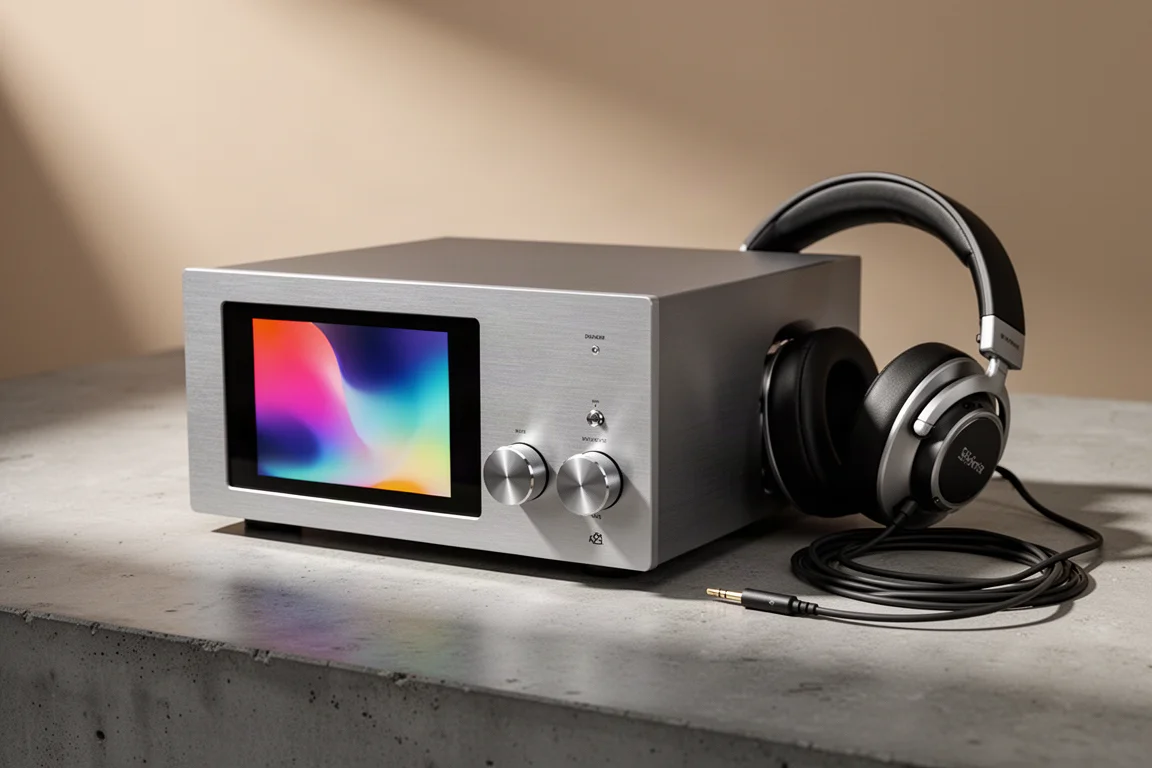
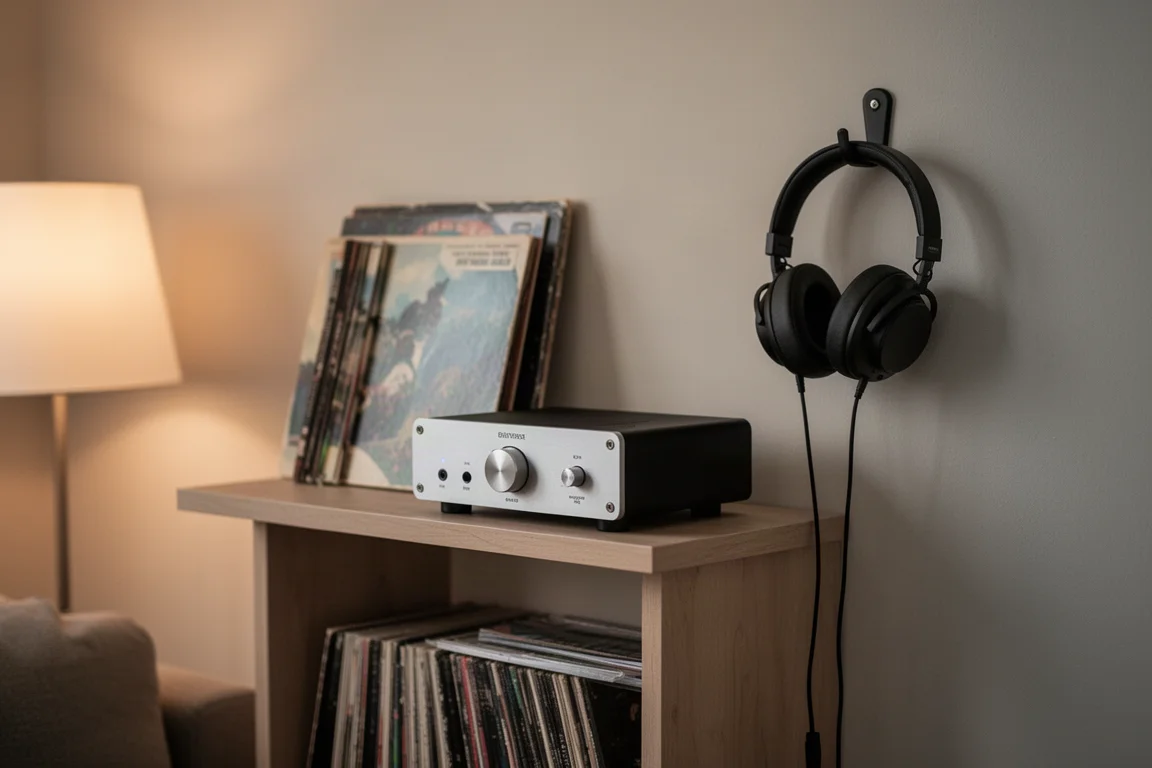
The FiiO R7 is a desktop audio component that refuses to pick one job. It is a network streamer with a touchscreen, a digital-to-analog converter, and a headphone amplifier, all housed in a single chassis that fits comfortably beside a pair of headphones. At around $700, that combination is the core of its appeal: one box instead of three.
It is also a device that asks for patience. The interface behaves like an Android device, remote control options are limited, and the headphone output has a character that will not suit every listener. Capability and friction sit side by side here, and understanding both is the key to deciding whether the R7 belongs on your desk.
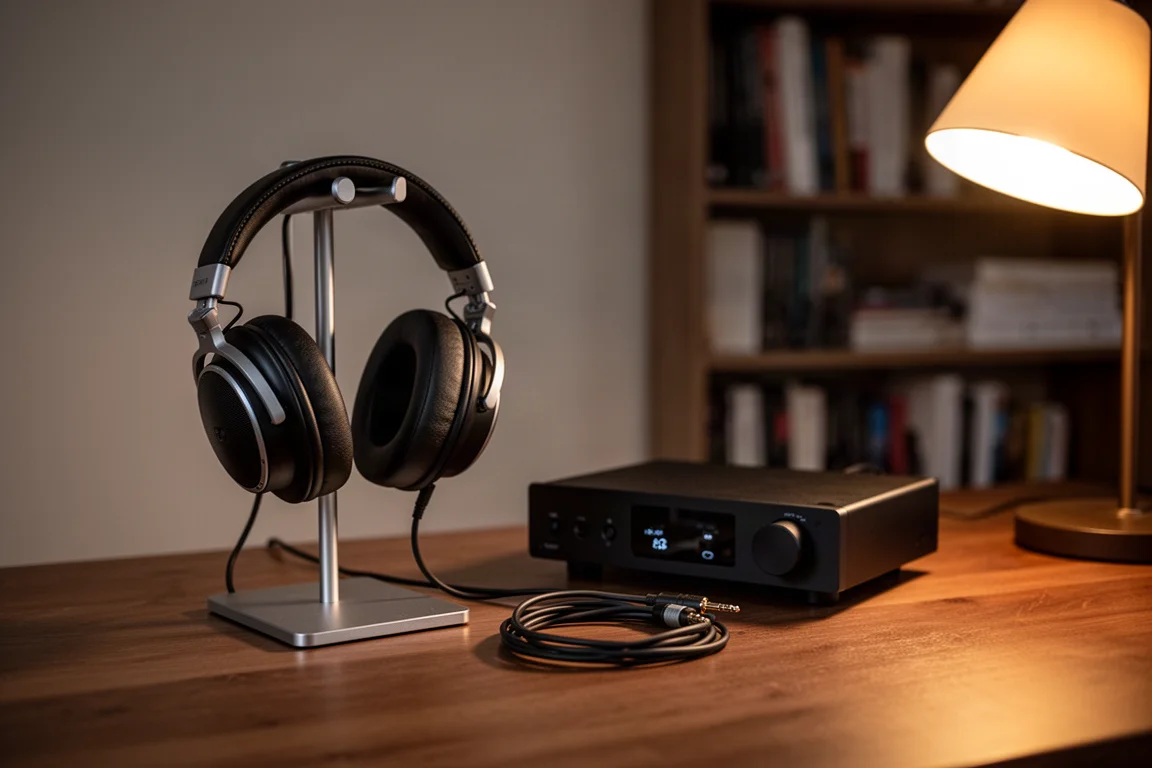
For listeners who want a compact, self-contained headphone station and are willing to learn its quirks, the R7 can be genuinely rewarding to live with. For listeners who want a set-and-forget streamer in a main system, it is a much harder recommendation.
Who This Product Is For
Three kinds of listeners get the most from the R7.
- Headphone listeners who want a single unit on a desk that handles streaming, conversion, and amplification without extra boxes.
- Roon subscribers. Roon is the most comfortable way to control the R7 remotely, and it also opens up DSP tools for equalization.
- Listeners who prefer running streaming apps natively on the device rather than sending audio through a separate bridge or computer.
It is a weaker fit for anyone who wants a remote-controlled component for a main two-channel or home theater system, and for listeners who expect AirPlay to behave exactly as it does on other hardware.
Main Strengths
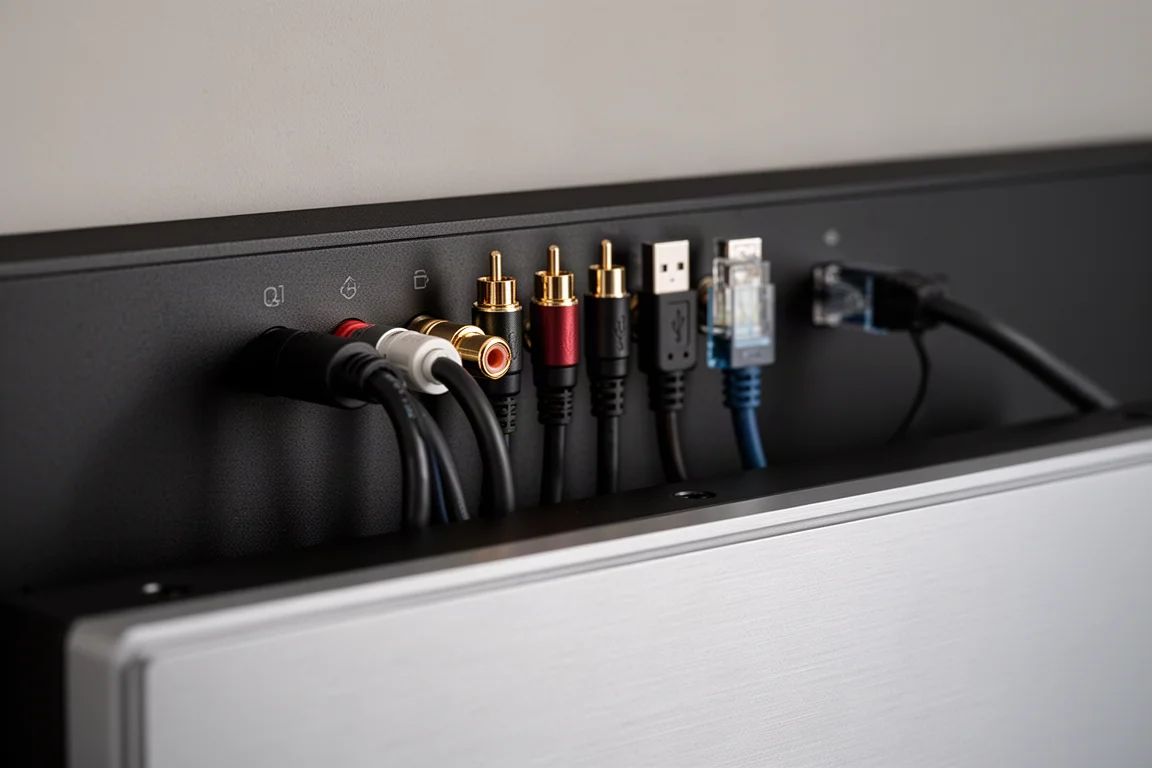
Connectivity is the headline. The back panel covers optical in and out, coaxial in and out, a USB input, a USB host output, a microSD card slot, wired Ethernet, two line outputs, and a balanced output. There is no analog input, but for digital sources the R7 is close to fully covered: a computer, an external hard drive, an SD card, and a disc transport can all feed it.
The front panel selector switch sets how the unit behaves. You can run the headphone amp and preamp together, the headphone amp alone, the preamp alone, or line output only. Headphone connections are a 4.4mm balanced output and a 6.35mm single-ended jack, so both balanced and standard cables are catered for.
The amplifier section is rated at up to 3.7 W at 32 ohms in Ultra High gain, with several gain steps below that. Volume is handled by a knob that brings up a graphical level display on the touchscreen, which makes precise adjustments easier than a plain dial.
The software side matters just as much. Because the R7 runs streaming apps natively, services such as Apple Music and Amazon Music can be installed directly on the device, and it works as a Roon Ready endpoint. Native app support removes a layer of bridging that many streamers require, and it keeps the listening experience inside one interface.
Setup and Daily Use
Hardware setup is straightforward. Power comes in through an IEC socket, and there is also a 12 V DC input rated at 3 A, which means an external linear power supply is an option for listeners who want one. Network connection can be wired through Ethernet or handled through the wireless antenna connection.
Local files are easy to accommodate as well. Music can be loaded onto a microSD card, inserted into the slot on the back, and accessed through the FiiO Music app.
The touchscreen is where the device’s personality shows. It is a full Android interface rather than a stripped-down streamer menu, so the display can do far more than a typical network player. The trade-off is discoverability: settings sit behind a swipe-down gesture, navigation relies on a small set of on-screen buttons, and the menu structure takes practice. Listeners coming from iOS tend to notice the learning curve most, because the interaction model is different from what they use every day. Once it clicks, though, the touchscreen is a genuinely enjoyable way to run a desktop system.
Things To Consider Before Buying
The headphone amplifier is clean, but clean is not the same as engaging. Its character leans dry through the midrange, it is less dynamic than some dedicated amplifiers, and sibilance showed up with certain headphones. With a pair of 350-ohm headphones, the highest gain setting was needed and volume still ran to roughly three quarters of the available range. Easier-to-drive headphones also benefited from the higher gain settings.
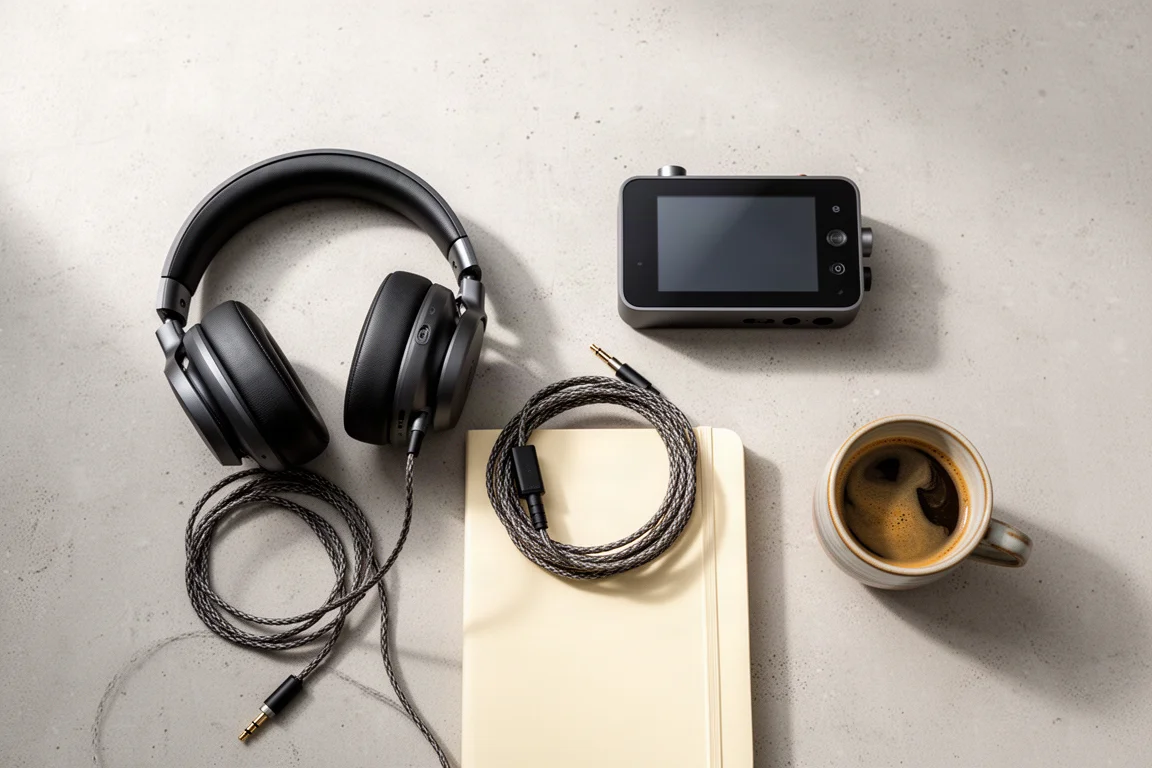
Equalization is possible, but the routes are not equal. A built-in EQ is available, and the more flexible option is applying a DSP curve through Roon, which allowed a small bass lift and a reduction in the 4 to 6 kHz region to tame the sharpness. That approach does mean giving up strict bit-perfect playback and leaving headroom in the signal, so it is a trade rather than a free upgrade. Android’s audio path can also resample audio, which matters if bit-perfect playback is a priority.
Two more points are worth knowing before buying. AirPlay works, but album artwork did not appear on the display when streaming from an iPhone, which is one of the main reasons to choose a screen-equipped streamer in the first place. And outside of Roon, there is no real way to control the R7 remotely, so you will be walking over to the unit and using the touchscreen.
Long-Term Value and Shelf Life
The R7 is built around an Android platform, and that raises a fair question about how long it will stay current. Phones age quickly, and a streamer that shares that architecture may not receive attention for as long as a simple analog component would. DAC chips and streaming features also move on, so the useful life of any digital front end deserves some thought.
The counterargument is value. At around $700 for three functions, the R7 works out to roughly $200 each for the streamer, the DAC, and the headphone amplifier. Judged that way the price is fair, and the streamer section is difficult to match on its own, because affordable network players with a screen are rare.
Separates remain an option. A dedicated headphone amplifier and a dedicated DAC can outperform the R7’s built-in sections, and those components tend to stay useful for longer, particularly if they are analog. The catch is cost: buying a comparable amplifier and DAC separately already exceeds the R7’s price, and adding a screen-equipped streamer pushes the total higher still. The R7’s real argument is integration, not outright performance.
Buying Advice
The R7 makes the most sense in a specific setting: a desk, a headphone nook, or an office system where one compact unit can cover streaming, conversion, and amplification. If you already subscribe to Roon and want a screen-equipped endpoint that doubles as a headphone amp, the fit is strong. The touchscreen and native app support also make it a satisfying device for listeners who enjoy interacting with their gear rather than hiding it in a rack.
Look elsewhere if you need a remote-controlled streamer for a main system, if AirPlay artwork matters to you, or if maximum amplifier dynamics for the money is the priority. Those listeners are usually better served by separates, even if the total cost climbs.
Used as intended, the price is reasonable. Three functions for around $700 is a fair deal, and the streamer portion alone justifies much of the cost, given how few affordable network players include a screen. The main caveat is shelf life: treat the R7 as a digital device with a finite lifespan rather than a long-term analog investment.
Conclusion
The FiiO R7 is a capable, genuinely interesting desktop component that packs a streamer, a DAC, and a headphone amplifier into one well-designed chassis. Its connectivity is broad, its native app support is a real convenience, and the touchscreen is more enjoyable than it first appears.
It is not a universal recommendation. The headphone output can sound dry and sharp with some headphones, the interface takes time to learn, remote control is limited outside Roon, and an Android-based platform invites questions about long-term support. Listeners who want one box for a headphone desk and are comfortable with those trade-offs will find a lot to like. Listeners who want a hands-off streamer for a main system should look at separates instead.
Product link
View more details for FiiO R7
This product is mentioned in the review. Check the specifications, options, and compatibility before buying.
View more details for FiiO R7Further reading
Related Reviews
Desktop Audio
ADAM Audio D3V vs Kali Audio LP-UNF: Two $299 Desktop Monitors Compared
Two compact powered desktop monitors at the same price, compared on bass extension, linearity, placement settings, directivity, and realistic output limits.
Desktop Audio
Aiyima T9 Review: A Compact Tube Desktop Amplifier With a Built-In DAC
A budget desktop amplifier that pairs class D power with two tubes, a full DAC section, Bluetooth, tone controls, and a working VU meter.
Desktop Audio
Aune S9c Pro Review: A Weighty Desktop DAC and Headphone Amplifier With Real Power
A desktop DAC and headphone amplifier with a linear power supply, dual Sabre converters and five watts of balanced headphone output. Here is what to weigh before buying.