Hi-Fi Audio
FiiO K13 R-2R vs FiiO Warmer R-2R: Two Affordable R-2R DACs, One Clear Pick
A side-by-side look at two R-2R desktop DACs from FiiO, the $319 K13 R-2R and the $350 Warmer R-2R, and which one earns its place on a desk.
Introduction
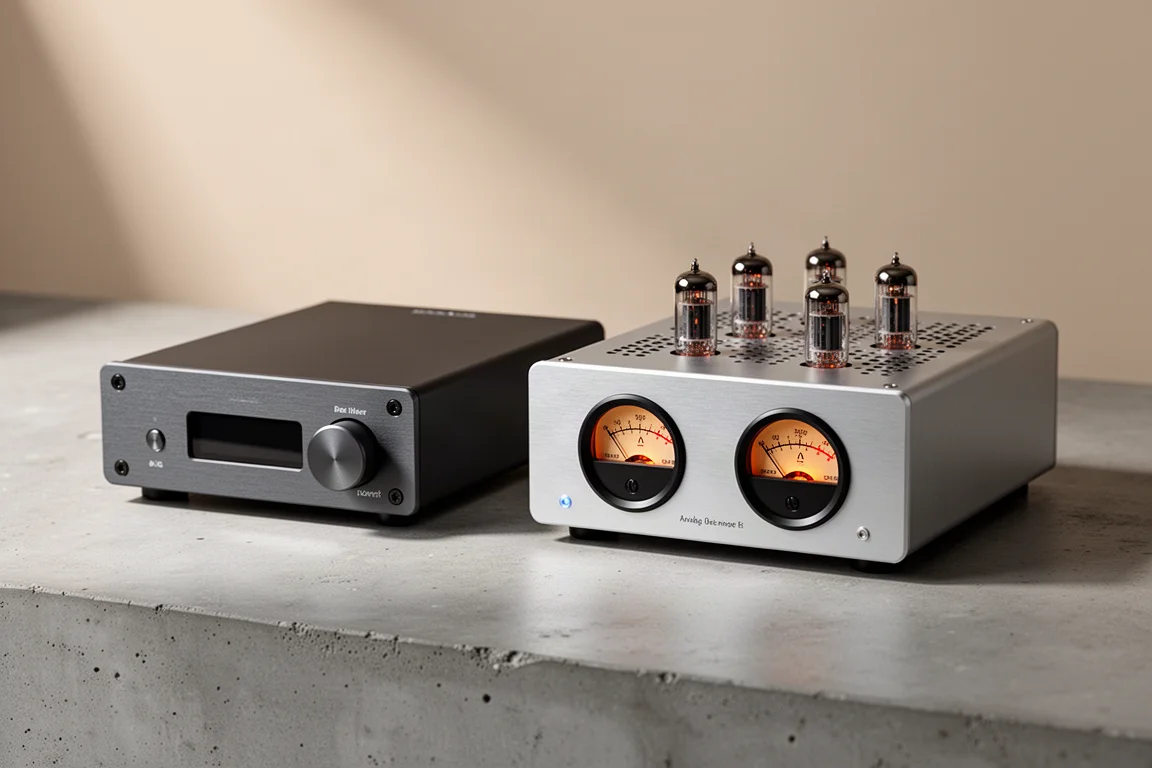
Two desktop DACs from FiiO, built around the same converter, priced within thirty dollars of each other: the K13 R-2R at $319 and the Warmer R-2R at $350. On paper, the Warmer looks like the more serious piece of equipment. It has tubes, analog VU meters and a linear power supply, which is a great deal of audiophile signalling inside one chassis. The K13 looks plainer by comparison.
Spend real time with both and that first impression reverses. The K13 R-2R is the more capable unit, and it is also the more revealing one, for less money. This comparison covers what each DAC actually does, where they differ, and which one is worth a place on a desk.
Shared Foundations: One R-2R Converter, Two Approaches
Both units are built around the same core: an in-house designed R-2R DAC module. It is a 24-bit, fully differential circuit built from 192 resistors, and it can be switched between non-oversampling and oversampling modes.
Connectivity is identical as well. Coaxial, Toslink and USB-C digital inputs sit alongside single-ended and balanced XLR outputs on the rear panel. Both units are made in China, which matters far less at this price than the spec sheet might suggest.

Past that shared foundation, the two designs take clearly different routes. One adds features, the other adds character.
FiiO K13 R-2R: More Than a DAC
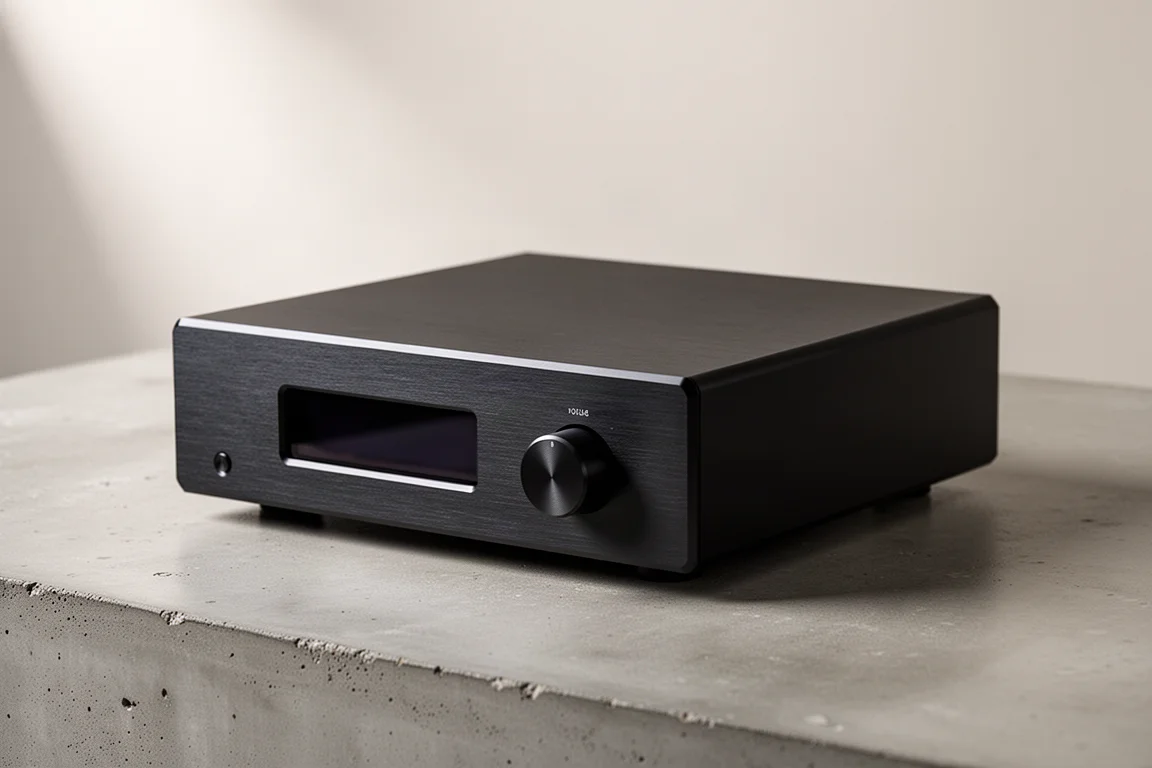
The K13 R-2R removes the tubes, the VU meters and the built-in linear supply, which is available as an optional extra instead. What remains is the R-2R module plus a much wider set of functions.
A front panel volume control lets the K13 work as a preamplifier as well as a DAC, and it also functions as a headphone amplifier. Two headphone outputs sit on the front panel and deliver up to 2.4 W into 32 ohms, which should cover most headphones in terms of power delivery. Bluetooth with LDAC support is included, along with a side-facing USB-C port and parametric EQ.
The parametric EQ deserves attention. It can be used to notch out a room mode, for example a 115 Hz peak caused by speakers sitting too close to a wall, which makes it a practical fix rather than a cosmetic one. Profiles are easiest to build through FiiO’s web interface with the K13 connected to a PC or Mac over USB, and they can then be selected on the fly through the control app over Bluetooth. The same app handles input switching, operational mode switching between line out, headphone out and pre out, and RGB lighting customization. A supplied infrared remote covers most of those options if you would rather not use a phone. Community-sourced headphone correction curves can also be downloaded through the app, and trying them costs nothing.
FiiO Warmer R-2R: Tubes, Meters, and a Linear Supply
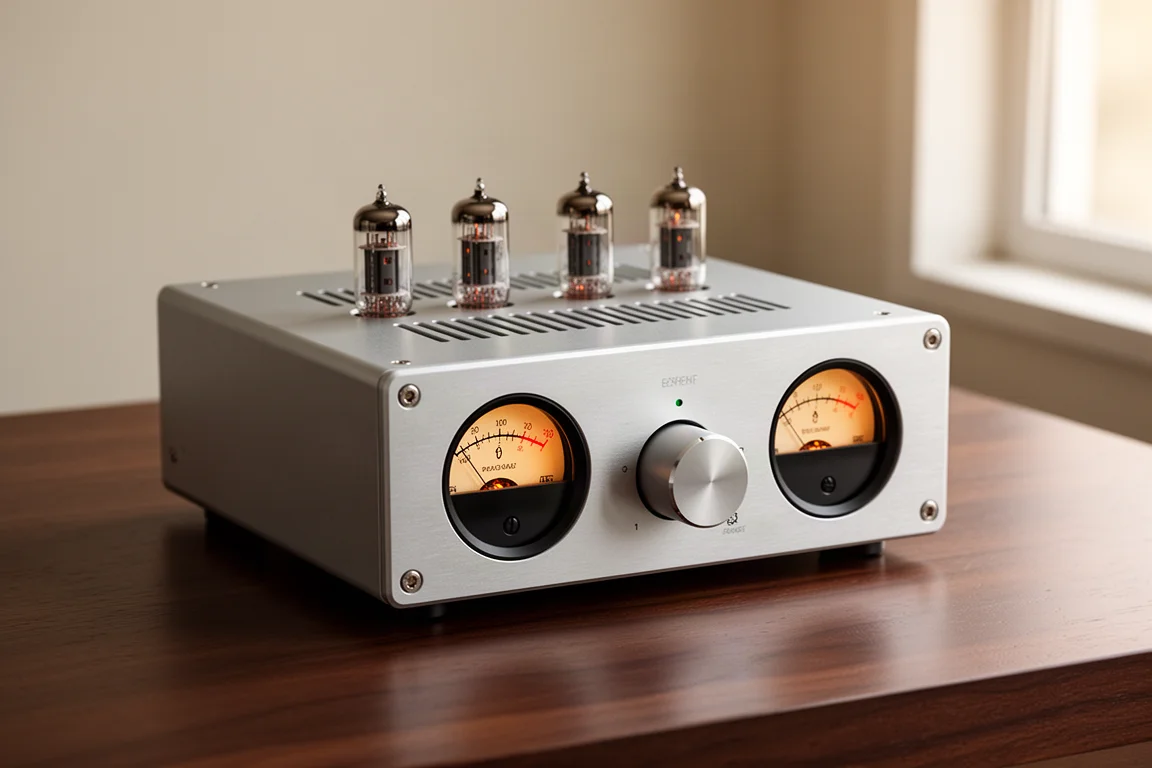
The Warmer R-2R is the more theatrical design. Four JJ Electronics tubes sit in the output stage as a buffer, analog VU meters move across the front panel, and the linear power supply is built in rather than optional. For plenty of listeners, those three details are the entire point: the coloration of tubes, the swing of the meters and the reassurance of a linear supply.
It is a DAC and nothing else. There is no headphone output, no Bluetooth and no parametric EQ, and that single-mindedness is clearly deliberate. If you want tubes in the signal path and meters on the desk, the trade is easy to understand.
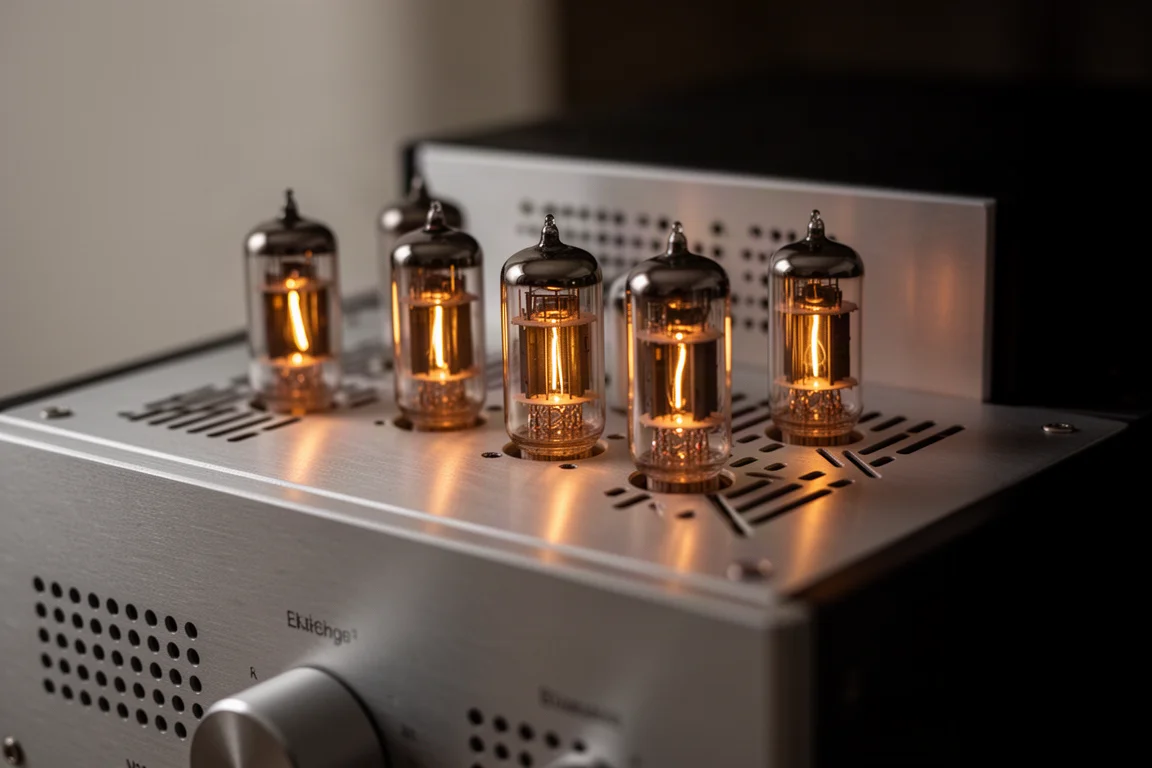
The stock tubes look like the Warmer’s weakest link. Replacing them with something audibly better pushes the total cost of ownership beyond $500, which changes the value calculation against a DAC that costs $319.
Sound Quality: Bass Definition and Transparency
Heard side by side, the differences between these two are not subtle enough to need a trained ear, though they are also not the gulf you would hear between two pairs of loudspeakers. These are DACs, and context matters.
Start with the low end. On dense, percussion-heavy material, the Warmer’s bass is woolly. Not dramatically so, but enough to soften what should sound distinct. The K13 presents the same material with better reach and tighter, better-defined articulation, so you hear the shape of the bass notes rather than their approximate form.
Then there is transparency. The Warmer places a layer of light gauze between the listener and the recording, while the K13 does not. On sparse material where vocals sit close and the arrangement leaves space around them, the Warmer smooths edges that should be audible. The K13 leaves those edges intact.
This is not a warm-versus-cold tonal contrast. It is a question of how much information survives the conversion to analog. The tubes, the linear supply and the glowing meters contribute to an experience, but not necessarily to the experience of listening. If tubes and meters are genuinely part of why you sit down to listen, the Warmer serves that purpose well, and those pleasures are real.
Everyday Features: Headphone Output, EQ, and Bluetooth
For most desktop systems, the feature gap decides the question. The K13 drives headphones directly, works as a preamplifier, accepts Bluetooth with LDAC, and offers parametric EQ that can correct a room problem rather than merely describe it.

The Warmer converts digital to analog and stops there. That is not a flaw in a system that already has a capable amplifier and headphone stage, but it does mean the Warmer needs more around it to do the same jobs.
Which DAC Suits Which Listener
The K13 R-2R suits listeners who want one box to handle headphones, speakers and casual Bluetooth streaming, and who would rather hear more of the recording than less of it. The parametric EQ makes it especially useful in a small room where speaker placement is constrained.
The Warmer R-2R suits listeners who have decided that tubes, VU meters and a linear power supply belong in their DAC, and who already own the amplification and headphone gear to complete the chain. Those buyers are not making a mistake. They are buying a specific set of pleasures.
Overall Buying Advice
At $319 against $350, the K13 R-2R is cheaper, more versatile and more resolving. It has better bass definition, it is more transparent everywhere else, and it adds a headphone amplifier, a parametric EQ, a Bluetooth input and preamplifier functionality that the Warmer simply does not have.

The Warmer is not a bad product. It is a narrow one. Its appeal rests on three features that many listeners find genuinely non-negotiable, and if you are one of them, it will serve you well enough. Just budget for the possibility that the stock tubes are the limiting factor, because a tube upgrade pushes the total beyond $500.
For everyone else, the choice is straightforward. Theater or clarity, at roughly the same price, and clarity is the better long-term purchase.
Conclusion
Two DACs, one converter, two philosophies. The Warmer R-2R sells an experience: tubes glowing, meters swinging, a linear supply doing quiet work in the background. The K13 R-2R sells information: tighter bass, a clearer window onto the recording, and a feature set that covers headphones, preamplification, Bluetooth and room correction.
If you want the experience, the Warmer delivers it. If you want to hear more of what is on the recording, the K13 R-2R is the one to buy.
Further reading
Related Reviews
Hi-Fi Audio
Accuphase C-57 vs Allnic H-7000V: Two High-End Phono Stages Compared
A fully balanced solid-state phono stage with a pitch-black noise floor meets a tube design built for well-loved records. Here is how to choose between them.

Hi-Fi Audio
Active vs Passive Hi-Fi: Five Components for a Modern System
Five components that define modern active and passive hi-fi systems, with the strengths, trade-offs and setup details worth weighing before you buy.
Hi-Fi Audio
Advance Paris A10 Apex Review: A Hybrid Integrated Amplifier That Covers a Lot of Ground
A French hybrid integrated amplifier with a class A tube preamp stage, analogue power meters, and an internal DAC and phono stage good enough to make extra boxes unnecessary.