Hi-Fi Audio
FiiO K13 R2R Review: A Sub-£300 DAC That Raises the Bar
A fully balanced R2R ladder DAC with XLR outputs, a 12V DC input for external power, and sound quality that challenges far more expensive rivals.
Introduction
Digital audio has improved enormously in a little over a decade. A converter that would have been the benchmark below £1,000 a few years ago now looks unremarkable next to hardware costing a fraction of that. The FiiO K13 R2R is a clear illustration of how far the entry point has moved.
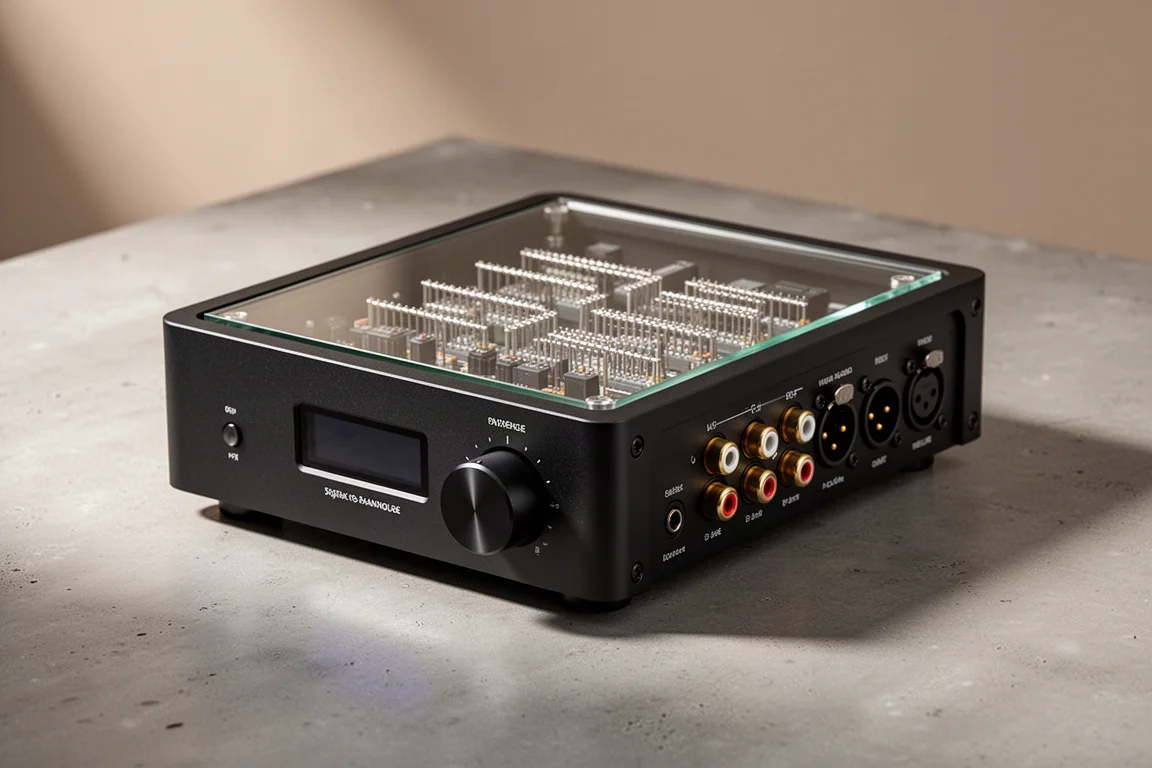
It is a desktop digital-to-analog converter built around an R2R ladder resistor array, with a fully balanced signal path and a UK price of £279. The K13 pairs that architecture with a machined aluminium chassis, a small central LCD, and a set of features that usually appear further up the market. This article covers who it suits, what it does well, and what is worth weighing up before buying.
Who the FiiO K13 R2R Is For
The K13 makes most sense as the hub of a desktop digital system. It accepts four digital inputs, coax, optical, USB, and Bluetooth, and offers balanced XLR outputs alongside two sets of single-ended RCA outputs. That is enough flexibility for a computer, a streamer, and a disc transport to share one converter without cable swapping.
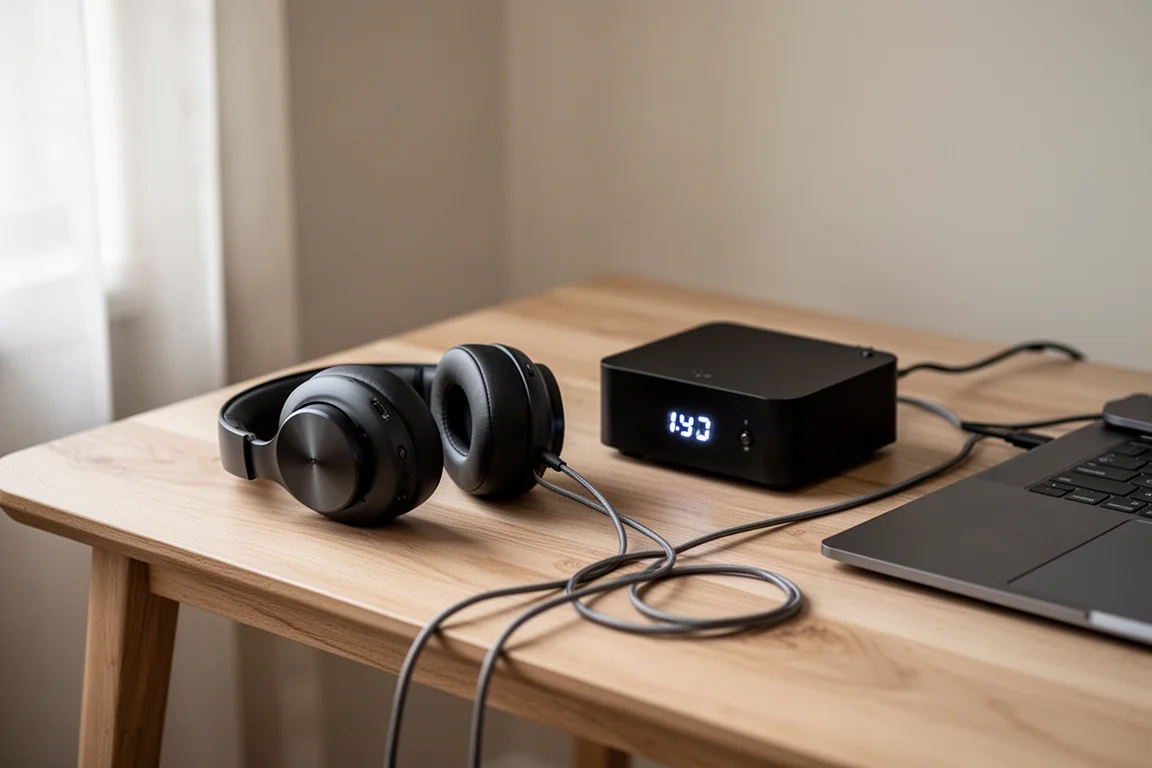
It is also a strong candidate for anyone who wants to drive powered speakers or a power amplifier directly. The analogue volume control is a ladder design built around an NJW1195A chip, so attenuation happens in the analogue domain rather than discarding bit depth digitally. Listeners who stay entirely digital can skip a separate preamplifier altogether. There is a headphone output too, with 1.2W single-ended and 2.4W balanced into a 32 ohm load, which makes the K13 a credible desktop headphone amplifier as well as a converter.
Build, Connectivity, and Controls
The chassis is machined from a single billet of aluminium with the internals cut away. That construction adds rigidity and helps keep vibrations away from sensitive electronics. A central LCD sits between two rotary dials: the left dial handles input selection and menu navigation, the right one controls volume.
On the front, a 4.4mm balanced headphone output sits to the left and a 6.3mm jack to the right. A USB port on the side makes it easy to connect a phone or tablet for streaming, and a remote control covers the essential functions. Around the back there are balanced XLR outputs, two pairs of single-ended RCA outputs, and the four digital inputs. One omission is a full-size USB socket on the rear, which would have accepted a wider range of cables, particularly since the side connection is USB-C.
Power delivery is more generous than the price suggests. The K13 ships with a 30W shielded switch-mode supply, and the internal supply can be bypassed through a DC input rated at 12V, 2.5A. That opens the door to an external supply later. FiiO has said it plans to release a matching linear power supply, the PL70, in early 2026, although details are still limited. It is also worth noting that the cheaper K11 R2R uses a simpler wall supply and is not fully balanced end to end, which is part of what the K13’s extra cost buys.
Sound Quality and Main Strengths
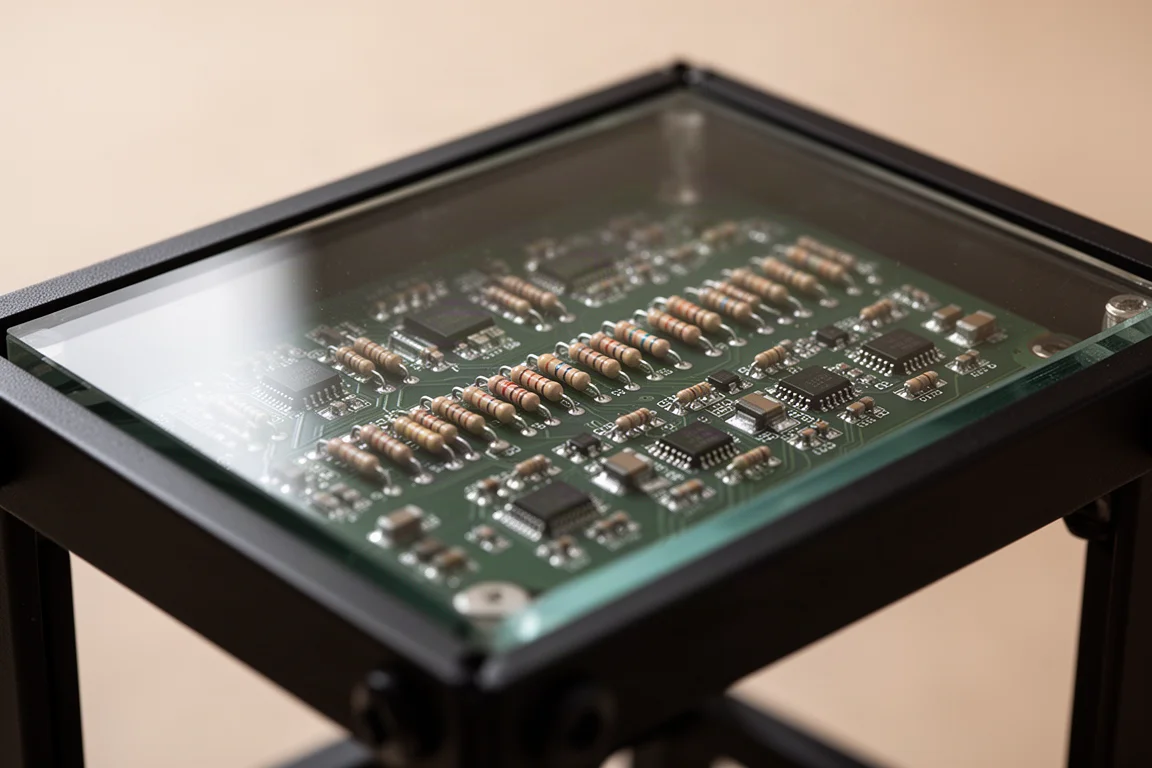
The DAC section uses four channels in a fully differential 24-bit R2R ladder resistor array. Each array holds 48 resistors, 192 in total, matched to 0.1% precision with low temperature drift. That is not the 0.01% matching found on some more expensive ladder designs, but the difference does not show up in listening.
What does show up is resolution. Bass is tight, mid-range transients have real attack, and the treble sounds open. The soundstage is wide, deep, and layered, and notes carry proper body. The K13 does not lean warm or cool. It simply sounds realistic, which is a harder trick to pull off at this price than it looks. Performance is also consistent across the coaxial, optical, and USB inputs, so the choice of transport matters less than it usually does.
On Colors by Black Pumas, the K13 captures the grit and range of the lead vocal, from an earthy lower register to an uplifting falsetto, and gives the lead guitar an authentic bite. That mix of texture and control is what separates the K13 from cheaper converters.
How It Compares With Other DACs
The sub-£500 market is crowded, and several well-regarded options now cost less than £200. The Fosi Audio ZD3, for example, is a £179 design built around an ESS chip with HDMI ARC for easy television integration. It is resolving and surprisingly neutral, but it does not sound fully natural: the soundstage is flat and notes lack body. Against it, the K13 sounds noticeably more complete.
The Cambridge Audio DacMagic 200M, at £349, has long been a favourite below £500. It uses two ESS chips in a dual mono configuration and adds a little richness through its output stage without losing detail. The K13 comfortably outperforms it, with tighter bass, better transient attack, and more open high frequencies.
The Chord Mojo 2 is arguably the only alternative that competes sonically, but it is not ideal for a desktop system, and its automatic input switching can be slow to release an input. The original Mojo, kept as a reference point, has a warm tone and a slightly wider stage, but it sounds slow and coloured next to the K13.
The closest rival is the Denafrips Enyo 15th, now £690 after a price cut from £1,065 in early 2024. It uses more tightly matched resistors, a more elaborate power supply, and heavier casework, yet those advantages do not translate into a clear sonic win on coaxial, optical, or USB. The Enyo has a slightly wider stage and a touch more upper mid-range refinement; the K13 answers with tighter bass and crisper mid-range transients. Vocals and lead instruments sit further forward on the K13 thanks to a little extra presence. The Enyo does hold one genuine advantage in its I2S input, which can tighten bass and transients and open the stage further, but that only matters if you own a transport that can make use of it.
Features, Menus, and Everyday Use
The menu system covers more ground than most buyers will need. Output can be set to preamplifier, fixed line level, or headphone. Gain can be set to low, medium, or high to suit different headphones and in-ear monitors. Oversampling can be switched on or off, and the K13 sounds noticeably cleaner with it engaged. The D2P setting lets the converter decode DSD natively or convert it to PCM.
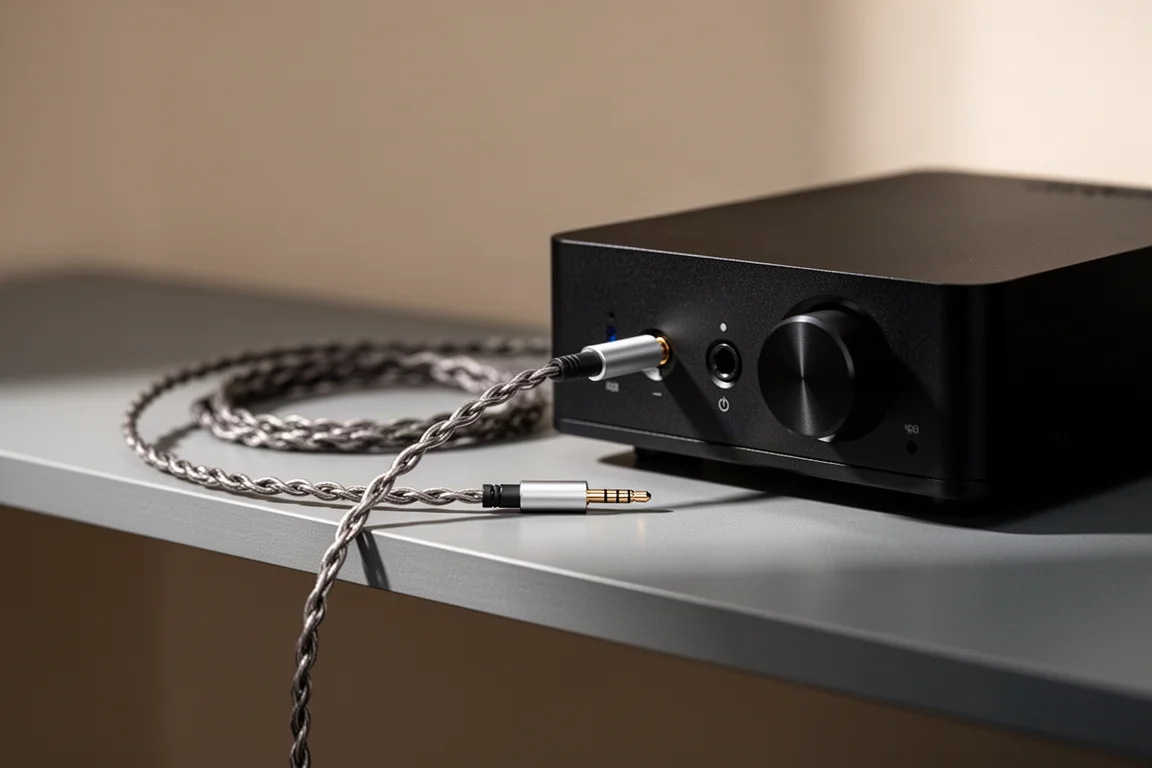
There is also a parametric EQ section with presets and ten user-defined slots, adjustable through the FiiO Control app for iOS and Android. The presets are best left alone, as they do more harm than good, but the user-defined filters can be useful for gently correcting a compromised setup. Other options include balance control, two USB working modes, display brightness and timeout, brightness for the R2R window and the dial LEDs, and a sleep timer. The RGB lighting can be adjusted or switched off entirely, and even for listeners who normally avoid decorative lighting, a subtle glow behind the R2R window adds a little visual interest without becoming a distraction.
Things to Consider Before Buying
A few points are worth knowing before you commit. The lack of a full-size USB port on the rear is a genuine inconvenience for anyone with a favourite cable. The parametric EQ presets should be treated as a novelty rather than a feature. Bluetooth is included as a convenience input, but its performance has not been established here.
It is also worth being realistic about upgrades. The K13 outperformed the internal DAC in an integrated amplifier retailing just under £6,000, which weakens the case for spending more on a separate converter than it once was. On external DACs, a meaningful step up in sound quality is likely to require a budget closer to £1,500. The K13 also has no I2S input, so buyers with an I2S-capable transport should weigh that against the rest of its strengths.
Buying Advice
Below £500, the K13 is the converter to beat. It delivers class-leading resolution, tonality, soundstaging, and imaging in a well-built and visually appealing package, and it does so at £279. Buyers who want the most from it should consider a clean external 12V supply when FiiO releases its matching unit, and anyone with an I2S-capable transport may still want to weigh the Denafrips Enyo 15th instead.
For everyone else building a desktop digital system, the decision is straightforward. The K13 offers the kind of performance that used to sit several price tiers higher, it keeps a headphone output and a preamplifier function in the same box, and it leaves room to grow later.
Conclusion
The K13 sets a new benchmark for what a converter under £300 can do. It combines a genuinely balanced signal path, a well-machined chassis, flexible outputs, and a sound that stays consistent across inputs. Nothing in its price class matches it on resolution and tonality, and its strongest rival costs more than twice as much.
For anyone building a digital front end on a budget under £500, this is the natural place to start.
Product link
View more details for FiiO K13 R2R
This product is mentioned in the review. Check the specifications, options, and compatibility before buying.
View more details for FiiO K13 R2RFurther reading
Related Reviews
Hi-Fi Audio
Accuphase C-57 vs Allnic H-7000V: Two High-End Phono Stages Compared
A fully balanced solid-state phono stage with a pitch-black noise floor meets a tube design built for well-loved records. Here is how to choose between them.

Hi-Fi Audio
Active vs Passive Hi-Fi: Five Components for a Modern System
Five components that define modern active and passive hi-fi systems, with the strengths, trade-offs and setup details worth weighing before you buy.
Hi-Fi Audio
Advance Paris A10 Apex Review: A Hybrid Integrated Amplifier That Covers a Lot of Ground
A French hybrid integrated amplifier with a class A tube preamp stage, analogue power meters, and an internal DAC and phono stage good enough to make extra boxes unnecessary.