Hi-Fi Audio
FiiO K11 R2R and WiiM Ultra: Two Affordable Desktop DAC Options Compared
A closer look at two affordable desktop DAC routes: the R2R based FiiO K11 R2R and the feature rich WiiM Ultra streaming DAC.
Introduction
Desktop DACs rarely get the attention that amplifiers and loudspeakers do, and that is partly because the differences between them tend to be smaller. Even so, two affordable options are worth knowing about right now, and they take very different routes to the same job.
The FiiO K11 R2R is a compact DAC and headphone amplifier built around a resistor ladder converter, and at around €179 (roughly $170) it is one of the most affordable R2R DACs released to date. The WiiM Ultra is a streaming DAC that leads with software: touchscreen operation, wide streaming protocol support, bass management and room compensation, all sitting around a conventional delta sigma converter.
One is a converter and headphone amplifier that needs a source. The other is a complete streaming front end with a DAC inside. Knowing where each one wins makes the decision much simpler.
What These Two Desktop DACs Bring to a System
Start with what they have in common. Both offer line level RCA outputs, so either can feed an integrated amplifier, and both can be fed from a computer or a network streamer. Where they differ is scope. The WiiM Ultra replaces a streamer and a DAC in a single box, while the K11 R2R concentrates on conversion and headphone drive and expects you to supply the rest.
It also helps to keep expectations realistic. Differences between DACs are considerably smaller than the differences you hear between amplifiers, loudspeakers and, above all, rooms. Neither of these units will transform a system on its own.

That said, both make a meaningful contribution in the right context. A converter that adds body and tonal colour can be the missing piece in a system that already resolves detail well, and a streamer with room compensation can solve problems that no converter ever will. The question is which of those two jobs your system actually needs.
FiiO K11 R2R: R2R Decoding at a Budget Price
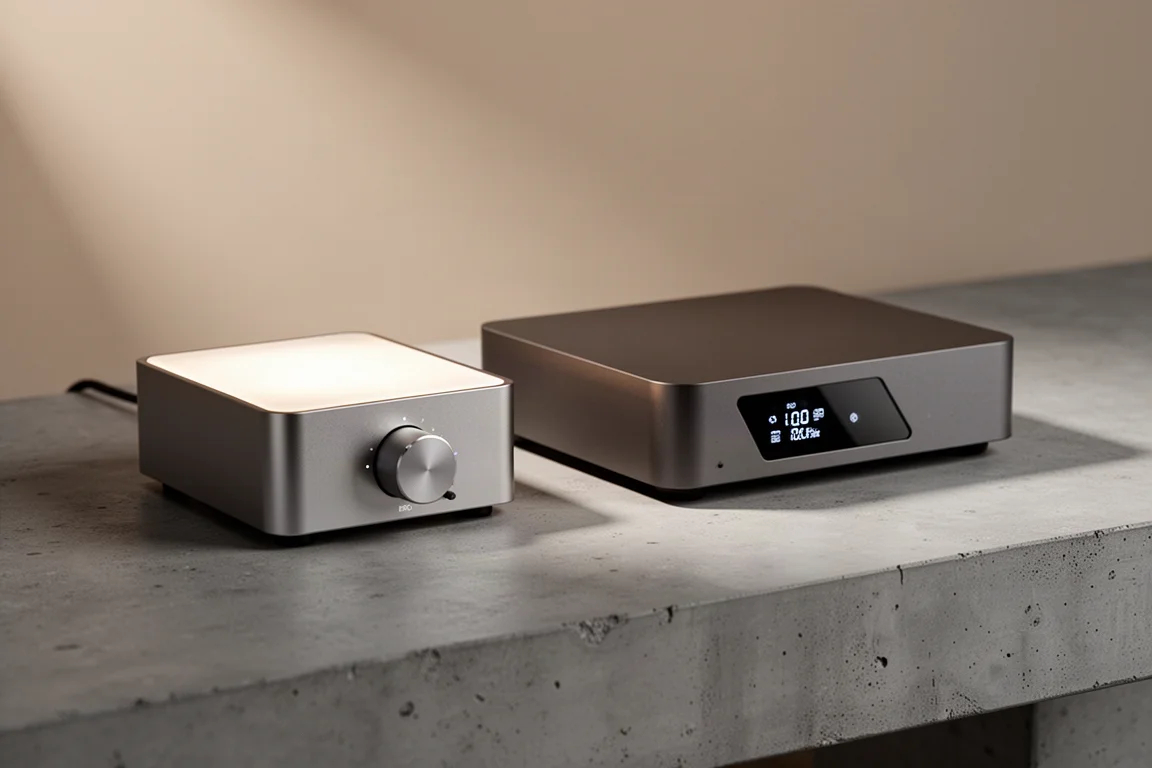
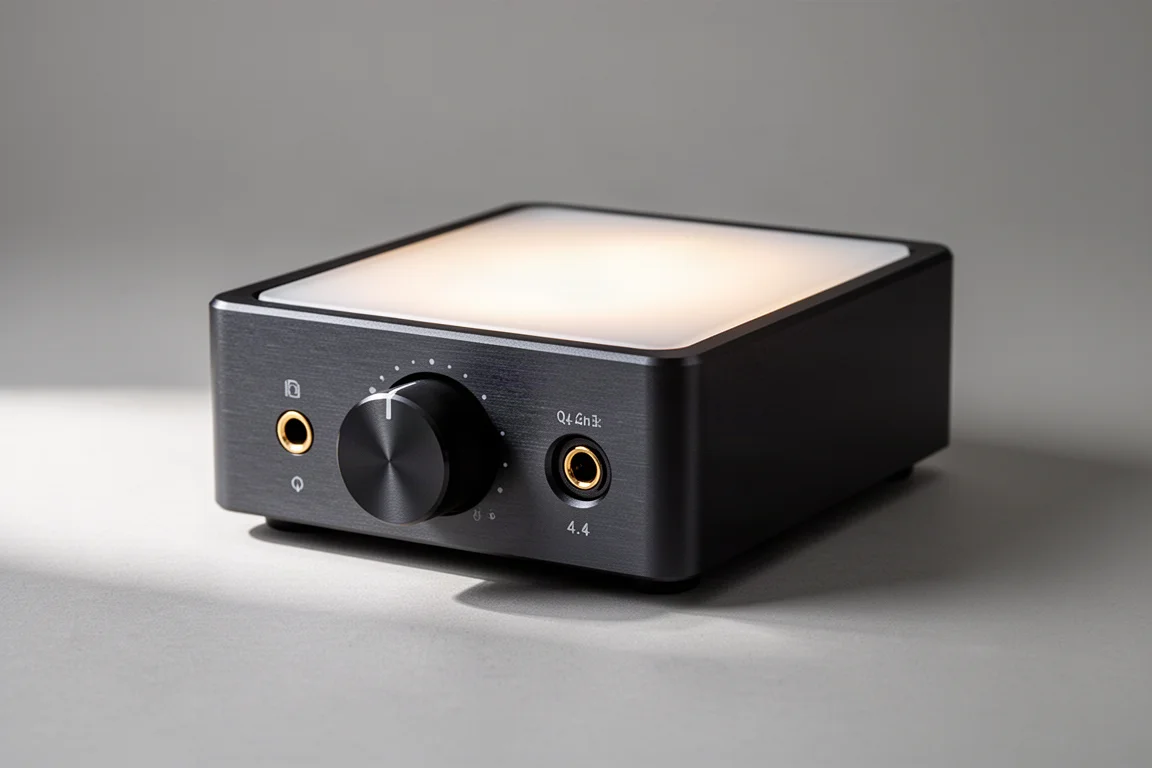
The K11 R2R arrives in a small metal chassis with a rubber base that stops it sliding around a desk. The illuminated top plate can be colour swapped, dimmed or switched off entirely through the on board menu, which is a nice touch at this price. Navigation is handled by pressing and turning the volume knob, and while the knob feel is nothing special, the menu is straightforward once you know the sequence.
R2R Architecture and the Oversampling Question
FiiO builds two versions of this DAC, and the R2R version is not the Cirrus Logic model. Instead it uses a resistor ladder, an approach that harks back to the CD players of the late 1980s and early 1990s, before delta sigma chips became the default choice. Delta sigma took over largely because it is cheaper to implement, and it is what you find in most modern converters, including the ESS chip inside the WiiM Ultra.
The two approaches work differently. An R2R converter processes each sample as it arrives, with every sample corresponding to a voltage value that activates a set of resistors and sets the height of the waveform at that moment in time. At CD quality that means 44,100 samples per second. Delta sigma designs pre-process the signal instead, raising the sample rate into the megahertz range and reducing the bit depth to one, two or three bits before decoding to analogue.
None of that makes R2R automatically better. A converter is more than its decoding silicon, and the quality of the power supply and the output stage matters just as much. What the K11 R2R offers is a rare chance to hear the architecture at a low price, and it is one of the most affordable R2R DACs to date. The first R2R design to reach this price zone was a compact dongle DAC that arrived in 2021 at around €299.
There is also a choice of decoding modes in the menu. Non oversampling mode decodes each sample as it arrives. Oversampling mode upsamples incoming signals to 384 kHz before handing them to the resistor ladder. Oversampling nudges the sound slightly closer to a conventional converter, but only slightly, and the non oversampling mode’s more easy going character is the one that keeps you listening for longer.
Inputs, Controls, and Build
The back panel carries three digital inputs: USB-C, optical and coaxial, which covers a laptop, a disc transport or a network streamer without adapters. On the front there are two headphone sockets, a quarter inch single ended output and a balanced 4.4 mm output. Three gain settings are available from the menu, and the op amp based headphone amplifier is fully balanced. Balanced operation multiplies output power by a factor of three, for a maximum of 1.3 W into 32 ohms.
Line out mode is engaged by double pressing the volume wheel, which switches the K11 R2R into pure converter duties and feeds the RCA outputs on the back. That makes it easy to slot into a larger system without unplugging anything.
Sound and Headphone Drive
With a moderately demanding pair of headphones, the quarter inch output at the lowest gain setting delivers more than enough level. Move to a 350 ohm model and the picture changes: medium gain with the balanced output produces a more effortless result, particularly with large dynamic swings and with music that depends on rhythmic drive.
Tonally, the K11 R2R leans warm. Male vocals gain a little more chest, hi-hats and rhythm guitar strikes come across as relaxed rather than etched, and the leading edges of high frequency transients are smoothed rather than sharpened. The one mild reservation is a slightly light sub-bass kick.
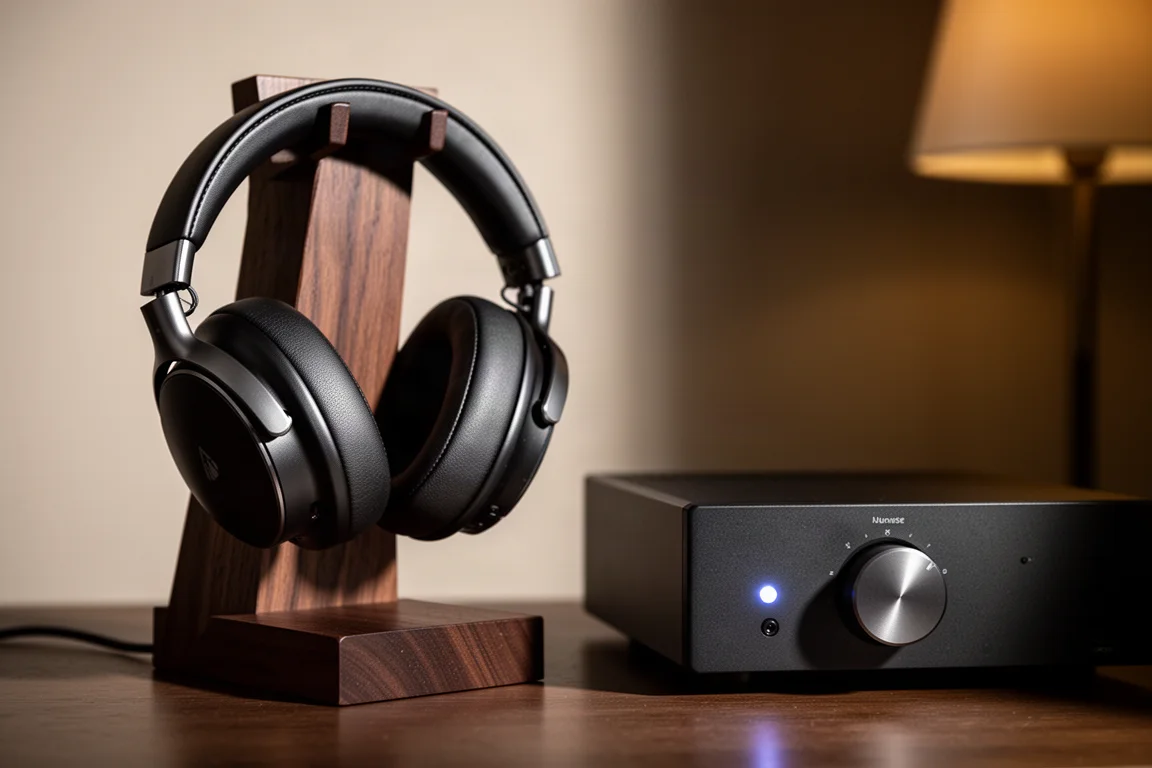
Used purely as a converter into an integrated amplifier, the same character comes through. The presentation is smooth, rich and a touch hooded, favouring tone and texture over crystal clarity and air. Against a laptop headphone output, or against the headphone output on the WiiM Ultra, the differences are real but not dramatic, and they are not the kind that jump out in a two minute comparison.
That last point matters. This is a converter that tends to win people over slowly, across weeks and months rather than minutes, and the pull towards it becomes stronger the longer it stays in a system.
WiiM Ultra: Streaming Features With a Conventional DAC Stage
The WiiM Ultra takes the opposite approach. Its appeal is software: a touchscreen interface, support for a very broad range of streaming protocols, bass management and room compensation. Around that sits a conventional converter, an ESS chip in this case, along with a coaxial output and line level RCA outputs.
Where the WiiM Ultra Excels
As a streaming hub, the Ultra is hard to argue with. Touchscreen control removes the need for a phone or tablet, protocol support covers the services most people actually use, and room compensation and bass management address problems that no amount of converter quality can fix. It is also Roon Ready, which means it can receive streams from Roon and blend a streaming service’s library with local files in one interface.
In sound quality terms, the Ultra is strong on clarity, layer separation and transient bite. Detail is easy to follow and the top end stays crisp.
Where the DAC Hardware Falls Short
Set against the wider field of streaming DACs, the Ultra’s converter is fine rather than special. It sounds detailed and crisp, but leaner in body and tonal colour, and less convincing when it comes to rhythmic drive. Against the K11 R2R the difference is easy to hear: the FiiO is warmer and more relaxed, the WiiM is clearer and airier, and the FiiO is the less dynamically constrained of the two. As with everything in this category, the gap is one type of light bulb versus another, not night and day.
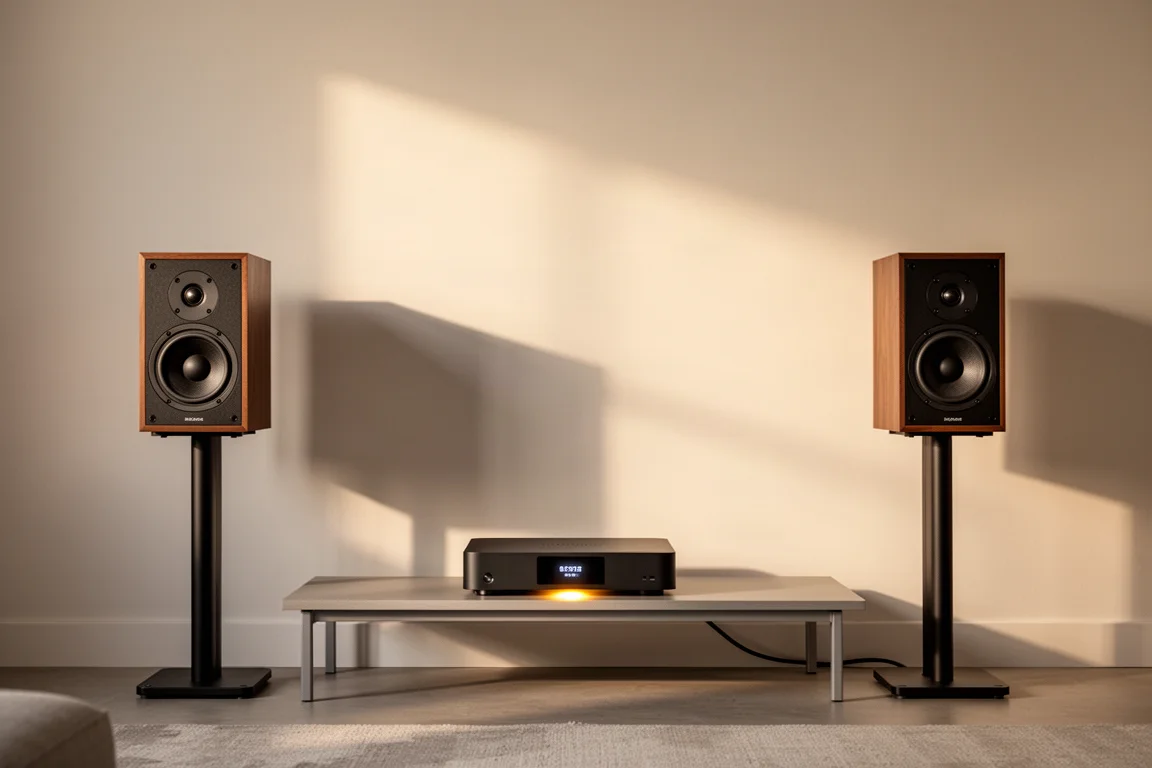
The obvious answer for anyone who wants both is to keep the streaming functionality and add the FiiO’s conversion. That combination delivers the full feature set of the Ultra with a more tonally and rhythmically satisfying sound, and it suits systems or headphones that already lean bright. There is also a leaner route: if a touchscreen is not needed, a WiiM Pro or Pro Plus paired with the K11 R2R costs roughly the same as the Ultra on its own, adds AirPlay support, allows a WiiM TV app with an Apple TV for a much larger now playing display, and delivers far better headphone drive in a more compact footprint.
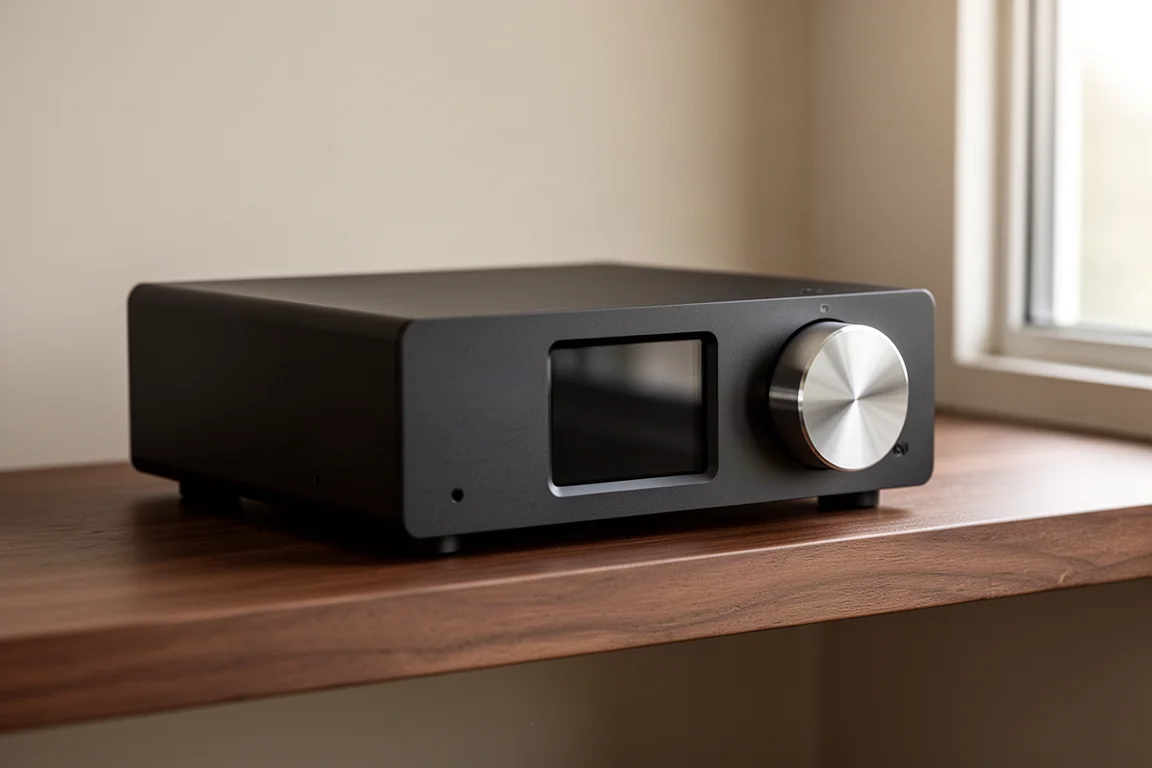
Pairing the FiiO K11 R2R With a WiiM Streamer
Wiring the two together is straightforward. Connect the streamer’s coaxial output to the K11 R2R’s coaxial input, switch the FiiO to line out by double pressing the volume wheel, and run its RCA outputs into an integrated amplifier. The WiiM handles the network side, including Roon, and the FiiO handles conversion.
Listen to that arrangement over a few days and the split becomes clear. The streamer contributes flexibility and a clean, well separated presentation, while the converter contributes body and a more natural sense of drive. Neither device is doing anything the other could not attempt alone, but the division of labour plays to both.
If your amplifier or headphones already sound bright, this pairing is particularly sensible. If your system already leans warm, the WiiM Ultra on its own may be enough.
Buying Advice: Which One Makes Sense for You
Choose the FiiO K11 R2R if you already have a source you like, whether that is a computer, a streamer or a disc transport, and you want a warmer, more tonally rich presentation with a capable balanced headphone output. At around €179 it is an inexpensive way to try R2R decoding, and the two decoding modes let you fine tune the character without changing anything else in the system.
Choose the WiiM Ultra if you want one box that handles streaming, touchscreen control, room compensation and bass management, and you are happy with a converter that prioritises clarity over body. Its software advantages are worth more to most listeners than the hardware shortfall costs them.
Choose both if you want the streaming features and the warmer conversion, and your budget stretches to a streamer plus a separate converter. In that case, pricing a WiiM Pro or Pro Plus alongside the K11 R2R is worth doing before committing to the Ultra.
Whichever route you take, keep expectations in proportion. These are differences of character rather than differences of quality, and money spent on a room or a pair of loudspeakers will usually change a system more than a converter swap. What the K11 R2R offers is a specific flavour that is rare at its price, and what the WiiM Ultra offers is a level of streaming convenience that is rare at its price.
Conclusion
The FiiO K11 R2R and the WiiM Ultra are not so much rivals as two answers to different questions. The FiiO is a budget converter and headphone amplifier with a warm, textured sound and a genuinely balanced output stage, plus the option of oversampling or non oversampling decoding. The WiiM Ultra is a streaming hub with excellent software and an average converter stage. For many systems the most satisfying result is to let the WiiM handle streaming and the FiiO handle conversion, and at the K11 R2R’s price that combination is well within reach.
Further reading
Related Reviews
Hi-Fi Audio
Accuphase C-57 vs Allnic H-7000V: Two High-End Phono Stages Compared
A fully balanced solid-state phono stage with a pitch-black noise floor meets a tube design built for well-loved records. Here is how to choose between them.
Hi-Fi Audio
Active vs Passive Hi-Fi: Five Components for a Modern System
Five components that define modern active and passive hi-fi systems, with the strengths, trade-offs and setup details worth weighing before you buy.
Hi-Fi Audio
Advance Paris A10 Apex Review: A Hybrid Integrated Amplifier That Covers a Lot of Ground
A French hybrid integrated amplifier with a class A tube preamp stage, analogue power meters, and an internal DAC and phono stage good enough to make extra boxes unnecessary.