Integrated Amplifiers
FiiO EA13 Review: A Tube-Powered Class A Integrated Amplifier for Purists
The FiiO EA13 pairs six tubes with a class A push-pull circuit, four line inputs, and a deliberately analog-only feature set. Here is what it does well and what to plan for.
Introduction
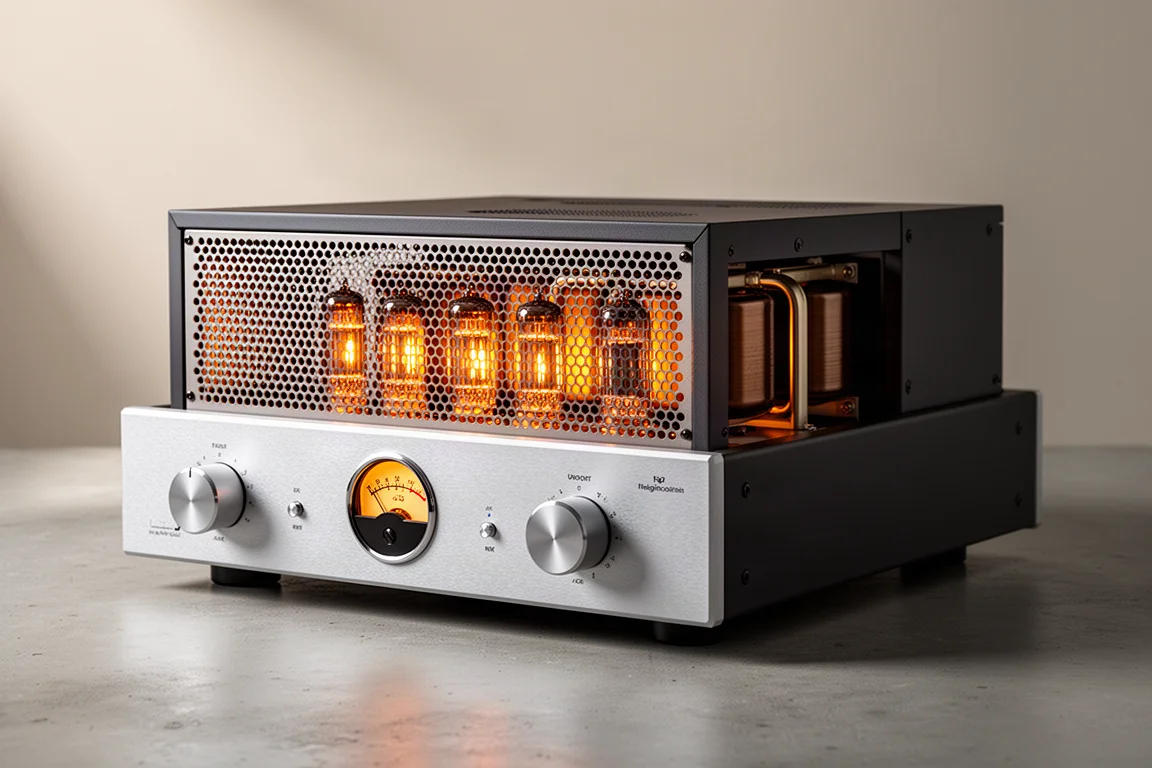
FiiO built its name on dongle DACs, digital audio players, and in-ear monitors. The EA13 goes the other way. It is a tube-loaded integrated amplifier that strips the modern hi-fi checklist back to the essentials: no streamer, no DAC, no phono stage, and no remote control. In their place you get mechanical VU meters and six tubes, two Sylvania NOS PCF80s and four JJ Electronics EL34s, arranged in a class A push-pull circuit.
The result is an amplifier built around a deliberately old-school idea. The signal path is analog throughout, and the ownership experience asks you to bring your own sources and your own habits. For listeners who already own a DAC or a streamer they like, that trade-off can be exactly the point.
Who the FiiO EA13 Is For
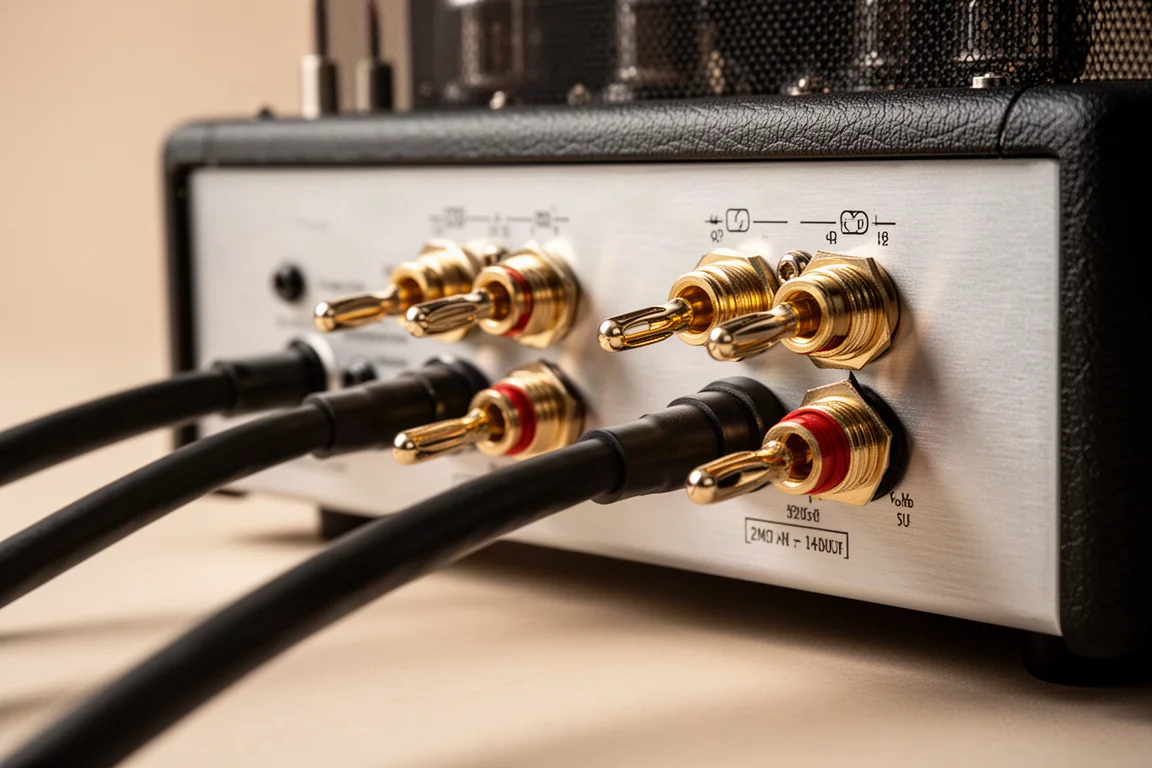
The EA13 suits listeners who want a simple, source-agnostic amplifier and are happy to handle the digital side themselves. Around the back there are four line-level inputs, and separate 8-ohm and 4-ohm taps let you match the output transformers to the loudspeakers you actually own.
There is no pre-out, so adding a subwoofer is not a straightforward proposition. There is also a quarter-inch headphone socket, and FiiO states that it is taken from the loudspeaker taps, which means higher-impedance headphones see more power than lower-impedance ones. That runs opposite to the usual expectation and is worth knowing before you buy.
Pricing sits at $769 in the US through US dealers and 665 euros in Europe, which places the EA13 above budget integrated amplifiers but well below the premium tube designs it invites comparison with.
Speaker matching matters here. Higher-sensitivity standmounts make the most of the available output, and the 18 W per channel rating goes considerably further with an easy load than the number alone suggests.
Tube Circuit and Power Output
The PCF80 is a triode pentode compound tube, and the pair handles initial voltage amplification and driver duties before passing the signal to the EL34 power tubes. The EL34 is one of the most iconic power tubes in audio, and FiiO describes its contribution as a lush, textured midrange with a smooth top end.
Output is rated at 18 W per channel at up to 1% THD, or 28 W per channel if you accept up to 5% THD. The tubes are auto-biasing, so there is nothing to adjust and nothing to measure.
The transformers are custom high-bandwidth EI silicon steel laminate designs intended to complement the EL34 power stage. To reduce mechanical hum and resonance, each one is internally potted with epoxy resin and fine sand before being sealed into its own enclosure.
Build, Chassis, and Controls
At almost 18 kg, the EA13 is mostly transformers and chassis. The unibody metal frame is anchored by a sandblasted CNC machined aluminum front panel, which FiiO describes as thick and intended to suppress acoustic resonances. The feet serve a similar purpose, and heat dissipation is handled by recessed top plate socket wells and vented sides.
The transformers and tubes sit under a heavyweight protective grill held in place by seven screws. With the grill removed, the amplifier reads as more of a DIY machine, and the tubes cannot be exposed without the transformers sitting alongside them.
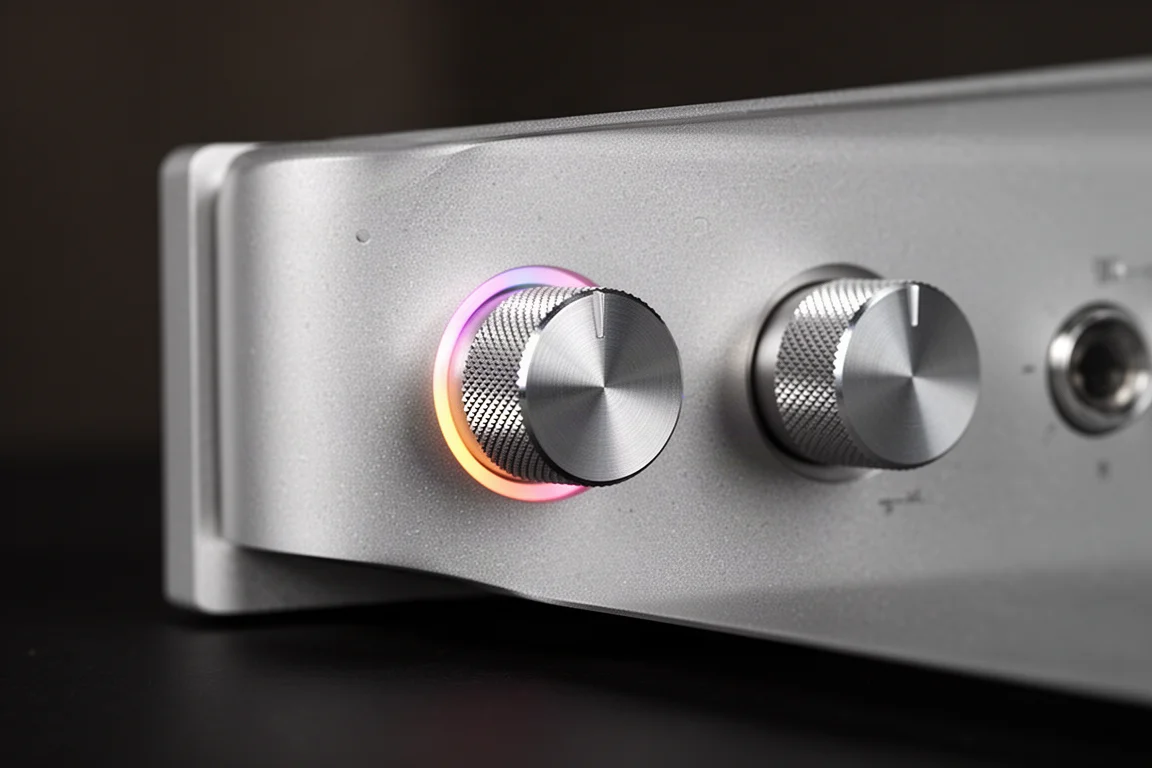
Controls are deliberately simple. A long press of the source selector brings the amplifier out of standby with a heavy thunk. The source selector and volume wheel are infinite rotary types with a small amount of play, and both feel adequate rather than special. The rings around them are RGB, but they can be recolored or switched off entirely to keep the look closer to vintage.
How It Sounds
The EA13 gives music more presence and physicality than its future-fi rivals, with abundant harmonic richness that never turns syrupy. This is not a buttery amplifier. More than the alternatives, it makes music feel like it is trying to force its way out of the loudspeakers, with a minor cost to crystalline clarity along the way.
Against the WiiM Amp Ultra, which converts and amplifies from a single box at 599 euros, the FiiO sounds more urgent and immediate, with more instrumental body. The WiiM holds the listener further back with a dynamically weaker, leaner presentation and a slightly grayer tonality. In isolation that difference may be hard to hear. Side by side it shows up clearly on strings and drum hits. The WiiM counters with practical advantages: it makes adding a subwoofer much easier and offers basic room correction, which the EA13 does not have. Its amplification is a basic class D circuit built around a pair of TI TPA3255 chips.
The Marantz Stereo 70S pairs HEOS streaming and a DAC with 75 W per channel of class AB drive, four times the FiiO’s rated output on paper. It sounds less tense and more natural than the WiiM, but the EA13 still comes across as the more powerful of the two, with superior tone and timbre, a top end that shimmers, and more convincing front-to-back layering. The Musical Fidelity A1, which sells for more than twice as much and includes a remote control, is the closer sonic relative of the three.
One limitation is worth stating plainly. Very low bass and sub-bass could not be fully assessed, because the paired loudspeakers are rated down to 55 Hz, which narrows the listening window too much to judge the bottom octave.
Things to Consider Before Buying
Heat is the main practical consideration. After an hour of playback in a well-ventilated room at 21°C, the back half of the removable grill reaches around 50°C, the honeycomb ventilated front half around 60°C, and the EL34 tubes themselves around 100°C. This is not an amplifier for heat waves, or for homes in hot climates without air conditioning.
Class A operation also draws more electricity than a class D equivalent, which is part of the cost of ownership rather than a one-time purchase decision. A 30-minute auto power off stops the amplifier running all night if you forget it, but the timer is fixed and cannot be shortened or extended.
Finally, the missing features are deliberate: no DAC, no streamer, no phono stage, no remote control, and no pre-outs. If any of those matter to you, plan for them before rather than after.
Buying Advice
The EA13 rewards a system built around it rather than simply plugged into it. Pair it with reasonably sensitive loudspeakers, give it space to breathe, and accept that the digital front end is your responsibility.
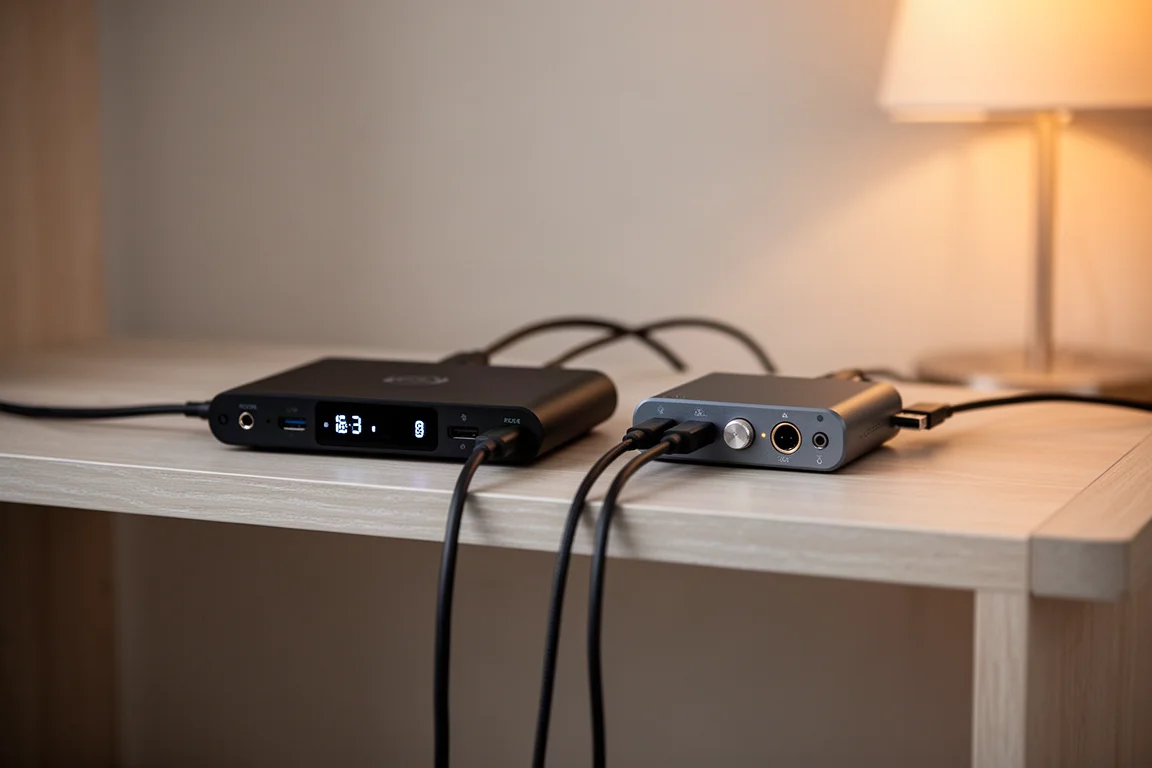
A compact streaming transport and a small DAC are enough to complete the chain. A Roon Ready transport around $100 can feed a DAC of your choice over coax, Toslink, or USB-C, avoiding the time cost of a DIY single-board computer build. With the amplifier, streamer, and DAC combined, a complete system can land at a little over $1,000 US or 1,000 euros. That keeps the total sensible while preserving the analog character that makes the EA13 interesting in the first place.
Conclusion
The FiiO EA13 is a niche product inside an already narrow audiophile niche, and it is honest about what that means. You give up streaming, digital conversion, a phono stage, a remote control, and subwoofer integration. In return you get six tubes, a class A push-pull circuit, a chassis heavy enough to stay quiet, and a presentation that sounds more alive and better layered than comparably priced all-in-one amplifiers.
Buy it if you have sources you already trust, speakers that are easy to drive, and a room that stays cool. Skip it if you want one box to do everything or you live somewhere the ambient temperature leaves no margin for a class A amplifier. For the right listener, the trade is a clear one.
Product link
View more details for FiiO EA13
This product is mentioned in the review. Check the specifications, options, and compatibility before buying.
View more details for FiiO EA13Further reading
Related Reviews
Integrated Amplifiers
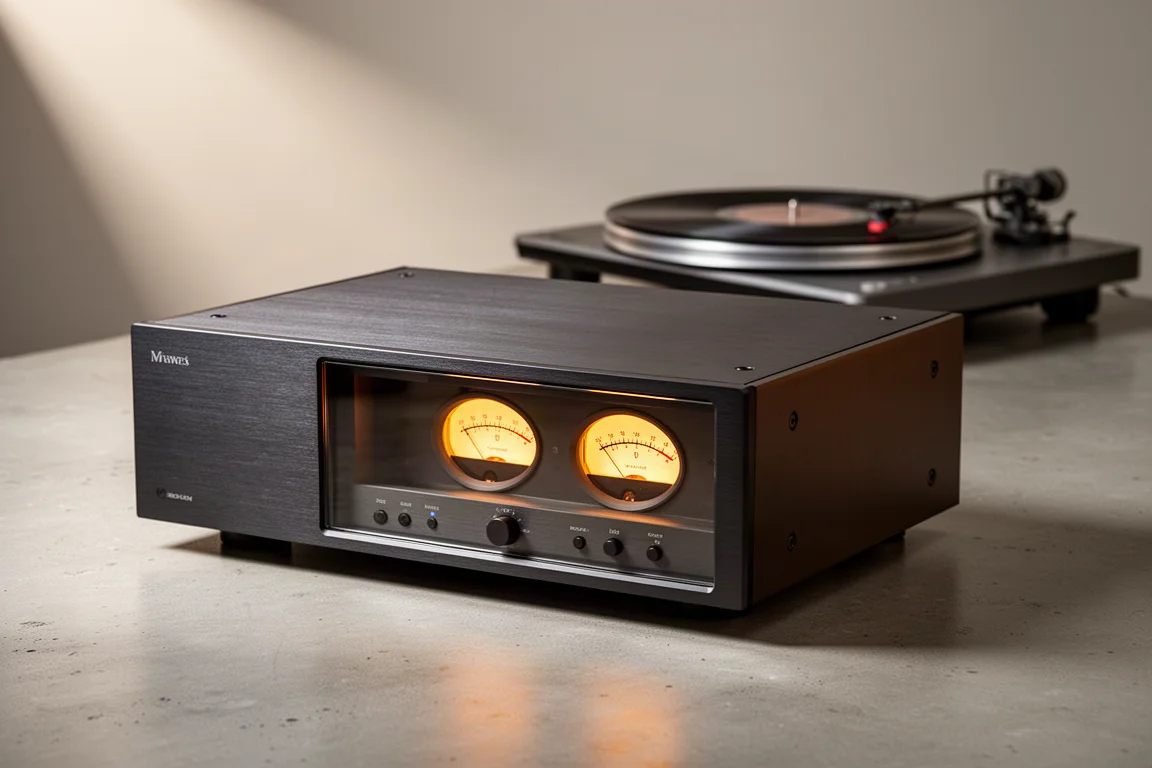
Advance Paris A10 Classic Review: Vintage Looks and a Lively, Punchy Sound
The Advance Paris A10 Classic pairs glowing blue VU meters and a tube stage with one of the widest input sets on any integrated amplifier. Here is what it does well and what to weigh before spending $2,500.
Integrated Amplifiers
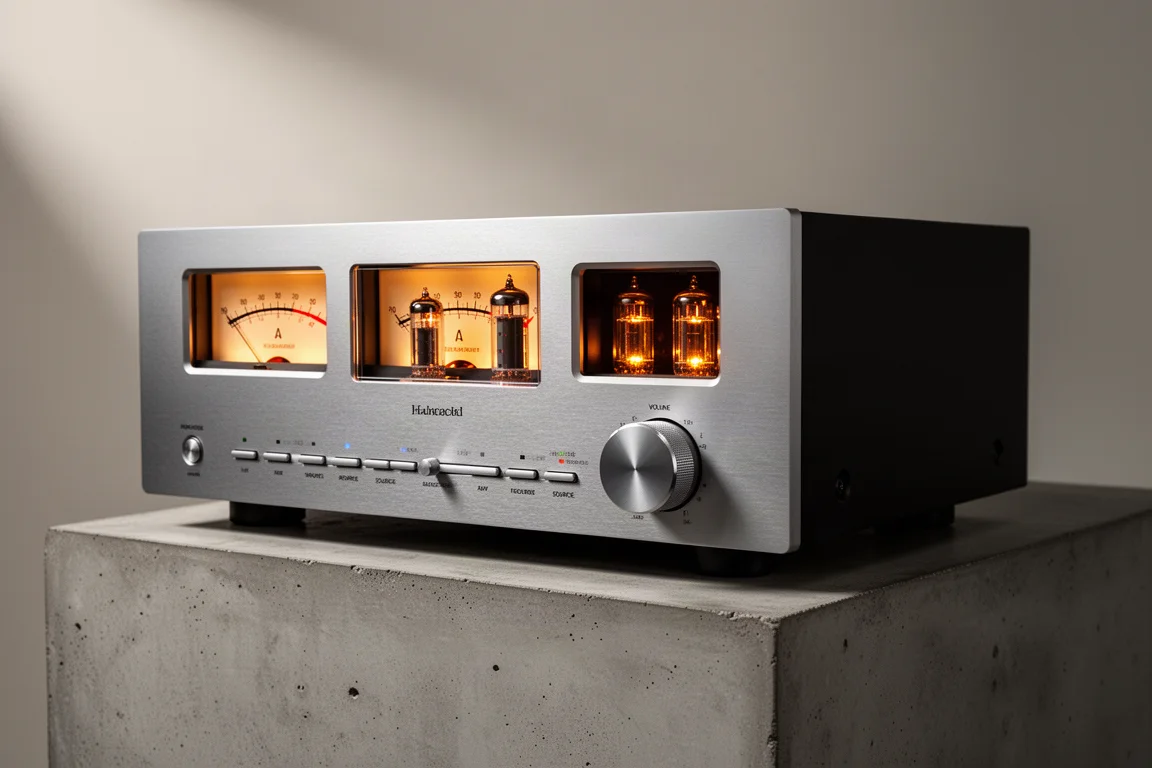
Advance Paris A12 Apex Review: A Modern Integrated Amplifier With Vintage Character
A dual mono integrated amplifier with 180 watts per channel, a tube front end, VU meters, and a connectivity list that covers turntables, televisions, computers, and headphones.
Integrated Amplifiers
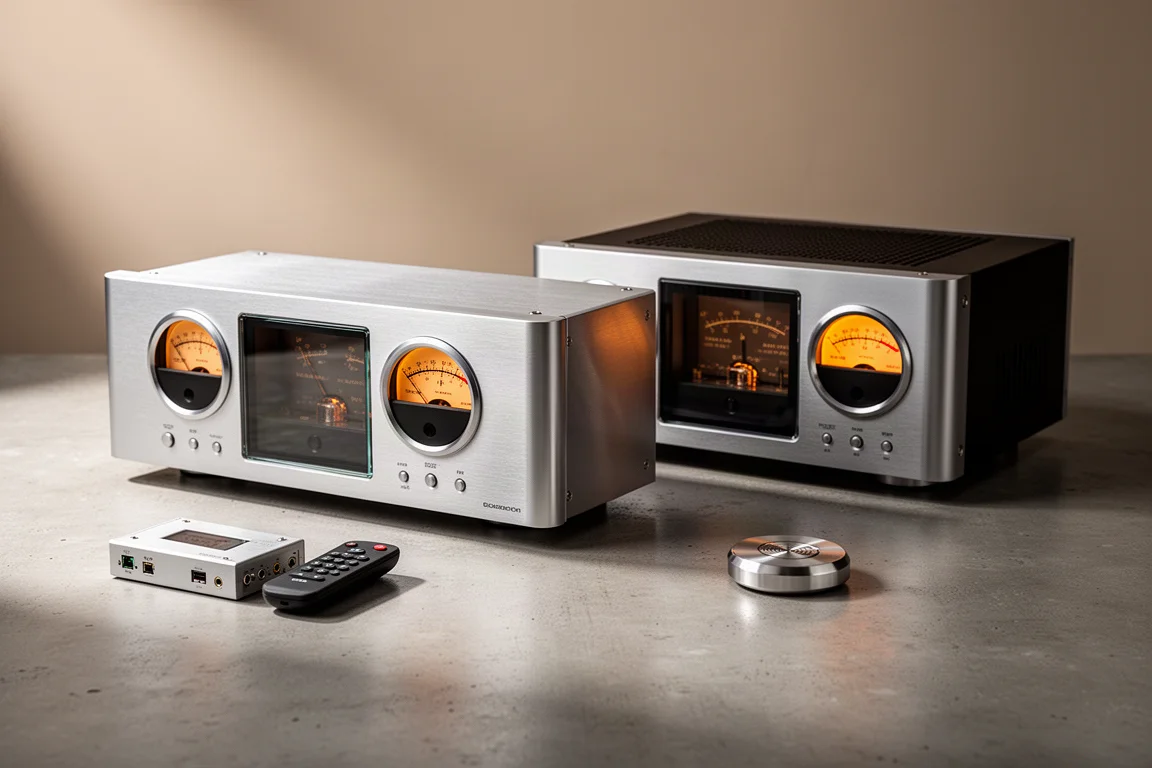
Advance Paris Nova Range Review: AI130, AI190 and Modular Upgrades
A practical look at the Advance Paris Nova range, including the AI130 and AI190 integrated amplifiers and the modular streaming, Bluetooth and remote accessories that expand them.