Triathlon Bikes
Felt IA 2.0 Review: Inside Felt's Redesigned Triathlon Platform
A detailed look at the Felt IA 2.0, from its slimmer frame and integrated hydration to the adjustable cockpit and the race-ready Dura-Ace and DT Swiss build.
Introduction
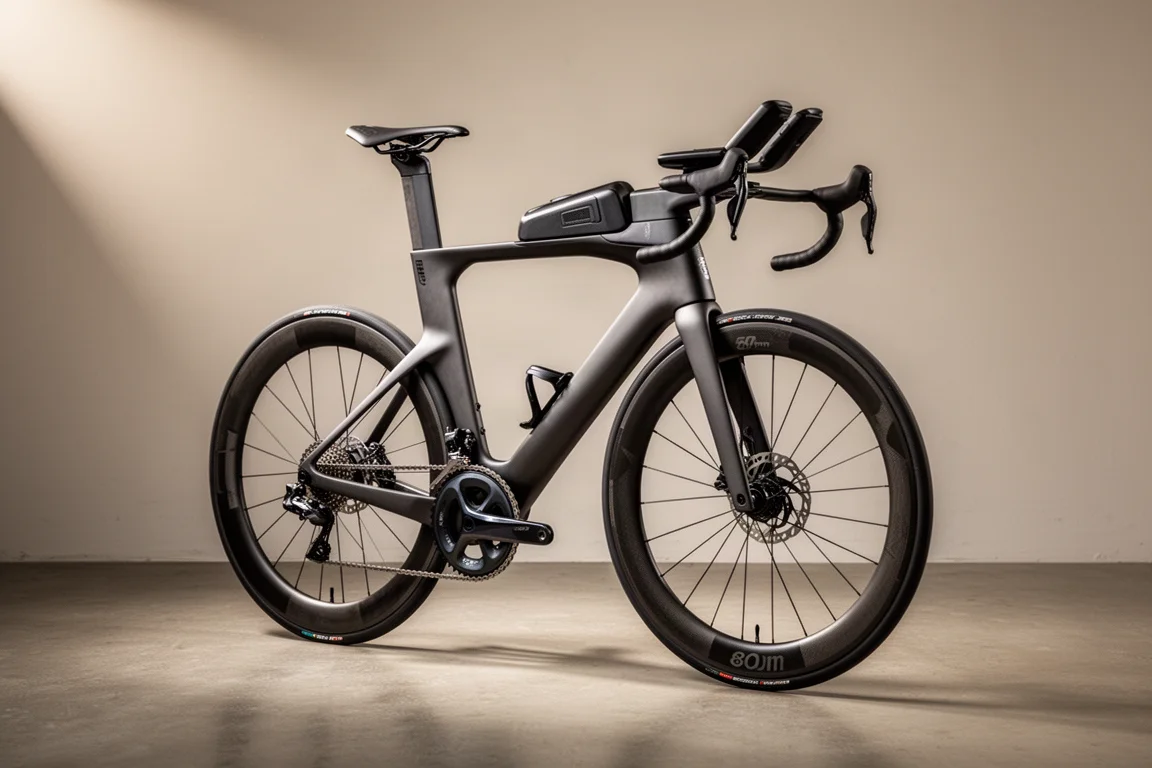
The Felt IA 2.0 is Felt’s newest long-course triathlon platform, and the redesign goes well beyond a fresh paint scheme. Compared with the previous generation, the down tube and seat post are noticeably slimmer, while the top tube and seat tube have grown to compensate. The result is a frame that carries far more of its function inside the structure itself.
That function includes a hydration system built into the top tube, a bento box integrated above it, and a storage system on the seat tube finished with a fin at the back. Up front, a fairing-style section smooths the area around the cockpit. Felt has indicated that the carbon mold and frame design shown are effectively the finished production shape, with only minor bolt and hardware changes still to be made, so the layout described here is representative of the final bike.
The build examined was set up in race-ready trim for multiple Iron Man world champion Daniela Ryf, which makes it a useful reference for how the platform is configured at the sharp end of the sport. Many of those choices are personal to the athlete, but the frame features underneath them are what buyers will actually receive.
Who This Bike Is For
This is a bike aimed squarely at long-course triathletes and time trial riders who value integrated storage and hydration over minimalist simplicity. Riders who race over 70.3 and full Ironman distances will get the most from the built-in bottle and box systems, because they reduce the amount of hardware bolted onto the frame and keep supplies within easy reach without leaving the aero position.
It also suits athletes who spend time refining position. The front end is designed to be adjusted rather than rebuilt, which matters for anyone who wants to experiment with extension angle or pad placement across a season.
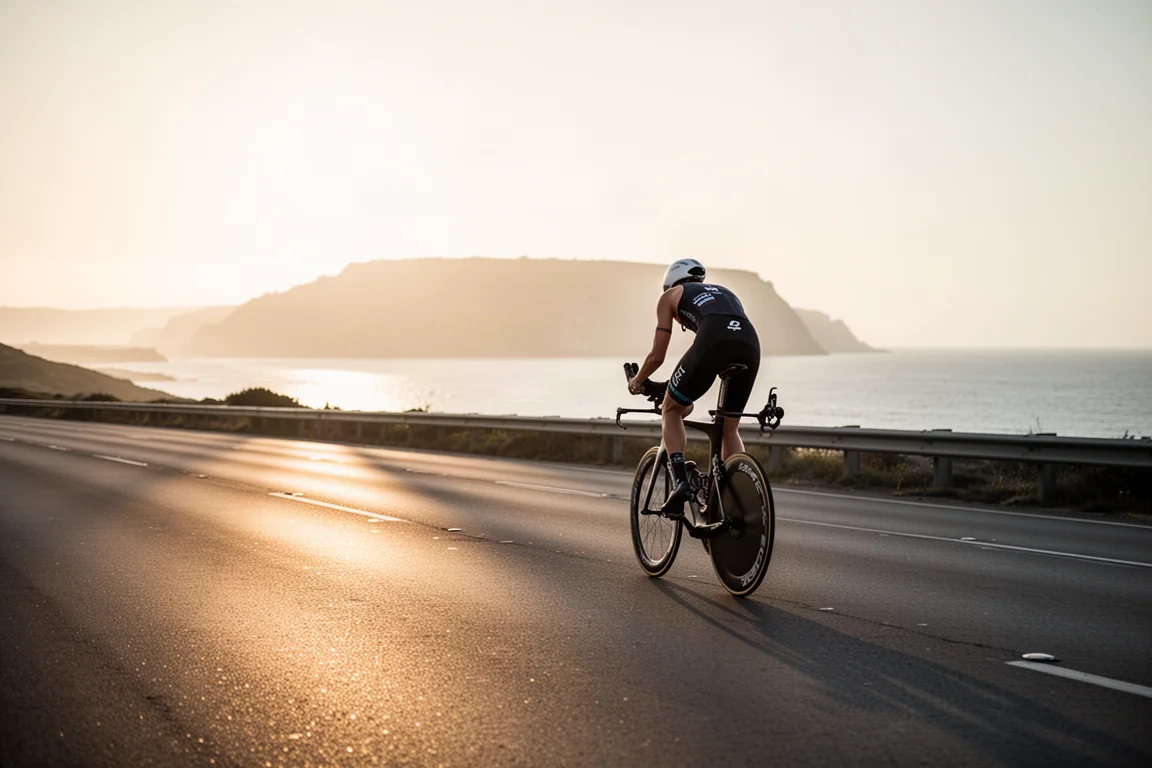
It is a less obvious fit for riders who prefer to travel light and race short distances, or for anyone who wants a simple bike that is easy to strip down and rebuild. The integrated approach rewards riders who will use the features, not those who will leave them empty.
Main Strengths
The clearest strength of the IA 2.0 is how deliberately the frame has been reworked. Slimmer tube profiles in key areas reduce frontal area, while the enlarged top tube and seat tube create the internal volume needed for the hydration and storage systems. It is a design that trades a little visual simplicity for genuine practicality.
Integrated Hydration and Storage
The hydration system slots into the top tube with a bento box built in above it. Because the bottle sits inside the frame rather than on top of it, the drinking straw stays within reach in the aero position, and the bottle can be refilled on the move through the opening at the top.
The whole assembly is also removable. Tabs on the system can be lifted, turned, and pulled to take the unit out of the frame, which makes cleaning and race-day preparation far more manageable than a permanently sealed design.
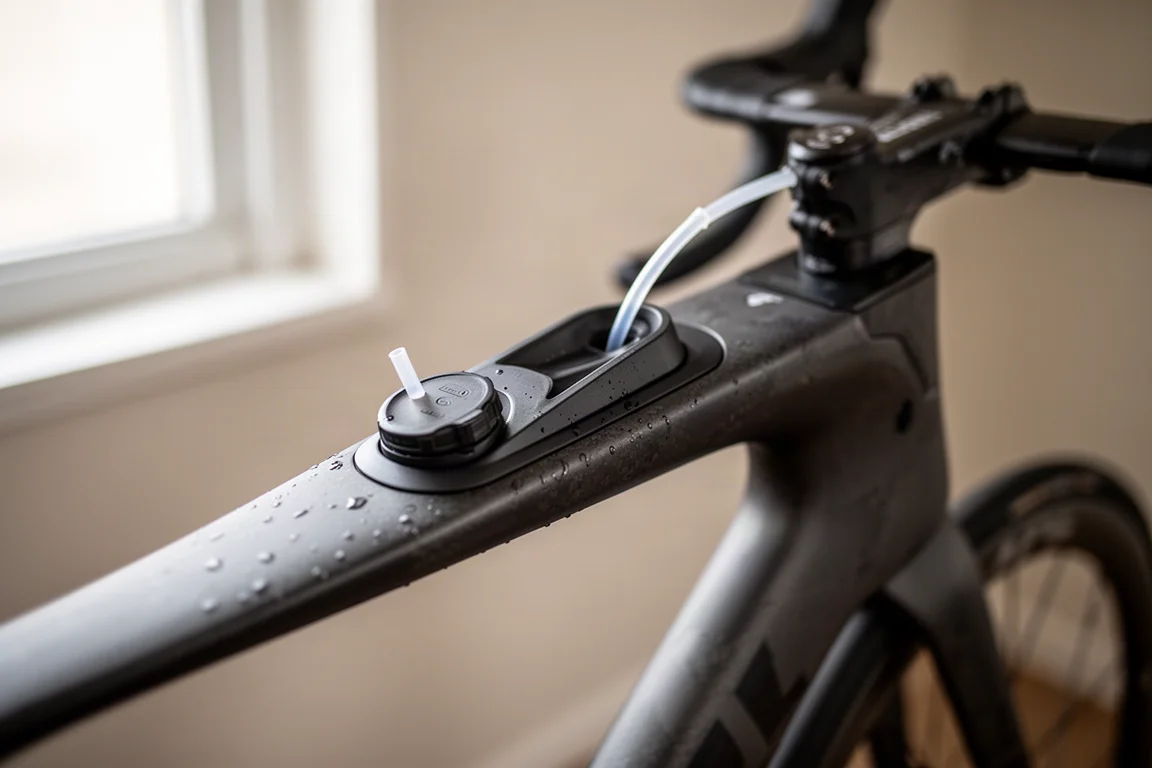
Behind that, a storage compartment sits on the seat tube and is finished with a fin at the rear, with a second storage area tucked below the saddle and seat post. The Di2 junction box is housed neatly inside the stem cover, so the front end stays clean and there is no loose wiring to manage.
Front-End Adjustability and Cockpit Setup
The base bar has a pronounced curve that drops down toward the bull horns, and bolts located underneath those horns suggest they can be removed and swapped for alternative shapes, possibly angled versions. That points to a cockpit designed to be reconfigured rather than replaced.
Extension adjustment is the more interesting part. Instead of adding angled shims to change the tilt of the aero bars, a single bolt can be released so the extensions rotate on a pivot, after which the assembly is clamped back down. It is a quick way to test position changes without sourcing extra parts.
In the race setup, small shims were fitted between the extensions and the elbow cups to bring the pads in line with the upper end of the bars, along with generously padded arm rests. Shifting is handled by Shimano Dura-Ace electronic groupset components: double buttons on each extension, a single shifter on each bull horn lever, and an additional set of shifters mounted underneath. Both of those lower sets control the rear derailleur, giving the rider the same shift available from several hand positions. Lizard Skins bar tape covers both the base bar and the extensions, and an XLab Torpedo bottle sits between the extensions.
A later iteration of the same setup showed a new colorway and custom extensions that support the arms from elbow to wrist, while still leaving room for a bottle between the arms. Notably, that build carried no bike computer and no visible power meter, reflecting a rider who rarely uses one.
Drivetrain, Wheels, and Race Build
The drivetrain uses Shimano Dura-Ace electronic shifting with 56/44 chainrings and an 11-28 cassette, paired with 172.5mm crank arms and Speedplay pedals. Those are big gears, chosen for a flat and fast course, and they suit a rider known for pushing large ratios.
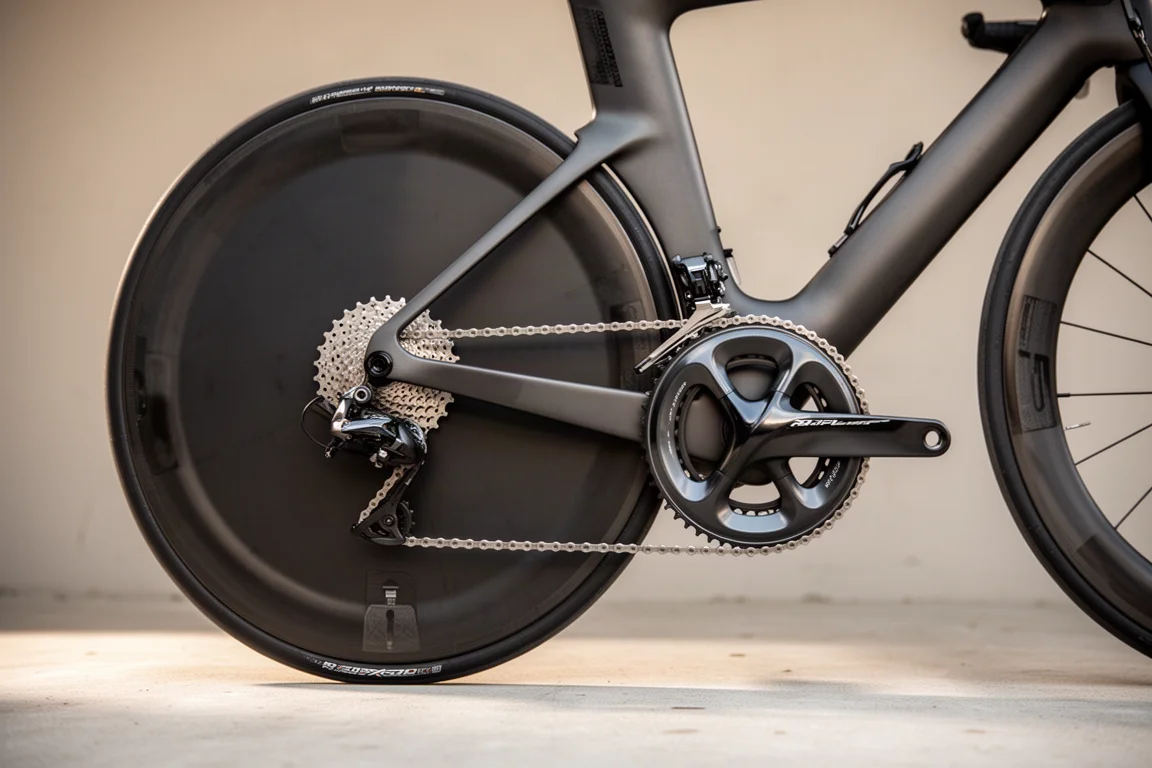
Wheels come from DT Swiss, a long-standing partner. The front is a DT Swiss ARC 1100 Dicut 80, an 80mm deep tubeless-ready rim set up tubeless, while the rear is a new DT Swiss disc wheel, also run tubeless. Both are fitted with Continental GP 5000 tires, 25mm at the front and 28mm at the rear.
At the back, a Selle Italia Turbo Matic Gel Flow saddle sits on the seat post, a long-running model that has clearly earned its place through years of use. An XLab Carbon Wing 400i carrier handles two bottles plus spares, making the whole setup look close to full Ironman specification. With bottles and spares already mounted, the complete bike weighed 10.84kg.
Things to Consider Before Buying
The integrated design is the main thing to weigh up. Hydration and storage systems built into the frame are convenient in a race, but they add parts that need cleaning, checking, and occasional removal, and they leave less room for improvisation if something needs to change at short notice.
The measured weight of 10.84kg should be read in context. That figure was taken with bottles and spares already fitted, so a stripped-down build will weigh less, and a fully loaded race setup will weigh more. It is a useful data point rather than a headline number.
Several details in the reference build are specific to that athlete rather than the platform. The 56/44 chainrings, 11-28 cassette, 172.5mm cranks, the shims under the elbow cups, the padded arm rests, the bar tape, and the XLab bottle and carrier are all setup choices. The custom extensions that support the forearm from elbow to wrist appear to be a bespoke item as well. Anyone buying the bike should expect to build their own position rather than inherit this one.
Finally, the pivot-based extension adjustment is elegant, but it rewards a rider who takes the time to understand the hardware. Owners who prefer set-and-forget cockpits may find the range of adjustment more than they need.
Buying Advice
Start with fit and position. The IA 2.0 offers a genuinely adjustable front end, and that adjustability is worth very little if the base frame size is wrong. If you are between sizes or unsure about your reach, the ability to rotate the extensions and swap the bull horns gives useful headroom, but it is not a substitute for correct sizing.
Next, decide honestly whether you will use the integrated hydration and storage. Riders covering 70.3 and Ironman distances will benefit from having fluid and nutrition inside the frame, with the bottle refillable on the move and the whole system removable for cleaning. Riders who race short or who travel constantly may prefer a simpler setup.
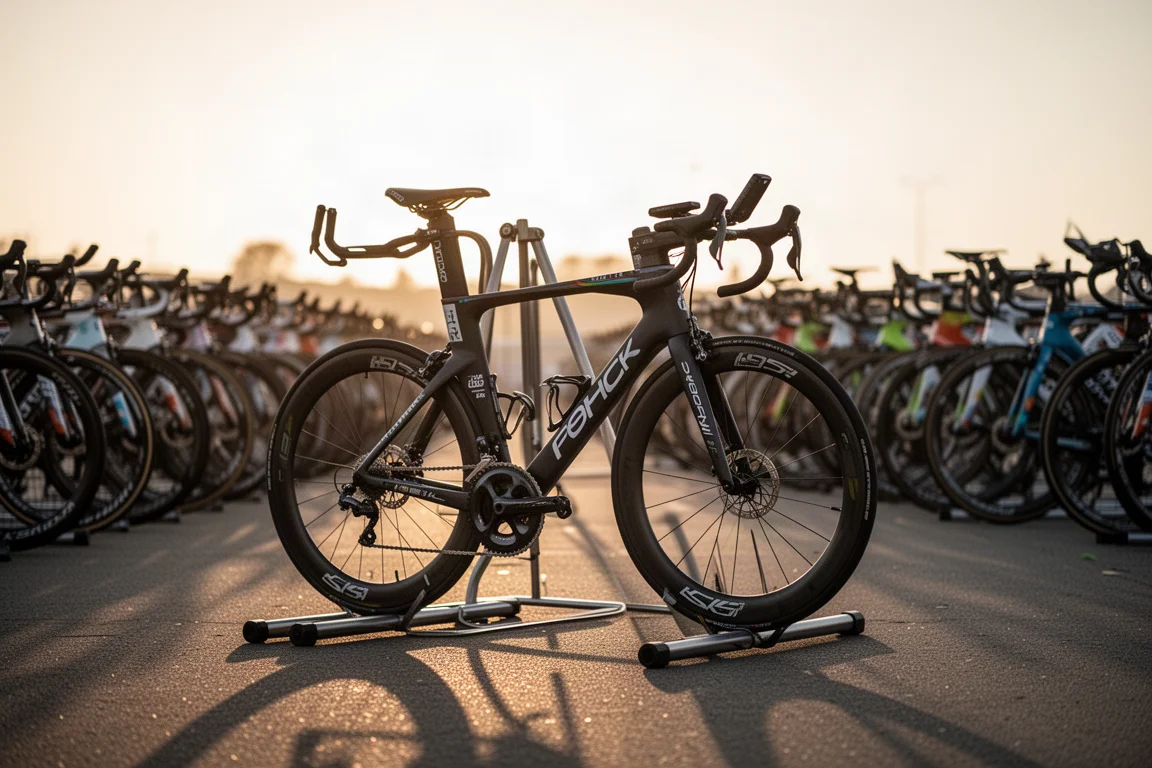
Think about gearing and wheels for your own terrain. The race build used 56/44 chainrings and an 11-28 cassette, which is a fast, flat-course specification, and an 80mm front wheel paired with a rear disc. Those choices suit certain courses and conditions far better than others, so match them to where you actually race.
Finally, confirm what comes as standard and what was athlete-specific. The frame, integrated hydration, bento box, seat tube storage, stem cover, and adjustable cockpit are the core platform. The shims, arm rests, bar tape, bottle, carrier, and custom extensions seen on the race build are additions to plan for separately.
Conclusion
The Felt IA 2.0 is a considered redesign rather than a cosmetic update. Slimmer down tube and seat post profiles, an enlarged top tube and seat tube that house hydration and storage, a finned storage compartment on the seat tube, and a front fairing all point to a platform built around long-course racing.
The cockpit is the standout feature. Removable bull horns, pivot-based extension adjustment, and multiple shift positions give riders real freedom to refine position over time, while the Dura-Ace drivetrain and DT Swiss wheels on the reference build show what the platform can look like at race pace.
For triathletes who will use the integrated systems and want a cockpit they can tune, the IA 2.0 makes a strong case. For riders who prefer minimal hardware and simple travel, the same features are worth thinking through carefully before committing.
Product link
View more details for Felt IA 2.0
This product is mentioned in the review. Check the specifications, options, and compatibility before buying.
View more details for Felt IA 2.0Further reading
Related Reviews
Triathlon Bikes
Best Triathlon Bikes 2026: Seven Race Bikes Compared
Seven triathlon bikes assessed on front-end adjustability, onboard hydration and storage, and value, from the most common bike in transition to lower-cost race options.
Triathlon Bikes
BMC Speedmachine Review: A Formula One-Informed Triathlon and TT Bike
The BMC Speedmachine pairs Red Bull Advanced Technologies aerodynamics with a redesigned frame, integrated hydration, and a 500 gram weight saving over BMC's previous triathlon platform.
Triathlon Bikes
Buying Speed: Canyon Speedmax CFR vs Triban RC 120 Road Test
A head-to-head 22 km test of a premium triathlon race bike, an affordable disc-brake road bike, and a disc wheel upgrade, with the numbers and the trade-offs that matter.