Water Treatment
Fastest Squeeze Water Filters: 7 Lightweight Backcountry Filters Compared
Seven popular hollow fiber squeeze filters timed side by side, from a 10 second liter to a 48 second liter, plus what actually drives the difference.
Introduction
A lightweight squeeze filter is one of the simplest ways to treat water in the backcountry: fill a reservoir bag, screw on the filter, and push water straight into a bottle. The catch is that flow rates vary enormously between models that all rely on the same hollow fiber membrane technology.
Seven of the most popular squeeze filters were timed side by side, each filtering one liter of water into a standard bottle while the bag was squeezed as hard as it would allow. The spread was dramatic. The quickest filter finished a liter in around ten seconds, while the slowest took nearly five times as long with its carbon element installed.
This guide covers the measured results, the physical reasons behind the gaps, and what those gaps mean for clogging over a season of use.
How These Filters Were Tested
Each filter was paired with a reservoir bag, filled with water, and squeezed at full pressure to push one liter into a bottle. The clock ran from the first squeeze to the last drop, so the numbers reflect real-world effort rather than laboratory flow benches.
All seven models use hollow fiber membrane filtration. Water is forced through bundles of fine tubes that allow water to pass while blocking bacteria and protozoa. Because the underlying filtration technology is essentially identical across the group, any difference in speed comes down to how each filter is built around that membrane.
Most filters were also run with a wide-mouth collapsible reservoir bag, which has a broad opening for scooping directly from a stream and standard threads at the top that fit nearly every filter in the group. Bag choice turned out to matter: pairing a filter with a bag that allows a firmer, more direct squeeze can shave seconds off every liter.
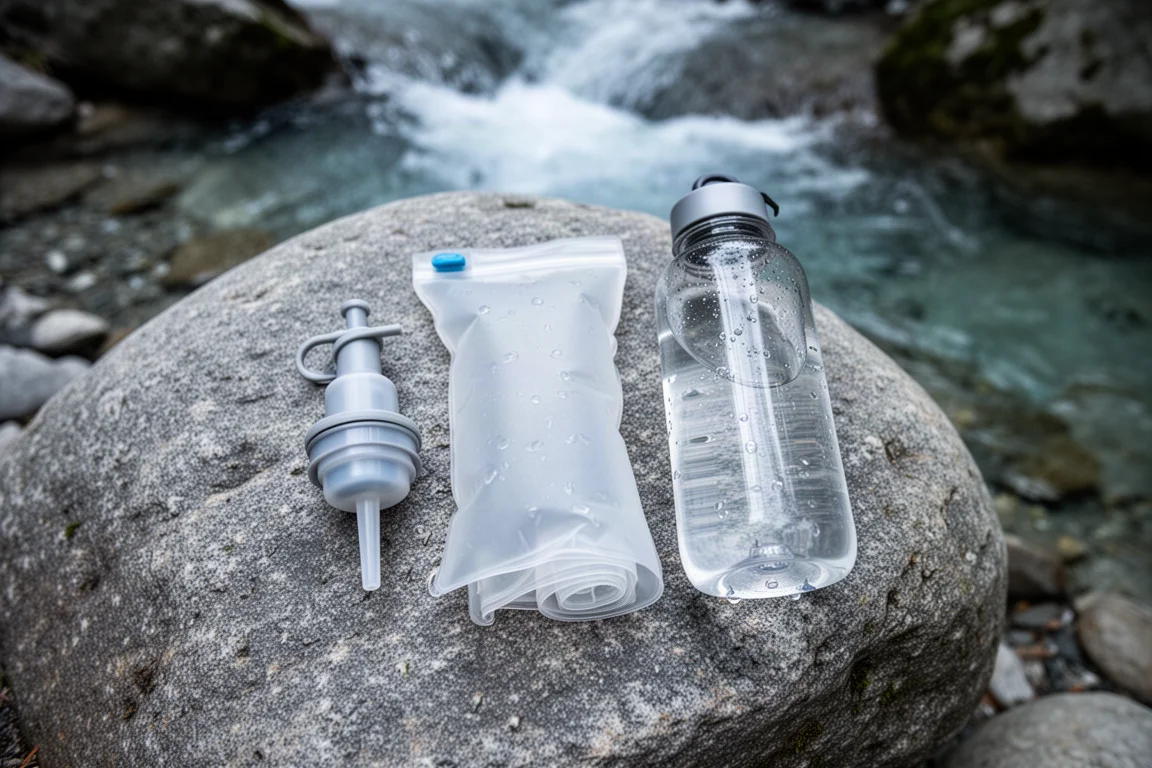
The measured results, from fastest to slowest:
- Katadyn BeFree: 12 seconds with its own soft flask, 10 seconds with a wide-mouth bag
- Platypus QuickDraw: 20 seconds with its own bag, 21 seconds with a wide-mouth bag
- Sawyer Squeeze: about 27 seconds
- HydroBlu VersaFlow: 34 seconds
- LifeStraw Flex: 48 seconds with the carbon element installed, 36 seconds without
- Sawyer Micro: clearly slower than the Squeeze
- Sawyer Mini: among the slowest in the group
Katadyn BeFree: The Fastest Filter in the Group
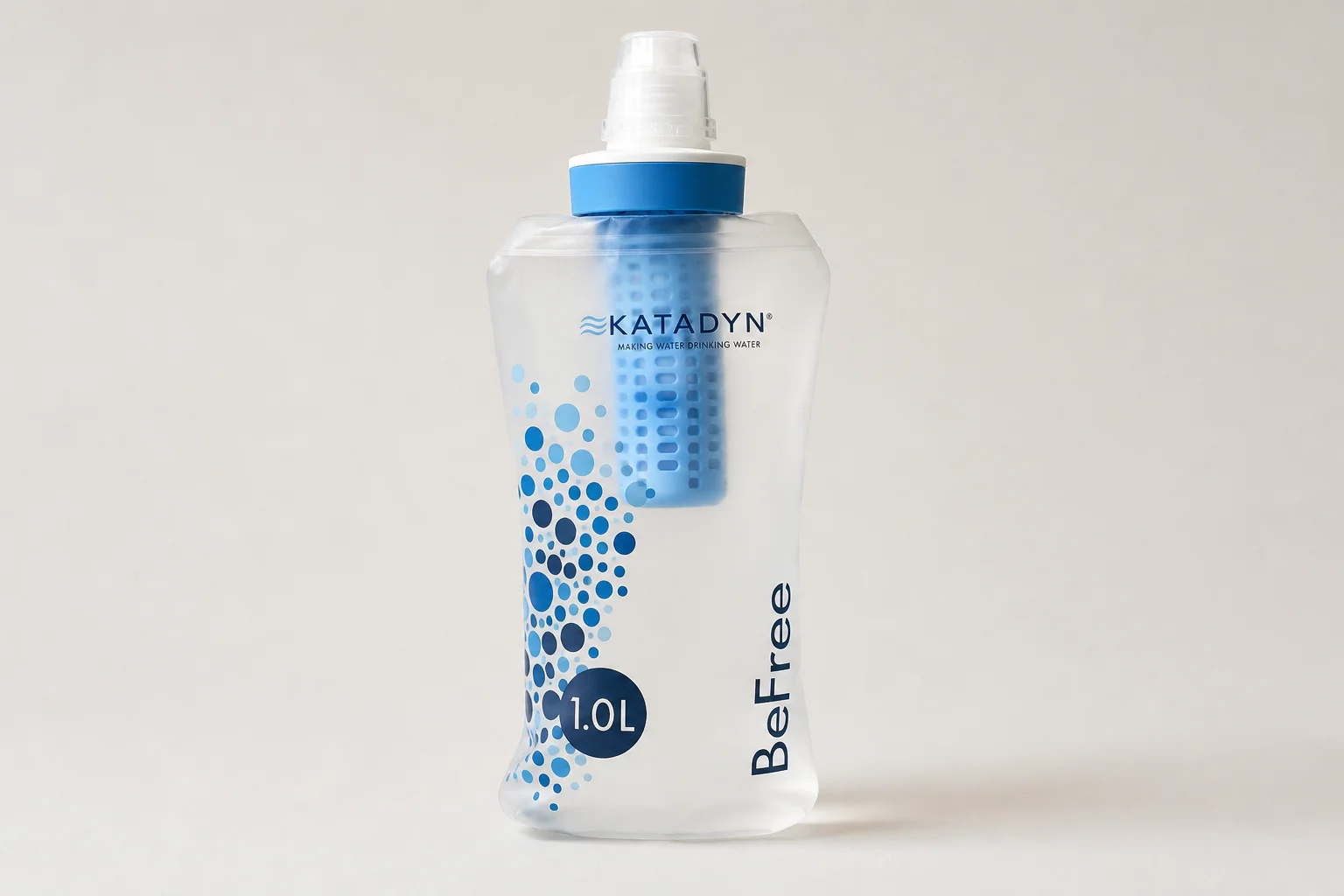
The BeFree won the test comfortably. It pushed a liter through in about 12 seconds using the soft flask it ships with, and about 10 seconds when paired with a wide-mouth collapsible bag that allows a firmer, more direct squeeze.
The reason appears to be exposure. Inside the BeFree, the hollow fiber bundle sits openly in the water path, so incoming water reaches the fibers almost immediately instead of being funneled through a narrow inlet first. It also has a long fiber bundle with plenty of surface area, which compounds the advantage.
Longevity is the trade-off worth knowing about. The BeFree has a reputation for clogging quickly with minimal use, and some users report flow dropping off after only a week or two on silty, sediment-heavy sources. Others have run the same filter for a year without clogging problems, which suggests water quality and handling habits matter as much as the filter itself.
Platypus QuickDraw: Fast Flow and Flexible Threading
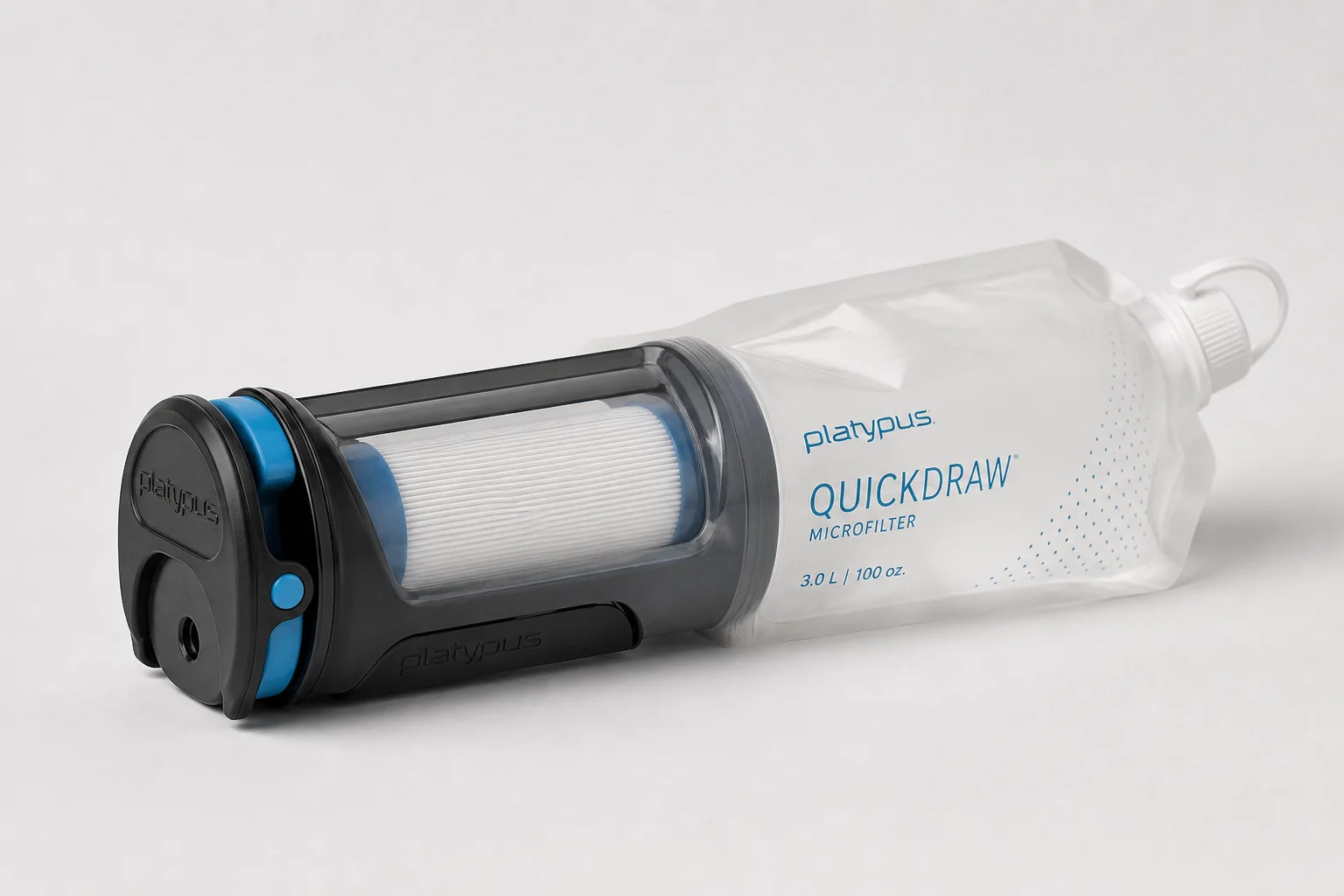
The QuickDraw finished second, filtering a liter in about 20 seconds with the bag it comes with and about 21 seconds with a wide-mouth bag. That near-identical result is useful information: the filter’s external threads fit its own wide-mouth reservoir, while standard threads on the other end accept a conventional bottle or a wide-mouth bag.
In practice, that means you can carry whichever reservoir you already own and expect the same performance. The fiber bundle is also more open to incoming water than the Sawyer Squeeze’s, which helps explain why it lands roughly seven seconds ahead of it despite using the same membrane technology.
The QuickDraw is a newer arrival than the Sawyer and Katadyn designs, so its long-term clogging record is shorter and less established.
Sawyer Squeeze: The Proven All-Rounder
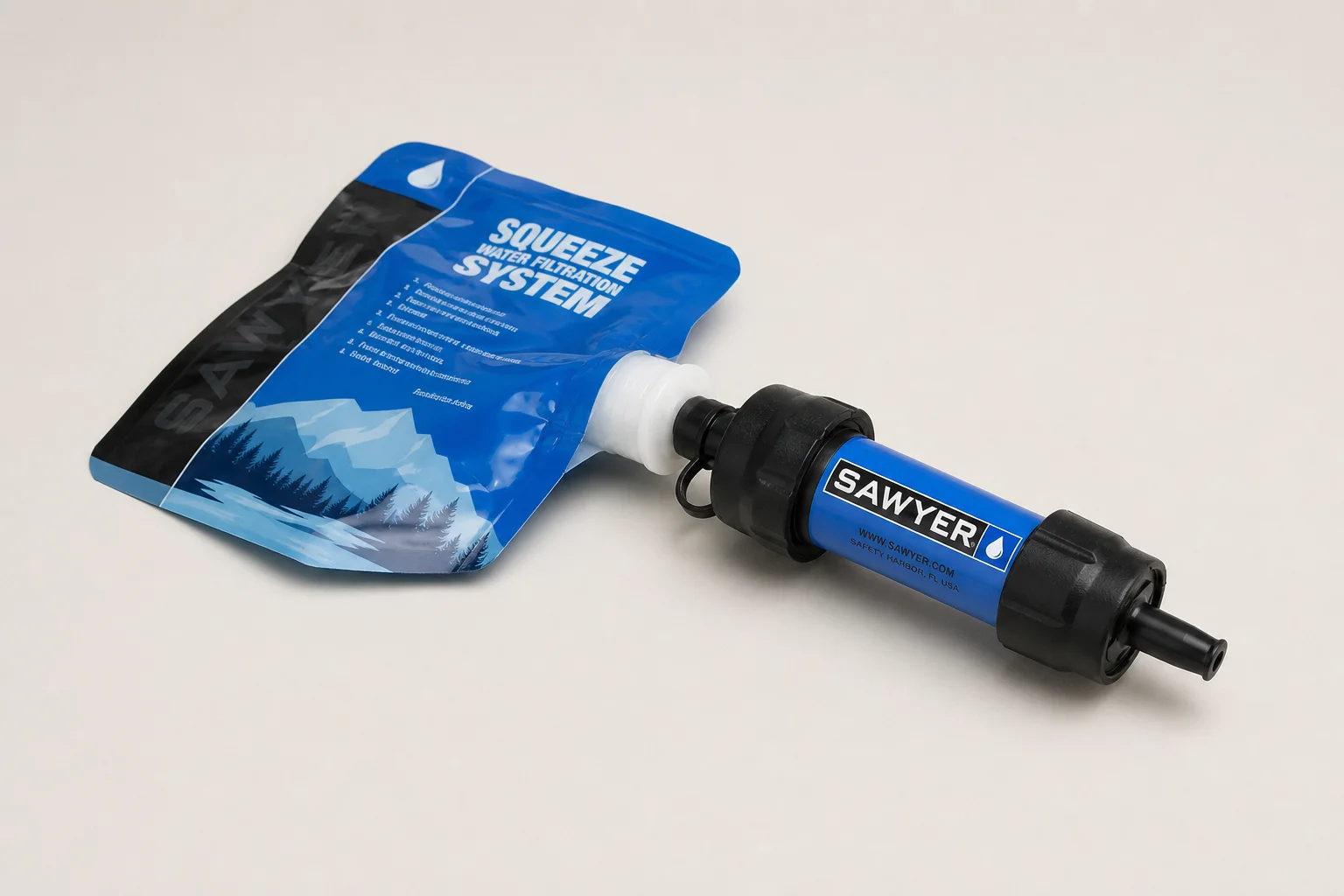
The Sawyer Squeeze landed third at about 27 seconds per liter. It is one of the most widely used filters on the market, and the timing explains why it remains a default recommendation: fast enough to be painless, without depending on a particular wide-mouth bag to hit its best numbers.
Its advantage over the smaller Sawyer Micro comes down to length. The Squeeze’s hollow fiber bundle runs nearly the full length of the housing, roughly double the Micro’s, which gives water far more surface area to pass through. The trade-off is a somewhat more constricted inlet, which slows water on its way to the fibers compared with the BeFree.
The membrane itself is rated at 0.1 micron, the same as the other Sawyer filters here.
If your priority is a filter you can buy with confidence and use across a range of bottles and bags, the Squeeze is the safest of the three fastest options. It simply asks for a few more seconds per liter than the leaders.
HydroBlu VersaFlow: Solid Mid-Pack Flow
The VersaFlow filtered a liter in about 34 seconds, landing in the middle of the group and well behind the three fastest filters.
It follows the same basic formula as the rest: a hollow fiber cartridge, a reservoir bag, and a squeeze. Nothing about the design gets in the way of flow, but nothing about it accelerates flow either, which is exactly what a mid-pack result looks like.
LifeStraw Flex: Carbon Filtration With a Flow Trade-Off
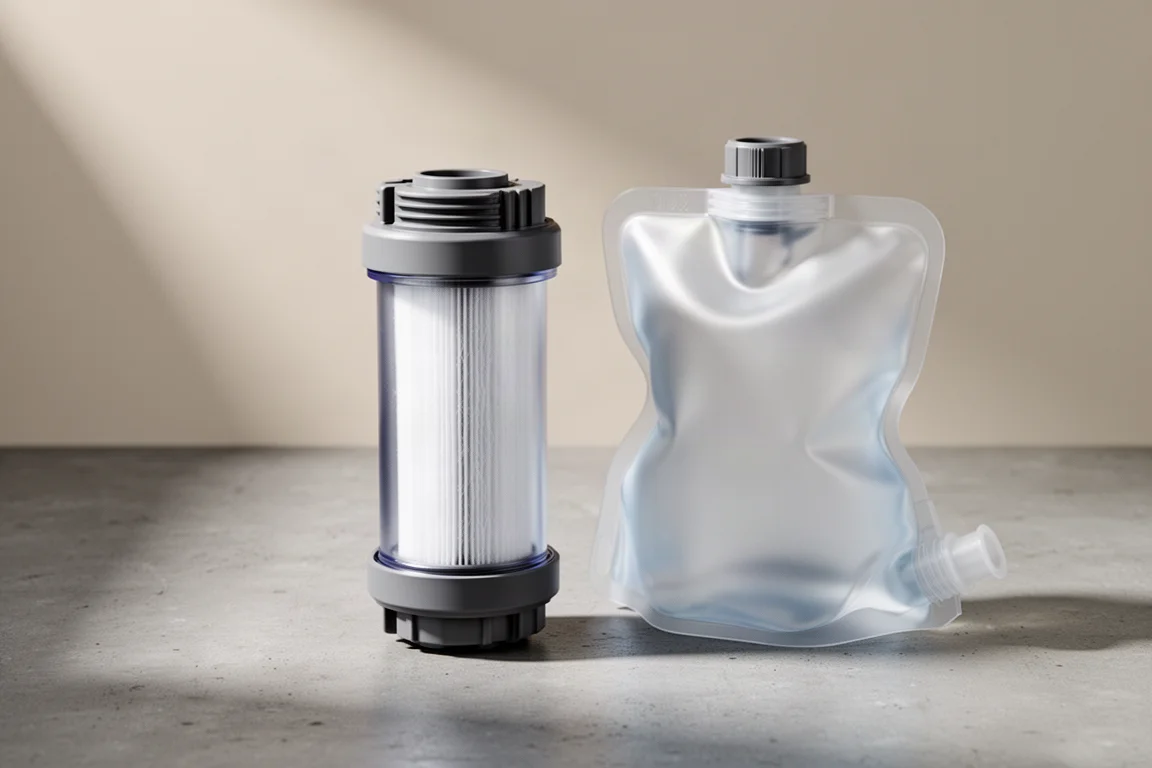
The Flex is the only filter here with a removable carbon element, and that element is the main story. With the carbon cartridge installed, a liter took about 48 seconds. With it removed, the same filter dropped to about 36 seconds.
The carbon element addresses taste rather than safety. It reduces odd flavors, tannins, and the discoloration you sometimes encounter in backcountry water. If your sources are clear and neutral-tasting, leaving the carbon out makes the Flex meaningfully quicker.
The Flex also uses a 0.2 micron membrane rather than the 0.1 micron rating of the Sawyer models, which may contribute to its position in the timing order.
Think of the Flex as a taste-focused filter rather than a speed-focused one. It is slower than every other filter tested with the carbon installed, and still slower than most without it.
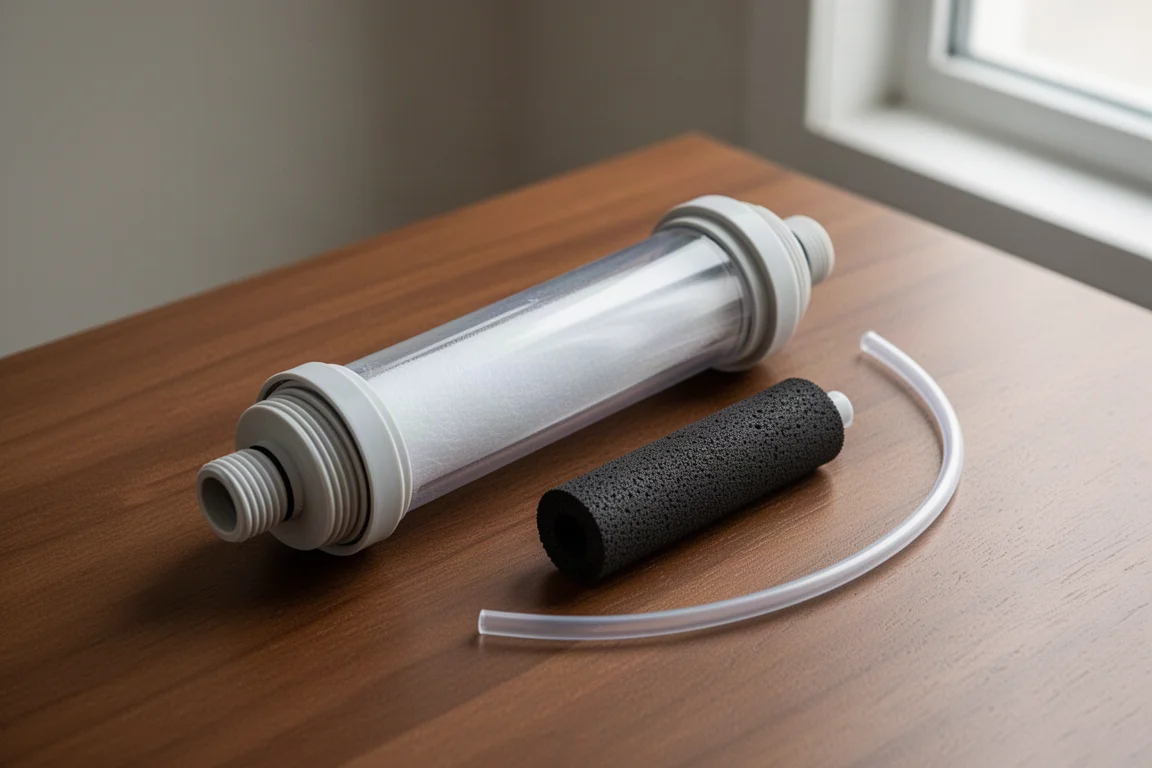
Sawyer Micro: Compact, Slower, and Clog-Prone
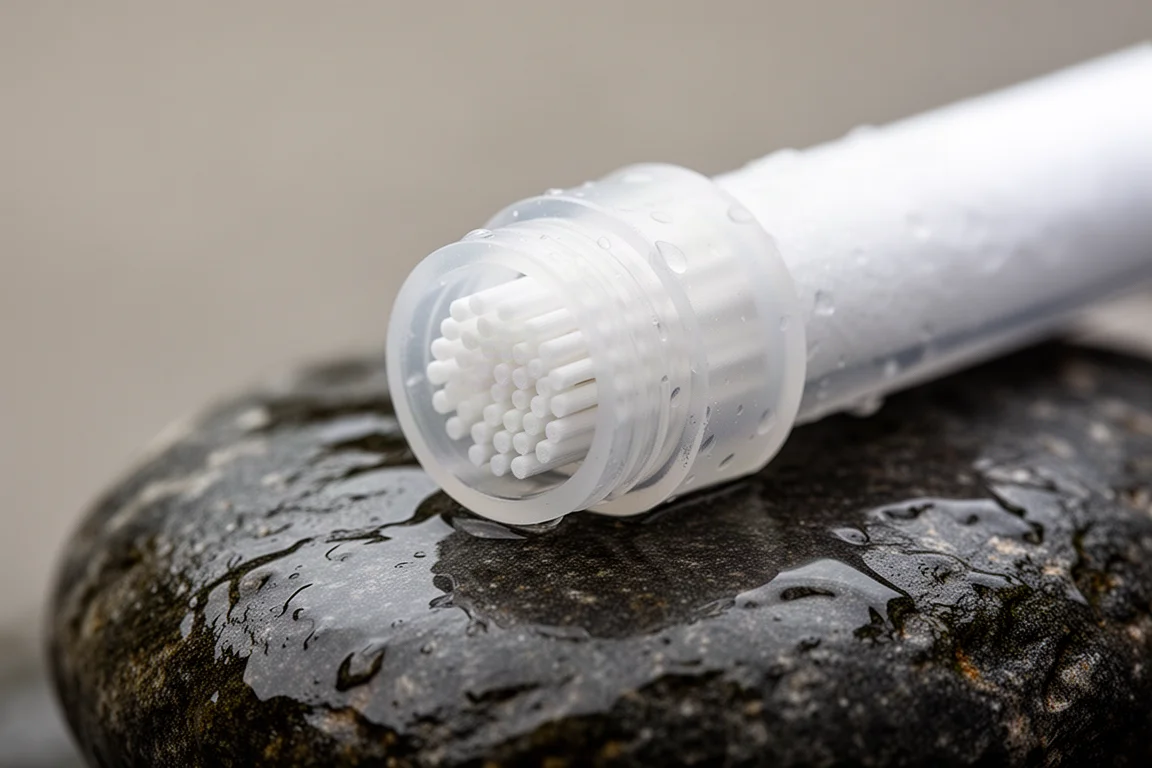
The Micro is the Squeeze’s smaller sibling, and it filtered noticeably slower in the same setup. The reason becomes visible once the housing is opened: the fiber bundle is short and tightly packed, so there is far less surface area for water to pass through.
That same shortage of surface area has a second consequence. The Micro has a reputation for clogging quickly with minimal use, because sediment in the water has less room to spread out before it starts blocking flow. Filters that are tightly bound internally tend to get overloaded by sediment faster than those with more open geometry.
For a small filter, it is a reasonable compromise. For anyone filtering silty water regularly, the Squeeze is the better of the two.
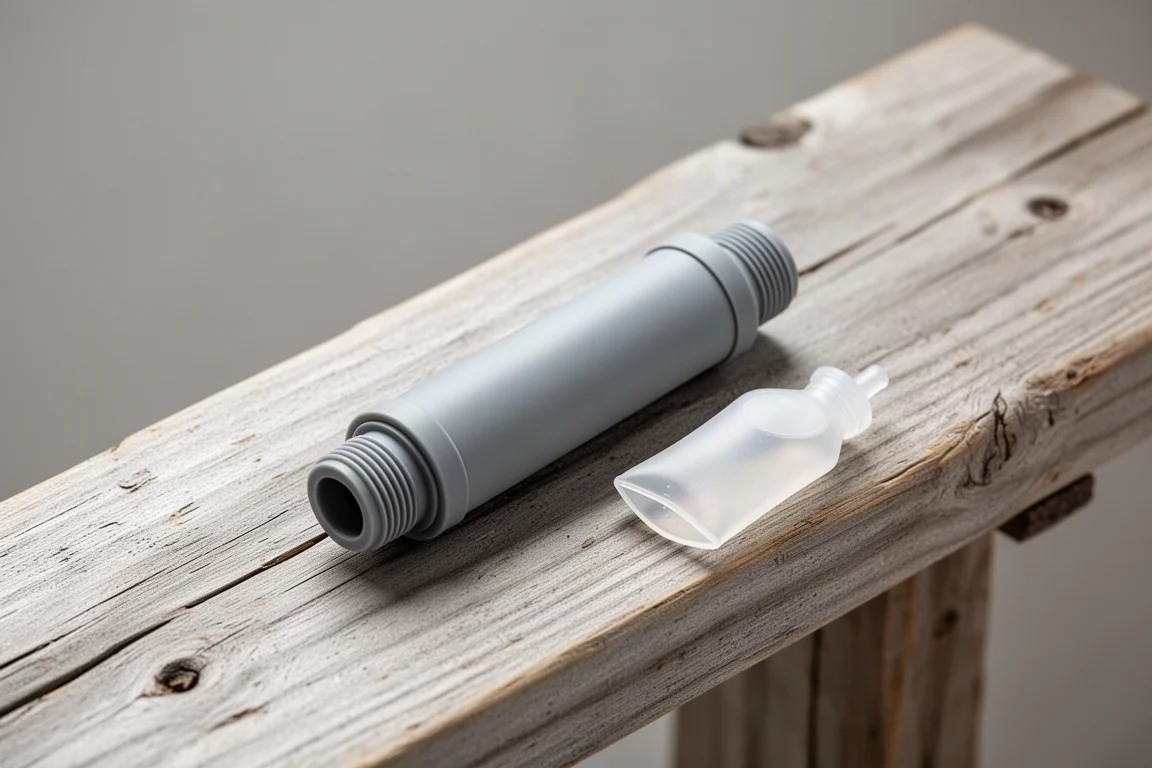
Sawyer Mini: Small and Restrictive
The Mini is the smallest filter in the group and among the slowest. Its narrow outlet constricts the water path to the fiber bundle more than any other design tested, and that restriction shows up directly in flow rate.
Like the other Sawyer filters, it uses a 0.1 micron hollow fiber membrane, so the difference between it and the Squeeze is packaging and internal geometry rather than filtration technology.
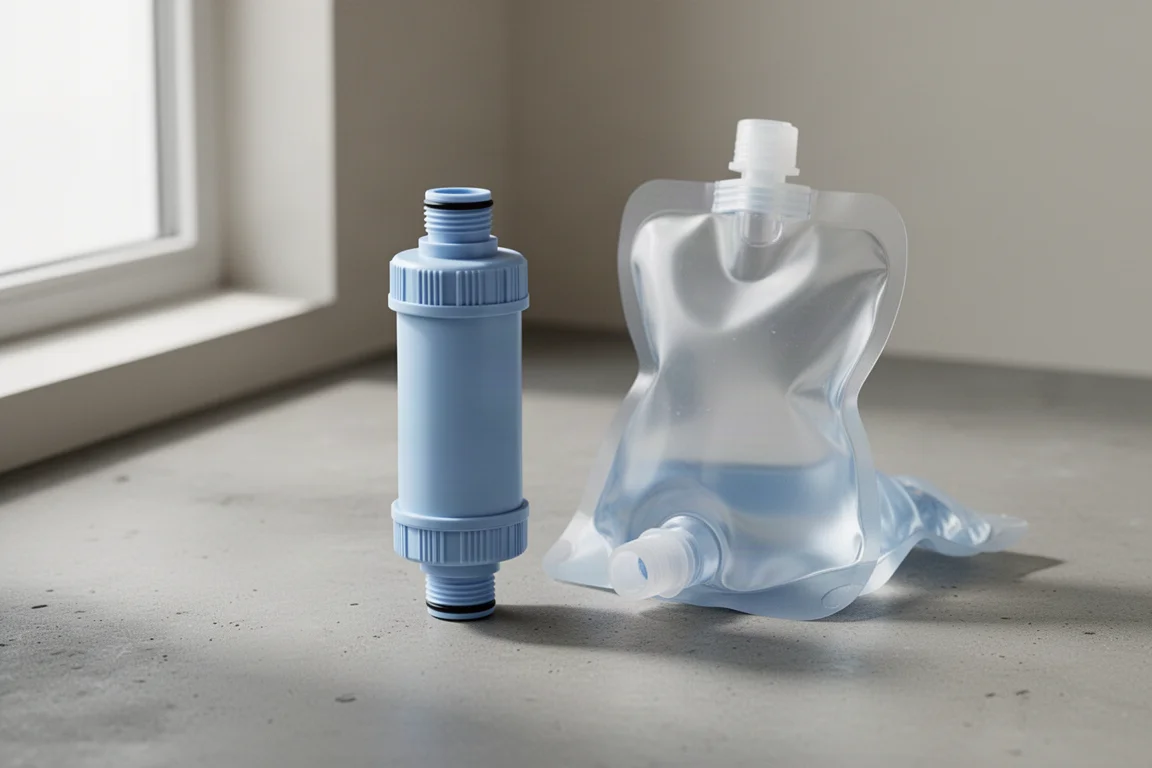
Why Flow Rates Differ Across Hollow Fiber Filters
With the same membrane technology in every filter, the timing gaps come down to how each design feeds water to the fibers and how much fiber surface area is available. Four factors stand out.
How quickly water reaches the fibers. The BeFree leaves its fiber bundle essentially open to any water flowing in and around it. Other designs funnel water through openings first, and those openings restrict flow to varying degrees. The QuickDraw is fairly open, the Squeeze is more constricted, and the Mini has an even narrower outlet that limits water reaching the tubes.
Tube diameter. Once water passes through the membrane and into the tubes, it exits at the end of the filter. If some tubes are larger in diameter than others, they should carry more flow. This one remains unconfirmed, since tube sizes are difficult to measure directly.
Number of tubes. More tubes generally means a wider bundle diameter at the folded end, and more surface area for water to pass through. A wider bundle should translate into more flow.
Tube length. The Squeeze’s filter material runs nearly the full length of its housing, while the Micro’s covers roughly half that distance. The longer bundle increases surface area substantially, and it is likely one of the main reasons the Squeeze outperforms the Micro by such a margin.
The BeFree appears to benefit from all four factors at once: long fibers, plenty of them, and an open path for water to reach them.
Clogging and Long-Term Flow
Filters slow down as sediment accumulates in the fiber bundle, and designs with the least surface area tend to lose flow first. The Micro and the BeFree both carry reputations for clogging after relatively little use, though in the BeFree’s case the pattern may reflect technique or unusually dirty water rather than a design flaw.
The Micro’s vulnerability is structural. With a short, tightly bound bundle, sediment has nowhere to spread out, so the filter overloads quickly once the water carries a lot of material. The BeFree has the opposite geometry but still has a reputation for early clogging, which is why water quality at the source matters so much when choosing between them.
Buying Advice: Which Squeeze Filter Fits Your Trip
Speed is only one variable, but it is the one you feel on every liter. The measured spread across these seven filters is wide enough to change how a long day on the trail feels.
If you want the fastest possible liter, the BeFree is the clear pick, provided you are filtering reasonably clean water and are prepared to manage sediment. If you want speed plus flexibility across bottles and bags, the QuickDraw is the strongest all-rounder. If you want a filter with a long track record and simple compatibility, the Sawyer Squeeze is the dependable choice at roughly 27 seconds per liter.
The Flex is the only option here that addresses taste, and its carbon element is worth the extra time if your water is tannin-stained or unpleasant to drink. The VersaFlow sits in the middle of the pack with no obvious penalty. The Micro and Mini make sense when pack size matters more than speed, and both are better suited to clean sources where sediment is less of a concern.
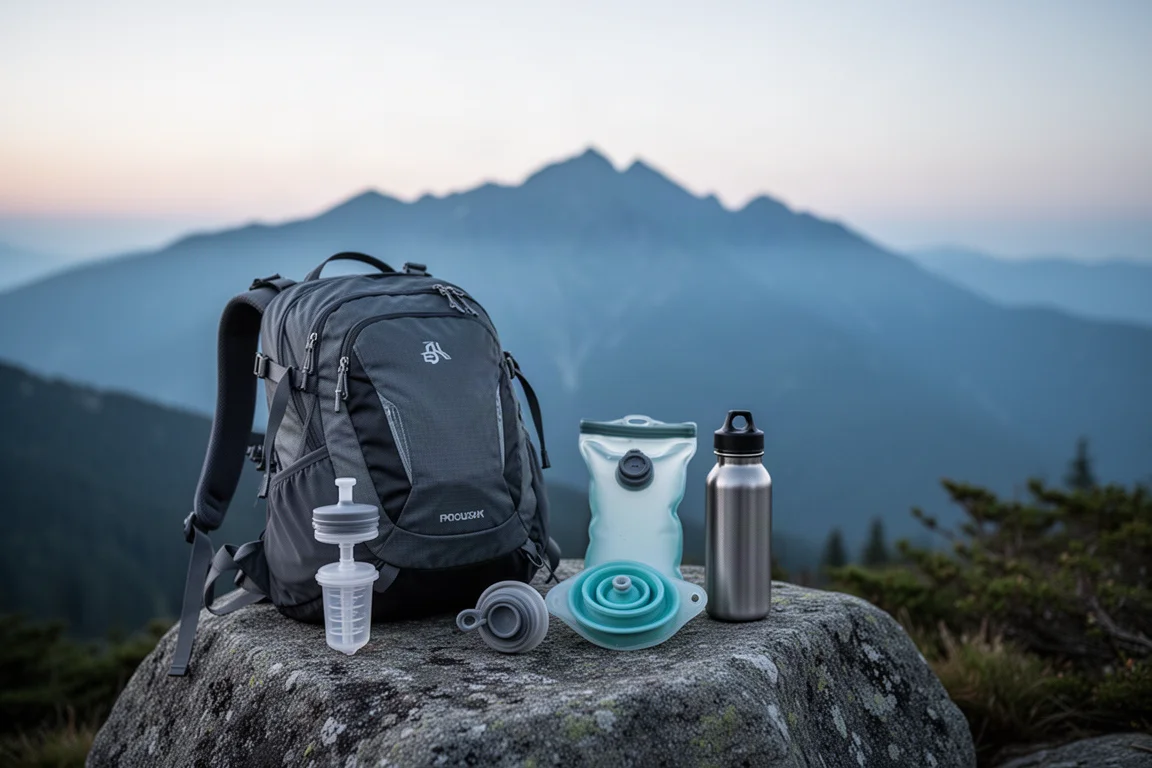
Whatever you choose, match the filter to the water you actually encounter. A fast filter on silty water can end up slower than a modest filter on clear water, because sediment is what ultimately determines how a hollow fiber filter performs over a season.
Conclusion
The measured spread across these seven filters is wide enough to matter: about 10 seconds per liter at the fast end and roughly 48 seconds at the slow end. The three worth shortlisting on speed alone are the Katadyn BeFree, the Platypus QuickDraw, and the Sawyer Squeeze, with the BeFree leading, the QuickDraw close behind, and the Squeeze offering the longest track record of the three.
Everything else trades flow for something else: carbon filtration in the LifeStraw Flex, a smaller body in the Sawyer Micro and Mini, and a straightforward mid-pack design in the HydroBlu VersaFlow. Pick the trade-off that matches your trips and your water sources, and the filter will do its job without slowing you down.
Further reading
Related Reviews

Backpacking Gear
Building a 10 lb Base Weight: An Ultralight Backpacking Gear List
A practical walkthrough of the ultralight pieces behind a 10 lb base weight, from a 765 g pack and a roomy one-person tent to a full camp chair and a dependable water filter.

Road Bikes
10 New Road Bikes Worth Watching: Aero, Titanium, Steel and Endurance Standouts
A practical roundup of 10 new road bikes, from aero flagships chasing single-watt gains to titanium, steel and endurance platforms built for real roads.
Bikepacking Gear
11 Bikepacking Essentials for Long-Distance Cycling
Eleven bikepacking essentials for long-distance cycling, from a steel gravel frame and a two-person tent to helmet lights, packable gloves, and a frame bag that puts weight in the right place.