Hi-Fi Speakers
Falcon Acoustics F50 Review: A UK-Made Stand-Mount With a ProAc-Inspired Heritage
A compact two-way stand-mount built in the UK, tuned for easy long-session listening, with an 8-ohm load and a sound that favours texture and imaging over sheer bass extension.
Introduction
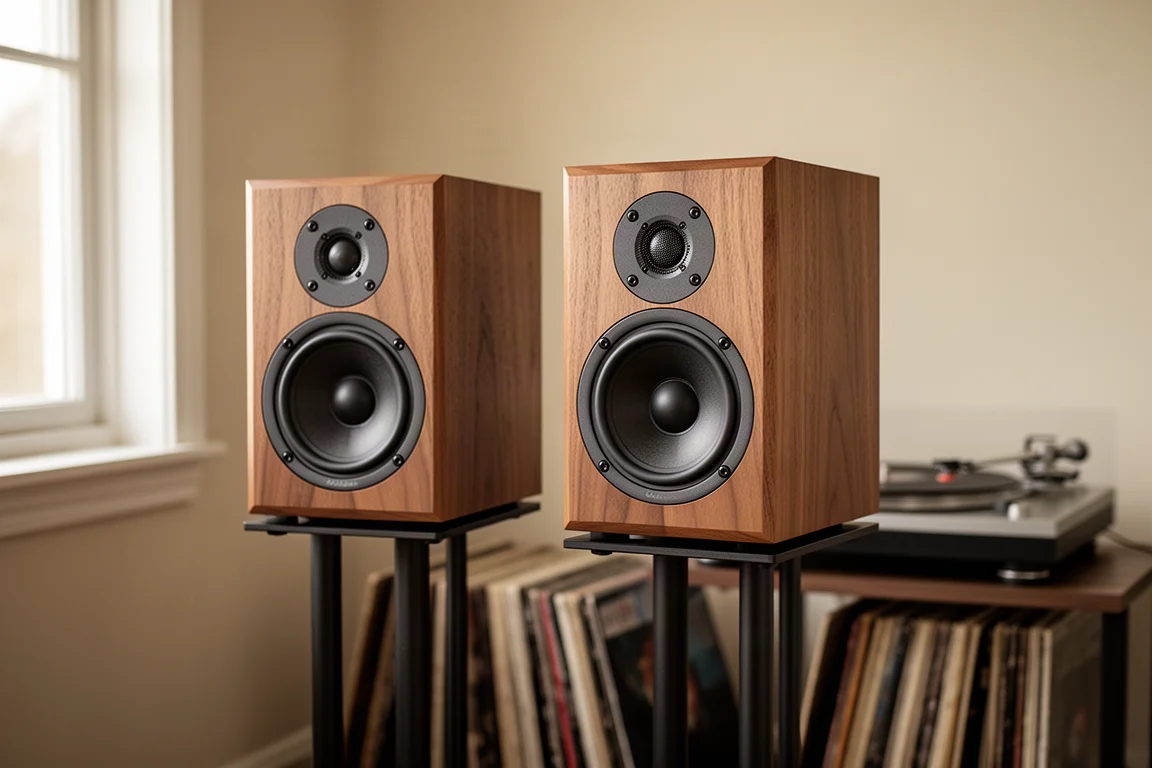
The Falcon Acoustics F50 is a two-way stand-mount loudspeaker designed and made in the United Kingdom, and it arrives with an unusual pedigree. It is a collaboration between Falcon Acoustics CEO Jerry Bloomfield and Graham Bridge, who spent 16 years at ProAc working alongside Stewart Tyler before Tyler passed away in 2021. The F50 is positioned as an homage to a legendary ProAc design, the Tablette 50.
That history sets expectations, but the F50 is not simply a reissue. It keeps the compact stand-mount format and the two-way configuration of the classic, while the sound is very much its own thing. Falcon Acoustics also builds the LS35A, so the company has a long track record with small monitors.
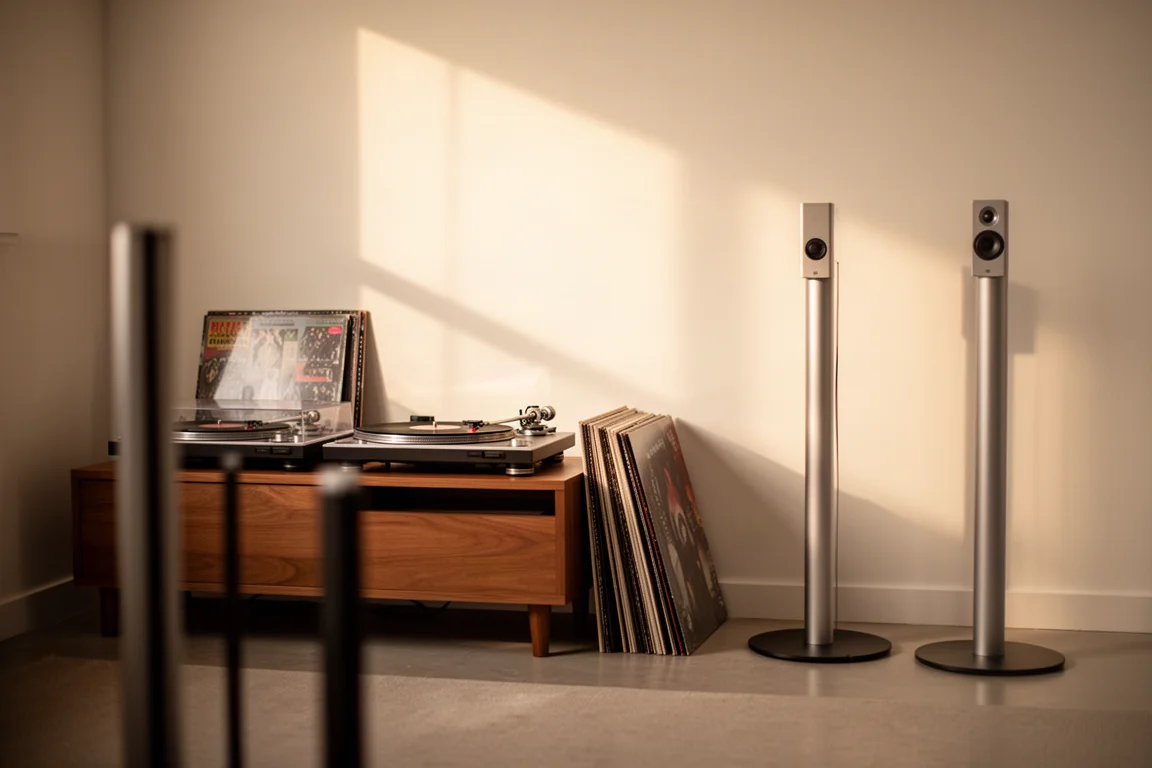
Small two-way speakers remain one of the most enduring formats in hi-fi, and the F50 shows why the formula keeps coming back. It stands only 11 inches tall, so it asks for very little floor space, a decent pair of stands, and a room that is smallish rather than very large.
Who the Falcon Acoustics F50 Is For
The F50 is aimed at listeners who value an easy, non-fatiguing presentation over sheer volume and bass slam. Acoustic music is the natural fit, though electric material is handled well too. If the goal is to crank rock music at a party, a small cabinet with a 5-inch woofer is not the right tool for that job.
It is also a strong candidate for anyone who listens late at night. Very small, low-sensitivity speakers often lose their composure at low volumes, and the F50 holds together better than most in that situation. Listeners who sit relatively close to their speakers and want the room to matter less will get the most from it.
Design, Drivers, and Specifications
The F50 is offered in a walnut finish only, and the veneer is genuinely striking when light catches it at the right angle. The woofer is a Falcon-produced B110, a 5-inch unit, and the tweeter is a 3/4-inch fabric dome with a round-back chamber. There are two bass ports and a set of high-quality binding posts.
The electrical specifications are worth noting. Impedance is 8 ohms, which is a welcome change from the 4-ohm loads that dominate current designs. Sensitivity is rated at 84 dB, which sits on the low side. The low-frequency figure is 60 Hz, and no cabinet of this size with a 5-inch driver will reach genuinely deep bass.
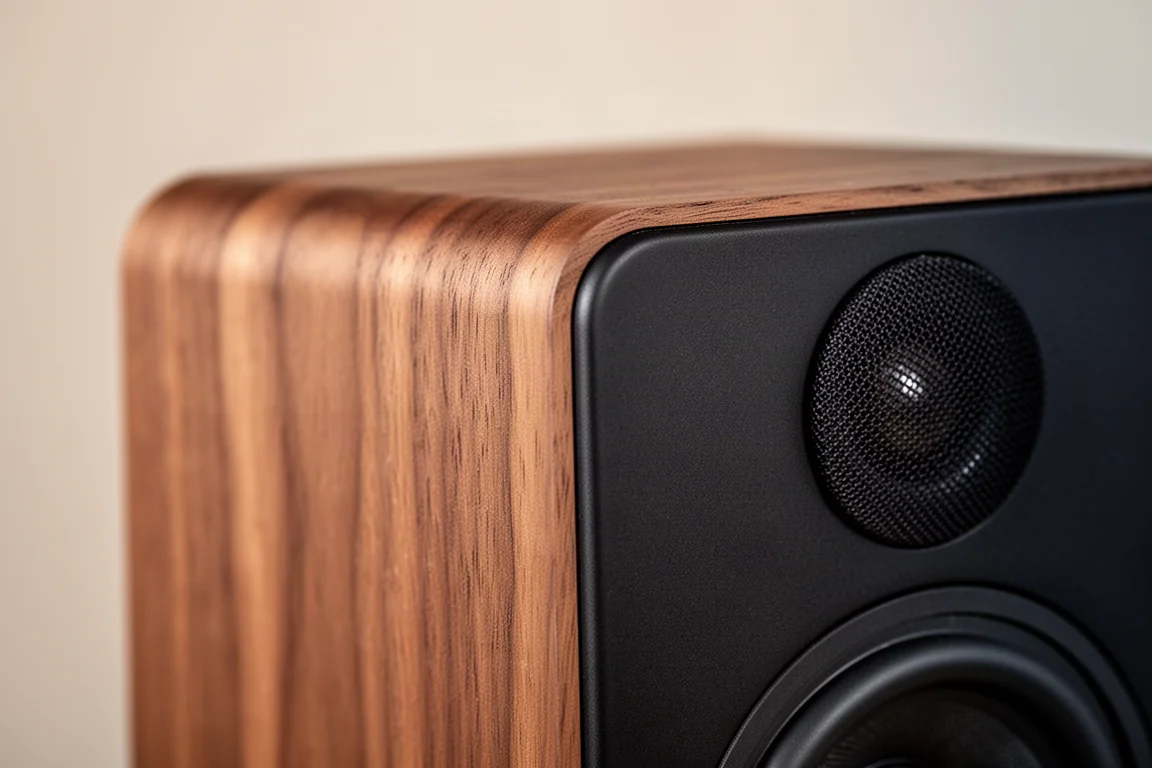
In practice those numbers describe a speaker that is friendly to a wide range of amplifiers because of its 8-ohm load, but one that still benefits from real power given the 84 dB rating. The 60 Hz specification looks modest on paper, and the listening experience is fuller than that single figure suggests.
Main Strengths: Sound Quality
The first thing that stands out is how easy the F50 is to live with. Long sessions, including three-hour stretches, pass without any sense of listening fatigue, and that is not something every small speaker manages.
The low end is detailed and clear. A subwoofer never felt necessary, even though the specification stops at 60 Hz. With a record built around a tight rhythm section, the bass line came through with enough weight and definition to drive the arrangement, and vocal performances were reproduced with a level of communication that is rare at this size.
Dynamics and imaging are the other highlights. On a chamber orchestra recording that is not dynamically compressed, individual instruments occupied their own space in the sound field, and the differences in level from one instrument to the next were handled cleanly. Percussion-heavy material came across with impact, texture, and transient snap rather than deep extension. Move close, around four feet, and the image grows while the room contributes less, which is typical of near-field listening.
Comparisons and System Matching
Two obvious reference points help place the F50. Against the KEF LS50 Meta, the differences are significant. The LS50 Meta sounds more midrange-forward, more immediate, and more in your face, while the F50 is more laid back. The F50’s high frequencies are not bright, and if anything they lean slightly rolled off, but it is not a dull speaker. It comes across as transparent without pushing that transparency forward, which is a large part of why it is so easy to listen to over long sessions.
The Sound Artist LS35A, a Chinese clone of the LS35A costing under $600 a pair, did not compare well. Despite similar cabinet and driver dimensions, it sounded withdrawn and reticent, like a smaller and less capable speaker on every count.
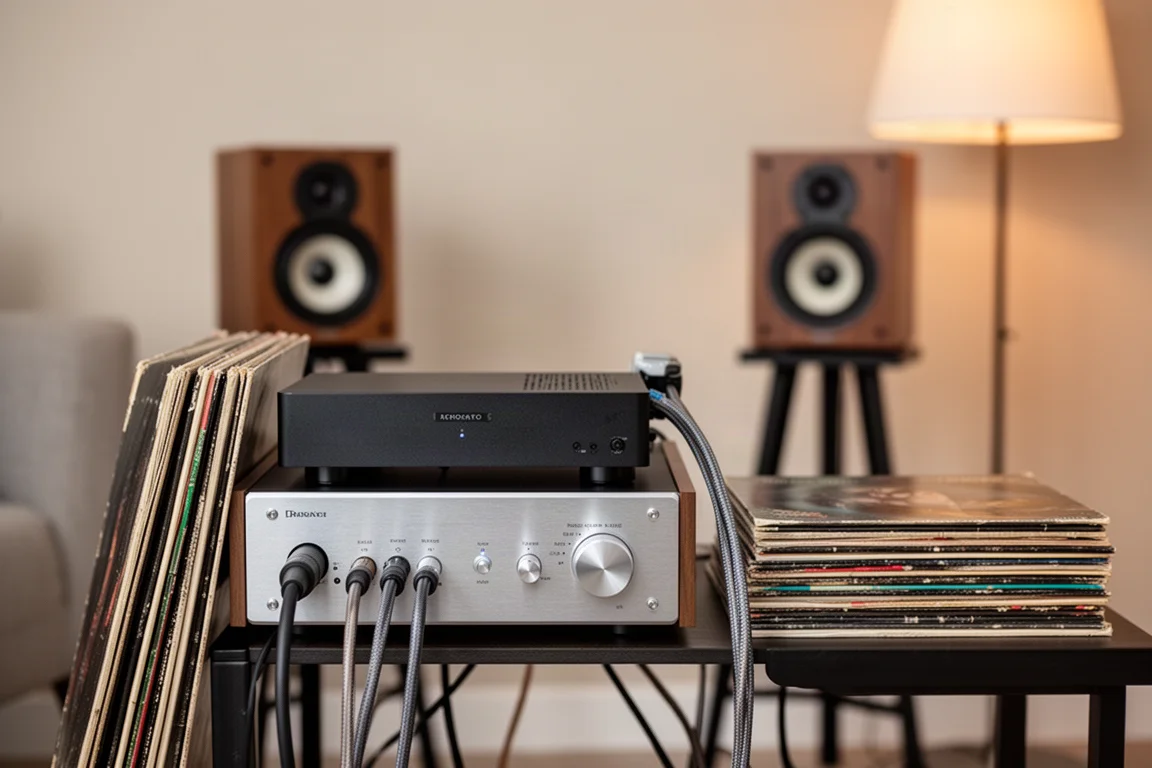
Amplifier matching is straightforward. A Quad preamplifier and power amplifier combination, an AER power amplifier, and a First Watt J2 Class A amplifier rated at roughly 20 watts per channel all produced good results. Solid, well-built stands matter a great deal with small speakers, and a 24-inch model was used here. The F50 also sounded better with its grilles off, not a dramatic difference but a worthwhile one, and it needed only a very small amount of toe-in.
Things to Consider Before Buying
The 84 dB sensitivity rating means the F50 rewards a capable amplifier rather than a low-powered afterthought. The 60 Hz low-frequency figure also sets honest expectations: this is a small speaker, and it will not deliver the weight and extension of a larger cabinet.
Finish choice is limited to walnut, so there is no alternative veneer or colour option to work around a room’s decor. Availability is another factor. For the initial production run, the F50 is sold in the United States only, direct through the distributor Fidelis.
Finally, budget for stands. A compact stand-mount of this type performs at its best on a rigid, correctly sized pair, and that is an additional cost to plan for.
Buying Advice
At launch the F50 was offered at an introductory price of $2,090 per pair, with that price holding through April 15, 2025. From April 16 the price rises by $400 to $2,490 per pair. Buyers who are already interested have a clear reason to decide before the increase rather than after it.
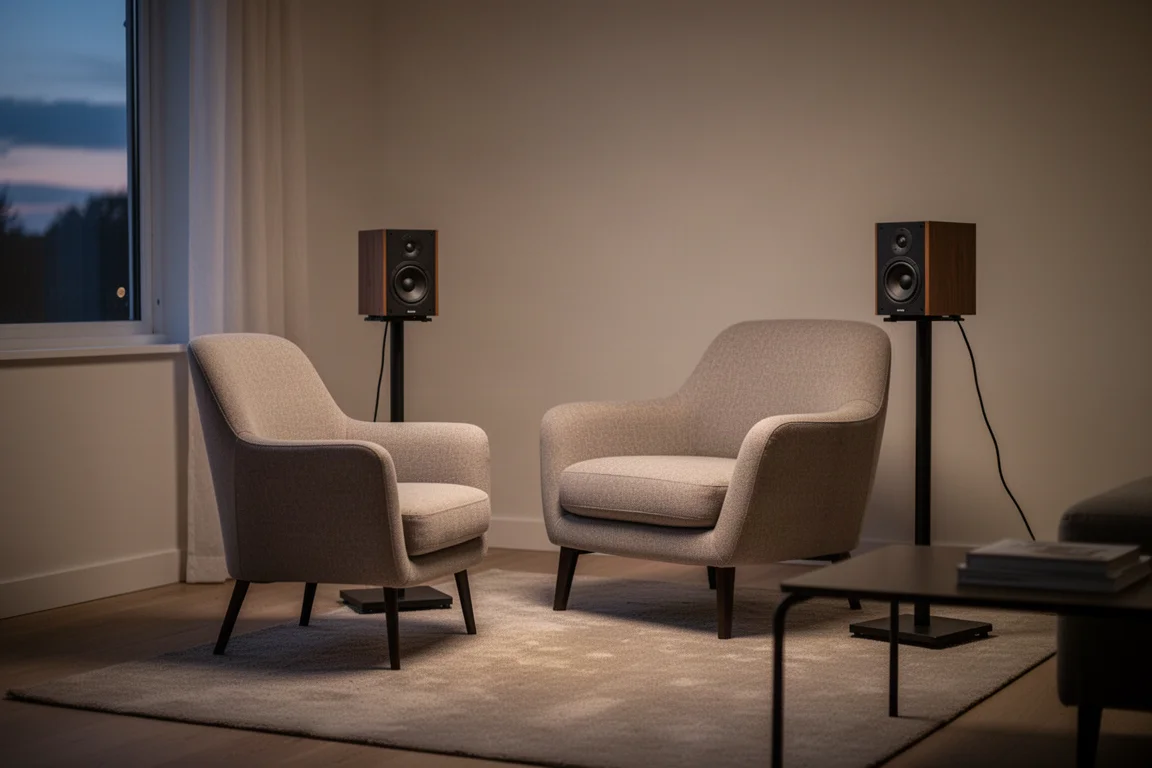
For anyone weighing the F50 against a more forward-sounding compact such as the LS50 Meta, the decision comes down to taste rather than outright superiority. If the priority is immediacy and a midrange-forward presentation, the alternative is the better match. If the priority is a relaxed, detailed, long-session sound in a smallish room, the F50 is the more convincing choice. Pair it with a solid amplifier, put it on proper 24-inch stands, and take the grilles off.
Conclusion
The Falcon Acoustics F50 looks like an ordinary small two-way stand-mount, and in many ways it is one. What sets it apart is the balance it strikes: an 8-ohm load, a walnut cabinet with real visual appeal, and a sound that prioritises texture, imaging, and easy long-term listening over volume and deep bass.
It is not the speaker for loud parties or for anyone chasing subwoofer-free bass extension from a 5-inch driver. For a listener with a modest room, an appetite for acoustic and vocal material, and a preference for detail over aggression, the F50 is an endearing and well-judged compact that becomes more likeable the longer it stays in the system.
Product link
View more details for Falcon Acoustics F50
This product is mentioned in the review. Check the specifications, options, and compatibility before buying.
View more details for Falcon Acoustics F50Further reading
Related Reviews
Hi-Fi Speakers
1723 THX Tower vs 1528 Bookshelf: Which Speaker Fits Your Room?
Two speakers at roughly the same price, built very differently. How the 1723 THX tower and the 1528 bookshelf compare on construction, bass, power needs, and sound.
Hi-Fi Speakers
Acoustic Energy AE 300 Review: Deep Bass From a Compact Standmount
A two-way standmount with real wood veneer, surprising low-end weight, and a warm, easygoing character. Here is what to know before buying.
Hi-Fi Speakers
Acoustic Energy AE1 40th Anniversary Review: A Modern Take on a British Classic
A compact standmount that revives a 1980s favorite with all-new parts, a warm mid-centric balance, and a price of £1,499 per pair.