Hi-Fi Amplifiers
Exposure 3510 Review: A Minimalist Integrated Amplifier Built Around Grip and Clarity
The Exposure 3510 pairs 110 watts of power and superb bass control with a forward tonal balance that rewards careful speaker matching.
Introduction
Exposure has been building amplifiers since 1974, and its design philosophy has stayed remarkably consistent: simple circuits, high-quality parts, and a fascia that does nothing more than it has to. The 3510 is the larger sibling of the 2510 integrated amplifier, and it arrives as a full-width unit with more power, more weight and a different voice from the models that came before it.
Priced at £2,250 in the UK, it sits in the territory where buyers expect both refinement and real drive. What makes the 3510 interesting is not simply the extra output but the way it uses it. Bass grip, clarity and rhythmic drive come first, and the tonal balance leans noticeably more forward than earlier Exposure designs.
This review covers what the 3510 does well, where it asks for care, and which systems it suits best.
Who the Exposure 3510 Is For
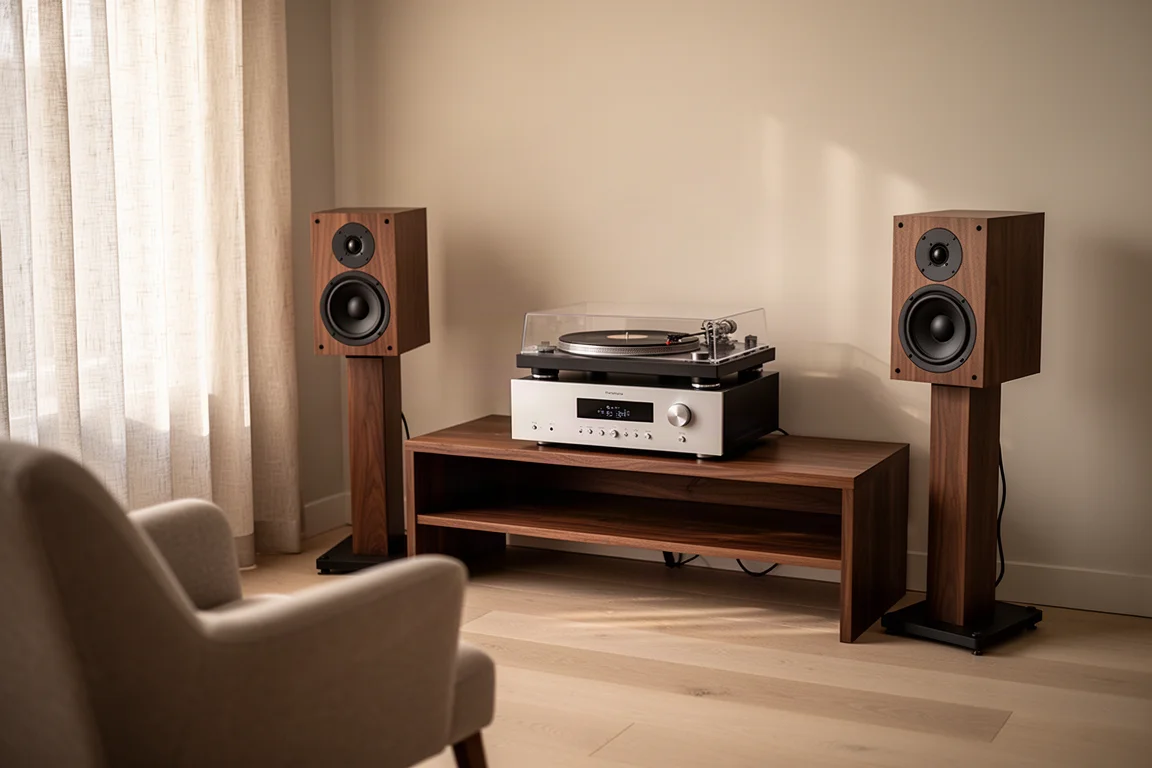
The 3510 is aimed at listeners who want a straightforward, full-width integrated amplifier with serious low-frequency control and a clean, dynamic midrange. It suits people building a simple two-channel system around a turntable or a streaming source who would rather choose their own DAC or phono stage than pay for one they will never use.
It is also a good fit for owners of speakers that lean warm. The amplifier’s forward presentation and its slight hardness in the upper midrange mean it is less comfortable with revealing speakers that already emphasise detail.
Design and Connections
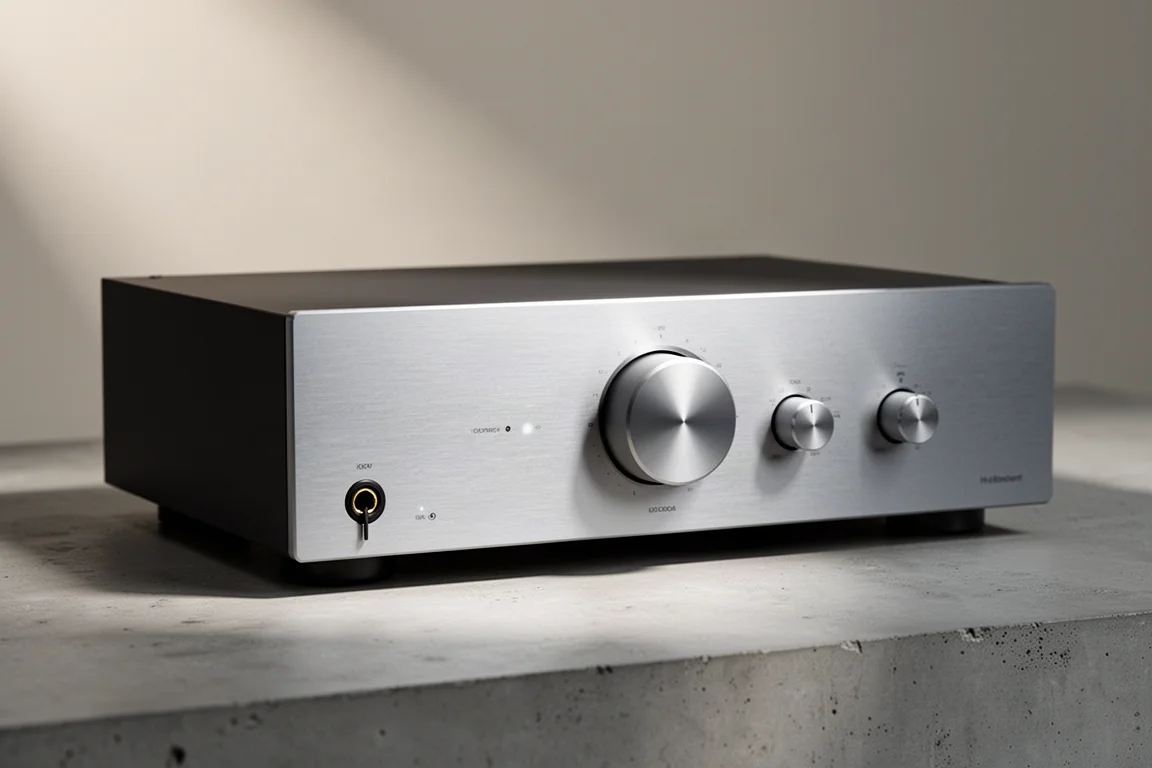
The 3510 is a full-width unit at 440mm wide and 115mm tall, and it weighs 12kg. Two finishes are available: a light finish Exposure calls titanium, and black, which has historically been the more popular option with Exposure amplifiers. The layout is minimal, with a power button, a rotary volume knob, an input selector and a 6.25mm headphone jack. The inlay around the input indicator LEDs is the one styling detail that divides opinion, since it looks borrowed from a different product category.
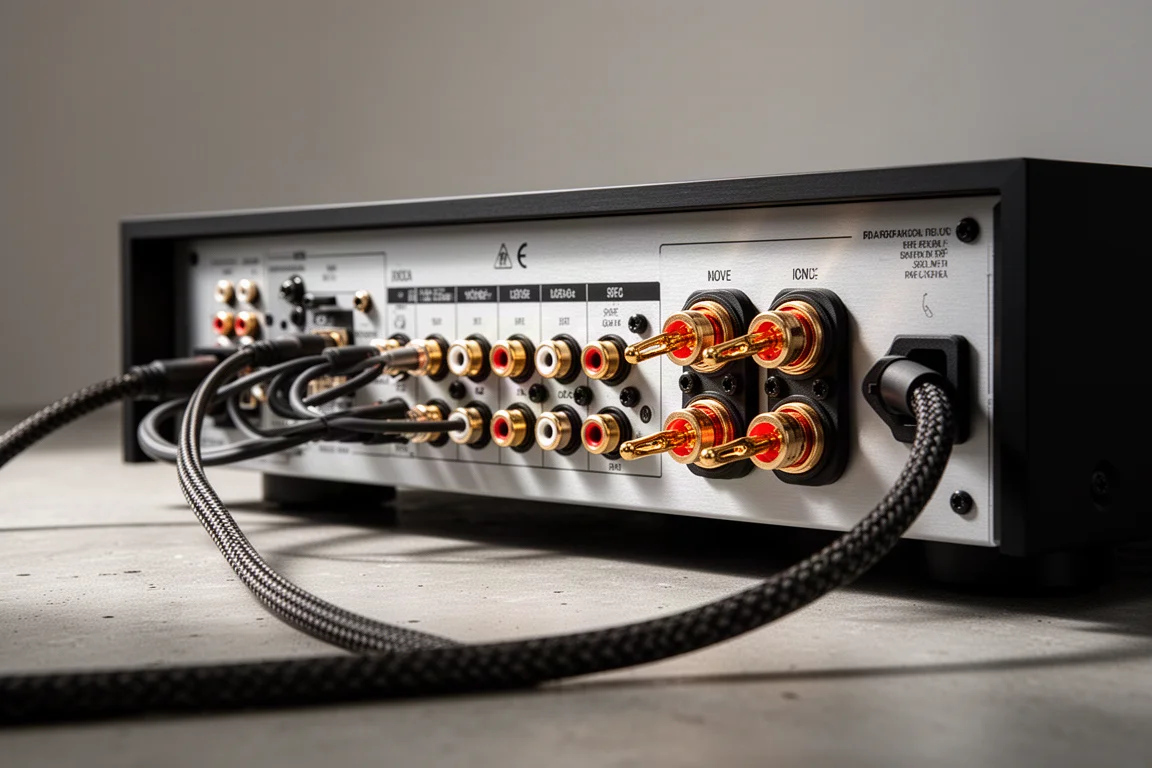
Connections run to six line-level RCA inputs, one of which doubles as the phono input when a phono card is fitted, plus a tape loop for recording devices, two sets of pre-outs and two sets of speaker terminals that accept banana plugs only. Exposure’s reasoning is that banana plugs sound better than the more common five-way binding posts.
Modularity is one of the strongest arguments for this amplifier. A DAC board can be specified for £410, and a moving magnet or moving coil phono card for £300 each. The result is that you pay only for the features you will actually use, and the cards can be added at the point of order.
Inside, the money has gone into the parts that affect sound. A large power transformer dominates the chassis, and it is the main reason the 3510 weighs twice as much as the 2510. A heatsink runs across the chassis, which also provides a little isolation between the sensitive electronics and the transformer. Eight bipolar junction transistors are mounted to that heatsink, double the number in the 2510, and output is rated at 110 watts into 8 ohms against 75 watts for the smaller model. Four 10,000 microfarad filter capacitors from a well-regarded Italian maker provide 20,000 microfarads per channel. Five Panasonic input switching relays handle source selection, an Alps Blue Velvet potentiometer handles volume, and the power amplifier section uses two identical modules for the left and right channels.
A remote control is supplied. It is functional but plastic, and it can also operate other Exposure components.
Main Strengths
Bass Grip and Control
Low frequencies are where the 3510 makes its strongest case. There is real grip and control here, and the amplifier packs a punch that translates directly into rhythmic drive. It also teases out variations in tone in the lower registers that many amplifiers at this price never reveal. Against the 2510 the difference is not subtle, and in this part of the range the 3510 competes with amplifiers costing considerably more.
Midrange Clarity and Tonality
Midrange clarity is superb, and even a very clean-sounding integrated amplifier at a similar price struggles to match it. The surprise is the tonality. This is not the traditional Exposure sound. The balance sits on the cooler, leaner side of neutral, closer to a slightly lean-sounding integrated than to the warmer, richer presentation of older Exposure models.
In practice that means vocals and lead instruments are projected a little further forward, and the presentation is more intimate than expansive. Soundstage width is reasonable, but depth is limited, because the midrange sits in line with the speakers rather than behind them. Some listeners will find that immediacy more engaging; others will miss the depth.
Treble and Refinement
The high frequencies are exemplary. Cymbals and hi-hats decay beautifully, with no sibilant edge. There is, however, a touch of hardness in the upper midrange, which makes the amplifier unforgiving of harsh recordings and of partnering equipment with the same characteristic.
Things to Consider Before Buying
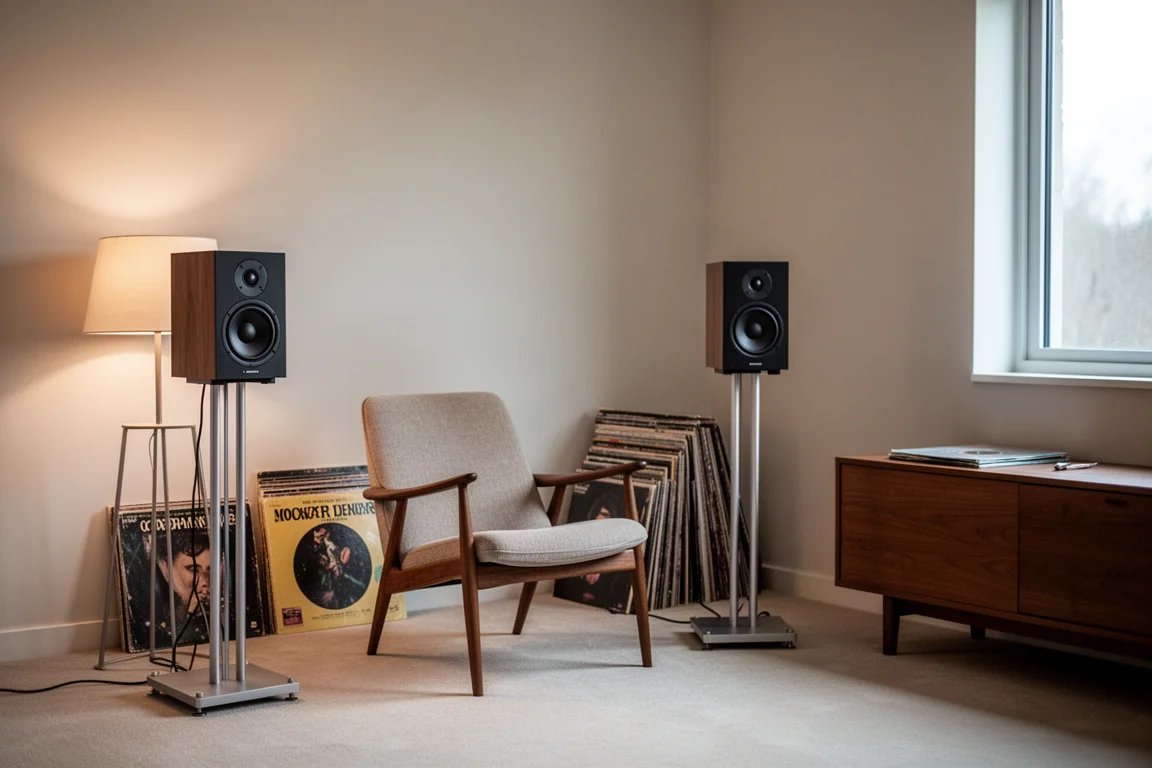
Speaker matching matters more than usual here. The 3510 worked with almost every speaker it was tried with, with one exception: a pair of particularly revealing monitors unearthed the tonal inaccuracies in the midrange. Warm-leaning speakers are the safer bet. A replica of the classic BBC LS3/5a, with its warm, rich midrange, was tempered slightly by the amplifier, which broadens the range of music that speaker can comfortably handle. A detailed, dynamic compact speaker with a slightly cool balance also worked well, with clarity and dynamics to the fore, and a small nearfield model sounded promising in early listening as well.
Other points to weigh: the DAC and phono stages are optional extras rather than standard equipment, the speaker terminals accept banana plugs only, and the remote control is plastic rather than premium. Buyers who want a built-in DAC or phono stage should factor the module prices into the total. Power is unlikely to be an issue, since 110 watts into 8 ohms will drive all but the most difficult speakers.
Buying Advice
The 3510 makes sense for listeners who prioritise bass control, dynamics and clarity, and who are happy with a forward tonal balance. Choose it if your speakers sit on the warm side of neutral and you value the option to add a phono stage or DAC only if you need one. If natural midrange neutrality and a deep soundstage are your priorities, this is a case where an audition with your own speakers is worth arranging before committing.
At £2,250 in the UK, with the DAC board at £410 and phono cards at £300, it is a considered purchase rather than an impulse one. The upside is an amplifier with power in reserve, a genuinely engaging presentation and a design philosophy that keeps the signal path simple.
Conclusion
The Exposure 3510 is not a reissue of the Exposure sound of twenty years ago, and that is worth knowing before you buy. What it offers instead is superb dynamics, excellent clarity, and low-frequency grip and control that stand out at this price, wrapped in a minimalist full-width chassis with optional modules that let you pay only for what you need. Match it with warm-leaning speakers and it is an easy amplifier to recommend.
Product link
View more details for Exposure 3510
This product is mentioned in the review. Check the specifications, options, and compatibility before buying.
View more details for Exposure 3510Further reading
Related Reviews
Hi-Fi Amplifiers
Accuphase E-280 Review: Entry-Level Accuphase With Flagship Attention to Detail
A close look at the Accuphase E-280 integrated amplifier, covering its champagne build, AAVA volume control, sound quality, and the speakers and sources that suit it best.
Hi-Fi Amplifiers
Advance Paris A10 Classic vs Yamaha A-S301: Two Integrated Amplifiers Compared
A practical comparison of a $350 integrated amplifier and a $2,500 reference model, covering the differences that matter and the ones that do not.
Hi-Fi Amplifiers
Affordable Chinese Amplifiers Worth Buying: Five Budget Hi-Fi Amps Compared
A practical look at five affordable amplifiers, what each one does well, and the trade-offs to weigh before you buy.