Hi-Fi Amplifiers
Exposure 3510 Preamplifier and Monoblocks Review: Purist British Separates With Real Power
A close look at the Exposure 3510 preamplifier and matching monoblocks: what they offer, how they sound, and who should consider separates over an integrated amplifier.
Introduction
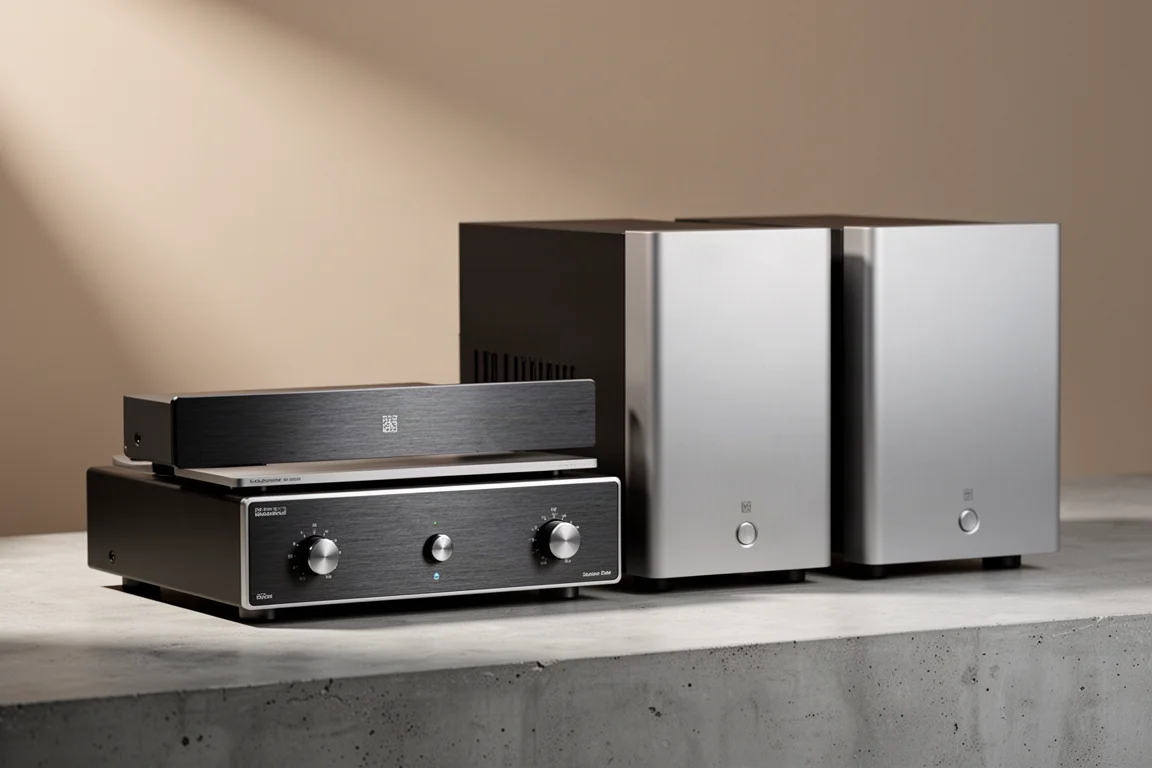
The Exposure 3510 preamplifier and its matching monoblock power amplifiers represent one of the more traditional routes into serious two-channel sound. Exposure has a long history of building unfussy British amplifiers, and the 3510 range carries that thinking forward: a slim preamplifier with the essentials only, paired with substantial monoblocks that prioritise power delivery over feature lists.
The preamplifier retails at £2,000 in the UK, and the monoblocks are £3,750 per pair. That places the stack at the upper end of the mainstream hi-fi market, in the same territory as some highly regarded integrated amplifiers. The question is whether separate pre and power amplification still earns its place there.
What the Exposure 3510 Stack Delivers
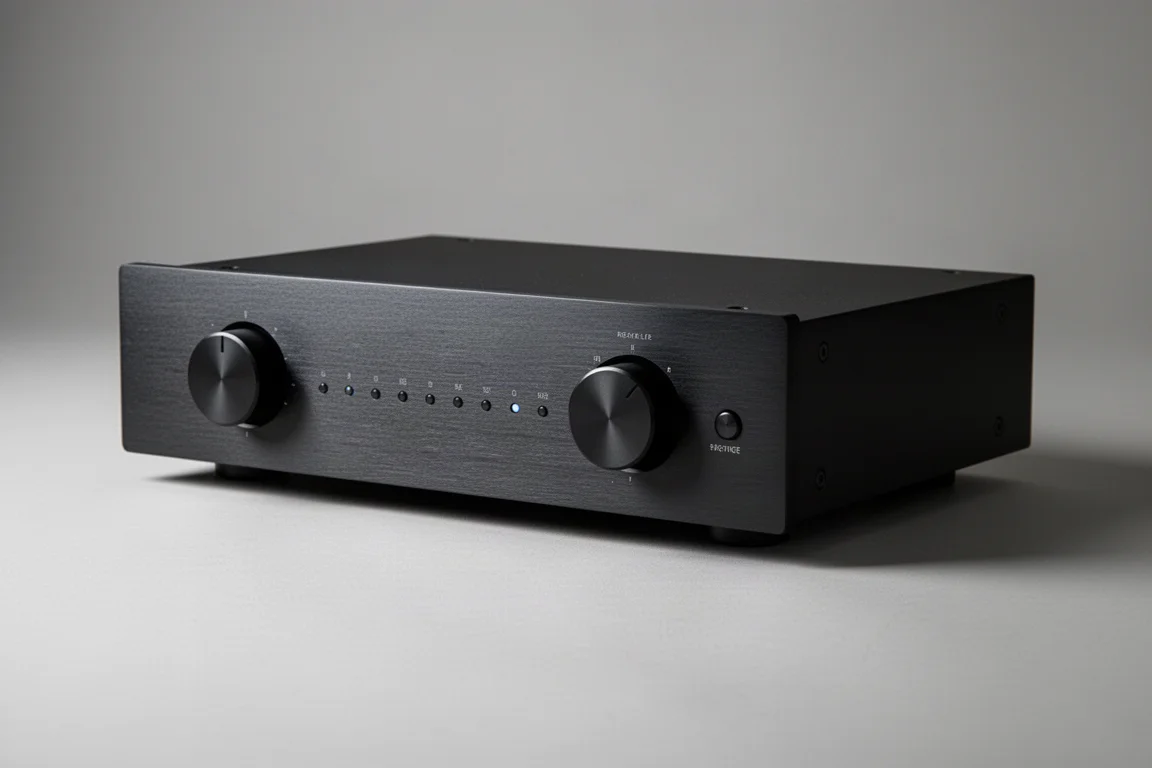
The design philosophy is visible before you power anything on. The preamplifier is a purist line stage with a power button and two rotary dials, one for input selection and one for volume. There is no tone control, no display and no app. The monoblocks are equally restrained, with a single power button on an otherwise plain front panel.
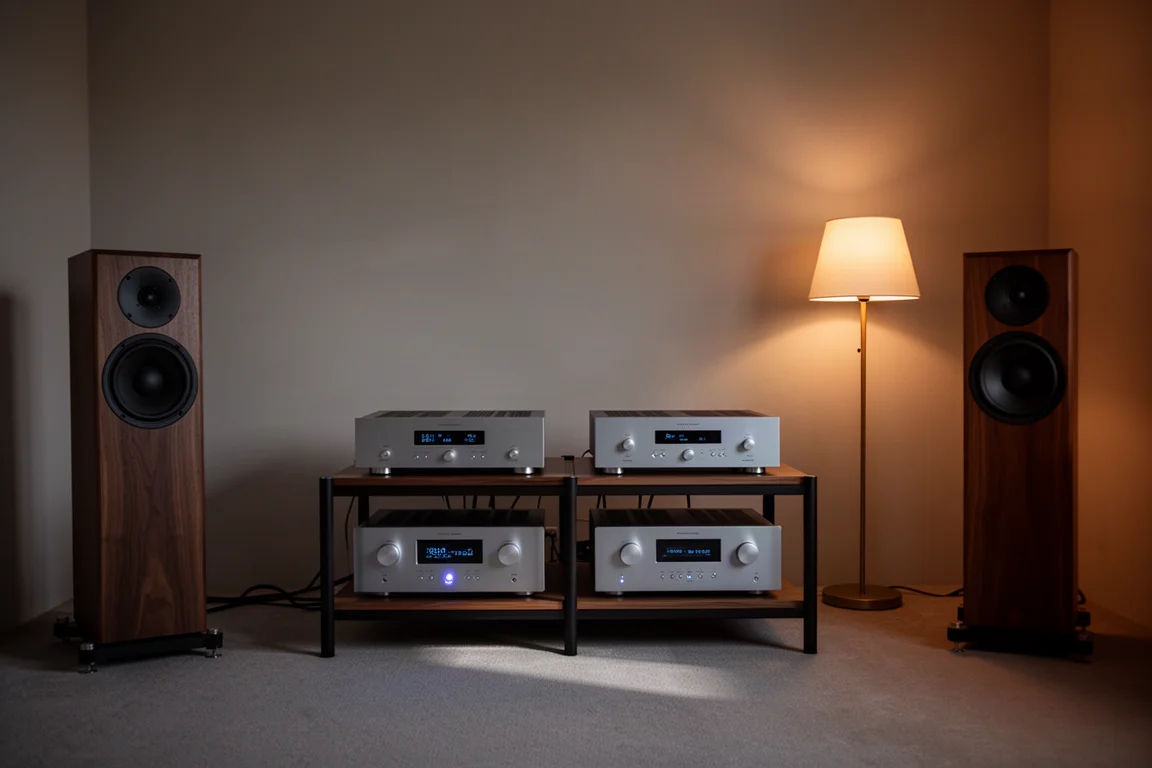
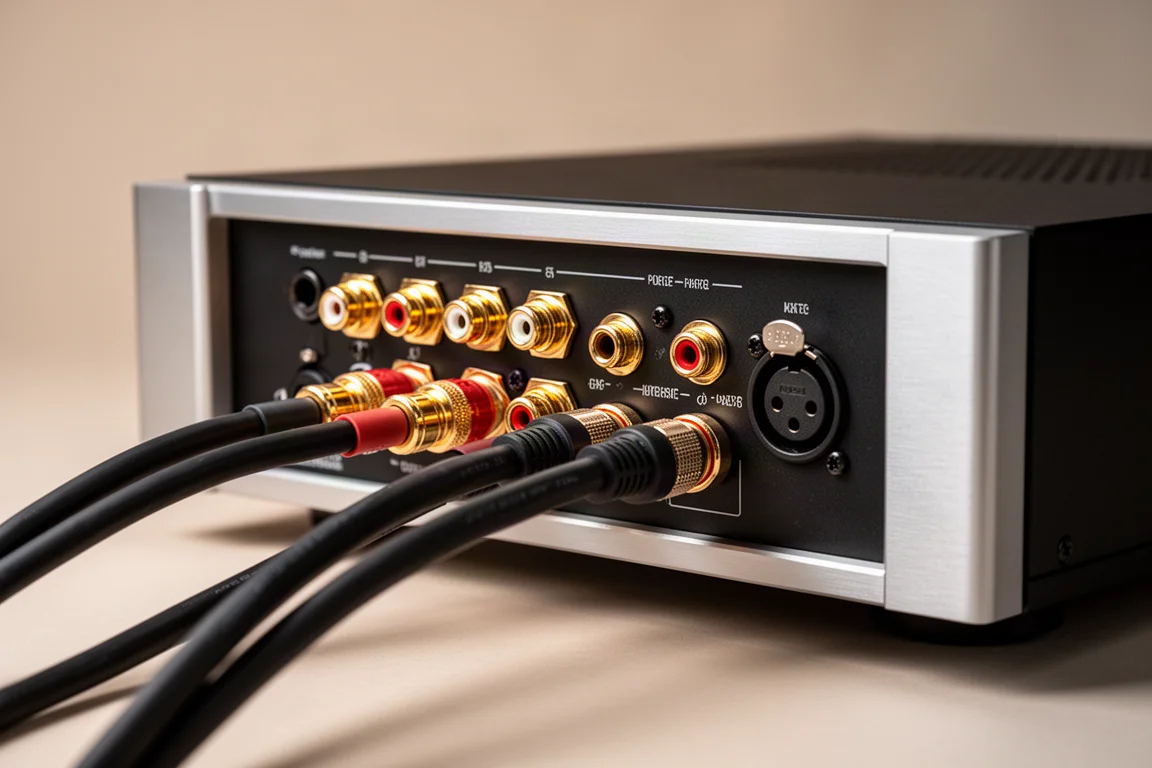
What the stack does offer is a genuinely flexible foundation. Six line-level inputs, a tape loop and two sets of preouts on the preamp cover most systems, while the power amplifiers accept both single-ended RCA and balanced XLR inputs through a rear switch. Two sets of speaker terminals on each monoblock allow bi-amping if your speakers support it.
Both units are full rack width, which makes them easy to house. The preamp stands 90 mm tall, while the monoblocks are taller at 115 mm to accommodate their larger power supplies.
Exposure 3510 Preamplifier
The 3510 preamp is a slim, full-width unit available in black or titanium. Its anodised aluminium fascia is deliberately plain, and the layout is built around the two rotary controls that most listeners will use for years without thinking about them. The motorised Alps Blue Velvet volume control is a familiar and well-regarded part in this price class.
Internally, the preamp uses a Noratel transformer and two large Kendeil power supply filter capacitors, supported by Elna Silmic capacitors on the main board. The circuit mixes discrete surface-mount and through-hole components, and Exposure offers two factory-fitted options that broaden its appeal.
The first is a Cirrus Logic WM8742 DAC module at £540, which adds digital inputs for listeners who want to run a streamer or transport directly into the preamp. The second is a phono stage at £360, available in moving magnet or moving coil form, which takes over one of the six line-level inputs when fitted. Buyers who only need analogue line-level inputs can keep the preamp as simple as it looks and spend the difference elsewhere.
A multi-purpose remote control is included. It handles volume and input selection, but the relevant buttons are not especially obvious, and the remote is shared across other functions rather than being dedicated to the amplifier. There are also no balanced outputs on the preamp, so the XLR inputs on the power amplifiers are there for flexibility with other preamplifiers.
Exposure 3510 Monoblocks
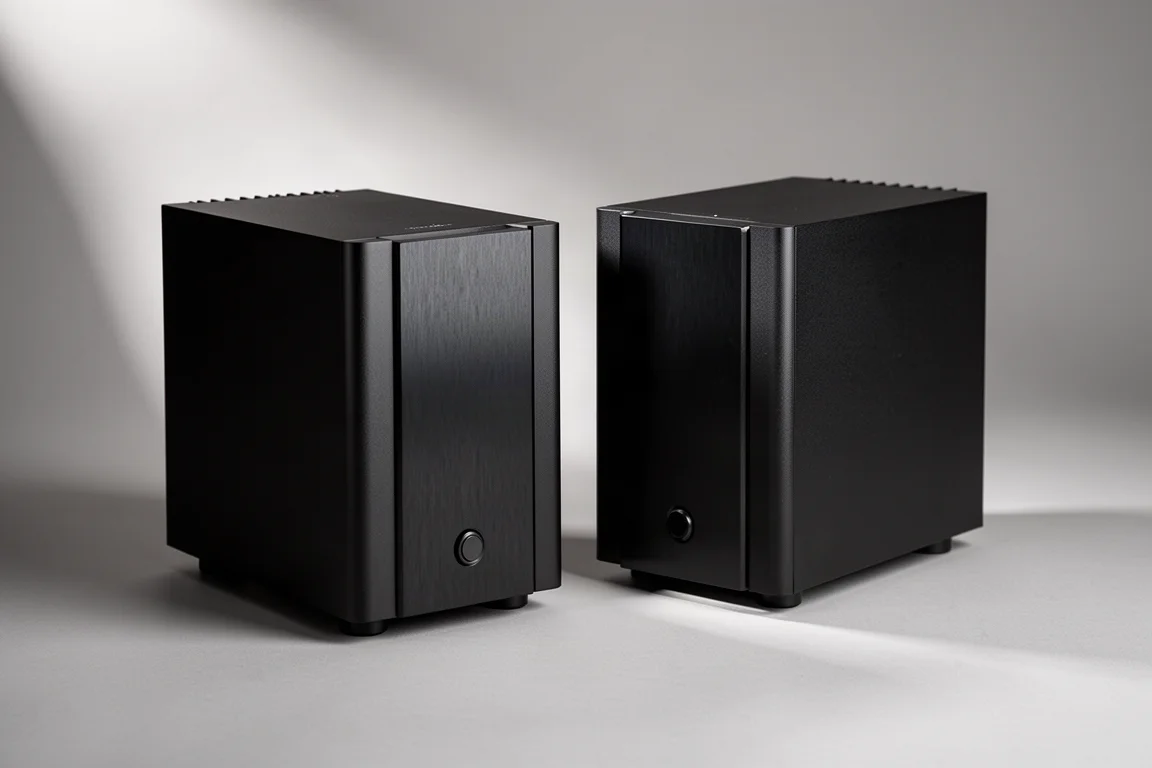
The 3510 monoblocks are the muscular half of the stack. Exposure rates them conservatively at 100 watts per channel, and published laboratory testing of the equivalent stereo power amplifier measured 135 watts continuously into 8 ohms at less than 1% total harmonic distortion, rising to 225 watts into 4 ohms. The monoblocks should comfortably match or exceed those figures.
That headroom is backed by serious hardware. Each monoblock carries a large toroidal transformer and four Kendeil filter capacitors rated at 10,000 microfarads each, for 40,000 microfarads per channel. The heat sink sits between the transformer and the sensitive electronics, which provides useful shielding in addition to cooling. Four Toshiba bipolar output transistors are mounted to it.
The amplifier board is a fully discrete through-hole design, which is a deliberate choice at this level and one that supports long-term serviceability. Exposure also confirms the circuit is DC coupled between stages, removing capacitors from the signal path.
A stereo power amplifier version of the same design is available at £2,200 for listeners who prefer a single box, but the monoblocks are the more capable option and the one that makes the strongest case for separates.
How the Stack Sounds
The most striking quality of the 3510 stack is its sense of scale. It throws a deep, wide sound stage that is unusual among solid-state amplifiers, and it does so without the tonal compromises that sometimes accompany that kind of expansiveness.
Bass is a particular strength. The presentation leans towards punchy low frequencies and a full lower mid-range, and the amplifiers maintain control of that weight rather than letting it blur. Performers are separated clearly and located securely within the sound field, which makes dense mixes easier to follow.
Tonally, the stack is warm. Listeners who like a little harmonic richness in their music will find plenty of it here, and the amplifiers never sound dark or rolled off while delivering it. Where the extra power really shows is composure. Busy, demanding tracks played at high volume stay organised rather than collapsing into a wall of sound.
For context, a £3,250 integrated amplifier offers a more even-handed tonal balance, but it is comfortably outclassed on scale, detail and dynamics by the Exposure separates. Against the strongest integrated amplifiers at this price, the 3510 stack gives up a small amount of fine detail retrieval, yet it sits ahead of most of the competition in the areas that matter most to the way it plays music.
Design and Everyday Ownership
Ownership is straightforward. The units are unfussy to set up, the connections are well spaced, and the minimal front panels mean there is nothing to configure or learn. The preamp’s two rotary controls are self-explanatory, and the optional DAC and phono modules are fitted at the factory rather than added later.
The remote control is the one place where the design feels less considered. It works, but the input selection and volume buttons are not immediately obvious, and a dedicated amplifier remote would suit a purist product better. Buyers who mostly use the front panel dials will not mind.
Build quality reflects the price. The anodised fascia and the internal layout of both the preamp and the monoblocks are clean and orderly, and the through-hole construction of the power amplifiers is a genuine long-term advantage for anyone planning to keep the amplifiers for years.
Pairing Advice: Speakers and Sources
Because the 3510 stack leans warm, it pairs most naturally with speakers that have a slightly cool tonal balance. That combination brings the overall system closer to neutral without sacrificing the amplifiers’ richness. The stack also has more than enough drive for almost any speaker on the market, so the limiting factor is tone matching rather than power.
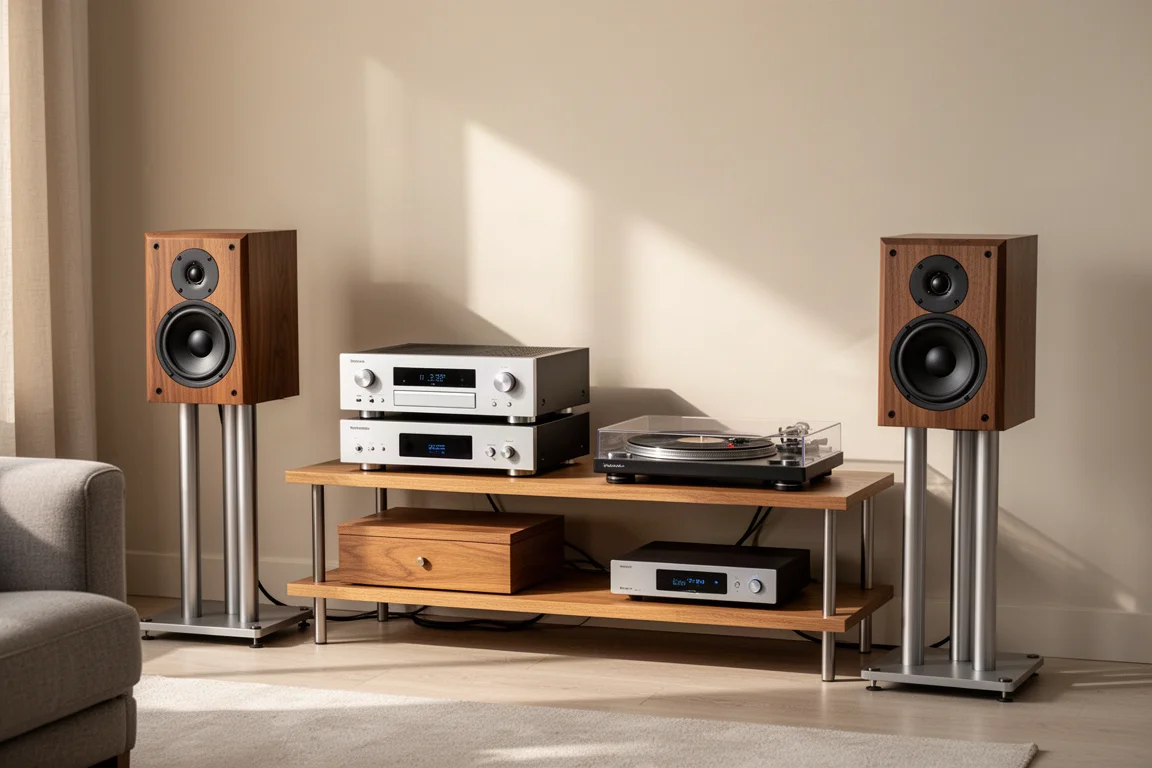
Source quality matters at this level. If you are spending close to £6,000 on amplification, a music source budget of at least £3,000 is a sensible starting point, and stretching a little further will let the amplifiers show what they can do. Dynamic, revealing speakers in the £1,800 to £3,000 range are worth considering too, since the Exposure stack is capable of getting a great deal out of them.
Where the Stack Fits in the Market
The 3510 preamp and monoblocks sit in a crowded part of the market, and the choice between them and a high-quality integrated amplifier comes down to priorities. Integrated designs offer fewer boxes, fewer cables and a lower total price. The Exposure separates offer more power, a larger and more three-dimensional sound stage, and the flexibility to change the preamp or the power amplifiers independently later.
The stack also carries a clear brand lineage. Exposure has built amplifiers of this character for decades, and the 3510 range preserves that identity while adding modern touches such as the optional DAC module and balanced inputs on the power amplifiers. For listeners who value continuity and serviceability alongside performance, that counts for something.
Buying Advice
The clearest candidates for the 3510 stack are listeners with demanding speakers and a taste for a warm, full-bodied presentation. If your system currently sounds thin or overly bright, the Exposure amplifiers are a logical correction, and the monoblocks’ power reserves mean you will not need to think about headroom again.
If your priority is the last word in detail retrieval and you prefer a neutral tonal balance, a top-tier integrated amplifier at a similar price will be the better fit. If you only need modest power for small speakers, the monoblocks are more amplifier than the job requires, and the stereo power amplifier at £2,200 or a simpler integrated will keep more budget available for sources and speakers.
Buyers should also decide early whether they want the DAC and phono modules. Adding both brings the preamp close to £2,900, so it is worth being honest about whether your existing source components already cover those jobs.
Conclusion
The Exposure 3510 preamplifier and monoblocks are a convincing argument for separates. They deliver generous power, a genuinely expansive sound stage, strong bass control and a warm tonality that many listeners actively want, all in simple, serviceable boxes with no unnecessary features.
The trade-offs are the ones you would expect: a feature-light preamp, an unremarkable remote, no balanced outputs on the preamplifier, and a total price that competes with some excellent integrated amplifiers offering slightly better fine detail. For anyone who values scale, drive and a rich tonal character, the 3510 stack earns its place near the top of the shortlist.
Further reading
Related Reviews
Hi-Fi Amplifiers
Accuphase E-280 Review: Entry-Level Accuphase With Flagship Attention to Detail
A close look at the Accuphase E-280 integrated amplifier, covering its champagne build, AAVA volume control, sound quality, and the speakers and sources that suit it best.
Hi-Fi Amplifiers
Advance Paris A10 Classic vs Yamaha A-S301: Two Integrated Amplifiers Compared
A practical comparison of a $350 integrated amplifier and a $2,500 reference model, covering the differences that matter and the ones that do not.
Hi-Fi Amplifiers
Affordable Chinese Amplifiers Worth Buying: Five Budget Hi-Fi Amps Compared
A practical look at five affordable amplifiers, what each one does well, and the trade-offs to weigh before you buy.