Sleeping Pads
Exped Ultra 10 R vs Highlander Napsack R 11: Two Winter Sleeping Pads With Tested R Values Above 10
Two backpacking sleeping pads with ASTM-tested R values above 10 go head to head on a sub-zero night, with notes on warmth, comfort, stability, price, and durability.
Introduction
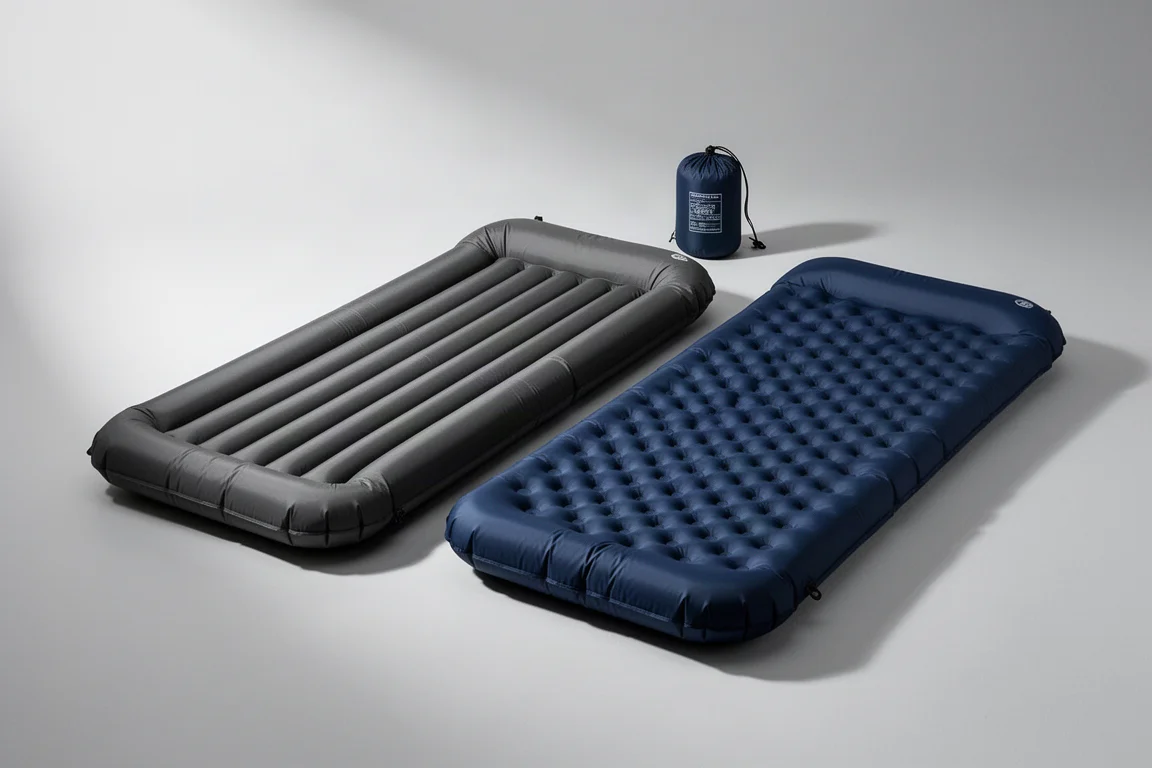
Two sleeping pads currently claim something unusual: ASTM-tested R values above 10, the kind of insulation that used to come with a serious weight or bulk penalty, in designs still light enough to carry backpacking. One is the Exped Ultra 10 R, from a brand that has been building inflatable sleeping pads since the category began. The other is the Highlander Napsack R 11, from a brand many cold-weather campers will not recognise, at roughly half the price.
On paper the two look close: 813 g versus 855 g in the long wide rectangular sizes, similar shell fabrics, and R values of 10.2 and 11 respectively. The more useful question is what those numbers mean on a night that drops well below freezing.
How These Two Pads Compare on Paper
Both pads use a 20-denier shell, so fabric thickness is nearly identical. The Exped uses polyester, the Highlander uses nylon, and the difference matters more than it sounds: the Exped face has a little stretch, which helps with pressure relief, while the Highlander shell is firmer and more rigid underfoot.
Both are heavy by backpacking standards. The long wide rectangular Exped weighs 813 g and the long wide rectangular Highlander 855 g. Neither is a pad you choose for a fast and light summer trip; both are aimed at cold nights when warmth matters more than grams.
R values are where the claims live. The Exped is rated at 10.2 and the Highlander at 11, and both figures are measured to the ASTM standard, which makes them comparable to each other rather than to marketing numbers. Thickness is listed at 9 cm on the Exped and a claimed 10 cm on the Highlander.
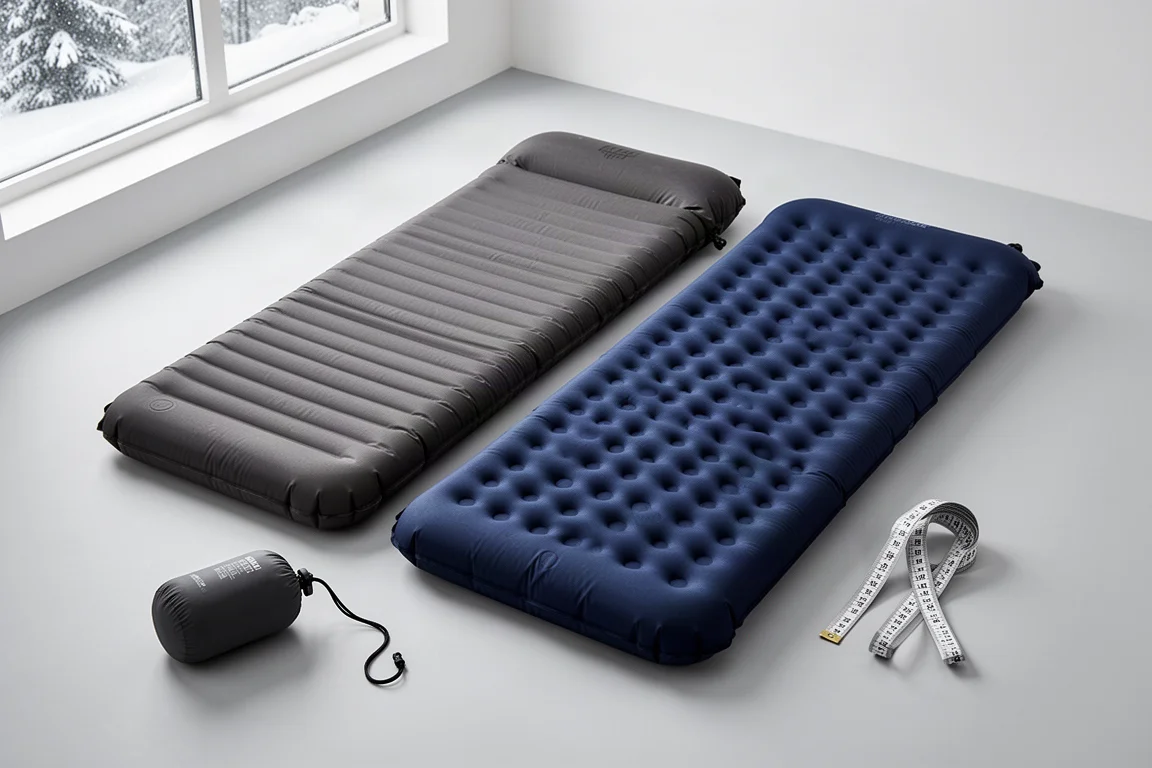
Price is the other headline difference. The Highlander Napsack R 11 sits at around $135, roughly half the cost of the Exped Ultra 10 R. That gap is the entire reason these two pads are worth comparing side by side.
Exped Ultra 10 R: Warmth and Comfort at the Top End
The Ultra 10 R uses an insulation design that sets it apart from most pads on the market. A layer of synthetic insulation is bonded to the top of the pad and another to the bottom, and reflective film is attached to each of those synthetic layers. In the Ultra 6.5 R that construction appears only on the top face; the 10 R carries it on both. It is a more involved build than simply suspending reflective film inside the air chamber.
Two details are worth knowing before you buy. The insulation does not wrap around the sides of the pad, which leaves a small air gap there, and the top fabric is a stretchy 20-denier polyester that gives noticeably under pressure.
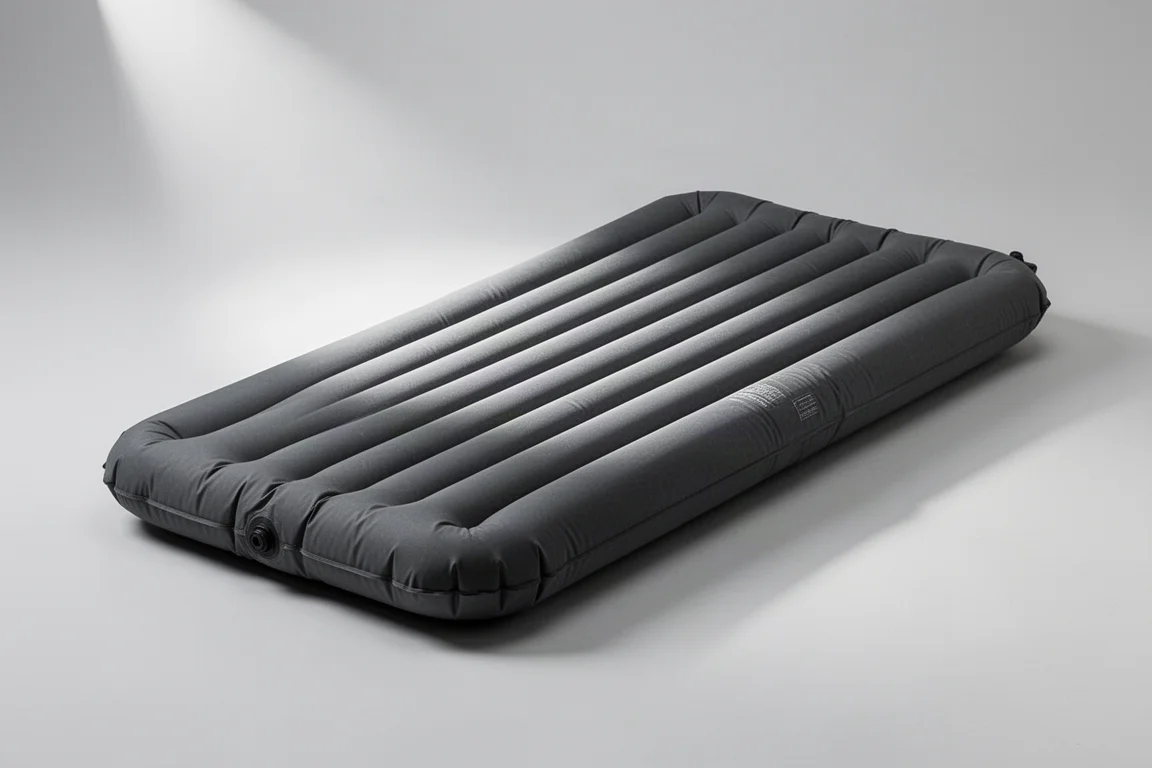
The baffle layout is the other half of the story. Long vertical baffles run the length of the pad, and the outer tubes are slightly larger than the inner ones. The result is a pad that feels stable rather than balloon-like, with edge support that keeps you centred through the night. It is also quiet: mostly a faint material crinkle, and very little noise as it shifts against a tent floor.
Weight is the trade-off. At 813 g in the long wide rectangular size, this is a pad built for warmth and comfort first.
Highlander Napsack R 11: An Unknown Brand With an Extreme Claim
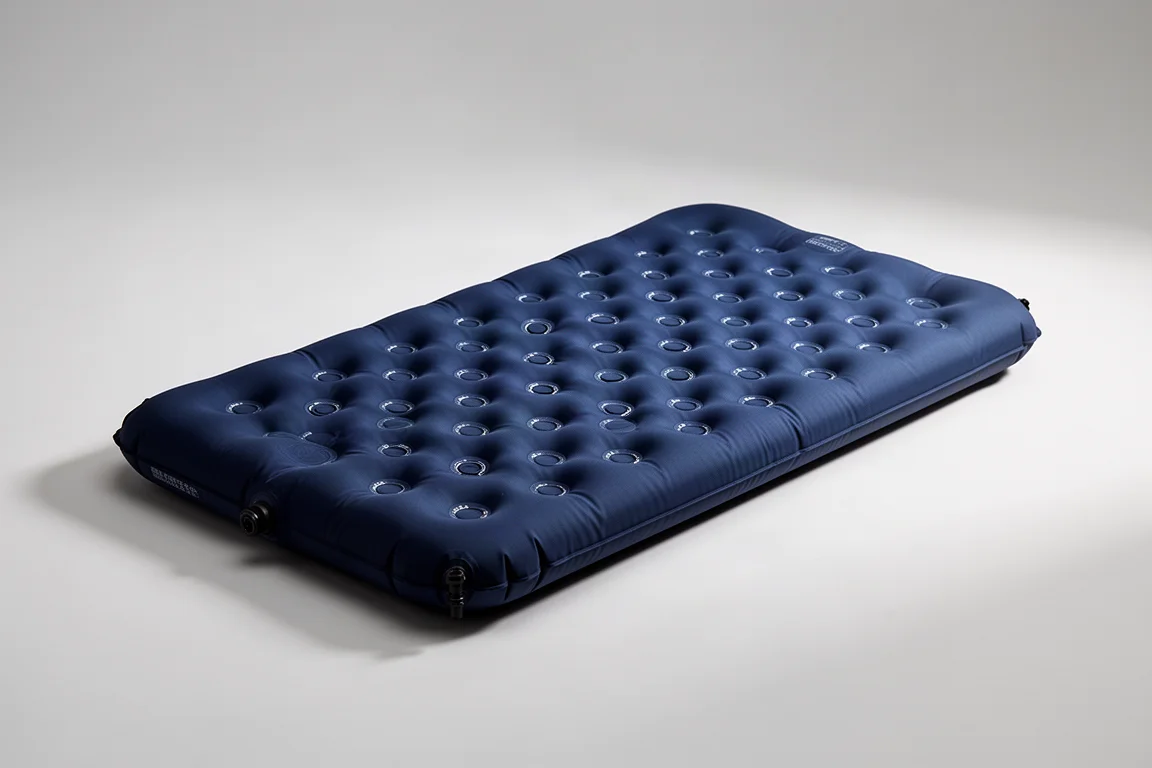
The Highlander Napsack R 11 takes a different route to its R value. Three layers of reflective film are suspended inside the air chamber, and the surface uses a dimpled baffle pattern, with a grid of small welded circles running across the pad. The shell is 20-denier nylon, and the long wide version weighs 855 g.
Three reflective layers is fewer than many pads use, which is why an R value of 11 invites some skepticism before the pad is even inflated. Comparable designs often land closer to the 6 to 7 range, so the rating is worth treating as something to verify in the field rather than accept straight off the packaging.
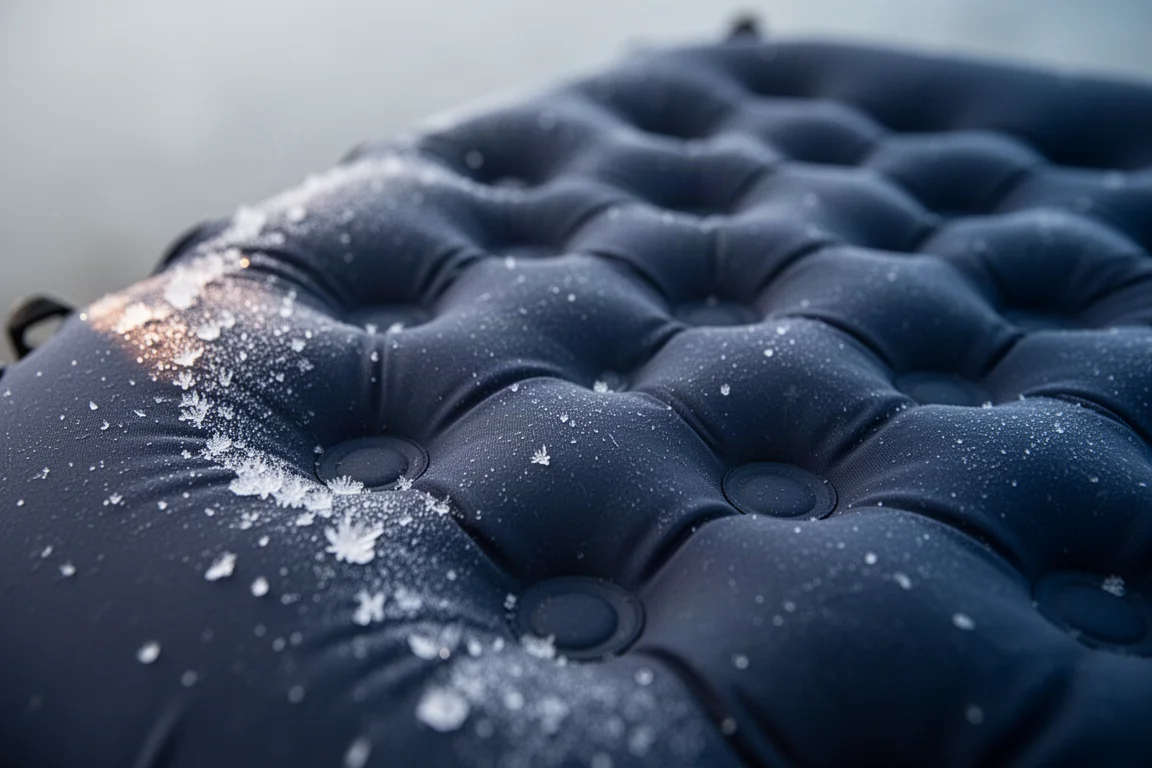
Dimpled baffling is generally one of the more comfortable patterns you can put on a sleeping pad, and this pad benefits from it. It is not quite as plush as the dimpled surfaces used on some other pads, but on a back or a side it works well through a long night.
Two physical differences show up immediately. The Highlander is roughly an inch narrower than the Exped and its surface curves down towards the sides, so it feels smaller underneath you. The nylon shell is also firmer and crinklier, with a rubbery sound when you press the dimples, and it is likely to be the noisier of the two against a tent floor.
Price is where the Napsack makes its case. At around $135 it costs roughly half of the Exped Ultra 10 R.
Overnight Warmth Results at Minus 13 to Minus 18 Celsius
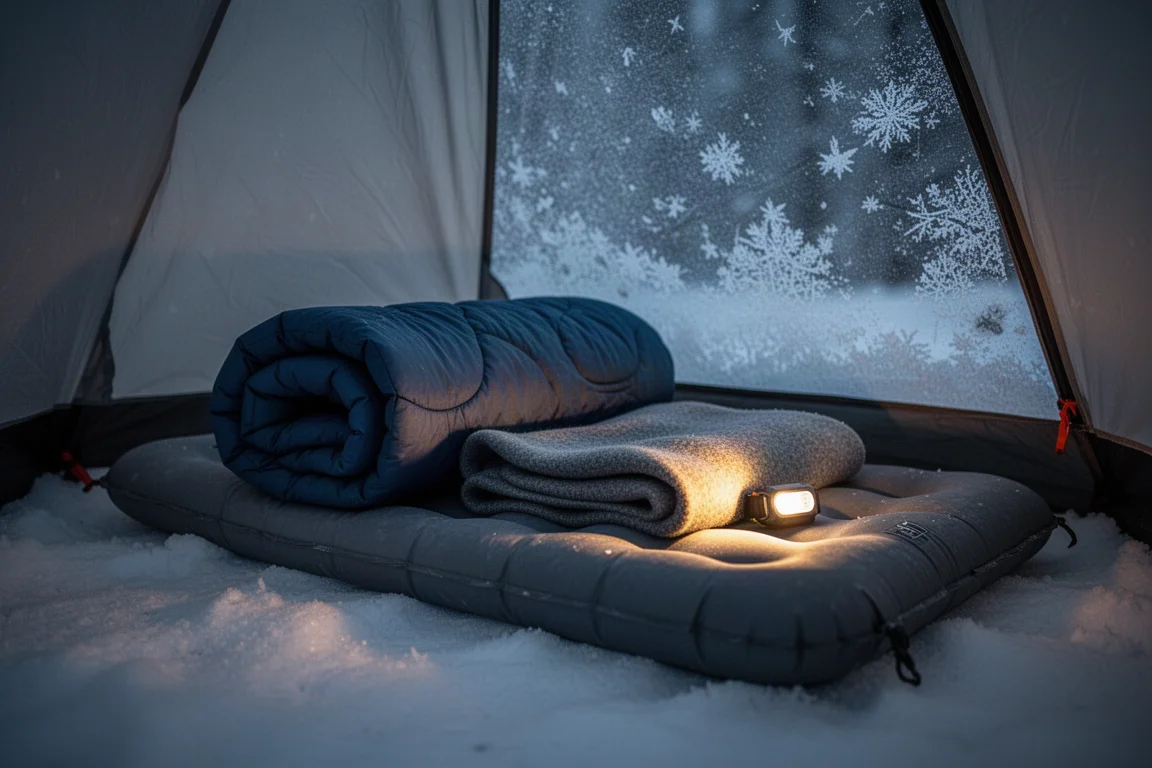
Both pads were taken out on a Canadian winter night that sat near minus 13 °C for most of the evening before dropping to minus 18 °C in the early morning. Conditions like that are useful because they push past the comfort rating of most three-season pads.
At around minus 10 °C, both pads were unremarkable in the best way: no cold spots, no sense of heat being pulled out of the sleeping system. The Highlander was still comfortable at minus 13 °C, warm enough that there was no reason to move off it.
The first sign of heat loss on the Highlander appeared around minus 15 to minus 16 °C, which points to a comfort limit somewhere between minus 16 and minus 20 °C depending on how warm a sleeper you are. That is a long way from the roughly minus 12 °C the three-layer construction seemed to promise on paper, and it makes the R value of 11 look generous rather than conservative.
The Exped Ultra 10 R was still going at minus 16 °C, with warmth noticeably reflected back towards the body, and it stayed comfortable through to minus 18 °C at the coldest point of the night. The one caveat is a slightly cold zone around the lower legs, a consequence of the long wide rectangular shape: the tapered area of a sleeping bag or quilt has more surface exposed to cold air, and a mummy-shaped pad is more efficient in that region.
Comfort, Stability, and Usable Sleeping Area
Comfort is the second half of a good winter night, and the two pads separate here as well.
The Highlander is a decently comfortable pad. It is 10 cm thick on paper and there is no realistic chance of bottoming out, whether you sleep on your back or your side.
The Exped is noticeably more comfortable, mainly through stability rather than softness. The slightly wider body, the thicker outer tubes, and the vertical baffles combine to give a larger usable sleeping area, and it is much harder to feel as though you are about to roll off the edge. The stretchy polyester top also does real work on pressure relief when the pad is pumped up hard.
One point of disagreement between the two is thickness. The Highlander claims 10 cm against the Exped’s 9 cm, but in person the Exped looks like the thicker pad, so the claimed figure is worth taking with a grain of salt.
That fully inflated detail matters more in winter than at any other time of year. R values assume the pad is inflated firm, so you cannot let air out to soften the surface the way you might in summer. Pressure relief and stability have to come from the design, not from a softer fill.
Durability, Weld Points, and Noise
Cold weather is hard on sleeping pads, and the most common failure point is the welds: the spots where the top and bottom of the pad are bonded together, and where the valve is attached. In freezing conditions those bonds can become brittle, and a single failure can end a trip.
The Exped has an advantage here. Its long vertical baffles mean fewer weld points overall, and its construction has held up well in recent years with little sign of failures in the field.
The Highlander has many more weld points because of the dimpled pattern, with a welded ring around every dimple. Whether the lower price has been achieved at the cost of construction quality is an open question. There simply is not enough long-term feedback on this pad yet, so the sensible approach is to watch for reports of failures before relying on it for a serious expedition.
Noise is a smaller but real factor. The Exped is quiet, with only a slight material crinkle. The Highlander is crinklier, and because the firmer nylon rubs against a tent floor, it is likely to be the noisier of the two in camp.
Buying Advice for Cold-Weather Campers
Both pads are legitimate options, and they suit different buyers.
The Highlander Napsack R 11 is one of the better winter-rated pads available near $135. Most pads in that price bracket fall apart in serious cold, and this one kept a sleeper comfortable down to around minus 13 °C before heat loss started. If your winter trips sit in the minus 5 to minus 15 °C range and budget matters, it is a reasonable buy, as long as you accept that its real-world warmth sits below what an R value of 11 suggests and that its weld points are unproven.
The Exped Ultra 10 R is the stronger pad overall. It is more comfortable, more stable, quieter, and warmer in the field, and it held up at minus 18 °C without reaching its limit. The cost is roughly double the Highlander’s, plus a little more care with packing because of its 813 g weight. For campers who spend real time in deep cold and want a pad they can trust, that is a fair trade.
Neither pad is light. If carrying less weight is the priority, there are lighter winter pads on the market, though they generally give up some comfort to get there. If the priority is sleeping warm and comfortably below freezing, both of these are worth a look, with the Exped the better long-term choice and the Highlander the better value.
Conclusion
Two pads, two tested R values above 10, and two very different prices. The Exped Ultra 10 R delivered on its rating, staying warm through a night that dropped to minus 18 °C while also being the more comfortable and more stable pad. The Highlander Napsack R 11 did more than its price suggests, keeping a sleeper comfortable to around minus 13 °C and holding up reasonably below that, even if its R value of 11 reads as optimistic and its long-term durability is still unknown.
For most cold-weather campers the decision comes down to budget against confidence: the Highlander for value, the Exped for the warmest and most comfortable night of the two.
Further reading
Related Reviews
Sleeping Pads
Best Backpacking Sleeping Pads 2026: Nine Pads Rated on Price, Comfort, Warmth, and Weight
Nine backpacking sleeping pads compared on price, comfort, warmth, and weight, from a $65 summer pad to a year-round option rated at R-7.3.
Sleeping Pads
Best Backpacking Sleeping Pads: Comfort, Warmth, and Weight Compared
A practical comparison of the Nemo Quasar 3D, Therm-a-Rest NeoAir XTherm Max, and Big Agnes Rapide SL for backpackers choosing between comfort, warmth, and packed weight.
Sleeping Pads
Best Backpacking Sleeping Pads: Ultralight, Winter, Comfort and Budget Picks
A practical roundup of the sleeping pads that stand out for ultralight weight, winter warmth, pressure relief and value, plus three popular pads that fell short.