Hi-Fi Audio
Eversolo T8 Review: A Dedicated Streaming Transport for Digital-First Systems
The Eversolo T8 removes the DAC from the equation and focuses on what a digital front end does best: quiet power, precise clocking, and fully isolated outputs.
Introduction
The front end of an audio system sets the tone for everything that follows, and the Eversolo T8 is built around that idea. Unlike the company’s all-in-one streamer decks such as the A6 and A10, the T8 is a dedicated streaming transport. There is no DAC inside and no analog outputs on the back. Its single job is to deliver a clean, precisely timed digital stream to a converter of your choosing, so the DAC, amplifier, and speakers can perform at their full potential.
The old principle still applies here: garbage in, garbage out. If the source introduces noise or timing errors, even the best DACs and amplifiers cannot fully make up for it. The T8 is designed to prevent that by keeping the signal as pure as possible before it ever leaves the chassis.
Who this product is for
The T8 makes the most sense for listeners who already own a DAC they like. That can be a standalone converter, the DAC stage inside an integrated amplifier, or the conversion built into a home theater processor or AVR. Because the transport handles only streaming and the user interface, it leaves digital-to-analog conversion to whichever component does that job best in a given system.
Keeping the DAC separate is a flexibility decision. A converter you already love gets fed a clean signal, and if you enjoy experimenting, you can swap DACs over time to change the character of the system without replacing the streaming front end. It also creates a clear upgrade path: as the DAC, amplifier, or other components improve, the T8 remains the steady digital source at the heart of the setup. For home theater owners, it doubles as a modern, stable streaming brain that integrates cleanly into a processor or AVR.
Main strengths
By leaving out the DAC stage, Eversolo could focus entirely on low-noise power, precise clocking, isolated outputs, and a polished control experience. That focus shows up in three places.
Low-noise linear power supply
The T8 uses a true linear power supply built around a custom toroidal transformer wound with high-purity copper and wired with Teflon insulation. The regulation and filtering stages are overbuilt for this category, dropping the noise floor to as low as 30 microvolts. In practice that reads as deep silence behind quiet passages, which is exactly where a low noise floor matters most.
Precise clocking and processing headroom
Clocking is handled by an ultra-precise femtosecond master clock. This matters because even the smallest drift in a clock signal can create tiny timing errors between samples, and those errors affect audio quality. More accurate timing translates into music that sounds more alive and closer to a live performance. The T8 also carries the processing headroom to stay responsive: a quad-core ARM processor, 4 GB of DDR memory, and 64 GB of internal eMMC storage keep the interface quick, with instant track scrubbing even when a large local library is loaded.
Isolation across every output
Having a full set of digital outputs is only half the story. Each output on the T8 is designed to break ground loops and keep switching noise off the data line, so the differences a listener hears come from the DAC and its preferred interface rather than from noise introduced by the transport.
Design, display, and build
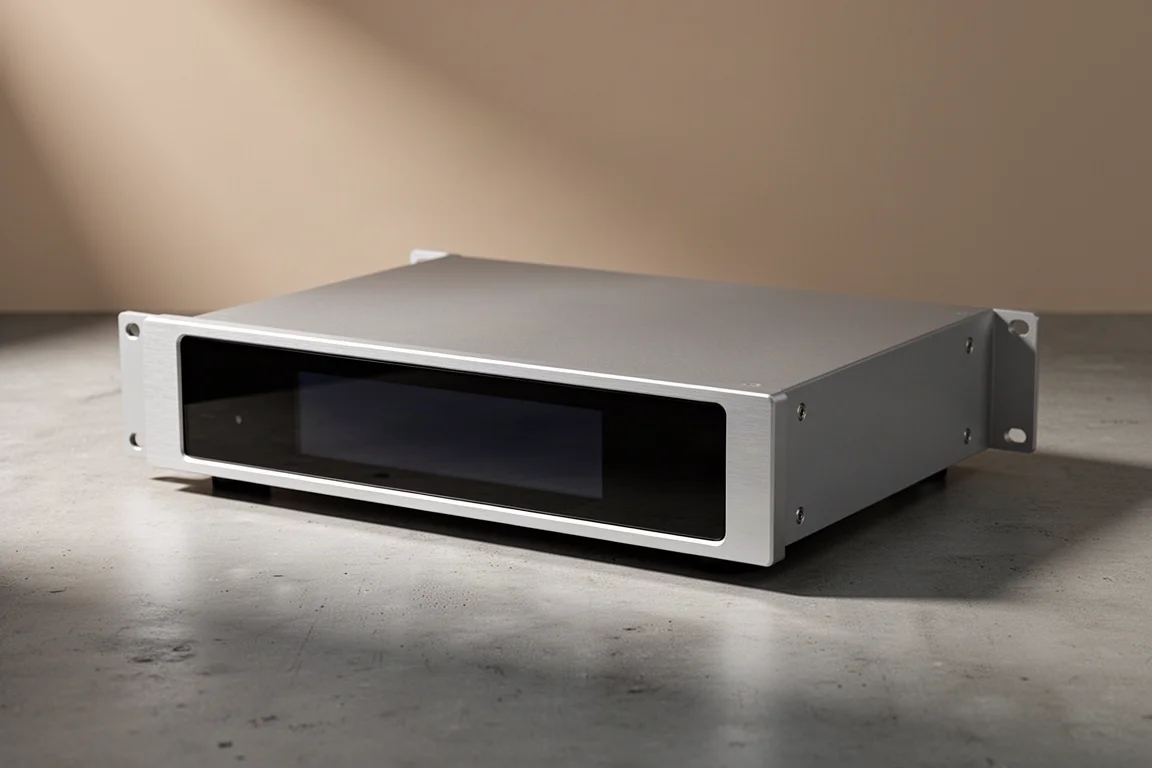
Physically, the T8 follows the familiar Eversolo formula. It measures roughly 12.4 inches wide, 9.1 inches deep, and 3.5 inches tall, compact enough to fit easily into most racks and media consoles. The chassis is solid aluminum in a black finish, and the front is covered by a glass panel spanning the full width, home to a 6-inch touchscreen and a few capacitive touch controls.
The display is bright and responsive, which makes navigating menus, browsing album art, or switching to meters and spectrum views a simple touch away. Lighting can be dimmed for dark-room listening, and the layout is customizable: favorites, home screen arrangement, and the way album art appears during playback are all adjustable.
Digital outputs and network connectivity
The rear panel covers the major digital outputs. The USB audio port is galvanically isolated and sends bit-perfect PCM and DSD to a modern DAC. I2S over HDMI offers a direct path with eight selectable modes for compatibility across a wide range of converters. AES/EBU on XLR provides a fully balanced, isolated connection that resists interference and works especially well for long cable runs to a DAC, integrated amplifier, or processor. Coaxial supports up to 24-bit/192 kHz with full isolation to reduce crosstalk, and optical remains a dependable choice that fits neatly into many home theater setups. There are also 12 V triggers to support a wake-on-LAN style power-up alongside the rest of the gear.
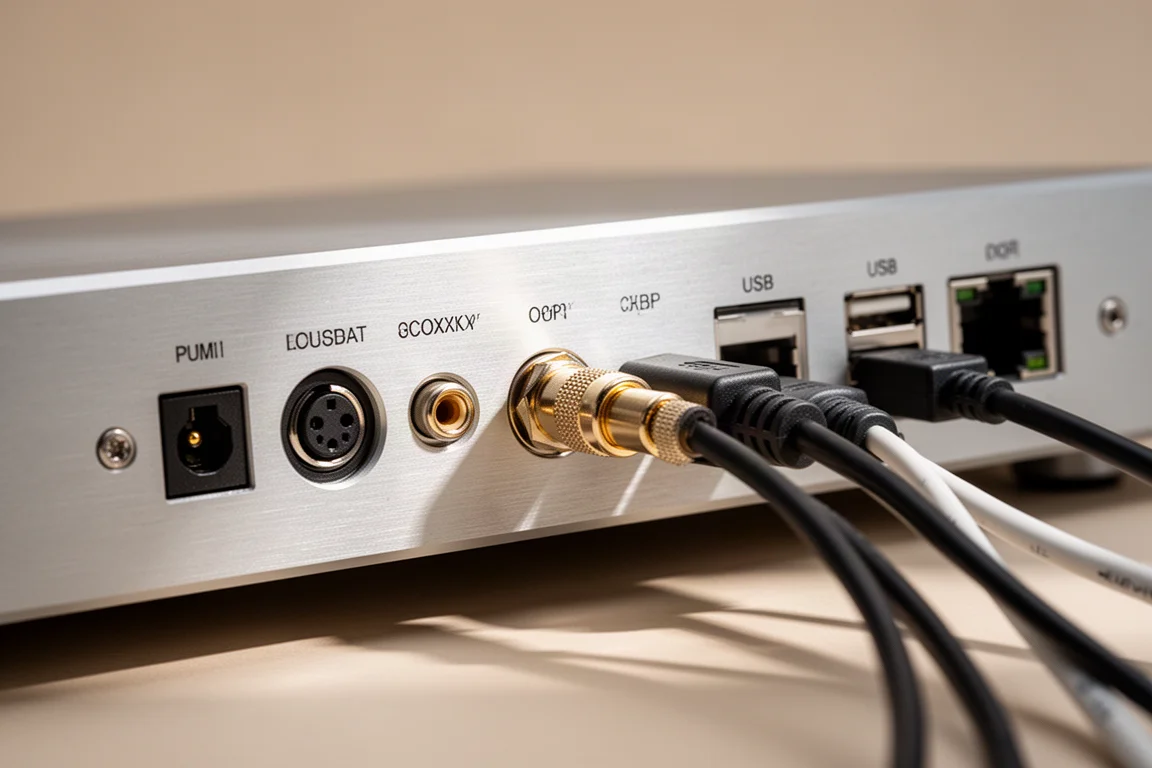
Network connectivity is where the T8 separates itself from most transports in its class. A gigabit Ethernet port handles reliable, low-latency playback, and Wi-Fi 6 is built in for setups where running a cable is not practical. The standout addition is an SFP fiber socket. Paired with compatible modules and a fiber-capable switch, it breaks the electrical link to the network entirely, cutting down the noise and interference that can creep in over copper connections. That level of isolation is usually found only on far more expensive streamers, and it can make a noticeable difference in racks crowded with networking gear and routers. For the very best performance, a wired connection remains the recommendation.
Local storage is equally flexible. Two M.2 SSD bays accept up to 16 TB across both slots, keeping a large library inside the transport, while rear USB ports handle external drives for simpler plug-and-play storage. The T8 can also pull from NAS drives and cloud platforms including Dropbox and Plex.
Playback experience and app control
Daily use is where a transport either gets out of the way or becomes a chore. The T8 supports Roon Ready, Tidal Connect, Qobuz Connect, Spotify Connect, and AirPlay 2, and a wide range of major streaming apps can be downloaded natively on the unit itself. Listeners can cast directly from a preferred streaming app or keep everything unified inside Eversolo’s own interface.
The Eversolo Control app for iOS and Android mirrors the front panel layout and stays quick in use. It allows direct sign-in to streaming platforms, and its universal search scans services and the local library at once. Playlists can mix tracks from different streaming services and local files, track scrubbing is instant, gapless playback works as expected, and sample rate changes happen silently in the background. Screencasting adds another option: the T8 can mirror its display to a phone or tablet for full interactive control, which is genuinely useful when the unit sits deep in a rack. A bundled remote with a metal back plate is included for anyone who prefers physical buttons.
Room correction and EQ features
Even though the T8 is digital only, it still includes EVOT, a FIR-based correction system that measures the listening space and applies time and frequency corrections to tame peaks, tighten bass, and steady imaging. Measurements can be taken with an Eversolo microphone or with the microphone on a phone. For manual tuning, there is a 10-band parametric EQ plus support for importing custom FIR filters. Loudness compensation and dynamic range control help with late-night sessions, and saving a few presets for daytime and evening listening is a practical way to use them.
Things to consider before buying
Three points are worth checking against your own system before committing.
First, the T8 has no analog outputs, so a DAC is mandatory. It can be a standalone converter, the DAC inside an integrated amplifier, or the conversion in a home theater processor or receiver, but without one there is nothing to turn the digital stream into sound.
Second, the best results come from a wired network connection. Wi-Fi 6 is convenient and built in, but Ethernet or the SFP fiber socket is the preferred path when the goal is the lowest possible noise.
Third, storage expansion means M.2 SSDs, and the app is likely to become the main control surface for many owners. The front panel, the remote, and screencasting all work well, but the app is the fastest route to most tasks.
Buying advice
If you already own a DAC you love, the T8 is a straightforward way to let it shine. It keeps noise out, holds timing steady, and lets the converter define the sound, which is exactly what a good transport should do. The result is music that feels natural and effortless, with imaging that stays locked in place, cymbals that carry air without turning brittle, guitars that bite without glare, and bass that delivers both pitch and weight against a quiet background.
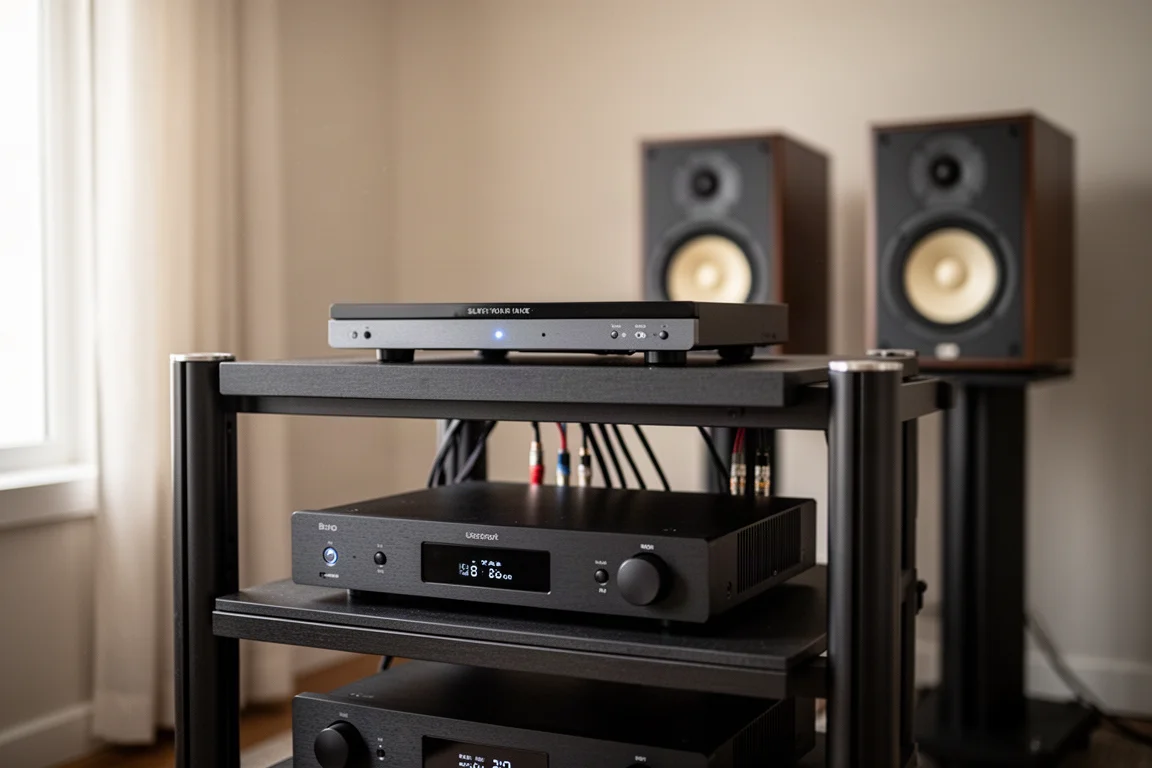
Listeners who need a single box with analog outputs are better served by an all-in-one streamer. For those building a two-box front end, Eversolo has already previewed the Z10 DAC as the natural partner to the T8, positioned as a flagship converter with dual mono architecture, triple toroidal transformers, oven-controlled crystal oscillators, and support for the latest PCM and DSD formats. Starting with the transport leaves that upgrade path wide open.
Conclusion
The Eversolo T8 makes a clear case for separating streaming from conversion. It is compact, solidly built, and fast in daily use, and its linear power supply, femtosecond clocking, and fully isolated outputs address the parts of a digital front end that are hardest to fix later. For anyone with a DAC worth feeding properly, it is a focused and flexible foundation.
Product link
View more details for Eversolo T8
This product is mentioned in the review. Check the specifications, options, and compatibility before buying.
View more details for Eversolo T8Further reading
Related Reviews
Hi-Fi Audio
Accuphase C-57 vs Allnic H-7000V: Two High-End Phono Stages Compared
A fully balanced solid-state phono stage with a pitch-black noise floor meets a tube design built for well-loved records. Here is how to choose between them.
Hi-Fi Audio
Active vs Passive Hi-Fi: Five Components for a Modern System
Five components that define modern active and passive hi-fi systems, with the strengths, trade-offs and setup details worth weighing before you buy.
Hi-Fi Audio
Advance Paris A10 Apex Review: A Hybrid Integrated Amplifier That Covers a Lot of Ground
A French hybrid integrated amplifier with a class A tube preamp stage, analogue power meters, and an internal DAC and phono stage good enough to make extra boxes unnecessary.