Hi-Fi Audio
EverSolo T10 Review: A Reference-Class Streaming Transport Built to Match the Z10
The EverSolo T10 is a dedicated streaming transport with an 8.6-inch touchscreen, 8 GB of DDR4 memory, 2.5 Gigabit Ethernet, and an external clock input. Here is what it does well and what to weigh before buying.
Introduction
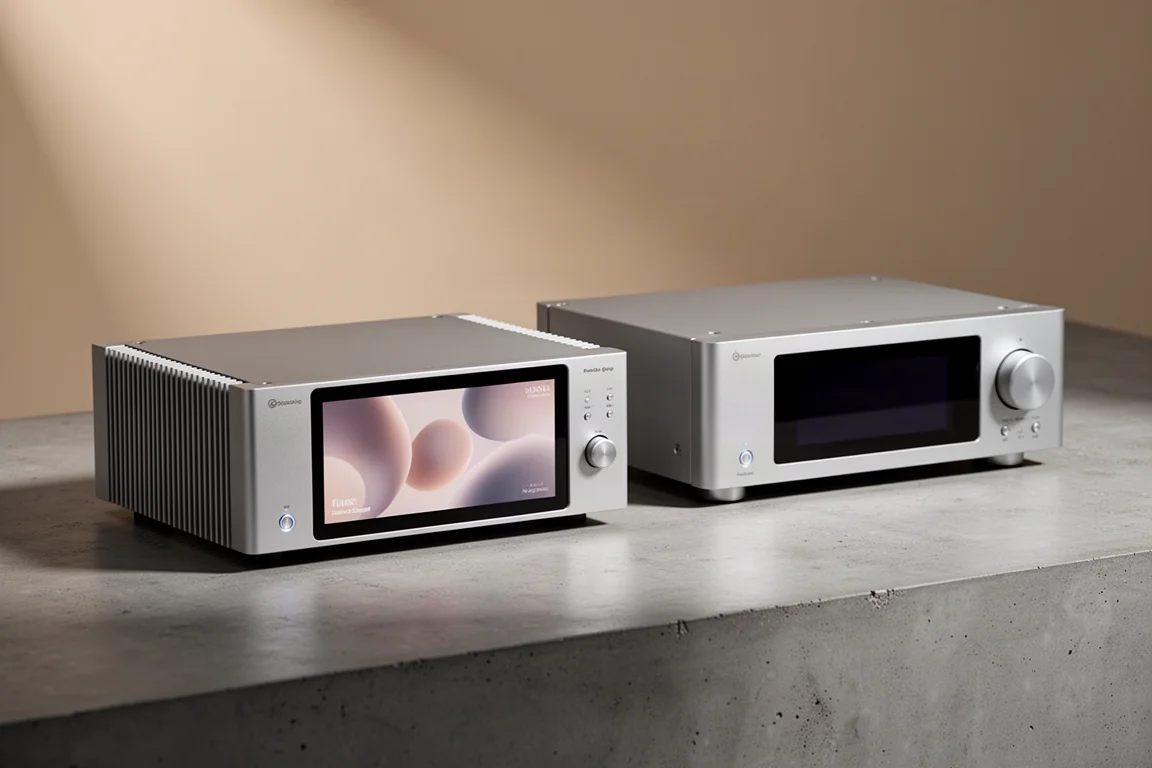
The EverSolo T10 is the company’s reference-class streaming transport, and it answers a question that has followed the EverSolo range for a while: what if the transport and the matching digital-to-analog converter were designed to sit together properly? The T10 shares its width, visual language, and scale with the EverSolo Z10, so the two finally stack the way a front end should.
That alone would be a modest update. The more interesting story is what the T10 adds inside: a larger display, faster networking, more system memory, and an external clock input that the T8 never offered. For listeners who already own a DAC they trust, that combination moves this transport into a different class.
What the EverSolo T10 Is and Who It Is For
Like the T8 before it, the T10 is a dedicated streaming transport. There is no DAC inside, no analog outputs, and no headphone amplifier. Its only job is to pull music from sources such as Tidal, Qobuz, a NAS drive, or a local library and hand a clean, precisely timed digital signal to a DAC, the component that turns a digital stream into the analog signal your amplifier and speakers can play.
Keeping those two tasks in separate boxes lets EverSolo focus the T10 entirely on the digital side: stable clocking, low-noise power, isolated outputs, and a control experience that stays fast no matter what you are doing with it. If you already have a DAC you love, the T10 is built to feed it a cleaner signal than most all-in-one streamers can. If you are pairing it with the Z10, the two now match physically as well as electrically.
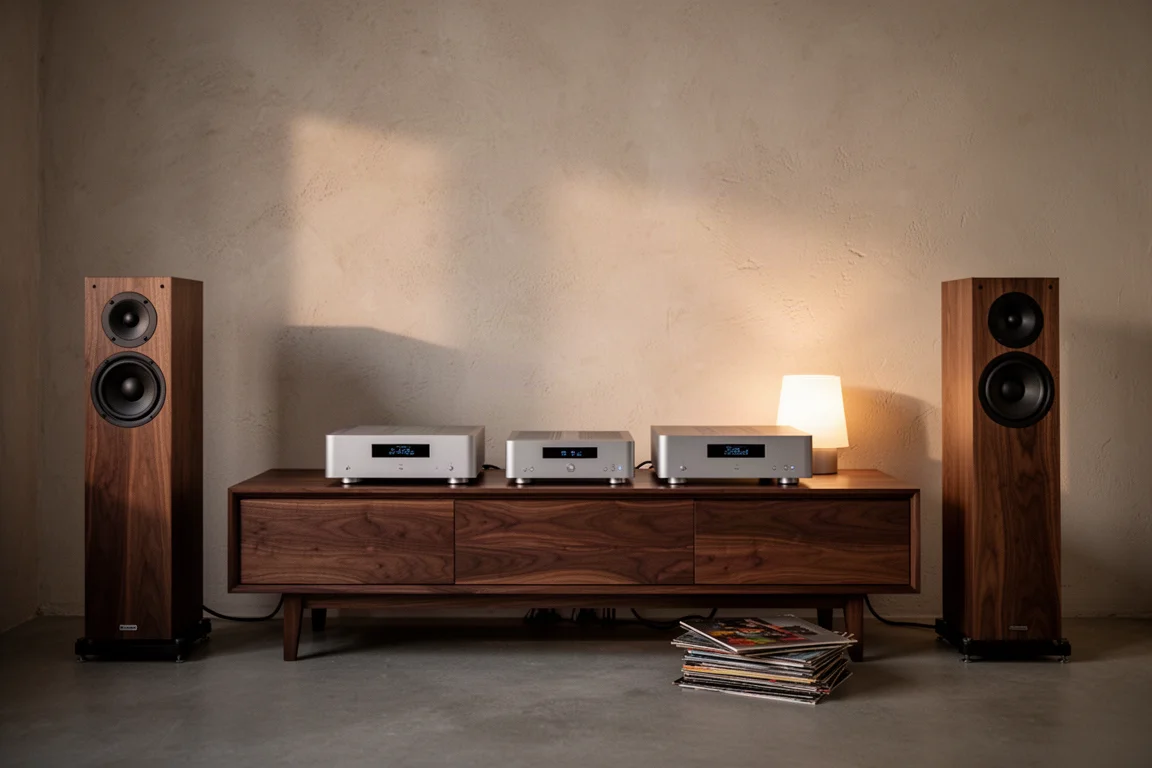
The T10 makes the most sense for listeners who treat the DAC as the heart of the system, who want a transport that stays out of the way and lets the rest of the chain do the talking, and who value a fast, well-organized interface for large local libraries and multiple streaming services.
Main Strengths: Design and the 8.6-Inch Touchscreen
The T10 arrives in a full-size aluminum chassis with ribbed sides for cooling and a clean front panel built around an 8.6-inch touchscreen, up from the 6-inch panel on the T8. The difference is visible right away: album art and VU meters fill the panel more completely, and the spectrum analyzer is legible from across the room rather than requiring a closer look. The display itself is bright, sharp, and quick to respond to touch.
Placed next to the Z10’s 8.8-inch panel, the two read as a matched system, which is precisely the point. Width, finish, and proportions line up, so the transport and the converter look intentional on a shelf rather than merely adjacent.
Main Strengths: Clocking, Processing, and the External Clock Input
Inside, the T10 follows the same fundamental approach as the T8: a custom oxygen-free copper toroidal transformer, linear power delivery, and a precise internal femto clock at the center of the design. What has changed is system memory. The T10 runs 8 GB of DDR4, double what the T8 carried, which keeps the interface fast and responsive when you are managing a large local library or jumping between services.
The headline addition is the external clock input. The T10 accepts 10 MHz and 25 MHz master clock signals and supports both 50-ohm and 75-ohm impedance. Many listeners will never touch this input, and the internal femto clock is already extremely precise on its own. For those who want to go further, it opens a path to synchronizing the T10 with an external reference clock. Because the Z10 also has external clock inputs, both units can run off the same master clock at the same time, and that kind of system-level synchronization is what separates a reference setup from a high-performance one.
Why does it matter? Every digital component has to know exactly when to read or send each sample, and that timing comes from a clock. Even a great internal clock can drift slightly over time, and when two components each keep their own time, small differences can appear as jitter. A master clock takes that variable out of the equation: instead of the T10 and the Z10 each keeping time, both lock onto the same external reference, so the whole chain works from one source of truth. A dedicated master clock for the ecosystem is in development, and connecting it to both units is how these inputs are meant to be used.
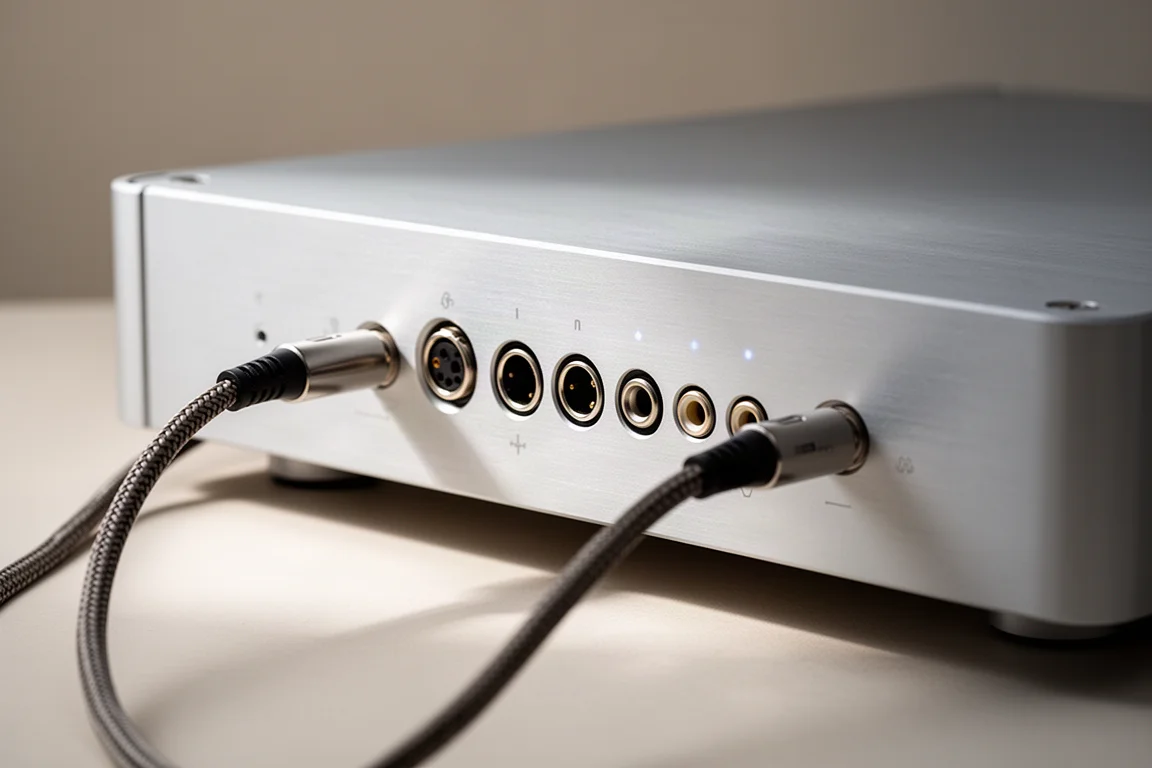
For most systems, the internal clock is the practical choice, and it is already very precise. The external input is best understood as a path you can take later, once the rest of the chain is settled, rather than a requirement for good sound.
Networking and Digital Outputs
Networking gets a meaningful upgrade. The T10 includes a 2.5 Gigabit Ethernet port, compared with standard Gigabit on the T8, which adds headroom for streaming ultra-high-resolution files. For most listeners, the T8’s Gigabit connection is still likely to be plenty. The SFP fiber port also returns and works as before: paired with a compatible fiber module and a fiber-capable switch, it breaks the electrical connection to your network entirely, cutting out the noise source that copper connections can sometimes introduce. Dual-band Wi-Fi is built in for setups where running a cable is not practical.
The rear panel covers every major digital output you would want. A galvanically isolated USB audio port handles DSD512 native and PCM up to 768 kHz at 32-bit. I2S over HDMI offers eight selectable pin modes for compatibility across a wide range of DACs and supports DSD512 and PCM 768 kHz. Coaxial, optical, and AES/EBU connections round out the classic options. Every output is electrically isolated to keep noise off the line, and trigger inputs and outputs let the T10 power on and off automatically with an amplifier or processor so everything wakes up together.
Living With the T10 Day to Day
Day-to-day usability is where EverSolo products tend to earn their keep, and the T10 is no different. The 8.6-inch touchscreen serves as the main control surface, and you can choose between full album art, VU meters, a spectrum analyzer, or nine different screensaver styles. The EverSolo Control app for iOS and Android mirrors the interface over your local network for full remote control, and screen casting is available for third-party apps running on the device.
Streaming support covers the major services natively, including Tidal, Qobuz, Amazon Music, and Deezer, and the T10 is Roon Ready with Tidal Connect, Qobuz Connect, and DLNA for flexible integration. The T10 also supports CD playback and ripping through a USB CD-ROM drive, with rips saved as WAV or FLAC to local or network storage, which is a genuinely useful option if you are still working through a physical collection.
For room correction and EQ, there is a parametric equalizer that works across all digital outputs, along with high and low pass filters, loudness control, dynamic range compression, and even channel delay. A dedicated room correction mode lets you adjust EQ based on your room’s acoustic characteristics. All of it is optional, and plenty of listeners will run the T10 flat just as it comes.
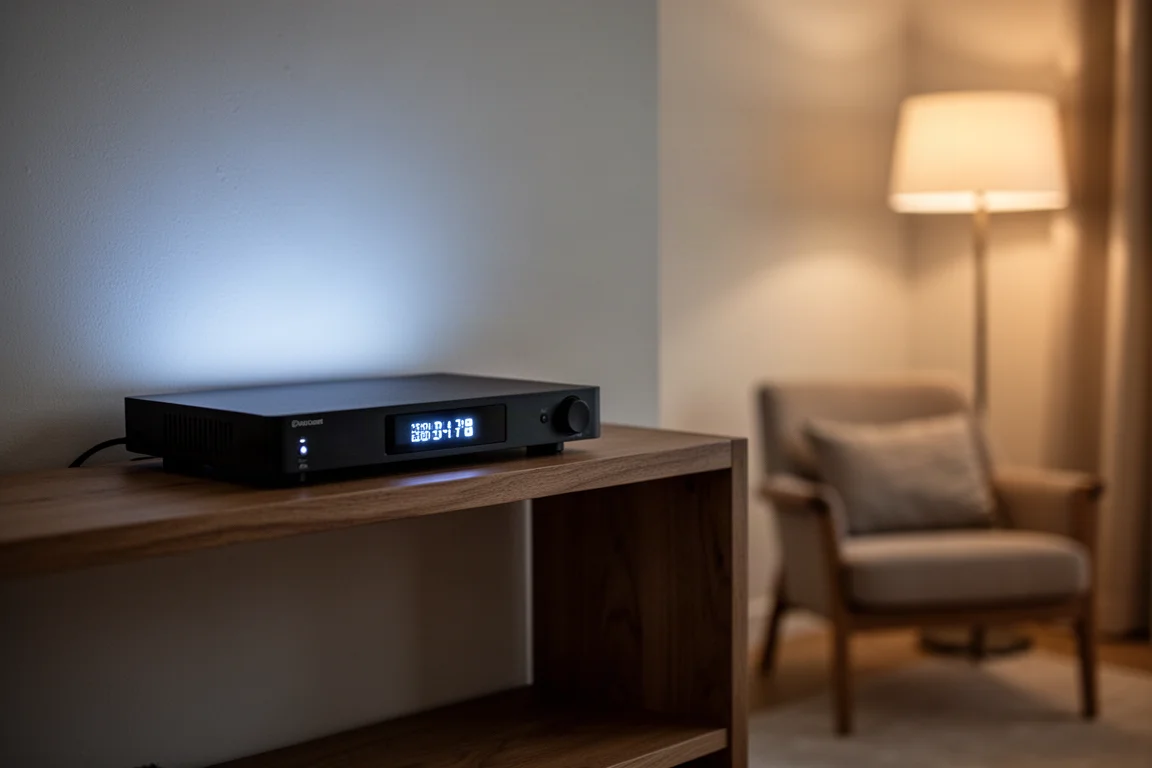
None of these tools force themselves on you. The interface stays quick whether you are browsing a large library, switching between services, or simply leaving album art on the screen, and that consistency is a big part of what makes the T10 easy to live with.
How the T10 Sounds in Practice
In use, the T10 sounds like the T8 with more of everything that makes a great transport great. The background is a little quieter, and that extra silence gives you more room to hear what is actually on the recording. Piano notes strike cleanly and hang in the air a little longer before fading. Cymbal hits carry air without hardening. Bass lines have pitch and definition rather than just weight, so you can follow the low end through a complex mix without anything blurring together. Vocals stay planted in the mix with a natural presence that does not call attention to itself.
Where the T10 pulls ahead of the T8 is in timing and space. Music feels slightly more locked in, the stage does not waver, a snare hit stops cleanly, and a fading synth note reveals its trailing edge instead of disappearing into the noise. Paired with the Z10, the combination is the strongest performance from EverSolo’s transport lineup. The I2S connection offered a slightly wider stage and a touch more ease in the upper frequencies than USB during testing, though that difference can be system dependent.
How the T10 Compares With the EverSolo T8
The T8 remains a capable transport, and its core approach is the same: linear power delivery, a precise internal clock, isolated outputs, and an SFP fiber port. The differences are easy to list. The T8 has a 6-inch touchscreen, Gigabit Ethernet, less system memory, and no external clock input. It also does not share the Z10’s chassis width, so the two do not stack cleanly on a shelf.
If your priority is a transport that handles streaming well and your network is already fast enough, the T8 covers the essentials, and its Gigabit port is still likely to be plenty for most people. The T10 is the one to consider if you want the larger display, the extra processing headroom, the 2.5 Gigabit port, or a path to external clocking, and if you want a front end that visually matches the Z10.
Pairing the T10 With the EverSolo Z10
The T10 and the Z10 are designed as a pair. Same width, same visual language, same scale, and displays that read as a matched set at 8.6 and 8.8 inches. Because the Z10 also accepts external clock signals, both units can lock onto a single master clock, which is the configuration these inputs were built for.
If you already own the Z10 and you are looking for the right transport, the T10 is the natural answer. If you are building a reference front end from scratch, the T10 and the Z10 together form a coherent digital chain, and the master clock in development is intended to complete it.
Things to Consider Before Buying
The T10 is a transport, not a one-box solution. It has no analog outputs and no headphone amp, so a DAC is mandatory, and the quality of that DAC still shapes the final result. The external clock input is genuinely useful, but only if you plan to add a master clock. Without one, you are relying on the internal femto clock, which is already extremely precise on its own.
The 2.5 Gigabit Ethernet port and the 8 GB of memory are meaningful for large libraries and high-resolution streaming, though listeners with modest libraries and a solid Gigabit network may not notice much difference in daily use. The room correction and EQ tools are optional as well. If you prefer a flat signal path, you can simply leave them alone.
Buying Advice
Choose the T10 if you want a dedicated transport with a large, fast interface, broad streaming support, isolated digital outputs, and a clean path to external clocking. It is the strongest match for the Z10, and it is the model to pick if you intend to build a reference digital front end over time.
Choose the T8 if you want the same fundamental transport approach at a lower tier and your network and system do not call for the extra headroom. It remains a capable option, particularly if you are not chasing external clocking or a matching chassis.
If you are starting fresh, plan the chain as a whole: transport, DAC, and, if you expect to use external clocking, a master clock. Buying the T10 and the Z10 together is the simplest way to get a matched front end, and either unit can be added later if you already own the other.
Conclusion
The T10 is what happens when a company listens. It fixes the chassis mismatch that kept the T8 and the Z10 from looking like a set, then adds a bigger display, faster networking, more memory, and an external clock input that moves the transport into reference territory. Paired with the Z10, it is the best combination in EverSolo’s transport lineup, and for anyone with a DAC they already trust, it is a straightforward upgrade path.
Product link
View more details for EverSolo T10
This product is mentioned in the review. Check the specifications, options, and compatibility before buying.
View more details for EverSolo T10Further reading
Related Reviews
Hi-Fi Audio
Accuphase C-57 vs Allnic H-7000V: Two High-End Phono Stages Compared
A fully balanced solid-state phono stage with a pitch-black noise floor meets a tube design built for well-loved records. Here is how to choose between them.
Hi-Fi Audio
Active vs Passive Hi-Fi: Five Components for a Modern System
Five components that define modern active and passive hi-fi systems, with the strengths, trade-offs and setup details worth weighing before you buy.
Hi-Fi Audio
Advance Paris A10 Apex Review: A Hybrid Integrated Amplifier That Covers a Lot of Ground
A French hybrid integrated amplifier with a class A tube preamp stage, analogue power meters, and an internal DAC and phono stage good enough to make extra boxes unnecessary.