Hi-Fi Audio
Eversolo Play Review: A Compact Streaming Amplifier That Covers Almost Everything
An all-in-one streaming amplifier with CD ripping, room correction, multi-room audio, and a phono stage, plus the power limits to understand before buying.
Introduction
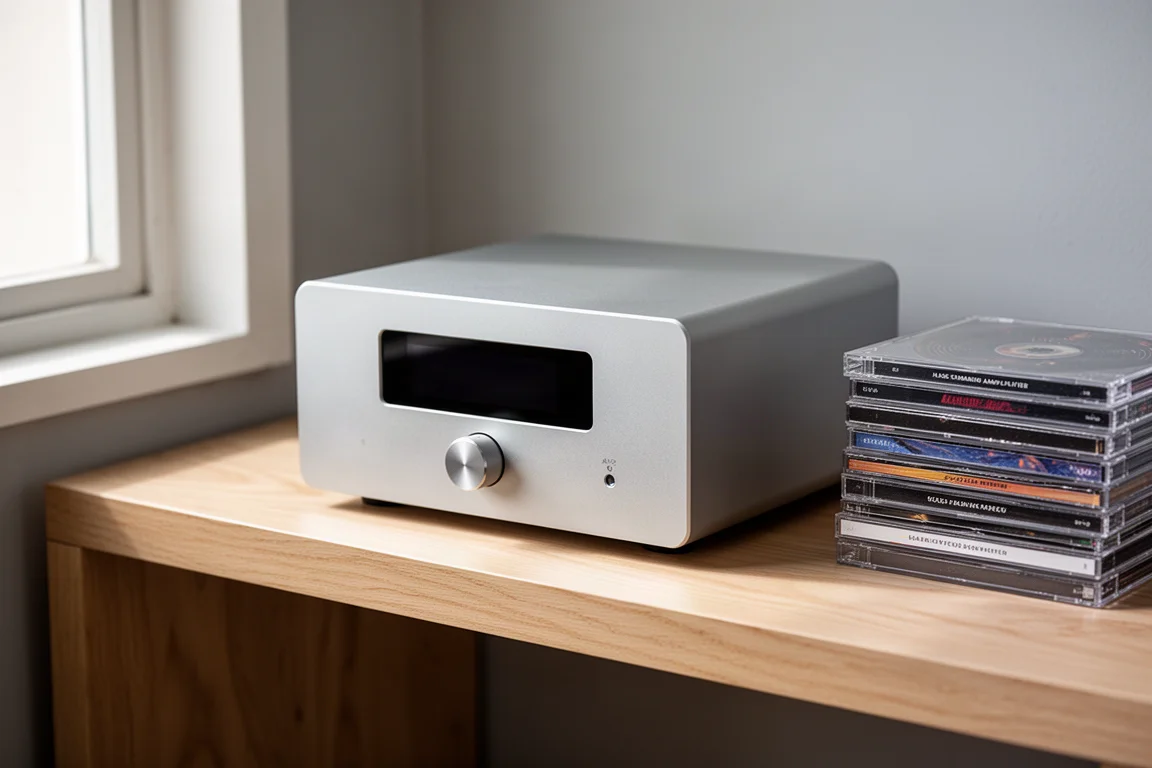
The Eversolo Play is a streaming amplifier that fits an entire two-channel system into one compact chassis. Connect a pair of speakers and a length of speaker cable, and the setup is finished. Its Class D amplifier delivers 60 watts into 8 ohms and 110 watts into 4 ohms, and the feature list reaches well beyond what those modest numbers suggest.
Streaming, local library playback, CD ripping, CD playback, room correction, parametric EQ, VU meters, multi-room zones, and a phono stage are all part of the package. The onboard AKM DAC is a departure from the Saber chips used in the earlier DMP models, and it is the more appealing of the two voicings in this lineup.
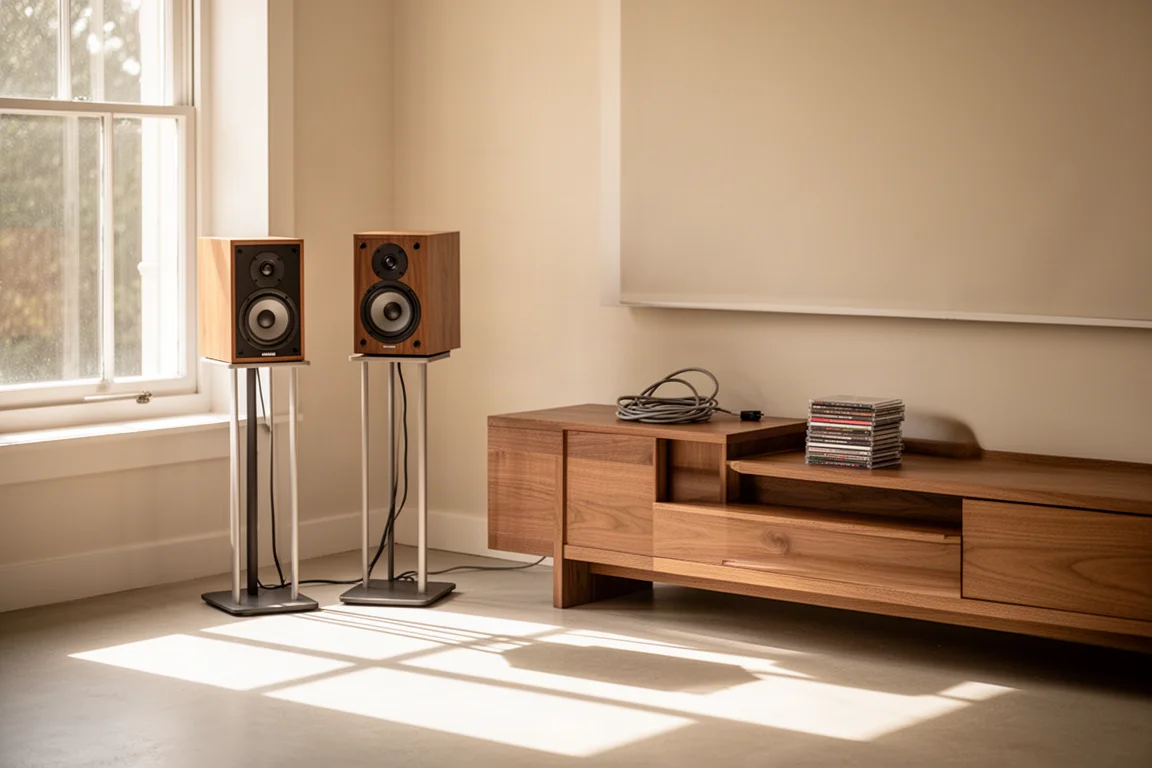
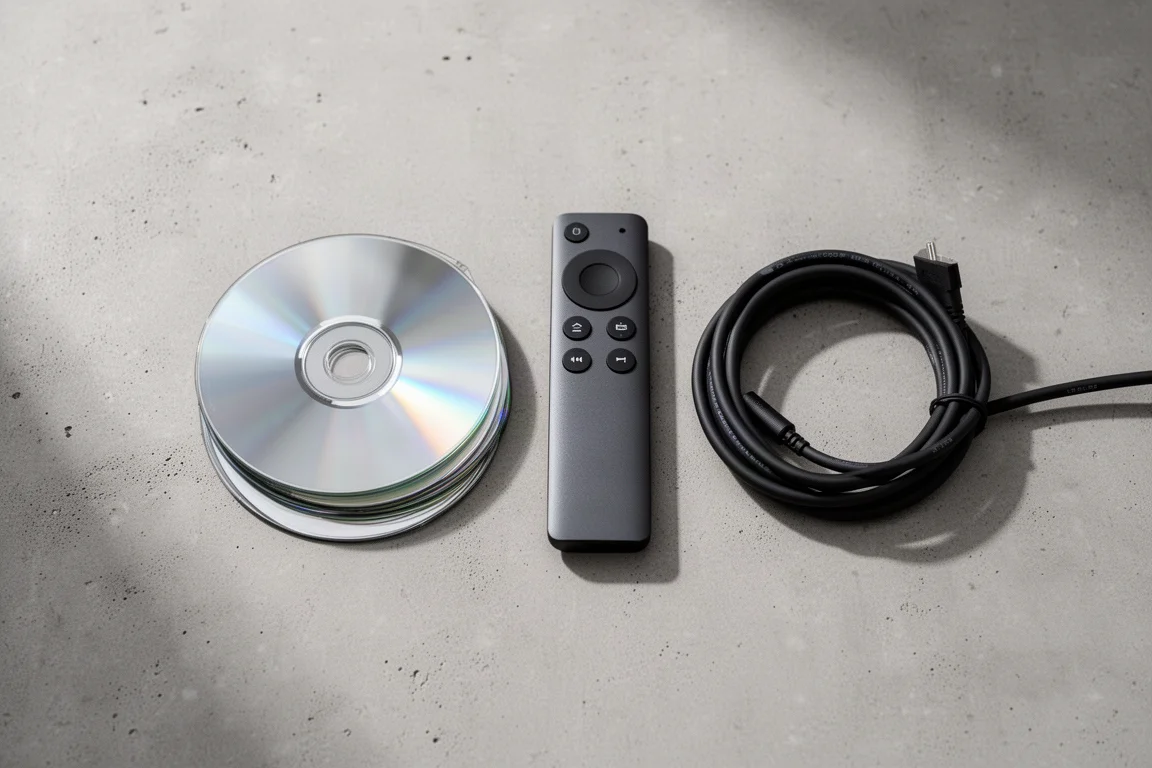
Two versions are available. The model with the built-in CD drive is priced around $799, roughly $100 above the version without it, and that drive handles both ripping and disc playback without any external hardware. For anyone with even a small CD collection, that is a modest premium for a lot of convenience.
Who This Product Is For
The Play makes the most sense for listeners who play music at low to moderate levels in a normal room. Power output is its main constraint, and that shapes almost everything about who should buy it.
Speakers with reasonable sensitivity are the right match. A pair rated around 86 to 87 dB with a nominal impedance near 4 ohms works comfortably at everyday listening levels. More demanding speakers, or a habit of listening at genuinely loud levels for long stretches, will reach the ceiling quickly.
It also suits households that would rather own one box than four: a streamer, a DAC, an amplifier, and a CD transport in a single unit. Vinyl listeners benefit as well, because the phono input accepts both moving magnet and moving coil cartridges, which is unusual on an all-in-one of this type.
Main Strengths
Start with the feature list, because it is unusually complete for the money. Streaming, room correction, parametric EQ, VU meters, multi-room zones, and the same interface used across the wider lineup are all present.
The CD drive is optional but worthwhile. Adding it costs about $100 and brings ripping and playback inside the chassis, where the earlier DMP models needed an external USB drive to do the same job.
Rear connectivity covers the practical cases. A dedicated subwoofer output with proper integration settings lets you extend the low end, HDMI eARC connects the unit straight to a television, and USB 3.0 accepts external storage. Two RCA analog inputs are included, one of them reserved for the phono stage.
Wireless performance deserves its own mention. The Play holds a stable Wi-Fi connection without the external antennas used on the DMP units, and a gigabit Ethernet port is there for anyone who prefers a hard-wired link.
Streaming, Room Correction, and Multi-Room
Multi-room support is where the Play separates itself from much of the competition. Zones can be configured individually, and several units can be spread through a house and controlled as a single system.
Room correction and parametric EQ handle the fine tuning. They are not the same professional-grade toolkit found on the DMP-A8 and DMP-A10, but for optimising a real room and adjusting smaller tonal details they cover the job comfortably.
The interface is shared with the rest of the lineup, so anyone familiar with those units will recognise the layout, the VU meters, and the general flow of the menus.
Sound Quality and Amplifier Performance
Tonally, the Play lands close to a considerably more expensive pairing. The DMP-A10 streamer leans bright and linear, the F10 amplifier leans warm and darker, and together they balance each other out. The Play’s built-in Class D amplifier produces a similar blend of detail and body from a single box rather than a stack costing many times more.
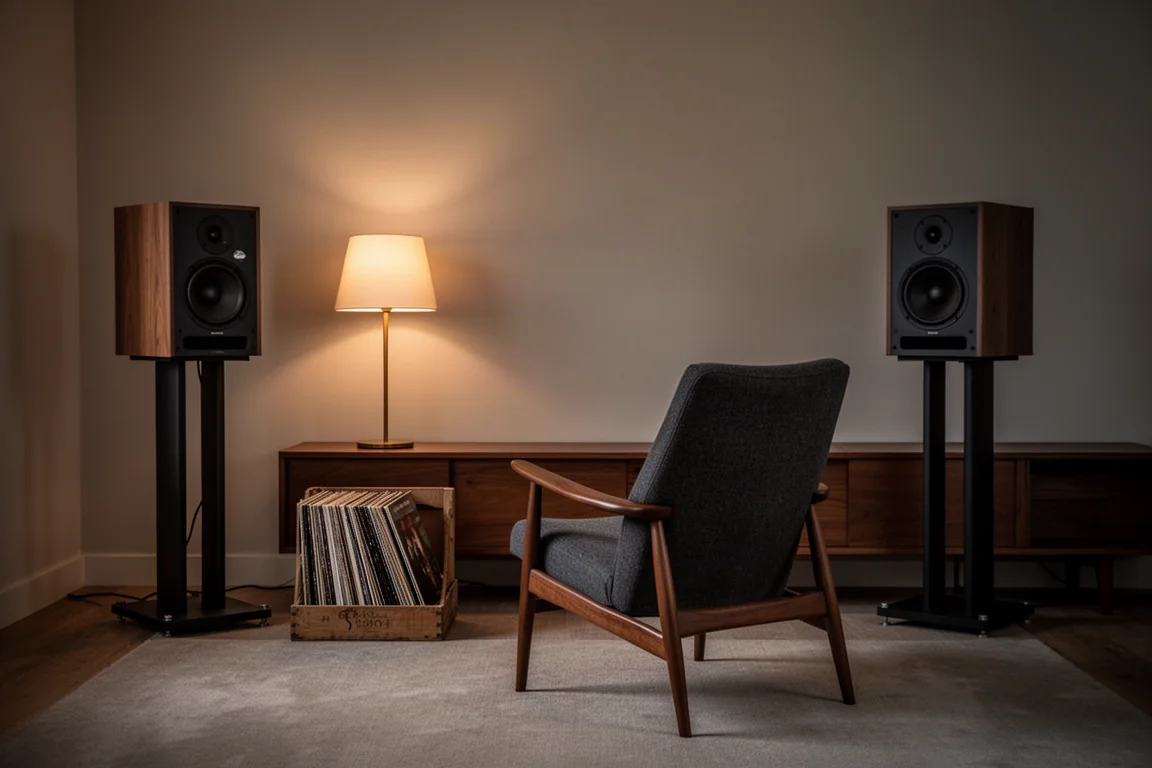
Power is the honest limitation. Driving a pair of 87 dB bookshelf speakers with a nominal 4 ohm load and a 3.7 ohm minimum required pushing the volume to its maximum for genuinely loud playback. Even at full volume the sound stayed composed, but that is not a habit to build a system around. At moderate levels, the same speakers are a comfortable match.
If your speakers are harder to drive than that, the Play is not the right amplifier for them. Sensitive speakers and sensible listening levels are the conditions under which it performs at its best.
Things to Consider Before Buying
The rear binding posts sit very close together. That makes thick speaker cables difficult to fit and raises the chance of an accidental short, and the posts themselves are not especially high in quality. Choose cables with slimmer terminations.
Chassis feel is another point to weigh. From a distance the casework resembles the DMP units, but the longer you spend with it, the more the finish reads as a step below them. The volume control reinforces that impression: it feels noticeably less refined than the DMP-A6, and a mild step below the DMP-A10.
There are also features that simply are not here. The Play offers no analog outputs beyond its inputs, no I2S connection, and no internal SSD slot of the kind found on the DMP-A6. If any of those matter to your setup, they will not arrive through a later update.
Buying Advice
Match the Play to the room and the speakers before anything else. If your speakers are reasonably sensitive and you listen at low to moderate levels, this unit delivers a complete, well-equipped system for a modest outlay.
Choose the version with the CD drive if you own CDs. The roughly $100 premium buys ripping and playback inside the same box, and that functionality cannot be added to the standard model afterwards.
If you already own a DMP-A6, DMP-A8, or DMP-A10, there is little reason to replace it. Those models include features the Play does not, such as the XLR outputs on the higher units, so the Play is best understood as a compact alternative for a second system or a first serious setup rather than a direct upgrade.
For anyone who needs to drive difficult speakers at high volumes, plan on separates instead. The amplifier stage is the limiting part of this design, not its streaming platform.
Conclusion
The Eversolo Play is a remarkably complete single-box system: streaming, CD ripping and playback, room correction, multi-room audio, a phono stage, and a capable Class D amplifier, with the CD version priced around $799. Its constraints are clear and worth respecting. Sensible speakers and moderate listening levels unlock everything it does well, and on those terms it is an easy recommendation.
Product link
View more details for EverSolo Play
This product is mentioned in the review. Check the specifications, options, and compatibility before buying.
View more details for EverSolo PlayFurther reading
Related Reviews
Hi-Fi Audio
Accuphase C-57 vs Allnic H-7000V: Two High-End Phono Stages Compared
A fully balanced solid-state phono stage with a pitch-black noise floor meets a tube design built for well-loved records. Here is how to choose between them.
Hi-Fi Audio
Active vs Passive Hi-Fi: Five Components for a Modern System
Five components that define modern active and passive hi-fi systems, with the strengths, trade-offs and setup details worth weighing before you buy.
Hi-Fi Audio
Advance Paris A10 Apex Review: A Hybrid Integrated Amplifier That Covers a Lot of Ground
A French hybrid integrated amplifier with a class A tube preamp stage, analogue power meters, and an internal DAC and phono stage good enough to make extra boxes unnecessary.