Audio Amplifiers
Eversolo F10 Review: A Warm, Powerful Class AB Amplifier
A practical look at the Eversolo F10, a warm-sounding class AB stereo amplifier with serious power reserves and a strong case for pairing with an Eversolo streamer all-in-one.
Introduction
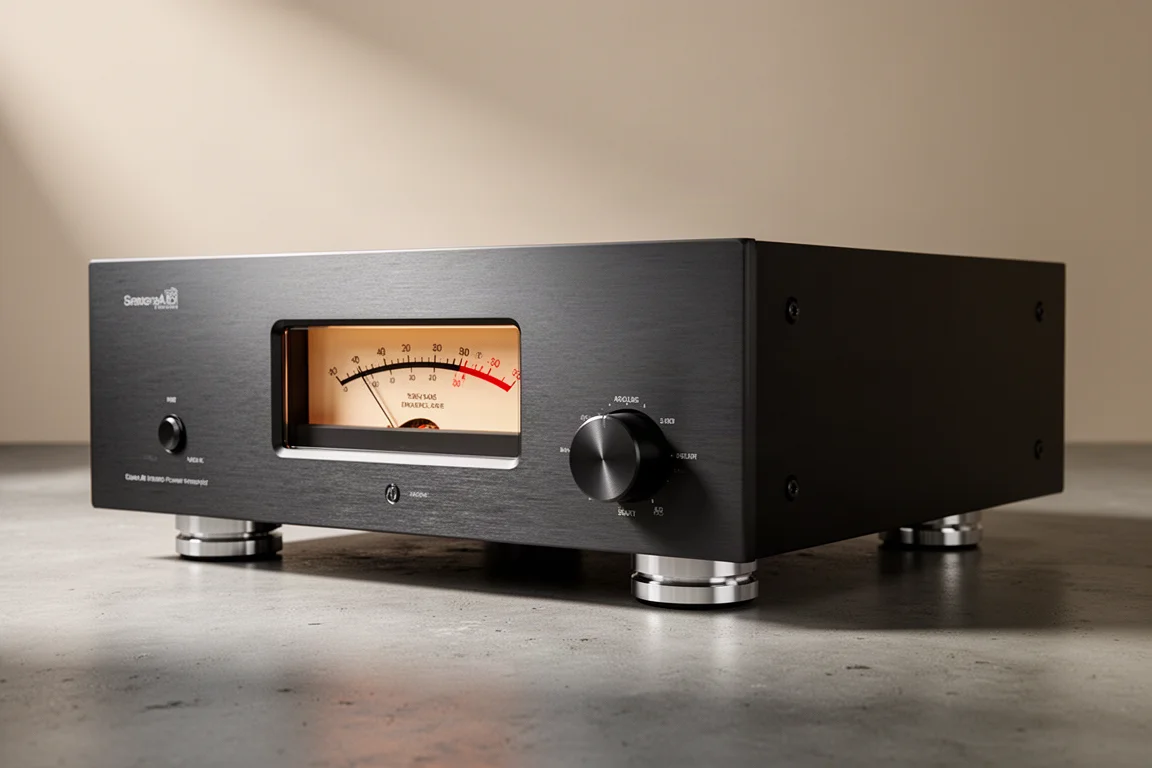
The Eversolo F10 is a class AB power amplifier built to sit alongside Eversolo’s streamer, DAC and preamplifier all-in-one units, and it makes a strong case for itself on value alone. Inside the chassis there is a linear power supply, a generous transistor count and a specification sheet that reads like something well above its class.
It is designed primarily for the Eversolo DMP-A10, and it also pairs with the DMP-A8 and the DMP-A6. All three of those units combine streaming, digital to analogue conversion and preamplification in a single box, and they have earned a reputation for generous features, an intuitive interface and sound quality that outpaces their price. The F10 follows the same philosophy: a great deal of capability for the money.
Sit it next to the DMP-A10 and the family resemblance is obvious. The F10 is slightly taller, but the form factor, the build quality and the overall design language line up closely, right down to the placement of the logo and the VU meter on the front panel.
Who This Amplifier Is For
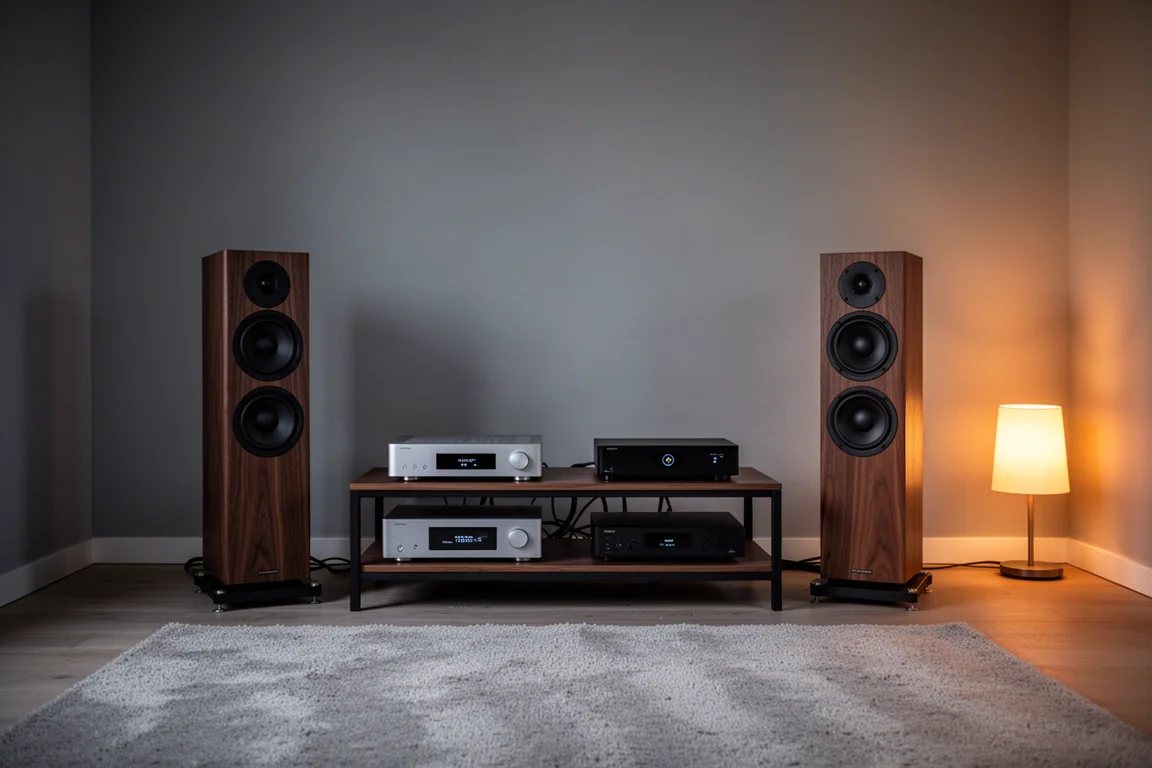
Anyone already running an Eversolo streamer all-in-one has the easiest decision to make. The two halves of the system balance each other well: the streamer side tends toward detail and can feel clinical on its own, while the F10 is warm, smooth and easygoing. Together they produce a more balanced presentation, and the tone-shaping tools in the Eversolo app give you room to fine-tune from there.
The strongest recommendation goes to listeners running speakers that are detail-oriented and full of nuance but can turn bright and fatiguing when matched with the wrong amplifier. With the F10, those speakers keep their detail and their airy top end while the mid-range and bass gain extra weight and texture. The result is a system that stays enjoyable over long listening sessions rather than one that demands short ones.
Power, Connectivity, and Internal Design
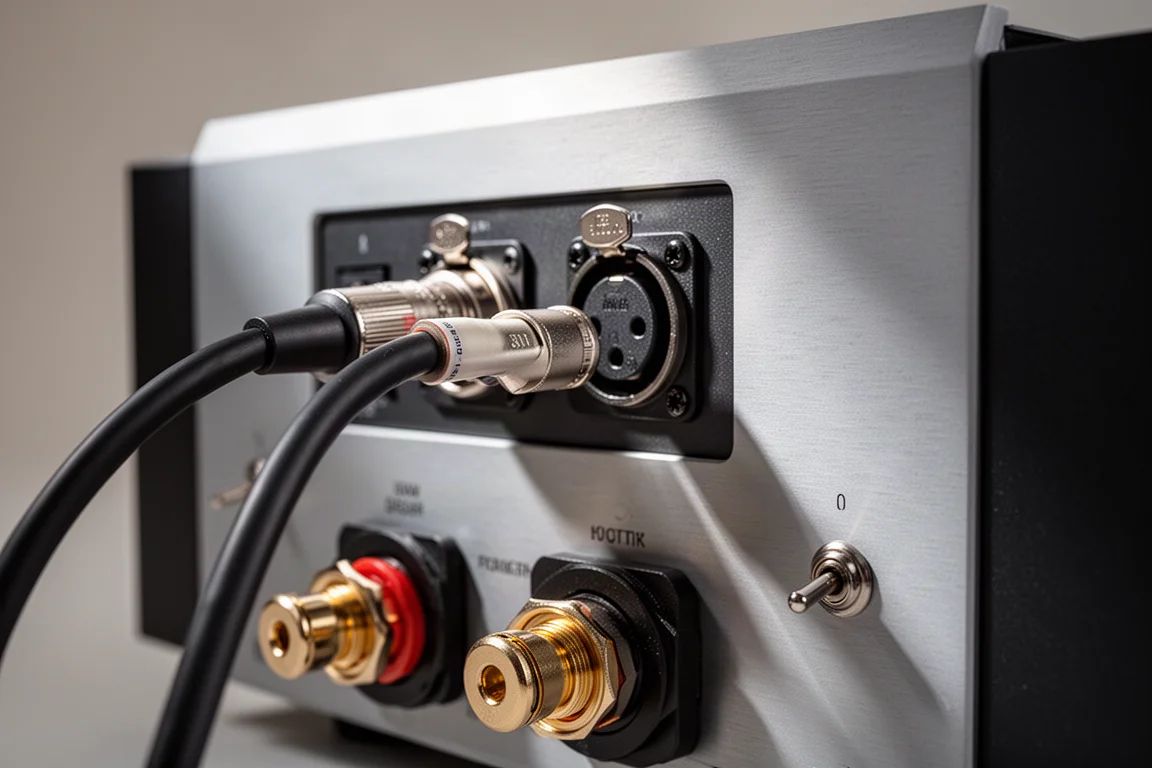
The rear panel is clean and clearly labelled, with both XLR and RCA inputs available. A sensitivity switch sets the gain of the amplifier: 23 dB is the standard setting, while 29 dB is there for demanding speakers that need more drive. A second switch selects stereo or mono operation, so two F10 units can be bridged into a pair of monoblocks.
In stereo, the F10 is rated at 200 watts into 8 ohms, 320 watts into 4 ohms and 450 watts into 2 ohms. Bridged as a pair, output rises to 650 watts into 8 ohms and 950 watts into 4 ohms. Eversolo also quotes respectable total harmonic distortion figures and damping factor, and that is a lot of power for driving most speakers on the market.
The more interesting story is inside the chassis. A linear power supply with large toroidal transformers feeds a substantial bank of reservoir capacitors, and filtering is included to keep unwanted DC noise out of the signal path. Each side uses five MOSFET transistors, ten in total. A dual differential amplifier design and dedicated preamp modules help lower noise and widen dynamic range. The circuit board is of a higher quality than is typically found at this price point.
Sound Character and Speaker Matching
The F10 sounds warm, easygoing and smooth. Bass is rich and full, with real texture, depth and punch, and the mid-range carries a satisfying thickness. The high frequencies are forgiving rather than forward. Among the amplifiers it was measured against, it was also the warmest sounding with no tone shaping applied.
That character pays off with speakers that lean toward detail and nuance. Those designs can sound clinical, lifeless or brittle when paired badly, but the F10 keeps their micro-detail intact while adding body to the bass and mid-range. The top end stays informative without becoming fatiguing.
With warmer and more neutral speakers, the picture changes. Bass remains excellent, but the top end can feel too subdued, and some of the air and extension those speakers are capable of goes missing. On that kind of system, leaner and more neutral amplifiers can be the better fit, and the F10 needs a little help from the tone controls to close the gap.
Things to Consider Before Buying
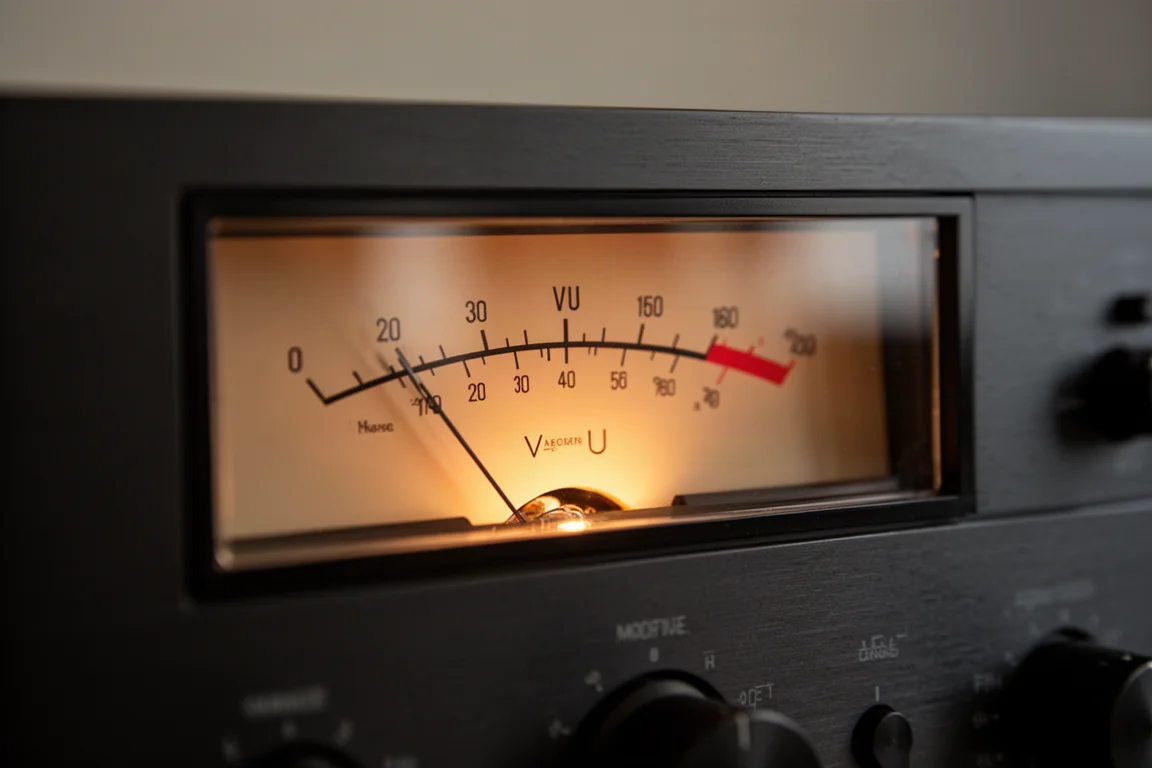
The front panel carries two logos, which some buyers will find unnecessary on an otherwise restrained design. The VU meter is also noticeably more jittery than the digital meter on the DMP-A10. From a normal listening position this is a minor point, but up close the difference is clearly visible.
The tone-shaping functions that unlock the F10’s flexibility live in the Eversolo streamer all-in-ones. If you do not own a DMP-A10, DMP-A8 or DMP-A6, you will be working with the amplifier’s own character alone, and the balance it strikes with your speakers becomes the whole story.
It is worth being honest about that before you commit: the F10 is at its best as the power stage of an Eversolo system rather than as an isolated purchase.
Getting the Most From the Eversolo F10
Pairing the F10 with the DMP-A10 opens up the loudness contour and the parametric EQ, and those two tools change what the amplifier can do. Switching on the loudness contour and adjusting the PEQ to taste brought warm and neutral speakers back into balance, restoring the high frequency presence that the amplifier on its own can hold back. Once dialled in, the F10 became the preferred choice even on those systems.
The sensitivity switch is the other lever worth using. Keep it at 23 dB for typical setups and move to 29 dB when the speakers need more gain. If you own two F10 units, bridged mono operation turns them into a pair of monoblocks with a substantial power reserve behind them.
Buying Advice
The F10 stands up well against far more expensive company. Compared with monoblock and integrated amplifiers costing considerably more, it held its own and was often the preferred option, particularly with brighter, detail-focused speakers. Those pricier designs did offer a more layered presentation and a grander sense of scale, but that reads as a refinement rather than a gap in the fundamentals.
Against a class D amplifier from an earlier collaboration, the F10 was the stronger performer in every category. Against two well-regarded amplifiers that sit under the $2,000 mark, it was clearly ahead on bass weight, texture and punch.
If you want the most from the F10, plan the streamer side of the system at the same time. That combination is where the value really shows, and it is the configuration that lets the amplifier compete with far pricier alternatives without feeling like a compromise.
Conclusion
The Eversolo F10 is a warm, smooth and genuinely powerful class AB amplifier that rewards a considered system match. Buy it as the power stage for an Eversolo streamer setup and it delivers a musical, non-fatiguing sound with excellent bass weight and texture. Pair it with speakers that benefit from a little restraint at the top end, and it becomes an easy recommendation.
Product link
View more details for Eversolo F10
This product is mentioned in the review. Check the specifications, options, and compatibility before buying.
View more details for Eversolo F10Further reading
Related Reviews
Audio Amplifiers
AGD Audion Mark III Review: A Compact Class D Amplifier With Tube-Like Musicality
A gallium nitride Class D amplifier that delivers tube-like midrange warmth, serious bass grip, and a modular upgrade path in a very small chassis.
Audio Amplifiers
Best Class D Amplifiers Under $100: Douk Audio A5 vs Fosi Audio V3
Two sub-$100 Class D amplifiers built on the same 3255 chipset, compared on bass weight, midrange body, treble presence, and real-world speaker matching.
Audio Amplifiers
Best Power Amplifiers Under $500: Six Stereo Amplifiers From $74 to $579
A practical roundup of six stereo power amplifiers under $500, covering real-world power, connectivity, cooling, and which kind of system each one suits.