Streaming Hi-Fi
EverSolo DMP-A8 Gen II vs Master Gen II: Which Streaming DAC Fits Your System?
A practical look at the two second-generation EverSolo DMP-A8 models, what they share, what the Master adds, and how to choose between them.
Introduction
The EverSolo DMP-A8 has earned a strong reputation as a single-box digital front end: a streamer, a DAC and a preamplifier in one chassis, so you do not have to stack separate components to get from your network to your amplifier. For the second generation, EverSolo has split the model line in two: the standard DMP-A8 Gen II and the DMP-A8 Master Gen II.
Both add hardware the original A8 never had, including a larger display, a faster processor, more storage headroom and a fibre optic network port. The Master Gen II goes further with a built-in CD mechanism and a clock upgrade. This guide covers what each model does, what separates them, and which one makes more sense for a given system.
What Both Gen II Models Share
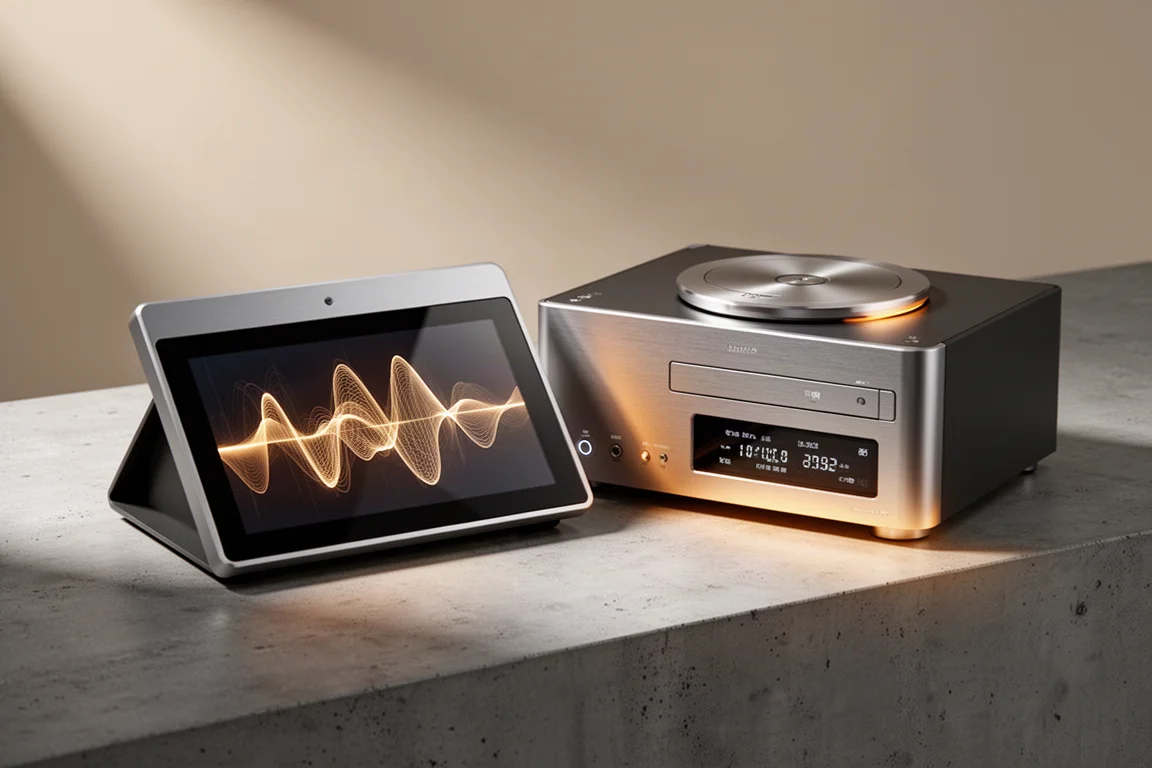
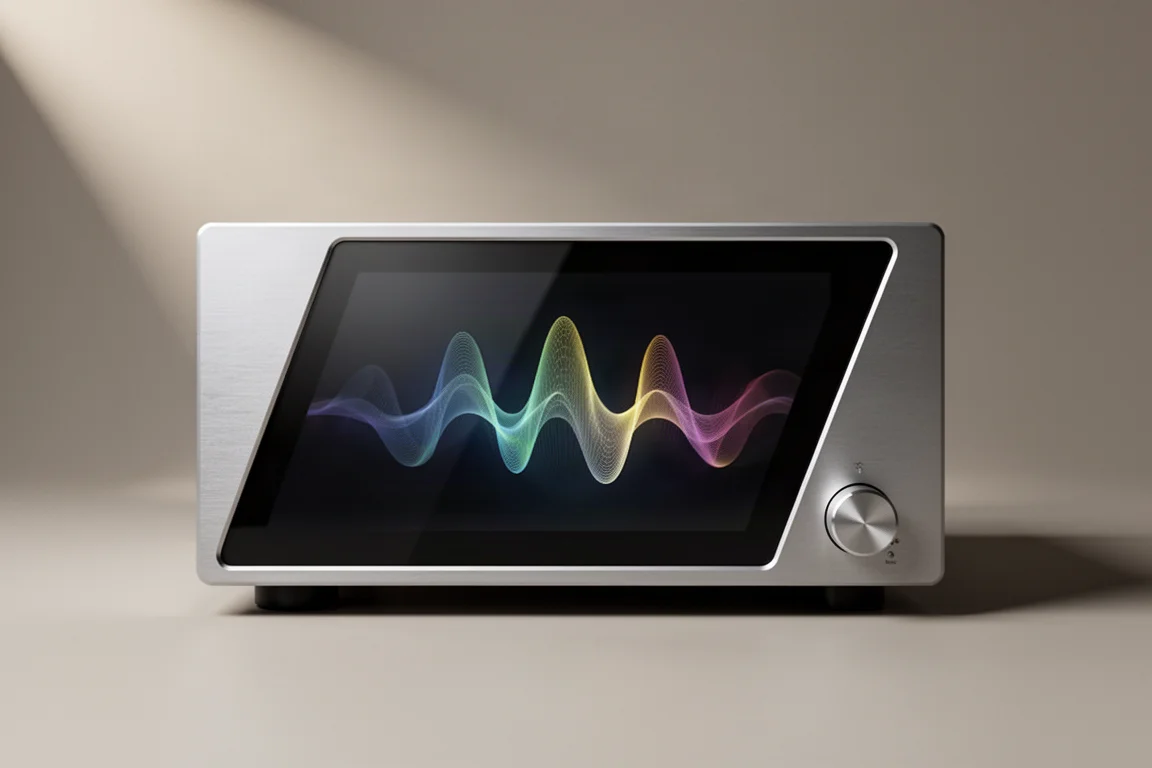
The most visible change is the front panel. The 6-inch touchscreen of the original A8 grows to 8.6 inches, and the interface has been rebuilt around it. You still get album art, VU meters and a spectrum analyser, along with newer animated display modes that move with the music. Control is available from the touchscreen itself, from the EverSolo app, or from the infrared remote included in the box.
Processing gets a substantial step up as well, moving from a quad-core chip to a 64-bit octa-core processor with 8 GB of DDR5 memory. EverSolo states that this configuration can scan and organise a 200,000-track local library in roughly two hours, which gives a sense of the headroom built in. Internal expansion comes from an M.2 NVMe slot on the underside that accepts SSDs up to 8 TB, double the ceiling of the original A8.
Networking covers gigabit Ethernet and built-in dual-band Wi-Fi 6, plus a dedicated SFP fibre optic network port that is new for this generation. A standard Ethernet connection carries audio data and electrical noise along the same copper wire, and that noise can find its way into sensitive analogue circuitry. A fibre link breaks the electrical path entirely, since light does not carry electrical noise, which removes that noise at the network interface. Using it requires a fibre-capable switch and a compatible module, so it is aimed at listeners building toward a very low-noise system.
Both models also share the same digital architecture: a two-chip design pairing the AK4191EQ for digital processing with AKM’s flagship AK4499EX for conversion. Separating processing from conversion keeps noise in one stage from bleeding into the other, an approach more commonly found in higher-end digital components. Volume control follows the same philosophy. Rather than a standard digital volume control, EverSolo uses an R2R resistor ladder backed by its EVC volume engine, attenuating the signal in the analogue domain with a network of precision resistors so resolution and channel balance stay consistent at essentially any listening level.
EverSolo DMP-A8 Gen II
At its core, the DMP-A8 Gen II is the same concept as before: one chassis that accepts digital sources, converts them through a high-quality DAC section, controls the volume and passes the signal to an amplifier or powered speakers. If you stream your music, keep a local library, or both, it can be the only component between your network and your amplifier.
The standard Gen II keeps the shared architecture described above: the 8.6-inch touchscreen, the 64-bit octa-core processor with 8 GB of DDR5 memory, the AK4191EQ and AK4499EX DAC pairing, the R2R ladder volume control, and the full set of network options including the SFP fibre port. What it does not include is the Master’s built-in CD mechanism or its upgraded clocking, and it does not offer the 10 MHz external clock input.
That makes the standard Gen II the straightforward choice for listeners who stream and have no plans to add an external clock. It delivers almost the same sound as the Master model for less money.
EverSolo DMP-A8 Master Gen II
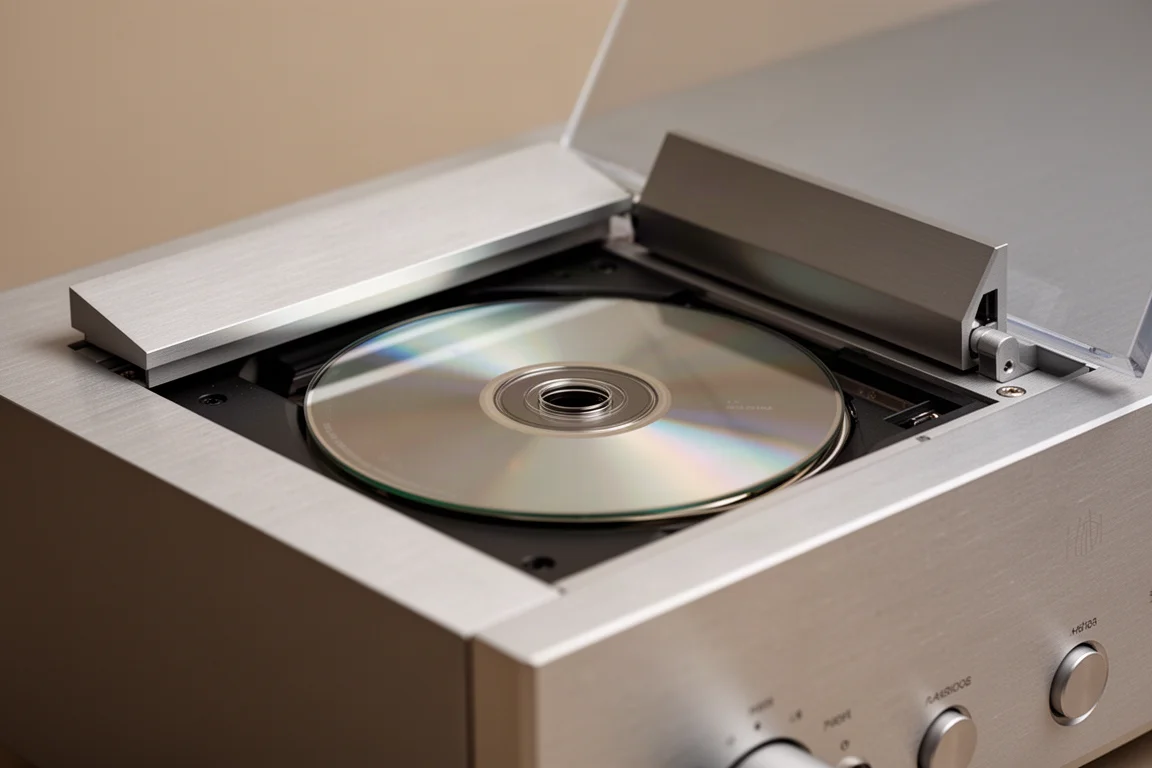
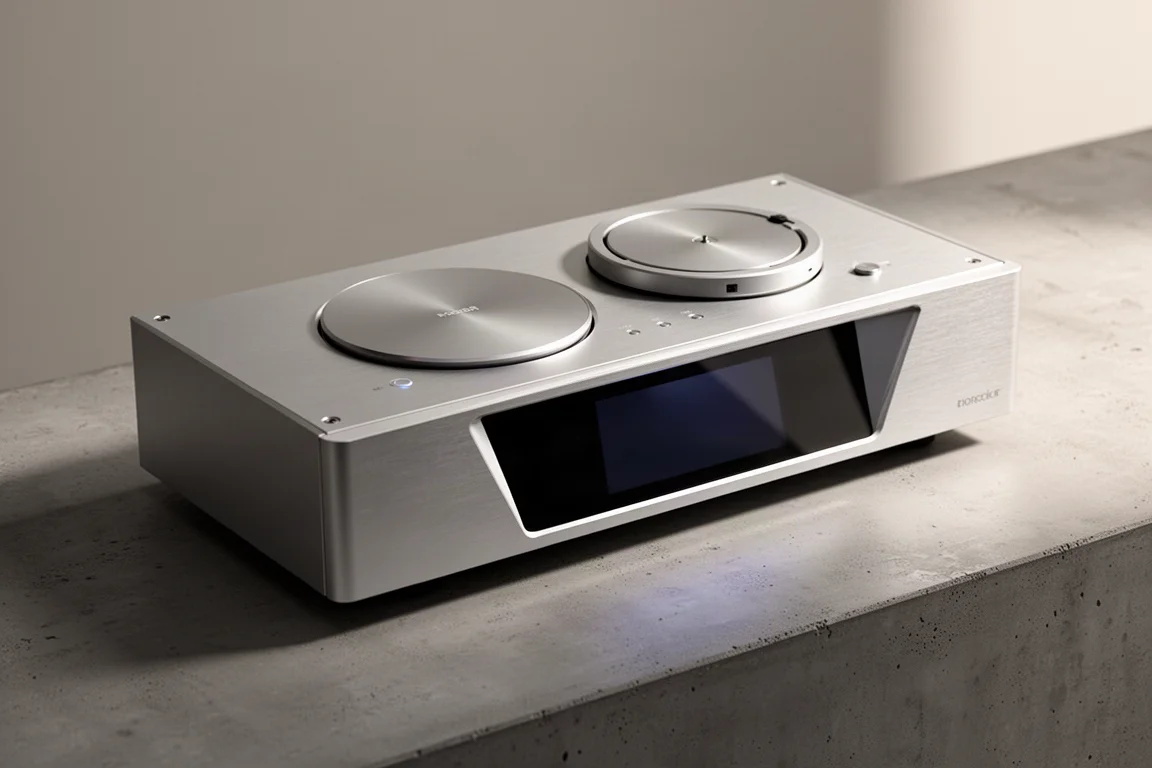
The Master Gen II is the first A8 to include a built-in top-loading CD mechanism, which makes CD playback simple and adds a genuine bonus for anyone digitising a disc collection, since it removes the need for an external USB drive. The system rips losslessly to WAV or FLAC, handles metadata and album art automatically, detects duplicates, and saves files to local storage or a network drive. For playback, the built-in mechanism performs well for what it is: it will not challenge a serious dedicated transport, but it is a capable and convenient disc player that earns its place in the chassis.
Clockwork is the other major difference. Both units use quality clocking, but the Master Gen II steps up to an oven-controlled crystal oscillator with PLL correction. All digital audio depends on precise timing to reconstruct the original signal accurately, and when that timing wavers even slightly it creates jitter, which introduces errors between samples and blurs the presentation. Instruments lose definition and transients soften. An OCXO addresses this by holding the crystal oscillator at a constant temperature, since temperature changes cause crystals to drift. By removing that variable, the OCXO keeps jitter under 50 femtoseconds, which makes music sound more alive and closer to the original performance.
The Master Gen II also adds a 10 MHz external clock input with adaptive syncing. An EverSolo precision master clock is built to feed this input directly, and other EverSolo components can lock to the same reference clock at once, delivering the kind of system-wide synchronisation usually found well above this price point. In a simple setup without an external clock, you may never use this input, but it provides a path to add one later.
Room Correction and Streaming Features
Both models run EverSolo’s usual streaming services natively and are Roon ready. Room correction moves up to EverSolo’s Evo Tune Pro system, which adds customisable target curves and stronger bass range control compared with the original Evo Tune. It pairs FIR filtering with a 20-band parametric EQ for manual adjustment, plus another 20 bands dedicated to automated room correction. Measurements can be taken with a phone microphone or a dedicated USB microphone, and Evo Tune Pro builds a correction filter from there. In practice the process is quick to work through and the results are convincing.
System-wide fade-in and fade-out now applies across local playback and streaming services as well, which is a small quality-of-life detail that makes switching sources and tracks feel smoother.
Connectivity and System Integration
The rear panels of the two Gen II models are identical. Both offer USB audio output supporting native DSD512 and PCM up to 768 kHz at 32-bit, I2S output with eight selectable pin modes, AES/EBU, coaxial and optical digital connections, and HDMI ARC and eARC for TV audio. There is also a dedicated subwoofer output with an adjustable crossover, which is new relative to the original A8 and useful in two-channel setups that add a sub.
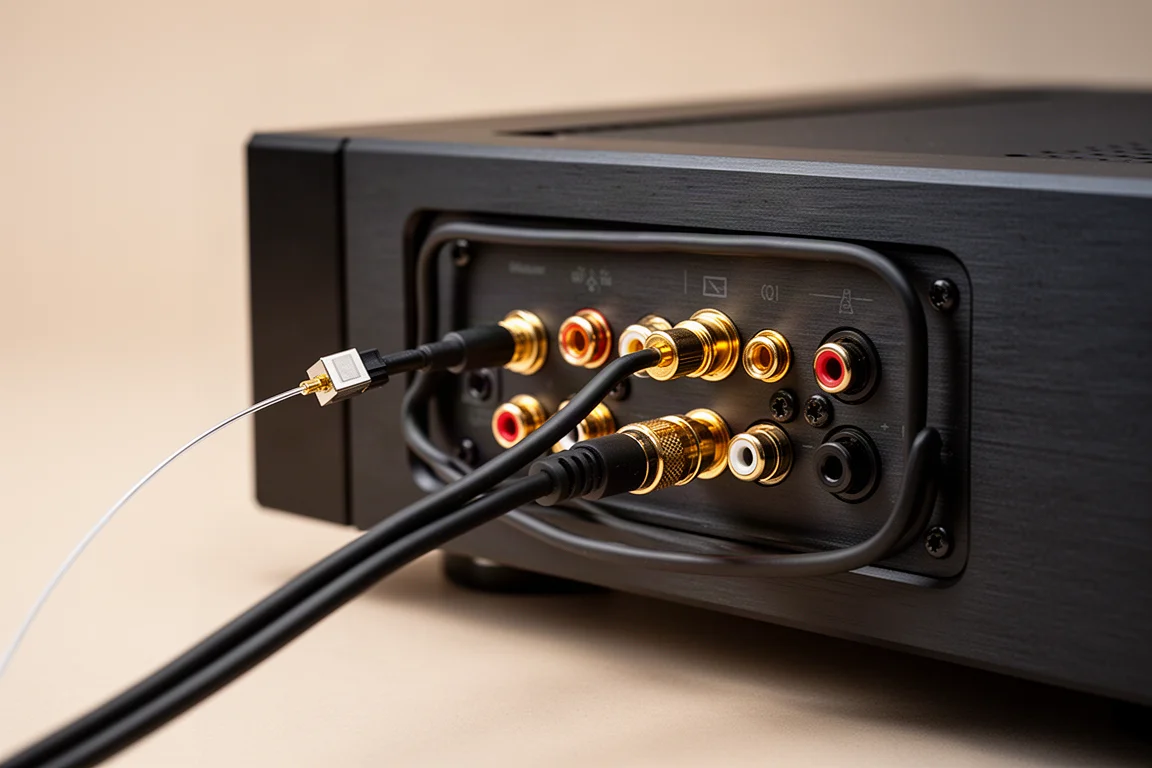
Automation is covered by wake on LAN and a 12 V trigger, so the unit can power on together with the rest of the system rather than needing a separate step every time you sit down to listen. Between the digital inputs, the subwoofer output and the trigger, the A8 Gen II models are set up to sit at the centre of a system rather than off to one side of it.
Sound Quality and Listening Notes
Set up with several different systems, the DMP-A8 Master Gen II carried the same sonic signature associated with EverSolo’s AKM Velvet Sound pairing, which also appears in the original A8. The background stays remarkably quiet, giving instruments room to sit apart rather than blurring into each other. Piano and acoustic guitar keep a natural decay, and vocals sit forward and clear without turning overly bright. The tonal balance leans slightly warm while retaining detail at the top end.
Because the core DAC pairing has not changed much between generations, owners of the original A8 should expect a familiar character rather than a different voicing. The generational gains show up in usability, processing speed, storage, networking and the subwoofer output, and on the Master model in clocking and disc playback.
Buying Advice: Standard or Master
If you already own the original A8, the Gen II models pull ahead through the larger screen, much faster processing, double the storage ceiling, the SFP fibre network port and the subwoofer output the original never had. The Master version then adds the OCXO clock and the built-in CD player, making it a more complete box before sound quality even enters the conversation.
Between the two, the decision is mostly about how you listen. If you only stream music and have no plans for an external clock, the standard DMP-A8 Gen II gets you almost the same sound for less money. The Master Gen II makes sense if you still play CDs, want tighter timing without relying on an external clock, or are building toward a reference setup where synchronisation matters and you want to add an external clock later. None of those additions are easy to retrofit to the standard Gen II.
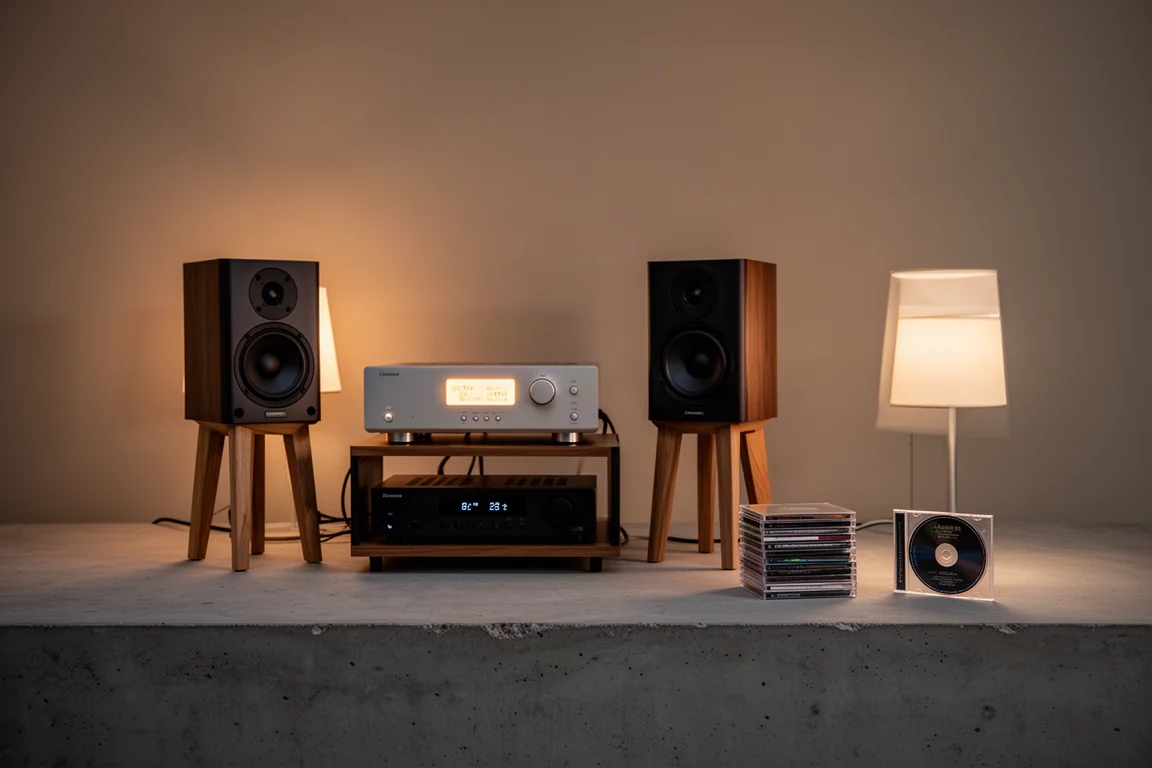
For anyone holding a disc collection, the Master’s ripping workflow is the clearest practical advantage, since it turns a shelf of CDs into a local library without extra hardware. For pure streaming setups, the standard model keeps the same core architecture and the same streaming and room correction features, which is where most of the day-to-day value sits.
Conclusion
The DMP-A8 Gen II and DMP-A8 Master Gen II share a great deal: the same DAC architecture, the same analogue-domain volume control, the same 8.6-inch interface, the same processor and memory, and the same connectivity. The choice comes down to whether you want the CD mechanism and the clock upgrade, or whether a streaming-focused single box at a lower cost is the better fit. Both remain a clean way to run an entire digital front end from one chassis.
Further reading
Related Reviews

Backpacking Gear
Building a 10 lb Base Weight: An Ultralight Backpacking Gear List
A practical walkthrough of the ultralight pieces behind a 10 lb base weight, from a 765 g pack and a roomy one-person tent to a full camp chair and a dependable water filter.

Road Bikes
10 New Road Bikes Worth Watching: Aero, Titanium, Steel and Endurance Standouts
A practical roundup of 10 new road bikes, from aero flagships chasing single-watt gains to titanium, steel and endurance platforms built for real roads.

Bikepacking Gear
11 Bikepacking Essentials for Long-Distance Cycling
Eleven bikepacking essentials for long-distance cycling, from a steel gravel frame and a two-person tent to helmet lights, packable gloves, and a frame bag that puts weight in the right place.