Hi-Fi Streamers
EverSolo DMP-A6 vs DMP-A8: Choosing the Right Streamer DAC Preamp
How the EverSolo DMP-A6, DMP-A6 Master Edition, and DMP-A8 differ, where the Bluesound Node fits, and which streamer DAC preamp suits your system.
Introduction
High-resolution music streaming has become a normal part of a serious two-channel system, and network streamers have moved from niche accessory to core component. EverSolo is a relatively new name in that category, yet the brand is already competing alongside long-established manufacturers. The DMP series is more than a set of streamers: each unit combines streaming, digital-to-analog conversion, and preamp control, so you can choose your music, change the volume, and manage the whole system from a phone without juggling several apps or remotes.
This guide walks through the three EverSolo models, the DMP-A6, the DMP-A6 Master Edition, and the DMP-A8, and explains where the Bluesound Node fits for listeners who want a simpler and more affordable route into streaming.
What to Look For in a Streamer DAC Preamp
A streamer DAC preamp sits at the front of the signal chain, so what is inside it matters more than the spec sheet first suggests. The DAC chipset sets the baseline character, the clock determines how accurately samples are timed, and the analog output stage decides how cleanly the signal reaches your amplifier. Because these units are fully balanced from the DAC output, noise stays low even over longer cable runs.
Input and output flexibility is the next thing to weigh. Digital inputs determine which sources you can connect, while analog inputs and preamp functionality decide whether the unit can act as the control centre for a separate power amp or a pair of active speakers.
Room correction tools deserve a place on the list as well. Every room creates peaks at certain frequencies based on its shape and how those frequencies interact, and those peaks color the sound. A parametric EQ lets you target a specific frequency and adjust how wide or steep that correction is, which is far more useful than fixed tone controls. Finally, look at which streaming services are supported natively, how polished the mobile app is, and whether you want local storage inside the unit for a personal library.
EverSolo DMP-A6: The Entry Point to the Range
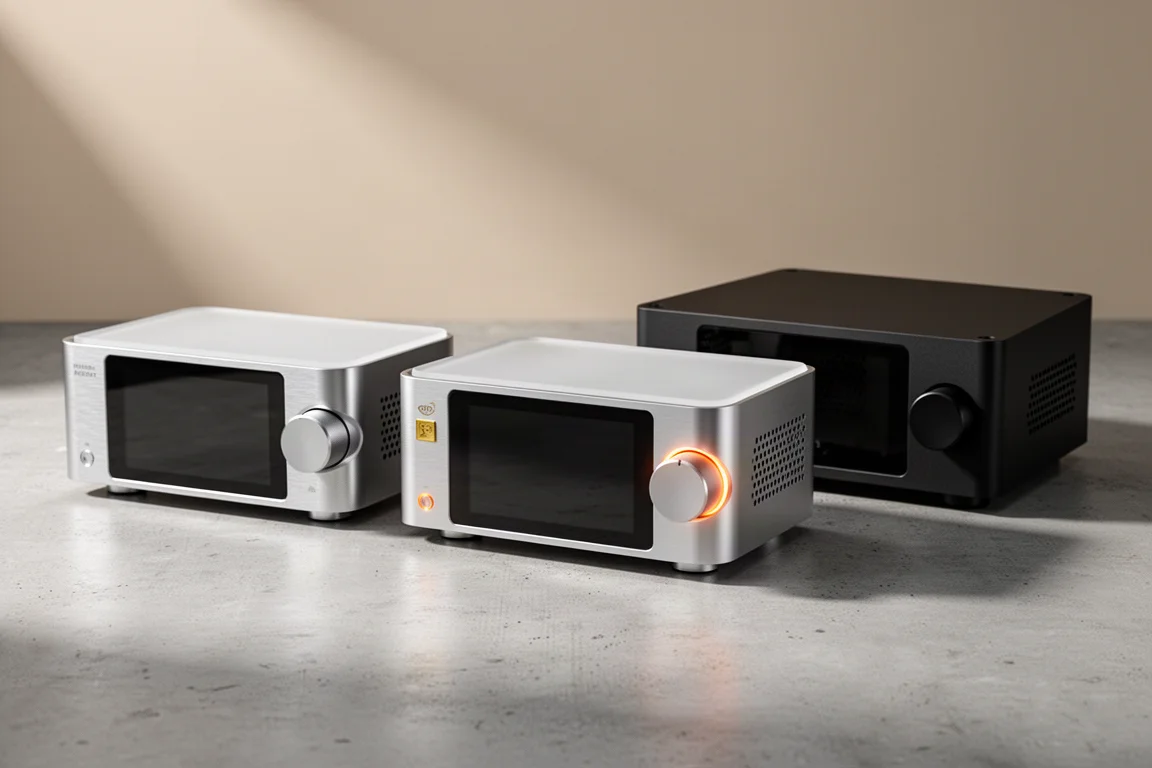
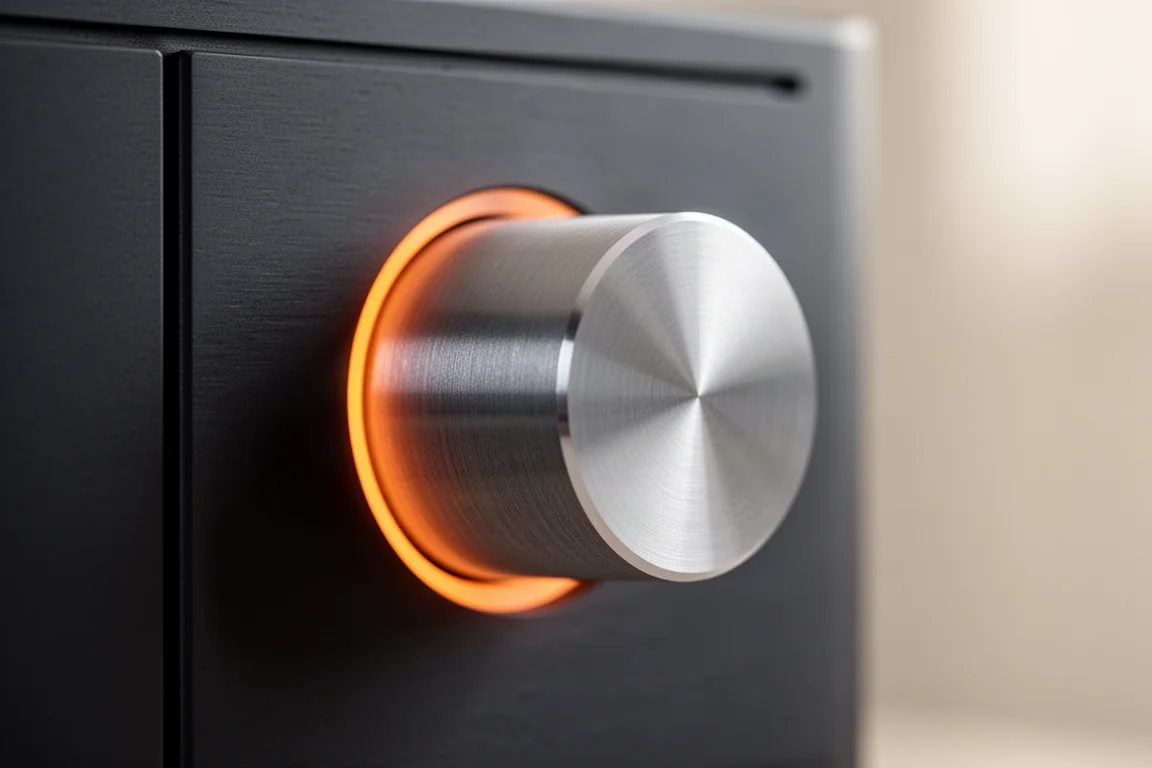
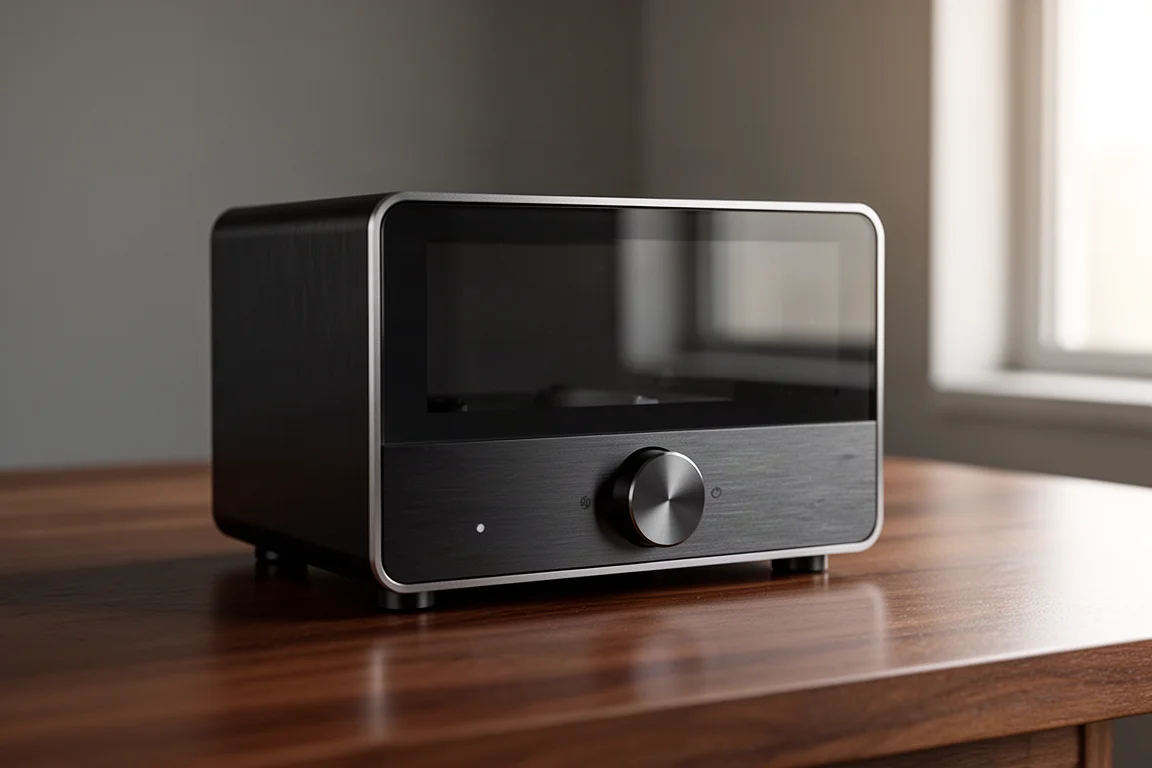
Build quality across the range is a strong point. Each unit uses a brushed aluminium front faceplate with a frosted anodized aluminium top and ventilation grilles on the sides, which gives a clean and modern look. On the right of the front panel sits a volume knob that doubles as the power button when pressed, and an adjustable LED ring around it adds a subtle accent.
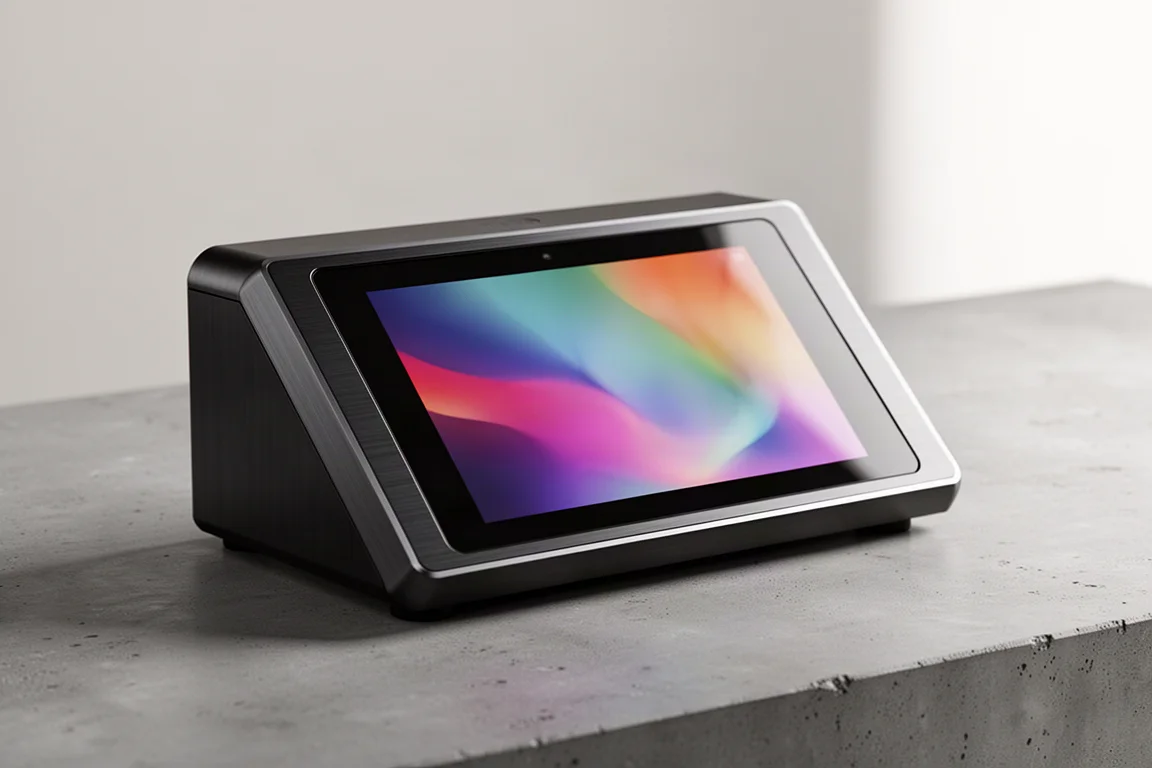
The centrepiece is a 6-inch glass touchscreen that runs edge to edge between the top and bottom of the faceplate. It is bright, colorful, and responsive in the way a good phone screen is, so moving around the interface never feels like a chore. The DMP-A6 measures roughly 10.6 inches wide, 3.5 inches tall, and 7.4 inches deep, which makes it narrower than a full-width component and easier to place on a desk or a smaller shelf.
Inside, the DMP-A6 uses two ESS Saber ES9038Q2M DACs, two high-precision crystal oscillators to reduce jitter, and OPA1642 op amps. A quad-core ARM processor runs a custom version of Android 11, and an XMOS 16-core processor handles USB audio with high bandwidth for lossless transmission. The USB inputs support DSD512 native and PCM up to 768kHz at 32 bits, while the optical and coaxial inputs handle DSD64 and PCM up to 192kHz at 24 bits. FLAC, WAV, APE, and most other common formats play back without issue.
Around the back you get three antennas, one for Bluetooth and two for Wi-Fi, a gigabit Ethernet port, HDMI out, a USB-A port for an attached drive, coaxial and optical digital inputs, a USB-C computer audio input, RCA analog outputs, and balanced XLR analog outputs. A hatch on the underside accepts a 4TB M.2 SSD for local music, and the unit can also pull from network storage and build a library by matching artists and album artwork from the cloud.
In use, the DMP-A6 comes across as neutral, with plenty of detail and a wide, lifelike presentation across genres. One practical point to plan for: a remote control is not included with the A6 models.
EverSolo DMP-A6 Master Edition: Better Clock, Smoother Top End
The DMP-A6 Master Edition shares its chassis, dimensions, and connectivity with the standard A6, and adds a gold EverSolo badge and nameplate on the front, along with an orange LED ring around the volume knob instead of a white one.
The more meaningful changes are inside. The Master Edition moves to a clock system with ultra-low noise and jitter, and steps up to OPA1612 op amps, which cost noticeably more than the OPA1642 parts used in the standard model. The OPA1612 is valued for a warmer character while keeping a silky smooth and extended top end.
Those changes show up in the sound. The Master Edition keeps the neutral family character of the A6 but adds a noticeably smoother, more effortless top end, and rhythmic material gains a little more life thanks to the improved clock. If your speakers are revealing enough to expose the difference, the step up is easy to justify, particularly because the source component is the one most people will live with the longest.
EverSolo DMP-A8: The Flagship Preamp
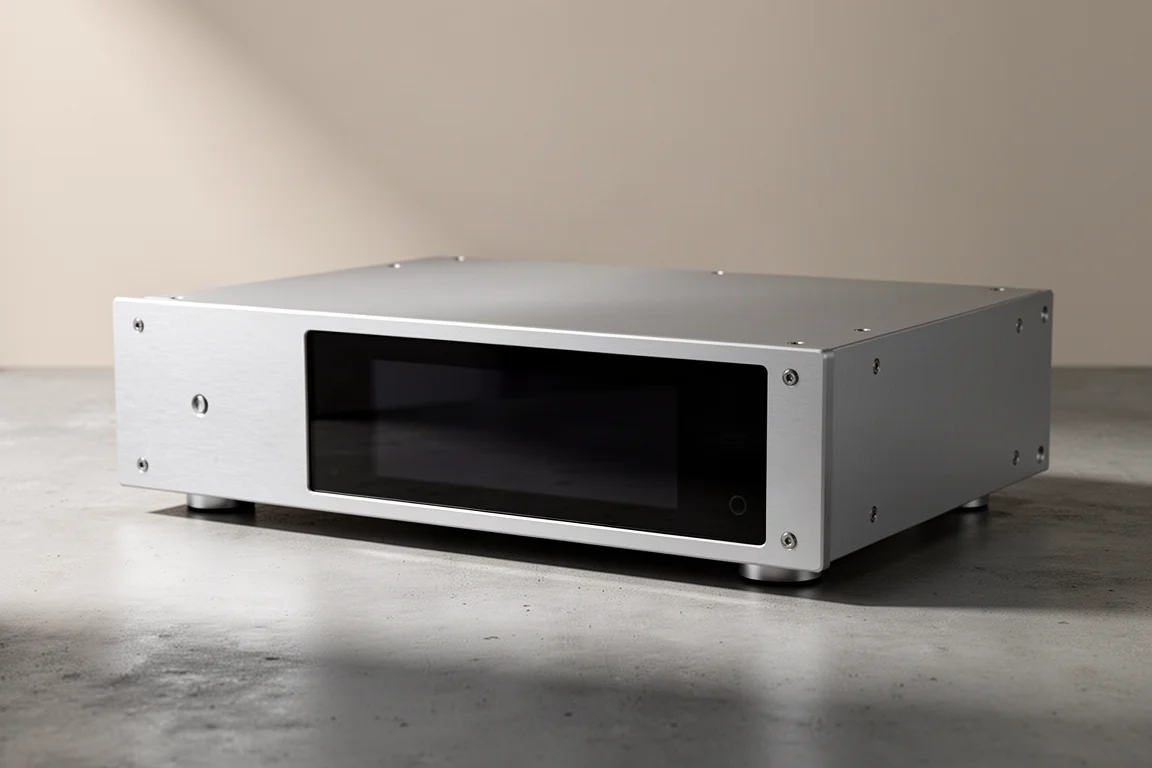
The DMP-A8 keeps the same design language but moves to a wider, deeper case at roughly 15 inches wide, 3.5 inches tall, and 9.8 inches deep. The extra space accommodates a different component set and a much fuller range of inputs and outputs.
At the heart of the A8 are AKM AK4499EX and AKM AK4191EQ DACs, a significant step up from the ESS parts in the A6 models. The A8 also adds a dual power supply and an R2R volume control circuit built from precision resistors and relays, which keeps accuracy high even at very low listening levels while reducing noise and distortion. The low-jitter clock system and OPA1612 op amps carry over from the Master Edition, and the circuitry uses hand-selected parts from names normally reserved for high-end components.
Connectivity expands considerably. The A8 keeps everything the A6 models offer and adds an HDMI IIS output for DACs that accept that signal, a second coaxial input, a second optical input, an HDMI ARC input, two analog inputs with one RCA and one balanced connection, and a trigger output for linking with a power amplifier. A remote control is included here, unlike the A6 models.
The EQ section is deeper as well. All three units offer graphic and parametric EQ on the screen or in the app, and the A8 adds a FIR filter, a compressor, a delay, and high-pass and low-pass filter options.
The sound is the clearest reason to step up. The A8 produces an almost analog-like digital presentation with an ultra-quiet background, and instruments are given their own space with a strong sense of separation. It reveals more small details while staying smooth, and in a system built around high-performance speakers the improvement is easy to hear. It is the most expensive of the three EverSolo units, and the larger chassis takes up more room.
Shared Software, App, and Streaming Features
All three EverSolo units run the same software platform. The home screen presents icons for music, streaming files, sources, and settings, and beneath those you can customize a row of apps to surface your most-used streaming services, apps, or cloud music drives. Helpful tips appear the first time you enter each section, showing shortcuts such as swiping from the left for the menu bar or tapping the top right corner to return to the track currently playing. Everything is responsive, and the processor handles the interface without lag.
The now-playing screen shows artwork, song title, artist, album, song resolution, and output resolution, and it can be rearranged into several different layouts. There are even three view meter styles to choose from. The mobile app mirrors that level of control, with access to your music, every setting, and volume from your phone. One standout feature is the ability to cast the unit’s screen directly to the phone, and the mirrored screen is fully interactive. That matters most for third-party apps, which are not accessible natively in the app. You can mirror the screen, open Apple Music, Spotify, or another sideloaded service, and control playback from there. Sideloaded apps still look good, even if their interface is not as polished as the built-in services.
The EverSolo Original Sampling rate audio engine bypasses the Android sample rate conversion restriction, so streaming apps play at their original sampling rate regardless of which service you use. The units are Roon Ready and support Tidal Connect, Qobuz Connect, DLNA, AirPlay, and Bluetooth 5.0.
Library building works from cloud metadata matching, pulling in artists and album artwork automatically, and it can also read from a network storage device. Some artwork can still be missing during testing, and this is expected to improve with further software updates. Music can also be copied over from a computer using one of the USB ports, shared through SMB so the unit acts as network storage for other devices, or ripped directly from a connected CD player using the built-in ripping app, which generates the artist and album information for you.
Bluesound Node: The Value Alternative
If the entry-level DMP-A6 is a stretch, the Bluesound Node remains one of the strongest value options in this category. In a direct comparison, the DMP-A6 edges it out, but only by a small margin.
The Node makes sense when you do not need a touchscreen and you do want a subwoofer output and an HDMI ARC input. At that point it is hard to beat for the money. The trade-off is the experience around it: there is no front-panel display to browse or admire, and the platform does not offer the component upgrades found further up the EverSolo range.
If you are planning to move to higher-performance speakers now or later, it still pays to buy the best source you can reasonably afford, since detail that never reaches the speakers cannot be recovered afterwards.
Which EverSolo Unit Fits Your System?
Choosing between the three EverSolo models comes down to your speakers and the role the unit will play. The DMP-A6 is the natural starting point for a first high-resolution streaming setup, offering a neutral, detailed sound, balanced outputs, and a compact chassis that fits smaller spaces.
The DMP-A6 Master Edition is the choice for listeners whose speakers are revealing enough to show what a better clock and output stage bring. The smoother top end and extra sense of life in rhythmic material are the reward, and the price difference is worth it in that context.
The DMP-A8 is the flagship, and it behaves like a full preamp rather than a streamer with a volume control. The AKM DACs, dual power supply, R2R volume control, HDMI ARC input, extra digital and analog inputs, and trigger output make it the most flexible of the three, and it delivers the most refined sound of the group. If your system is already built around high-performance speakers, the upgrade is easy to hear.
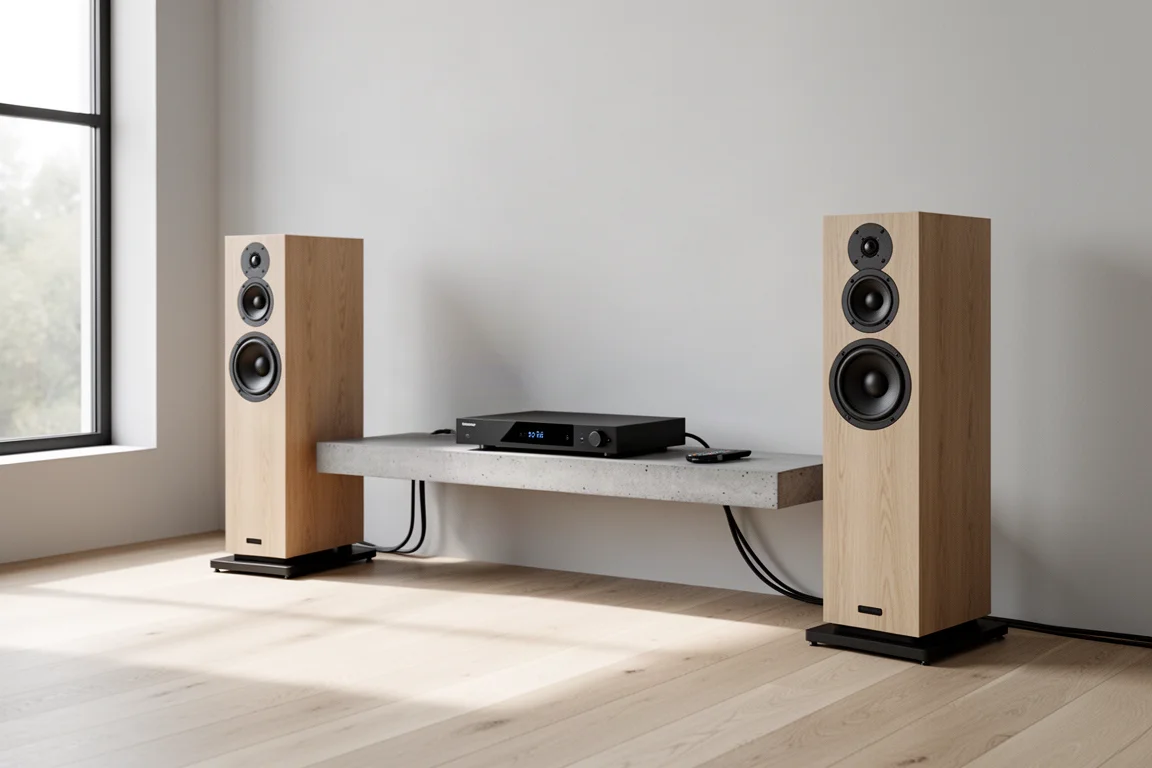
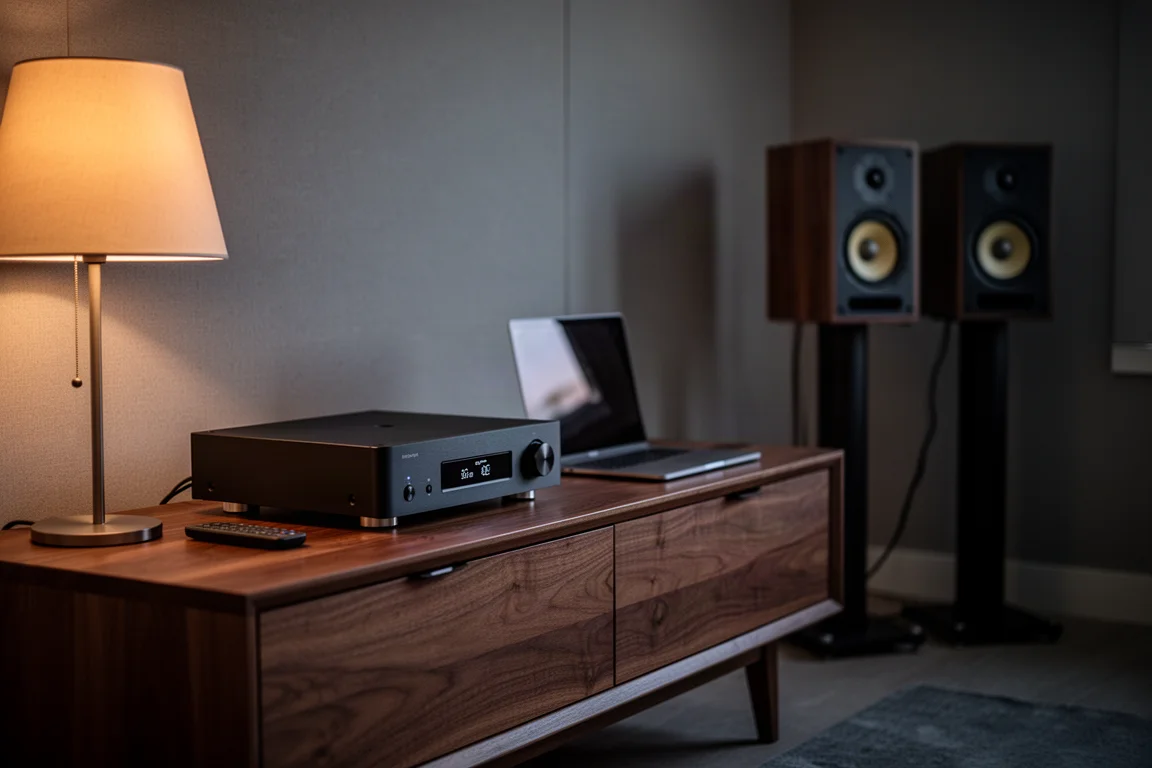
Any of these units can be added to a home theater system, an integrated amplifier, or a preamp. Where balanced cables are supported, using them is the recommended route, and pairing one of these with a good two-channel power amp makes for a simple but excellent system. Your power requirements will depend on your speakers and your room. Remember that the A8 ships with a remote control, while the A6 models require one to be purchased separately.
Conclusion
EverSolo has arrived in a crowded category with three units that share a well-built chassis, an excellent touchscreen interface, and a genuinely capable software platform. The DMP-A6 is the entry point and delivers a neutral, detailed performance with balanced outputs and broad streaming support. The DMP-A6 Master Edition refines that recipe with a better clock and a smoother top end, which is worth the extra cost when your speakers can show the difference. The DMP-A8 steps up to flagship AKM conversion, a dual power supply, an R2R volume control, and a much fuller set of connections, and it sounds the most polished of the three.
The Bluesound Node stays a strong value pick for anyone who does not need a touchscreen and does want a subwoofer output and HDMI ARC. Whichever route you take, put a healthy share of your budget into the source, because detail that never leaves the source never reaches your ears.
Further reading
Related Reviews
Hi-Fi Streamers
Best Music Streamers Under £1,000: Cambridge Audio CXN 100 vs Eversolo DMP-A6 vs Bluesound Node X
Three sub-£1,000 network streamers compared on sound character, connectivity, build and app experience, with clear guidance on which one suits which system.
Hi-Fi Streamers
Bluesound Node X vs Eversolo DMP-A6: Two Standout Streamers Below £1,000
A close comparison of two sub-£1,000 music streamers: one focused on app quality and everyday flexibility, the other on build, display and resolution.
Hi-Fi Streamers
Cambridge Audio CXN 100 Review: A Streamer and Digital Preamp in One Box
The CXN 100 replaces a multi-award-winning streamer with a full redesign, adding a better DAC, a 100-step volume control, balanced outputs, and digital preamp flexibility.