Hi-Fi Streamers
Best Music Streamers Under £1,000: Cambridge Audio CXN 100 vs Eversolo DMP-A6 vs Bluesound Node X
Three sub-£1,000 network streamers compared on sound character, connectivity, build and app experience, with clear guidance on which one suits which system.
Introduction
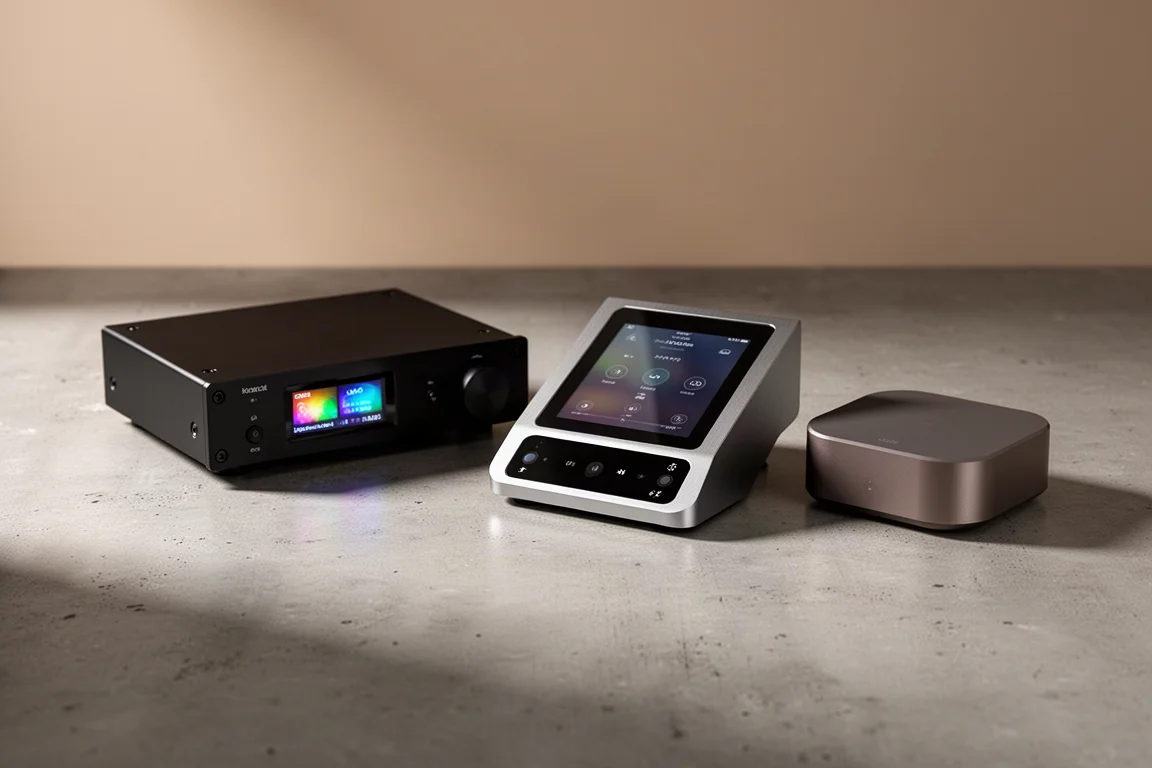
The sub-£1,000 network streamer has become one of the most competitive corners of hi-fi. Three models dominate the conversation: the Cambridge Audio CXN 100, the Eversolo DMP-A6 and the Bluesound Node X. All three stream from the major services, all three can feed an amplifier directly, and all three cost less than a mid-range pair of speakers. The differences lie in tonal character, connectivity and how pleasant each one is to live with.
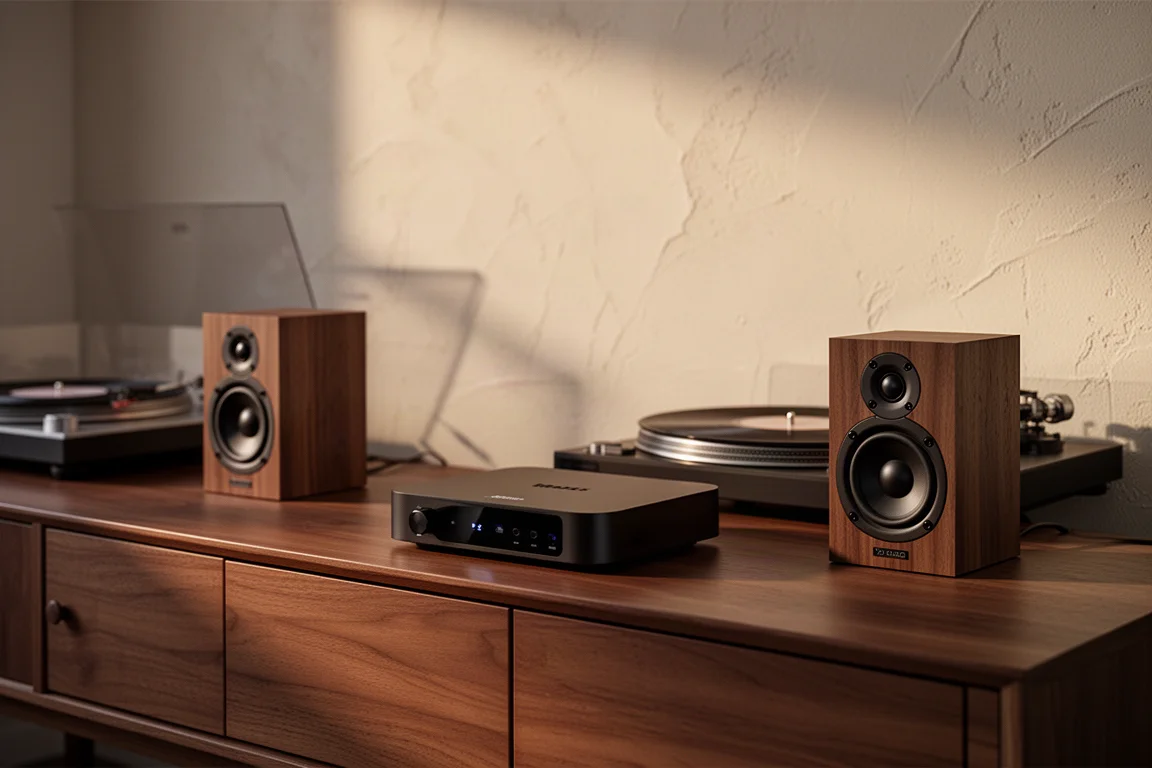
That matters more than it sounds. A streamer sits at the centre of a system, so its character shapes everything downstream. One of these three leans warm, one leans cool, and one deliberately sits in the middle. Choosing between them is really a question of matching the device to the speakers and amplifier you already own.
What to Consider Before Buying a Streamer
Sound character comes first. The Eversolo DMP-A6 can sound lean and even bright in certain systems, the Bluesound Node X has a distinctly warm and relaxed presentation, and the Cambridge Audio CXN 100 sits closer to neutral with a slight warmth. None of these are faults, but each one pushes a system in a direction, and care needs to be taken with partner equipment.
Connectivity is the second consideration, and the three devices take noticeably different approaches. Useful connections to look for include HDMI eARC for TV control, a headphone socket, a USB output for an external DAC, and enough digital inputs to act as a hub. Build quality and the app experience round out the picture, because a streamer is only as good as the software that drives it.
Cambridge Audio CXN 100: Balanced Sound in a Full-Width Chassis
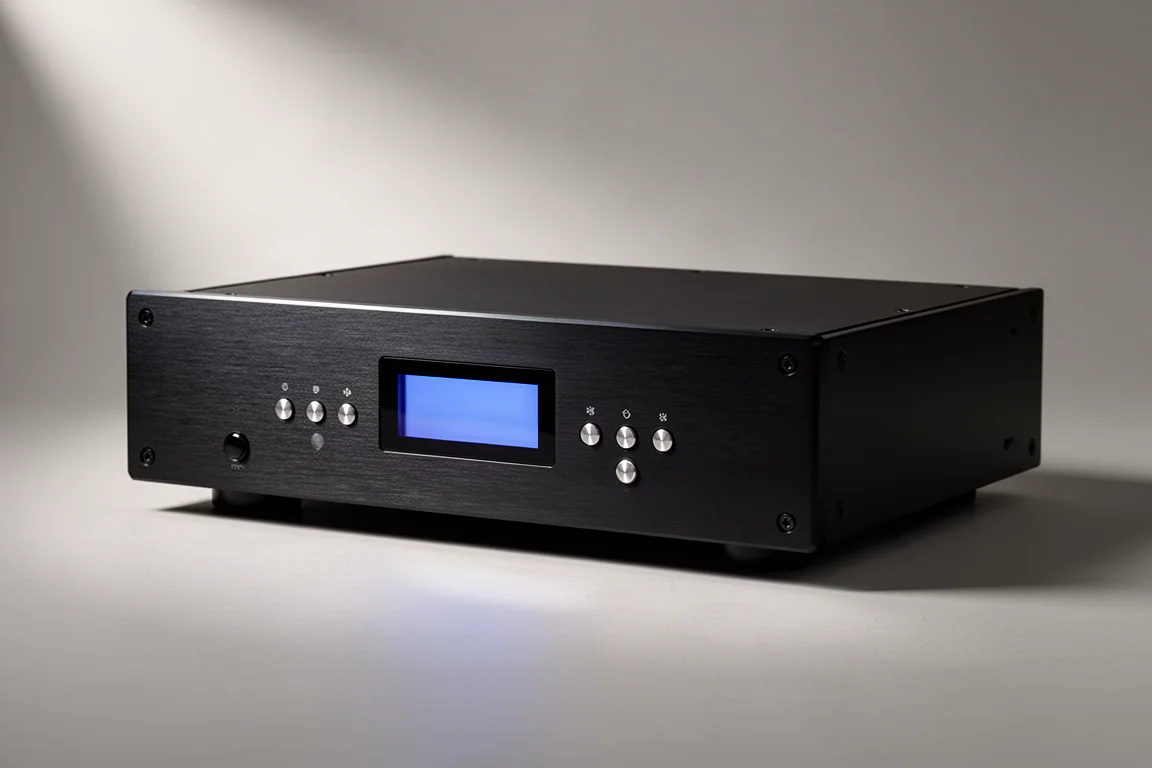
The CXN 100 replaces the outgoing CXN V2 and is described as a ground-up redesign rather than a revision. It uses the Gen 4 StreamMagic module and swaps the older Wolfson DAC for an ESS Saber 9028 Q2M. Styling is conventional in the best sense: a full rack-width unit with a metal front fascia and a chassis formed from the thin folded steel common at this price. It blends in unassumingly with other Cambridge Audio components.
Streaming covers internet radio, Deezer, Qobuz, Tidal and Spotify, while Apple Music, Amazon Music and BBC Sounds are reached through AirPlay or Chromecast. The StreamMagic app can be bypassed entirely for Bluetooth, Spotify Connect, Tidal Connect and Roon. Around the back there is an ethernet port, two USB inputs, optical and coaxial digital inputs, optical and coaxial digital outputs, and both single-ended RCA and balanced XLR analogue outputs.
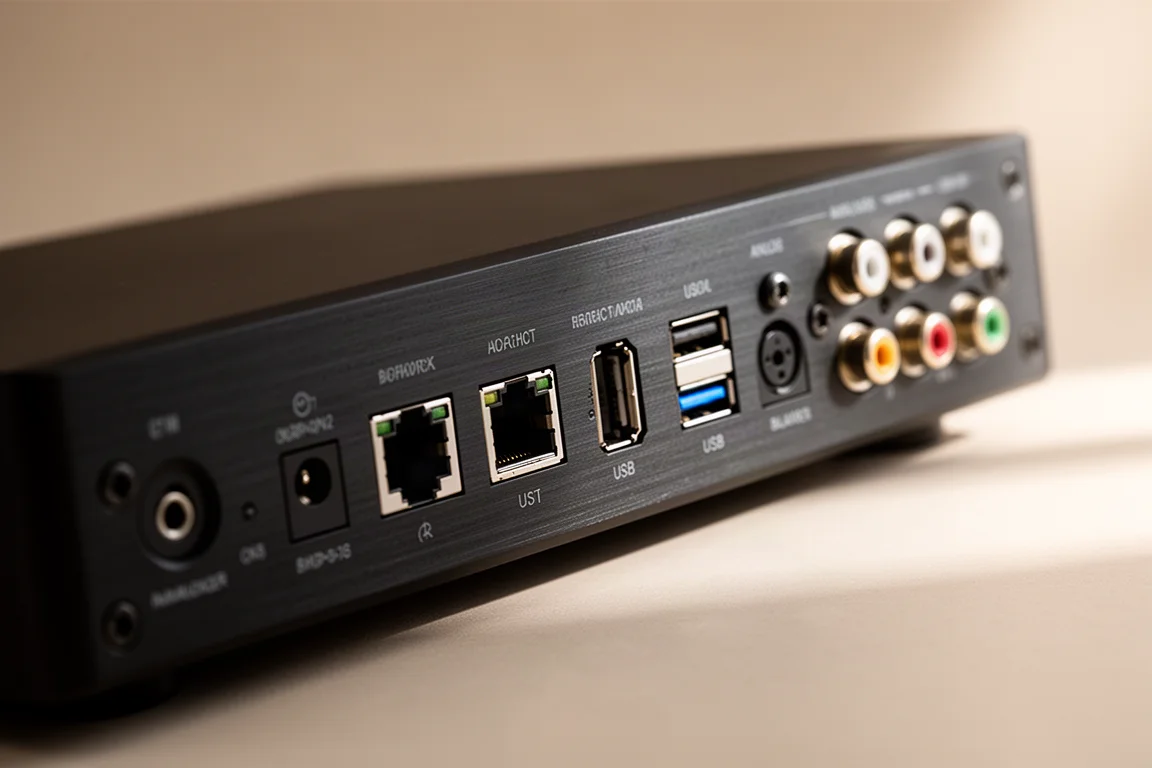
Two omissions stand out. There is no HDMI eARC, which would have let a TV remote power the unit on and off and adjust volume, and no headphone output. The remote control is an optional accessory at £25, and there is no asynchronous USB output, so anyone feeding an external DAC has to rely on the coaxial and optical connections, where the streamer’s own clock handles the exchange of information.
Tonally the CXN 100 is very well balanced, sitting just a little on the warm side but nowhere near the warmth of the Node X, and well clear of the cooler Eversolo. In a price-appropriate system it is the most even-handed of the three. Used as a digital preamp it made no impact on performance, so connecting it directly to a power amplifier or powered speakers is a realistic option. At £899 it costs more than its two rivals here, and that premium is the main question mark.
Eversolo DMP-A6: Build Quality and Resolution
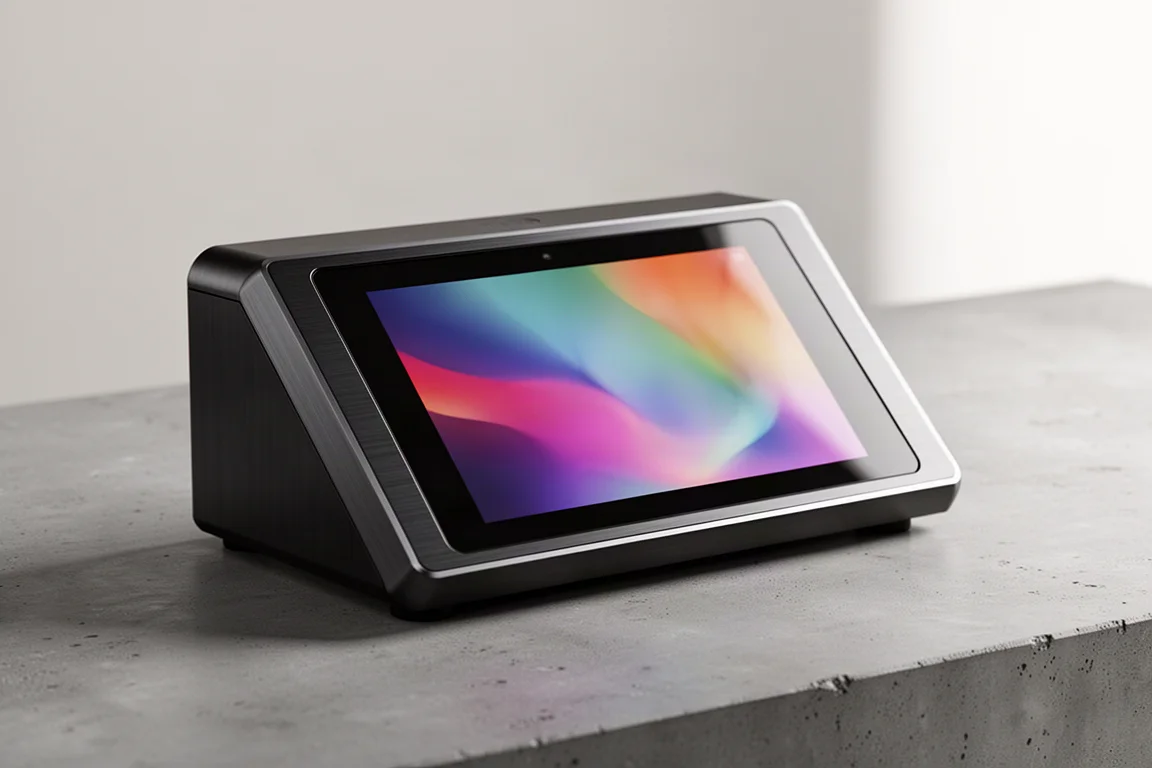
At £759 the DMP-A6 still sets the standard for build quality in this class. Its casework uses much thicker plates of machined aluminium than the competition, and the front panel carries a 6-inch, 150 mm colour touchscreen that is a genuine pleasure to interact with. Inside, two ESS Saber 9038 Q2M chips handle independent digital-to-analogue conversion for the left and right channels.
Connectivity is generous, with both a USB input and a USB output, though the HDMI port is a multi-channel output rather than an HDMI eARC input. The control app is Android-based, with graphics and layout that are exactly what you would hope for. It has continued to improve through firmware updates, adding features such as a parametric EQ. Compatibility is not perfect, and connecting to an iPad proved troublesome, while the same app worked flawlessly on an Android phone.
Sonically the DMP-A6 delivers the best resolution of the three, most obviously in bass control and precision of imaging, but it carries a coolness that can edge towards bright and harsh in a more revealing system. Used as a transport through its optical and coaxial outputs the performance drops away sharply, while the USB output is a different story entirely, adding body to the mid-range and sounding more open and refined.
Bluesound Node X: Warmth, Scale and Smart Connections
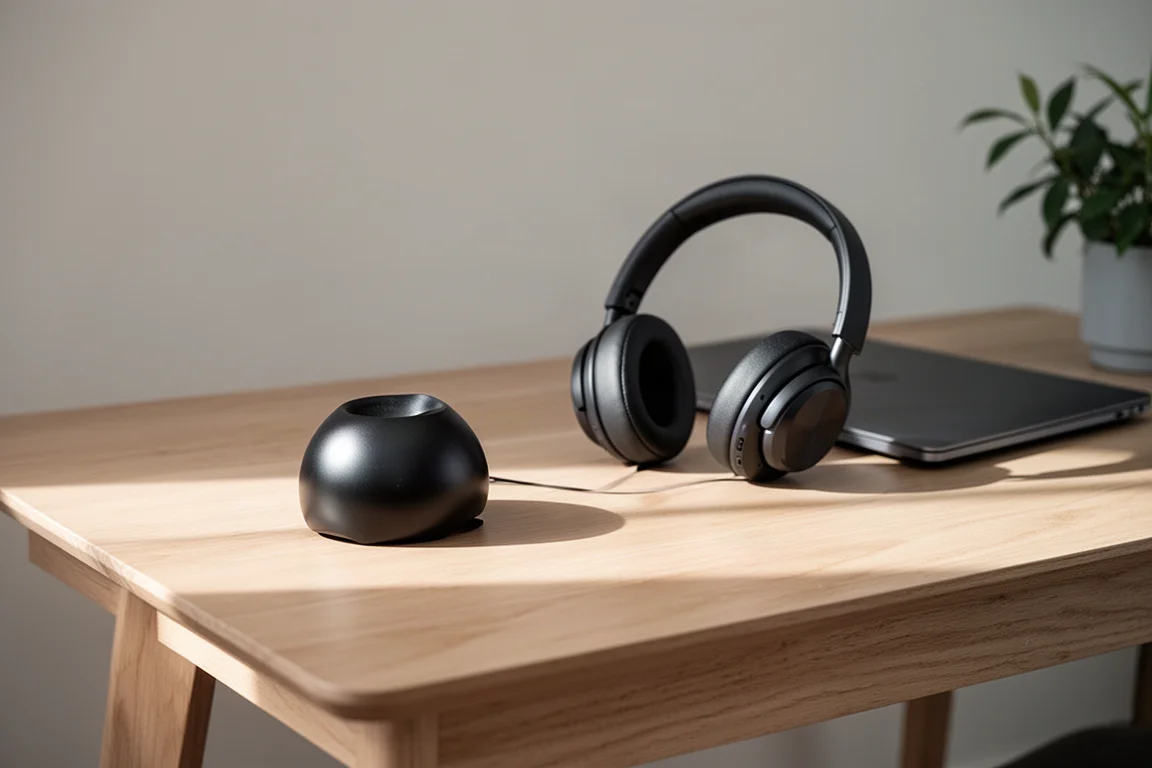
The Node X is the smallest and the cheapest of the three at £699, and its casework is plastic rather than metal. That sounds like a disadvantage until you consider the use case: it is compact, understated and sits elegantly on a sideboard or a desk. It uses the same DAC chip as the CXN 100, a single ESS Saber 9028 Q2M.
For such a compact device, the connectivity choices are the smartest of the group. There is a headphone socket on the front, HDMI eARC on the rear, a USB port that works as an input for external drives or as an output for a DAC, and a 3.5 mm optical port that doubles as an analogue input. Direct interaction is limited to proximity controls covering up to five presets, volume, play and pause and track skipping, with no screen for artwork.
The BluOS system is the most advanced interface of the three, with a more sophisticated graphical layout and customisable screens, and it remains the only one of these streamers that allows playlists to be built across platforms. Sonically the Node X is distinctly warm and relaxed. It produces the widest soundstage and the boldest sense of space, but the mid-range is a touch too relaxed, and when connected to an external DAC over USB the resolution improved considerably while still staying a little soft for some tastes.
That combination of scale, warmth and genuinely useful connections makes it the most flexible of the three in a small room or a desktop setup, even if it is the least resolving overall.
Using These Streamers as Digital Transports
As a system improves, a streamer has to work not only as a streamer but also as a streaming transport feeding an external DAC. Here the results were surprising. The Eversolo sounded poor through its optical and coaxial outputs, but through USB it gained body, openness and refinement. The Bluesound improved considerably over USB as well, yet remained slightly soft.
The CXN 100, which has no asynchronous USB output at all, had to rely on coaxial and optical and let its own clock take charge. Fidelity improved considerably anyway, with better refinement than the Node X and not quite the resolution of the Eversolo. That points to careful implementation of the digital outputs, and it makes the CXN 100 a more capable transport than its specification sheet suggests.
Buying Advice
Choose the Cambridge Audio CXN 100 if you are happy with the sound of your speakers and amplifier and do not want to shift the tonal balance in either direction. It is the most balanced of the three, works well as a digital preamp, and is the easiest of the group to live with long term, provided you can accept the £899 price and the absence of HDMI eARC, a headphone socket and an asynchronous USB output.
Choose the Eversolo DMP-A6 if resolution, imaging precision and build quality matter most, and if your system leans warm rather than bright. Choose the Bluesound Node X if you want scale, warmth, the best app experience and the most useful set of connections, including HDMI eARC and a headphone socket, in the smallest footprint of the three.
On price, the CXN 100 is the hardest to justify at full retail against the £759 Eversolo and the £699 Node X. If the balance of its sound appeals, it is worth watching for a sale that brings it closer to parity.
Conclusion
All three streamers are solid products with clear personalities. The Eversolo DMP-A6 leads on build and resolution, the Bluesound Node X leads on connectivity and interface, and the Cambridge Audio CXN 100 leads on neutrality. Match the character to your system rather than to the specification sheet, and any of the three will serve as a dependable centrepiece for years of listening.
Further reading
Related Reviews
Hi-Fi Streamers
Bluesound Node X vs Eversolo DMP-A6: Two Standout Streamers Below £1,000
A close comparison of two sub-£1,000 music streamers: one focused on app quality and everyday flexibility, the other on build, display and resolution.
Hi-Fi Streamers
Cambridge Audio CXN 100 Review: A Streamer and Digital Preamp in One Box
The CXN 100 replaces a multi-award-winning streamer with a full redesign, adding a better DAC, a 100-step volume control, balanced outputs, and digital preamp flexibility.
Hi-Fi Streamers
EverSolo DMP-A6 vs DMP-A8: Choosing the Right Streamer DAC Preamp
How the EverSolo DMP-A6, DMP-A6 Master Edition, and DMP-A8 differ, where the Bluesound Node fits, and which streamer DAC preamp suits your system.