Streaming DACs
Eversolo DMP-A6 vs Bluesound Node vs WiiM Pro: Streaming DACs Compared
A practical comparison of four streaming DAC options: what the Eversolo DMP-A6, Bluesound Node, WiiM Pro and Geshelli Labs J2 each do well, and which trade-offs matter most.
Introduction
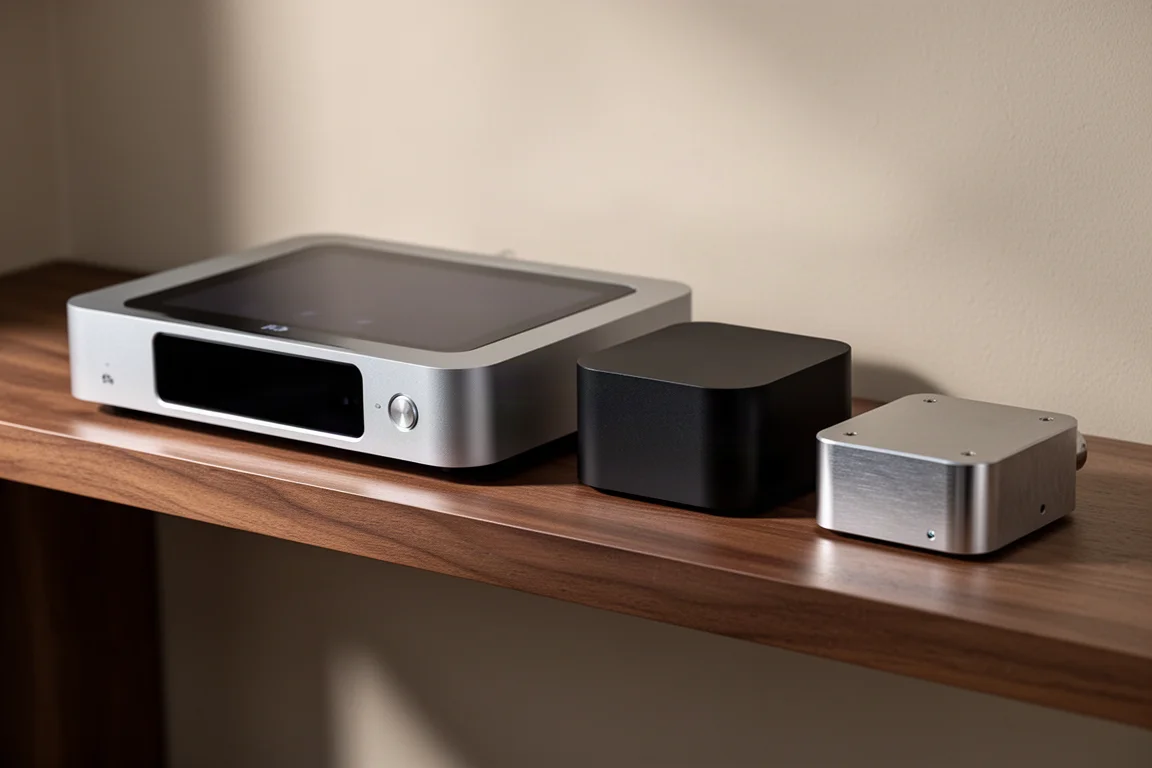
Streaming DACs have quietly become the centre of a lot of two-channel systems. They sit between your network and your amplifier, pull music from streaming services or a local library, and hand it off in analogue or digital form. The category is crowded, and the four products here take genuinely different approaches to the same job.
The Eversolo DMP-A6 is the most expensive of the group at $860, and it is the one that has drawn the most attention, largely because of its six-inch display. The Bluesound Node and the WiiM Pro approach the problem from the affordable end of the market, while the Geshelli Labs J2 is a small standalone DAC that changes the value calculation when it is paired with a lower-cost streamer.
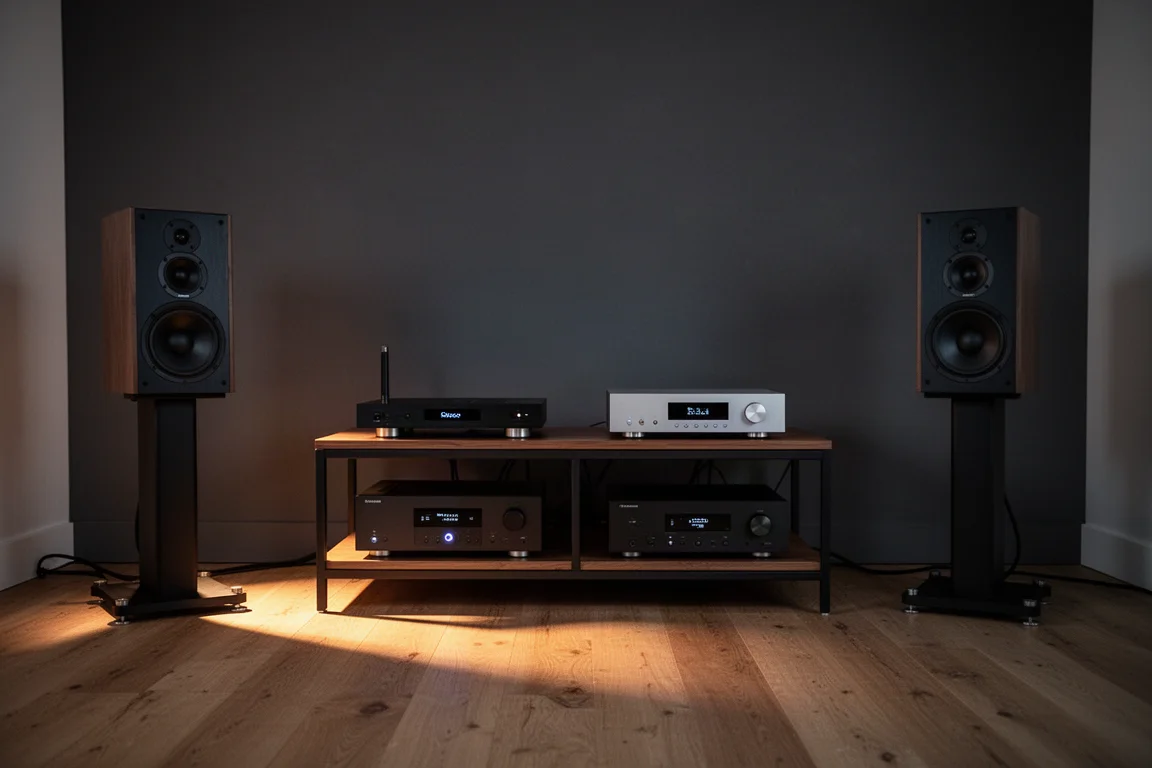
This comparison focuses on how each product works inside a real system: what connects to it, what it can play, and what you give up as the price drops. Sound quality differences between them are real but relative, so the more useful question is which feature set matches the way you actually listen.
What Separates These Streaming DACs
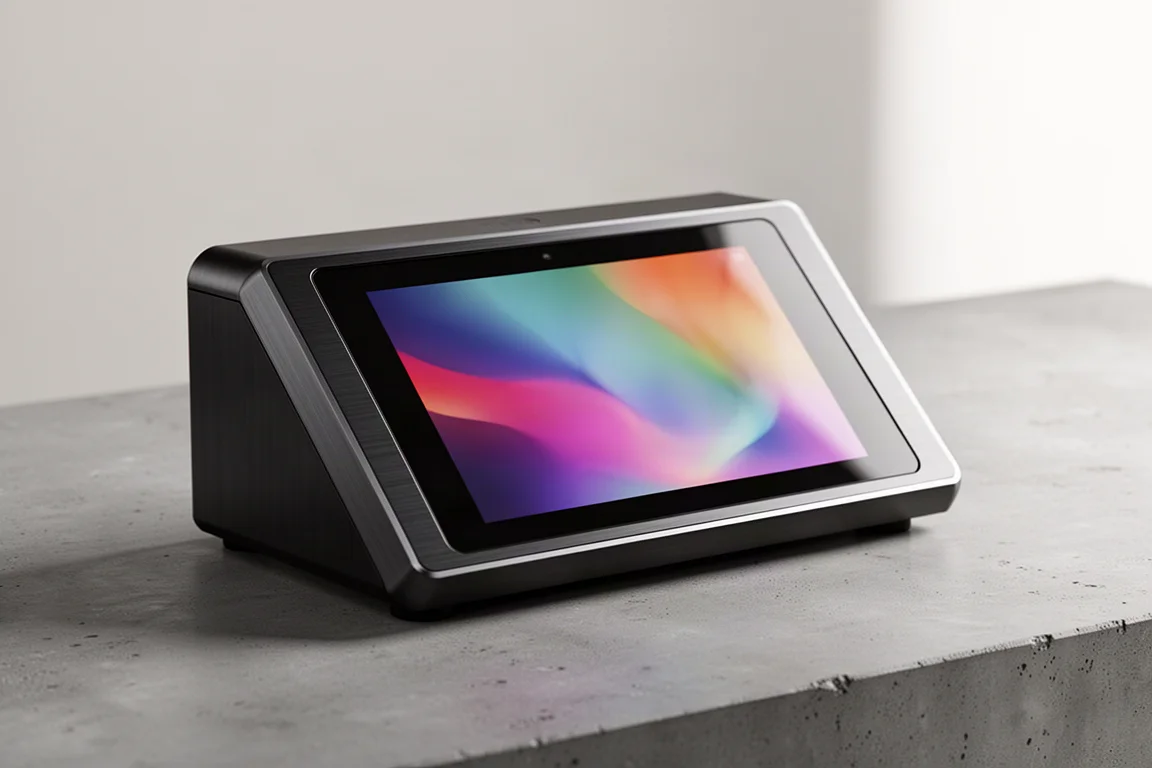
The first dividing line is the display. Only the Eversolo DMP-A6 has one, and it is a genuine six-inch touchscreen that shows album art and VU meters. The Bluesound Node and the WiiM Pro have no screen at all, so their interaction lives entirely in a phone or tablet app.
The second is connectivity. The DMP-A6 offers balanced XLR outputs and single-ended RCA outputs, a full set of digital inputs covering USB, USB-C, optical and coaxial, plus digital outputs if you want to bypass the internal DAC entirely. What it does not have is an analogue input. The Node and the WiiM Pro both accept an analogue source, which means a turntable or a phono stage can run straight into them.
The third is software and services. The DMP-A6 runs an Android-based operating system, is Roon Ready, ships with Tidal and Qobuz, and can download Apple Music, Deezer and Napster. The Node and the WiiM Pro can both play Amazon Music natively, which the DMP-A6 cannot. The WiiM Pro adds a ten-band equaliser that none of the others offer.
The fourth is price and what it buys you. The DMP-A6 is a streamer, a DAC and a display in one box, and it is priced accordingly. The Node and the WiiM Pro spread that cost differently, and the J2 shows what happens when you split streaming and conversion into two cheaper parts.
Eversolo DMP-A6: A Streamer Built Around a Deck
The DMP-A6 is best understood as a streamer built around a deck. Inside there are two Sabre 9038Q2M DAC chips, an XMOS interface and an internal switching power supply, all wrapped in a chassis that feels genuinely well made. It is not a modular component, so the DAC cannot be swapped out later, but the 9038Q2M is a well-regarded converter and the way it is integrated here sounds very good.
The back panel is packed. You get balanced XLR and single-ended RCA outputs, two digital outputs, digital inputs for USB, USB-C, optical and coaxial, USB ports for hard drives, a hardwired Ethernet connection, an IEC power inlet with a master toggle, and an HDMI connection.
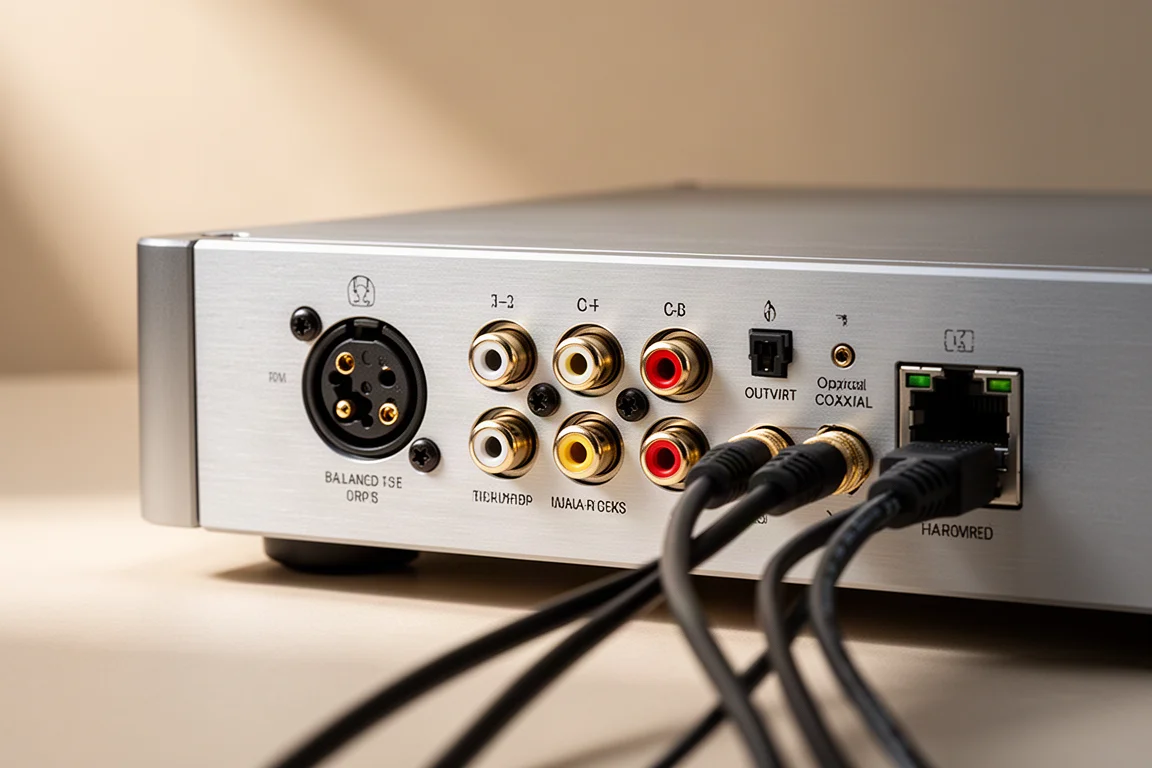
That HDMI connection is the biggest missed opportunity on the product. It is an output, intended for DSD and multi-channel music, not an eARC input. For most people an HDMI eARC input would have been far more useful, because it would let a television feed the unit directly and turn the DMP-A6 into the centre of a minimalist living-room system. You can still connect a TV over optical, but that route does not give you bit-perfect playback from TV apps.
Sonically the DMP-A6 is dynamic, wide and detailed, and it makes the most of well-recorded material. It is also less forgiving of poor recordings, and there is no equaliser to soften them. The VU meters look great on the display but tend to sit near the top of their range with very little visible movement, and there is no way to reduce their sensitivity.
The other gap is Amazon Music. Despite being listed alongside the supported services, it was not installed on the unit and there was no obvious way to add it. AirPlay works as a workaround, but that gives up the bit-perfect playback that makes hi-res Amazon Music worth using in the first place. If you live in Tidal, Qobuz or Roon, none of this matters. If Amazon Music is your main service, it matters a lot.
Where the DMP-A6 justifies its $860 is in the combination: a display, a streamer and a fully functioning DAC in a single box. Connect a CD transport to one of the digital inputs, or run it straight into a pair of monoblocks, and it holds up in both roles. Few streamers at this price include a screen at all, and that is exactly why this one stands out.
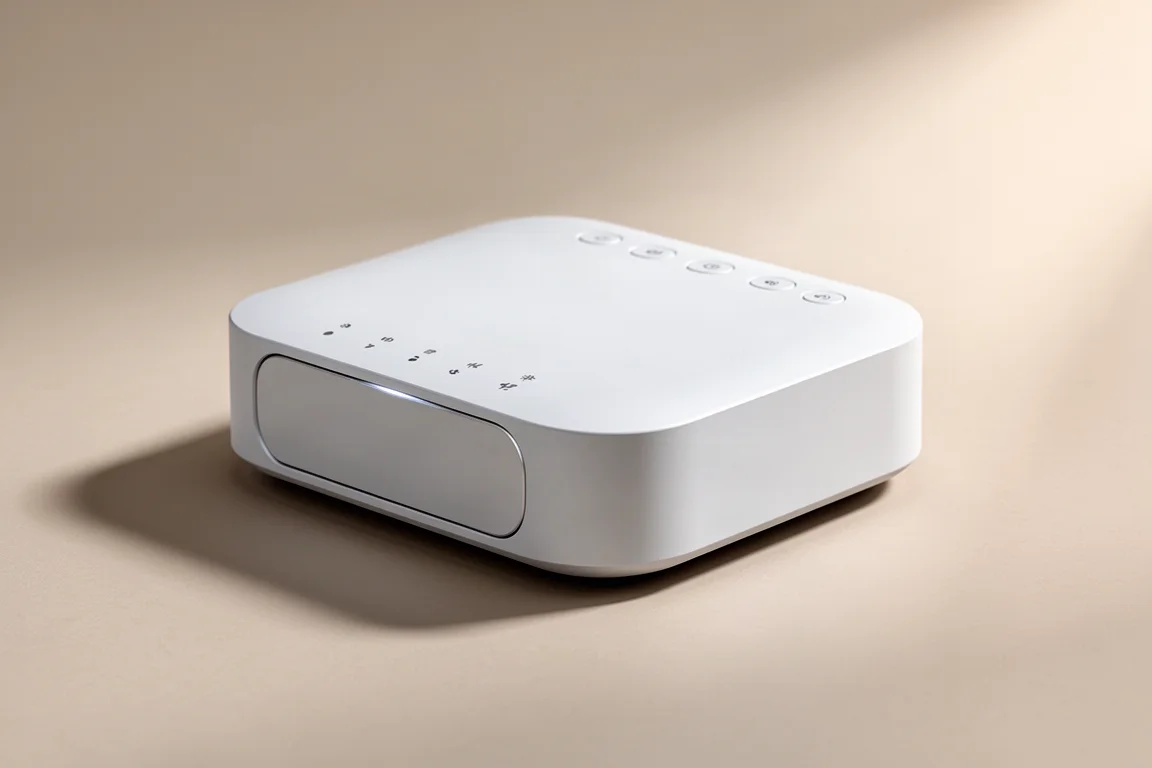
Bluesound Node: The Laid-Back Living-Room Option
The Bluesound Node takes the opposite approach. There is no display, so everything runs through the control app, but the trade-off buys you connectivity the DMP-A6 does not have. The Node includes an HDMI input, which makes it a natural partner for a television, and an analogue input on a 3.5 mm jack so a turntable or phono stage can plug straight in. It also plays Amazon Music natively.
Sonically the Node is the more relaxed of the two. It is a little more laid back, not as detailed and not as airy as the DMP-A6. That is not a criticism: some rougher recordings actually come across better on the Node precisely because it smooths over more of the edges. If your library leans towards older or less polished masters, that character can be an advantage rather than a compromise.
Its real strength is as the hub of a living room. A TV over HDMI, a turntable over the analogue input, and a full set of streaming services in one compact box is a genuinely useful combination, and it is the reason the Node remains a sensible default for mixed-use systems.
WiiM Pro: Affordable Streaming With Room to Tune
The WiiM Pro sits at the affordable end of the streaming market, and it covers more ground than its price suggests. It supports Amazon Music natively, it has an analogue input that lets it act as a true preamp, and it includes a ten-band equaliser. That last feature is more significant than it sounds: with a difficult recording, you can shape the sound to suit your taste rather than living with whatever the mastering engineer decided.
In pure sound quality terms, the WiiM Pro is a step behind the Bluesound Node when it comes to instrument separation. It still sounds good, and in a casual listen most people would struggle to pick out large differences. Put it in a quiet room with familiar music and the gap becomes easier to hear, but it is a gap, not a gulf.
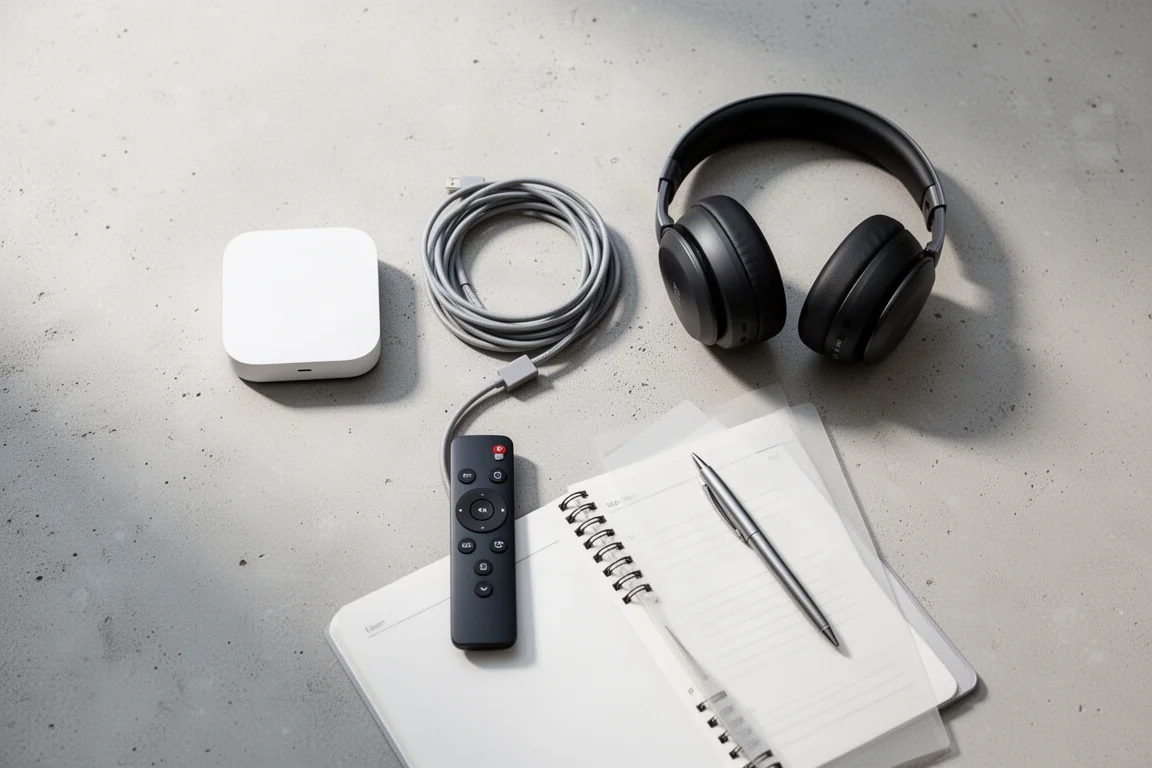
Used as a transport rather than a standalone player, the WiiM Pro becomes much more interesting. Pair it with an outboard DAC and the converter does the heavy lifting, which is exactly the route the Geshelli Labs J2 opens up. The analogue input also adds a layer of flexibility the DMP-A6 simply does not offer at any price.
Geshelli Labs J2: A Small DAC That Changes the Math
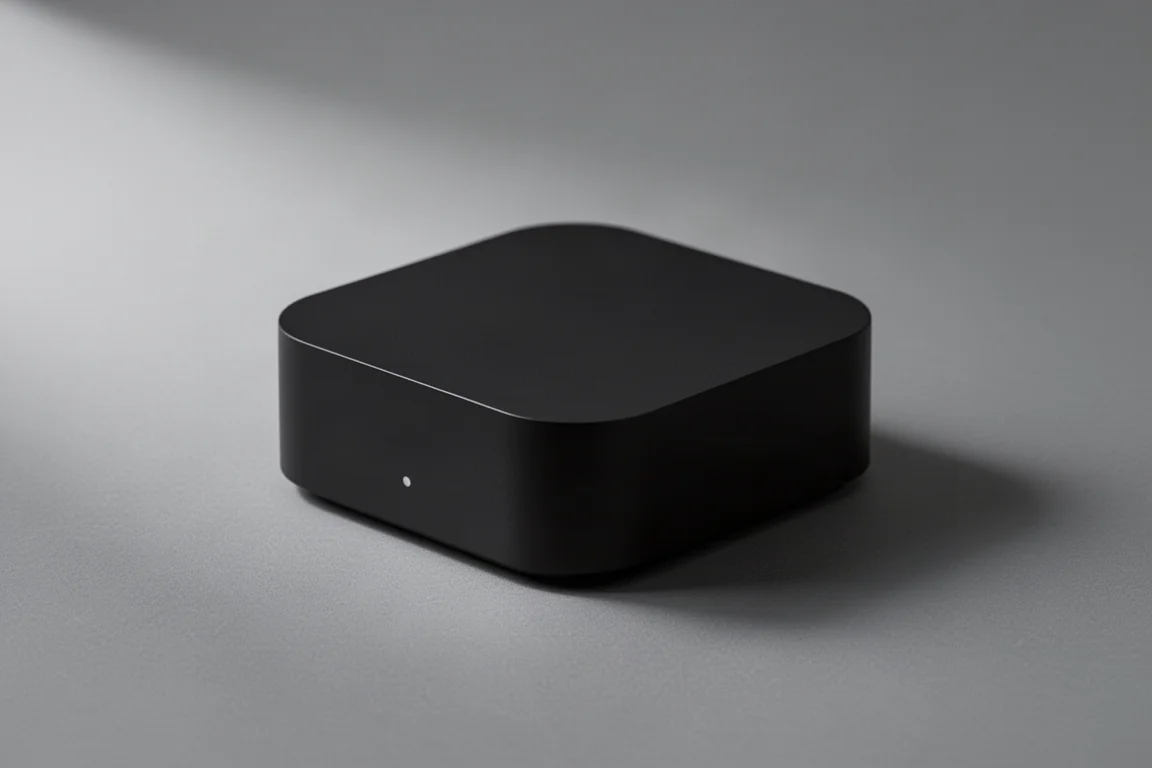
The Geshelli Labs J2, in its AKM version, is a compact standalone DAC rather than a streamer. On its own it needs a source, but combined with the WiiM Pro it forms a two-box streaming setup that comes in around $400 in total.
That combination is worth taking seriously. In side-by-side listening against the DMP-A6, the WiiM Pro and J2 pairing came across as more dynamic, more natural at the top end and more spacious. It also gains an analogue input and ten-band EQ through the WiiM Pro, features the DMP-A6 does not have.
What you give up is everything the DMP-A6 does beyond conversion. There is no display, no album art, no VU meters, no built-in app platform, and none of the digital input flexibility. If you are chasing pure sonics per dollar and a screen is irrelevant to you, the maths is straightforward. If the display is the reason you are interested in this category at all, the J2 cannot help you.
Buying Advice: Match the Features to Your System
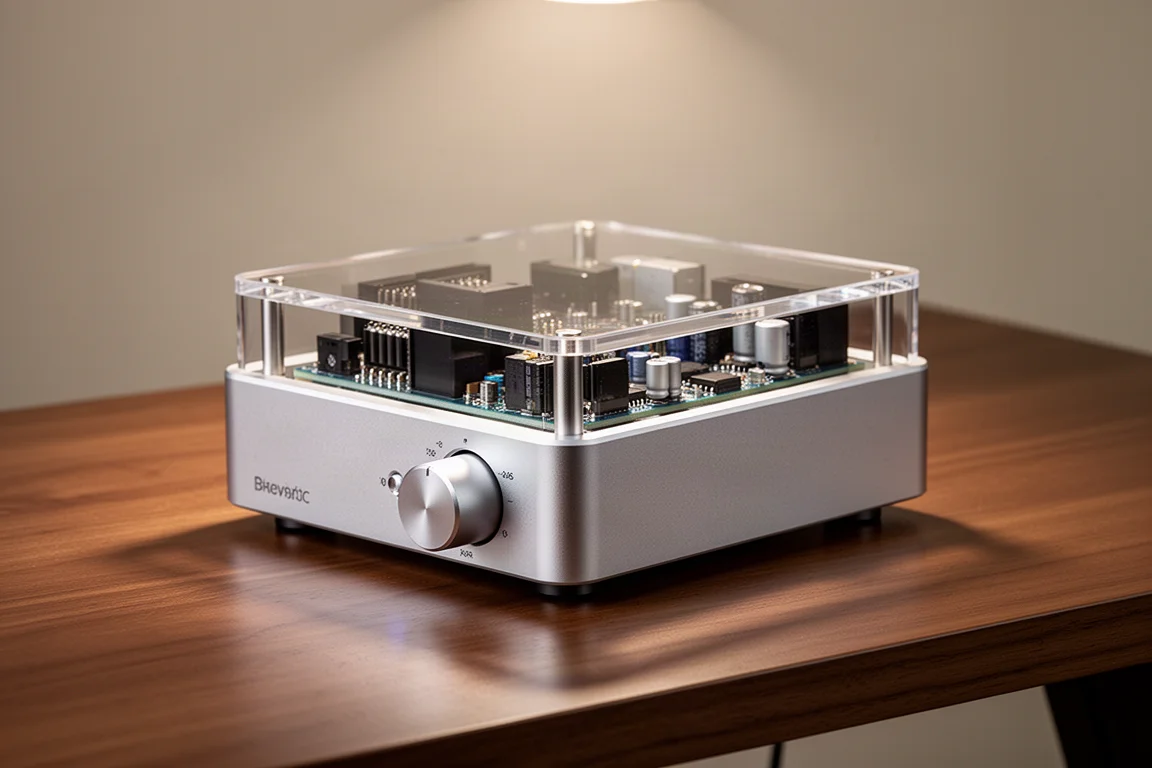
Start with the feature you cannot live without. If a screen matters, the DMP-A6 is the obvious choice, because it is one of very few streamers at this price with a display, and the album art and touch controls are genuinely pleasant to live with. It also doubles as a capable standalone DAC for a CD transport or a TV over optical.
If your system lives in a living room and needs to serve a television and a turntable as well as a streaming subscription, the Bluesound Node is the better fit. HDMI input, an analogue input and native Amazon Music support cover the practical cases that the DMP-A6 leaves open.
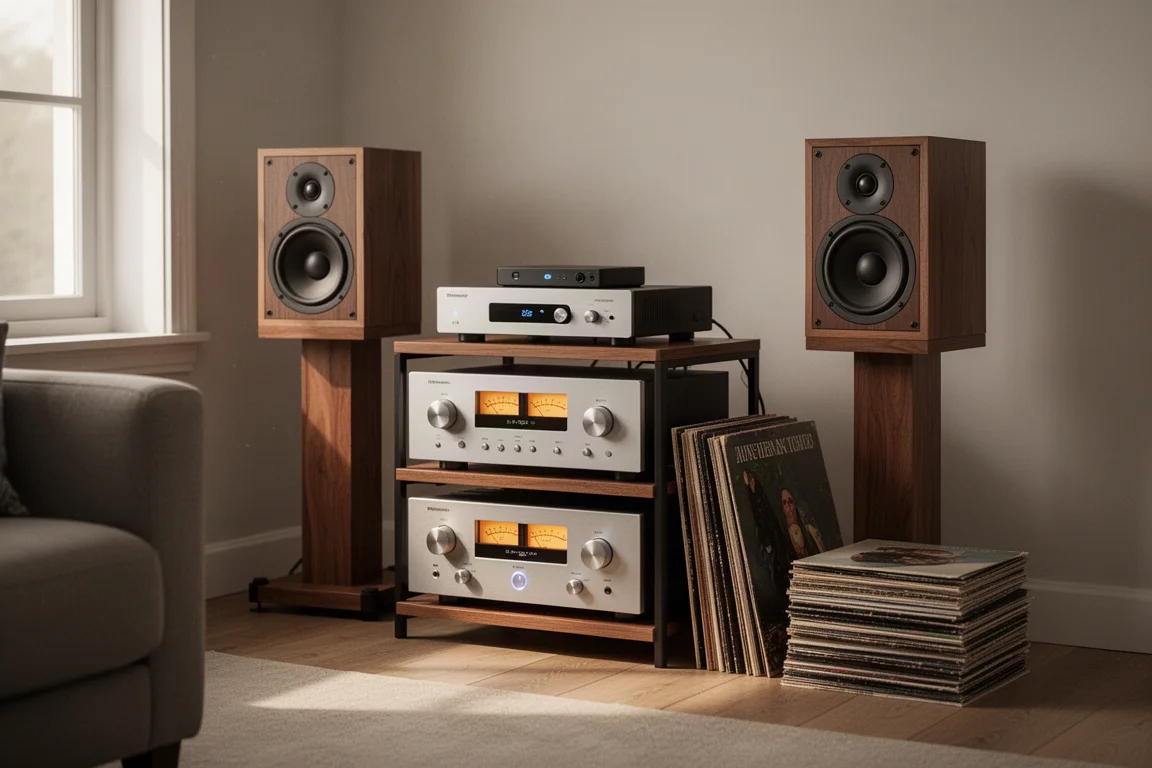
If budget is the deciding factor, the WiiM Pro is the sensible starting point. It plays Amazon Music natively, it can act as a true preamp thanks to its analogue input, and its ten-band EQ lets you tune difficult recordings. Add the Geshelli Labs J2 and you have a two-box setup around $400 that, in this comparison, edged ahead of the DMP-A6 on sound alone.
One honest caveat applies to all of this. Sound quality judgements are relative to the rest of your system and to the music you listen to. The DMP-A6 is not overpriced for what it offers, and the cheaper routes are not automatically better. They are simply better value if you do not need what the extra money buys.
Conclusion
None of these four products is the right answer for everyone, and that is the point. The Eversolo DMP-A6 is a brilliant product for a specific kind of listener: someone who wants a display on the shelf, who streams through Tidal, Qobuz or Roon, and who values having a streamer and a DAC in one well-built box. The Bluesound Node is the practical choice for a shared living-room system. The WiiM Pro is the affordable entry point with genuine tuning flexibility, and the Geshelli Labs J2 is the route to better sound per dollar for anyone who does not need a screen.
Pick the one whose strengths match the way you listen, and the purchase decision becomes much simpler.
Further reading
Related Reviews
Streaming DACs
Auralic Altair G1.1 vs Gustard R26 vs Denafrips Venus 2: Three Streaming DACs Compared
A practical comparison of three high-end digital front ends: the all-in-one Auralic Altair G1.1, the value-focused Gustard R26, and the purist Denafrips Venus 2.
Streaming DACs
Streaming DACs Compared: Argon Audio Solo, WiiM Mini, Bluesound Node and Hegel H190
Four streaming options, one buying decision: how the compact Argon Audio Solo stacks up against the WiiM Mini, the Bluesound Node and the Hegel H190.

Backpacking Gear
Building a 10 lb Base Weight: An Ultralight Backpacking Gear List
A practical walkthrough of the ultralight pieces behind a 10 lb base weight, from a 765 g pack and a roomy one-person tent to a full camp chair and a dependable water filter.