Triathlon Saddles
Ergon SR Triathlon Saddle Review: Comfort and Speed for Triathlon Bikes
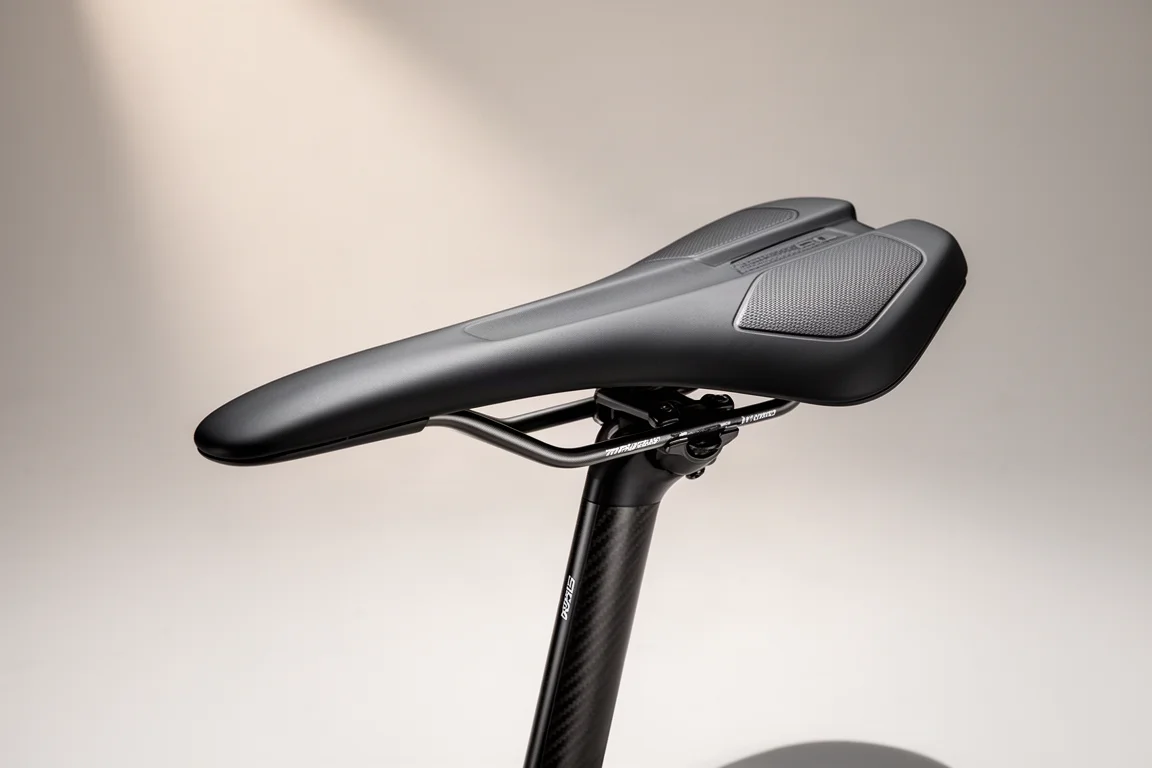
A closer look at the Ergon SR Triathlon saddle, its dynamic power position, the front and mid sitting types, and the differences between the men's and women's versions.
Introduction
A triathlon bike asks a lot of the rider, and the saddle is where most of that discomfort ends up. Holding an aerodynamic position for hours is not a natural posture, and the wrong saddle turns a long ride into a constant search for the one spot that works.
The Ergon SR Triathlon was developed over a period of roughly two to three years with input from a professional triathlete. Ergon presents it as more than a comfort upgrade: the company claims the saddle improves comfort on a triathlon bike and also helps riders run faster off the bike. Rather than a single shape, the range is built around four distinct versions.

This review covers what the SR Triathlon is, how the front and mid sitting types differ, what separates the men’s and women’s versions, and what is worth checking before you buy.
Who the SR Triathlon Is For
This saddle is aimed at riders who spend long hours in an aerodynamic position, particularly triathletes and time trial riders preparing for long distance events. It is also relevant for riders who have struggled with saddles that only feel comfortable in one narrow position.
The design assumes that sitting type is anatomical rather than a matter of preference. Ergon divides riders into front and mid sitting types, and the saddle you choose is meant to match the way you already sit, not the way you would like to sit. Riders who have never considered this distinction may find that the SR Triathlon clarifies why certain saddles have never quite worked.
It is less relevant for casual riders doing short, upright trips, where a conventional saddle is usually simpler and cheaper.
Main Strengths: A Dynamic Power Position
The core idea behind the SR Triathlon is what Ergon calls a dynamic power position. Instead of locking the rider into one precise contact point, the saddle is shaped so that you can move slightly forward or slightly back without losing the power you are putting through the pedals.
That movement matters over a long ride. Shifting position adds a new pressure point alongside the existing one, which relieves load on the areas that have been carrying it. Riders can ease off overused hamstrings or quads and give preloaded tissue a break, while still pedalling at the same effort.
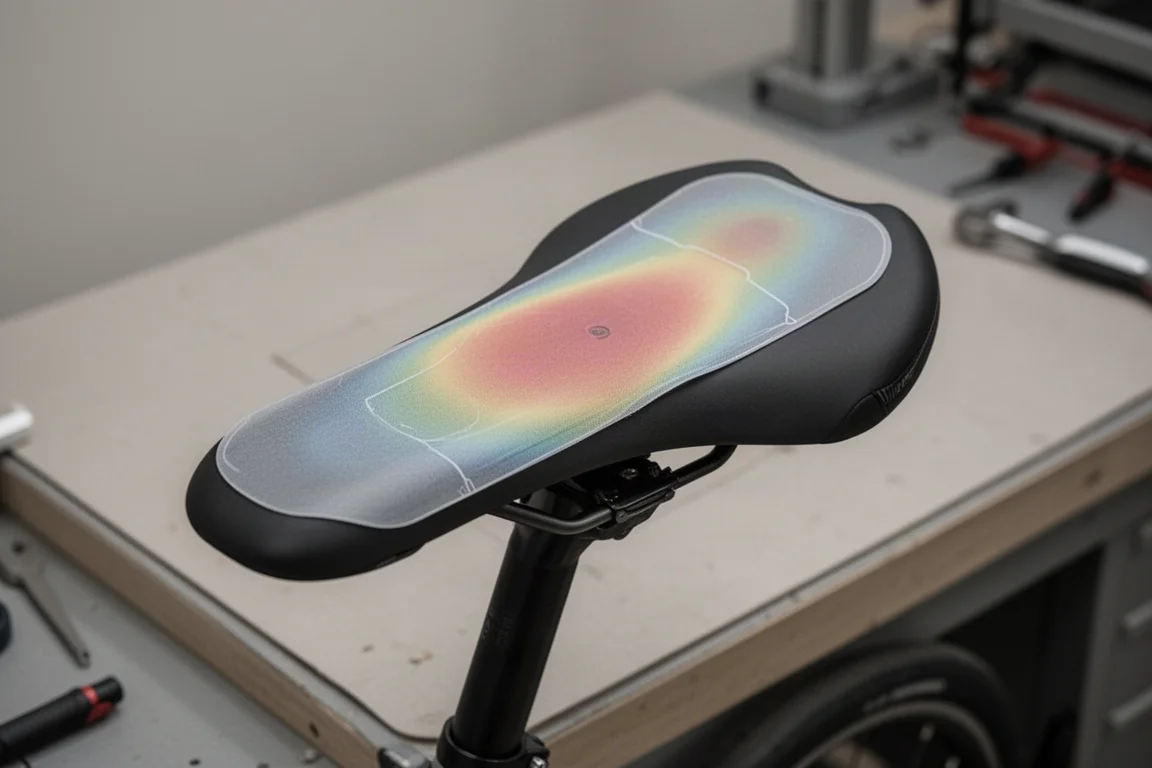
Anyone who has ridden a saddle with a single comfortable spot will recognise the problem this solves. On those saddles, sitting a little forward or a little back immediately becomes uncomfortable, which is exactly the situation that becomes painful in the later stages of a long bike leg.
Ergon also argues that the saddle helps the run that follows. The claim is not that the saddle changes your running form, but that reducing pressure on the lower back, upper back and shoulder region during the ride makes the transition from cycling to running less of a struggle. The saddle is designed to act as a stable weight loader so the rider can concentrate on pedalling rather than on holding position.
Front or Mid: Choosing Your Sitting Type
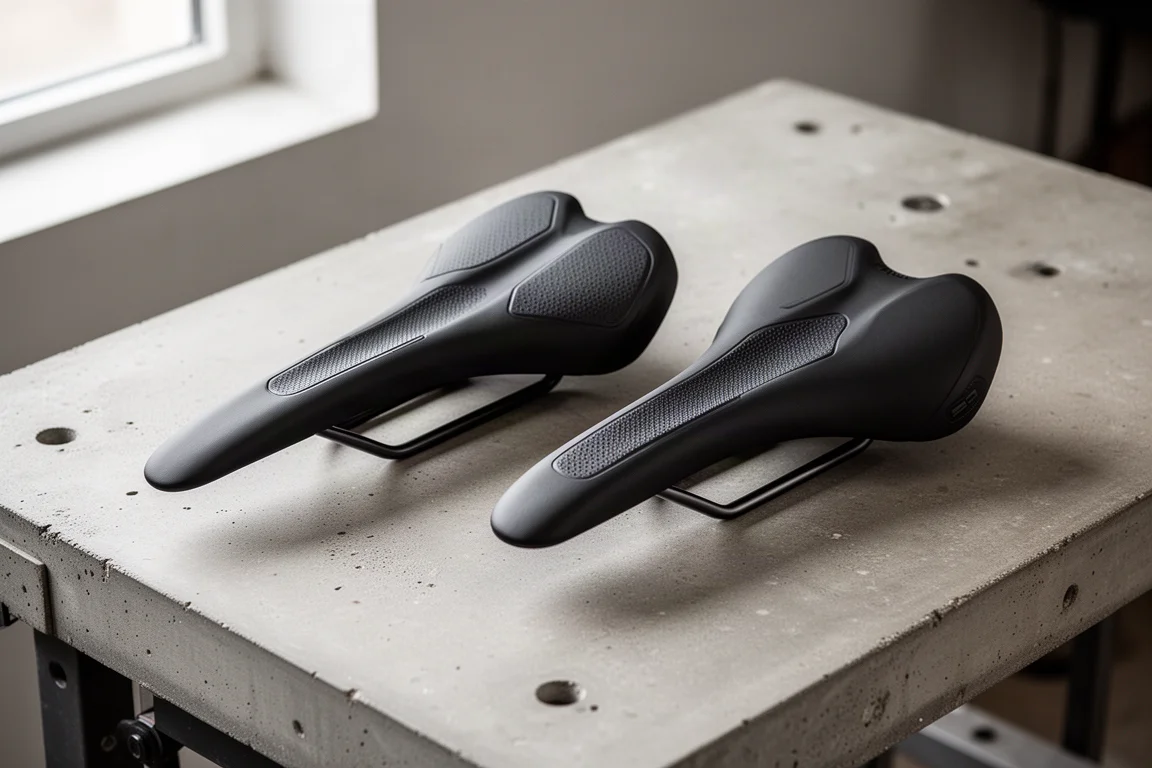
The SR Triathlon range splits into front and mid variants for both men and women, giving four saddles in total. The difference is visible in the shape. The front version has a long, shallow nose and is made for riders who sit on the front of the saddle. The mid version has a wide, short nose and is made for riders who sit in the middle region.
This is not a choice in the usual sense. Sitting type comes from anatomy and settled behaviour, in the same way that sit bone width is fixed. A rider cannot decide to become a mid sitter and ride a mid saddle instead. One of the two shapes will suit you better, and the other will not.
Pressure mapping is one way to identify which type you are, and Ergon also publishes guidance explaining how to work it out. If you are unsure, it is worth resolving before you order, because the front and mid shapes are not interchangeable in use.
Men’s and Women’s Versions: Different Pressure Relief
The men’s and women’s saddles also differ in how they relieve pressure, reflecting different anatomy. The men’s version uses a wide, surface-oriented front nose area with a shallow pressure relief channel running through it.
The women’s version takes a different approach and uses a 3D printed cover with variable shore hardness. A firmer structure holds the bone structures and carries the rider’s weight, while a softer material supports the soft tissue and adds support inside the pressure relief channel itself.

The effect of that construction is a larger overall contact surface, which spreads load and reduces the pressure at any single point. The pressure relief channel is treated as an active part of the comfort system rather than simply an opening in the cover.
Because the two versions are built differently, it is worth confirming exactly which model you are ordering rather than assuming that the men’s and women’s saddles differ only in width.
Things to Consider Before Buying
The main consideration is fit. With four variants in the range, the SR Triathlon rewards riders who take the time to establish whether they are a front or a mid sitter and to select the correct men’s or women’s model. Getting this wrong means living with the wrong shape, since the design does not allow for a compromise between the two.
The claim about running faster is worth reading carefully. Ergon frames it around the transition from cycling to running, a phase that is biomechanically awkward and typically takes several kilometres to settle. The gain described is a marginal one: reaching a comfortable running rhythm sooner, because less pressure has accumulated in the lower back during the ride. That is a reasonable benefit, but it is not a guarantee of a faster split on its own.
Comfort is also personal, and a saddle that suits one rider’s anatomy and position may not suit another’s. The dynamic power position is designed to reduce the penalty for moving around, but it still assumes the saddle matches your sitting type in the first place.
Finally, the women’s version uses a 3D printed cover while the men’s does not, so the two models should be compared as different constructions rather than as colour or width variations of the same saddle.
Buying Advice
The SR Triathlon makes the most sense for triathletes and time trial riders covering long distances, especially those who have found that a single sweet spot on the saddle is not enough to get them through the bike leg comfortably.
Before ordering, work out whether you sit toward the front or the middle of the saddle, and confirm whether you need the men’s or the women’s model. Pressure mapping is the most reliable route if you have access to it, and Ergon’s own guidance is a useful starting point if you do not. Riders who are unsure should not guess, because the front and mid shapes serve different positions.
If your priority is simply a comfortable saddle for short, relaxed rides, a conventional design will usually cost less and do the job. The case for the SR Triathlon is strongest when comfort over several hours in an aerodynamic position, and a smoother start to the run, are the things you actually need.
Conclusion
The Ergon SR Triathlon is a considered answer to a specific problem: staying comfortable and powerful on a triathlon bike for hours, then starting the run without a locked-up lower back. Its dynamic power position allows useful movement without sacrificing output, and the split between front and mid sitting types, plus separate men’s and women’s constructions, reflects how individual saddle fit really is.
The trade-off is that the range asks more of the buyer. You need to know which type you are before you buy, and the faster-run claim is a marginal transition benefit rather than a transformation. For riders who put in the time to get the match right, that precision is the point.
Product link
View more details for Ergon SR Triathlon
This product is mentioned in the review. Check the specifications, options, and compatibility before buying.
View more details for Ergon SR TriathlonFurther reading
Related Reviews
Cycling Components
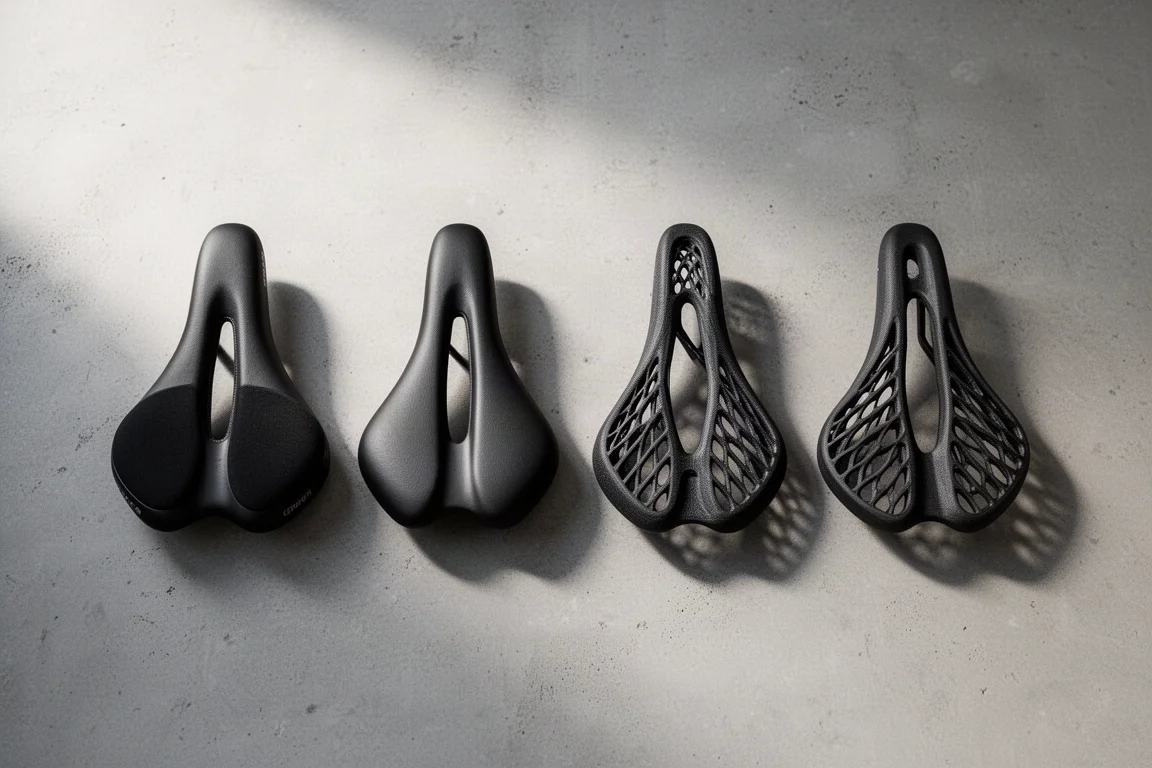
Are 3D Printed Bike Saddles Worth It? A Pressure-Mapped Comparison
Four saddle shapes pressure mapped in standard and 3D printed form, with rider feedback on where the upgrade pays off and where it does not.
Bike Saddles
Best Road Bike Saddles for Comfort: Four Shapes Worth Trying
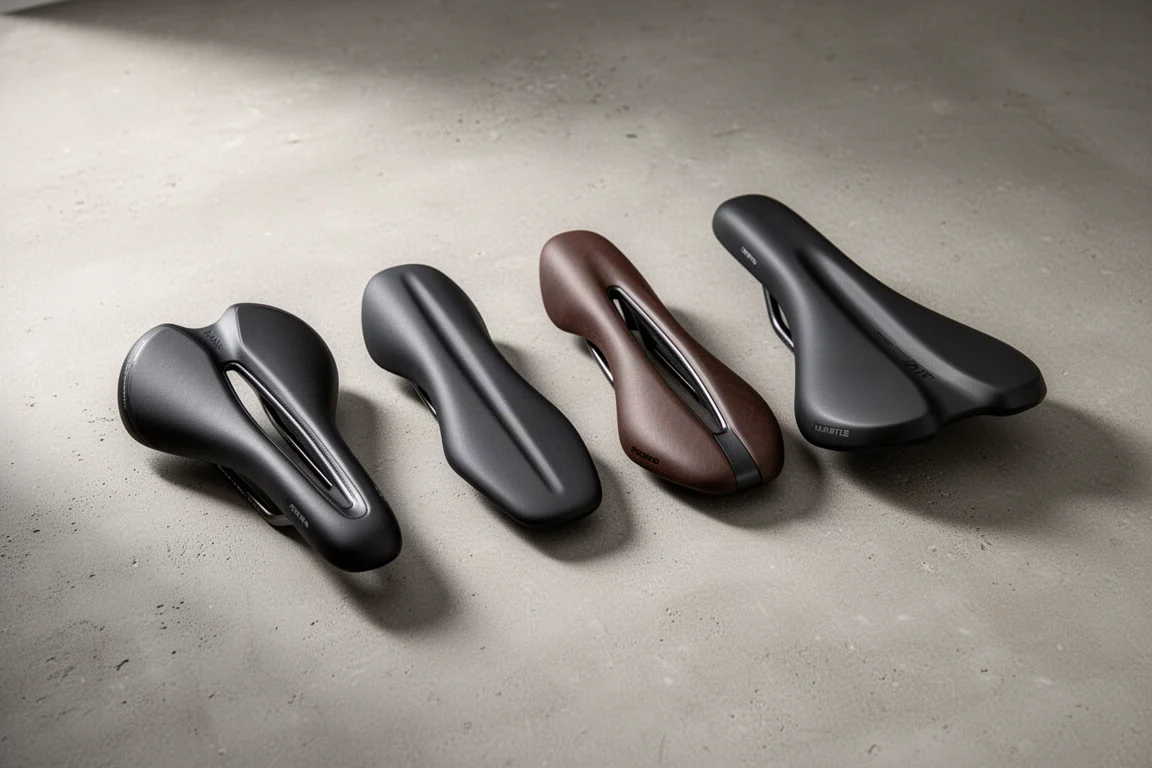
Short nose, narrow, flat or wide: how saddle shape changes pressure on the bike, and four road saddles worth testing before you buy.
Bike Fitting
Bike Fit Stance Guide: Five Ways to Widen Your Pedal Stance
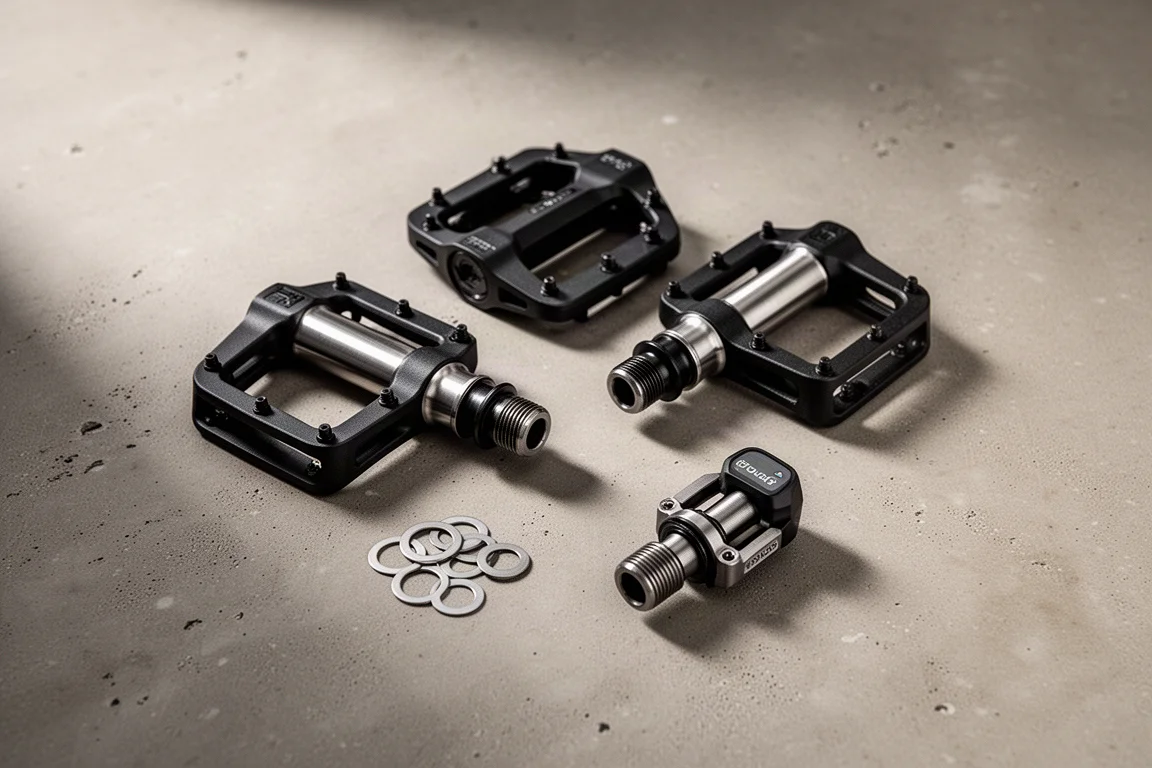
Stance is one of the most overlooked numbers in bike fitting. Here are five practical ways to widen it, from inexpensive pedal washers to long-axle pedals and a dual-sided power meter.