Bike Saddles
Best Road Bike Saddles for Comfort: Four Shapes Worth Trying
Short nose, narrow, flat or wide: how saddle shape changes pressure on the bike, and four road saddles worth testing before you buy.
Introduction
Saddle discomfort is one of the most common complaints in road cycling, and it is rarely a mystery. It usually shows up as an asymmetric interaction with the saddle: one side taking more load than the other, or pressure building in one specific spot. A saddle should not be the loudest part of your awareness of the bike, and it should not be painful. Comfort also has a time value attached to it. Something that feels acceptable for 30 seconds on a fitting rig can feel very different after four or five hours on the road.
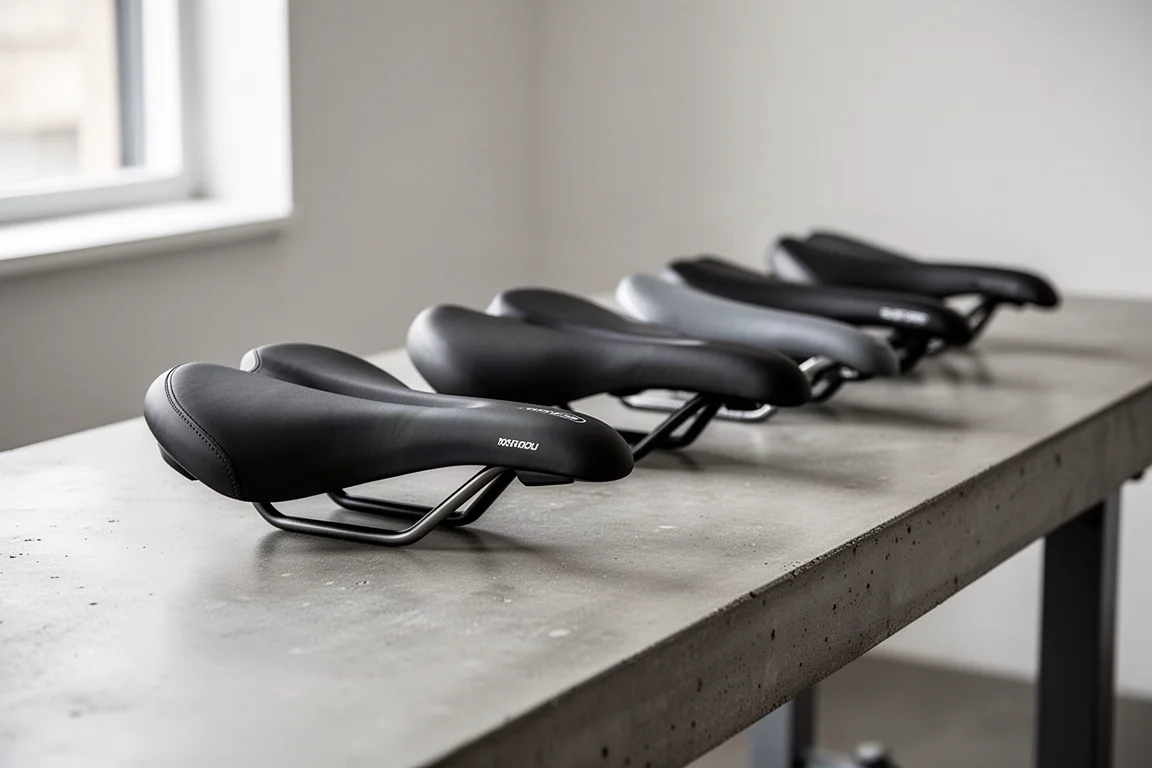
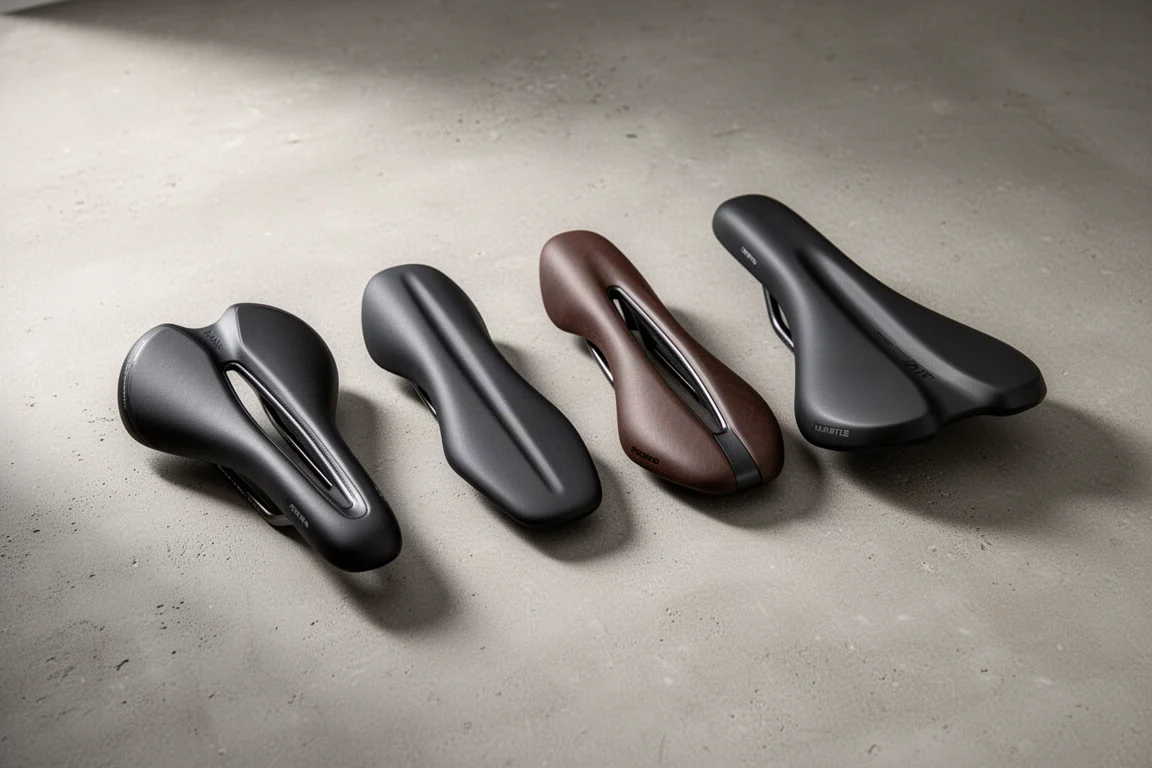
The four saddles below cover the shapes that dominate the road market right now: a short-nose design around 140 mm wide, a narrow flat saddle, a narrow saddle with a relief channel, and the wider short-nose platform that set the template for much of the current market. Each behaves differently depending on how you actually sit on it, which is why shape matters more than the label on the box.
Why Saddle Shape Matters More Than Padding
Shape, not padding, is what determines how a saddle distributes your weight. Many shapes still in production are inherited from much older designs, and the basic outline of a saddle has changed less than you might expect. The more meaningful shifts have been the pressure relief channel, intended to reduce soft tissue pressure in the perineum, and the move to short-nosed saddles, which also helped riders work around the setback rules used in racing.
Widths have moved in the opposite direction. Saddles have been getting shorter and wider at the same time, and the trend toward wider platforms has been driven in part by sit-bone measuring, a system that tends to produce a saddle that is too wide. An excessively wide saddle can get in the way of the thighs clearing the wings, which pushes the rider forward and onto the nose. A saddle that is too wide can create the very pressure problem it was meant to solve.
Padding is not the fix either. A heavily padded saddle gives the pelvis room to rock, and that instability can contribute to lower back pain and foot issues. A relatively firm saddle, paired with padded shorts, is usually the better starting point.
Prime Primavera: Short Nose, Around 140 mm Wide
The Prime Primavera is a short-nose saddle around 140 mm wide, built along the same lines as other modern short and moderately wide road saddles. It is the shape many riders arrive at first, and it suits a long, reachy riding position. It was originally picked up through a retailer that has since closed its doors, so availability now depends on what is in stock.
Pressure mapping, which uses a sensor mat with 30 measuring points, showed what that position was doing to the saddle. Load at the nose was roughly twice that of the left wing, and the left wing carried roughly twice the load of the right. The pattern was uneven from side to side, and the front of the saddle took the worst of it. That is the kind of asymmetry that shows up as recurring saddle soreness rather than a constant ache.
The takeaway is not that the saddle is badly made. It is that a short-nose saddle in a sensible width can still produce a poor pressure pattern if reach, saddle height or saddle tilt are off.
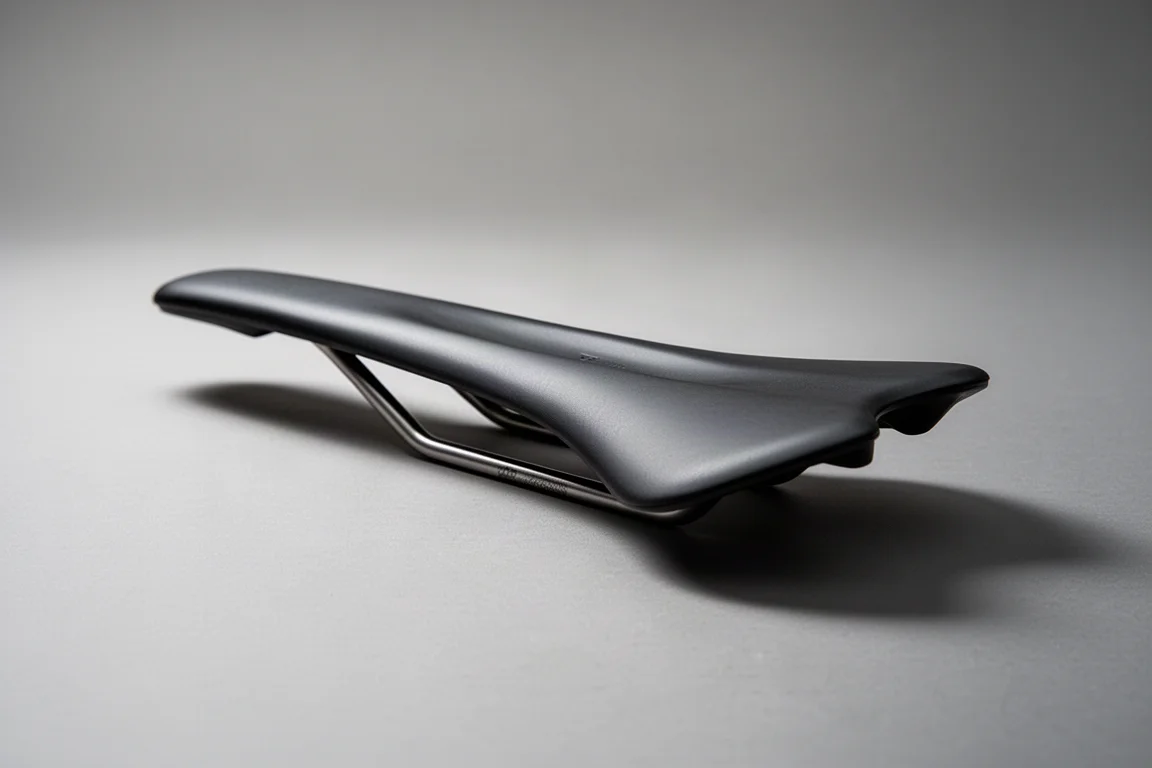
Fizik Arione: Narrow, Flat and Without a Relief Channel
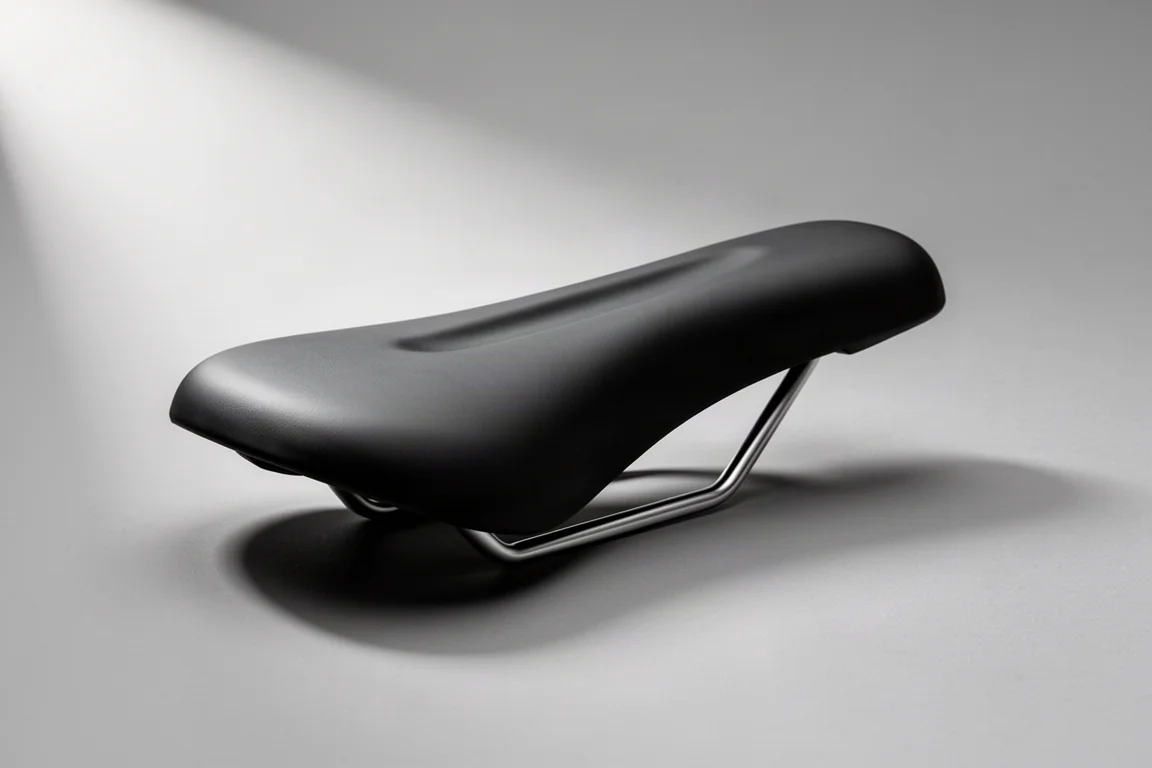
The Fizik Arione is a long, narrow saddle measuring around 130 mm at its widest point, with a completely flat top and no pressure relief channel. Moving to it shifted the pressure point away from the nose, because the narrower width gave more freedom to sit further back on the shell. The relief at the front came at a cost: the load transferred to the rear of the saddle instead.
The flat front is what stands out in the drops. With no channel and no shaping at the nose, pressure arrives immediately once the pelvis rotates forward. That does not make the Arione a poor saddle, but the shape rewards riders who sit further back and stay there. Even then, soft tissue pressure does not disappear. It simply moves.
Selle Italia SLR Boost: Narrower, With a Relief Channel
The Selle Italia SLR Boost is around 13 mm narrower than the Prime Primavera and adds a relief channel through the shell. On the mapping mat, the rear of the saddle showed a noticeably more even spread of force than the wider short-nose saddle, which is exactly what a narrower, channelled shape is meant to achieve.
The front of the saddle told a different story. Pressure at the nose remained, but that residual hot spot was unilateral, sitting on one side. That pattern points away from the saddle and toward position: a saddle set too far back, too much reach, or too much drop will all drive more load into the nose. As a demonstration, reducing reach by 30 mm cut pressure through the nose by around 25 percent.
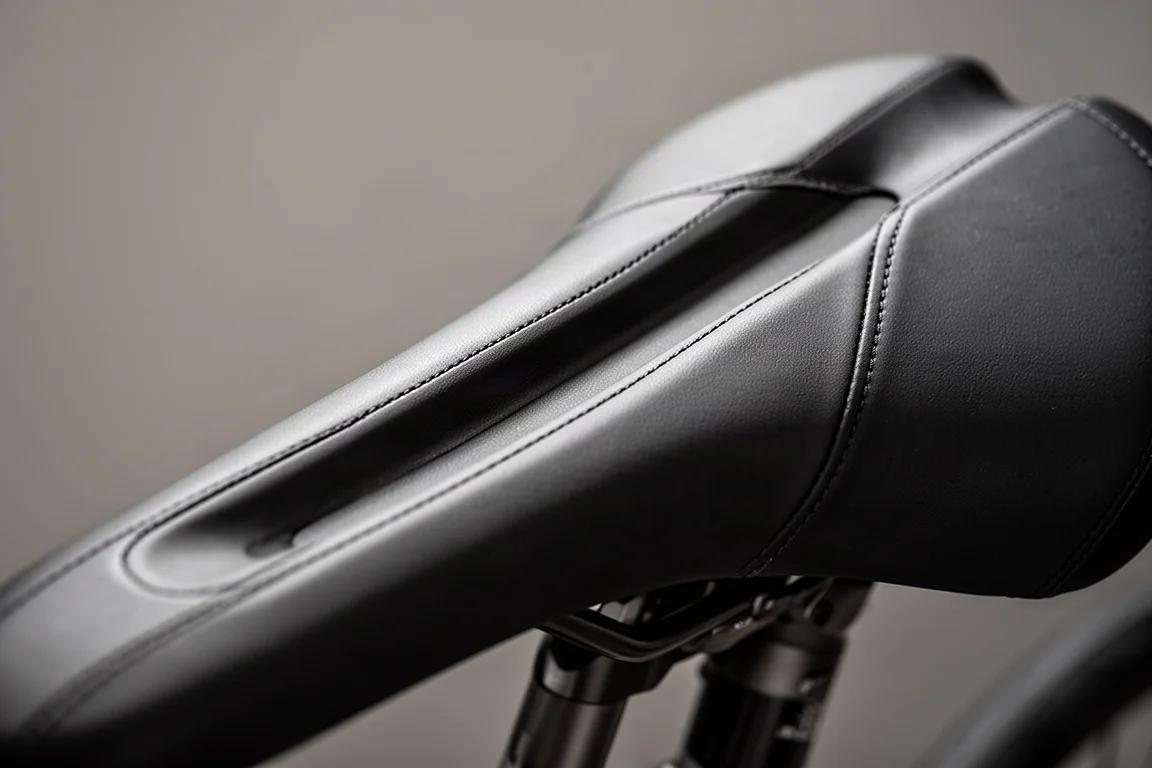
That is the useful lesson from this shape. A narrower saddle with a channel can improve how load is spread across the rear, but it will not compensate for a position that pushes you onto the front of it.
Specialized Power: The Short-Nose Platform That Set the Trend
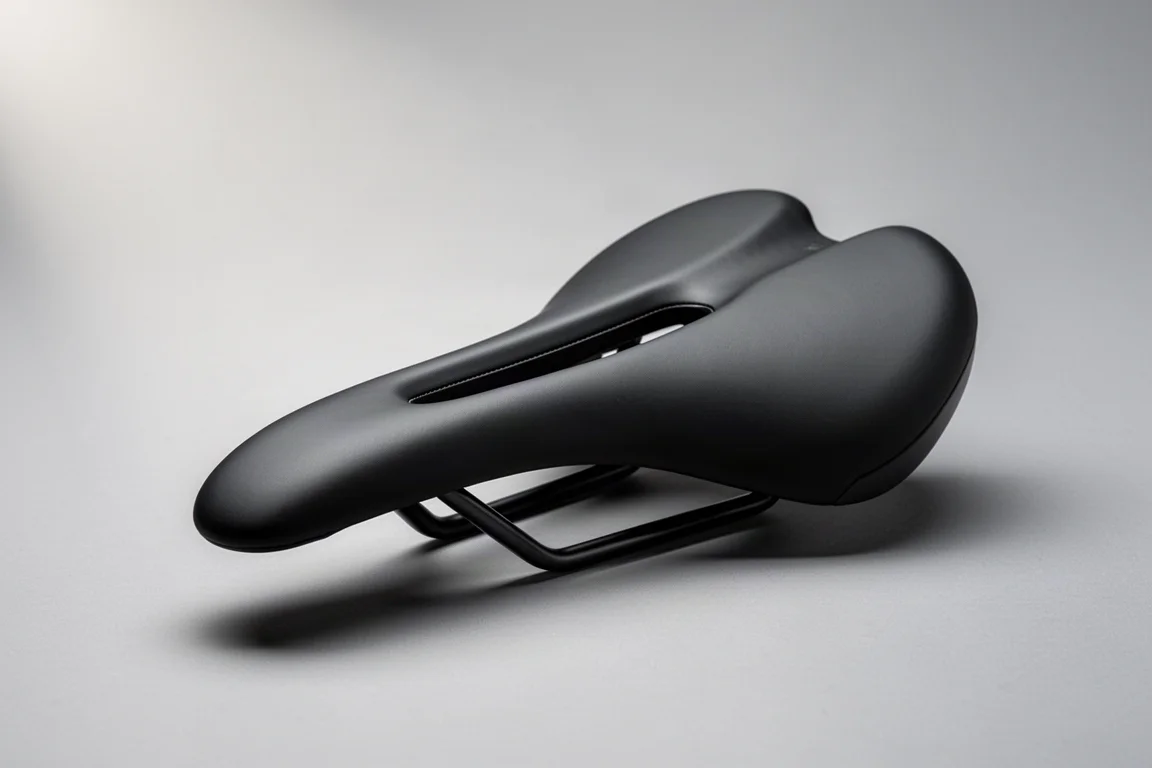
The Specialized Power has been one of the most influential saddles of the past decade. It helped normalise the short-nose format and the pressure relief channel, and it made the case that saddles can get shorter as they get wider. The range starts at around 140 mm and runs up to roughly 168 mm.
That upper end is where the caution sits. A width that generous is wider than most skeletons need, and an excessively wide saddle can stop the thighs clearing the wings cleanly, which encourages the rider to slide forward onto the nose. Width should be chosen for how you sit on the bike, not for how the saddle looks on the shelf.
Buying Advice: What to Try Before You Buy a New Saddle
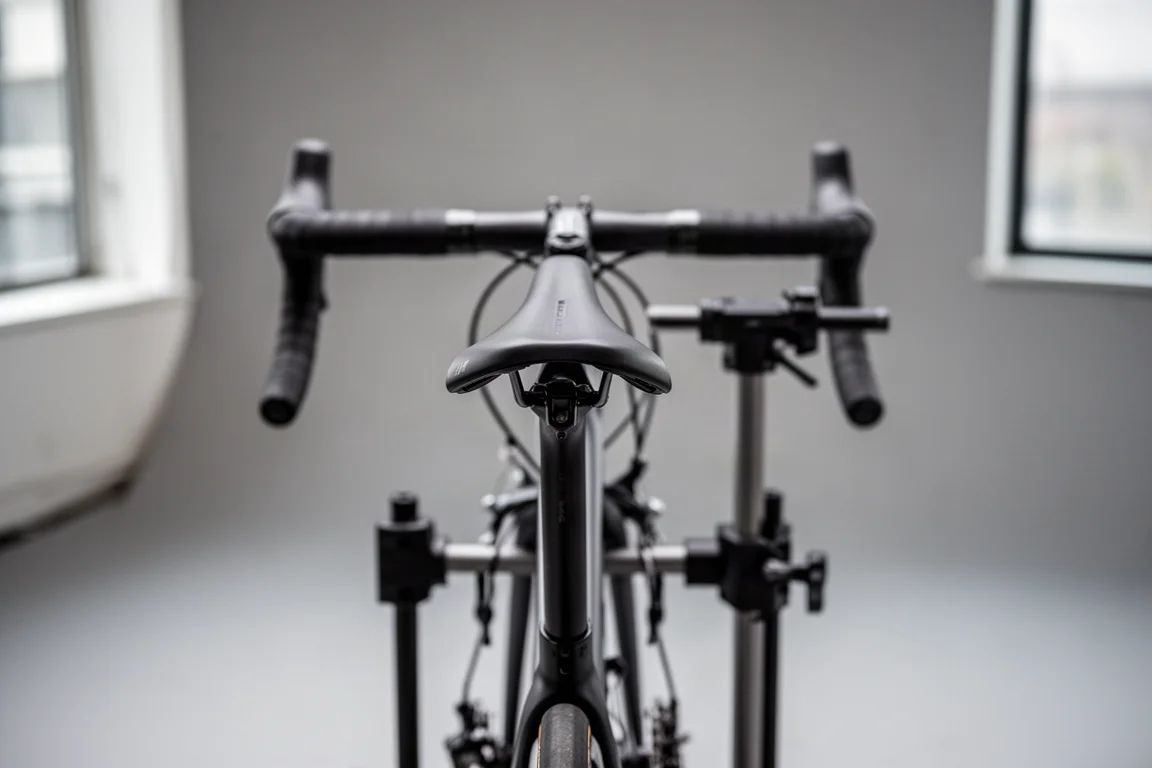
If saddle pressure is the problem, a new saddle is not automatically the answer. Two fit parameters cause most of it: excessive saddle height and excessive reach. Both tend to produce either an asymmetric interaction with the saddle or too much contact with the nose, and both are free to adjust.
Start with the basics. Check that the saddle is relatively level and relatively flat, and that it is not too high. If levelling the saddle creates genital pressure, try lowering it rather than tilting the nose down. If you find yourself constantly pushed onto the nose, shortening the stem by 10 mm, 15 mm or even 20 mm is worth testing. Fit work away from the saddle matters too: adding arch support to shoes reduced saddle pressure by up to 50 percent in one fitting setup, which shows how much of a saddle problem can originate somewhere else entirely.
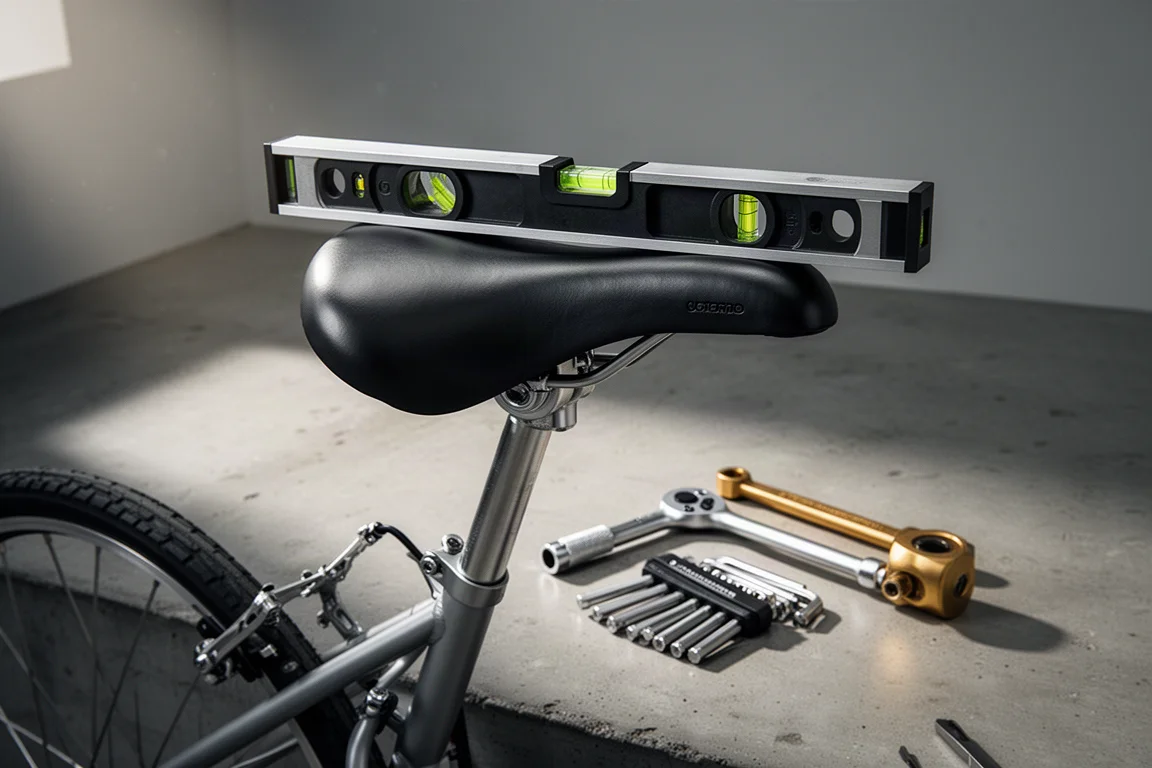
Pressure mapping is useful, but it is not the saddle selection tool it is often presented as. Its strength is showing what positional changes achieve, such as whether a shorter reach genuinely takes load off the nose. Comparative testing in a controlled environment, with different saddles and different positions, remains the most reliable route to a comfortable setup.
Conclusion
Four saddles, four different behaviours. The Prime Primavera shows how a short-nose shape around 140 mm wide can still concentrate load at the nose. The Fizik Arione trades front-end pressure for a rearward load, thanks to a narrow, flat profile with no channel. The Selle Italia SLR Boost spreads load more evenly at the rear while leaving front-end pressure to be solved by position. The Specialized Power remains the reference point for the short-nose trend, with a width range that rewards careful choice.
Start with saddle height, reach and tilt. Change the saddle once those are right.
Further reading
Related Reviews
Bike Saddles
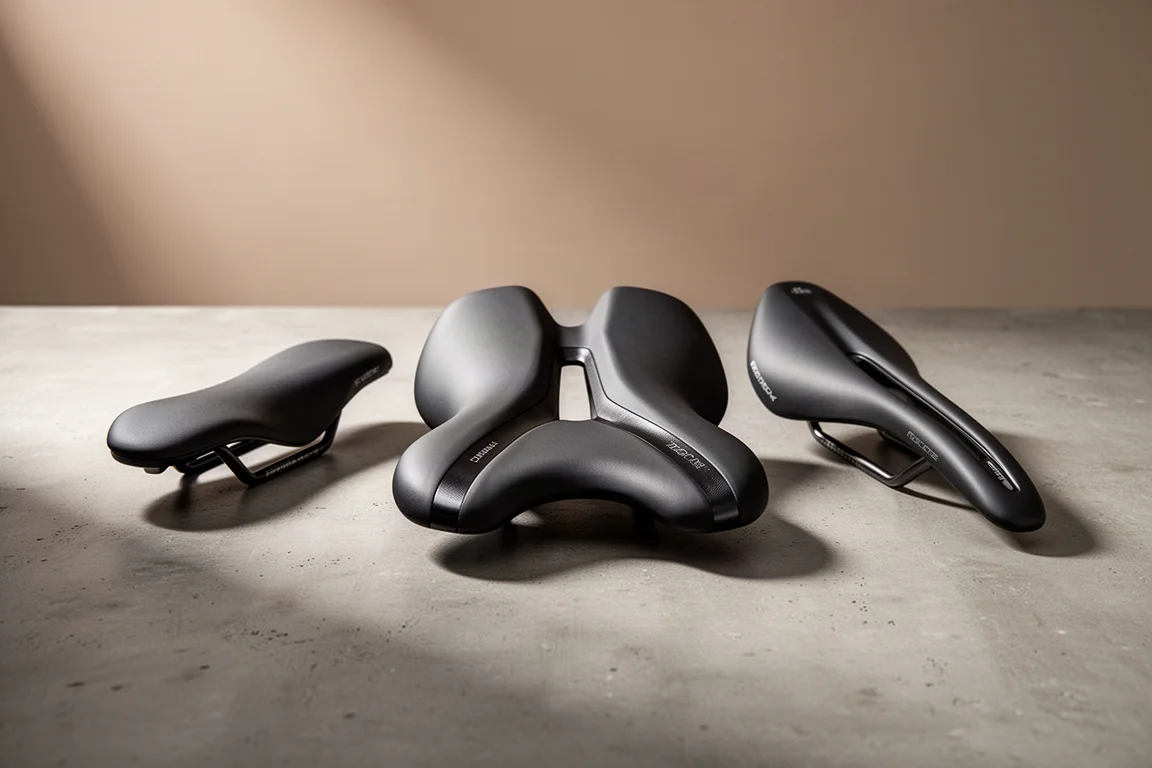
Bike Saddle Comfort Guide: Shape, Width, and Fit Explained
Saddle comfort depends on shape, width, padding, and position. Three saddles show how short-nose, channel-relieved, and narrower designs behave in practice.
Bike Saddles
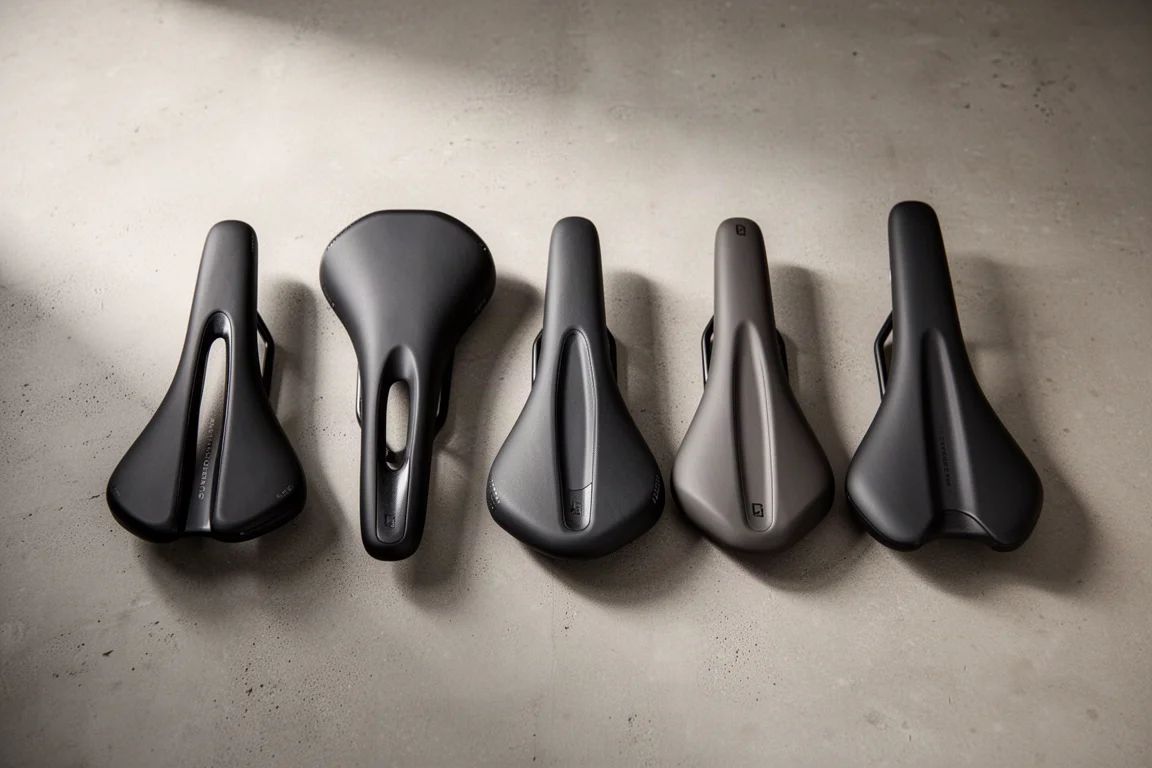
Bike Saddle Width Compared: What Nine Saddles Reveal About Comfort
Nine road saddles from Selle Italia, Specialized and PRO, compared by width, pressure distribution and pelvic stability to see whether wider really means more comfortable.
Bike Saddles
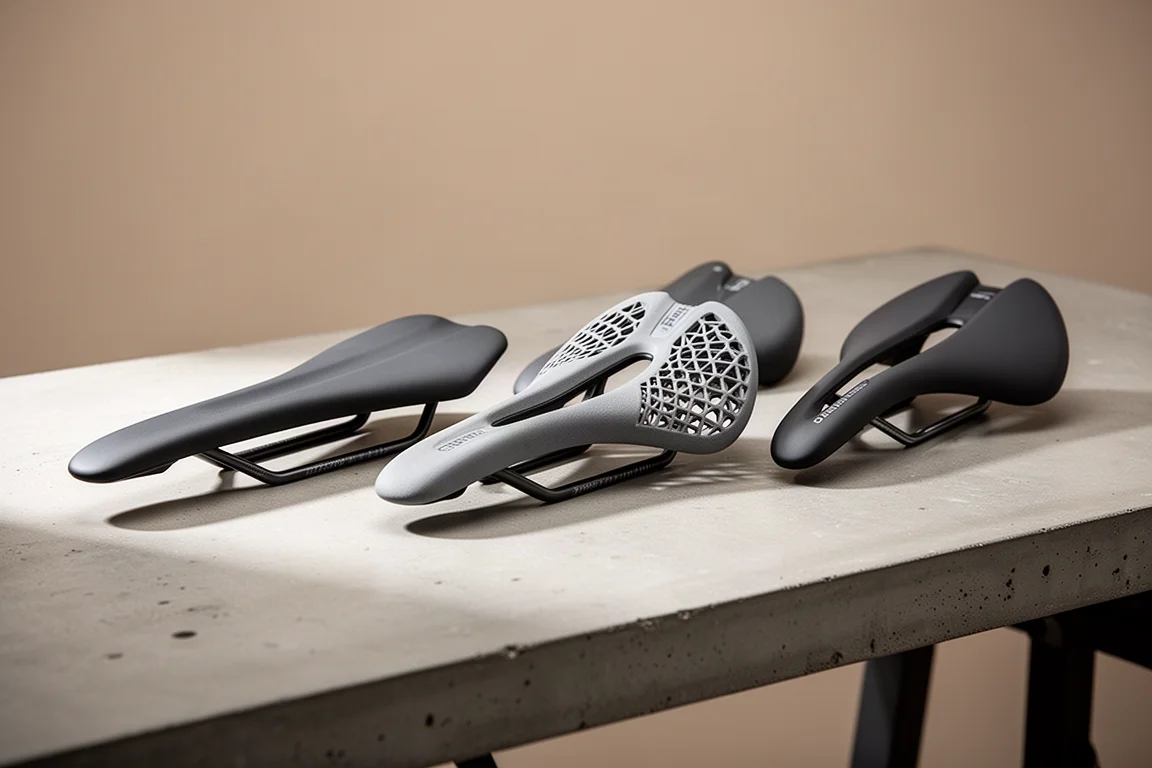
19 Bike Saddles Ranked Worst to Best: What to Buy and What to Skip
A no-nonsense ranking of 19 road bike saddles, shaped by more than 15,000 bike fittings, from models to skip to genuine top-tier picks.