Backpacking Gear
Synthetic Puffy Jacket and Quilt for Backpacking: Enlightened Equipment Torrid and Enigma Apex
A close look at two ClimaShield Apex pieces for damp three-season backpacking, with real weights, prices, and the trade-offs worth knowing before you buy.
Introduction
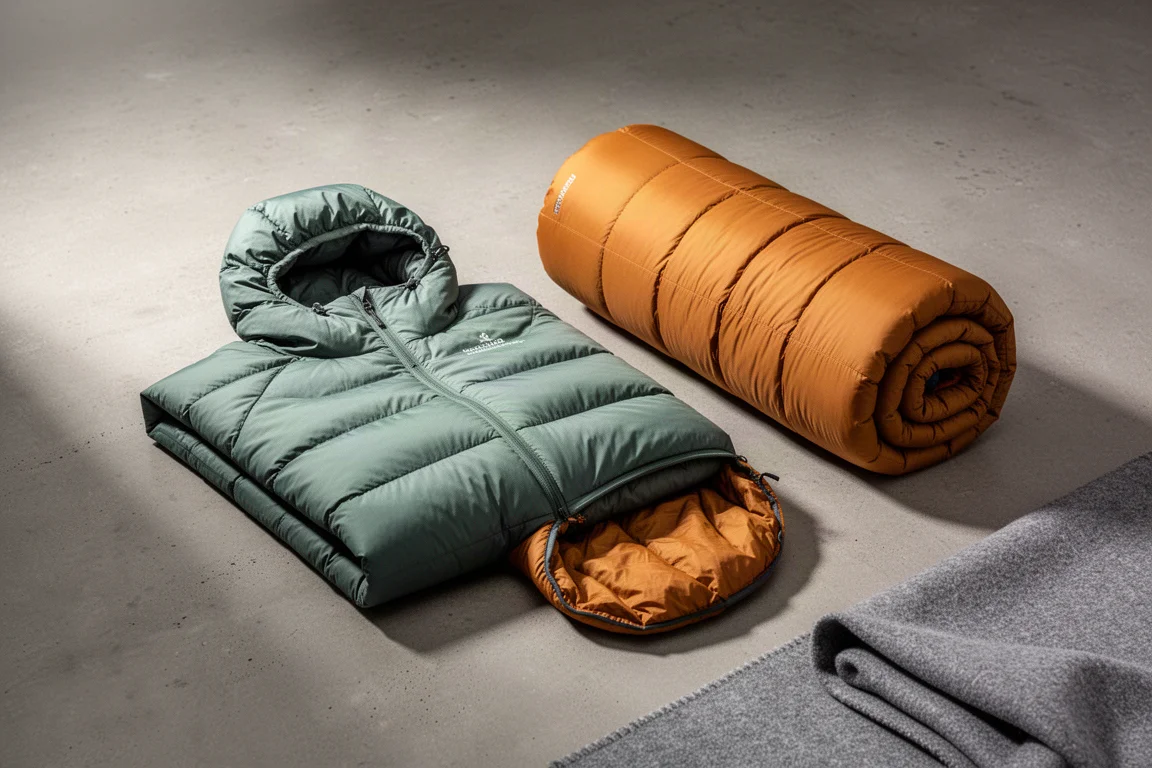
Synthetic insulation has become the practical answer for a particular kind of backpacker: the hiker who reacts badly to down and feathers, and the hiker who spends enough time in damp, humid conditions that a wet sleeping system is a genuine risk. The Enlightened Equipment Women’s Torrid Custom Jacket and the Enigma Apex Custom Quilt both sit at the center of that decision. Both use ClimaShield Apex synthetic insulation, both can be ordered as custom builds, and both were carried through a full thru hike of the Foothills Trail in three-season conditions.
This roundup covers what each piece is made of, how the insulation behaved night after night, and where the real trade-offs appear.
Why Synthetic Insulation for Backpacking
ClimaShield Apex is a continuous sheet of synthetic insulation rather than loose clusters. That construction matters for two reasons. It holds its shape and its insulating value when it takes on moisture, where down tends to collapse and lose loft. And because it is a single sheet, it does not need baffles or extra stitching to keep insulation from shifting into cold spots.
It is worth being clear about what synthetic insulation does not do: it does not turn a puffy into a rain jacket. The Torrid’s nylon shell has a DWR finish, which handles mist, fog, and light snow that can be brushed off, but it is not waterproof. Insulating layers are still best kept dry and worn under a shell in wet weather.
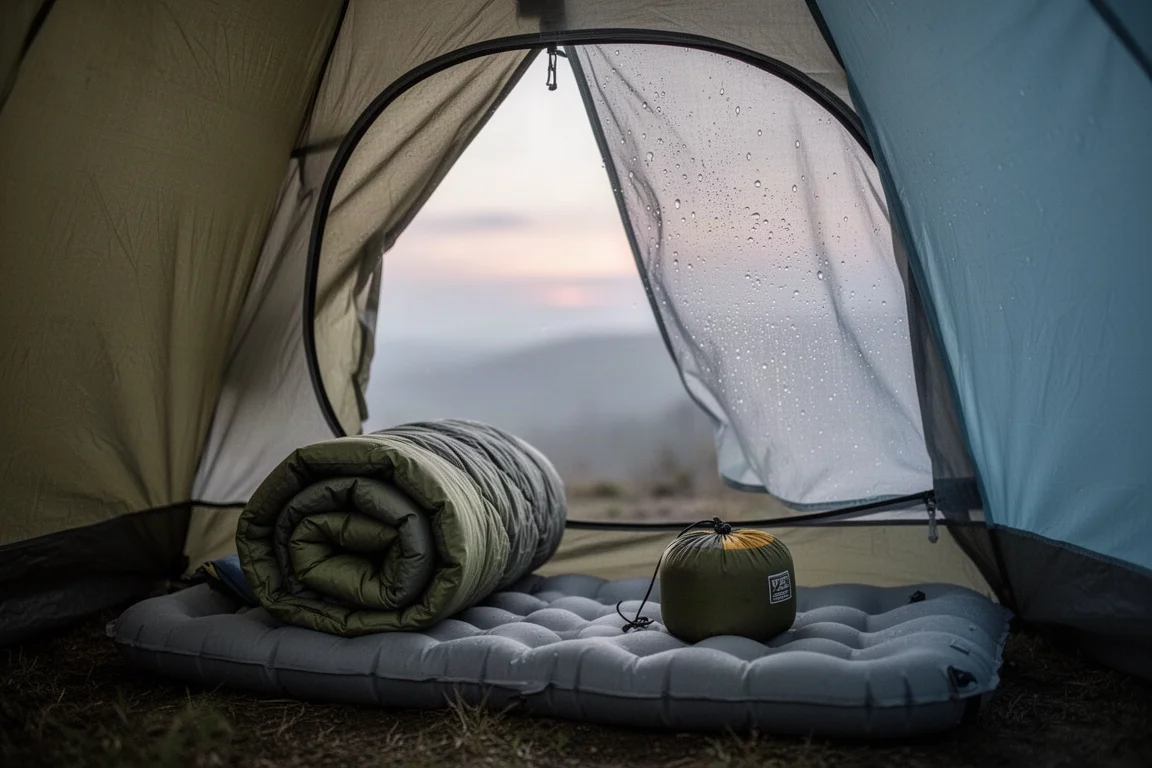
For anyone dealing with feather sensitivities, the appeal is simpler still. A synthetic jacket and quilt remove down fill from the camp and sleep system entirely, which is a meaningful change when facial swelling has been getting worse season after season.
Enlightened Equipment Women’s Torrid Custom Jacket
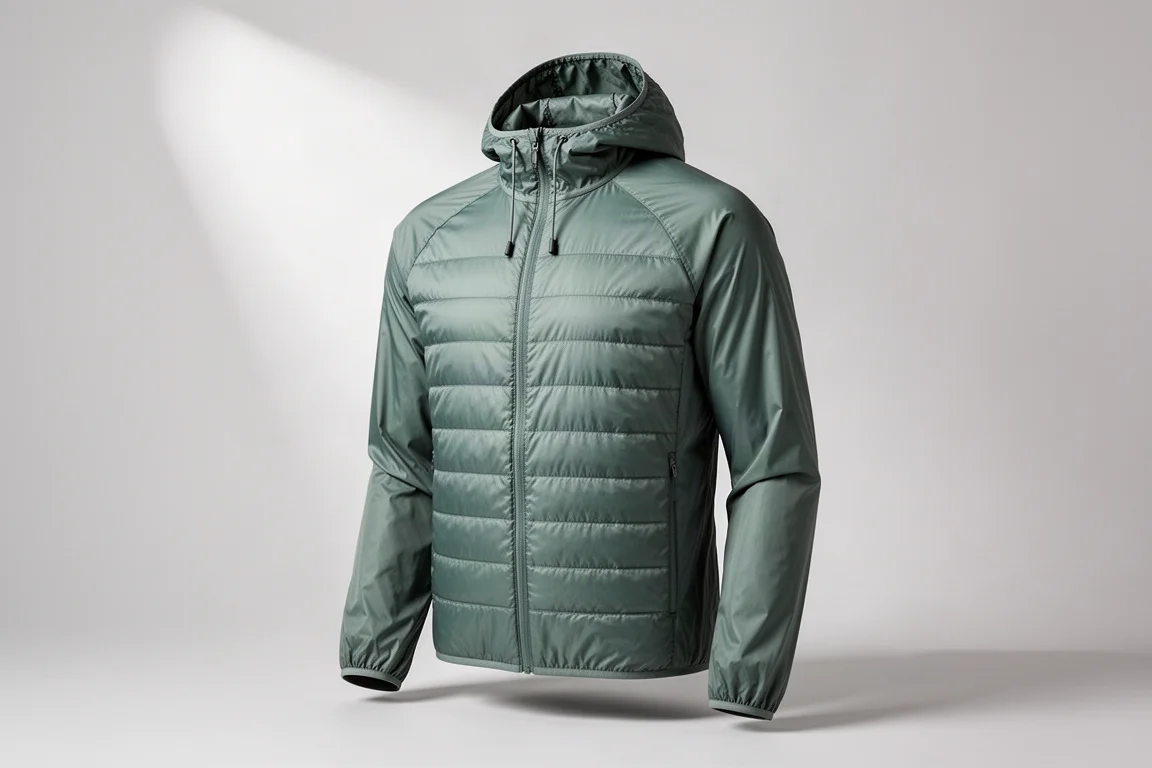
The Torrid is built around 2 oz/yd² ClimaShield Apex insulation, wrapped in a 10 denier nylon shell and lining with a DWR finish. It is a hooded, raglan-sleeve design: the sleeve runs as one connected piece from the neck area downward, a pattern intended to improve freedom of motion and reduce pressure where shoulder straps sit. Elastic cuffs keep drafts from running up the arms, and the hood is easily adjustable.
Torrid Fit, Sizing, and Custom Options
Enlightened Equipment publishes a sizing chart with measuring instructions, and the fit is straightforward to dial in. A 5 ft 8 in hiker weighing 130 to 135 lb fits a medium. As configured with 10 denier nylon inside and out and a regular hood, a medium weighed 7.75 oz and cost $175.
The custom build allows a choice of colors and fabric weights. A ready-to-ship version is also available and typically ships within three to five days instead of a lead time that can run several weeks, though it limits the build to a size, two color schemes, fixed 10 denier nylon, and a regular hood.
Two details stand out in use. The waist adjustment sits inside the hand pockets, so there is no cinch hardware pressing into the hip under a pack belt. The jacket is also handmade in Winona, Minnesota.
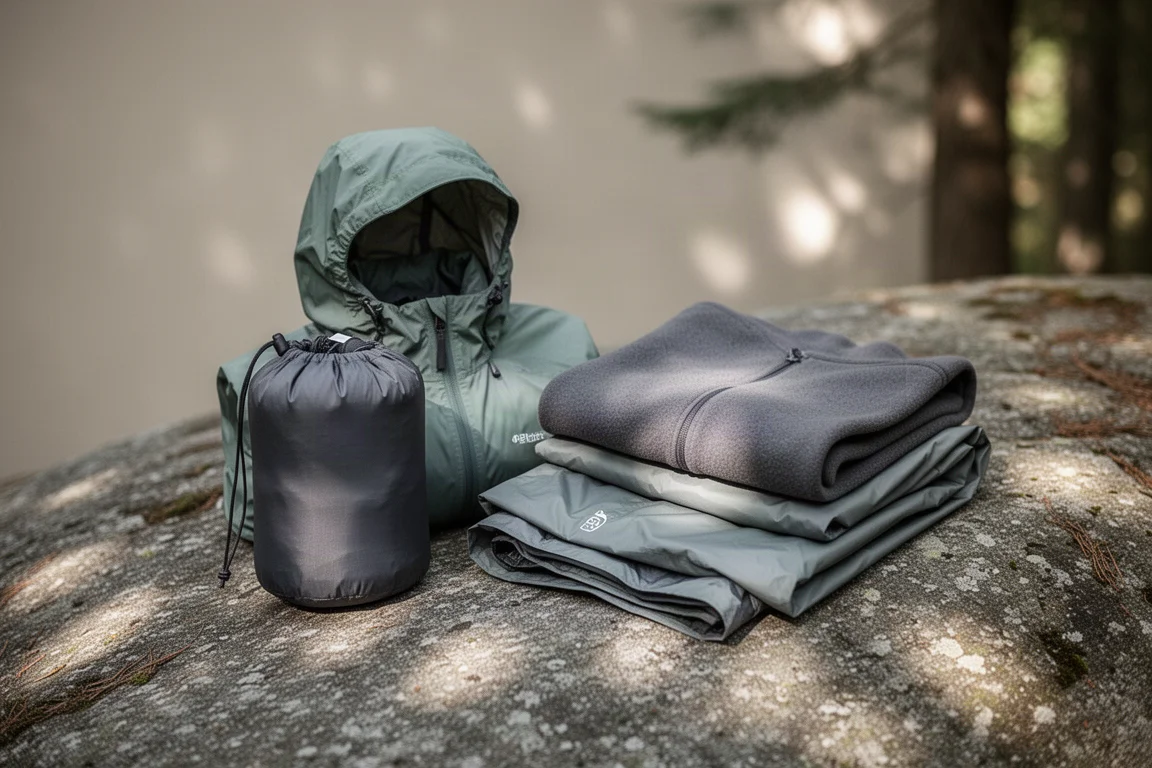
In the field the Torrid came out warmer than expected. It is not as warm as a comparable down jacket of similar weight, but it costs roughly $200 less, and for cool three-season trips it delivered more warmth than a synthetic layer of that weight would suggest.
Enlightened Equipment Enigma Apex Custom Quilt
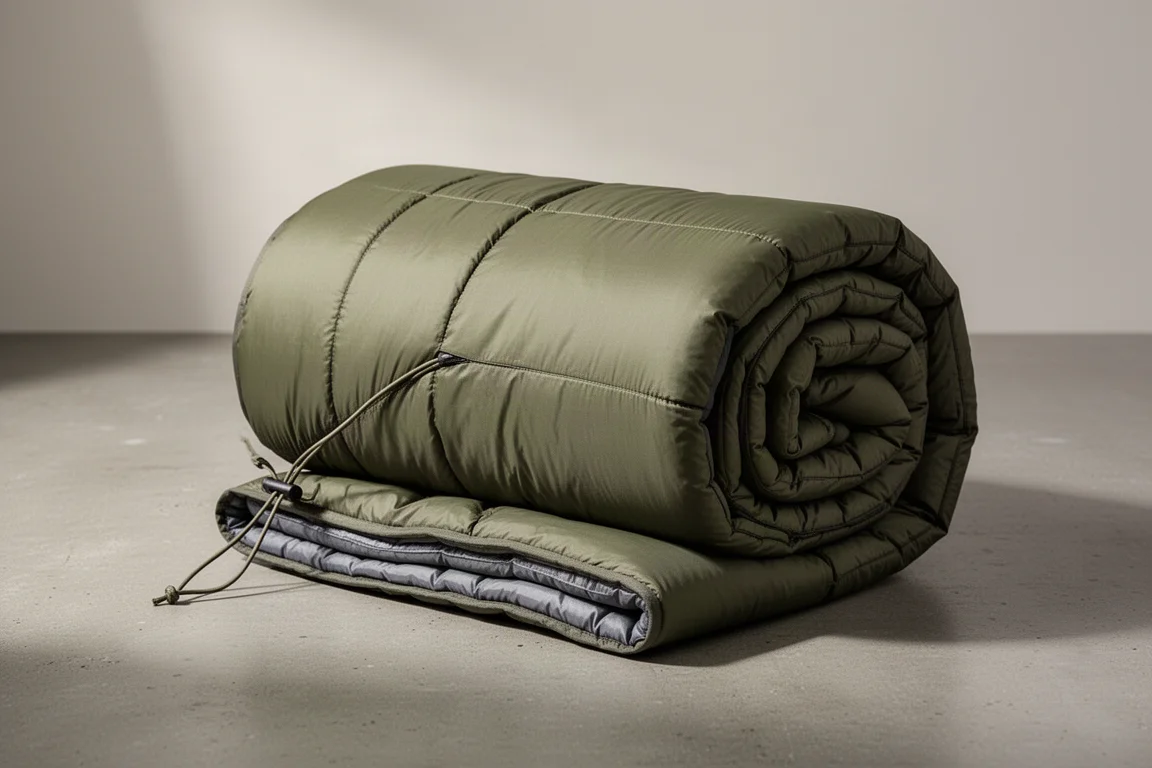
The Enigma Apex is the synthetic counterpart to the down Enigma, sharing the same overall shape but built from ClimaShield Apex. Because the insulation is a single sheet, there are no baffles and no extra stitching, which keeps the design simpler and avoids the cold spots that bunched down can create. The shell and lining are 10 denier nylon.
Rating options run from 50 degrees down to 20 degrees, and the quilt can be ordered in different lengths and widths. A regular length with slim width was the right fit here, keeping the space the body has to heat to a minimum while trimming material weight. The sewn footbox removes the cords and zippers that would otherwise let heat escape, and the sleeping pad attachment system is one of the more secure designs available. Each quilt ships with a silnylon stuff sack for the trail and a cotton drawstring bag for storage at home.
One limitation to know: the synthetic Enigma is offered only as a custom build, so there is no ready-to-ship synthetic version to fall back on.
Enigma Apex Warmth, Loft, and Sleep Performance
As configured, the 20 degree Enigma Apex weighed 26.79 oz and cost $230. That is roughly 5 oz more than a 22 degree down quilt used for comparison, and about $200 less expensive. Choosing a synthetic quilt built with UP insulation instead would have added around 10 oz to the pack, since UP behaves more like down and is bulkier to compensate for. In practice, the 20 degree rating kept a cold sleeper comfortable in nighttime temperatures in the mid-30s and up. At a genuine 20 degrees it would not have been enough, which is typical for anyone who sleeps cold and usually needs a rating about 10 degrees lower than the expected conditions.
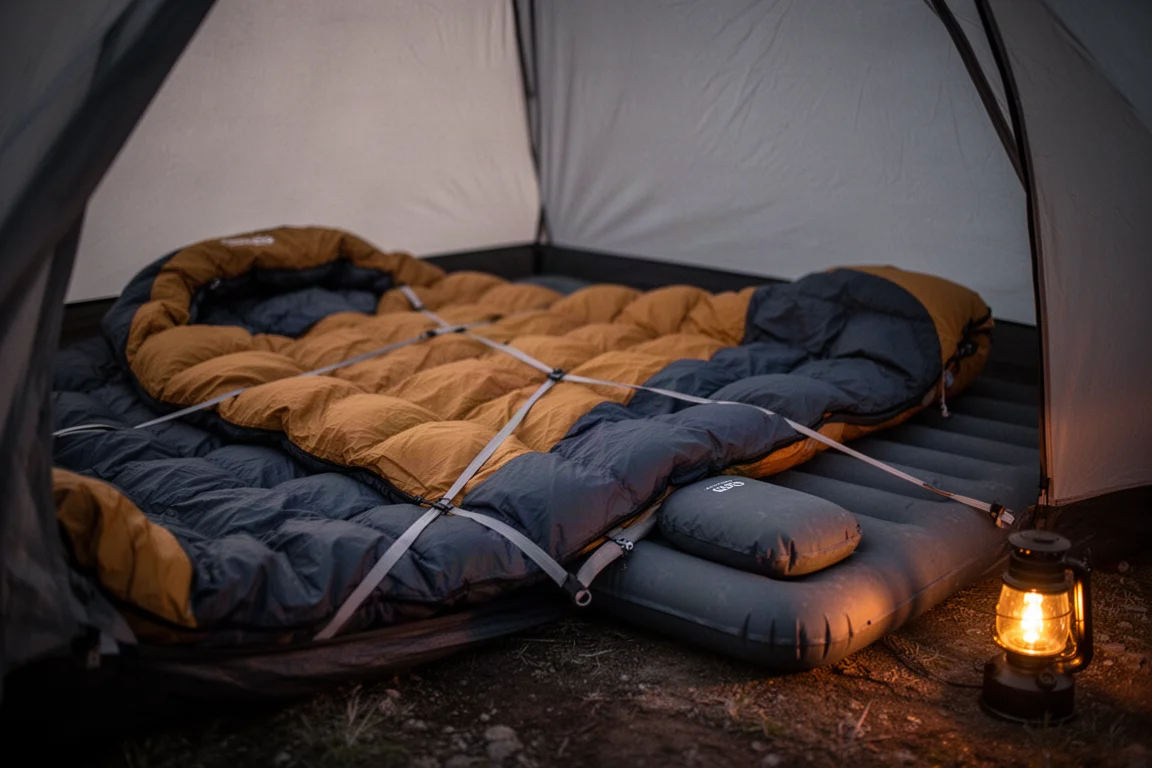
Two behaviors stood out. The quilt arrived lofty straight out of the pack, so there was no waiting for down to fluff up before getting warm. And where a treated down quilt tends to wither and slowly dry after pressing against a condensation-covered tent wall, the synthetic quilt did not shrink down at all, and feet stayed warm through the night.
On the original question of whether synthetics reduce allergy symptoms, the results were partial. Puffiness was generally less pronounced across the trip, with one morning that was noticeably worse, and the test was inconclusive because a down quilt was also in the tent overnight. The most likely picture is a multi-part issue that takes more than one gear change to resolve.
Weight, Bulk, and Value Trade-Offs
On paper the numbers are close. The Torrid matches a comparable down jacket on weight while costing roughly $200 less, and the Enigma Apex adds about 5 oz over a comparable down quilt while saving about the same amount of money. What shows up more than the weight is the volume. The synthetic quilt packs to nearly twice the space of the down quilt it replaced, which is the trade-off that affects pack planning most.
Overall Buying Advice
Choose the Torrid if you want a synthetic puffy that stays warm when damp, layers cleanly under a shell, and comes in a build you can specify yourself. It suits backpackers who react to feathers, and anyone who wants a lower-cost insulating layer for cool three-season conditions. The ready-to-ship option is worth checking first if a trip is coming up soon.
Choose the Enigma Apex if you sleep cold, want a quilt sized to your body, and would rather not depend on down. It offers an immediately lofty, condensation-tolerant sleep system at a lower price than a comparable down quilt. Plan pack space accordingly, and order early, since the synthetic version is custom only.
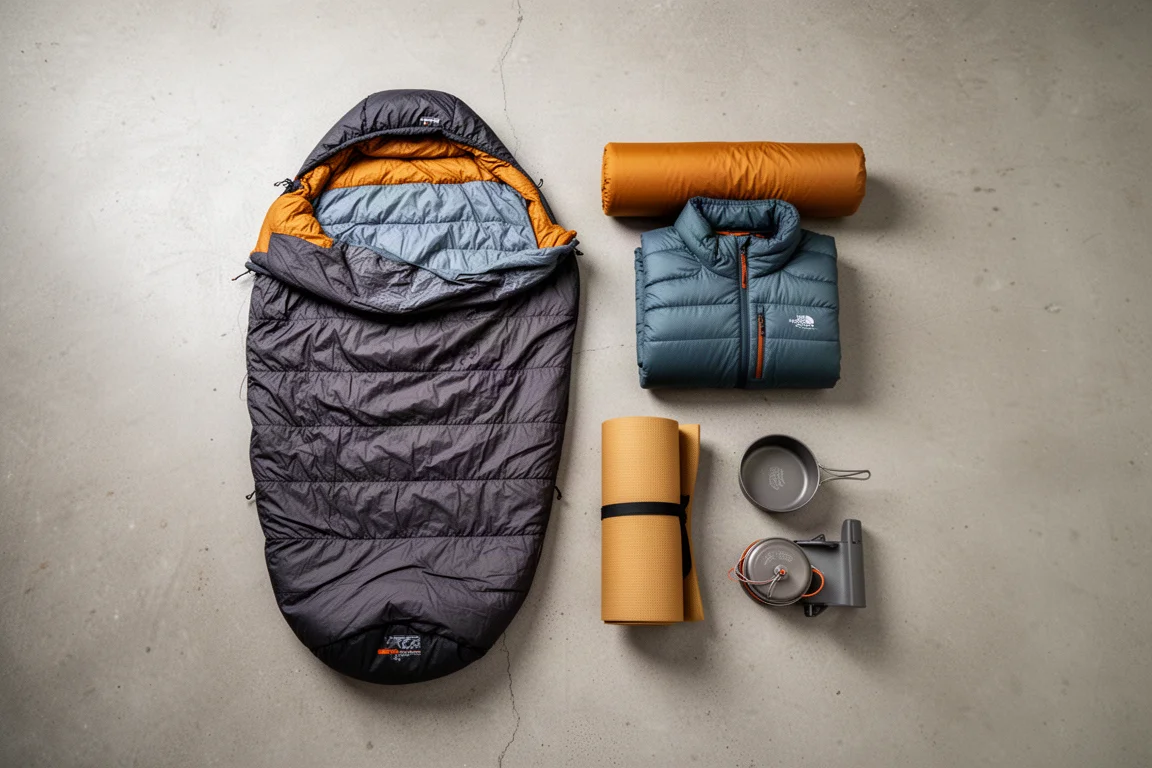
For anyone weighing synthetic against down, the honest framing is this: you give up some warmth per ounce and a fair amount of packed volume, and in return you get insulation that keeps working when it gets damp and a price that is meaningfully lower.
Conclusion
The Torrid and the Enigma Apex work as a pair because they solve the same problem in two places, on the body and in the tent. Both delivered more warmth than expected in mid-30s conditions, both resisted the moisture that degrades down, and both came in well below the cost of the comparable down pieces used alongside them. The compromises are real, mainly bulk in the quilt and a warmth ceiling below premium down, but for damp three-season backpacking and for anyone avoiding feathers, they are sensible choices.
Further reading
Related Reviews

Backpacking Gear
Building a 10 lb Base Weight: An Ultralight Backpacking Gear List
A practical walkthrough of the ultralight pieces behind a 10 lb base weight, from a 765 g pack and a roomy one-person tent to a full camp chair and a dependable water filter.
Backpacking Gear
A 15-Pound Lightweight Backpacking Gear List for Solo Trips
A beginner-friendly 15-pound backpacking setup built from easy-to-find gear, with notes on what each piece does, how it packs, and where to spend your attention.
Backpacking Gear
8 Ultralight Backpacking Gear Upgrades Worth Carrying
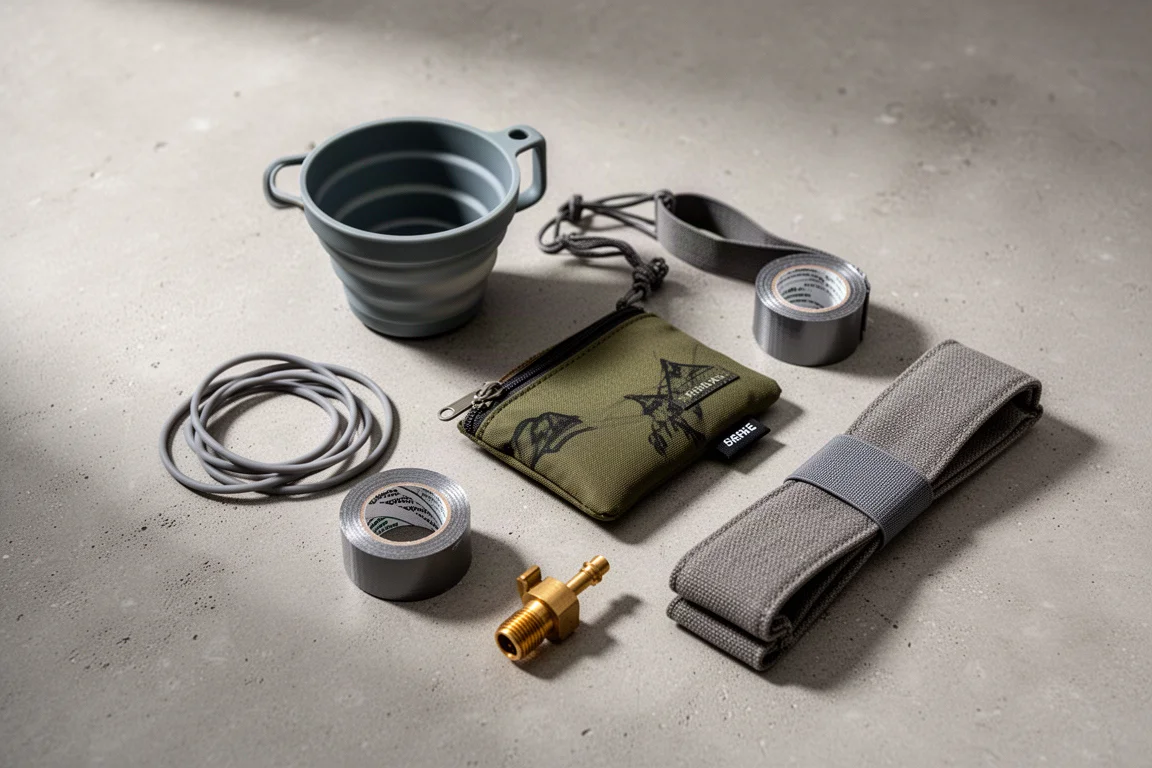
Eight small, affordable backpacking upgrades that solve real trail annoyances, from a pillow that stays put to a fuel valve that rescues leftover canister gas.