Home Audio
Endow Audio Seven Riviera Seven Review: An Omnidirectional Speaker With a Narrow High-Frequency Window
A close look at the Endow Audio Seven Riviera Seven, an omnidirectional speaker that radiates evenly to about 6 kHz and then focuses its treble into a very narrow forward window.
Introduction
The Endow Audio Seven Riviera Seven is one of the most unusual speakers you can put in a listening room, and the reason is not the driver count or the cabinet finish. It is the way the speaker radiates sound.
From roughly 20 Hz up to about 6 kHz, it behaves as a genuine omnidirectional design, sending essentially the same energy forward, to the sides, and behind. Walk around the cabinet and the tonal character barely changes. Then, at around 6 kHz, the radiation pattern changes abruptly. Above that point everything is projected forward in a narrow window of roughly plus or minus 20 degrees horizontally and about plus or minus 10 degrees vertically.
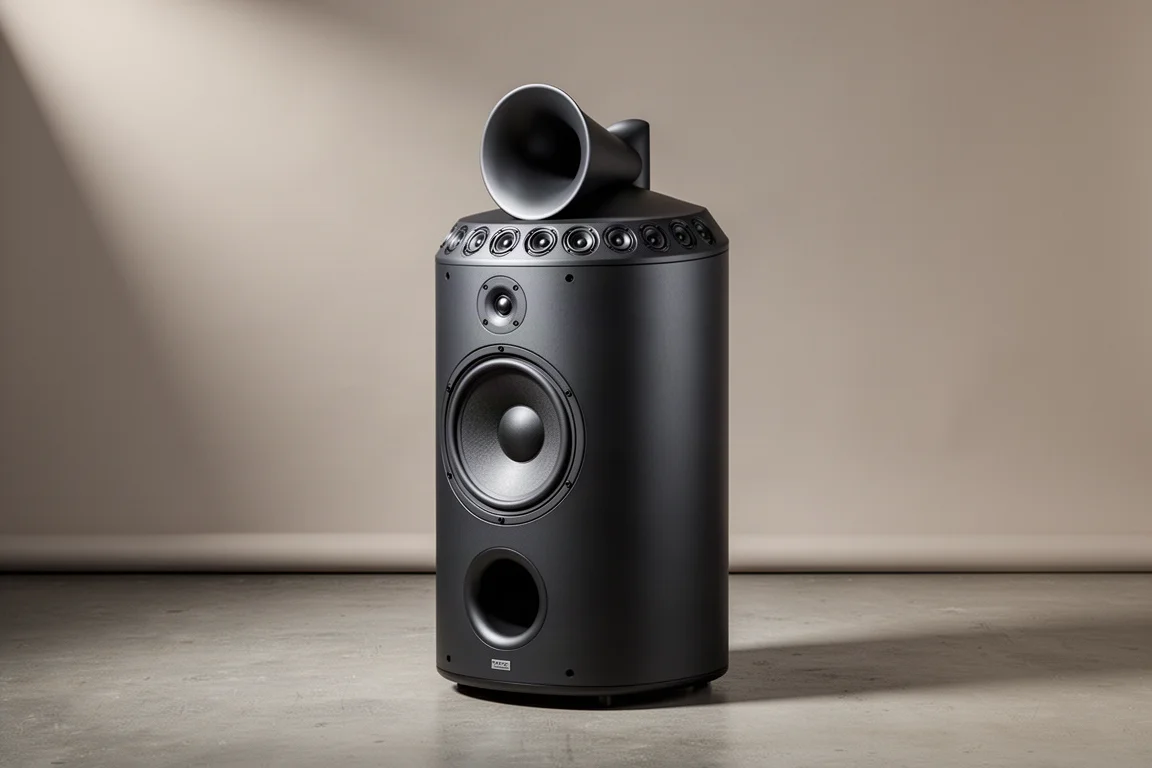
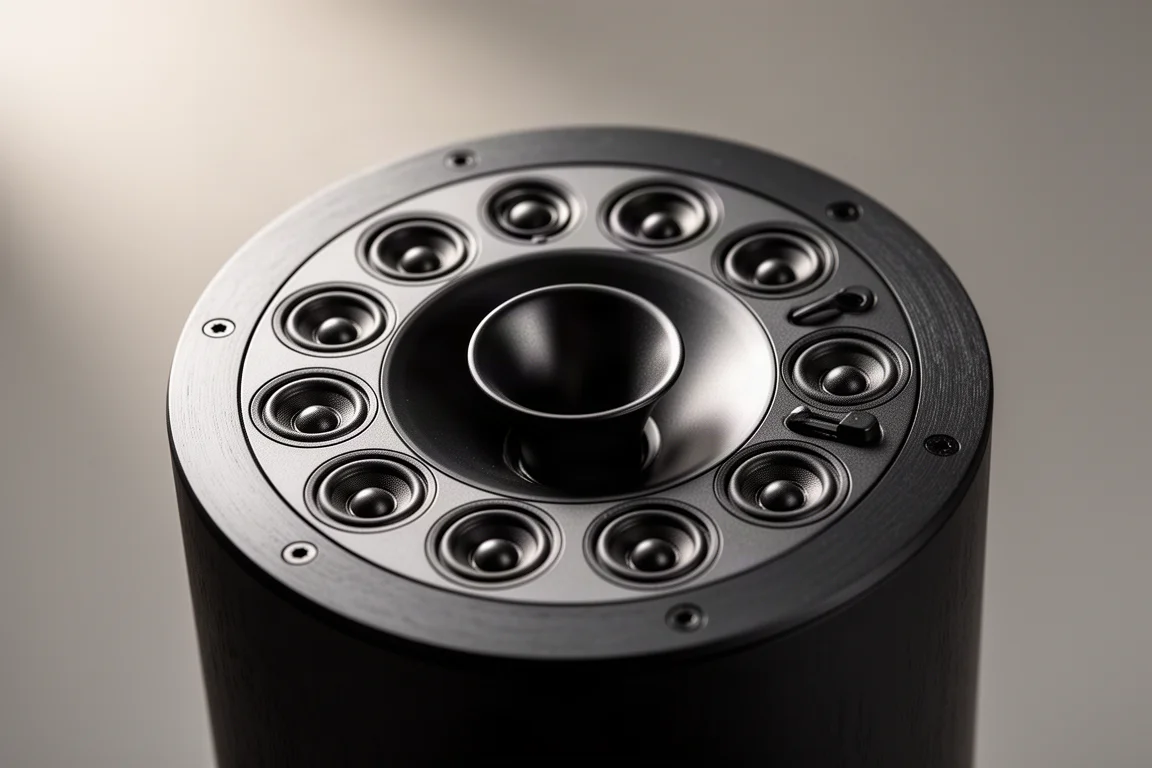
The hardware behind that behaviour is just as distinctive. A seven-inch mid-bass driver handles the front of the cabinet, a flared waveguide sits on the top surface, and nine 1.5-inch midrange drivers are arranged around the circumference of that waveguide. A seven-inch passive radiator sits below it. The result is a speaker that illuminates a room very differently from a conventional front-firing box, and one that asks for a specific kind of setup.
Who This Speaker Is For
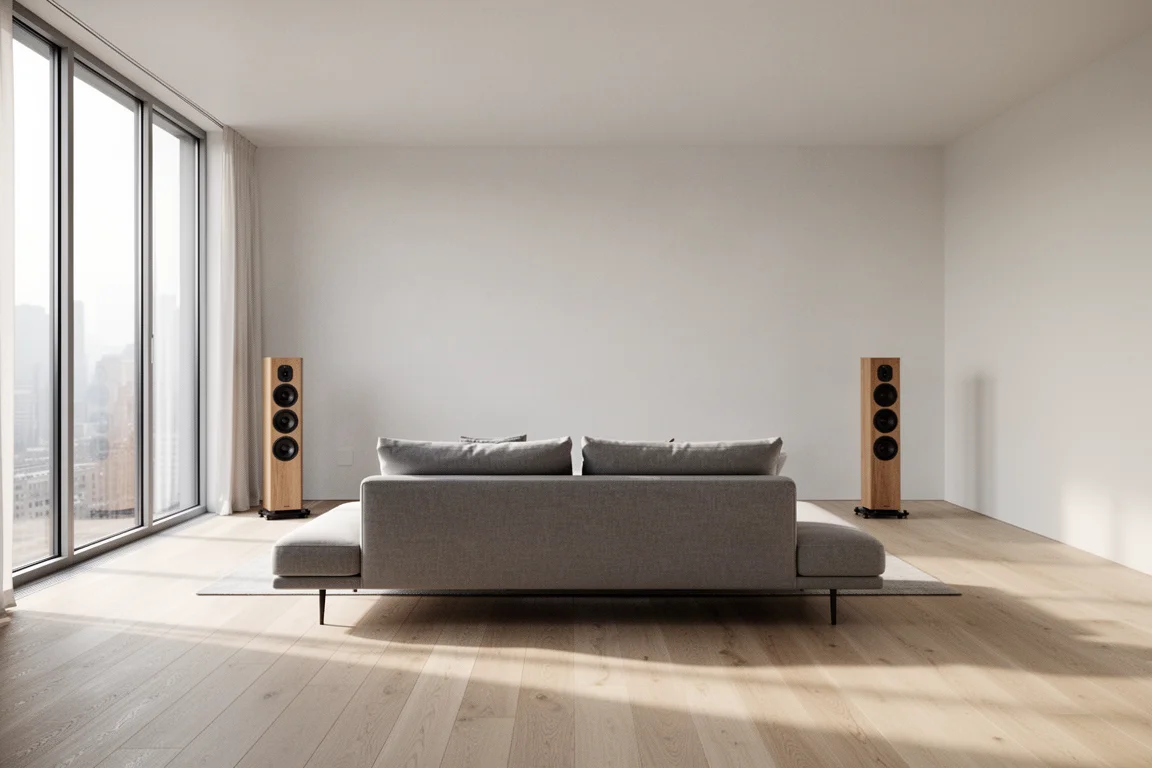
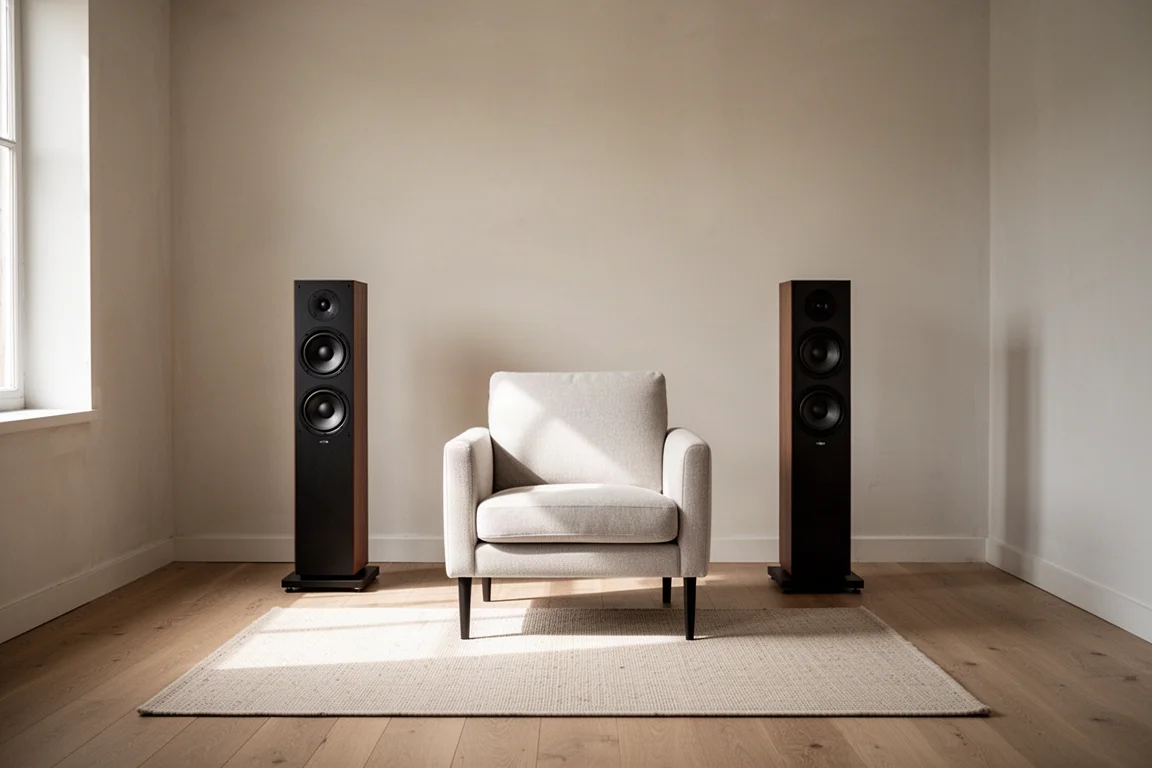
This is a speaker for listeners who value a broad, open, diffuse soundstage more than pinpoint imaging, and who are willing to position their seat with unusual precision. Because the high-frequency window is so narrow, your ears need to line up closely with the tweeter. Move a couple of inches off that axis, or stand up out of the seat, and the top end largely disappears.
Room choice matters as much as seating. In a heavily treated, acoustically dead space, the already narrow high-frequency output is absorbed further and the tonal balance leans even harder toward the midrange. In a livelier room with carpet and side walls set well back, the presentation moved closer to neutral, although the difference was small.
Listeners who want a wide, forgiving sweet spot in every direction, or who expect plenty of high-frequency air and sparkle, are likely to find this design frustrating. It is a specialist speaker with a very particular set of priorities.
Main Strengths
The soundstage is the headline. Because the speaker radiates evenly up to the mid-high transition, it illuminates the front wall, the side walls, the floor, the ceiling, and the wall behind the listener with comparable energy. The effect is a very broad, spacious, and diffuse presentation that few conventional designs can match.
Low-frequency performance is respectable for this type of design. Measured sensitivity sits at around 81 to 82 dB, with an F3 near 50 Hz and an F10 near 36 Hz. In practice the mid-bass had a snappy, punchy character with solid impact, and it extended usefully into the low 50 Hz region in a normal room.
Multi-tone distortion stayed below the level where it becomes clearly audible, even when the speaker was playing full range. That suggests it holds together reasonably well under complex, densely layered material.
It is also worth noting that the design appears deliberate rather than defective. Published measurements line up with the manufacturer’s own data, which points to an intentional tuning choice rather than a flaw in the execution.
Things to Consider Before Buying
The most important consideration is the high-frequency radiation pattern. Because the treble is confined to such a narrow forward window, the listening position becomes a fixed point rather than an area. Vertical alignment is especially critical, with roughly 10 degrees of tolerance above or below the tweeter axis.
The tonal balance is midrange-forward. In listening sessions, vocals stood out well ahead of kick drum and synth guitar, while vocal air and cymbal crashes were comparatively absent next to the midrange. Estimated in-room response reflects that same shape, showing a broad dip through the high-frequency region, which traces back to the waveguide sending far less energy to the side walls, floor, and ceiling than the midrange and lower frequencies do.
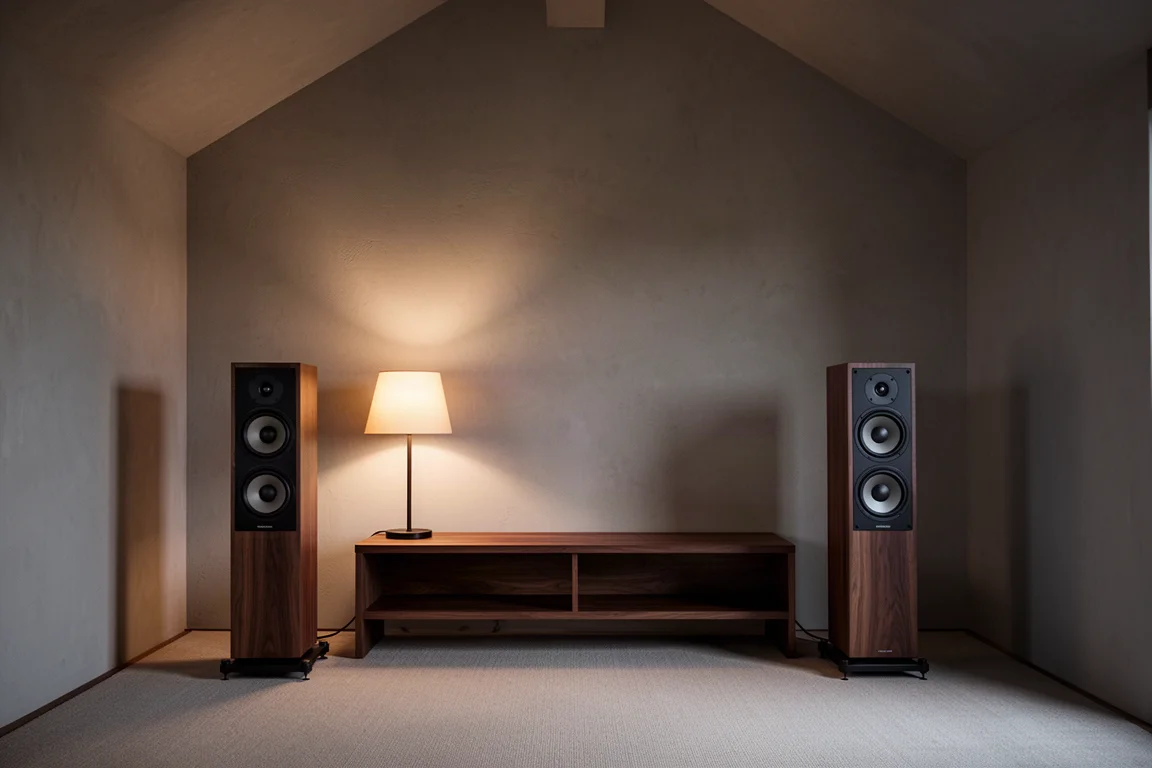
Other measured behaviour is worth weighing against the price of admission. On-axis response is relatively linear but shows some diffraction-type behaviour, and there is a peak of roughly 7 to 8 dB above the mean level in the high frequencies whose origin is not fully clear. Distortion is acceptable at moderate levels but rises noticeably at higher output, including around 100 Hz. Compression is higher than the driver count might suggest: at very loud playback the nine small midrange drivers show compression across roughly 300 Hz to 6 kHz, costing about 2 to 2.5 dB of dynamic range at realistic four-meter listening distances. Low-frequency compression also climbs at high output, which makes a subwoofer a sensible partner if you listen loudly. Finally, sensitivity of 81 to 82 dB means the speaker wants a capable amplifier rather than a low-powered one.
Buying Advice
If you are considering the Seven Riviera Seven, plan the setup before the purchase. Fix a single listening seat, align your ears precisely with the tweeter height, and accept that standing or moving around will cost you the treble. A room with a little natural liveliness, carpet on the floor, and side walls set well back suited this speaker better than a heavily damped, treatment-heavy room.
Budget for amplification with real headroom, given the measured sensitivity, and consider a subwoofer if you listen at high levels or want to preserve dynamic peaks in demanding material. Because the midrange sits high in level relative to the bass and the narrow high-frequency output, the tonal balance is a matter of taste rather than a defect, and it is the single biggest reason to hear the speaker before committing.
This is not a speaker for everyone, and it is not a design that blends into a typical room without thought. What it does with spatial presentation, however, is genuinely distinctive, and listeners who prioritise that quality may find it rewarding in a way that conventional boxes are not.
Conclusion
The Endow Audio Seven Riviera Seven is a genuinely different loudspeaker. Its omnidirectional radiation up to about 6 kHz produces a spacious, diffuse soundstage, while the abrupt transition to a tightly focused high-frequency window demands careful alignment and a fixed listening position. The midrange-forward balance, the dip in estimated in-room response, and the compression at very high output are real considerations rather than minor details.
Buy it if you want a broad, room-filling presentation and are prepared to set up your seat and your room around it. Look elsewhere if you want a forgiving sweet spot, a neutral tonal balance straight out of the box, or high-frequency sparkle in every direction. This is a speaker that has to be heard to be understood, and that alone makes it worth seeking out for an audition.
Product link
View more details for Endow Audio Seven Riviera Seven
This product is mentioned in the review. Check the specifications, options, and compatibility before buying.
View more details for Endow Audio Seven Riviera SevenFurther reading
Related Reviews
Home Audio
Aperion Novus Tower and Center Review: Punchy Home Theater Sound With Real Refinement
A close look at the Aperion Novus tower and center speakers, from their layered paint finish and punchy bass to the 4-ohm load and what the price actually buys.
Home Audio
Arendal 1610 Tower Review: Flagship Dynamics in a Room-Friendly Tower
A compact floorstanding tower with three 8-inch aluminium woofers, a 5-inch carbon midrange, and the kind of bass heft usually reserved for much larger speakers.
Home Audio
Arendal 1723 S THX Review: A Reference Speaker Built Like a Tank
A practical look at the Arendal 1723 S THX, a sealed, THX-certified speaker with exceptional build quality, a very flat top end, and a midrange that responds beautifully to EQ.