Integrated Amplifiers
Emotiva TA1 vs Yamaha A-S301: Two Integrated Amplifiers Under $500
A practical comparison of two integrated amplifiers under $500, covering build quality, inputs, power, and how each one sounds across different kinds of music.
Introduction
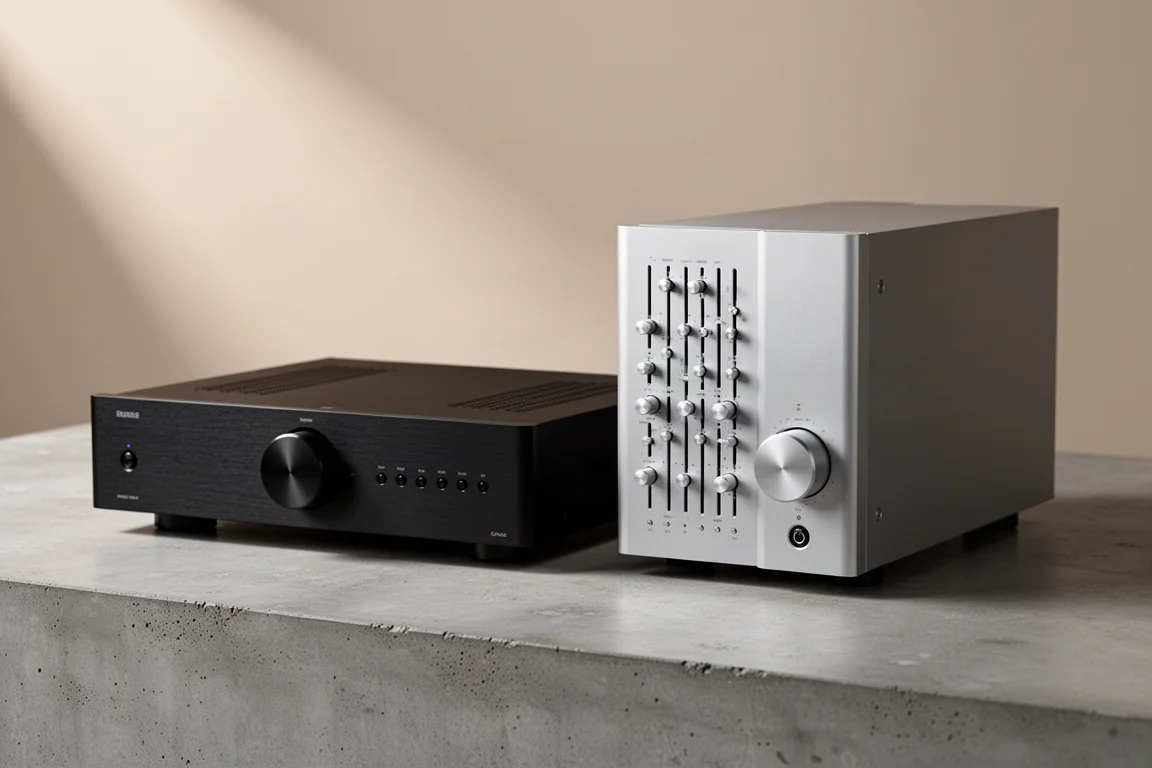
Two integrated amplifiers sit in a narrow but useful price window: the Emotiva TA1 at $499 and the Yamaha A-S301 at $350. Both deliver more than 50 watts per channel into 8 ohms, both can drive 4 ohm speakers, and both offer a traditional two-channel layout with a phono stage, analog inputs, and digital connections.
That combination is not common between roughly $300 and $500. Traditional two-channel integrated amplifiers in this range are few, and most buyers choosing between these two are weighing the same things: build quality, input flexibility, power delivery, and how each amplifier actually sounds with the speakers they already own.
What These Two Amplifiers Have in Common
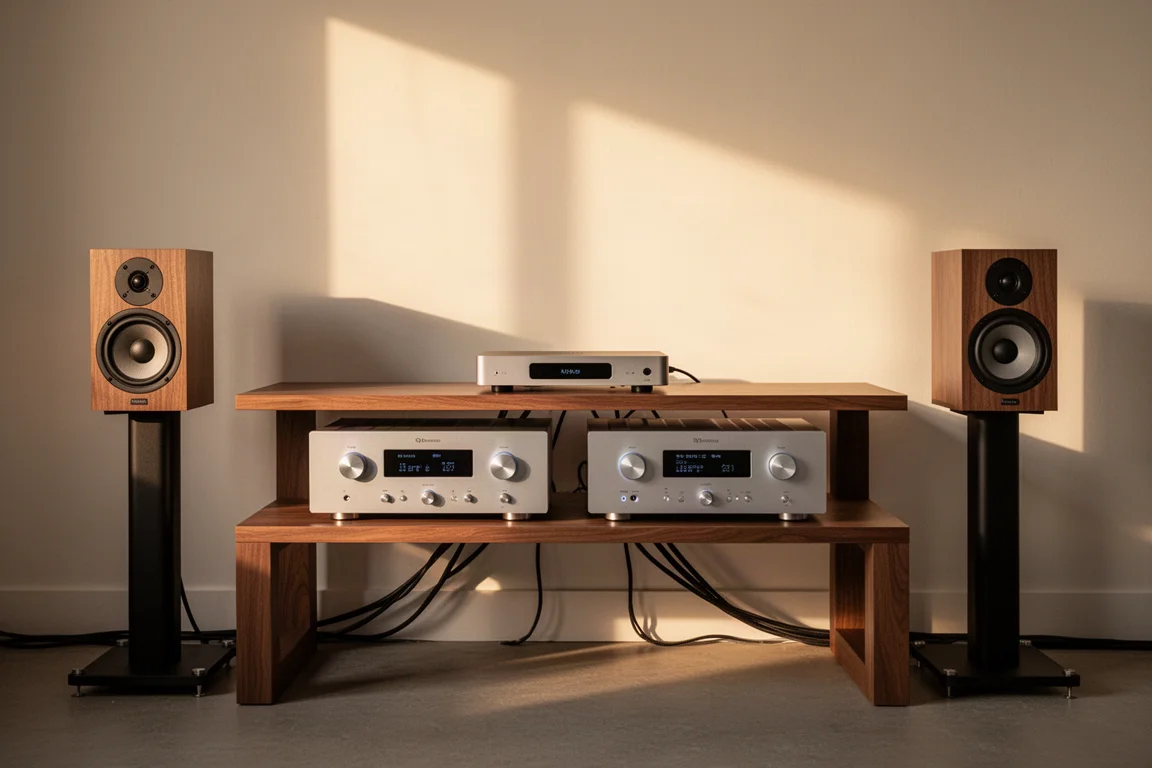
Start with the shared ground. Both are class AB integrated amplifiers in a traditional full-size format, and both clear the 50 watt per channel mark into 8 ohms. Both can drive 4 ohm speakers. Each one includes a phono stage, digital inputs, and a subwoofer output, and each ships with a fully functioning remote control.
That is a genuinely useful feature set at this price. You can plug in a turntable, a streamer, and a disc player without adding external boxes, and you can add a subwoofer later without replacing the amplifier. For most people building a first serious two-channel system, both units cover the essentials.
Where they diverge is in how far each one goes beyond those essentials, and that is where the $150 price difference starts to matter.
Emotiva TA1: Features, Inputs, and Build
The TA1 is the more generously equipped of the two. Its phono stage accepts both moving magnet and moving coil cartridges, which is unusual at this price. Alongside the phono input there are two additional analog inputs, CD and auxiliary, for three analog sources in total.
More importantly, the TA1 includes preamp outputs. That means it works as a complete amplifier out of the box, and later it can serve as a preamp if you decide to add an external power amplifier. It also has bass management: a high-pass filter fixed at 90 Hz for the left and right speakers, which can be applied to the internal amplifier even without an external amp connected. A set of single-ended RCA outputs can use that crossover along with the subwoofer output.
Digital connections are full size rather than miniature: coaxial, optical, and a USB input feeding the internal DAC. There is also an FM tuner built in with an FM antenna connection, plus a trigger output for switching on a connected component such as a streamer or external power amplifier.
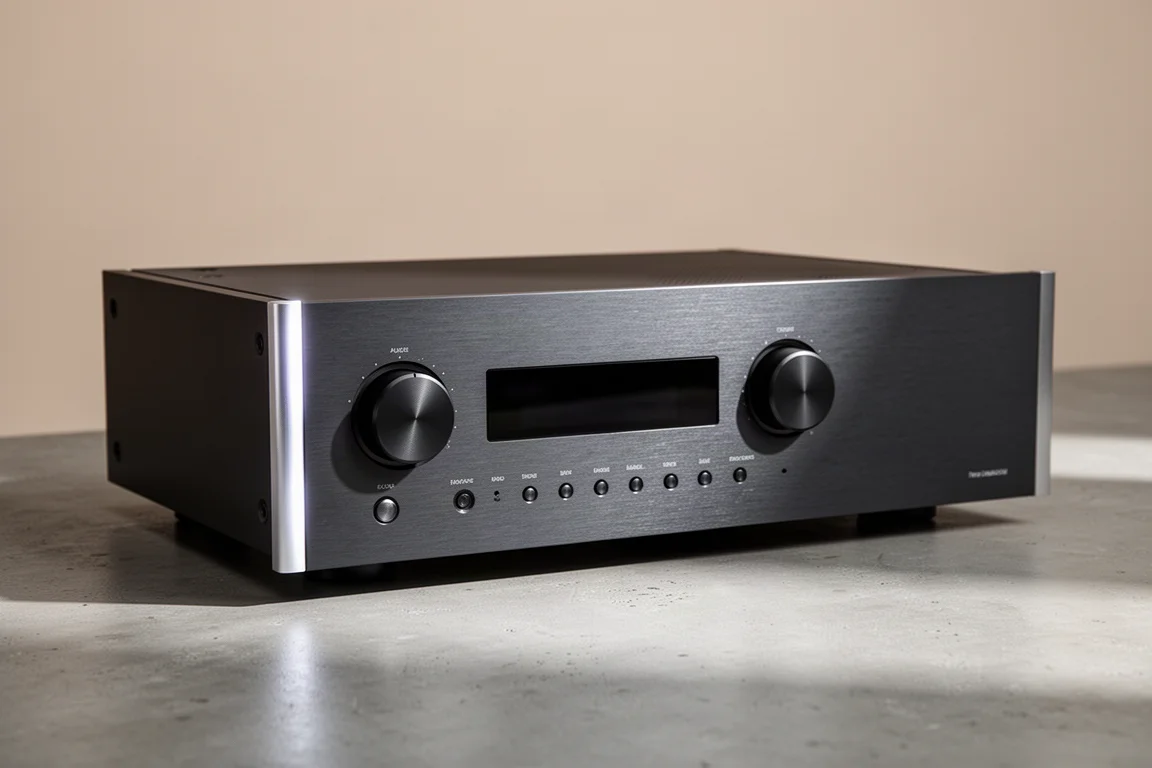
Power is rated at 50 watts into 8 ohms and 100 watts into 4 ohms. The chassis is shorter than the Yamaha’s, but it is the heavier of the two and the better built: the knobs, buttons, and feet all feel more substantial. The front panel keeps things simple, with one volume knob, a few push buttons for inputs and trims, and the power button in the centre.
Yamaha A-S301: Features, Inputs, and Build
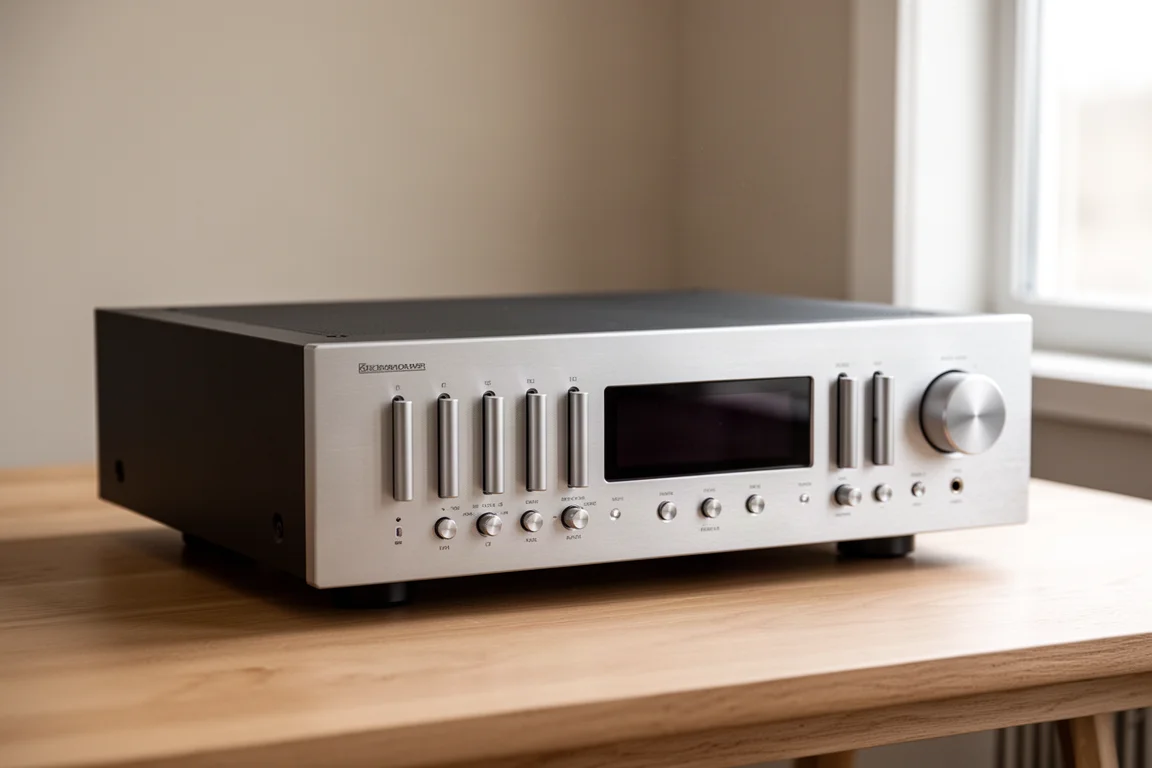
The A-S301 takes a different approach. Its styling has a vintage integrated amplifier feel, and that design language carries through the wider Yamaha line, so the higher models in the range look fundamentally the same. The front panel uses a column of small vertical knobs with a large volume knob on the right and a push-button power switch on the left.
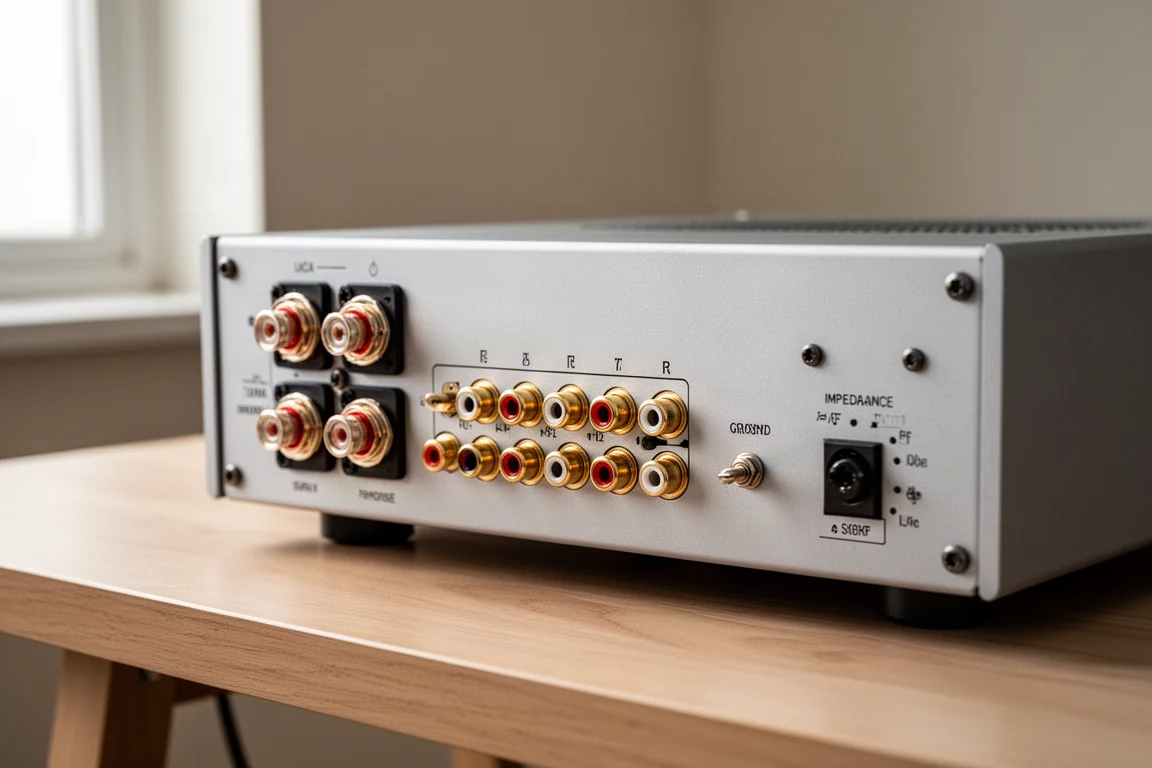
Inputs cover a tuner, a CD player, and two further analog inputs with record outputs, plus a phono stage for moving magnet cartridges. Digital connections are limited to a single optical and a single coaxial input. There is no USB input for a DAC. A 5 volt, half amp USB port on the back is for power only, enough to charge a phone or feed a small streamer rather than a full 1 amp device.
Outputs include a single subwoofer out and two sets of binding posts, so you can run speaker A and speaker B simultaneously. A switch on the back is set to match the nominal impedance of your speakers and the number of pairs you are driving at once.
Power is rated at 60 watts into 8 ohms. Yamaha does not publish a 4 ohm figure, though the amplifier will drive 4 ohm speakers.
The trade-off is in the feel of the controls. The knobs are plastic and light, and the variable loudness control in particular feels insubstantial in the hand. Across the room the amplifier looks good and it works well, but it does not feel as solid as the Emotiva.
If you need a large number of analog inputs, this is the amplifier that provides them, and the extra record outputs are genuinely handy for a tape deck or a second source.
Build Quality and Design Compared
Judged purely on how the two components feel in use, the TA1 is the better built amplifier. It is heavier in a smaller chassis, and the knobs, buttons, and feet all communicate more quality. The Yamaha’s plastic controls feel lighter, and the volume knob in particular can feel slightly uneven when you turn it.
That said, build feel is not the same as reliability. The Yamaha does not feel like it will fall apart, and its vintage-inspired design is arguably the more attractive of the two in a living room. If appearance matters more to you than the tactile experience of the controls, the Yamaha remains a legitimate choice.
Sound Quality: Where Each Amplifier Shines
Both amplifiers were run with a streamer feeding them digitally and a pair of ELAC Debut 3 speakers with 6.5 inch woofers. The results depended heavily on the track.
With dense, bass-heavy material, the Yamaha was the surprise. On a busy, well-recorded album with a lot happening spatially and a great deal of low-frequency content, the amount of bass coming out of the Yamaha and speaker combination was remarkable, and the amplifier did not break up even at 90 dB SPL, which is louder than anyone should reasonably listen. On that material the Yamaha was the preferred amplifier.
Change the track and the picture flips. On a midrange-focused rock ballad, the TA1 pulled ahead clearly. The Yamaha’s midrange sounded thin, sterile, and close to lifeless on that song, with a character closer to a mediocre class D amplifier than a class AB design. The TA1 filled that midrange out. On a well-recorded metal track, both amplifiers sounded good, with the TA1 adding a mild U-shaped emphasis at the bass and top end.
The practical summary: with very dynamic music and a lot of bass, such as EDM, the Yamaha is the better choice. With almost everything else, particularly at lower volumes, the TA1 is more enjoyable. The TA1 sounds excellent below roughly 85 dB and feels more dynamic, but its emphasis in the upper midrange and treble can become intense with a bright speaker at loud volumes. The Yamaha stays more balanced as the volume rises.
If you are on a strict budget and the Yamaha is what fits, it still sounds good on most tracks. Just expect a little midrange dryness and occasional dullness on certain recordings. The variable loudness control helps somewhat, but it does not fully remove that grainy quality in the midrange.
Power, Volume, and Speaker Matching
On paper the Yamaha has the higher 8 ohm rating at 60 watts, and the Emotiva counters with a published 100 watts into 4 ohms. In practice, the Yamaha drove the test speakers to 93 dB with no breakup and no complaints, and it held together at higher levels than the TA1. The TA1 reached 86 to 88 dB easily but ran out of headroom sooner.
That difference matters if you listen loud, have inefficient speakers, or want a lot of clean output for parties. For everyday listening levels, both have ample power.
Which Amplifier Should You Choose?
Choose the Yamaha A-S301 if budget is the priority and you need plenty of analog inputs. At $350 it continues to surprise with how much it delivers, and open-box examples have appeared for less than the list price. If it had preamp outputs, it would be a far more compelling component and would change the calculus considerably.
Choose the Emotiva TA1 if you can stretch to $499 and want the more complete package: a USB DAC input, preamp outputs that let it serve as a preamp later, bass management with a 90 Hz high-pass filter, and a phono stage that handles moving coil cartridges as well as moving magnets. It also sounds better at moderate volumes across most genres, and it is the better built of the two. Emotiva also offers a military or first responder discount, which can narrow the price gap.
One more note on the Yamaha: there is a step-up model, the A-S501, priced closer to the Emotiva. It was not part of this comparison, but it is worth knowing about if you like the Yamaha sound and want more from the platform.
For most people weighing these two side by side, the TA1 is the better long-term purchase because of its upgrade path. The Yamaha remains the better value on pure price and the stronger choice for bass-heavy electronic music and high-volume listening.
Conclusion
These are two genuinely good integrated amplifiers, and both are easy to recommend within their own price bracket. The Yamaha A-S301 at $350 offers more analog inputs, more power headroom, and a vintage look that works in any room. The Emotiva TA1 at $499 adds a USB DAC, preamp outputs, bass management, a moving coil capable phono stage, and better build quality, and it sounds more engaging at everyday listening levels. Match the amplifier to the music you actually play and the speakers you already own, and either one will serve you well.
Further reading
Related Reviews
Integrated Amplifiers
Advance Paris A10 Classic Review: Vintage Looks and a Lively, Punchy Sound
The Advance Paris A10 Classic pairs glowing blue VU meters and a tube stage with one of the widest input sets on any integrated amplifier. Here is what it does well and what to weigh before spending $2,500.
Integrated Amplifiers
Advance Paris A12 Apex Review: A Modern Integrated Amplifier With Vintage Character
A dual mono integrated amplifier with 180 watts per channel, a tube front end, VU meters, and a connectivity list that covers turntables, televisions, computers, and headphones.
Integrated Amplifiers
Advance Paris Nova Range Review: AI130, AI190 and Modular Upgrades
A practical look at the Advance Paris Nova range, including the AI130 and AI190 integrated amplifiers and the modular streaming, Bluetooth and remote accessories that expand them.