Stereo Preamps
Emotiva PT2 vs PT1: Two Stereo Preamps Compared
A practical look at Emotiva's two BasX stereo preamplifiers, what the extra $200 buys on the PT2, and which one fits your system.
Introduction
Deciding between an integrated amplifier and a set of separates is one of the oldest questions in two-channel audio. An integrated amplifier is the easy answer: one box, one power cable, and a phono stage and DAC already built in. Separates ask for more effort, but they let you choose each part of the chain and improve it over time.
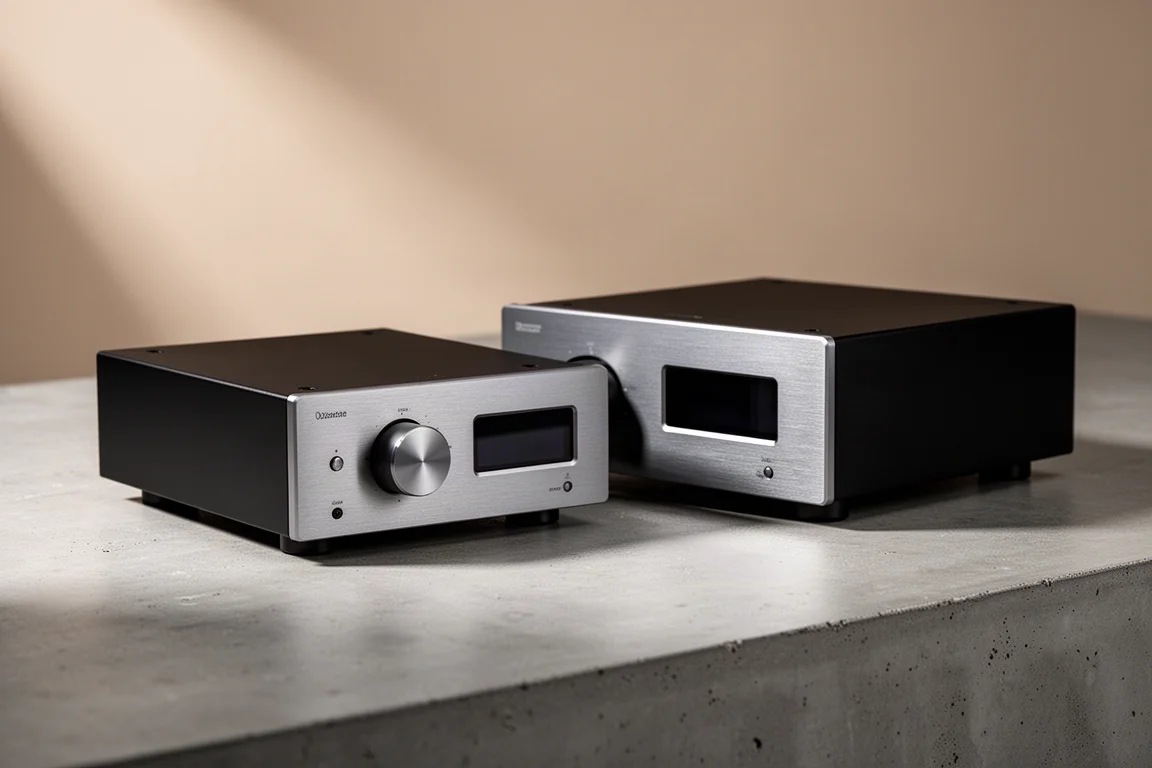
The Emotiva PT2 and Emotiva PT1 land right in the middle of that choice. Both are dedicated stereo preamplifiers from Emotiva’s BasX line, and both include a phono stage and a DAC, so they behave much like an integrated amplifier with the power amplifier stage left out. The PT2 sells for $699, while the PT1 sits about $200 below it. This guide walks through what each one includes, where they differ, and which one makes more sense depending on how you listen and how far you want to take your system.
What the Emotiva PT2 and PT1 Have in Common
Start with the shared foundation, because it explains a large part of why these preamps are worth considering at all.
Both models include a phono input that accepts moving magnet and moving coil cartridges, so a turntable can be connected directly without an outboard phono stage. Both use the same digital-to-analog converter, an Analog Devices 1955 chip capable of handling 24-bit/192 kHz files, which covers most of what a typical digital library or streaming setup will send its way. Bluetooth is built in on both, with AAC and aptX support.
Both also ship with a remote control that handles volume, input switching and tone controls. The same tone adjustments can be reached from the front panel by holding down the volume button and working through a short sequence of button presses. That combination is not especially intuitive at first, but it becomes second nature after a handful of attempts.
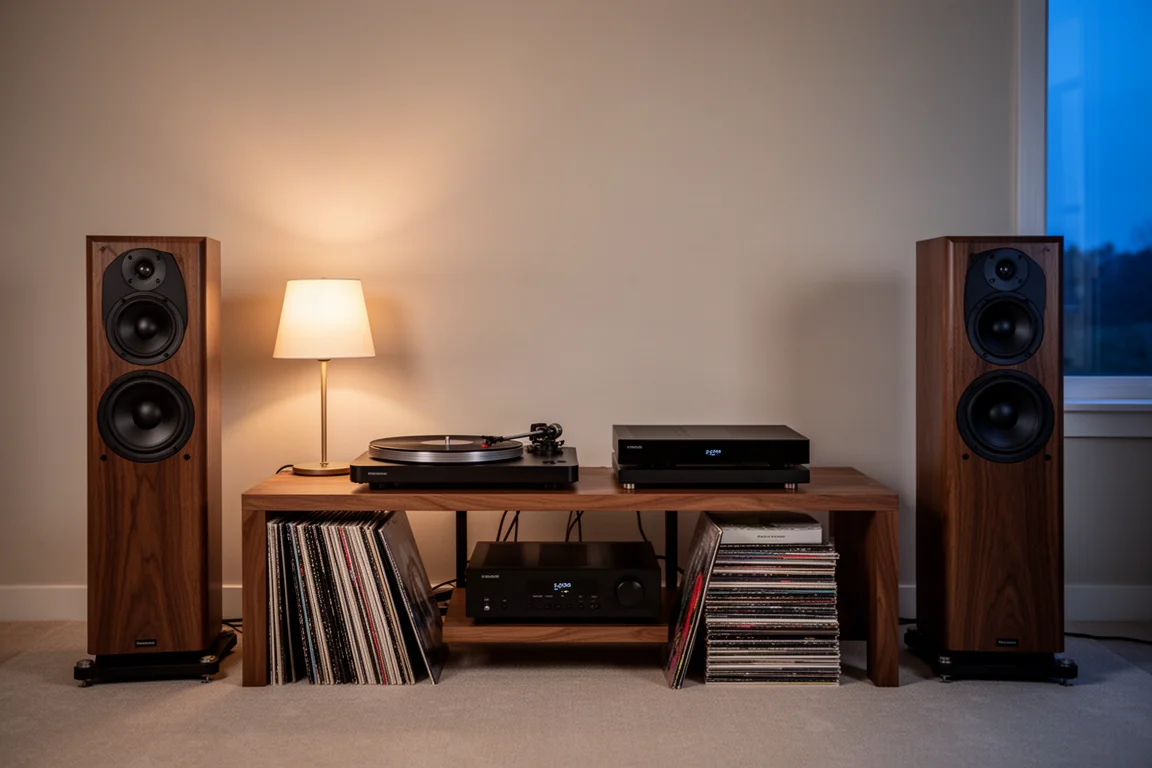
What neither preamp includes is an amplifier. That is the whole point of the design: you supply a separate power amplifier and connect your speakers to that. Because the phono stage and DAC are already inside, the PT2 and PT1 feel far closer to an integrated amplifier than to a traditional bare preamp.
Those similarities matter, because they mean the choice between the two is mostly about flexibility rather than the basic listening experience.
Emotiva PT2: More Inputs and More Control
The PT2 is the more capable of the two, and most of the extra cost shows up in connectivity. It offers four open analog inputs alongside its phono input, against two open analog inputs on the PT1, and it adds an extra digital input to the same 24-bit/192 kHz converter. The phono stage also adds a selectable impedance rating, which gives moving coil cartridge owners more to work with. An FM tuner is included as well.
Those extra analog inputs are the reason the PT2 can grow with a system. You can run a CD player, a streamer and two other sources at the same time, or leave inputs free for an outboard DAC or phono stage you plan to add later.
Emotiva PT1: The Lower-Cost Entry Point
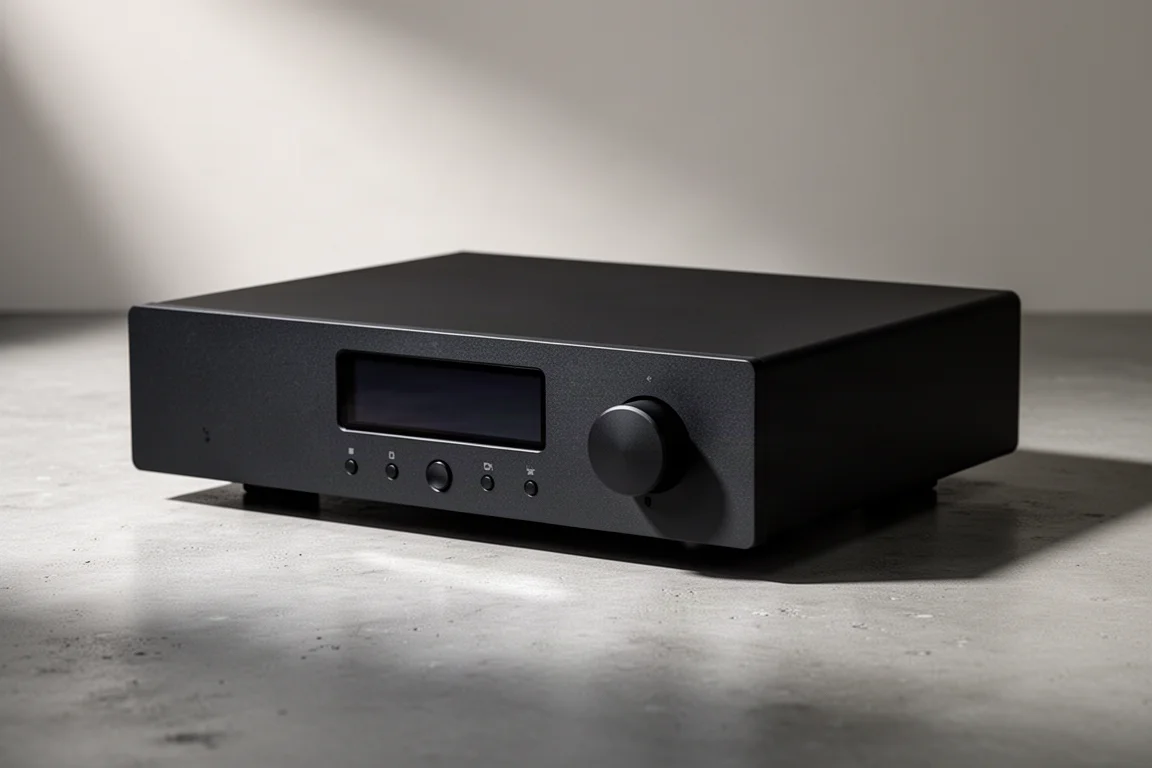
The PT1 covers the same essential ground with a simpler layout. It has two open analog inputs, one intended for a CD player and one for an auxiliary source, plus a phono input for moving magnet and moving coil cartridges. The DAC and Bluetooth implementations match the PT2, so digital playback and wireless streaming behave the same way on either unit.
What the PT1 gives up is flexibility. Its high-pass filtering is fixed rather than adjustable, and it does not include the home theater bypass function or the variable low-pass filter on the subwoofer output. If your system is a straightforward two-channel setup with a turntable and one or two digital sources, those omissions may never come up.
Bass Management and Home Theater Bypass
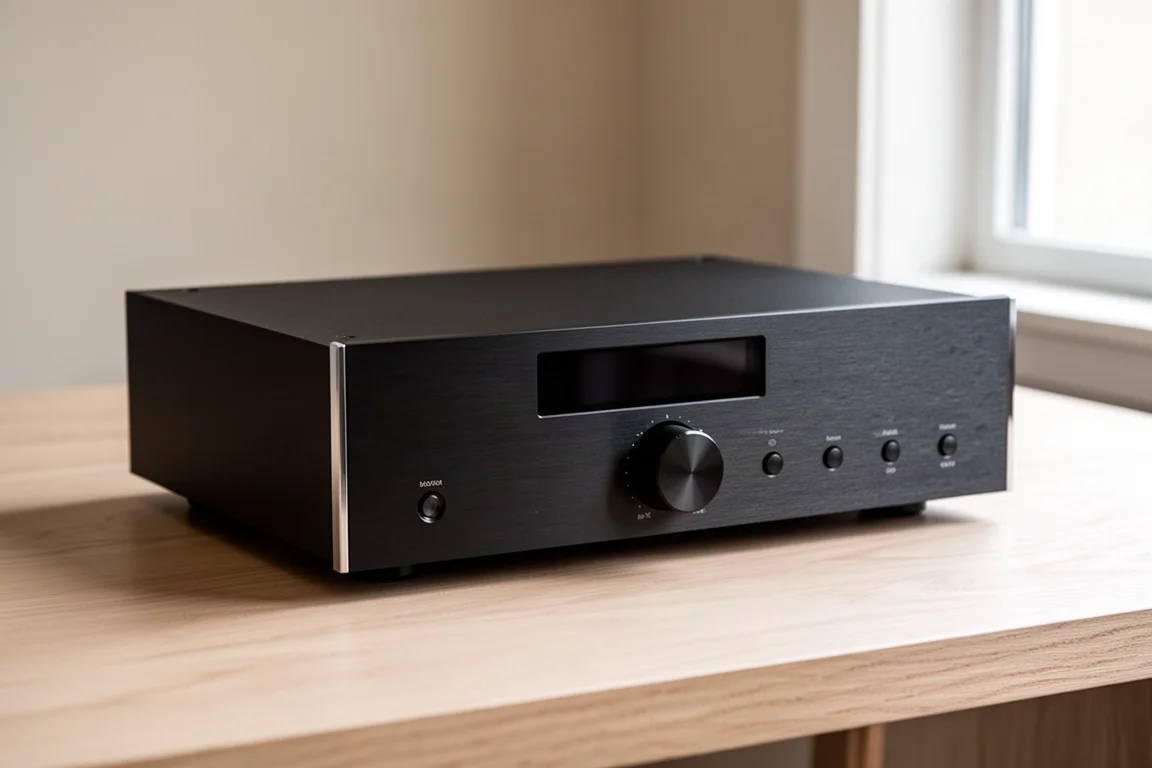
Bass management is the feature that separates these two preamps most clearly, and it is worth understanding before deciding whether the PT2’s price is justified.
Both designs can apply a high-pass filter to the signal leaving the preamp outputs, which means the amplifier feeding your speakers no longer has to reproduce the lowest frequencies. Sending less bass to the speakers lets them play louder and cleaner, because they are not being overloaded by low-frequency information. On the PT1 that filter is fixed. On the PT2 it is variable, so you can dial in the exact setting that suits your speakers and room.
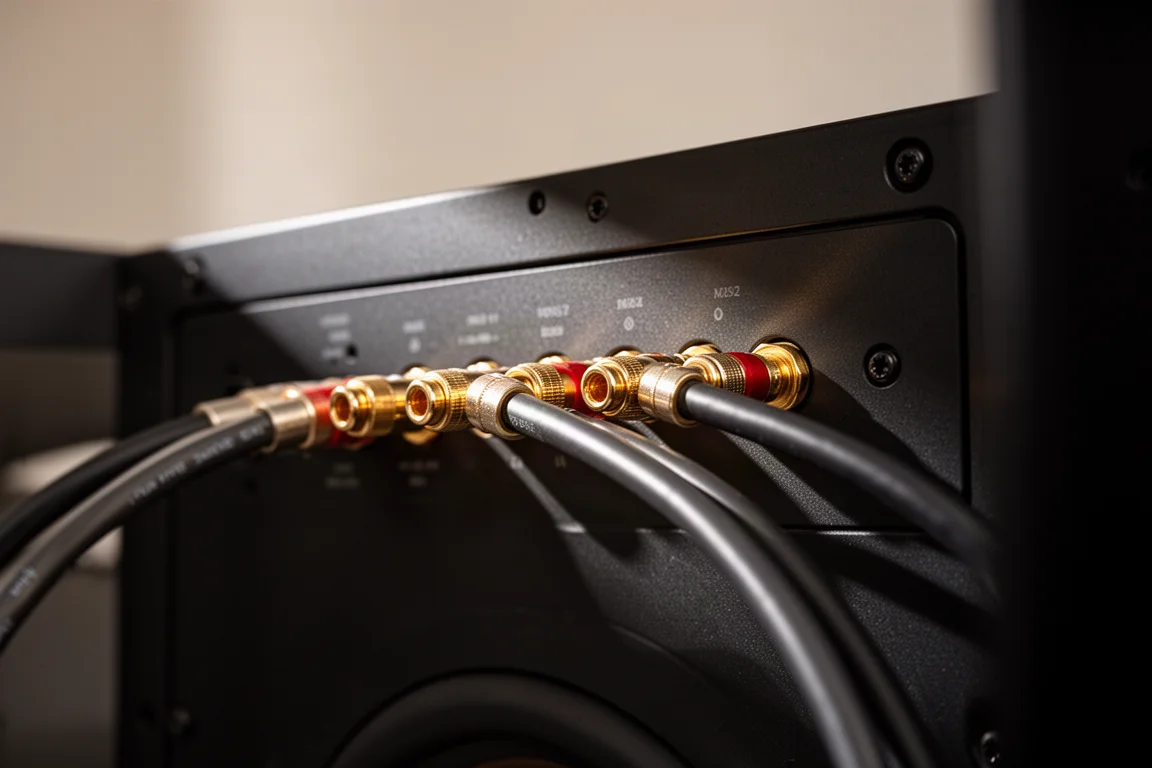
The PT2 also adds a variable low-pass filter on the subwoofer output, which makes it easier to blend a subwoofer with the main speakers instead of relying on a single preset crossover point.
The other PT2-only feature is home theater bypass. In a system that combines a dedicated two-channel setup with a surround processor, bypass mode lets the PT2 pass the signal straight through to the home theater processor when you want to watch a film or a series. The processor then runs the whole system and the two-channel chain stays out of the way. This works with processors from other brands as well, not only Emotiva’s own.
Sound Character: Neutral, Clean and Uncolored
Emotiva components tend to aim for neutrality, and the PT2 follows that approach. It does not add much of anything to the signal at either end of the frequency range. In direct comparisons with an integrated amplifier that leaned brighter and more forward in the treble, the Emotiva presentation came across as noticeably more even-handed, with a clean and large sense of scale.
That character makes the PT2 easy to live with across a wide range of recordings, and it is the reason it serves as the preamplifier in a reference two-channel system. Anyone specifically chasing a warm, lush, heavily colored sound should look elsewhere, because that is not what this design is trying to do. For listeners who want the preamp to stay out of the way, the neutrality is the appeal.
Bluetooth, the Remote and Everyday Usability
Bluetooth is built into both preamps with AAC and aptX support, which makes casual streaming from a phone or tablet straightforward without adding another box to the rack.
The remote control is a clear step forward from the older handset that shipped with earlier Emotiva components. It covers volume, input selection and tone controls, and the layout is similar to remotes from several other brands in this price range, so it feels familiar quickly. Tone controls are also available on the front panel, reached by holding the volume button and stepping through a short sequence. It takes a few tries to remember, and after that it is quick.

Between the remote, the front-panel controls and Bluetooth, day-to-day operation stays simple. There is no app to configure and no network setup to work through, which keeps the experience closer to traditional hi-fi than to a modern streaming device.
Building a System Around the PT2 or the PT1
Neither preamp makes sound on its own, so the total cost of a working system includes an amplifier. Paired with a BasX A2 stereo amplifier, the PT2 comes in at a little over $1,000 for the preamp and power amplifier together. From there, the system can grow in whichever direction you prefer.
The extra analog inputs on the PT2 are what make that growth practical. An outboard DAC in the $250 to $300 range, or a dedicated phono stage around $500, can be added later and connected to a free input, while the built-in DAC and phono stage continue to handle everything else. Emotiva’s own BasX A1 monoblocks and the XPA Gen 3 power amplifier have both been used with the PT2, so there is room to move up the amplifier range as well.
For most listeners, the DAC and phono stage already inside either preamp will be good enough. In one direct comparison, an Emotiva built-in phono stage held its own against a budget outboard phono stage, and the difference was not significant enough to justify keeping the separate unit.
Buying Advice: Matching the Preamp to Your Setup
The PT2 makes sense if you want the flexibility. Four analog inputs, a variable high-pass filter, a variable low-pass filter on the subwoofer output and home theater bypass all solve real problems in a system that mixes two-channel listening with movies, or one that is likely to grow. At $699 it is not inexpensive, but a competing preamp with a broadly similar feature set and balanced connectivity sells for considerably more, in the region of $1,400 to $1,600. For listeners who need everything the PT2 offers, the value is clear.
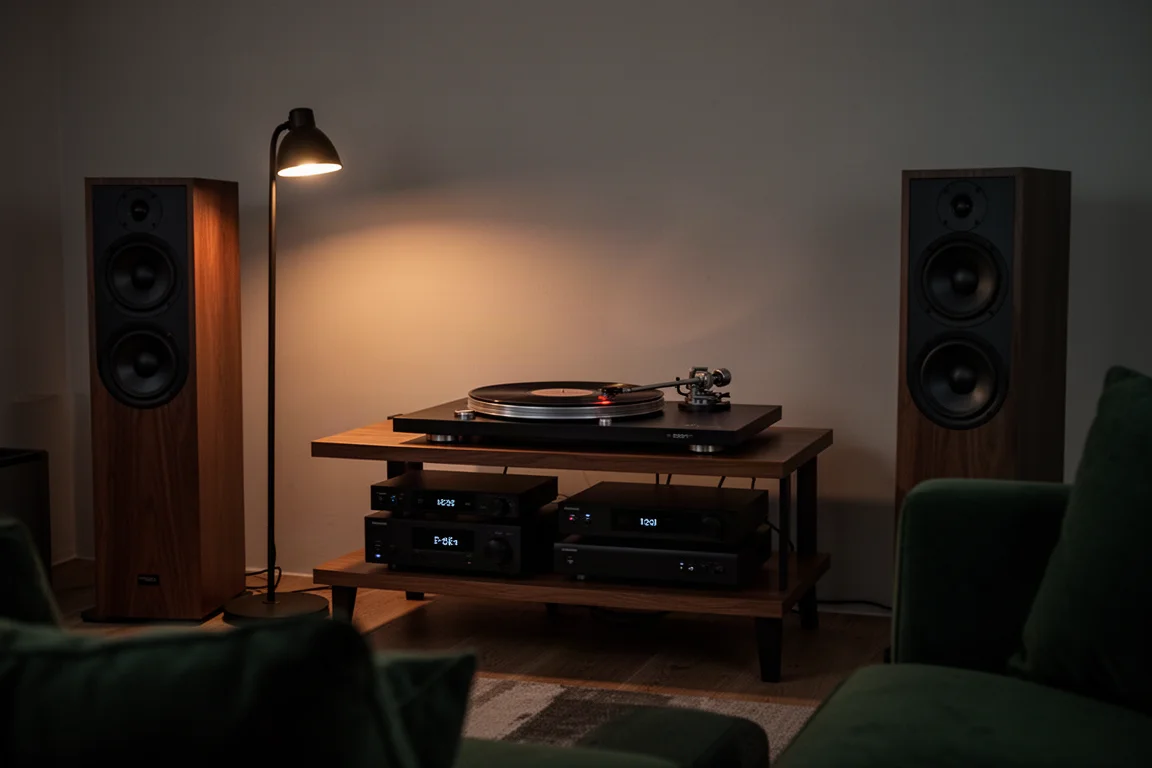
The PT1 suits a simpler setup. If two analog inputs cover your sources and you do not need adjustable filtering or a home theater bypass, the lower price leaves more budget for the amplifier or the speakers, where the money tends to make a more audible difference.
For anyone who already owns a DAC or a phono stage they love, a preamp without those stages built in is also worth considering, since the PT2’s internal DAC and phono stage would go unused. For everyone else, both Emotiva models deliver the integrated-amplifier experience while keeping the door open to separates.
Conclusion
The Emotiva PT2 and PT1 share the same core: a phono stage, a 24-bit/192 kHz DAC and Bluetooth in a preamp that leaves amplification to a separate box. The PT2’s extra $200 buys four analog inputs, adjustable high-pass and low-pass filtering and home theater bypass, along with an FM tuner. The PT1 keeps two analog inputs and fixed filtering at a lower price.
If you want a preamp that can serve as the hub of a system for years and adapt as your sources change, the PT2 is the more future-proof choice. If your system is settled and simple, the PT1 gets you into separates without paying for flexibility you will not use.
Further reading
Related Reviews

Backpacking Gear
Building a 10 lb Base Weight: An Ultralight Backpacking Gear List
A practical walkthrough of the ultralight pieces behind a 10 lb base weight, from a 765 g pack and a roomy one-person tent to a full camp chair and a dependable water filter.

Road Bikes
10 New Road Bikes Worth Watching: Aero, Titanium, Steel and Endurance Standouts
A practical roundup of 10 new road bikes, from aero flagships chasing single-watt gains to titanium, steel and endurance platforms built for real roads.

Bikepacking Gear
11 Bikepacking Essentials for Long-Distance Cycling
Eleven bikepacking essentials for long-distance cycling, from a steel gravel frame and a two-person tent to helmet lights, packable gloves, and a frame bag that puts weight in the right place.