AV Receivers
Emotiva MR1L Review: A 9.2-Channel Receiver Built Around Power and Manual Control
The Emotiva MR1L trades streaming apps and next-gen gaming features for nine channels of Class AB power, full preamp outputs, and deep parametric EQ.
Introduction
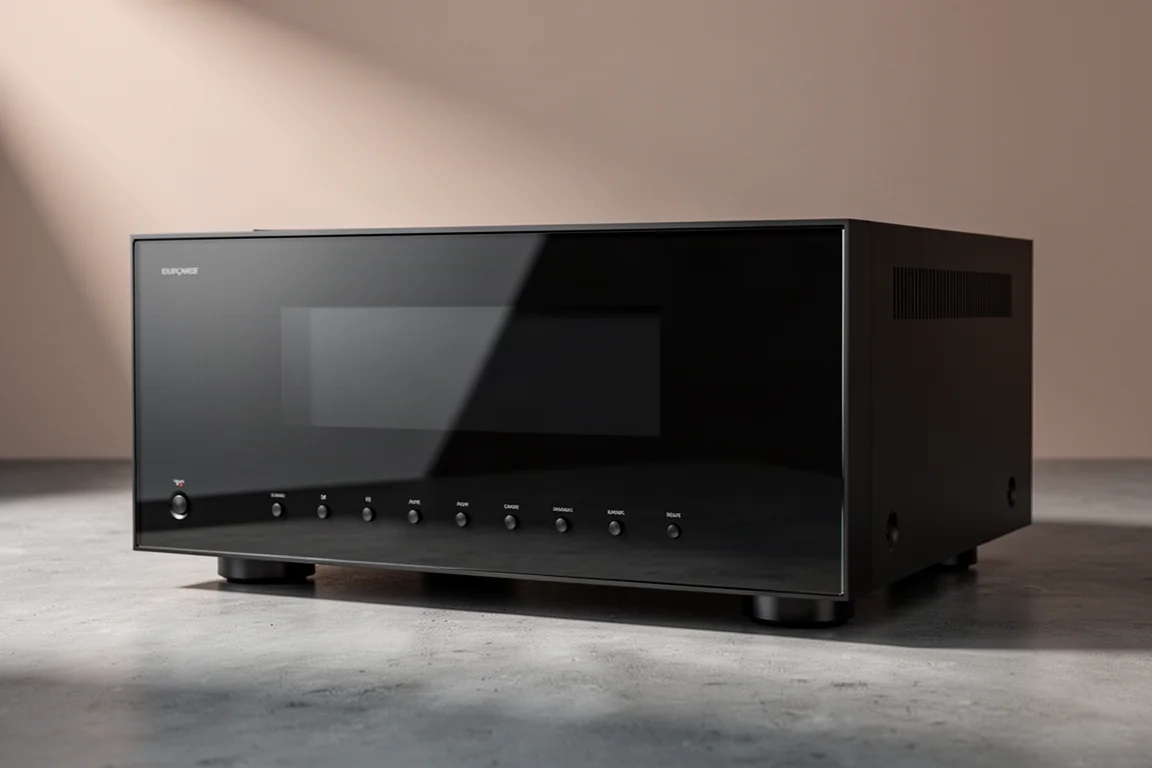
The Emotiva MR1L is a 9.2-channel Class AB AV receiver built around a deliberate trade-off. Instead of chasing every current feature, it puts the budget into amplification, preamp flexibility, and manual tuning tools. Emotiva rates it at 85 watts per channel into 8 ohms and 100 watts per channel into 4 ohms, with all channels driven. When fewer channels are in use, output climbs, reaching a maximum of 140 watts into 8 ohms and 200 watts into 4 ohms in stereo.
It arrives about a year after the MR1 and follows the same philosophy. For listeners who already own their sources, that focus can be appealing. For anyone who wants the receiver to be the hub for streaming, gaming, and smart home control, it is a different conversation entirely.
Who This Product Is For
The MR1L suits a specific kind of home theater. It makes the most sense for listeners who treat the receiver as the amplifier and switching center of a system that already has external sources, such as a dedicated music streamer or a network player. Emotiva has a long reputation for affordable gear that gives people access to performance they might not otherwise be able to budget for, and this receiver sits squarely in that tradition.
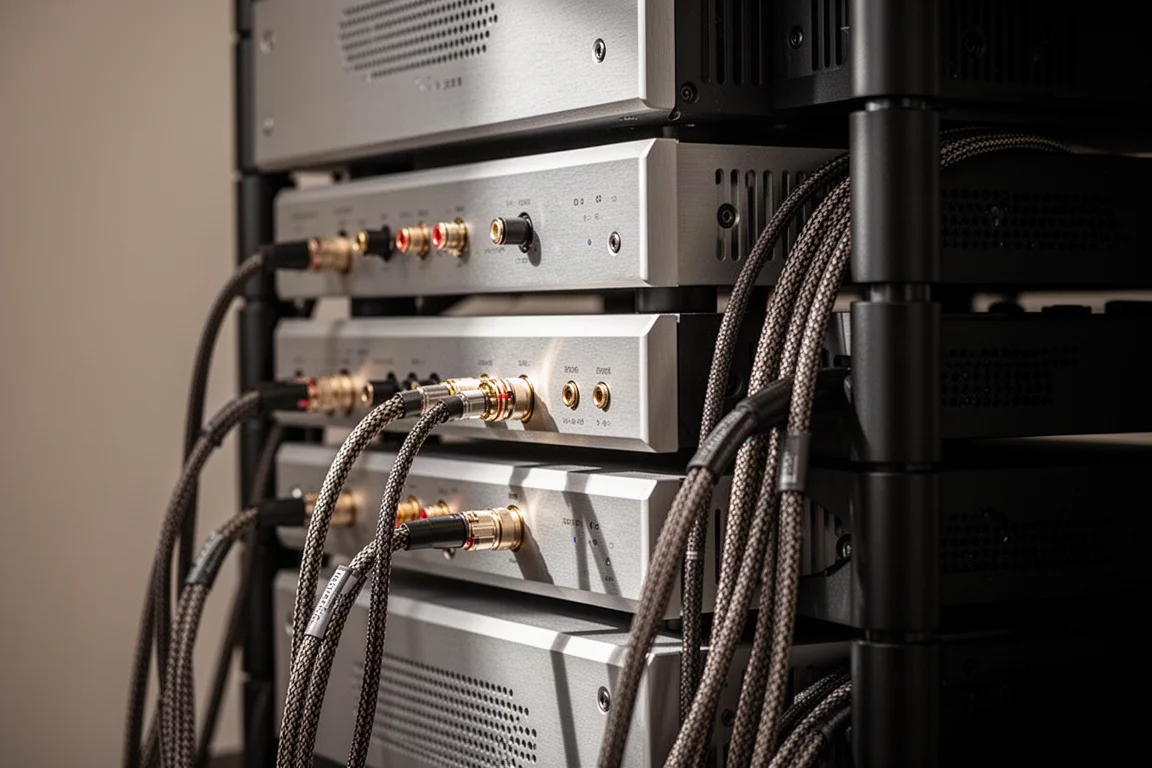
It is also a strong fit for anyone who wants to grow a system over time. With full unbalanced preamp outputs, the MR1L can support 13.2 channels of outboard amplification, so a separate amplifier can be added later to drive more speakers or deliver more power. It can also be placed into a strict preamp mode, which effectively turns it into an affordable preamp processor for a system built around external amps.
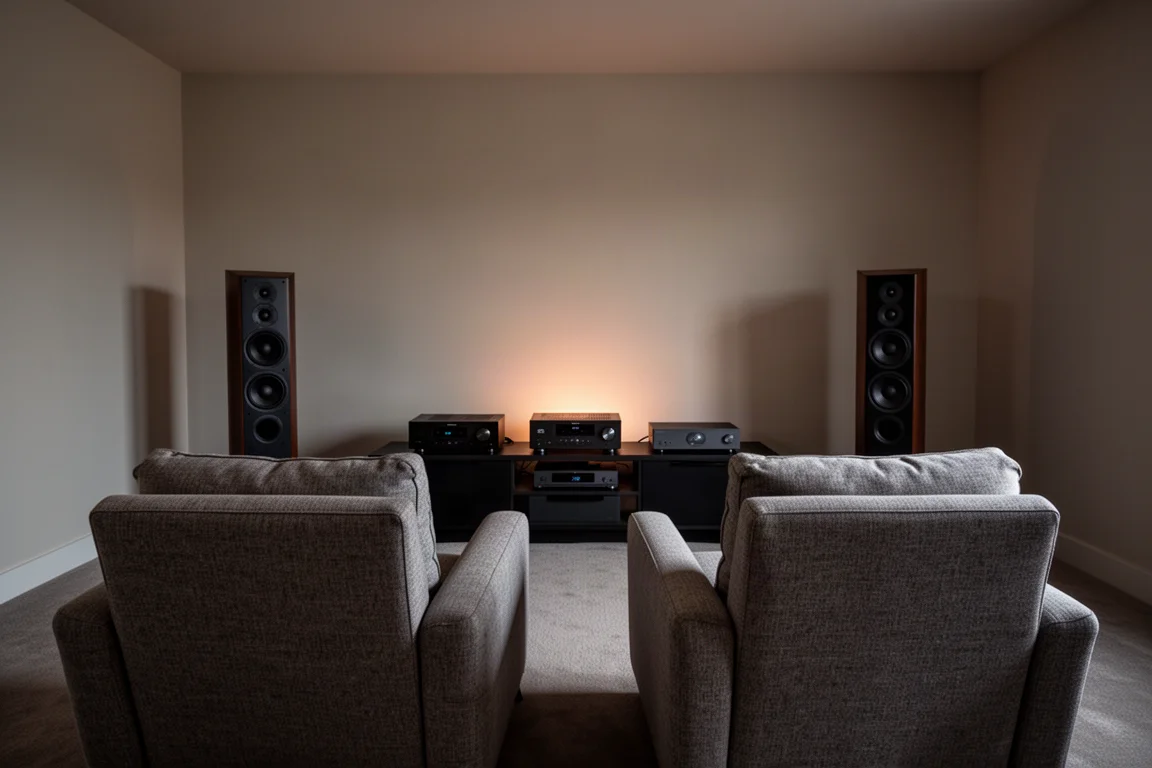
The other half of the audience is the tinkerer. If you enjoy manual control over speaker layout, crossover behavior, and EQ filters, the MR1L gives you more of that than most receivers at its level. If you would rather set a receiver up once and never open the menu again, the appeal is much weaker.
Main Strengths
Power Delivery and Preamp Flexibility
Power is the headline. With all nine channels driven, the MR1L holds its rated output, and it scales up as channels are freed. That matters most with demanding speakers and loud playback, where the receiver keeps a firm grip instead of straining. Across the speakers used in testing, the amplifier never tripped or ran out of composure, whether the system was running three, five, or all nine channels.
The preamp side is just as practical. Full unbalanced preamp outputs allow up to 13.2 channels of outboard amplification, so the receiver can serve as the processing core of a larger system. Two subwoofer outputs are included, with a choice of balanced or unbalanced connections. That is fewer than the four some buyers hope for, but it covers the vast majority of setups.
Input coverage is broad enough for most home theaters: four sets of RCA analog inputs, one USB input, two coaxial digital inputs, and two optical digital inputs. There is no built-in phono preamp and no legacy video connections, but Bluetooth is included for casual wireless playback. Anyone wanting music streaming or smart home control such as Google Assistant will need to budget for a third-party device, like a dedicated streamer or network node.
On the video side, the receiver provides six HDMI 2.0b inputs and two HDMI 2.0b outputs. All ports handle signals up to 4K 60 and most HDR formats, including Dolby Vision. The primary output supports ARC and eARC, which keeps a television’s audio return path available without extra cabling.
Sound Quality Across Music and Film
Tonally, the MR1L is well balanced with a mostly neutral lean. In stereo listening and when used as a preamp with an external two-channel amplifier at everyday volumes, it showed no meaningful difference in character. Music playback is confident, with strong control over speaker drivers and a noticeable sense of grip in the low end. The midrange stays intelligible and the highs extend in a controlled way, which together produce dynamic punch from top to bottom.
Just as importantly, the receiver does not smooth over detail. Subtle recording texture and small dynamic shifts come through rather than being glossed over, which is not always true of less capable receivers or cheaper Class D designs. Well-recorded rock tracks and live recordings came across more like a modest separates system than a typical sub-$2,000 AV receiver.
Imaging is another strength. Performers and instruments are placed in solid three-dimensional space without relying on artificial surround processing. For movies, the receiver scales sound cleanly whether you are running three, five, or all nine channels, delivering a full and rich cinematic presentation on everything from science fiction to slow-burn crime drama.
Emotiva’s room correction, EmoQ, works along similar lines to other automatic solutions. Using a series of test tones and the supplied microphone, it tunes speakers to the room for tighter bass and better dialogue intelligibility. The more interesting tool is the manual parametric EQ: up to 11 channels of full PEQ for the front three channels, plus seven and five bands of PEQ for the surround and subwoofer channels. That level of manual adjustment is rare in this class and lets you dial in a wide range of speakers with filters of your own design.
Things to Consider Before Buying
Source Switching, Boot Times, and Remote Response
The most significant issue is an audible hiss followed by a pop when switching between sources, apps, or even programs inside a single streaming service. Its severity tracks with volume, so the transition can be jarring during loud playback. Emotiva is aware of the behavior, but there has been no word on whether it will or can be addressed. Multiple units exhibited identical behavior, which points to a platform-level characteristic rather than a single faulty sample.
Patience is required elsewhere too. The MR1L takes a long time to boot and to acquire a signal, particularly over HDMI. That is surprising given the receiver performs essentially no video processing. Remote commands are equally laggy, and the delay becomes most noticeable when making complex manual adjustments across an entire surround system. The on-screen display itself is visually basic and clunky, though it offers a deep level of customization that rivals some of the most adjustable receivers on the market. Manual PEQ configuration in particular is a project, not a five-minute task.
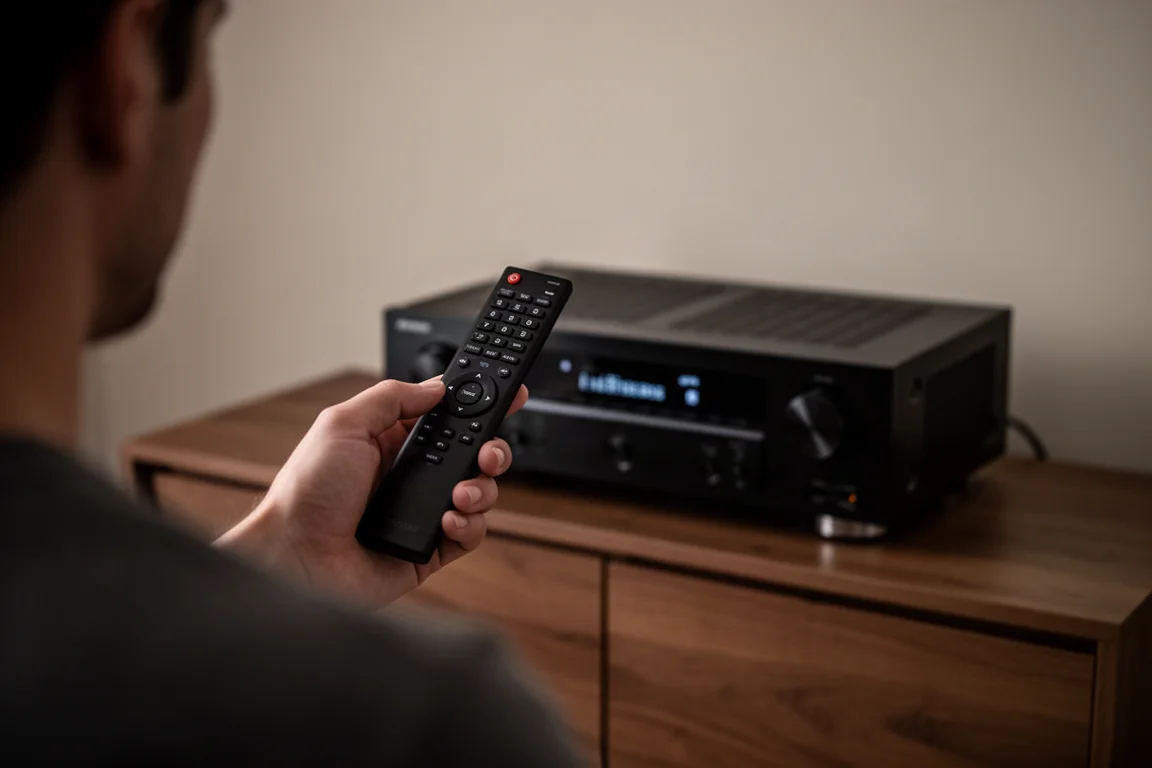
The front panel is one of the more successful design decisions. Instead of the usual brushed black metal, Emotiva uses a sleeker all-glass faceplate, and the display is large and easy to read from across a room. The display is not really usable for manual adjustments, so the on-screen menu remains the better route. It can be dimmed or fully defeated from the remote, which is a welcome touch for dark rooms.
Missing Modern Features
The feature omissions are deliberate, and they will decide the purchase for many people. There is no support for 4K120, VRR, or ALLM, so next-generation consoles cannot take advantage of their higher frame rates and variable refresh features through the receiver. A workaround exists: connect the console directly to the display and bypass the receiver. That is workable for one console, but households with several gaming systems will run into the limited HDMI 2.1 port counts on many televisions, where only some inputs support the higher refresh rates and one of those is often reserved for eARC.
There is also no built-in streaming platform and no smart home integration without an external device. If those conveniences matter, comparable receivers from Marantz, Denon, Sony, and Yamaha will be easier to live with day to day and offer more current features, often for similar money. Yamaha models in particular pair streaming, 8K 60 and 4K120 support, and PEQ, and they typically cost about the same as the MR1L or less.
Two surround considerations are worth noting. Emotiva cannot generate phantom channels or perform room mapping the way some flagship receivers do, so using Dolby or DTS standard speaker layouts is strongly recommended to get the best surround performance. Without that structure, surround channels can sound more directional. The receiver also lacks dialogue enhancement processing, so anyone who relies on dialogue aids to improve difficult mixes may need to look elsewhere. Dialogue was intelligible in testing, though that is partly a matter of the source mix.
Buying Advice
The MR1L answers a clear question: what if you spent the money on amplification and tuning instead of features? On that measure it delivers. Its all-channels-driven power is more confident than the closely priced Marantz Cinema 70, and it will drive harder-to-drive speakers to louder levels without strain. The Cinema 70 counters with a far friendlier user experience, full preamp outputs of its own, enough power for most rooms, and a price around $1,000. For a great many buyers, that combination is the easier recommendation.
The same logic applies further up the market. The McIntosh MHT300 does arguably less than the MR1L while costing several times more. In a direct comparison on the same speakers, the Emotiva matched it and may have edged ahead on sound, though the McIntosh offers 8K support, Dirac, more power with all channels driven, and American assembly. Whether those additions justify the premium is a personal call.
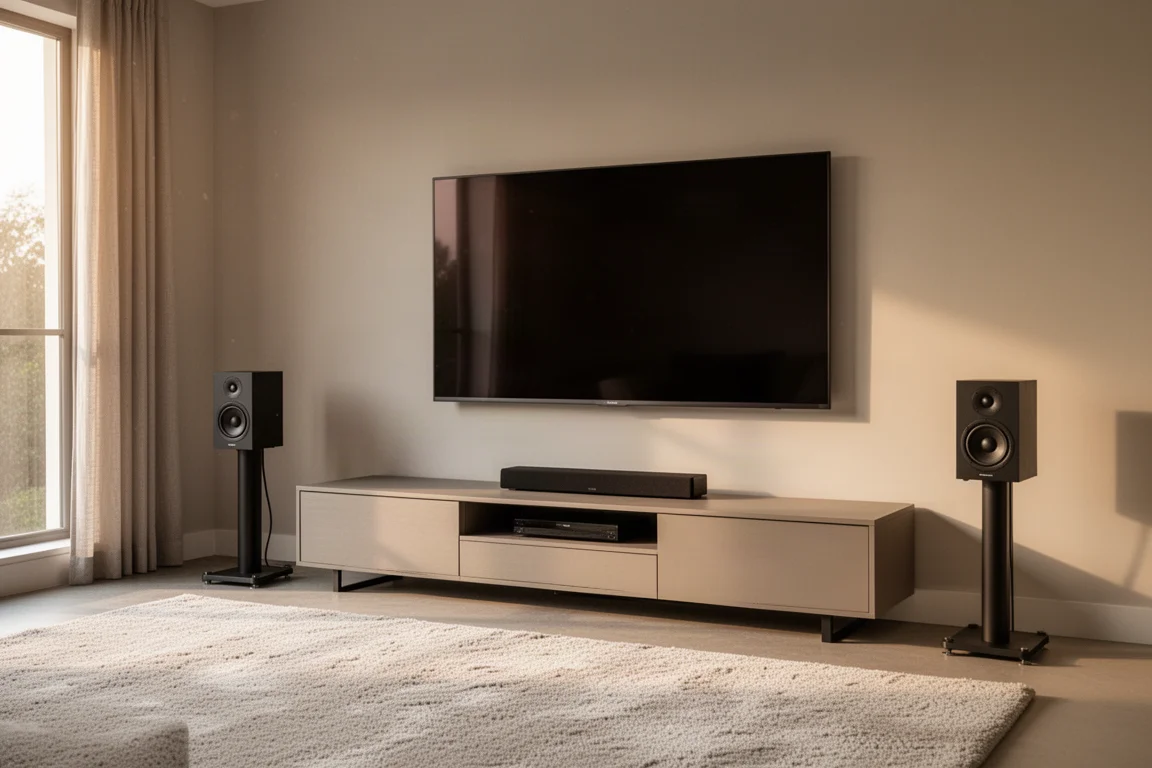
If sound quality and power are your priorities, the MR1L earns its place. If you game seriously, want streaming built in, or prefer a receiver that feels quick and modern in daily use, the alternatives are stronger. The honest framing is that this receiver asks you to accept older interfaces and a shorter feature list in exchange for amplifier headroom and manual control that few rivals at the price provide. Buy it for what it does well, not in the hope that the gaps will close later.
Conclusion
The Emotiva MR1L is a focused receiver with real strengths and real compromises. Nine channels of Class AB power, support for 13.2 channels of outboard amplification, a strict preamp mode, and up to 11 channels of manual parametric EQ make it genuinely capable for listeners who want control. Slow boot times, laggy remote response, source-switching noise, and the absence of next-gen gaming and streaming features keep it from being an easy pick for everyone.
The decision comes down to what you value most. If it is power, tuning depth, and a neutral, confident sound, the MR1L is worth a serious look. If it is convenience, current connectivity, and a polished daily experience, the competition has the advantage.
Product link
View more details for Emotiva MR1L
This product is mentioned in the review. Check the specifications, options, and compatibility before buying.
View more details for Emotiva MR1LFurther reading
Related Reviews
AV Receivers
Anthem MRX 740 8K Review: Composed Home Theater Sound With a Few Rough Edges
A close look at Anthem's mid-tier MRX 740 8K receiver, covering its sound, ARC Genesis room correction, HDMI 2.1 features and the daily quirks worth knowing before you buy.
AV Receivers
Anthem MRX 740 vs MRX 1140: Which AV Receiver Fits Your System?
A measured look at the Anthem MRX 740 and MRX 1140, covering preamp output performance, amplifier behaviour, bass management, and expansion headroom.
AV Receivers
Best AV Receivers for Home Theater: Denon, Onkyo, Marantz and Yamaha Compared
Four home theater receivers compared on features, sound character, setup and value, with clear guidance on which one fits which kind of buyer.