AV Receivers
Emotiva MR1 Review: An 11-Channel AV Receiver Built Like a Separate
Emotiva's first home theater receiver pairs 11 channels of internal amplification with a Class H power supply, full preamp outputs, and a simple, stable setup.
Introduction
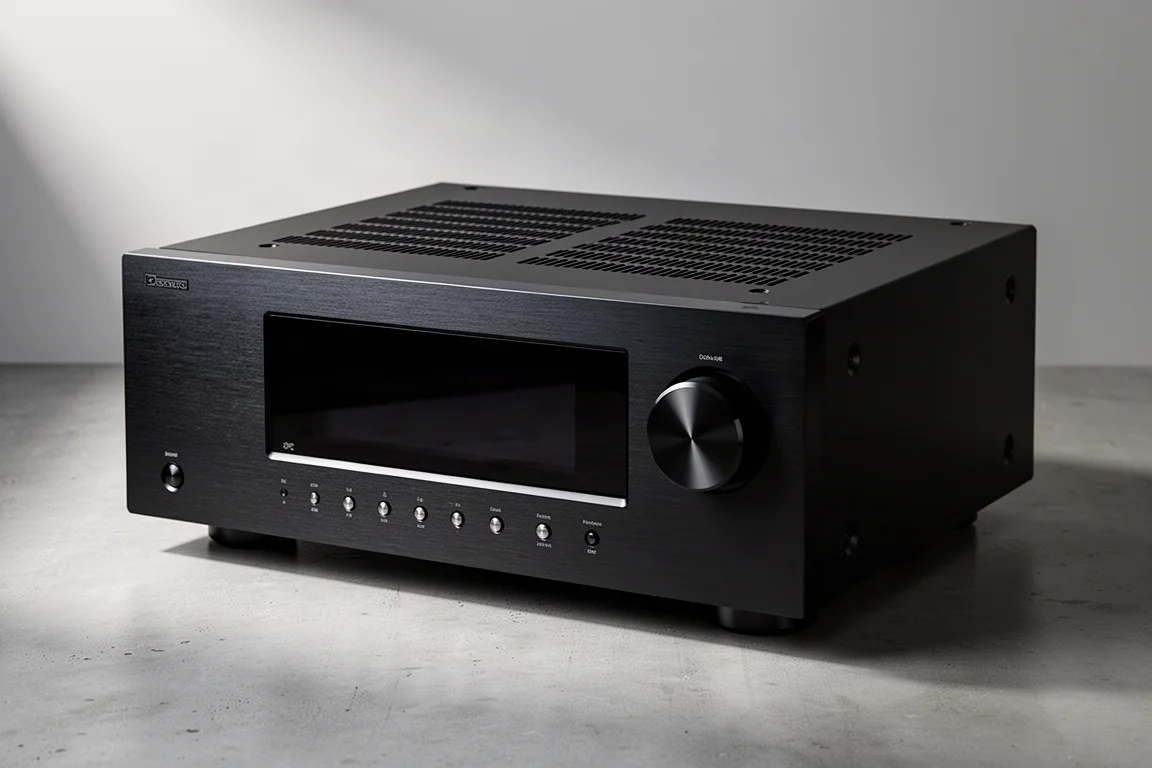
Emotiva built its home theater reputation on separates: dedicated processors and dedicated power amplifiers, arranged in tiers that start with the BasX line and climb through the company’s larger amplification platforms. The MR1 is Emotiva’s first home theater receiver, and it takes that separate-based thinking and condenses it into a single chassis.
The result is an 11-channel receiver with a Class H power supply and a toroidal transformer that is genuinely oversized for the category. It weighs roughly 50 pounds out of the box and 58 pounds in it. At $1,999 it is a serious purchase, and it is not a small one physically either. What it promises is a one-box answer for listeners who want movie sound and music playback from the same component.
Who the Emotiva MR1 Is For
The MR1 makes the most sense for listeners who are building or upgrading a full surround system and want amplification headroom without buying a processor and a separate multichannel amplifier. With 11 channels of internal amplification, it covers configurations such as 7.1.4 or a 5.2.2 layout with room to spare. Because every channel has a preamp output, two additional channels can be added later with an external amplifier if a larger speaker layout is the goal.
It is also aimed at people who care about two-channel music. Most receivers are bought for movies and tolerated for music. The MR1’s amplifier section is drawn from Emotiva’s dedicated amplification designs, and that foundation is what gives it an edge when the source material is a record rather than a film.
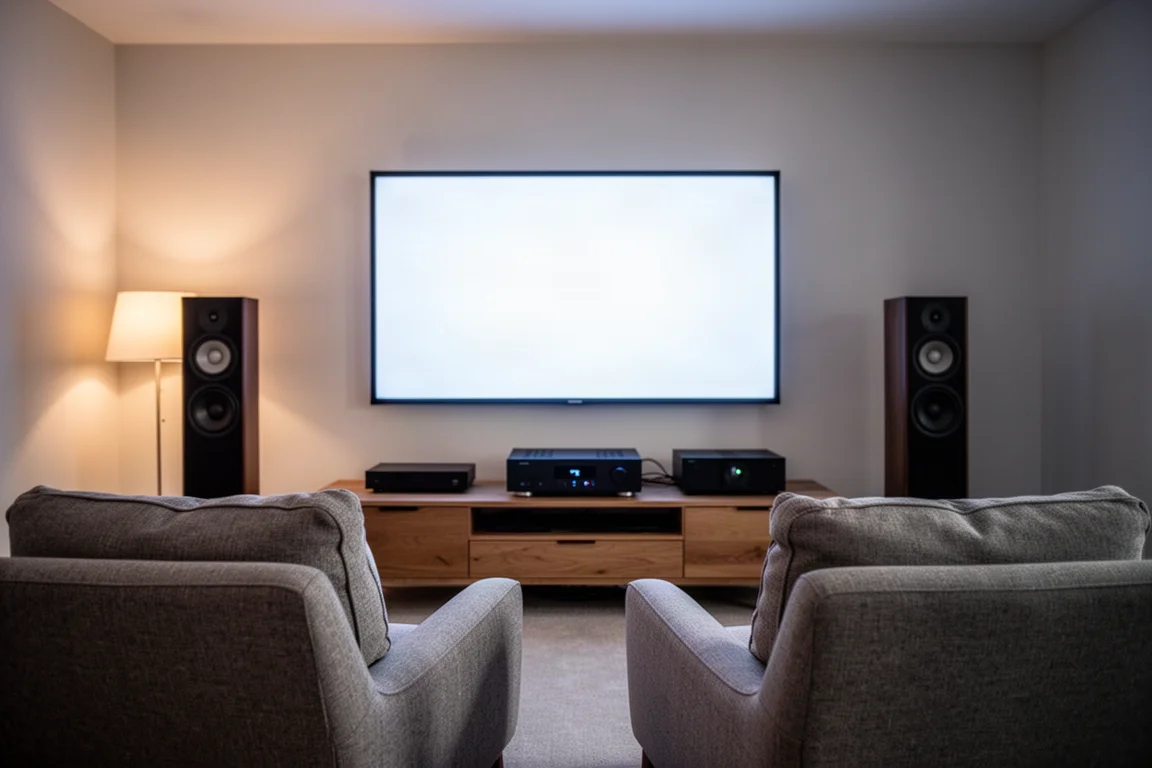
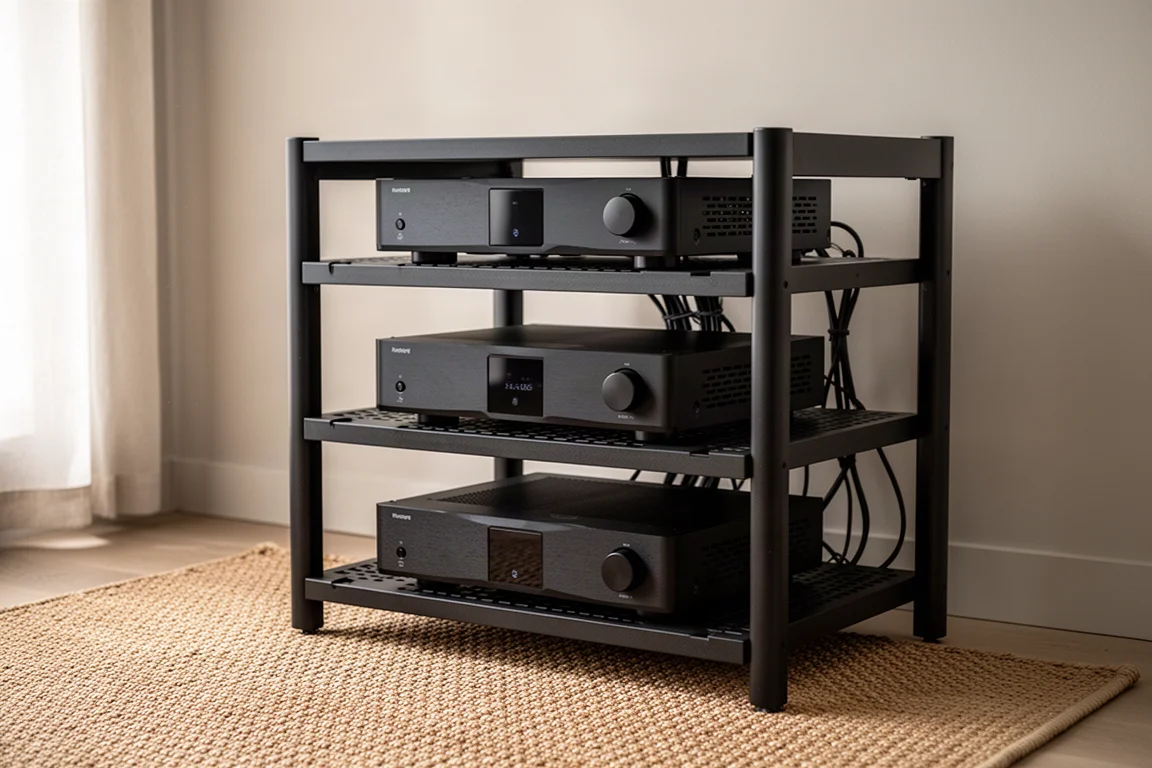
The practical trade-off is space. The chassis is deep and heavy, and it wants a shelf with real depth and open airflow behind it. Buyers with a shallow cabinet should measure before ordering, because this is not a component that slips into every media console.
Build Quality and the Case for a Big Chassis
The MR1 is built the way Emotiva builds its separates: metal faceplate, metal chassis, and a substantial toroidal transformer inside. The Class H power supply is the reason the unit is this large and this heavy, and the weight is a fair indicator of what sits under the lid. Emotiva has also addressed a long-running point of feedback about its front panel lighting. The blue LEDs can be dimmed, and they can be switched off entirely for anyone who prefers a dark rack.
Speaker terminals are arranged at an angle rather than in one straight row. That layout spreads cables apart, which makes it easier to route and organize a full set of speaker runs and reduces the chance of a short. Banana plugs are the simplest option, though bare wire and spades also work. The binding posts themselves are solid, and the rear panel finishes with a standard IEC power inlet.
Power Delivery Across Eleven Channels
The numbers are the headline. With two channels driven, the MR1 is rated at 180 watts into 8 ohms and 290 watts into 4 ohms. With all 11 channels driven, it is rated at 100 watts into 8 ohms and 130 watts into 4 ohms. Rating a receiver with every channel driven is uncommon in the AV receiver market, and it gives a more honest picture of what the amplifier can do when a demanding surround mix asks every speaker to work at once.
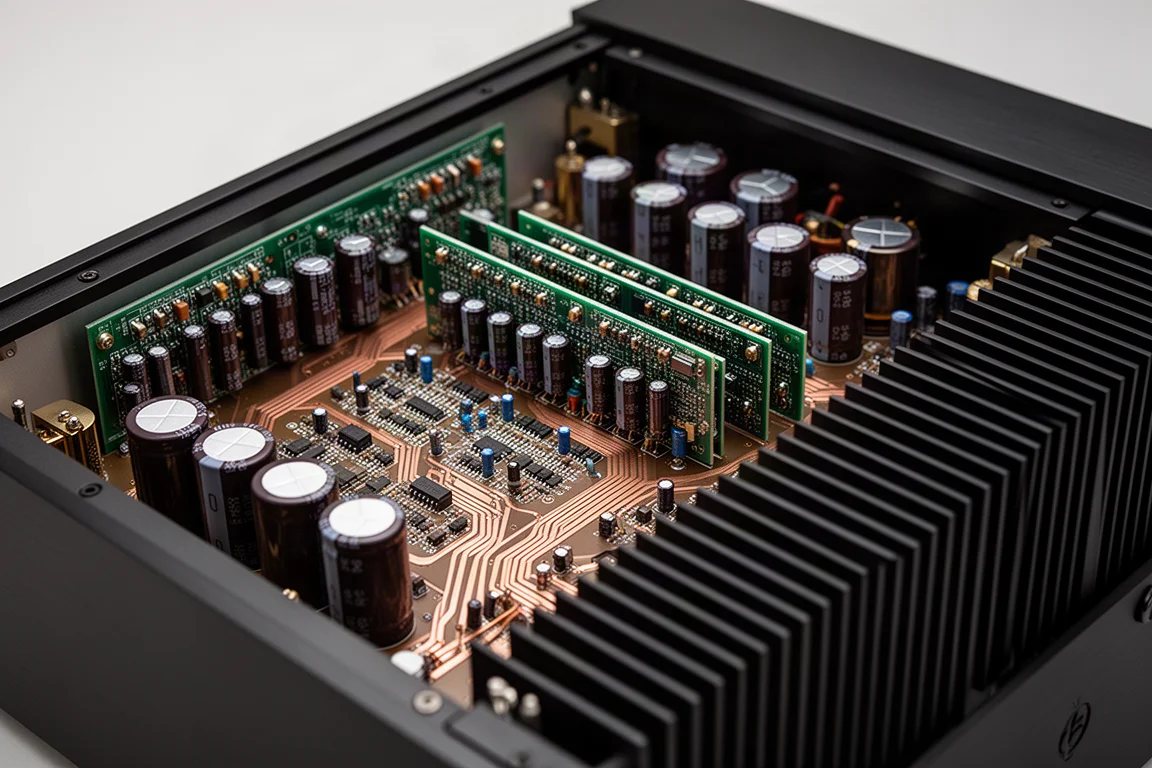
The power supply is built to support that kind of load. For most rooms, 11 channels of internal amplification will be more than enough, and preamp outputs on every channel mean the platform can grow if needed. Adding outboard amplification for the final two channels is possible, but it takes a serious amplifier to be worth the effort.
Connections and Flexibility
Rear connectivity is broad. There are six HDMI inputs and two HDMI outputs, one of which supports eARC for audio returning from a television, and eARC connections proved stable in use. Subwoofer output is available in both balanced and single-ended form, with two outputs of each type. Analog audio is covered by four inputs, and the DAC section offers two optical and two coaxial inputs alongside a USB input for USB DAC duties. Bluetooth is handled by an external antenna at the rear.
Also on the back panel are the input for the supplied calibration microphone, a USB port for firmware updates, and an RS-232 serial port.
Setup and Room Correction
Setup follows the familiar guided routine. The receiver walks through speaker selection, distances, levels, and room correction using the included microphone. Speaker type selection covers in-ceiling and up-firing height modules, which matters for anyone running Dolby height channels. Because the microphone input sits on the rear panel, it is worth running calibration before the receiver is installed in a rack or a tight cabinet.
Room correction results can then be refined channel by channel. Each speaker has its own EQ, and a further click reveals the EQ curve with its listed frequencies and Q values, all of which can be adjusted. The system is effectively unlimited for anyone willing to learn it, though it rewards a patient, technical user. Levels, distances, and channel trims are adjustable in the same area.
Everyday Control and Sound Modes
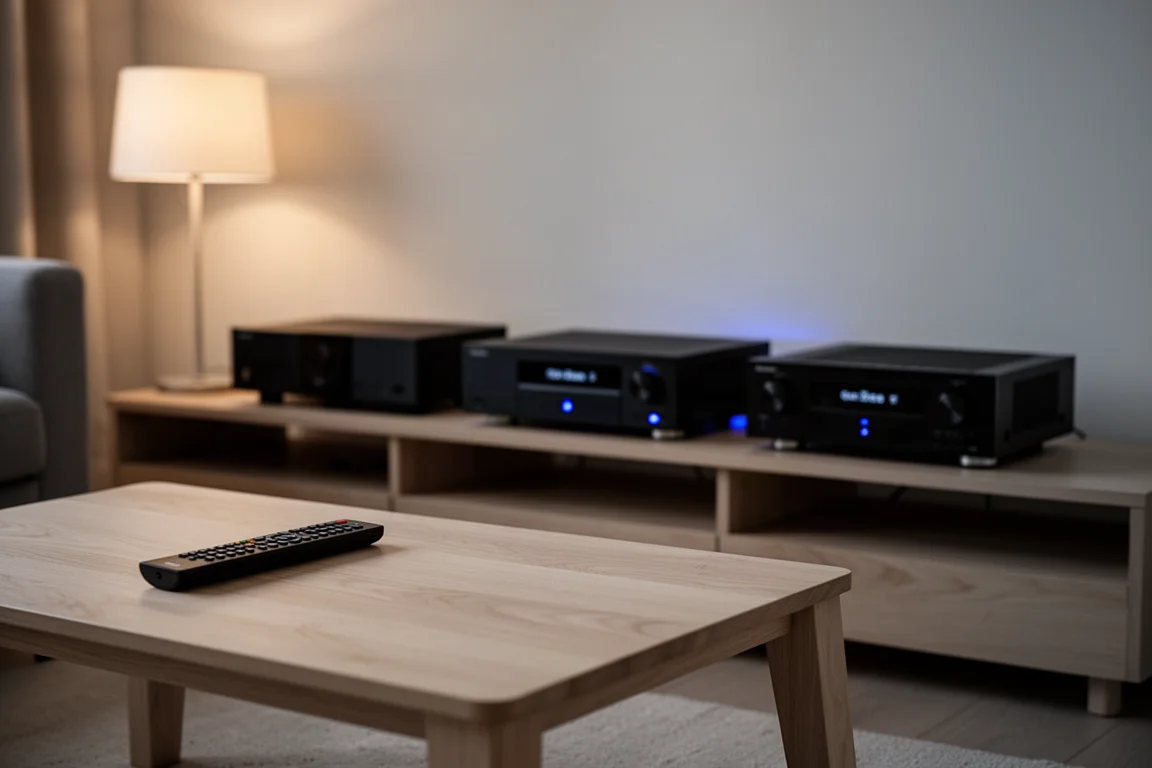
The remote is large and has a reassuring weight. Its buttons are formed as a single rubber sheet rather than individual keys set into a frame, which is the main compromise. What the remote does offer is direct trim access: dedicated up and down buttons for the center channel, the height channels, the surround channels, and the subwoofer. That means dialogue can be lifted mid-film without digging through menus, which is genuinely useful with streaming mixes that keep dialogue tightly compressed.
Sound mode options are deliberately limited to five or six, including pure and direct. Direct lets the source material determine the upmix or mode. Some buyers will read the short list as a missing feature, while others will see it as the reason the receiver is quick to live with day to day.
Music Performance
Two-channel music is where this receiver separates itself from the typical AV receiver. The amplifier section behaves like a dedicated Emotiva stereo amplifier, and that carries through into how records and streams are presented. Buyers who would otherwise keep a separate two-channel system alongside their home theater rig may find the MR1 covers both roles on its own.
Things to Consider Before Buying
- Size and weight. At about 50 pounds out of the box and 58 pounds boxed, the MR1 needs a sturdy shelf, real depth, and airflow.
- Price. At $1,999 it sits in premium flagship territory, and the value case rests on power delivery and construction rather than a long feature list.
- Remote feel. The single rubber button sheet is functional but not a premium touch.
- On-screen interface. The menus are simple and stable, but they look dated compared with the glossy interfaces on some competing receivers.
- Rear microphone input. Calibration is easiest before the receiver goes into a rack.
- Sound mode count. A handful of modes is a strength for some buyers and a limitation for others.
- Channel expansion. Going beyond 11 channels requires an external amplifier.
Buying Advice
At $1,999 the MR1 competes with flagship receivers from larger brands, and its case rests on power delivery, build quality, and music performance rather than feature count. Buyers should confirm rack depth and ventilation, plan on banana plugs for the angled speaker terminals, and expect to spend some time in the EQ menus if they want the room correction dialed in precisely. The receiver is available now, and Emotiva lists it as in stock.
If a full surround system plus serious music playback is the goal and the budget allows one premium component, the MR1 covers both jobs in a single box. Buyers who mainly want a long list of streaming features and a large menu of sound modes should look at a conventional flagship receiver instead.
Conclusion
The MR1 is big, heavy, and expensive, and each of those traits follows from the design goal: putting a separate processor and a multichannel amplifier into one chassis without diluting the power supply. It drives 11 channels internally, offers preamp outputs on every channel, and handles two-channel music with the character of a dedicated amplifier. The remote and the on-screen interface are the compromises, and the size is a genuine constraint. For listeners who have been searching for a single box that does movies and music properly, this is a compelling answer.
Product link
View more details for Emotiva MR1
This product is mentioned in the review. Check the specifications, options, and compatibility before buying.
View more details for Emotiva MR1Further reading
Related Reviews
AV Receivers
Anthem MRX 740 8K Review: Composed Home Theater Sound With a Few Rough Edges
A close look at Anthem's mid-tier MRX 740 8K receiver, covering its sound, ARC Genesis room correction, HDMI 2.1 features and the daily quirks worth knowing before you buy.
AV Receivers
Anthem MRX 740 vs MRX 1140: Which AV Receiver Fits Your System?
A measured look at the Anthem MRX 740 and MRX 1140, covering preamp output performance, amplifier behaviour, bass management, and expansion headroom.
AV Receivers
Best AV Receivers for Home Theater: Denon, Onkyo, Marantz and Yamaha Compared
Four home theater receivers compared on features, sound character, setup and value, with clear guidance on which one fits which kind of buyer.