Hi-Fi Audio
Emotiva LB12s and Advance Paris A12 Apex: A Heritage-Inspired Hi-Fi Pair
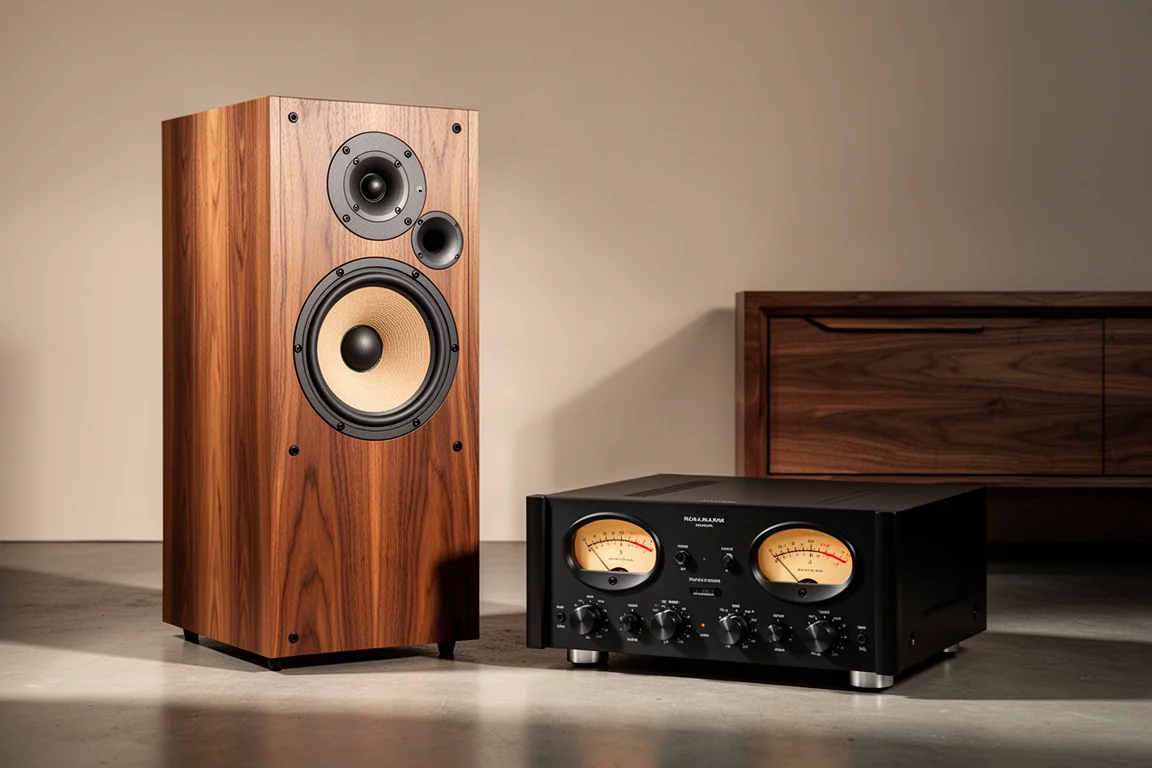
A three-way floorstanding speaker with a 12-inch woofer and a dual mono integrated amplifier, considered together for listeners building a heritage-style two-channel system.
Introduction
Heritage-inspired hi-fi has become one of the more interesting corners of the audio market. Buyers increasingly want equipment that looks like it belongs in a room rather than a black box that disappears into a rack. Two components make that idea unusually concrete: the Emotiva LB12s, a three-way floorstanding speaker wrapped in real wood veneer, and the Advance Paris A12 Apex, a dual mono integrated amplifier with analog VU meters and a very deep feature set.
Considered separately, each is a statement piece. Considered together, they form the kind of system that pairs vintage visual character with modern drive capability and connectivity.
How These Two Components Fit Together
Matching a speaker and an amplifier comes down to a few practical questions: how much power the speaker needs, how flexible the amplifier is, and whether the two share a design philosophy.
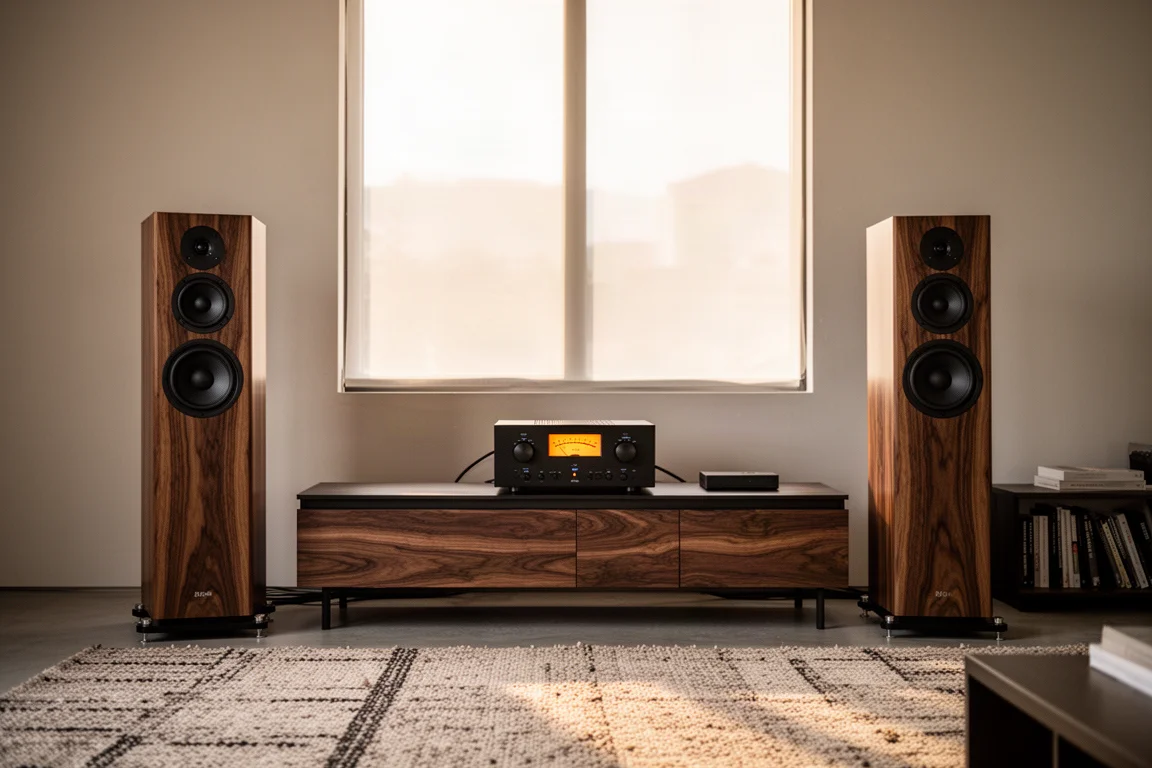
The LB12s is rated at 91 dB sensitivity with a nominal 8 ohm impedance, which places it among the easier floorstanders to drive. The A12 Apex supplies 180 watts per channel into 8 ohms and 272 watts per channel into 4 ohms, so there is ample headroom for a speaker of this type. Both pieces also lean into the same retro-modern aesthetic: wood veneer on one side, VU meters and tactile selector knobs on the other.
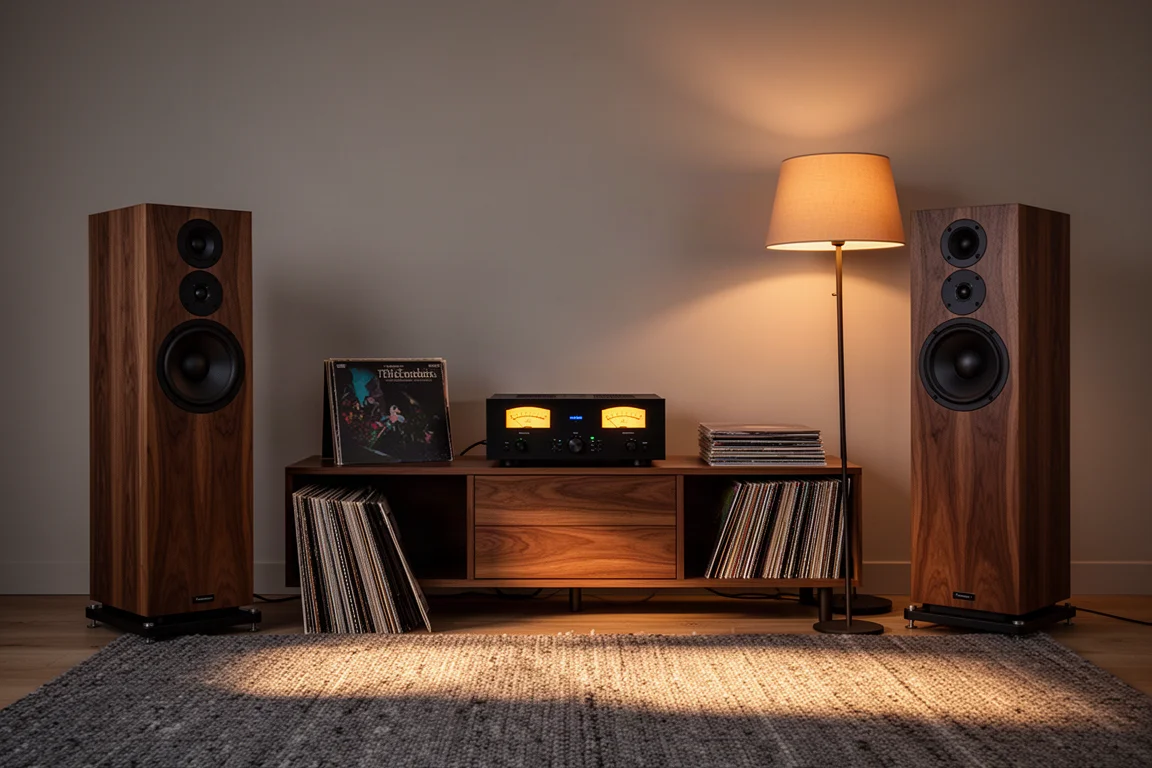
For listeners building a system around a single room, that combination is the appeal. This is a pairing aimed at people who want their equipment to be visible, permanent and enjoyable to operate rather than hidden away.
Emotiva LB12s: Heritage Looks With Modern Bass
The LB12s is a notable shift for Emotiva, a brand better known for conventional box speakers. This is a three-way floorstander with a large paper cone woofer, real wood veneer and a design language that deliberately echoes speakers from the 1970s and early 1980s. The model name is said to stand for ‘lease breaker’.
Design and Build
The driver complement is a 28 mm soft dome tweeter with a neodymium magnet, a 5.25 inch hyperdome midrange driver that also uses a neodymium magnet, and a 12 inch paper cone woofer. The tweeter choice matters here: a soft dome rather than the air motion transformer topology Emotiva has used elsewhere.
Each cabinet weighs 71 pounds, and units ship by freight on a pallet, so delivery and placement are worth planning for.
The LB12s is sold as a mirrored pair, which means the tweeter and midrange are offset from the center of the baffle. Positioning the tweeter and midrange on the inside edge produces more focused imaging, while placing them on the outside produces a broader soundstage. It is a genuine setup choice rather than a marketing detail, and it costs nothing to experiment.
Other practical touches include removable magnetic grilles with unusually strong magnets. Two grille colors are supplied, a light gray and a cream shade. On the rear panel, separate midrange and treble switches let listeners boost or cut those bands to suit their room and taste. The cabinet also sits on a slight rake, angling the drivers upward a few degrees. A small plaque on the front depicts the speaker’s frequency response, which is largely flat with a rise above 10 kHz. Coverage is backed by a 10 year warranty.
Sound Characteristics
The published specifications list 91 dB sensitivity, a nominal 8 ohm impedance and a frequency response of 40 Hz to 32 kHz, plus or minus 3 dB.
Bass is the headline. The 12 inch woofer produces low frequency output that feels deeper than the published figure implies, and it holds together on bass-heavy material played at genuinely loud levels, around 90 dB, without strain or bottoming out. On percussion-led recordings the speaker resolves fine details such as rim hits and subtle studio artifacts that less revealing designs tend to smooth over. Just as importantly, it does so without the hardness in the 4 to 6 kHz region that can make sibilant recordings difficult to sit through.
The overall character is best described as refined and fun: a warm, full midrange with real punch underneath.
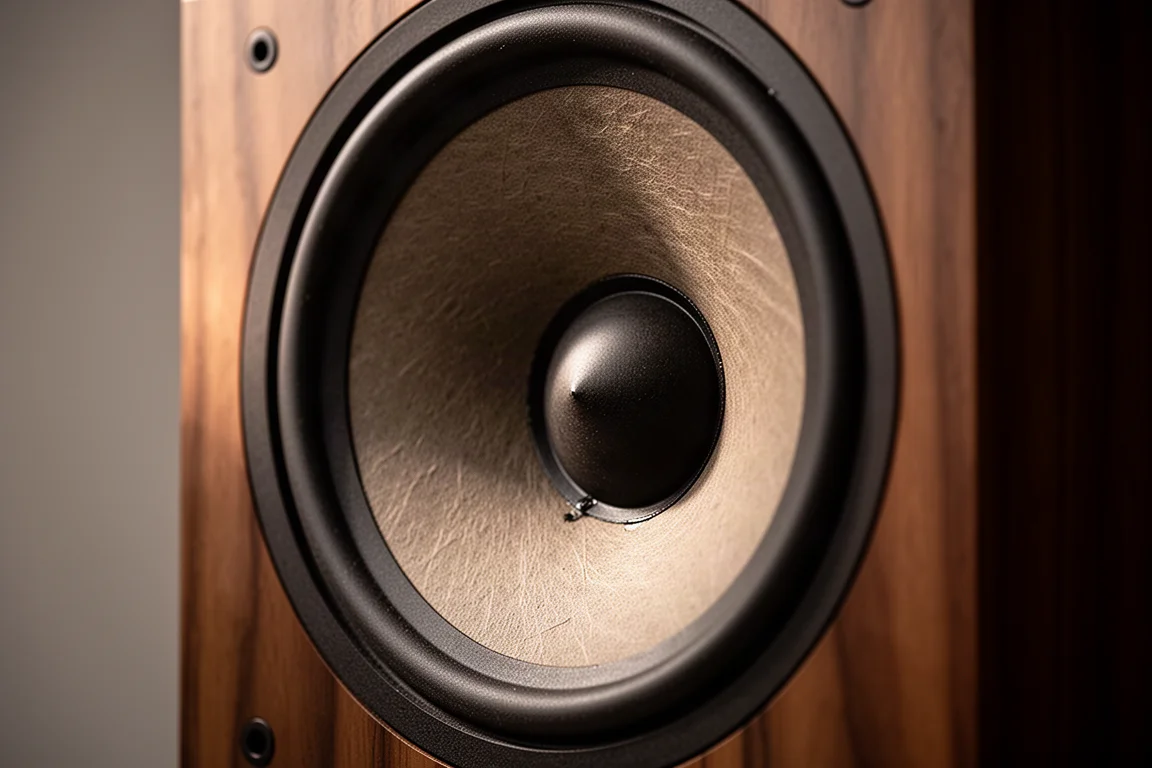
That combination of scale and control is what separates the LB12s from smaller heritage-style designs. It delivers the physicality of a large vintage speaker while keeping the composure of a modern one, and it responds well to being driven hard.
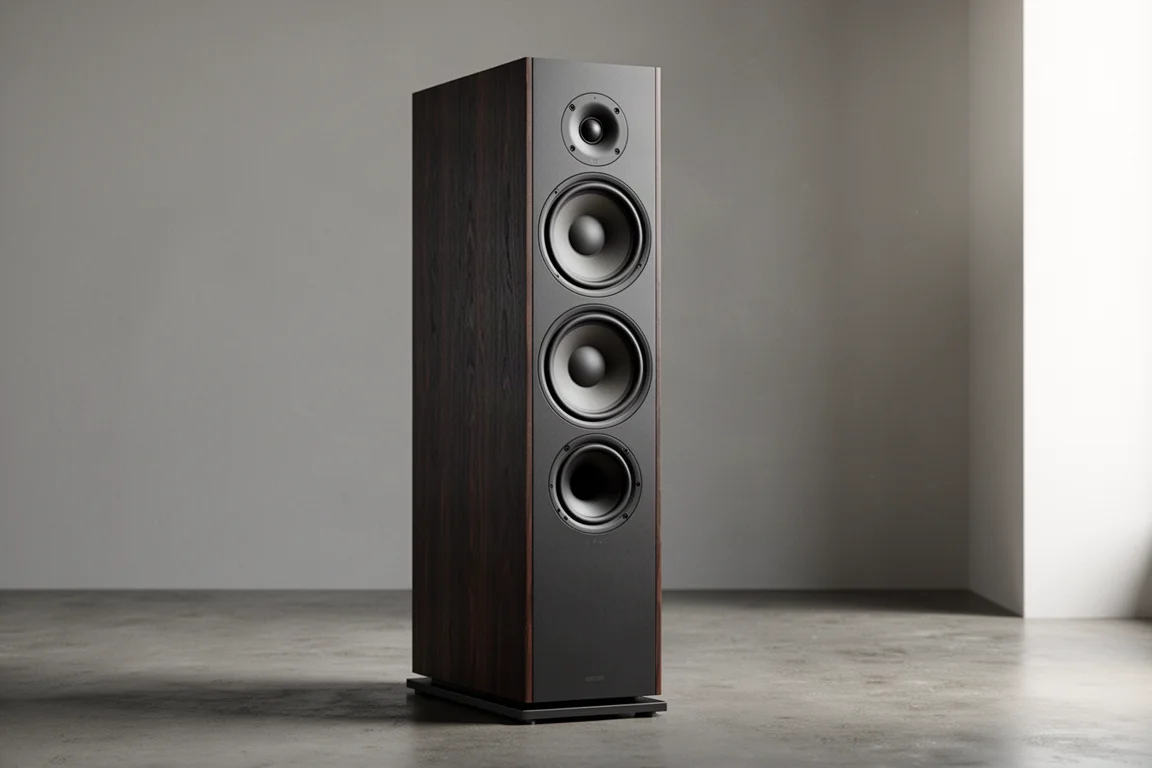
Advance Paris A12 Apex: Dual Mono Power and Flexibility
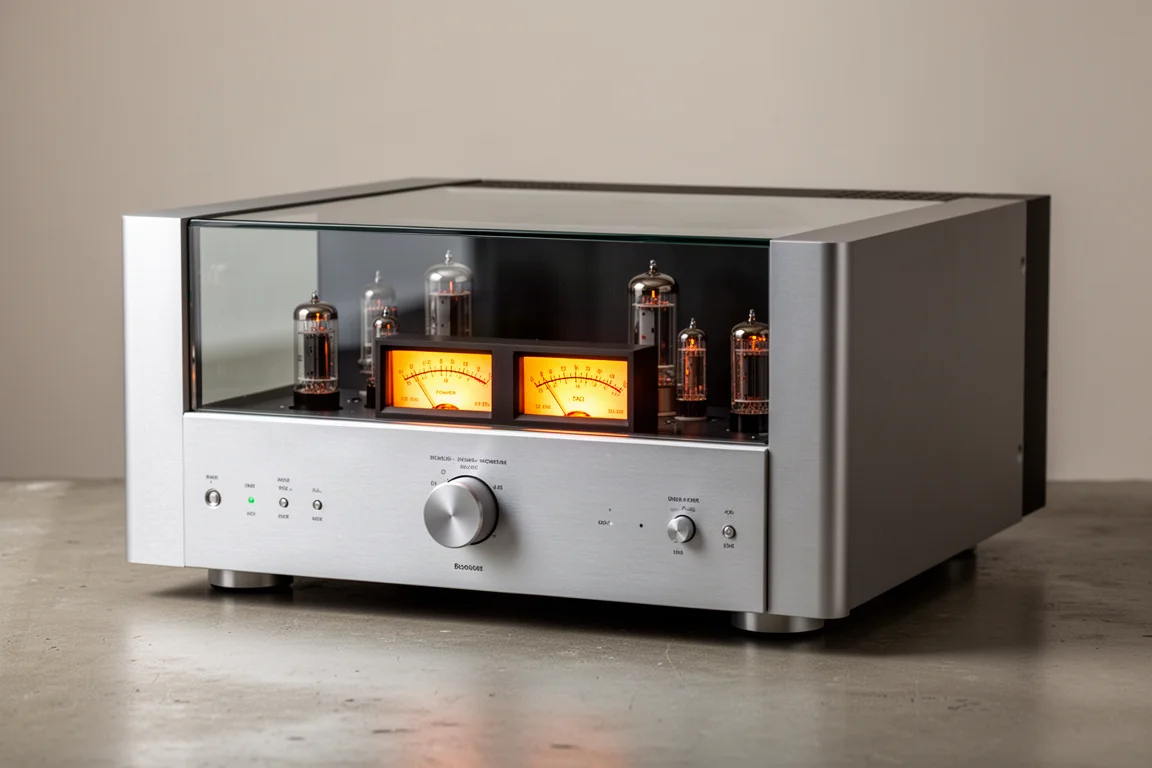
The A12 Apex is an integrated amplifier priced at $5,000, which is $500 above the A12 Classic it sits alongside. It shares much of that model’s architecture, including its dual mono layout, where the left and right channels each get their own power supply and a linear supply built around a toroidal transformer.
Connectivity and Features
The input count is extensive. There are three optical and three coaxial digital inputs, an AES/EBU digital input and an HDMI eARC connection. Analog coverage includes five unbalanced RCA inputs and two balanced XLR inputs, plus a moving magnet or moving coil phono stage with variable loading.
Outputs are just as generous: a balanced preamp output, an RCA preamp output and two subwoofer outputs, along with selectable bass management at 75 or 150 Hz. The front panel adds quarter-inch and 3.5 mm headphone jacks, two VU meters and separate selector knobs for digital and analog sources. A matching CD player is available, sharing the same internals as the existing model with different color options.
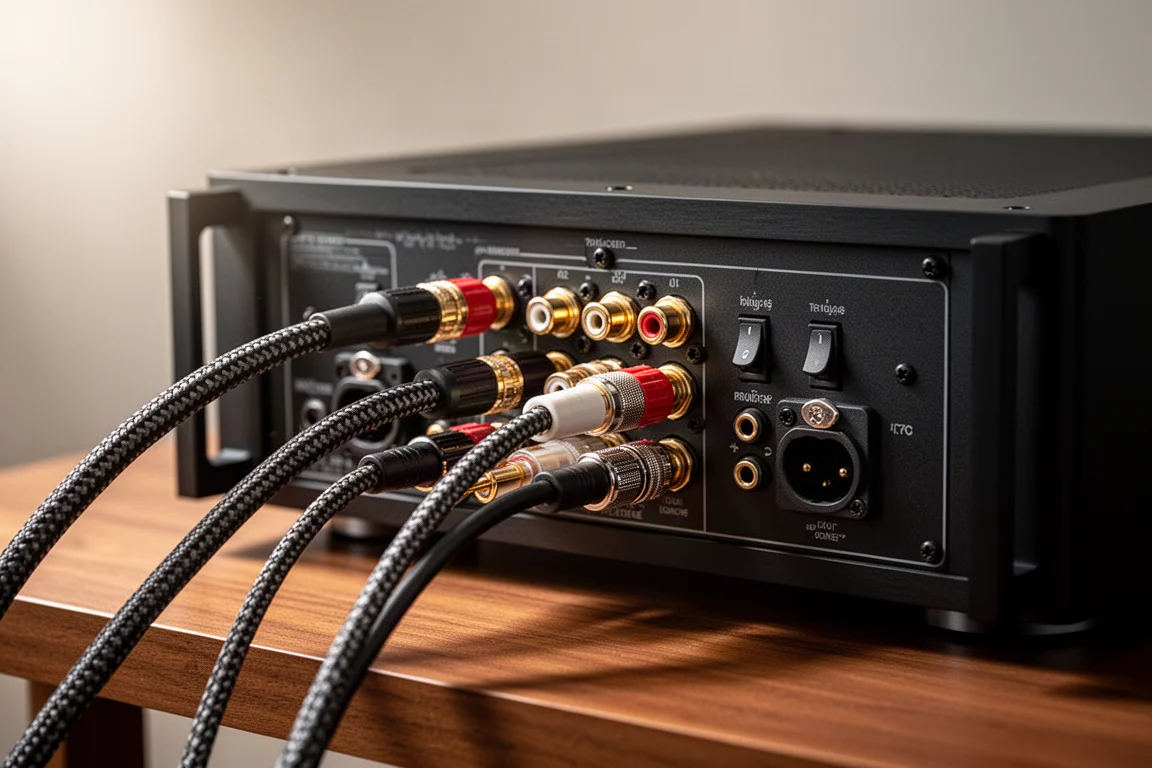
The result is an amplifier that can absorb a turntable, a streamer, a disc player, a television and a pair of subwoofers without an external switcher or a separate phono stage. For listeners who want one chassis to handle a whole system, that breadth is the point.
Amplification and Control
Power output is rated at 180 watts per channel into 8 ohms and 272 watts per channel into 4 ohms. In use the amplifier comes across as effortless and dynamically punchy, with no sense of strain when driving a large three-way speaker at high volume.
Several features set the Apex apart from the A12 Classic. It moves to HDMI eARC, gains upgraded Bluetooth with a Bluetooth output, uses tubes branded by Advance Paris rather than PSVane, ships with a different remote control and is compatible with the AR2R rotary remote. The DAC has also been upgraded to a 9039 Q2M chip in place of the PCM 1796.
Everyday usability is well covered too. There is a loudness control for low-volume listening and a Class A bias switch, which many owners of Advance Paris gear leave engaged. Combined with the dual mono construction, that gives the A12 Apex the separation and authority normally associated with separate monoblock power amplifiers, but in a single chassis.
What to Consider Before Buying
The first consideration is physical. At 71 pounds each, the LB12s speakers arrive by freight on a pallet, and they need a room with enough space to let a 12 inch woofer breathe. Placement experimentation with the mirrored driver layout takes a little patience, though it costs nothing but time.
Budget is the second consideration. At $3,000 for the speakers and $5,000 for the amplifier, this is a serious outlay. The speakers are the more accessible entry point, and the amplifier is the larger commitment.
Feature depth is the third. The A12 Apex carries far more inputs, outputs and adjustment options than many two-channel listeners will ever use. Buyers who only need one or two sources may find that the simpler A12 Classic covers their needs, and Advance Paris also offers the A10 Classic for listeners who want to stay within the same family.
Finally, the speakers reward a capable amplifier. Their ability to expose subtle detail in percussion and low-level recordings is part of what makes them engaging, so pairing them with a component that can deliver clean power at volume is worth the effort.
Buying Advice
Choose the Emotiva LB12s if you want a large, warm, dynamic three-way floorstander with genuine low frequency authority, a real wood finish and the flexibility to tune imaging and treble response to your room. At $3,000 it sits at the affordable end of the heritage-inspired speaker category, and its combination of bass weight and midrange warmth is hard to match at that price.
Choose the Advance Paris A12 Apex if you want a single amplifier that covers vinyl, digital, television audio, headphones and subwoofers, and if the dual mono topology, VU meters and Class A bias option appeal to you. The 180 watt per channel rating gives it enough headroom for demanding speakers, and the upgrades over the A12 Classic, including the new DAC, eARC and revised tubes, are meaningful for anyone keeping the amplifier long term.
If budget is tight, start with the speakers. They define the character of the system, and their 91 dB sensitivity means they will still perform well with a more modest amplifier. Add the A12 Apex when you are ready to commit to the amplifier as the long-term centerpiece of the setup.
Conclusion
The Emotiva LB12s and the Advance Paris A12 Apex make a coherent argument for heritage-inspired hi-fi. One brings a 12 inch woofer, a three-way design and a wood-veneered cabinet that looks like it belongs in a listening room. The other brings dual mono construction, 180 watts per channel, an extensive input set and the analog meters and tactile controls that make an amplifier enjoyable to own. Bought together, they form a system built around presence and permanence rather than minimalism, and each stands up on its own merits.
Further reading
Related Reviews
Hi-Fi Audio
Accuphase C-57 vs Allnic H-7000V: Two High-End Phono Stages Compared
A fully balanced solid-state phono stage with a pitch-black noise floor meets a tube design built for well-loved records. Here is how to choose between them.
Hi-Fi Audio
Active vs Passive Hi-Fi: Five Components for a Modern System
Five components that define modern active and passive hi-fi systems, with the strengths, trade-offs and setup details worth weighing before you buy.
Hi-Fi Audio
Advance Paris A10 Apex Review: A Hybrid Integrated Amplifier That Covers a Lot of Ground
A French hybrid integrated amplifier with a class A tube preamp stage, analogue power meters, and an internal DAC and phono stage good enough to make extra boxes unnecessary.