CD Players
Emotiva ERC-4 Review: A CD Player, Transport, and DAC in One
A $600 CD player with a built-in DAC, balanced outputs, and transport flexibility, plus what a direct CD versus streaming comparison revealed.
Introduction
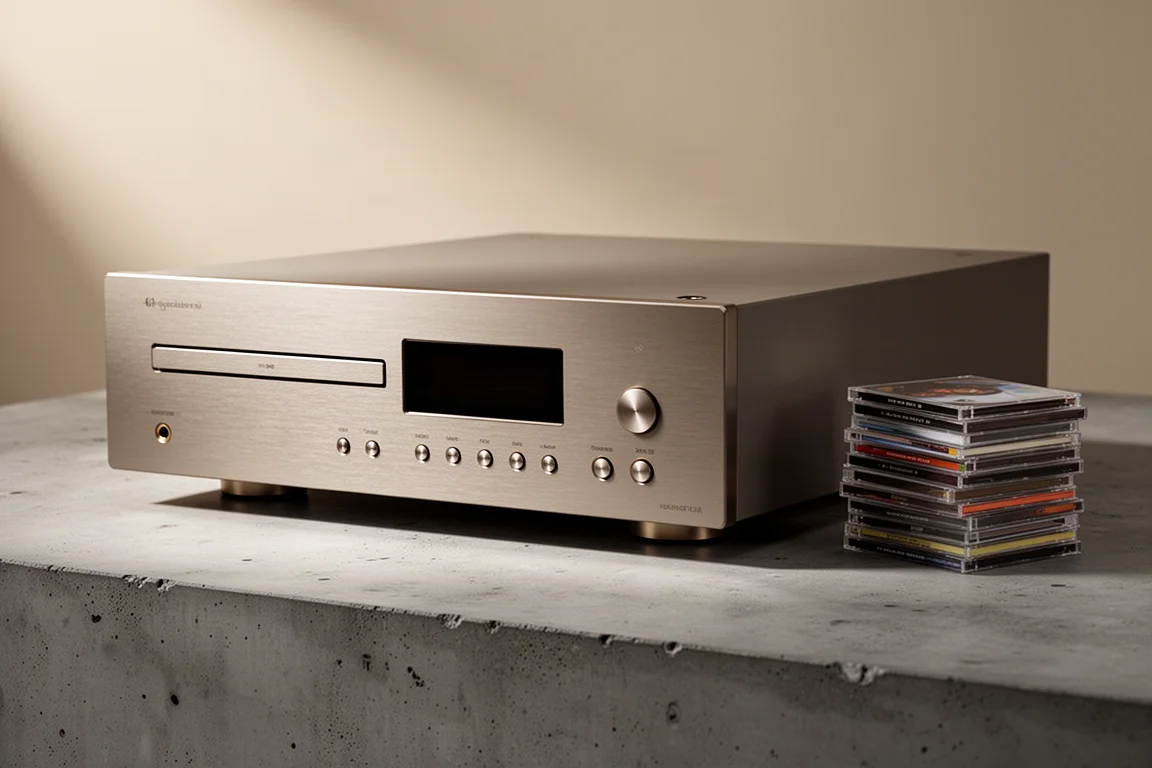
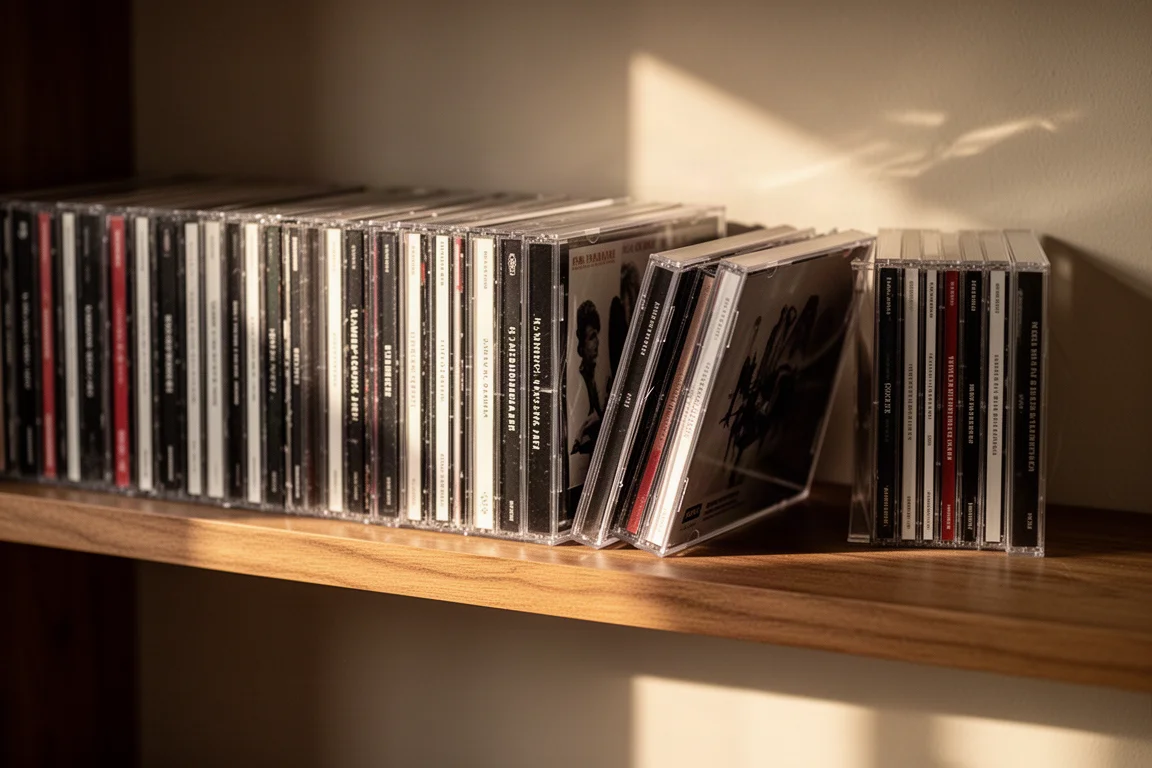
Compact discs never fully disappeared. They are still easy to find new, plentiful secondhand, and they continue to account for a large share of physical music sales. Plenty of listeners have shelves full of them and nothing particularly good to play them on.
The Emotiva ERC-4 is a $600 component aimed at that gap, and it does more than spin a disc. Behind the front panel sits a CD mechanism paired with a built-in DAC built around an Analog Devices 1955 converter chip. Coaxial and optical digital inputs let external sources use that DAC, while a digital output lets the player feed an external converter instead. Balanced XLR outputs sit alongside single-ended RCA outputs.
In practice that means one box can serve as a CD player, a CD transport, or a standalone DAC. For anyone rebuilding a system around physical media, that flexibility is the strongest argument in its favour.
Who the ERC-4 Is For
Two kinds of buyers will get the most from this player. The first is a listener who already owns a CD collection and wants a dedicated deck rather than leaning on a Blu-ray player or a computer drive. The second is someone assembling a system who would otherwise budget for a separate DAC, since the ERC-4 covers that role as well.
It also suits systems with balanced connections, thanks to the XLR outputs. If your amplifier only offers single-ended inputs, the RCA outputs work just as well and nothing is lost.
It is a harder sell for listeners who have moved almost entirely to streaming. Convenience still favours streaming, and a disc player asks you to handle physical media every time you want to hear something.
Main Strengths: DAC, Balanced Outputs, and Build
Three things stand out. The first is the DAC section. The Analog Devices 1955 chip is not a budget part, and the coaxial and optical inputs turn the player into a proper standalone converter for a computer, a streamer, or an external disc transport.
The second is connectivity. A pair of balanced outputs and a pair of RCA outputs cover balanced and conventional systems, and the digital coaxial and optical inputs sit alongside a digital output, so the ERC-4 can lead a signal chain or feed one further down the line.
The third is the way it is put together. The chassis has an industrial look, with hex screws visible along the panel edges, and the front-panel buttons are metal with a positive click. The supplied remote is unusually good, with direct controls, so selecting track eight or track nine is a single press rather than a scroll. Input selection is just as simple: three buttons for optical, coaxial, and CD.
That simplicity is deliberate, and it is a large part of why the player is easy to live with. Nothing about operating it requires a manual.
Things to Consider Before Buying
The price is the first consideration. At $600 the ERC-4 is a meaningful outlay, and a good part of that value sits in the DAC. If you already own a converter you are happy with, you are paying for capability you may never use.
It is also a single-disc player. There is no changer mechanism here, so listening to an album means loading one disc at a time. For some listeners that is part of the appeal of physical media, and for others it is friction.
Finally, the sound quality difference over streaming described below came from one comparison, on one system, with one album. It is a useful data point rather than a controlled study, and results will vary with the computer, the cabling, and the rest of the chain.
CD Versus Streaming: What a Direct Comparison Showed
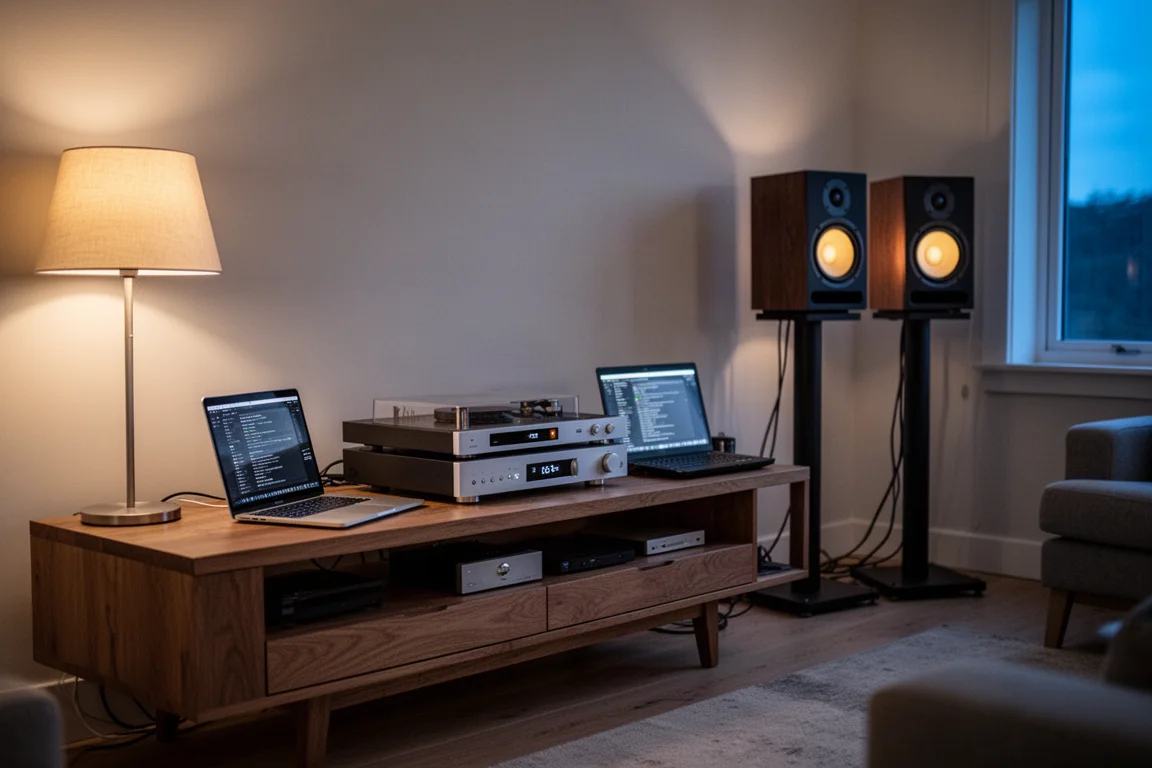
The most interesting test involved playing the same remastered recording two ways through the same DAC, the same power supply, and the same system, with the computer connected over optical. The only variables were the computer and the optical cable.
The CD had the edge. The differences showed up most clearly at the top end, in separation and detail retrieval, and in the sense of space and layering. The disc presentation had a grander scale with instruments more clearly separated, while the streamed version sounded slightly smaller in scope and a little more jumbled, though still enjoyable.
That result lines up with why many listeners still keep discs around, but it should be read as a preference rather than a verdict. Streaming remains far more convenient, and convenience matters.
Inputs, Outputs, and System Matching
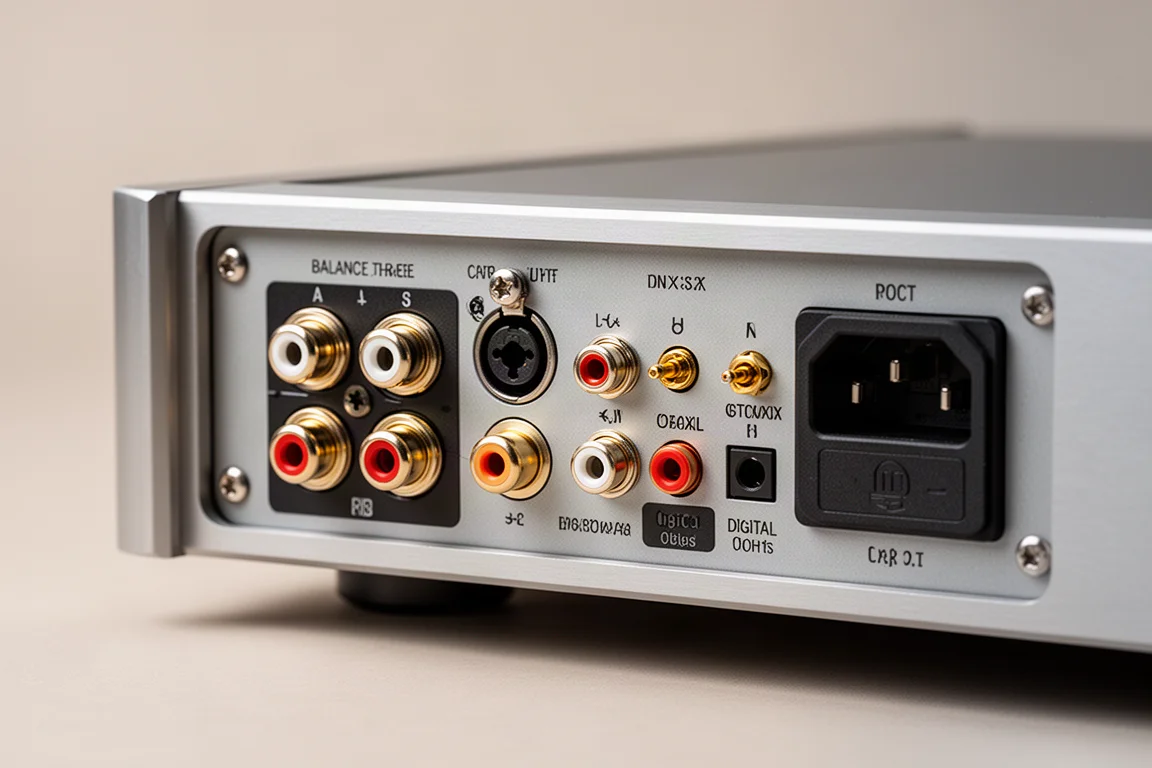
Around the back you get a pair of balanced outputs, a pair of RCA outputs, a digital coaxial input, a digital optical input, a power switch, and an IEC inlet. That is a clean, practical set for a modern system, and it covers both directions of conversion.
In use, the ERC-4 was paired with a solid-state preamp, a two-channel Emotiva power amplifier, and ELAC Uni-Fi 2.0 speakers. It settled into that chain without fuss and simply sounded good. It is a CD player that plays discs well.
Buying Advice
If you are weighing the ERC-4, the decision comes down to whether you want the DAC. Buyers without a converter get three components in one, and the price looks considerably more reasonable once a separate DAC is taken out of the equation. Buyers who already own a capable DAC should think about whether a simpler transport would do the same job.
Building a collection is cheaper than it used to be. Secondhand discs have been widely available for a few dollars each, though condition varies. A practical approach is to stream an album first, then buy the disc for the records worth owning.
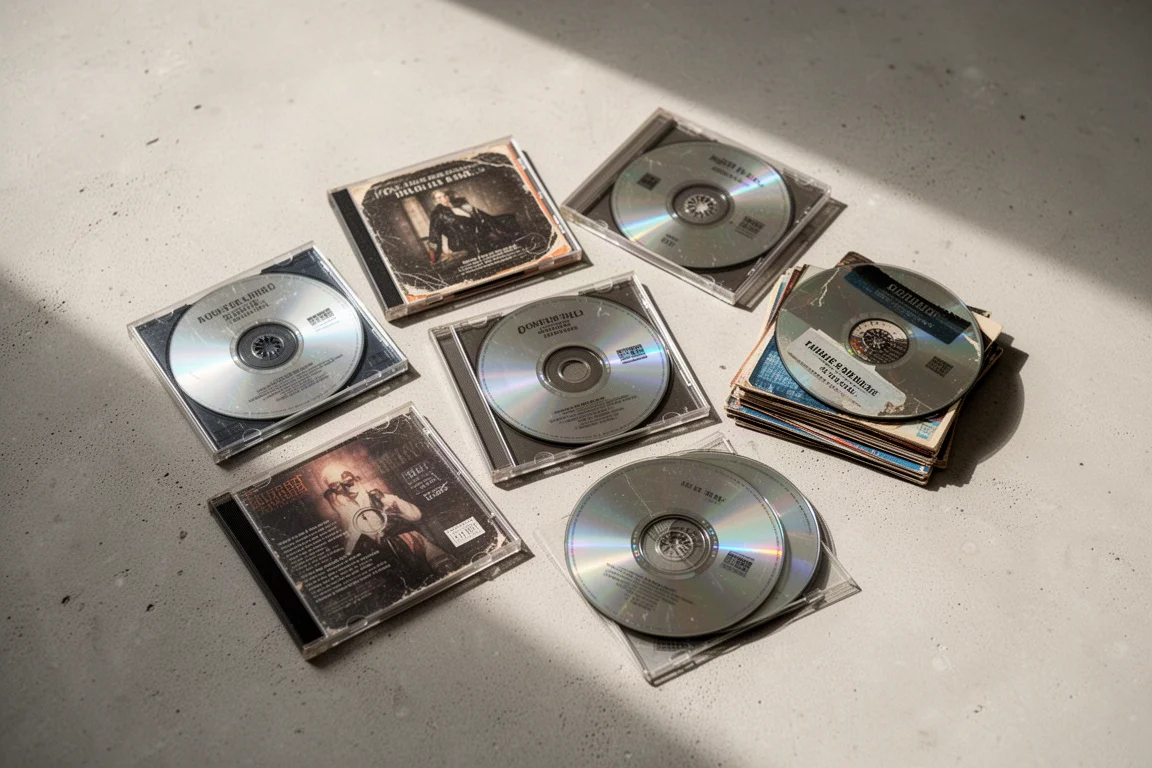
Either way, the format rewards a little patience. CDs are still in print, still sold in stores, and still easy to find used.
Conclusion
The Emotiva ERC-4 makes a clear case for itself as a CD player, a transport, and a DAC in one chassis. Balanced outputs, a capable converter chip, and a sturdy, simple control layout cover a lot of ground for $600.
It is not the obvious choice for listeners who have fully committed to streaming, and the sonic advantage over streaming observed here was modest rather than dramatic. For anyone with a shelf of discs, or anyone who wants a single component that handles digital sources in both directions, it is a serious contender worth a hard look.
Product link
View more details for Emotiva ERC-4 CD Player Transport
This product is mentioned in the review. Check the specifications, options, and compatibility before buying.
View more details for Emotiva ERC-4 CD Player TransportFurther reading
Related Reviews
CD Players
Advance Paris X-CD9 Review: A Tube CD Player That Also Works as a Transport
A close look at the Advance Paris X-CD9, a tube CD player that doubles as a CD transport, with listening notes, handling details, and a comparison against an external DAC.
CD Players
Best CD Players and DACs in 2026: Five Ways to Get Great CD Sound
Five CD player and converter options from roughly $80 to $600, plus what actually matters for sound quality and how buying discs supports the artists you love.
CD Players
Best CD Players Compared: Budget, Mid-Range, and High-End Picks
A practical comparison of four CD players across price points, from an entry-level deck to a reference-grade player that doubles as a DAC and headphone amplifier.