Power Amplifiers
Emotiva DR1 Monoblock Amplifier Review: 1,000 Watts of Differential Power
A practical look at Emotiva's 1,000 watt differential monoblock amplifier, covering real world demands, speaker pairing, and who should buy it.
Introduction
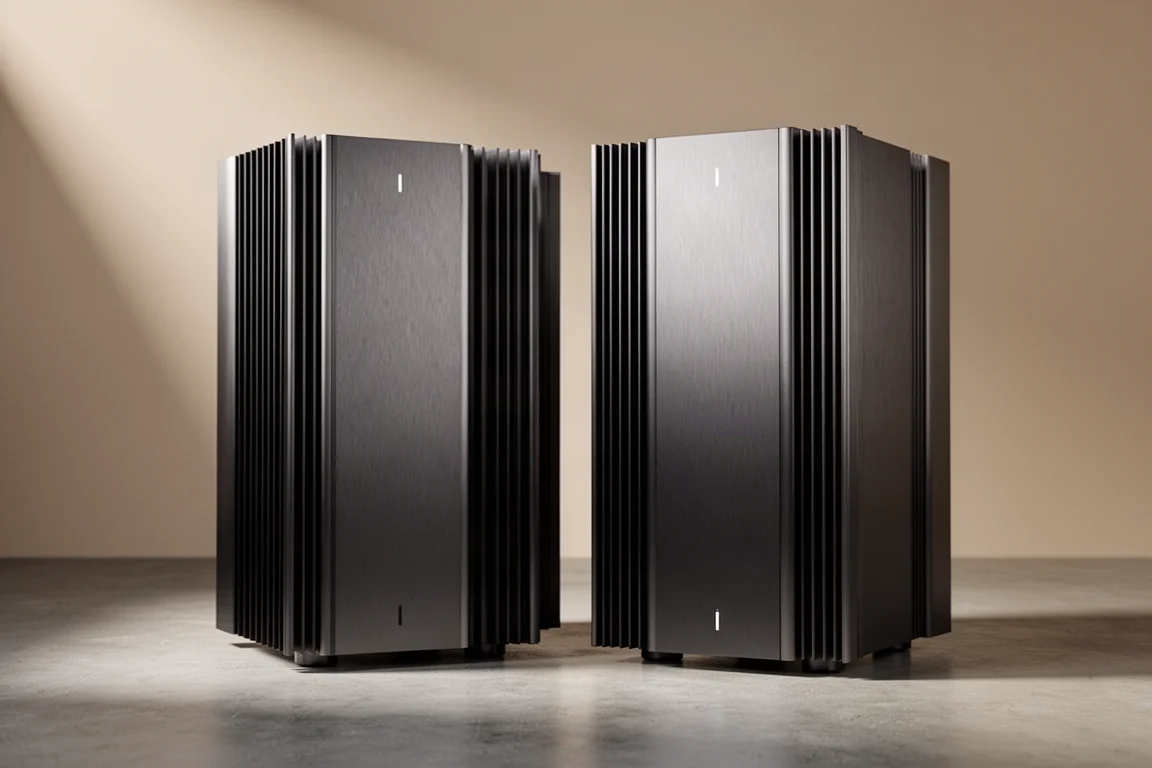
The Emotiva DR1 is a monoblock power amplifier rated at 1,000 watts into 4 ohms and 600 watts into 8 ohms, with both figures quoted at less than 0.1 percent total harmonic distortion. Each amplifier sells for $1,500, so a stereo pair comes to $3,000. Many amplifiers have passed through this desk over the years, and none of them have delivered power quite like this one.
That raises the question worth answering before anything else: does a system actually need this much power, and does the extra headroom change what you hear? On paper, a clean 50 watts is enough to drive most speakers in most rooms. In practice, the experience of listening is not always the same as the calculation, and the DR1 is a good example of why.
What follows is a practical look at what this amplifier does well, where it demands care from the rest of the system, and which listeners should think seriously about it.
Who This Product Is For
The DR1 makes the most sense for listeners who already own substantial speakers and want the bottom end driven with authority. It is not a sensible first amplifier, and it is not a sensible match for small or budget bookshelf models.
The test system is a useful illustration. The ELAC Uni-Fi Reference is a three-way design with a 6.5 inch woofer and a concentric midrange and tweeter, rated at 85 dB sensitivity and priced around $1,200. It is a capable speaker that had never sounded like this before. Even so, it turned out to be the limiting factor in the system rather than the amplifier.
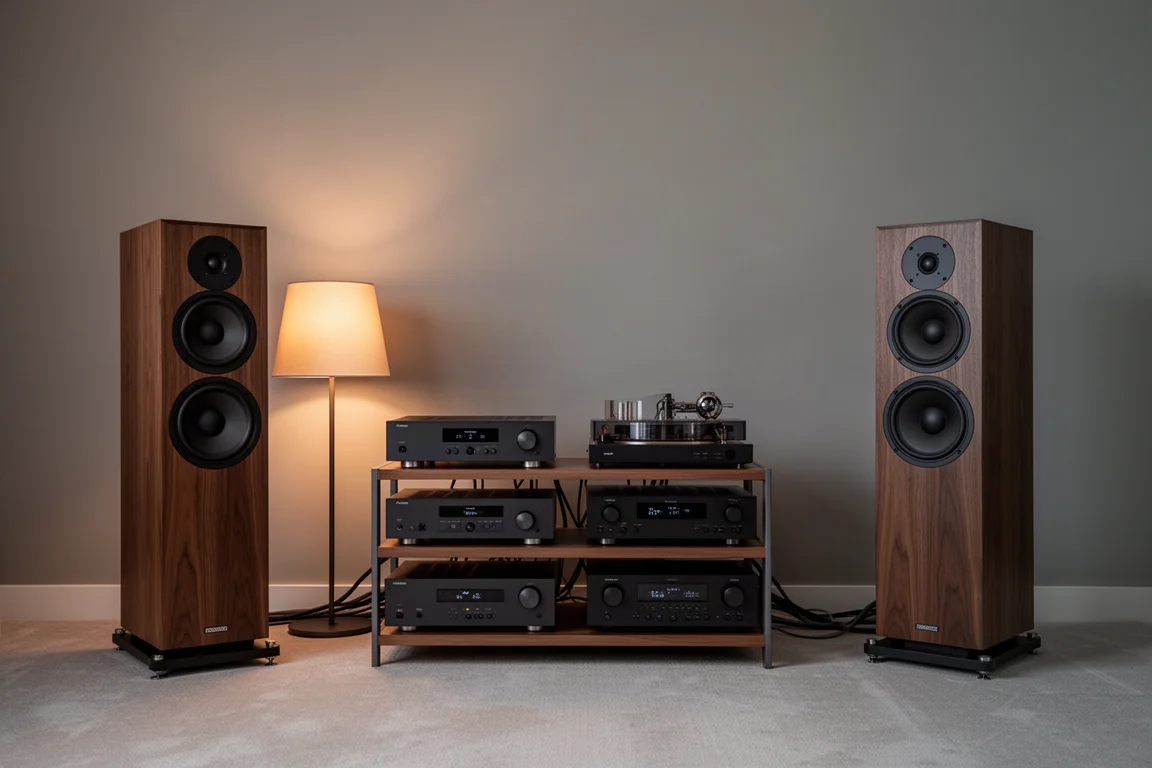
If your speakers have modest power handling or a small woofer, the DR1 is likely far more amplifier than they can use. If you own large towers with genuine bass extension, this is where the design starts to make sense. The higher the quality of the speaker, the more of the amplifier’s control you will actually hear.
Main Strengths
The DR1 is a truly differential push pull design. In practice, each monoblock behaves like two mono modules sharing a single power supply, one working on the positive side of the signal and one on the negative side. That architecture, paired with a genuinely balanced source chain, is the reason the amplifier sounds as quiet and as controlled as it does.
Bass Control and Low-End Authority
The first thing you notice is the bass. It arrives with a sense of grip and scale that is difficult to describe without reaching for cliches. The Uni-Fi Reference has always been a competent speaker in the low end, but it had never been pushed anywhere near its potential until it was connected to these amplifiers.
The bass was not just loud, it was clean. There was no sense of the low end smearing or falling apart, and punchy modern recordings came through with real impact. Midrange tonality is typical Emotiva: neutral, with a touch of sparkle at the top that suits speakers which are slightly reserved in the treble. It is also worth noting that no tone controls were needed at any point during listening.
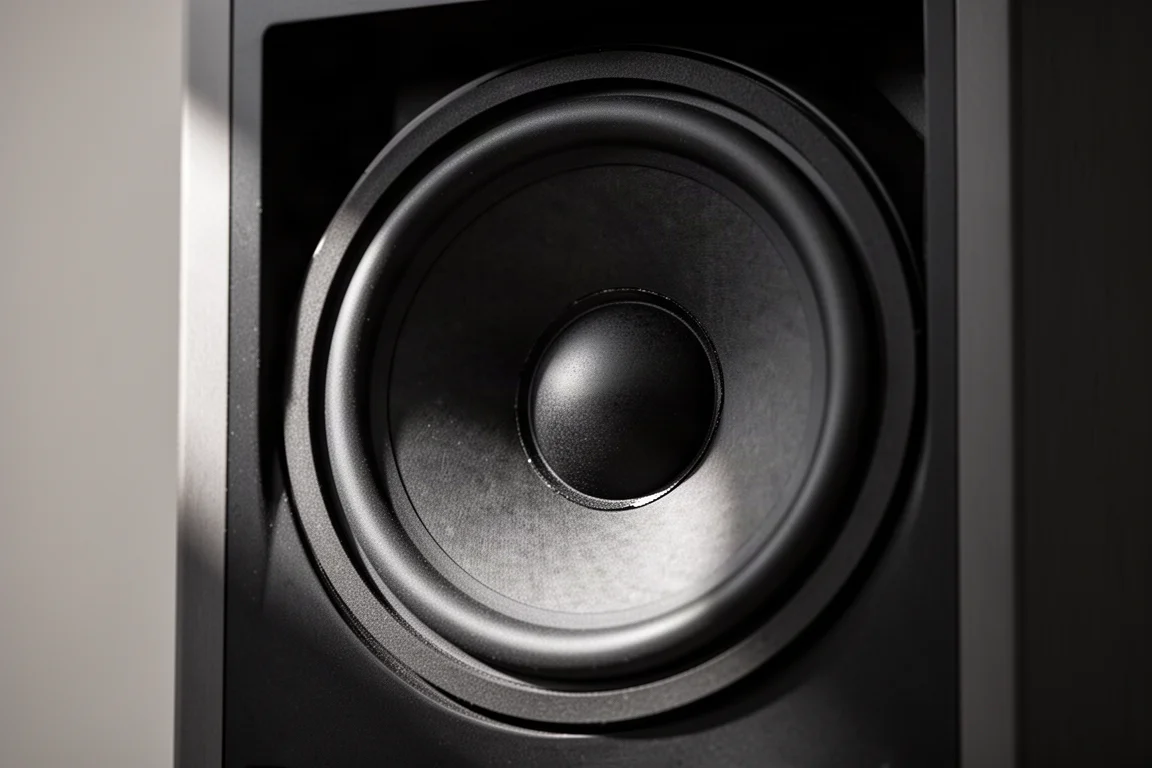
That combination of quantity and control is what separates the DR1 from the more affordable monoblocks in the same family. The A1 monoblocks and the XPA Gen 2 both sound excellent in their own right, but neither offers the same command over the bottom end that the DR1 is built around.
Imaging, Soundstage, and Detail
Imaging is a genuine strength. Instruments are placed in space more definitively than through other amplifiers, and the presentation is cleaner overall. The Uni-Fi Reference already does well with soundstage thanks to its concentric driver arrangement, and the DR1 made that quality easier to hear.
The amplifier is also transparent enough to expose differences between recordings. Some albums sound thin and midrange-heavy, while well-recorded material sounds superb. That is not a fault of the amplifier, but it does mean the DR1 rewards a good source and good recordings. Comparing it directly with the Schiit Tyr monoblocks, the Tyr has a richer, more caramel-like quality in the lower midrange, while the DR1 is the more accurate and more definitive of the two when it comes to placing instruments in space.
Power and Headroom
The rated output is 1,000 watts into 4 ohms and 600 watts into 8 ohms at less than 0.1 percent total harmonic distortion. That headroom is what gives the amplifier its effortless character, and it is also what makes speaker matching essential.
This is a large amplifier in every sense. Each unit measures 17 inches wide, 8 inches high with its feet fitted, and 19 inches deep. For scale, two Schiit Tyr monoblocks stacked on top of each other occupy roughly the same footprint as a single DR1.
During testing, the DR1 had enough output to damage a Dayton Audio speaker when pushed hard. That is not a reason to avoid the amplifier, but it is a reason to be deliberate about what you connect it to. Speakers with robust drivers and honest power ratings will make far better partners than small cabinets with limited excursion.
Things to Consider Before Buying
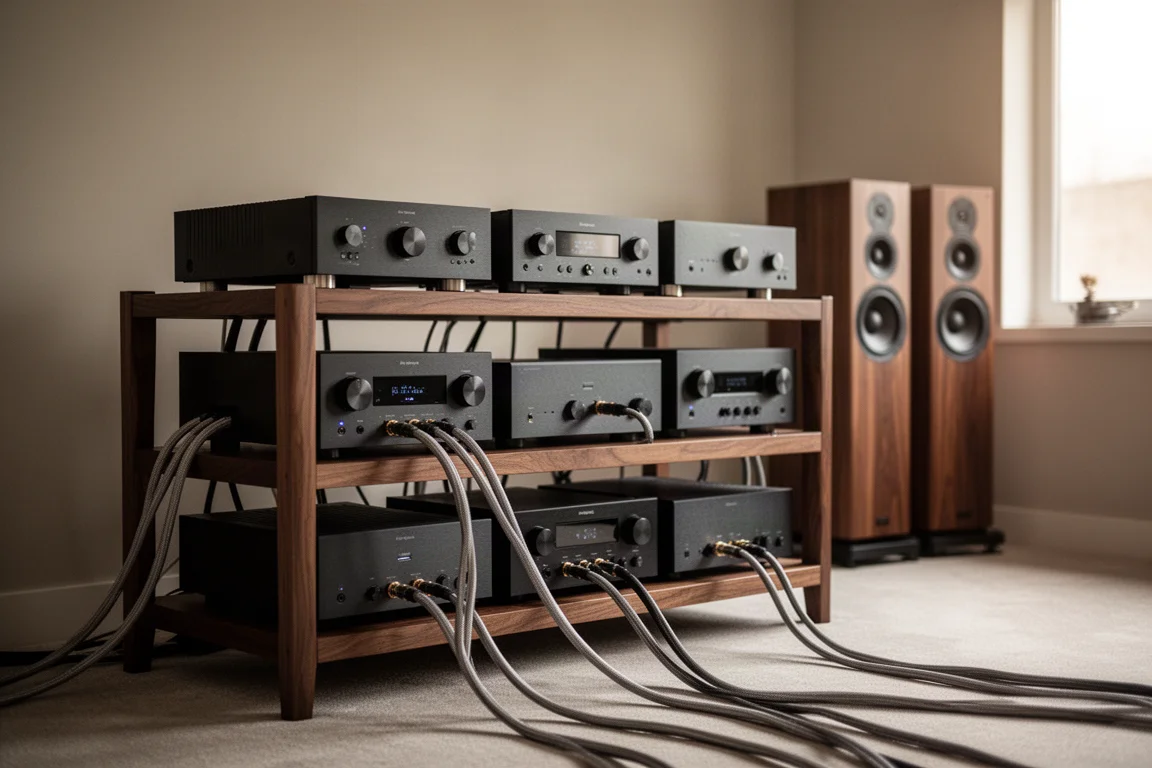
Space is the first practical hurdle. The depth is the part that catches people out, because many modern media consoles are simply not deep enough for components of this size, and the feet can only be removed to save about an inch of height. Plan for ventilation as well, since two of these amplifiers working together produce real heat.
Speaker pairing matters more here than with most amplifiers. The DR1 has the capacity to control a woofer completely, which flatters speakers that are strong in the upper registers and can absorb that much low-end energy. During testing, a smaller Q Acoustics 5020 standmount responded very well and gained low-end weight it normally lacks, while the larger Uni-Fi Reference was revealed as the weaker link in the chain. The same amplifier on the wrong speaker can sound like too much of a good thing.
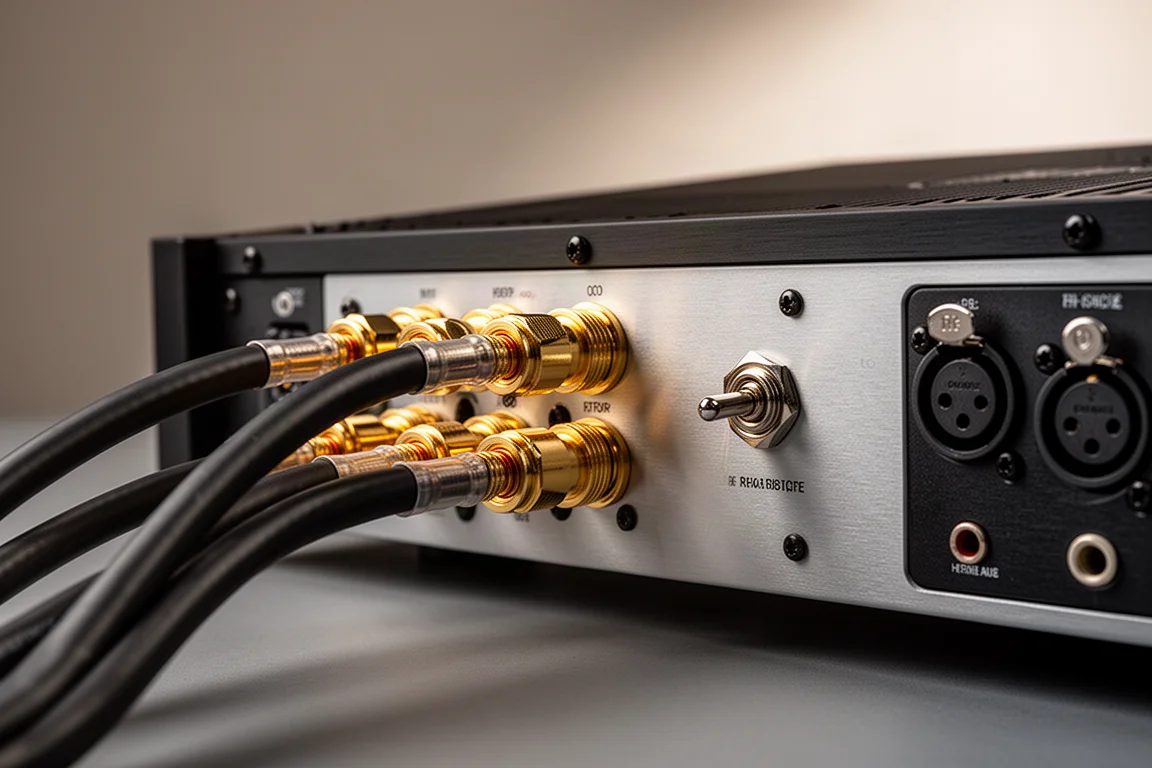
The signal chain deserves attention too. On the back panel you get an RCA input and an XLR input with a toggle switch to select between them, a trigger input and output, and a master kill switch. To hear the DR1 at its best, the whole path should be balanced and differential from the source through to the amplifier, which means a differential source and a differential preamplifier or processor. That can get expensive quickly.
Finally, the price. At $1,500 each, a pair costs $3,000, which is a significant commitment for a component that will expose any weak link around it.
Buying Advice
Buy the DR1 if you already own large, capable speakers and want the low end handled with authority. The amplifier delivers its best when it is fed a genuinely balanced differential signal, so budget for the source and preamplifier side of the chain as well rather than treating the amplifiers as a standalone upgrade.
Measure your rack or console before ordering. Allow for the full 19 inches of depth, leave room for airflow, and check that the shelf can carry the weight, because two of these units take up a substantial amount of real estate.
If your system is built around smaller speakers, the DR1 is more amplifier than those speakers can use, and the more affordable Emotiva A1 monoblocks or the XPA Gen 2 will deliver excellent sound for considerably less money. The DR1 is the right purchase for a system that is already built around serious speakers and can put the extra control to work.
Conclusion
The Emotiva DR1 is a remarkable piece of hardware. The differential push pull design, the enormous power reserves, and the resulting grip on the low end add up to a listening experience that is physical as much as it is musical. Bass feels visceral and clean, imaging is precise, and the amplifier stays composed no matter how demanding the material becomes.
It is also an amplifier that changes how you think about system building. At this level the speakers become the limiting factor rather than the electronics, and getting the pairing right matters more than any single specification on the spec sheet. Buy it for a system that deserves it, and it will be the last part of the chain you worry about.
Product link
View more details for Emotiva DR1 Monoblock Amplifier
This product is mentioned in the review. Check the specifications, options, and compatibility before buying.
View more details for Emotiva DR1 Monoblock AmplifierFurther reading
Related Reviews
Power Amplifiers
Advance Paris X-A160 EVO Review: A Focused Power Amplifier Built to Last
A $1,999 stereo power amplifier with selectable class A bias, 160 watts per channel, blue VU meters, and a build designed to be serviced for decades.
Power Amplifiers
Benchmark AHB2 Review: A Compact Power Amplifier Built Around Transparency
A compact reference-oriented power amplifier with THX-patented feed-forward error correction, balanced-only inputs, and the current to drive low-impedance speakers.
Power Amplifiers
Burson Timekeeper 3X GT Review: Class A Character in a Compact Monoblock
A compact flagship monoblock with the first 30 watts in Class A, 110W into 8 ohms, pinpoint imaging, and an unusually large soundstage.