Hi-Fi Audio
Emotiva BasX TA2 Review: A Powerful Integrated Amplifier at a Modest Price
The Emotiva BasX TA2 pairs 200 watts per channel of Class AB power with analog bass management, a moving coil phono stage and a generous digital input set for $899.
Introduction
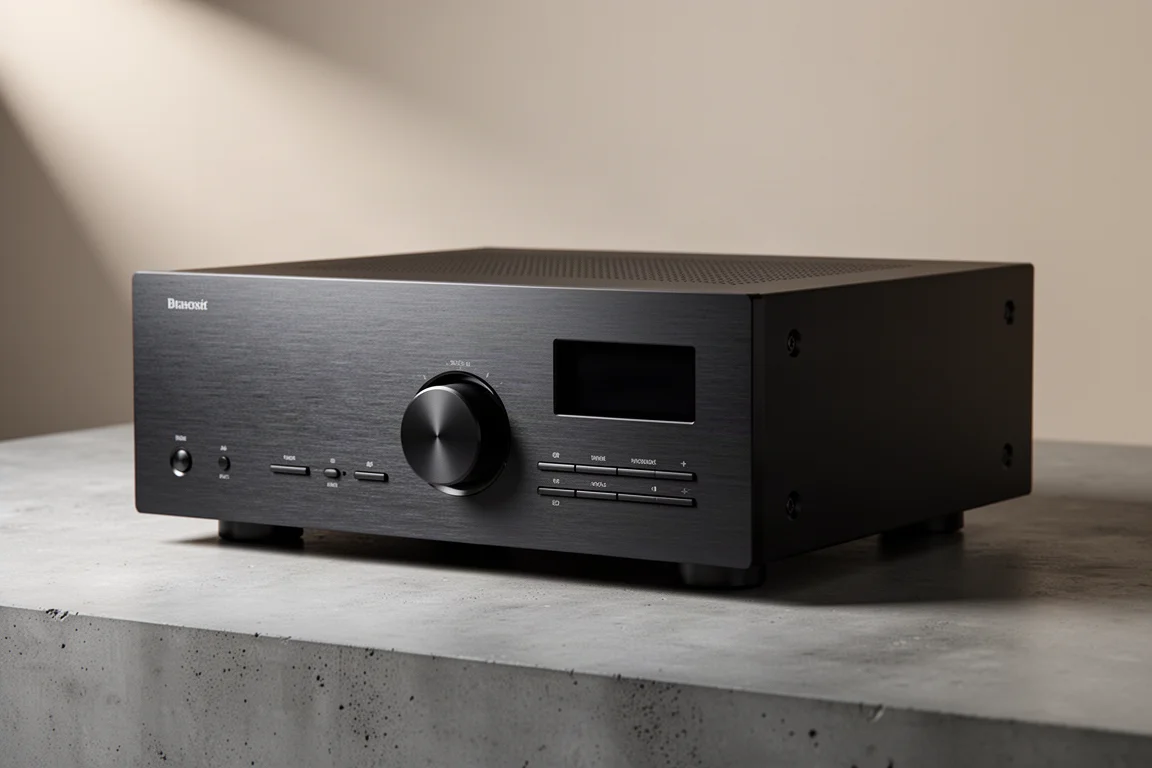
The Emotiva BasX TA2 is sold as an integrated amplifier, but the built-in FM tuner means it is really a stereo receiver in the traditional sense. The label matters less than what the unit delivers. At $899, it combines a Class AB output stage rated at 200 watts per channel into 4 ohms and 135 watts per channel into 8 ohms with a feature list that would look generous on a far more expensive component.
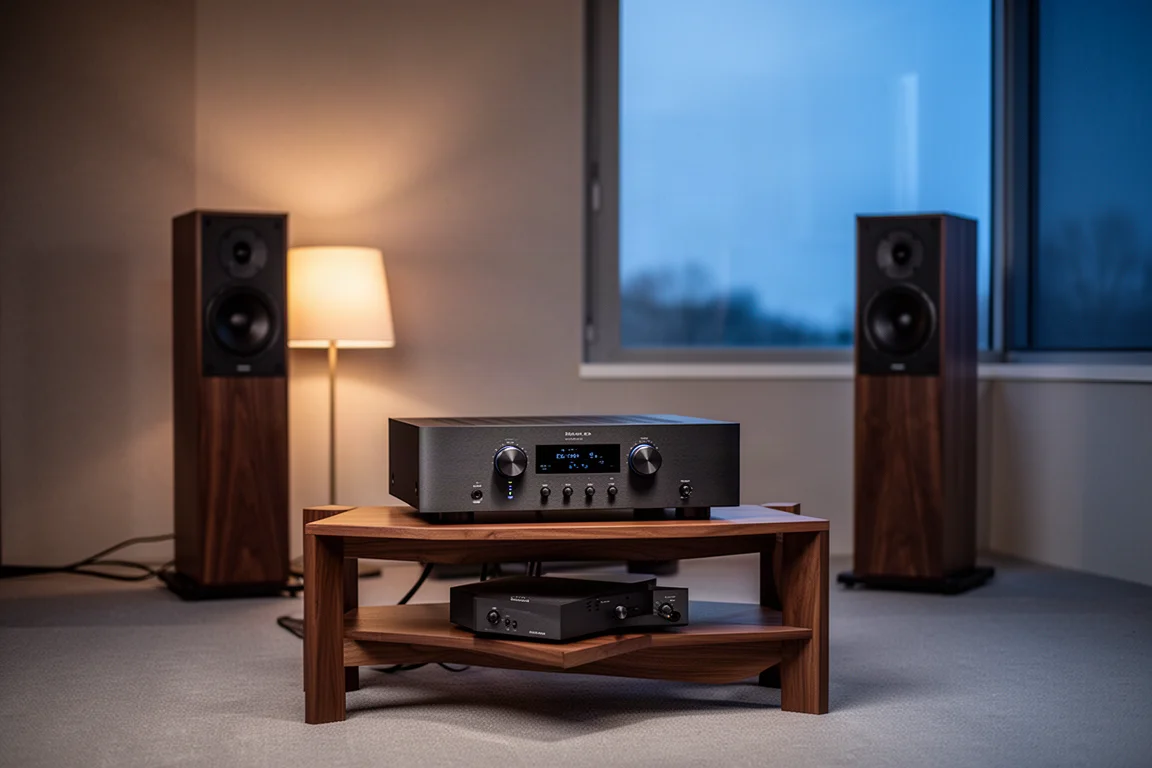
That blend of power and flexibility is the heart of the case for the TA2. It covers vinyl, digital sources, wireless playback and a subwoofer without asking the owner to add extra boxes, and the analog signal path stays analog from input to output when bass management is in use.
Who This Product Is For
This amplifier makes the most sense for listeners running a pair of reasonably efficient speakers who want headroom to spare. It also suits anyone building a system around vinyl and digital sources at the same time, because the phono stage accepts both moving magnet and moving coil cartridges while the digital section covers USB, optical, coaxial and Bluetooth 5.
It is a natural fit for people who want to add a subwoofer without converting an analog signal to digital. Owners of low-sensitivity panel speakers should read the pairing notes below carefully before committing.
Main Strengths
Power is the headline. A Class AB design delivering 200 watts per channel into 4 ohms at this price is genuinely uncommon, and the topology will appeal to listeners who prefer Class AB to the Class D designs that have become more widespread. The sound stays neutral rather than bright or warm, sitting close to the middle of the road across a range of speakers. The build backs it up, with a large toroidal transformer and a substantial heat sink, plus two fans fitted to keep that heat sink cool.
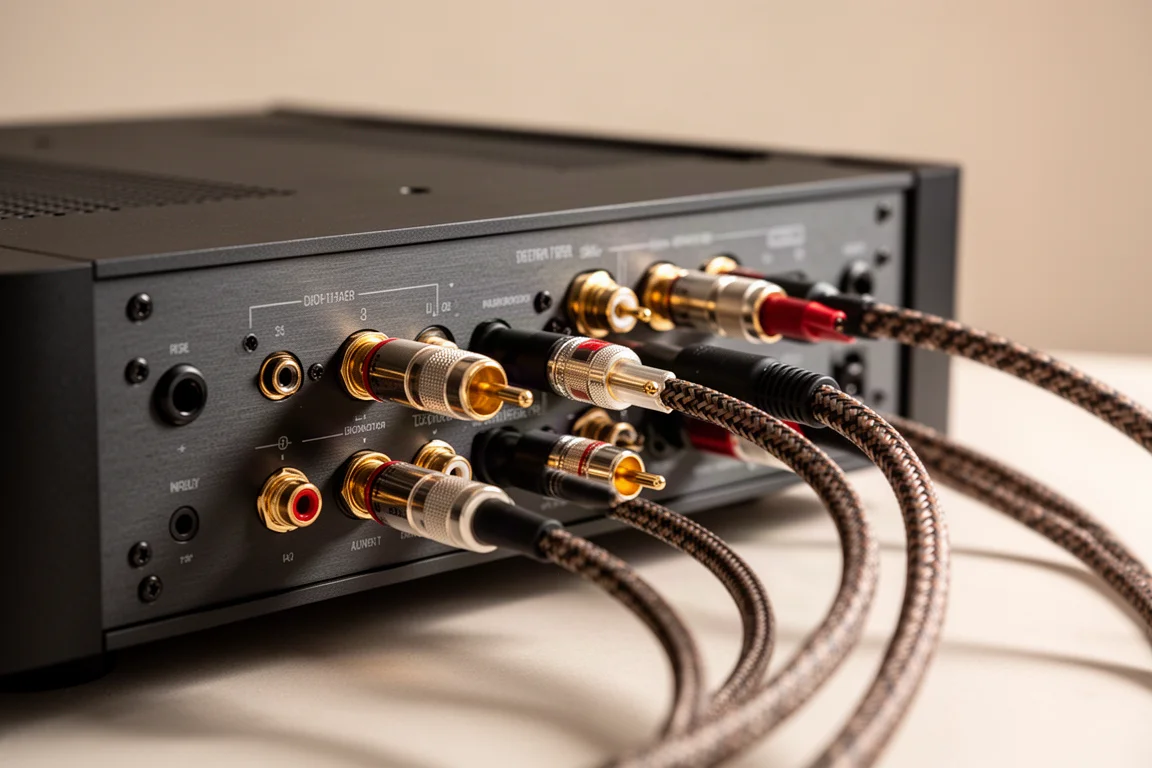
The feature set is unusually well thought out for the money. The areas below are where the TA2 separates itself from typical amplifiers in this bracket.
Bass Management Without Digital Conversion
Bass management can be switched on or off, and when it is active the signal is not converted to digital. High-pass filtering lets the main speakers run above a chosen frequency, for example 100 Hz, while everything below that point is sent to a subwoofer through the RCA subwoofer output. Preamplifier outputs are also provided. For anyone with small speakers and a sub, this is the most useful feature on the amplifier.
Phono and Analog Inputs
There are four analog inputs, one of which is a phono stage supporting both moving magnet and moving coil cartridges. With a moving coil cartridge on a Technics SL-1200G turntable, the phono input stayed very quiet, with no background hiss, and sounded neutral.
Digital Inputs and Wireless Playback
Four digital inputs are on board: one USB, two optical and one coaxial, along with Bluetooth 5. Bluetooth playback was enjoyable enough for attentive listening rather than mere background music. The internal DAC sounds good, and stepping up to a more capable external DAC improved things noticeably, which suggests the analog circuitry is the strongest part of the design.
Controls and Day-to-Day Use
The volume knob has a good feel in use. The blue LEDs are dimmable on the current generation, and the ring light around the volume control can be switched off entirely, which makes the amplifier far easier to live with in a dark room.
How It Sounds in Practice
With a pair of Eclipse RP-600 Mark II standmount speakers, the TA2 sounded full, dynamic and effortless. The speakers produced enough bass on their own that a subwoofer was not required, even though adding one increased the overall impact in the room, and the amplifier played loud without strain.
With Magnepan LRS Plus panel speakers, the tonal balance changed noticeably. The amplifier drove them with ease, but the lower midrange and bass felt thinner than ideal, and the pairing only came together once a well-matched subwoofer was added. Transparency and image focus were strong, fullness was not.
Things to Consider Before Buying
The fans are the main practical caveat. During sustained loud playback they switch on, and the whoosh is audible from the amplifier itself when changing sources. It is not loud or especially intrusive, but it is noticeable in a quiet room.

A few other details are worth knowing before ordering.
Headphone Jack and Remote Control
The front headphone jack is a 3.5 mm socket rather than the larger 6.3 mm type common on home amplifiers. It works, but it is a minor annoyance for anyone with full-size headphones. The supplied remote is plastic, fully functional and not especially pleasant to hold.
Speaker Matching
The TA2 is at its best with speakers that do not demand the last ounce of low-frequency weight, or with speakers that are partnered with a subwoofer. That is not a limitation of power, which is abundant, but of tonal balance.
Value and Long-Term Ownership
At $899, the combination of Class AB power, analog bass management, a moving coil capable phono stage, four digital inputs and Bluetooth is hard to match. The amplifier is sold direct, carries a three-year warranty, and feels solidly constructed inside and out, which supports the case for long-term ownership.
Buying Advice
Buy the TA2 if you want high power, a genuinely useful analog feature set and a neutral tonal character without moving into four-figure spending. It is an excellent match for compact standmount speakers, and a very good one for vinyl and digital listeners who want a single box to handle both.
If you own Magnepan LRS Plus or similar low-sensitivity panel speakers, plan on adding a well-matched subwoofer, and treat bass management as an essential part of the setup rather than an optional extra. With that in place, the pairing becomes far more convincing.
Conclusion
The Emotiva BasX TA2 delivers more power and more useful features than its price suggests, and its neutral, clean sound makes it easy to build a system around. The fans and the small headphone jack are the compromises to accept, and both are easy to work with. For listeners who want one amplifier to anchor a vinyl and digital system, it is a confident recommendation.
Product link
View more details for Emotiva BasX TA2
This product is mentioned in the review. Check the specifications, options, and compatibility before buying.
View more details for Emotiva BasX TA2Further reading
Related Reviews
Hi-Fi Audio
Accuphase C-57 vs Allnic H-7000V: Two High-End Phono Stages Compared
A fully balanced solid-state phono stage with a pitch-black noise floor meets a tube design built for well-loved records. Here is how to choose between them.
Hi-Fi Audio
Active vs Passive Hi-Fi: Five Components for a Modern System
Five components that define modern active and passive hi-fi systems, with the strengths, trade-offs and setup details worth weighing before you buy.
Hi-Fi Audio
Advance Paris A10 Apex Review: A Hybrid Integrated Amplifier That Covers a Lot of Ground
A French hybrid integrated amplifier with a class A tube preamp stage, analogue power meters, and an internal DAC and phono stage good enough to make extra boxes unnecessary.