Integrated Amplifiers
Emotiva BasX TA1 Review: Transparent Sound With Smart Bass Management
A slim class AB integrated amplifier with 60 watts per channel into 8 ohms, a capable phono stage, Bluetooth with aptX HD, and 90 Hz bass management for $549.
Introduction
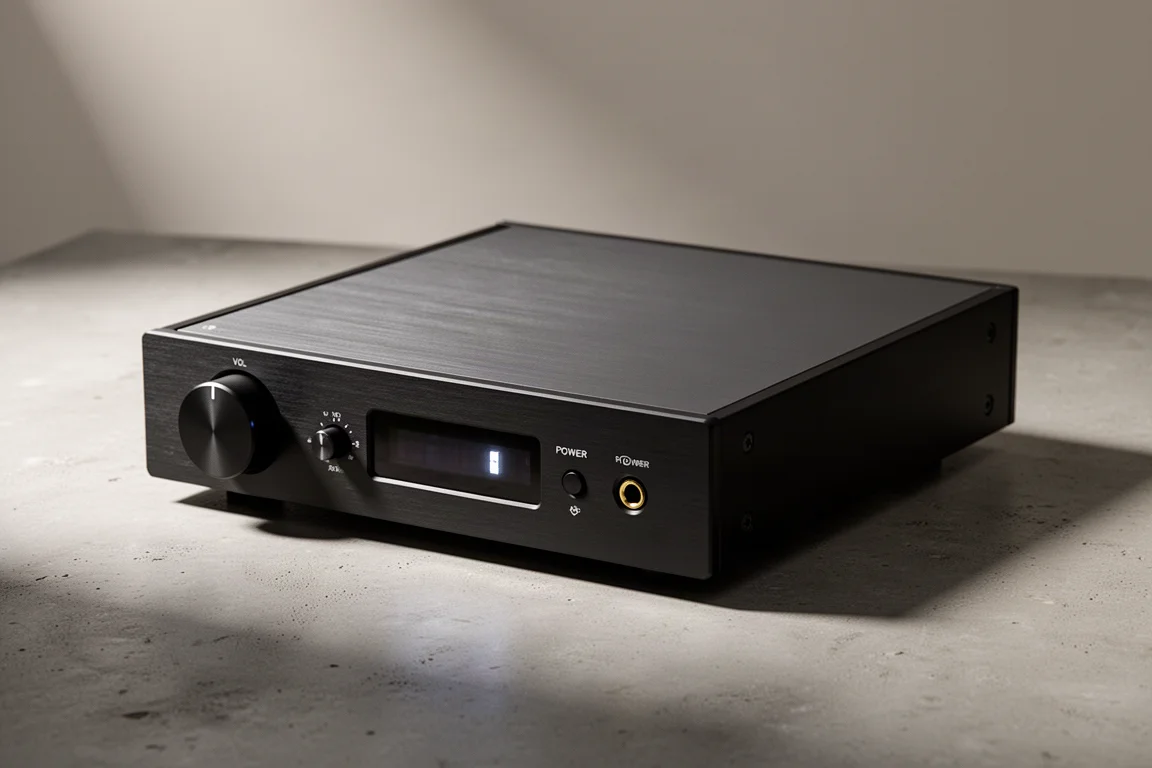
The Emotiva BasX TA1 is a slim integrated amplifier with a deliberately quiet front panel: one volume control, an input selector, a power switch, and a 3.5 mm headphone jack. Nothing else competes for attention, and the indicator LEDs are dim enough to disappear in a dark room, a welcome change from earlier Emotiva designs that were noticeably brighter after dark. The display stays readable from across the room.
Behind that minimal face sits a class AB output stage rather than the class D topology that is common at this price. It delivers 60 watts per channel into 8 ohms and 100 watts per channel into 4 ohms, so it can drive 4-ohm speakers without complaint. Inside the chassis, large heat sinks and a substantial toroidal transformer point to build quality that sits above most of the competition. The TA1 is designed in the United States, manufactured in China, and priced at $549.
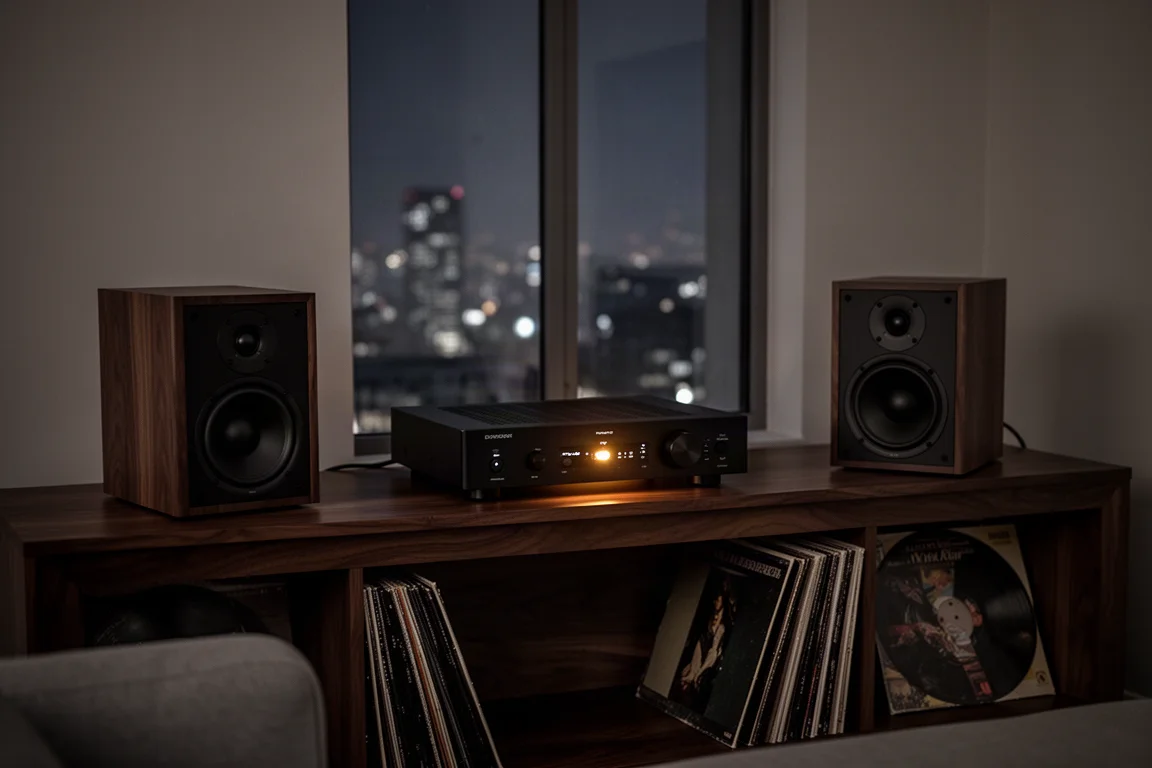
The feature set reaches well beyond the basics. There is a phono stage for moving magnet and moving coil cartridges, coaxial, USB, and optical digital inputs, Bluetooth with aptX HD, an FM tuner, and a bass management scheme built around a 90 Hz high-pass output. For listeners who want one box to handle vinyl, digital sources, and a subwoofer, that is a lot of flexibility at this price.
Who this product is for
The TA1 suits listeners who value a neutral, transparent presentation over a warm or heavily colored one. It also makes sense for anyone running compact standmount speakers who wants to add a subwoofer without losing control of the low end. Because it can drive 4-ohm loads, it is a reasonable match for speakers that ask more of an amplifier than budget integrateds usually deliver.
Vinyl listeners get a capable phono stage without buying a separate box, and headphone listeners get a front-panel jack that works well with high-impedance models. Anyone who wants a low-profile amplifier that fits on a shelf, receives FM radio, and accepts a Bluetooth connection for casual listening is covered as well.
One detail worth knowing before buying: Emotiva also offers a nearly identical preamplifier called the PT1 at $399. It is effectively the same design without the power output stage, so listeners who already own a power amplifier can spend less and get the same preamplifier functions.
Main strengths
Transparency is the TA1’s defining quality. It sounds neutral and clean, with enough muscle for its size and price that small speakers sound bigger than they are. Bass control is a particular strength: low frequencies arrive fast and well defined rather than thickened.
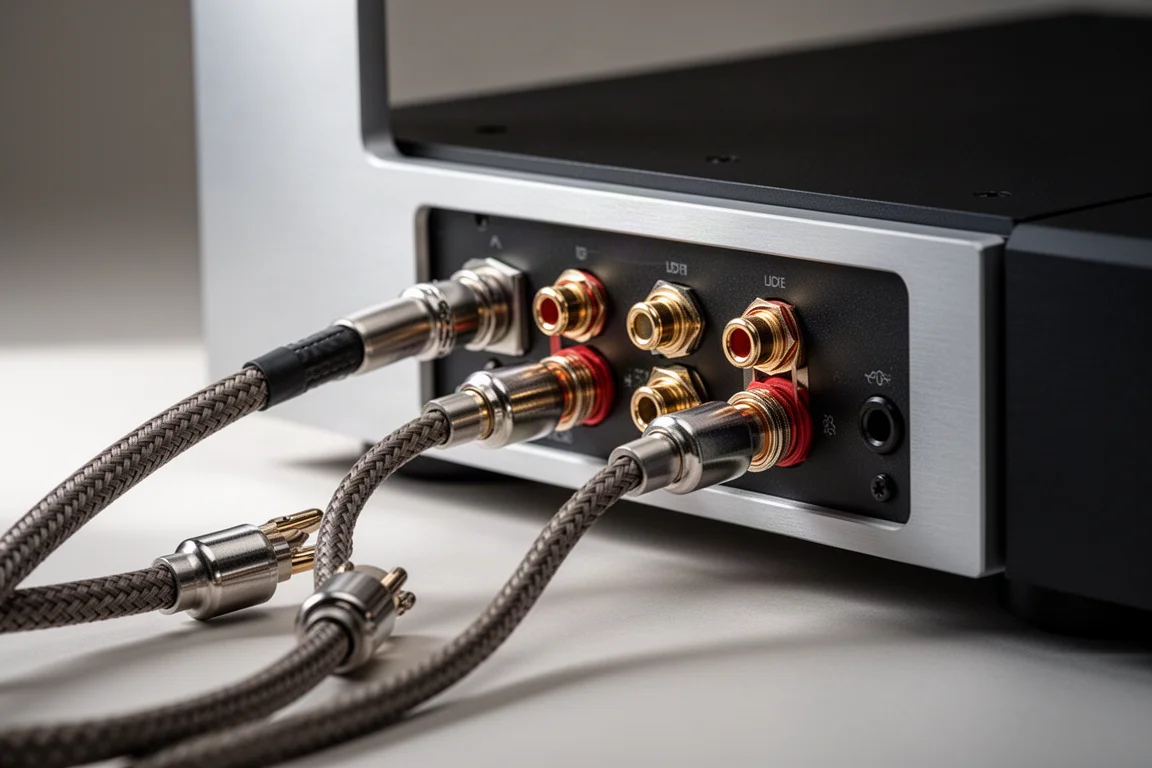
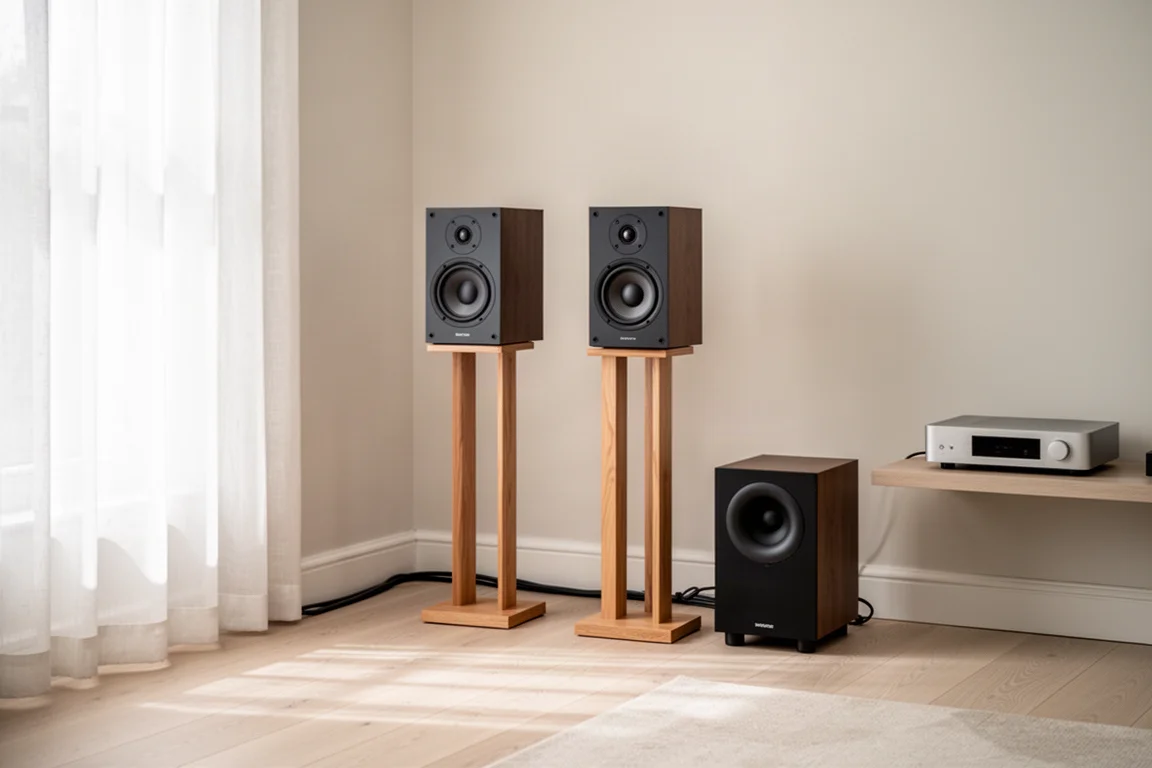
Bass management is the smartest part of the design. The TA1 provides a preamplifier output with a 90 Hz high-pass filter for the main speakers, and a mono subwoofer output carrying everything below 90 Hz. Small speakers with limited bass extension can be relieved of deep bass duties while a subwoofer handles the bottom end, or the speakers can run full range alongside a subwoofer. Both options are available.
Around the back, chunky binding posts accept heavy speaker cable without fuss, and the front-panel headphone output stays enjoyable even with demanding high-impedance headphones. The phono stage is serious enough that most listeners will not need an external phono preamplifier. Emotiva covers the TA1 with a three-year warranty.
Connectivity and Inputs
Three analog inputs are on board: a phono stage that handles both moving magnet and moving coil cartridges, plus two line-level stereo RCA inputs. Outputs include a standard preamplifier output, the 90 Hz high-pass preamplifier output for the main speakers, and the mono subwoofer output.
On the digital side there are coaxial, USB, and optical inputs, along with Bluetooth using aptX HD for wireless playback. An FM tuner rounds out the input list for broadcast radio.
Things to consider before buying
The remote control works, but it does not let you jump straight to a specific analog or digital input. Input selection stays a hands-on task, which is a small daily annoyance rather than a functional problem.
Bluetooth is perfectly usable for background and casual listening, but it does not match a wired coaxial, USB, or optical connection. Listeners who care about the last degree of clarity should plan on a cable.
The phono stage is genuinely good for an integrated amplifier at this price, although dedicated vinyl listeners may eventually want a better external stage. Power output is modest on paper at 60 watts per channel into 8 ohms, but the 100 watts per channel into 4 ohms gives the TA1 useful headroom with more demanding speakers.
Listening Notes and Sound Quality
The TA1 was paired with Q Acoustics Concept 30 standmount speakers and, for most of the listening, Bowers & Wilkins 607 S2 Anniversary standmounts. With the 607 S2 pair the match was strong enough that a subwoofer never felt necessary. Bass definition and detail came through clearly, and the amplifier sounded powerful in a way its dimensions do not suggest.
A well-recorded reggae album showed what the low end can do: fast, detailed, and tightly controlled. Against a long-standing reference integrated amplifier in the same price neighborhood, the Denon PMA600NE, the bass grew warmer and thicker, which some listeners may prefer but which trades away speed and transparency. The TA1 came across as the more transparent of the two and controlled the 607 S2 speakers more firmly, despite similar power ratings.
On jazz piano and vocals, the TA1 held a balance of neutral and warm enough to stay engaging and human. The phono stage, used with a Grado Reference Platinum 2 cartridge on a Technics SL-1200GR turntable, sounded excellent. High-impedance headphones through the front jack were a very enjoyable pairing.
Buying advice
At $549, the BasX TA1 is a straightforward recommendation for anyone building a compact, high-value system around neutral sound. It covers vinyl, wired digital sources, Bluetooth, radio, headphones, and a subwoofer, all from a slim chassis that disappears onto a shelf.

If you already own a power amplifier, the PT1 preamplifier at $399 delivers the same control set without the output stage. If you need one box to drive 4-ohm speakers and integrate a subwoofer cleanly, the TA1 is the version to buy. The three-year warranty adds further reassurance.
Conclusion
The Emotiva BasX TA1 gets the fundamentals right: transparent, neutral sound, firm bass control, flexible connections, and build quality that feels a step above its price. The compromises are limited to the remote, which cannot select inputs directly, and Bluetooth that is fine for casual use but below a wired connection. For listeners who want clarity and control from a low-profile integrated amplifier, this is an easy one to buy with confidence.
Product link
View more details for Emotiva BasX TA1
This product is mentioned in the review. Check the specifications, options, and compatibility before buying.
View more details for Emotiva BasX TA1Further reading
Related Reviews
Integrated Amplifiers
Advance Paris A10 Classic Review: Vintage Looks and a Lively, Punchy Sound
The Advance Paris A10 Classic pairs glowing blue VU meters and a tube stage with one of the widest input sets on any integrated amplifier. Here is what it does well and what to weigh before spending $2,500.
Integrated Amplifiers
Advance Paris A12 Apex Review: A Modern Integrated Amplifier With Vintage Character
A dual mono integrated amplifier with 180 watts per channel, a tube front end, VU meters, and a connectivity list that covers turntables, televisions, computers, and headphones.
Integrated Amplifiers
Advance Paris Nova Range Review: AI130, AI190 and Modular Upgrades
A practical look at the Advance Paris Nova range, including the AI130 and AI190 integrated amplifiers and the modular streaming, Bluetooth and remote accessories that expand them.