Integrated Amplifiers
Emotiva BasX A2m Review: Compact Class AB Power for a Budget Hi-Fi System
A compact $279 Class AB integrated amplifier with real 4-ohm capability, a full-size headphone output and a deliberately minimal feature set.
Introduction
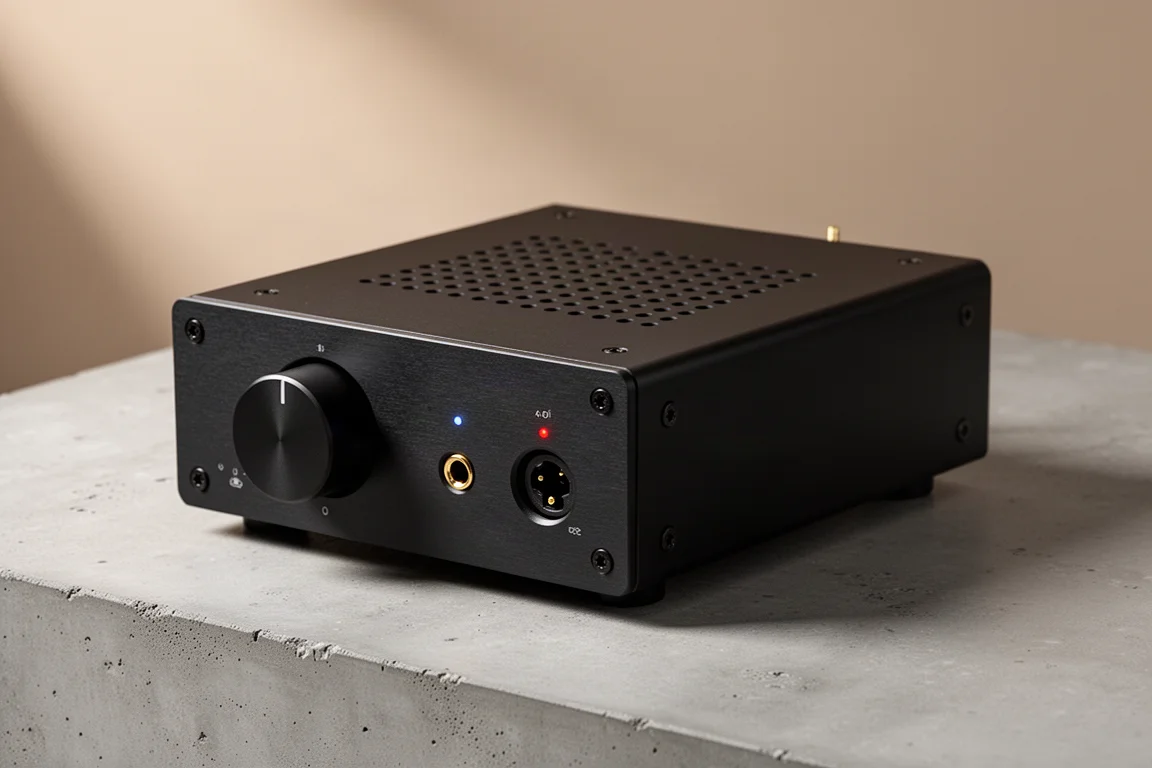
The Emotiva BasX A2m is a compact integrated amplifier priced at $279, and it belongs to a small group of affordable amplifiers that still use a Class AB output stage rather than a Class D switching design. It measures just 8.25 inches wide and 14 inches deep, so it can sit on a desktop and drive a pair of passive speakers without taking over the room.
Its power ratings are 50 watts per channel into 8 ohms and 90 watts per channel into 4 ohms. The 4-ohm figure is the more revealing number, because it tells you the amplifier is built to stay composed with speakers that present a demanding load. A full-size headphone jack sits on the front panel, which is not something every integrated amplifier at this price offers.
What follows is a look at who the A2m suits, how it performed across several very different pairs of speakers, how its headphone output holds up, and which compromises are built into the design.
Who this product is for
The A2m is aimed at listeners who want the most sound quality they can get for a modest outlay and are willing to give up convenience features to get it. It fits neatly into three kinds of systems:
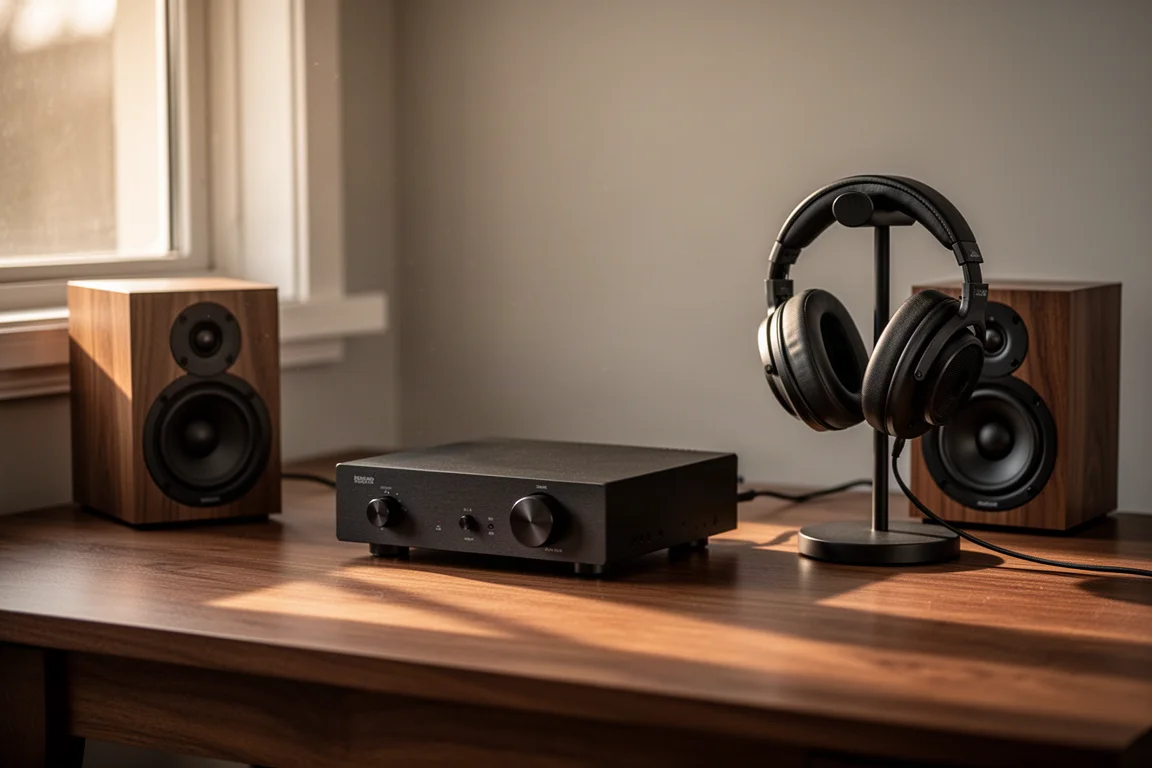
- A desktop setup driving passive bookshelf speakers
- A small second system where space is tight
- A headphone-first system that also needs to power speakers
It is a less natural fit for anyone who needs several line-level sources connected at once, wants a remote control, or prefers a display that shows the volume level. Those buyers will need to look elsewhere.
Main strengths
Sound quality across different speakers
Across three pairs of speakers, the A2m consistently sounded fuller and more in control than the brighter, less powerful Dayton Audio HTA 100, a $230 hybrid design rated at 50 watts into 4 ohms. With the ELAC Uni-Fi Reference speakers and Lucinda Williams’ Car Wheels on a Gravel Road, the presentation shifted darker, warmer and richer, with more depth and spaciousness in the soundstage.
The harder the load, the more the extra power showed. Driving the Magnepan LRS Plus, a genuinely difficult speaker, the A2m kept the music under control and opened up the imaging so that each instrument and each voice occupied its own space, while the less powerful amplifier blurred them together. It could also play the Magnepans noticeably louder without strain.
With the easy-to-drive Klipsch RP-600M, both amplifiers produced a surprising amount of bass, but the A2m tightened up that bass control, keeping the low end firm instead of merely big. Rhythm and pace came through clearly on David Bowie’s Let’s Dance, where the Denon PMA-600NE at $499 sounded sluggish by comparison, despite carrying a lower 45-watt rating into 8 ohms and publishing no 4-ohm figure at all.
Build, controls, and connectivity
The volume control is a knurled metal knob with a genuinely good feel under the fingers. A switch on the rear panel bypasses that volume control entirely, turning the A2m into a straight power amplifier that can be driven by a source with variable output or by a separate preamplifier. That flexibility is unusual at this price.
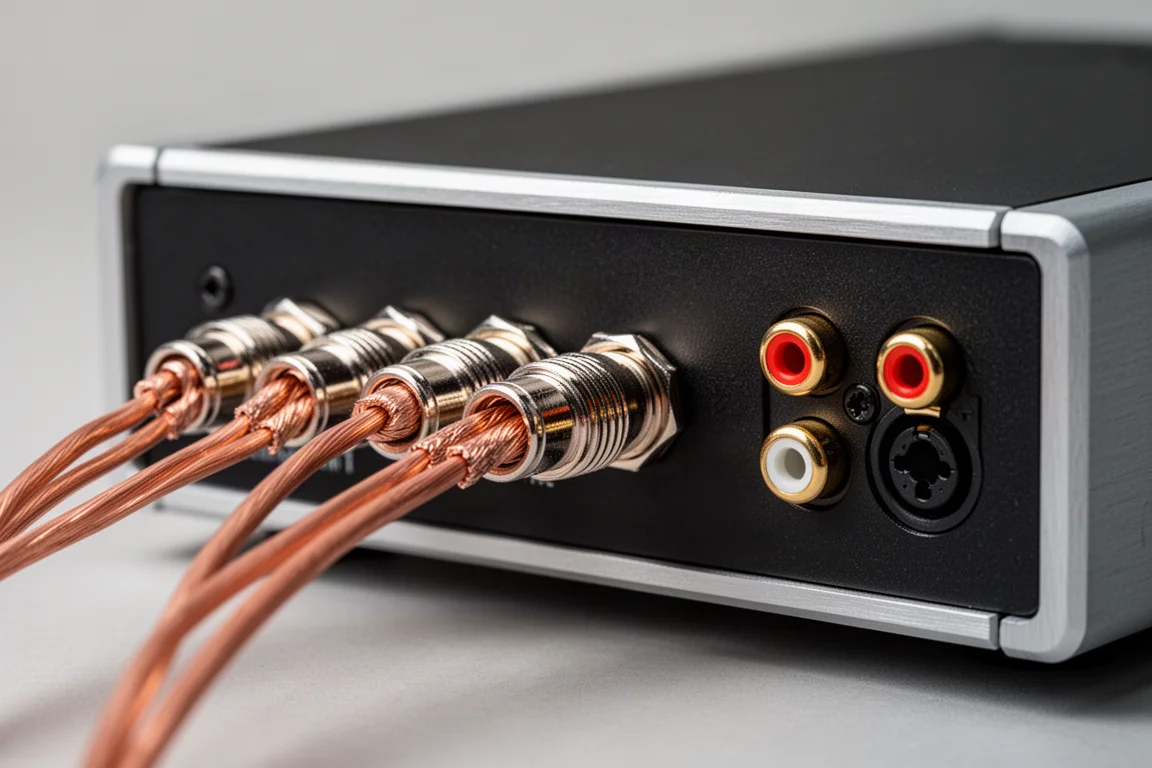
Connectivity is deliberately minimal: a single set of RCA inputs, no remote control, and no display. The amplifier carries a three-year warranty.
Headphone performance
The front-panel jack is a full-size quarter-inch connector, the type most home headphones use. More importantly, the headphone output is derived from the same power amplifier section that drives speakers, reduced through dropping resistors so it stays safe with any headphone.
That arrangement pays off in practice. With Sennheiser HD 6xx headphones, a moderately demanding pair, the Bowie mix opened up and felt engaging rather than thin, which is more than most integrated amplifiers at this price manage.
Things to consider before buying
The single set of RCA inputs is the biggest practical limitation. If you have a turntable, a CD player and a streamer, you will be swapping cables between listening sessions.
There is no remote control and no display, so the volume knob gives you no indication of where the level is set until the music starts.
Cooling is handled by a fan, and it is audible from across the room when nothing is playing. It is not detectable once music is running, but it is a little louder than the fan in the Dayton Audio HTA 100, which is also fan cooled. Buyers who listen at very low levels in a quiet room should weigh that.
Finally, if you want more inputs, a remote and additional features, Emotiva offers the TA1 at $599, which sits in a different price bracket entirely.
Buying advice
At $279, the A2m makes the most sense for a buyer whose priority is sound quality rather than features. It handled every speaker it was paired with, from a difficult planar magnetic design to an efficient horn-loaded bookshelf, and it stayed composed in each case.
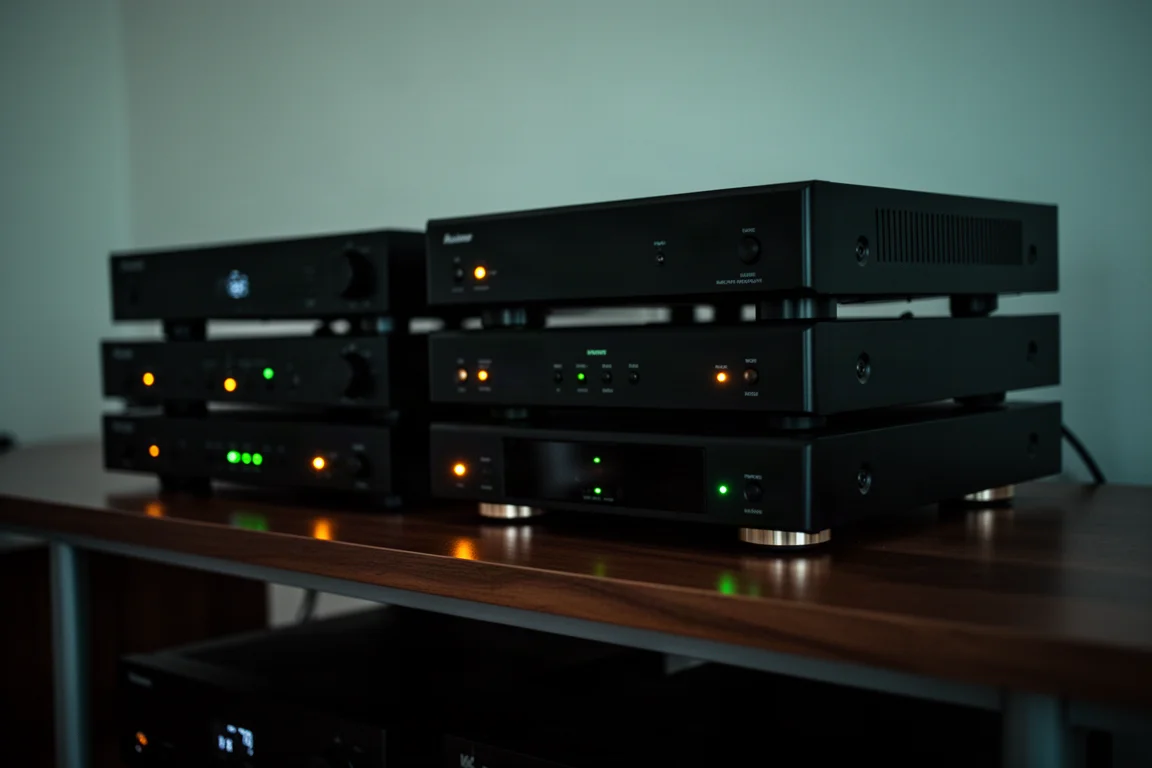
The comparison that matters most is with the Denon PMA-600NE at $499. Both amplifiers played plenty loud through the ELAC Uni-Fi Reference speakers, but the A2m had more spring in its step, and the Denon sounded a touch lacklustre on high-energy material. If you do not need the extra inputs, the remote, or the wider feature set, the cheaper amplifier is the more engaging listen.
Conclusion
The Emotiva BasX A2m is a special piece of budget hi-fi. It will not suit everyone: the single input, the absence of a remote and display, and the audible cooling fan will rule it out for some buyers. But if the goal is maximising sound quality at $279 with both easy and difficult speakers, plus a genuinely capable headphone output and a three-year warranty, it deserves serious consideration.
Product link
View more details for Emotiva BasX A2m
This product is mentioned in the review. Check the specifications, options, and compatibility before buying.
View more details for Emotiva BasX A2mFurther reading
Related Reviews
Integrated Amplifiers
Advance Paris A10 Classic Review: Vintage Looks and a Lively, Punchy Sound
The Advance Paris A10 Classic pairs glowing blue VU meters and a tube stage with one of the widest input sets on any integrated amplifier. Here is what it does well and what to weigh before spending $2,500.
Integrated Amplifiers
Advance Paris A12 Apex Review: A Modern Integrated Amplifier With Vintage Character
A dual mono integrated amplifier with 180 watts per channel, a tube front end, VU meters, and a connectivity list that covers turntables, televisions, computers, and headphones.
Integrated Amplifiers
Advance Paris Nova Range Review: AI130, AI190 and Modular Upgrades
A practical look at the Advance Paris Nova range, including the AI130 and AI190 integrated amplifiers and the modular streaming, Bluetooth and remote accessories that expand them.