Amplifiers
Emotiva BasX A1 Monoblock Review: Affordable Stereo Power With Real Strengths
A close look at Emotiva's entry-level 200W monoblock: taut bass, a neutral midrange, and a noise floor worth checking against your speakers.
Introduction
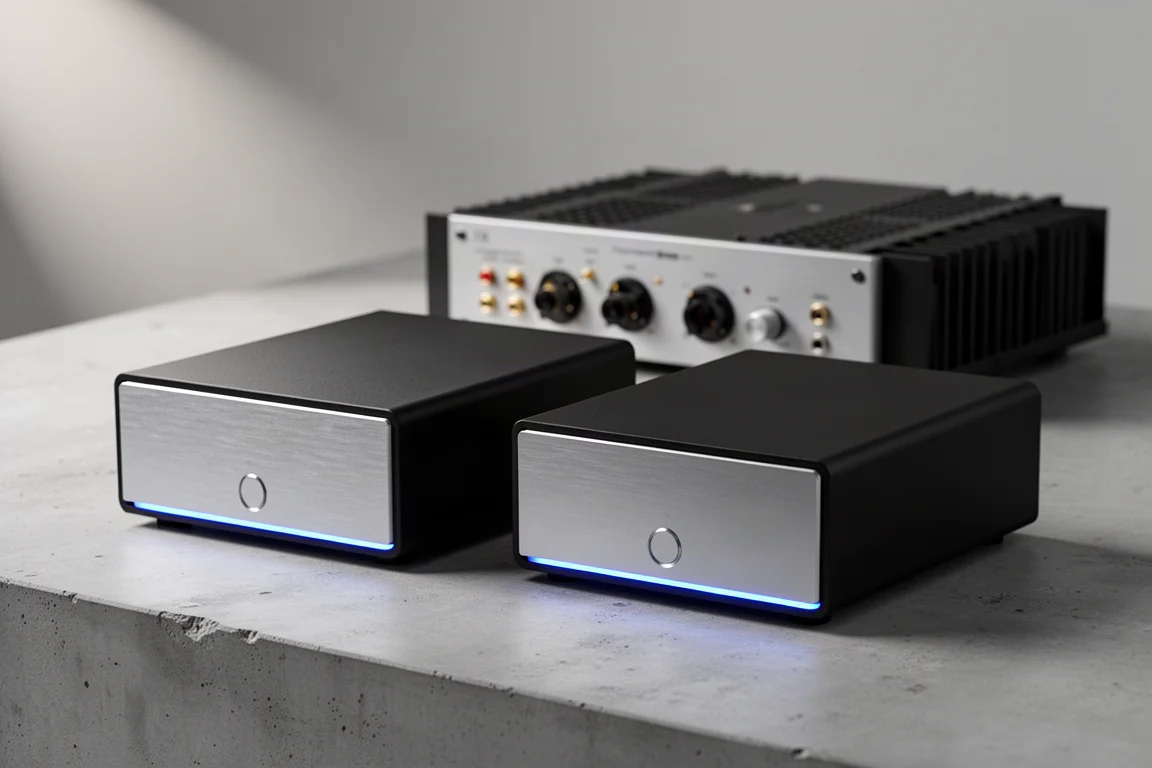
The Emotiva BasX A1 is the entry point to the company’s monoblock line. It is rated at 200 watts into 8 ohms and 350 watts into 4 ohms, and because it is a mono design it drives one speaker at a time. A stereo system therefore needs two of them.
It shares its chassis with the rest of the BasX range, which is a deliberate choice at this price point rather than a shortcut. The slim profile actually reads as more streamlined than the larger XPA HC-1, and the only front-panel cues that separate the A1 from its siblings are the silk-screened model name and a single LED status light sitting dead center in the display window.
Who This Amplifier Is For
This amplifier suits listeners who want more than a taste of high-end sound while staying on a tighter budget. Two A1s plus a good preamp and a pair of speakers will get most people into genuinely capable stereo performance for far less than high-end separates usually cost.
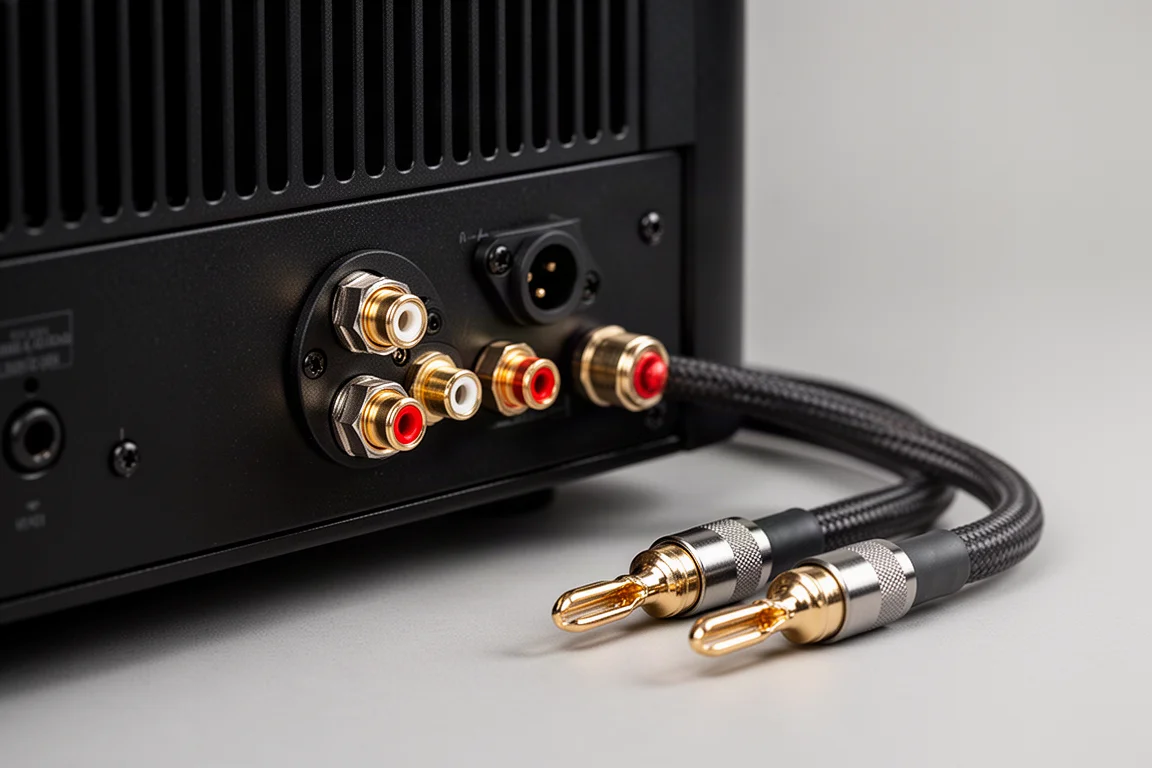
Setup is about as simple as it gets. Connect one amplifier to the right preamp output and the other to the left, then run each amp to its corresponding speaker. The rear panel carries a single line-level RCA input, one pair of five-way binding posts, trigger input and output, a status LED defeat switch, a removable power cord, and a master power switch. Nothing is included that the job does not require.
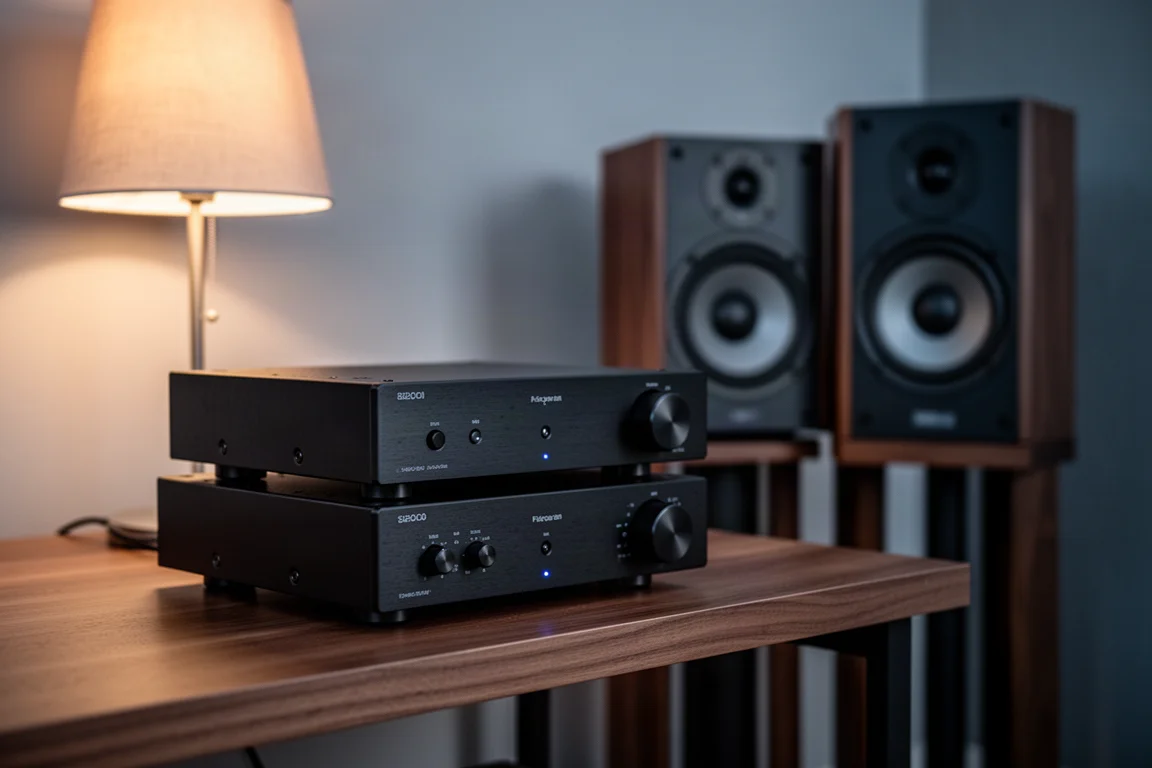
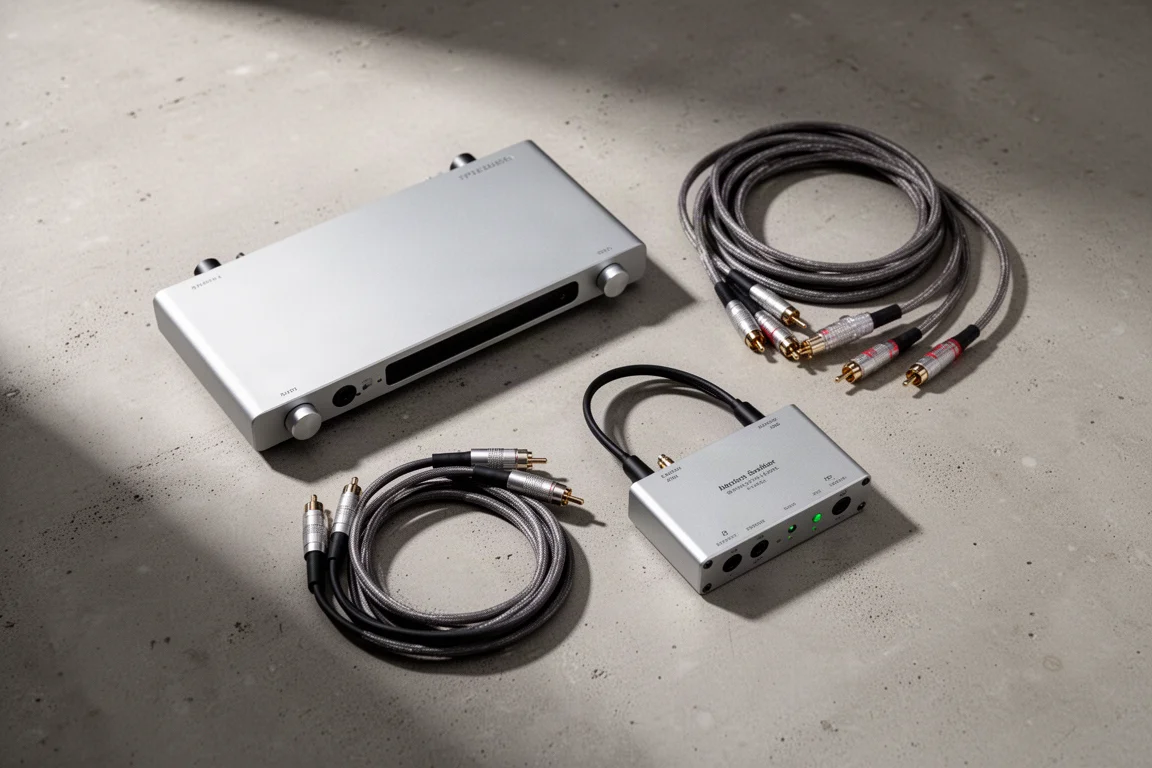
If you already own an AVR with preamp outputs, a pair of A1s is a practical way to add dedicated stereo amplification without replacing the rest of the system. Emotiva’s own BasX PT-1 preamp is a natural partner for keeping the electronics in one family.
Main Strengths
Across a range of speakers, the A1’s defining quality is neutrality. It does not stamp a character on the music, and its strongest traits show up in the low end and through the midrange.
Bass and Low-Frequency Control
Bass is taut and detailed. Kick drums come across as well dampened and immediate. Costlier amplifiers produced a little more extension and control down low, although in-room measurements did not reflect that impression, so part of it may come down to expectation rather than anything measurable. Paired with the Sonus Faber Lumina III towers, the low end was textural and focused even though those speakers are not bass-heavy by design.
Midrange Neutrality
There was zero coloration and zero tonal change through the midrange as speakers were swapped. The one exception was the tube-based Decware Zen, which carries a hint of smoothness. Against the Rotel 1592 Mk II or the XPA HC-1, there was no real appreciable difference in tone. Those two resolved slightly more detail and sounded a touch more focused, but nothing close to a night and day gap.
This is the part of the performance that makes the A1 easy to recommend. A neutral midrange is exactly what you want when the rest of the chain is doing its job.
Treble and Noise Floor
The A1 is not a silent amplifier at idle. There is some audible tweeter hiss, and how much you notice depends heavily on the speaker. With a 102 dB sensitive design like the Klipsch Cornwall IV, hiss was audible from roughly two feet away. The XPA HC-1 and the Rotel 1592 Mk II are notably quieter, and the Decware Zen is dead silent.
With less sensitive speakers the picture changes. On the Sonus Faber towers there was far less hiss, and on the Polk R700 it was only audible with an ear pressed close to the tweeter. Because of the slightly higher noise floor, high frequencies are not quite as smooth at the edges and show faint traces of grain above average listening levels. Otherwise the treble is detailed, surprisingly airy, and refined for an amplifier built to a budget.
Soundstage and Dynamics
Soundstage definition is a genuine strength. With the Lumina IIIs, the A1 came close to the Rotel for separation between instruments and performers, particularly when listening between the speakers. Complex passages kept their detail, with the Rotel and the HC-1 only a hair better when the music got busy.
It does not match the completely holographic presentation of the Decware Zen, but the Decware does not work with every speaker, while the A1 does. To put it in plain terms, if the Decware is a perfect 10 with the right pair of speakers, the BasX A1 is a solid 7.5 across the board.
Dynamics are unlikely to be a concern. For speakers rated 4 ohms or higher with a sensitivity of roughly 86 dB or above, the A1 will not disappoint. Crescendos start and stop with ease. The only caveat is that because the noise floor is not completely without sound, sudden silences may not read as absolute sonic black holes.
Things to Consider Before Buying
The main consideration is speaker sensitivity. If your speakers are highly efficient, the idle hiss will be easier to hear, and the treble will show a little more grain when you push the volume. With more typical speakers, that gap narrows considerably.
Some listeners may notice a slight loss of bass extension or weight on certain speakers compared with pricier amplifiers. And because this is a monoblock, a stereo setup means two amplifiers, two sets of cables, and the space to place them.
It is also worth remembering that the A1 is one part of a chain. Paired with a different preamp, including a tube design, the overall result can change substantially. What you can reasonably expect is a relatively neutral presentation.
Buying Advice
At $449 each, there is very little to fault in the BasX A1’s performance. A pair of monoblocks comes in well under a thousand dollars, roughly half to a third of what the more expensive competition costs. The XPA HC-1 is the better amplifier at twice the price, but it does not deliver twice the performance.
Against similarly priced options such as the Outlaw Audio Model 2220, the A1 is slightly more powerful, and on paper the two are otherwise neck and neck. The Crown XLS DriveCore 2 offers better value in raw power output, but the Emotiva is equally neutral in tone, and its lower noise floor and more consumer-friendly design make it the better fit for more listeners.
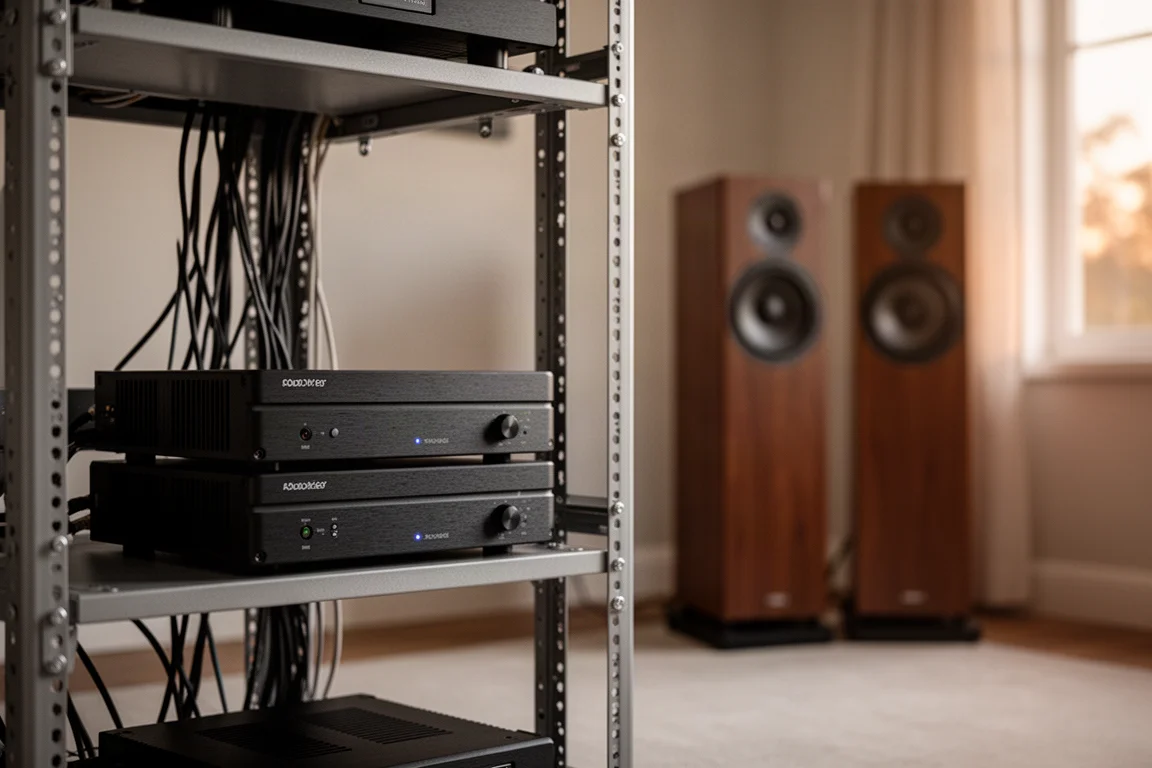
As a reference point, a pair of Polk R700 speakers at roughly $2,000 plus roughly $800 for a pair of A1s puts you at about $2,800 before a preamp or streamer. That is real money, but it is approachable money for the level of performance involved.
Conclusion
The BasX A1 may be the most compelling amplifier in Emotiva’s BasX line. It is not the quietest amplifier you can buy, and it will not match the last word in refinement from pricier designs, but it gets remarkably close for a fraction of the cost. If you are looking for more than a taste of high-end sound without stretching your budget, this one is easy to recommend.
Product link
View more details for Emotiva BasX A1
This product is mentioned in the review. Check the specifications, options, and compatibility before buying.
View more details for Emotiva BasX A1Further reading
Related Reviews
Amplifiers
AIYIMA A07 Max Review: A Budget Class D Amplifier That Can Run Bridged
A close look at the AIYIMA A07 Max, a TPA3255 desktop amplifier that adds bridging, swappable op-amps, and a very quiet noise floor at a budget price.
Amplifiers
AIYIMA A08 Review: A Compact Class D Amplifier With USB DAC and Bluetooth
A practical look at the AIYIMA A08, a $115 Class D integrated amplifier that adds a USB DAC, Bluetooth, and an internal power supply to a proven budget platform.
Amplifiers
Aiyima A300 vs Topping PA5: Two Class D Amplifiers Compared
A practical comparison of the Aiyima A300 and the Topping PA5, two Texas Instruments 3255 class D amplifiers with very different prices and feature sets.