Home Audio
Emotiva Airmotiv T2+ Review: A Neutral Tower Speaker With Honest Bass
A detailed look at the Emotiva Airmotiv T2+ tower speaker: neutral on-axis response, flat bass with a 62 Hz F3, a 4-ohm load that asks for a capable amplifier, and the placement details worth knowing before you buy.
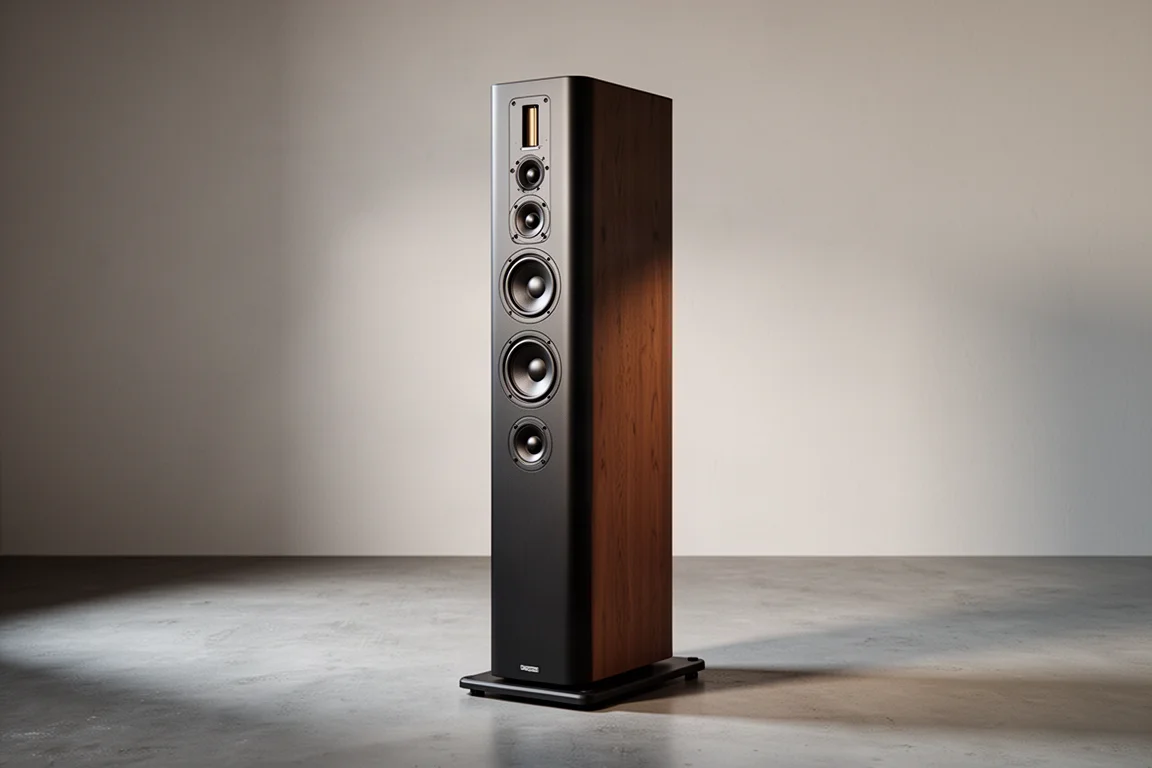
Introduction
The Emotiva Airmotiv T2+ is a floor-standing tower speaker that sells for $999 per pair with shipping included in the United States, and that price lands it in a crowded part of the market. Most towers in this range lean on a boosted mid-bass hump and a lifted top end, because that combination grabs attention in a short demonstration. The Airmotiv T2+ does something different. Its on-axis response holds close to neutral across the treble, its midrange from roughly 300 Hz to 3 kHz stays even, and its bass stays flat rather than puffing up around 100 Hz. For buyers who would rather have a tower that behaves predictably than one that performs a trick, that is the heart of the appeal.
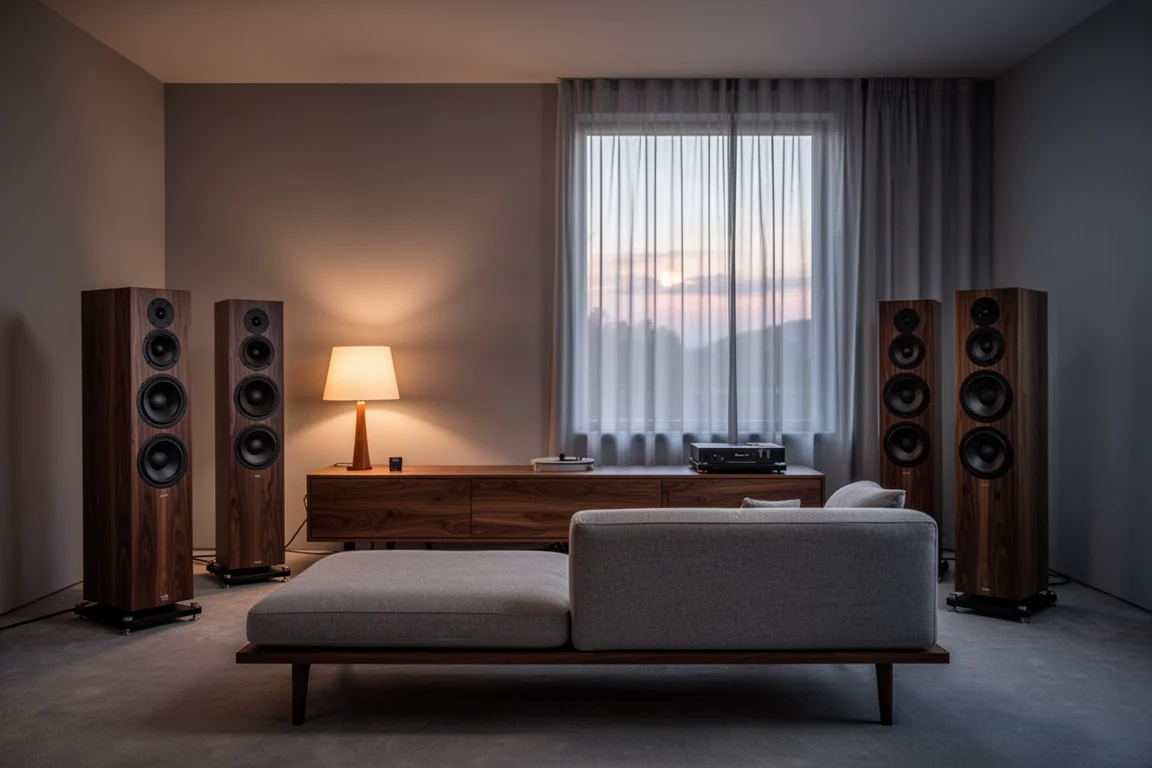
The details behind that character are worth understanding, because a speaker this neutral interacts with a room in ways that a heavily coloured design does not. This review covers what the measurements show, where the Airmotiv T2+ genuinely earns its place, and the handful of practical considerations that decide whether it suits your system.
Who the Airmotiv T2+ Is For
This is a tower for listeners who value an even, well-balanced presentation over showroom drama. It suits two-channel listeners who want an accurate midrange and honest bass, and it works just as well as the front pair in a home theater build where a neutral front stage matters.
The speaker is rated at 4 ohms and dips to nearly 3 ohms around 100 Hz, so it is not the ideal match for a small, lightly built amplifier. Buyers should plan on an amplifier that is comfortable driving a low-impedance load.
It is also a sensible choice for rooms where a raised rear row of seats is part of the layout. Listening up to about 20 degrees above the tweeter axis stays within the speaker’s usable vertical window, which means a second row can still hear the top end reasonably well.
Main Strengths
The strongest argument for the Airmotiv T2+ is its linearity. Sensitivity sits close to 90 dB, and the response stays within roughly plus or minus 2.5 dB from 80 Hz to 16 kHz. That is a genuinely even result from a tower at this price, and it is more impressive given how many drivers the design has to integrate into a single coherent output.
The midrange is the second clear strength. The region between 300 Hz and 3 kHz comes across as neutral and uncoloured, with no obvious forwardness or recess in the vocal range. Voices and acoustic instruments sit where you expect them to sit.
Bass behaviour is the third. There is no mid-bass bump here, which separates this speaker from cheaper towers that lift the region around 100 Hz to sound bigger than they are. Extension is honest rather than dramatic: the F3 measures at 62 Hz and the F10 at 32 Hz. The result is a low end that stays balanced with the rest of the speaker instead of dominating it.
Output capability is solid as well. The speaker holds below one percent total harmonic distortion at 96 dB at one meter down to about 60 Hz, and distortion only rises below that point as expected. Dynamic range holds together until roughly 96 dB at one meter, then compresses hard above 102 dB. In a typical living room at around four meters, a stereo pair reached peaks of about 100 to 102 dB without strain, which is more headroom than most listening sessions will ever call for.
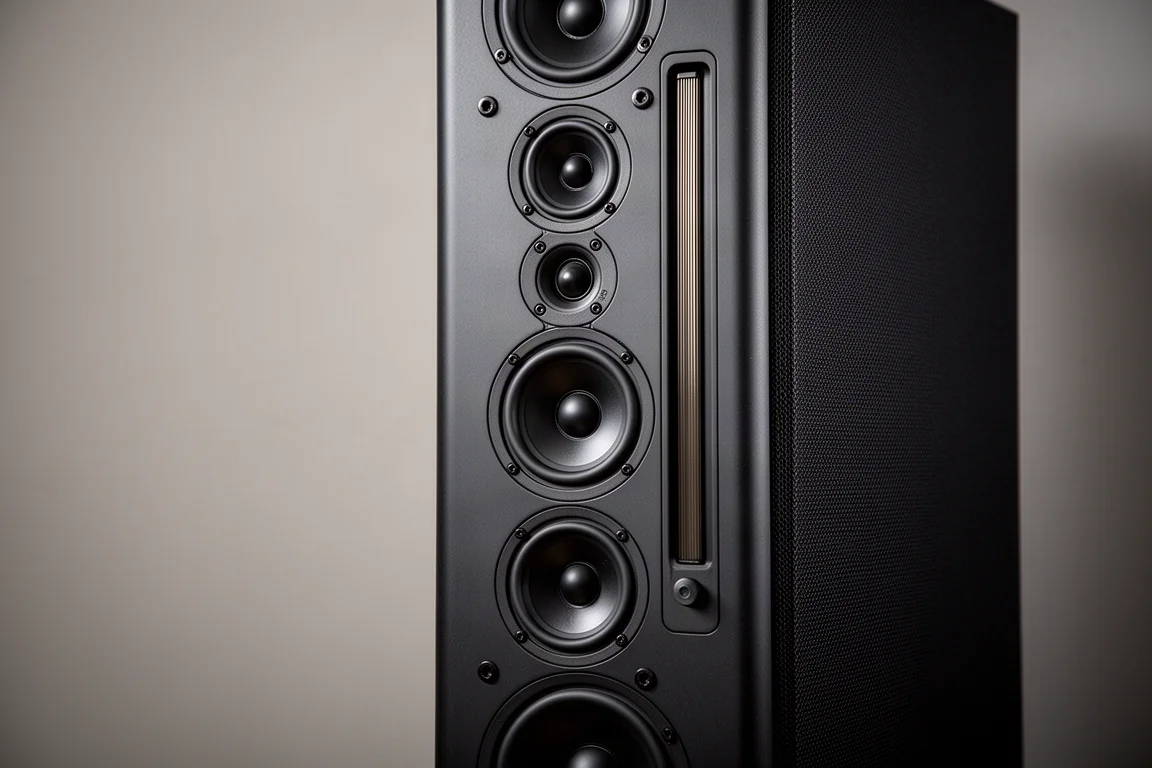
Lateral dispersion is wide and fairly consistent at about plus or minus 60 degrees, narrowing gradually higher up the range. That wide window helps the speaker create a stable image across a normal seating area rather than collapsing into a single narrow sweet spot.
Things to Consider Before Buying
The top end is the one area where the Airmotiv T2+ divides opinion, and the reason is room dependent rather than a flaw in the driver. On axis, the treble is close to neutral, sitting within about plus or minus 2.5 dB. The estimated in-room response tells a slightly different story: through the midrange a trend line can be drawn, and between roughly 6 and 10 kHz the response runs a few dB above that line. In a room with nearby reflective sidewalls, that extra reflected energy can read as brightness. In a room with distant sidewalls and softer surfaces, it largely disappears. Absorption at the first reflection points, or a modest amount of toe-in, is the practical lever here.
Off-axis behaviour around 8 kHz shows a diffraction effect, and this is where setup preference splits. Listening about 30 degrees off axis flattens that region noticeably, but going off axis also droops the upper midrange, which some listeners find worse than the original peak. Listening on axis keeps the upper midrange intact. Neither choice is wrong, and it is worth trying both in your own room.
There are two narrow resonances to know about. One sits near 1.5 kHz and measures only about 1 dB above the 90 dB reference line, and because it is high in Q it needs the right note to become audible at all. The other appears as a small blip somewhere around 320 to 350 Hz. In extended listening across a large library, the second one surfaced on only a couple of tracks out of roughly 30 to 40, and the first is similarly occasional. These are minor characteristics rather than persistent problems, but listeners who are sensitive to narrow colorations may notice them.
Vertical placement is less forgiving than horizontal placement. The usable window runs about 20 degrees above the tweeter axis and 10 degrees below it, and beyond that there is a substantial suck-out through the midrange. Listening height matters.
Finally, impedance. With a 4-ohm rating and a dip to almost 3 ohms near 100 Hz, this speaker rewards an amplifier with real current capability.
Placement, Rooms, and Amplifier Matching
The Airmotiv T2+ is at its best with the listener on axis, ears level with the tweeter and the tweeter aimed toward the seating position. That is the arrangement the predicted in-room response assumes, and it is the arrangement that keeps the upper midrange properly filled in.
Room surfaces do the rest of the work. Where the sidewalls are far from the speakers and the room includes soft or broken-up surfaces, the high-frequency reflection energy stays low and the speaker reads as neutral. Where the sidewalls are close and hard, that reflected energy adds up and the presentation can tip toward bright. Curtains, artwork, rugs, and open space all help in the same direction, and treatment at the first reflection points is the most direct fix.
For height, keep the listening position within that window of about 20 degrees above and 10 degrees below the tweeter. A slightly raised second row in a theater setup still falls inside it, which is a useful detail for anyone building a room with tiered seating.
On the amplifier side, plan for the load. A 4-ohm nominal rating with a dip near 3 ohms at 100 Hz is not demanding by high-end standards, but it is enough to expose a weak receiver. A capable integrated amplifier or a power amplifier with a solid supply will let the speaker deliver its dynamic range without strain.
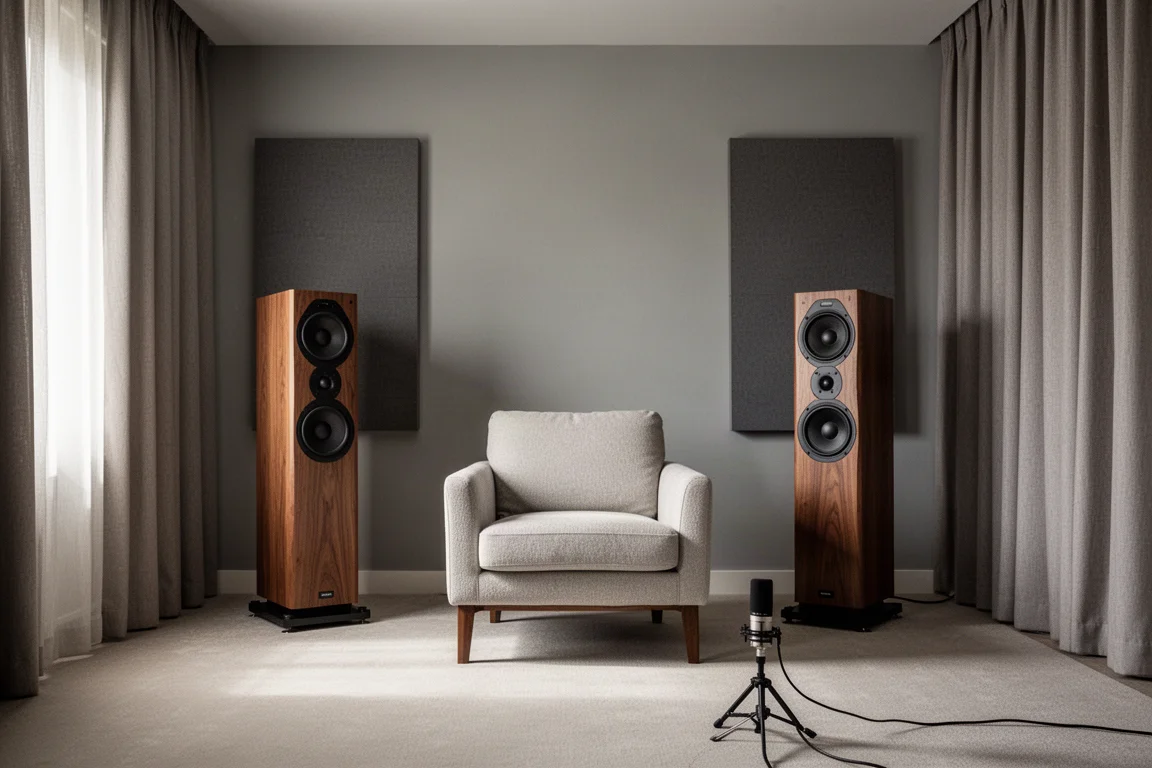
If you are choosing between on-axis and off-axis placement, treat it as a listening experiment rather than a fixed rule. Set the speakers on axis first, live with them for a few days, then try a 30-degree toe-out and compare. The difference is audible in the upper midrange and the top end, and which version you prefer will depend on your room more than on the speaker.
Bass Extension and Subwoofer Considerations
The Airmotiv T2+ extends lower than its price suggests, but it does not reach the bottom octave. With an F3 at 62 Hz and an F10 at 32 Hz, the bass is present and well behaved down through the upper bass and into the lower midbass, and the absence of a mid-bass bump means what you hear is the recording rather than an added bloom.
That makes the subwoofer question straightforward. If your music library rarely goes below 50 Hz, these towers will likely carry a stereo system on their own without a subwoofer. If you watch movies, or if you listen to music with genuine sub-50 Hz content, a subwoofer is the right addition. Distortion also climbs below 60 Hz, so handing the deepest notes to a dedicated subwoofer keeps the towers operating in their cleanest range.
For a two-channel setup, this makes the Airmotiv T2+ a reasonable long-term foundation: start with the towers, add a subwoofer later if your material calls for it, and the system grows without needing to replace the front pair.
Buying Advice
At $999 per pair with shipping included in the United States, the Airmotiv T2+ makes its case through balance rather than spectacle. The value is in the neutral on-axis response, the even midrange, the flat bass without an artificial hump, and genuine low-frequency extension for a tower in this bracket. Buyers who want a speaker that flatters everything will find it restrained. Buyers who want a speaker that gets out of the way of the recording will find it very easy to live with.
Three things are worth planning for before purchase. First, match it with an amplifier that handles a 4-ohm load dipping to nearly 3 ohms. Second, think about your room: if the sidewalls sit close to the speakers and the surfaces are hard, budget for absorption or accept that you will spend some time on placement. Third, decide on the subwoofer question up front, because it changes how you allocate budget across the system.
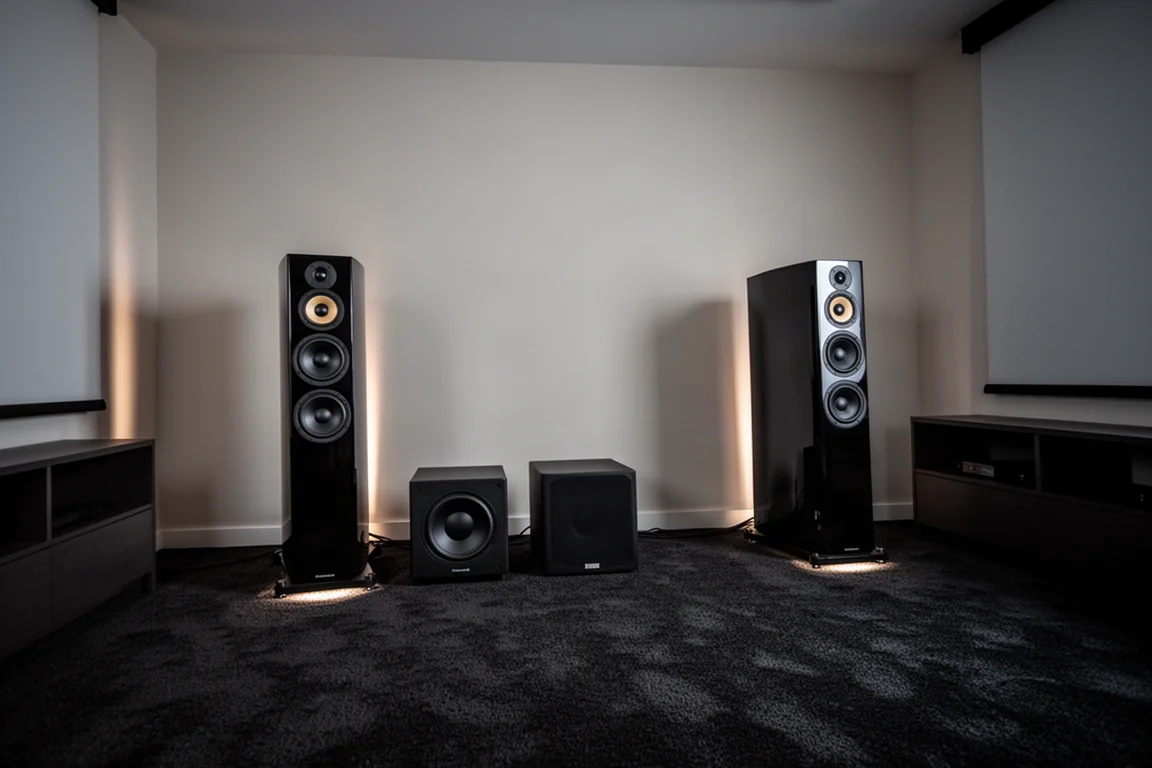
Setup itself is simple. Keep the tweeter aimed at ear height, listen on axis first, and only then experiment with toe-in. Give the speakers a little space from the wall behind them and let the room do what it can to control the first reflections. Done that way, the Airmotiv T2+ delivers exactly what its measurements promise: a neutral, well-balanced tower that stays composed at high volume and does not ask for much in return.
Conclusion
The Emotiva Airmotiv T2+ is a tower speaker that prioritises accuracy over excitement, and it does so at a price where that choice is genuinely uncommon. Its on-axis linearity of roughly plus or minus 2.5 dB from 80 Hz to 16 kHz, its neutral 300 Hz to 3 kHz midrange, its flat bass with a 62 Hz F3, and its ability to hold under one percent distortion at 96 dB down to 60 Hz all point to a design that was tuned rather than marketed.
The trade-offs are equally clear and equally manageable. The estimated in-room response runs a few dB above the midrange trend between 6 and 10 kHz, so reflective rooms can sound brighter than the on-axis data suggests. There are two narrow resonances, near 1.5 kHz and around 320 to 350 Hz, that show up only occasionally. The vertical window is modest, and the 4-ohm load dipping near 3 ohms asks for a capable amplifier.
None of those points disqualify the speaker. They simply describe a tower that responds well to sensible setup and rewards a buyer who understands what it is. If you want neutral, honest performance from a floor-standing pair without spending into the premium bracket, the Airmotiv T2+ deserves a serious place on your shortlist.
Product link
View more details for Emotiva Airmotiv T2+
This product is mentioned in the review. Check the specifications, options, and compatibility before buying.
View more details for Emotiva Airmotiv T2+Further reading
Related Reviews
Home Audio
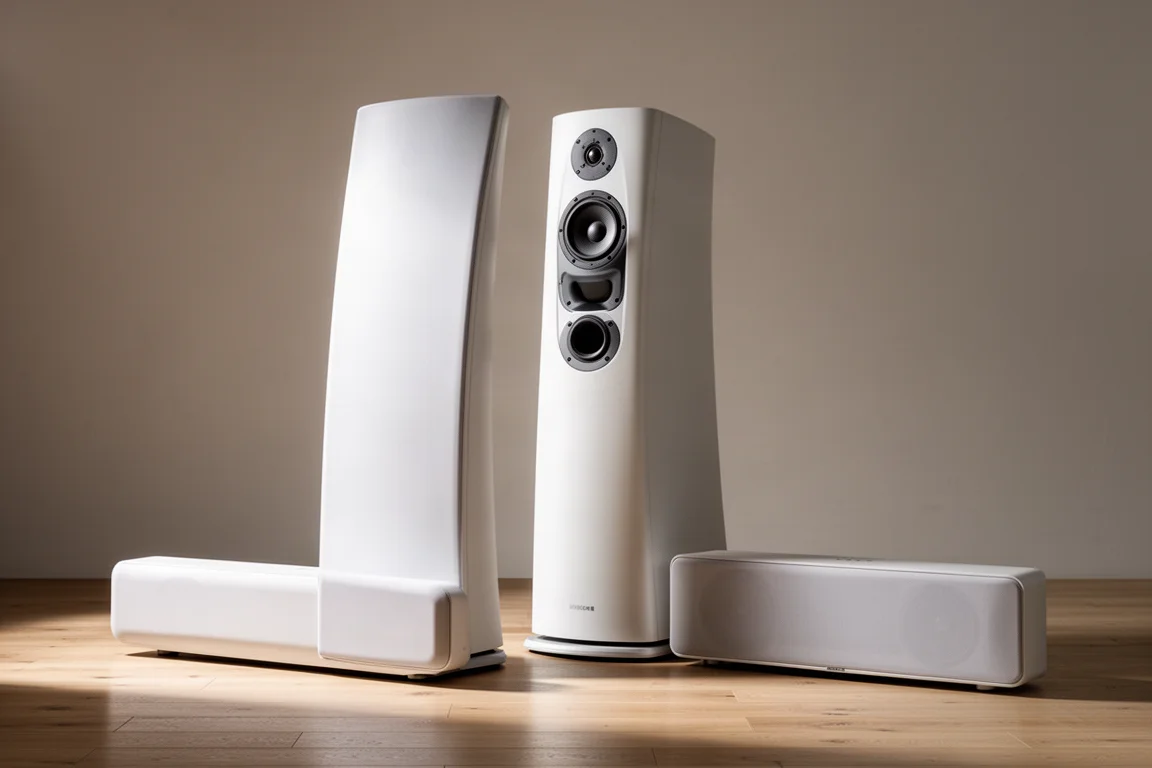
Aperion Novus Tower and Center Review: Punchy Home Theater Sound With Real Refinement
A close look at the Aperion Novus tower and center speakers, from their layered paint finish and punchy bass to the 4-ohm load and what the price actually buys.
Home Audio
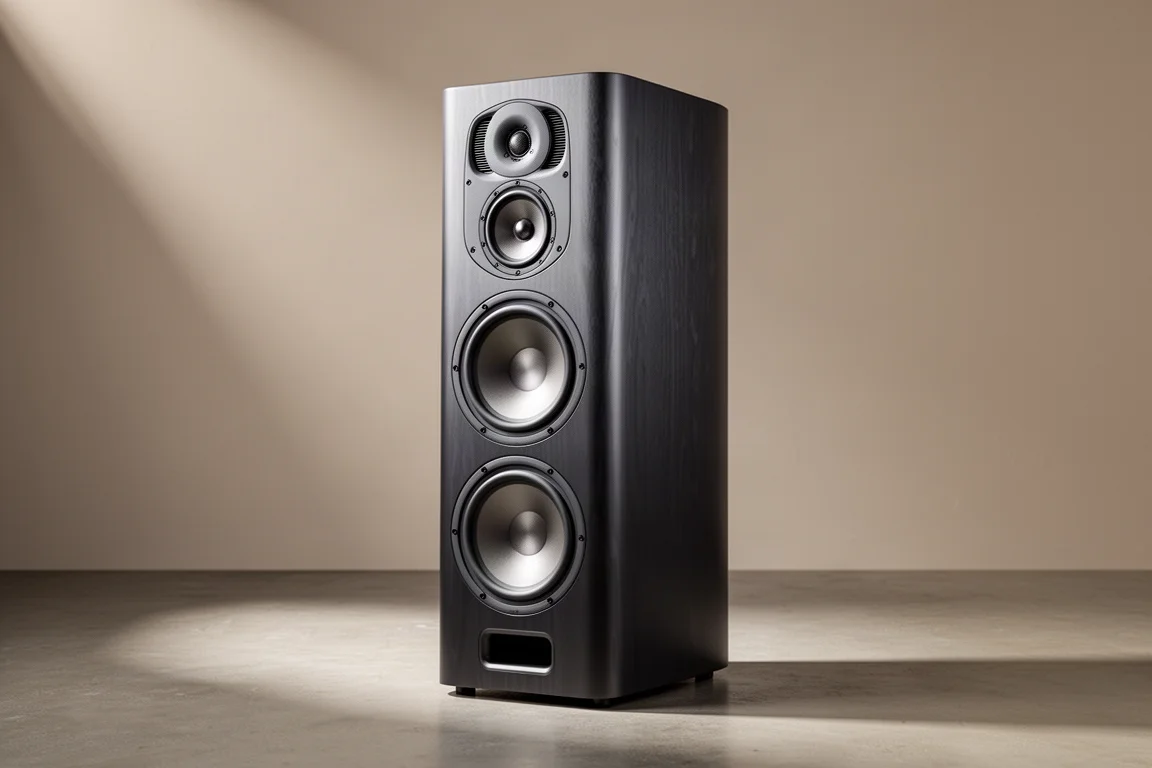
Arendal 1610 Tower Review: Flagship Dynamics in a Room-Friendly Tower
A compact floorstanding tower with three 8-inch aluminium woofers, a 5-inch carbon midrange, and the kind of bass heft usually reserved for much larger speakers.
Home Audio
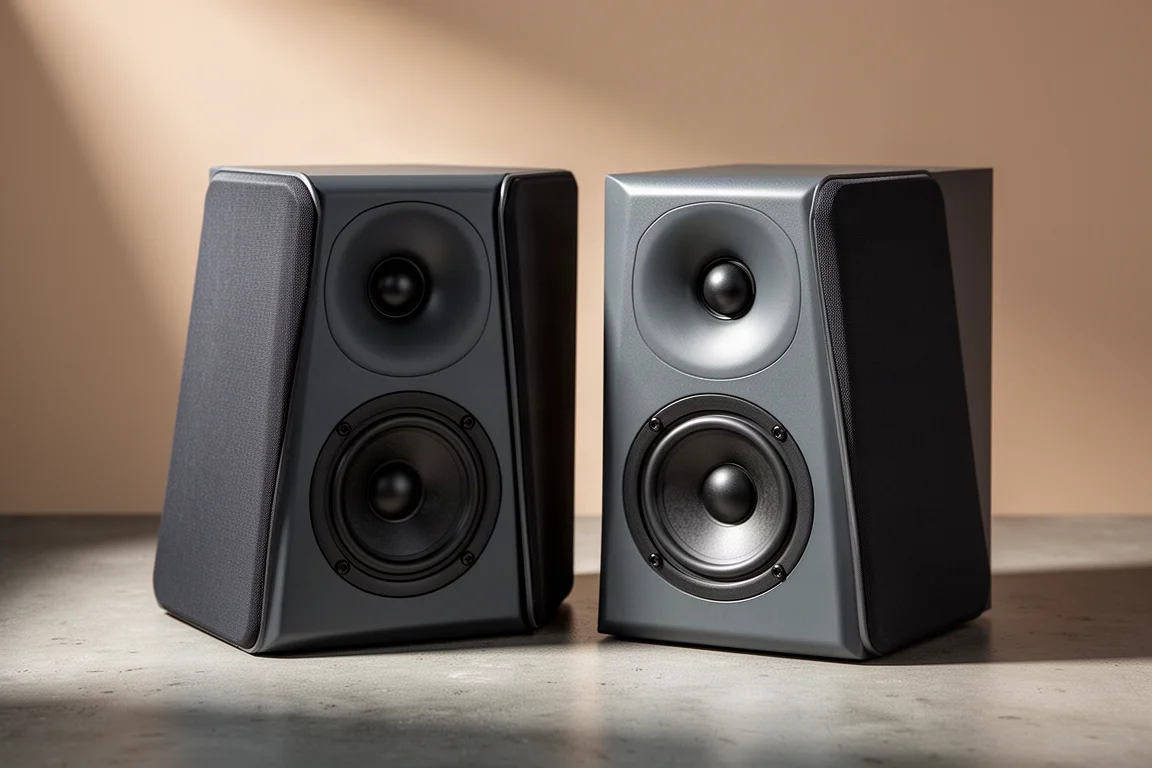
Arendal 1723 S THX Review: A Reference Speaker Built Like a Tank
A practical look at the Arendal 1723 S THX, a sealed, THX-certified speaker with exceptional build quality, a very flat top end, and a midrange that responds beautifully to EQ.