Hi-Fi Speakers
Eminent Technology LFT-8B Review: A Hybrid Panel Speaker With Clarity and Weight
A practical look at the Eminent Technology LFT-8B, a $3,200 hybrid panel speaker that pairs a ribbon tweeter and a push-pull planar magnetic midrange with an 8-inch woofer.
Introduction
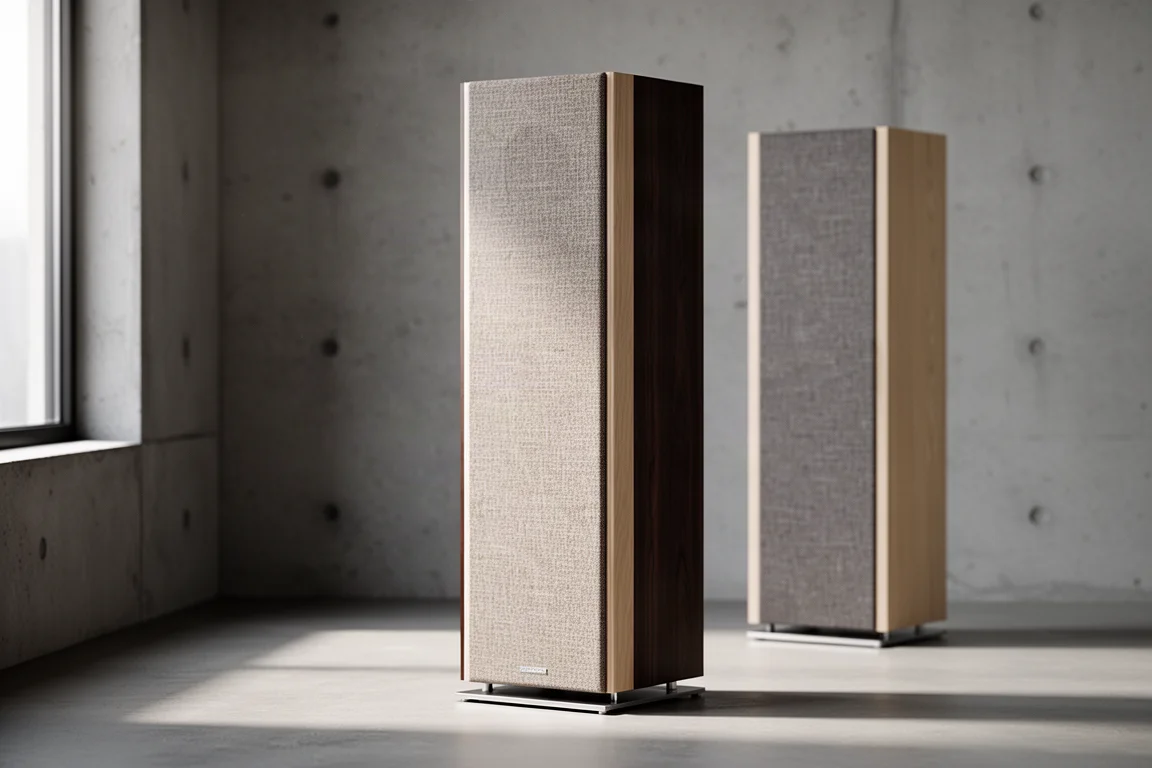
The Eminent Technology LFT-8B is a hybrid panel speaker with an unusually long history behind it. The original LFT-8 arrived in 1990, and the design has been in production in one form or another for more than three decades. The company behind it was founded in 1983, and the speakers are designed and built in Tallahassee, Florida. That kind of continuity is rare in high-end audio, and it says something about how carefully the design has been refined rather than replaced.
The price is $3,200 per pair. Trim is available in black, black oak, and walnut, and the speaker ships with a cloth grille that covers its full height, plus a separate grille for the back of the panel. That rear grille matters because this is a dipole design, radiating sound forward and backward rather than mostly to the sides.
Three drivers share the work. A ribbon tweeter stands 21 inches tall. A planar magnetic midrange measures 3.5 inches wide and 42 inches tall, and it uses a push-pull magnet structure with magnets placed both in front of and behind the diaphragm. Below that sits an 8-inch mass-loaded woofer in a sealed enclosure. That combination of ribbon, planar panel, and conventional woofer is what makes the LFT-8B a hybrid rather than a pure panel speaker.
Who the Eminent Technology LFT-8B Is For
This is a speaker for listeners who value transparency, instrumental focus, and midrange substance ahead of maximum output or chest-punching bass. It rewards a room that can give it space and electronics that can give it power.
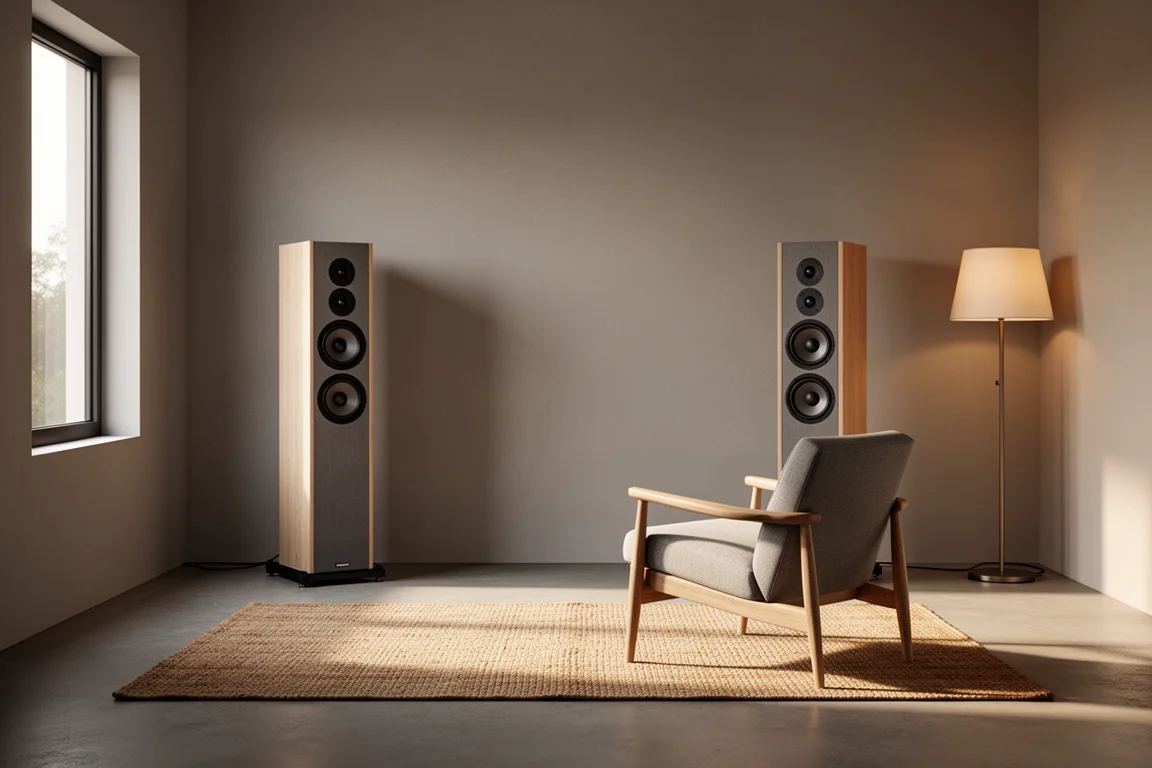
Because it is a dipole, it projects far less energy toward the side walls, so side-wall reflections are less of a concern than they are with a conventional box speaker. What it does need is distance from the wall behind it. Two feet is a minimum, three or four feet is better, and roughly four and a half feet with a slight amount of toe-in aimed at the listening position proved to be the sweet spot from a seat about nine feet away.
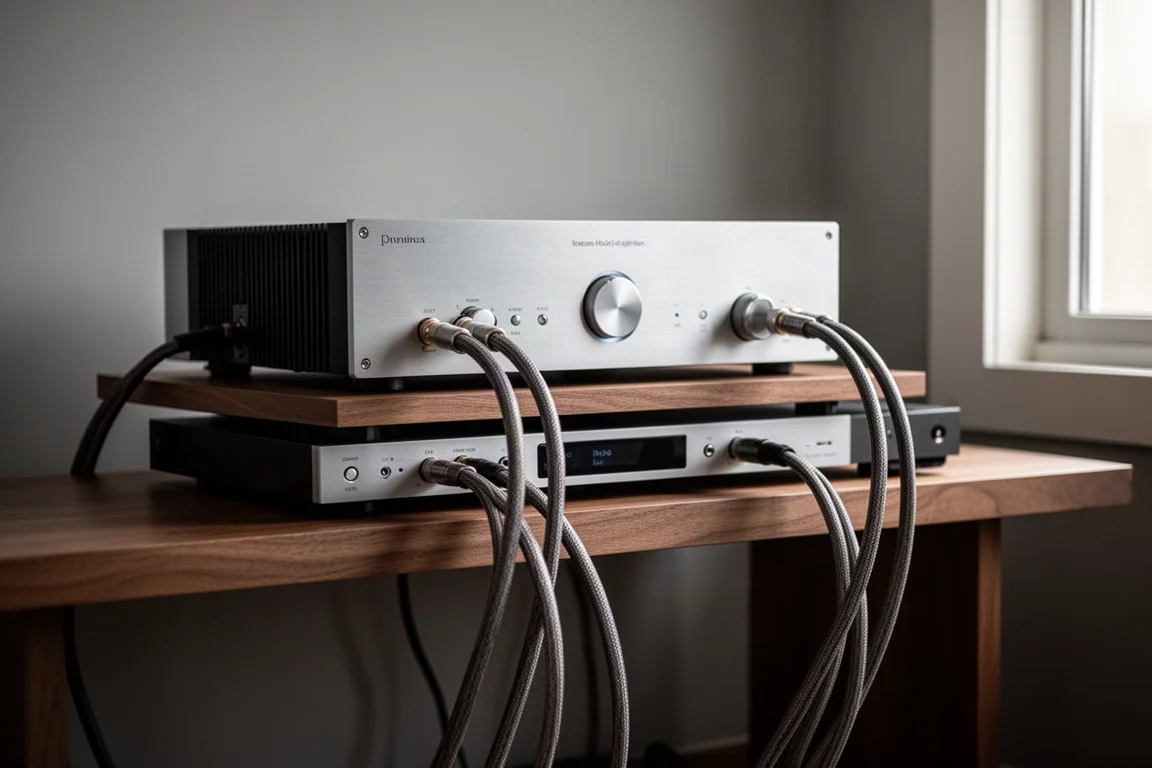
Sensitivity is specified at 84 dB, which is on the low side, so the speaker wants an amplifier with real current delivery. Impedance is a friendly 8 ohms and does not droop much below that, so the load itself is not difficult. Testing covered a 250-watt-per-channel stereo amplifier, a second solid-state amplifier with a warmer and fuller character, and a 40-watt tube amplifier. The solid-state options had a clear advantage in dynamics.
If your listening leans toward heavy metal, very loud techno, or anything that depends on physical slam, this is probably not the right speaker. If it leans toward acoustic music, classical, jazz, and well-recorded rock where separation and texture matter, it becomes a very compelling option.
Main Strengths
The LFT-8B’s greatest strength is the way it balances two qualities that usually pull in opposite directions. Pure planar and electrostatic designs are often praised for transparency but criticized for sounding thin, lightweight, or ethereal. Box speakers with conventional dynamic drivers deliver weight and punch but often lose the sense of instruments floating free of the cabinets. The LFT-8B gets much closer to having both at once.
That balance shows up immediately in the way the speaker images. Instruments and voices do not cling to the panels. They occupy space in the room, and each one is more sharply defined and more complete than most panel speakers manage. The gaps between performers are clearer too, which makes dense recordings easier to follow.
There is also a density to the midrange that is unusual for a panel. Strings keep their sweetness without acquiring a hard edge, and voices carry a substance that makes them feel more physical. It is the kind of quality that matters more the longer you listen.
A Wall of Sound With Sharp Instrument Focus
Scale is a genuine strength here. The LFT-8B sounds big because it is big, even though the panels themselves are slim. It throws a wall of sound that floats free of the speakers, and large orchestral recordings benefit from that sense of size. A Philip Glass and Yo-Yo Ma collaboration used during listening was dynamic and full of soul, with strings that felt real rather than analytical.
Dynamics are handled well for a panel speaker, and the LFT-8B is more dynamically alive than any planar magnetic design that had been in the same room. Part of that comes from the push-pull midrange, and part of it comes from the dedicated woofer, something a Magnepan-style panel simply does not have.
Bass Speed and Midrange Weight
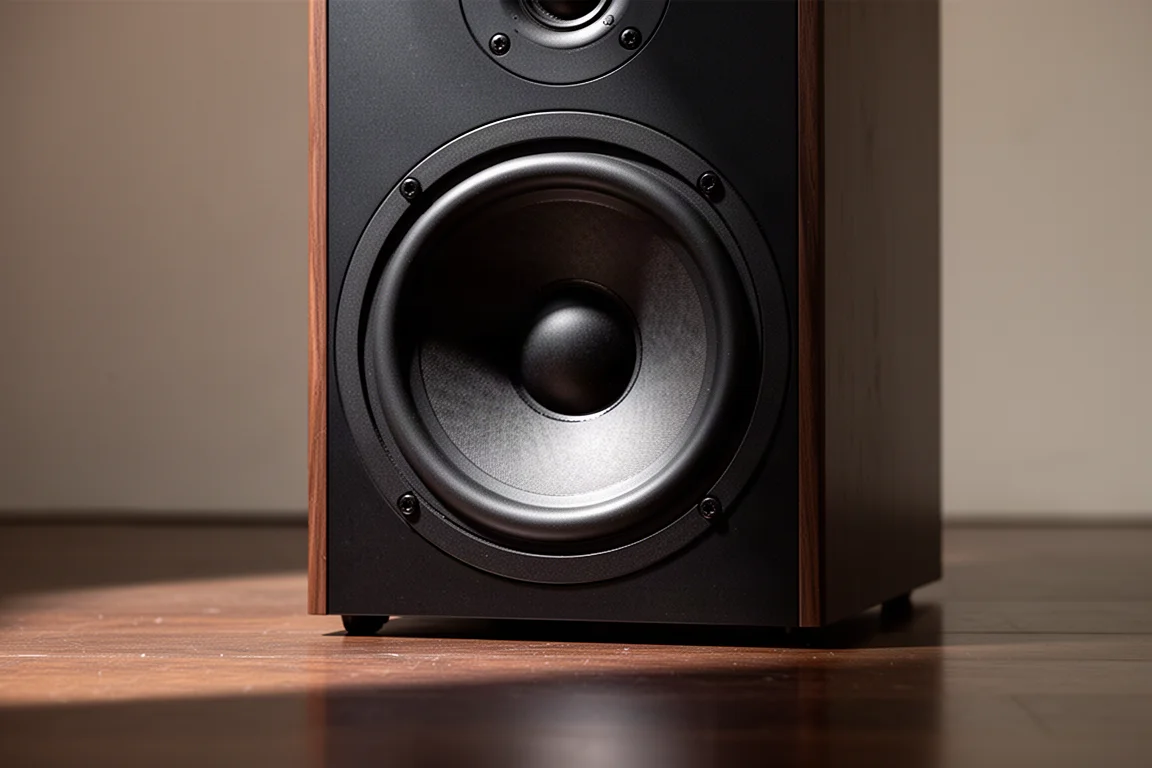
The 8-inch woofer sits close to the floor, and it is fast, quick, and agile. The blend between woofer and panel is not absolutely seamless, but it is very good, and likely better than the integration you would get from adding a separate subwoofer to another panel speaker.
This changes the character of the speaker in a meaningful way. It is not thin and ethereal. The music has weight and substance well into the midrange, which makes it feel more real than a typical electrostatic design. The trade-off is that it will not match a high-efficiency horn or a large Klipsch-style speaker for sheer output and chest impact.
At low volume the LFT-8B also holds together well. It does not need to be played loudly to feel satisfying, which is not something every panel speaker can claim. Mid-level listening is strong, and loud playback is handled with real gusto, short of the extreme levels a high-sensitivity design can reach.
Living With the LFT-8B: Placement, Power, and Setup
Set-up is straightforward once you accept the space requirement. The rear panel offers bi-wire speaker connectors and a three-position tweeter level adjustment. Most listening was done at the minimum tweeter level, which is worth trying first if your room is on the lively side.
Amplifier matching changes the presentation noticeably. A high-power stereo amplifier produced the clearest delineation between instruments and the most beautiful tone. A second solid-state amplifier sat in the middle, warmer and fuller. A further solid-state option delivered a sweeter, very powerful sound with slightly less separation. A 40-watt tube amplifier brought dimensionality and solidity at quieter levels but gave up dynamic slam. The speaker scales with the electronics you feed it, which is a compliment, but it also means the rest of the system will be audible.
Break-in matters as well. The speaker needed time before it settled into its best behaviour.
Things to Consider Before Buying
The LFT-8B asks for room. If you cannot place it two to four feet from the wall behind it, you will not hear what it can do.
It asks for power. With 84 dB sensitivity, a low-powered amplifier will run out of headroom before the speaker does.
It is not a party speaker. Listeners who want maximum loudness, heavy low-frequency impact, or the physical punch of a large horn-loaded design should look elsewhere. The LFT-8B is at its best with material that rewards clarity and separation.
It is also a specialist product from a small manufacturer. There are five brick-and-mortar dealers in the United States, and most sales are direct. In the United States, shipping is free. The company also sells direct into the UK and most of Europe, where shipping is not free but is far less expensive than going through a distributor. Warranty coverage runs three years. The company’s website is dated, but it carries a lot of useful information, including an owner’s manual worth reading before purchase.
Buying Advice
At $3,200 per pair, the LFT-8B sits in a price band occupied by some very capable conventional speakers. What it offers instead is a hybrid panel presentation: a ribbon tweeter, a push-pull planar magnetic midrange, and a fast 8-inch woofer that together deliver clarity and weight in a way pure panel designs rarely manage.
Context helps here. A compact planar speaker at roughly a third of the price remains an extraordinary value for anyone curious about dipole sound, but it is a smaller, less dynamically alive speaker with less bass punch and less resolution of detail. A larger open-baffle design with a 15-inch woofer, at roughly twice the price, energizes a room more completely at the low end, while the LFT-8B holds the edge in focus, transparency, and the delineation of individual instruments and voices.
There is also an upgrade path worth knowing about. The LFT-8C uses a similar footprint but replaces the passive woofer with an active dipole woofer system that pairs an 8-inch front woofer with a separate 6.5-inch rear woofer and adds DSP. Owners of the LFT-8B can buy the active woofer pair on its own for $1,600 with free shipping in the United States, and it screws into place. A complete LFT-8C is $4,500 per pair. That makes the LFT-8B a sensible entry point into the design, with a clear route forward if you later want more low-end authority.
Conclusion
The Eminent Technology LFT-8B is a rare thing: a panel speaker that keeps the transparency and imaging precision of a planar design while adding the density, weight, and bass speed that panels usually lack. It is not for every room or every taste. It needs space, it needs power, and it will not deliver the slam of a high-efficiency horn speaker.
For listeners who have the room and the amplification, and who value clarity, instrument focus, and a sound that floats free of the speakers, it is a genuinely compelling choice at $3,200 per pair.
Product link
View more details for Eminent Technology LFT-8B
This product is mentioned in the review. Check the specifications, options, and compatibility before buying.
View more details for Eminent Technology LFT-8BFurther reading
Related Reviews
Hi-Fi Speakers
1723 THX Tower vs 1528 Bookshelf: Which Speaker Fits Your Room?
Two speakers at roughly the same price, built very differently. How the 1723 THX tower and the 1528 bookshelf compare on construction, bass, power needs, and sound.
Hi-Fi Speakers
Acoustic Energy AE 300 Review: Deep Bass From a Compact Standmount
A two-way standmount with real wood veneer, surprising low-end weight, and a warm, easygoing character. Here is what to know before buying.
Hi-Fi Speakers
Acoustic Energy AE1 40th Anniversary Review: A Modern Take on a British Classic
A compact standmount that revives a 1980s favorite with all-new parts, a warm mid-centric balance, and a price of £1,499 per pair.