Integrated Amplifiers
Electrocompaniet ECI 6DX Mark I Review: A Smooth All-in-One Streaming Amplifier
An all-in-one amplifier, pre-amplifier, DAC and streamer at $7,500, with a warm, refined sound and a handful of interface quirks worth knowing before you buy.
Introduction
Electrocompaniet has been building audio equipment since 1973, and while the brand is not widely known in the North American market, it is making a return there. The ECI 6DX Mark I is a clear statement of what the company does: a single chassis that combines a power amplifier, a pre-amplifier, a DAC, and a network streamer.
All you need to start streaming is a pair of speakers and speaker cables. Turntables, CD players, and other sources can be added later through the connections on the back, which makes the unit a practical centrepiece for a modern two-channel system.
At $7,500, the ECI 6DX Mark I lines up directly against the Hegel H390, another all-in-one player at a similar price. Competition in this category was scarce a few years ago, and there are now noticeably more options at this price, as well as above and below it.
What the Electrocompaniet ECI 6DX Mark I Offers
The core appeal is consolidation without obvious compromise. The amplifier section delivers 125 watts into 8 ohms and is specified as stable down to 2 ohms, so it is designed to stay composed with loudspeakers that present a difficult load. In practice it drove power-hungry standmounts and larger floorstanders without strain, keeping a firm grip on the low end rather than running out of headroom.
Streaming is handled over Ethernet or Wi-Fi, with AirPlay, DLNA, Spotify Connect, Tidal Connect, and Qobuz all supported. Amazon Music support is not available as far as we can tell. Control runs through the E Play app, whose interface is intuitive and genuinely well laid out.
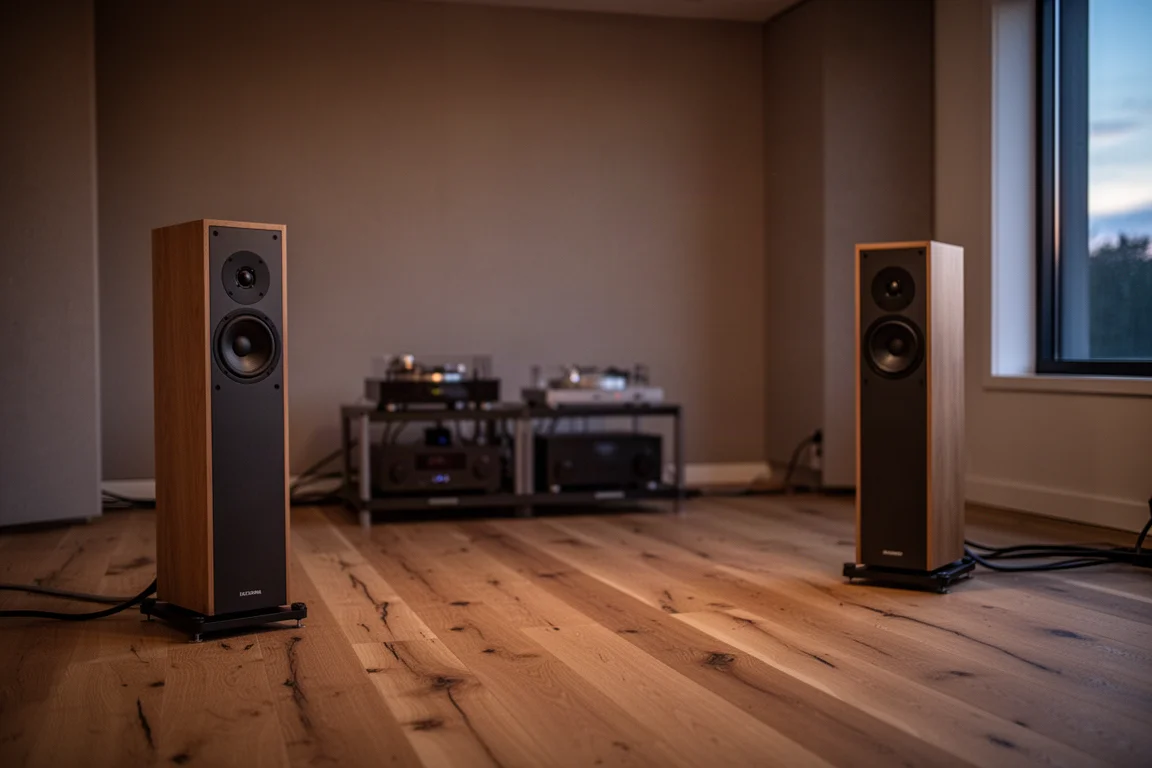
Around the back, the unit covers the essentials for a full system: analogue inputs, pre-amplifier outputs, a subwoofer connection, and digital inputs labelled TOSLINK. The feature set is broad enough that most listeners will not need to add anything beyond a source or two.
Who This Product Is For
This is a natural fit for listeners who want one high-quality box instead of four, and who value a calm, refined presentation over an aggressive one. If your system is built around speakers with a lively, energetic top end, the ECI 6DX Mark I has a way of smoothing out rough edges while keeping the detail intact.
It is a less obvious choice if your speakers already lean warm and smooth. In that case the amplifier’s own warm character can double up, and a different partner may suit the system better.
It also suits listeners who stream most of the time and only occasionally play physical media, since the streaming section is the heart of the design and additional sources are optional extras rather than requirements.
Design and Everyday Controls
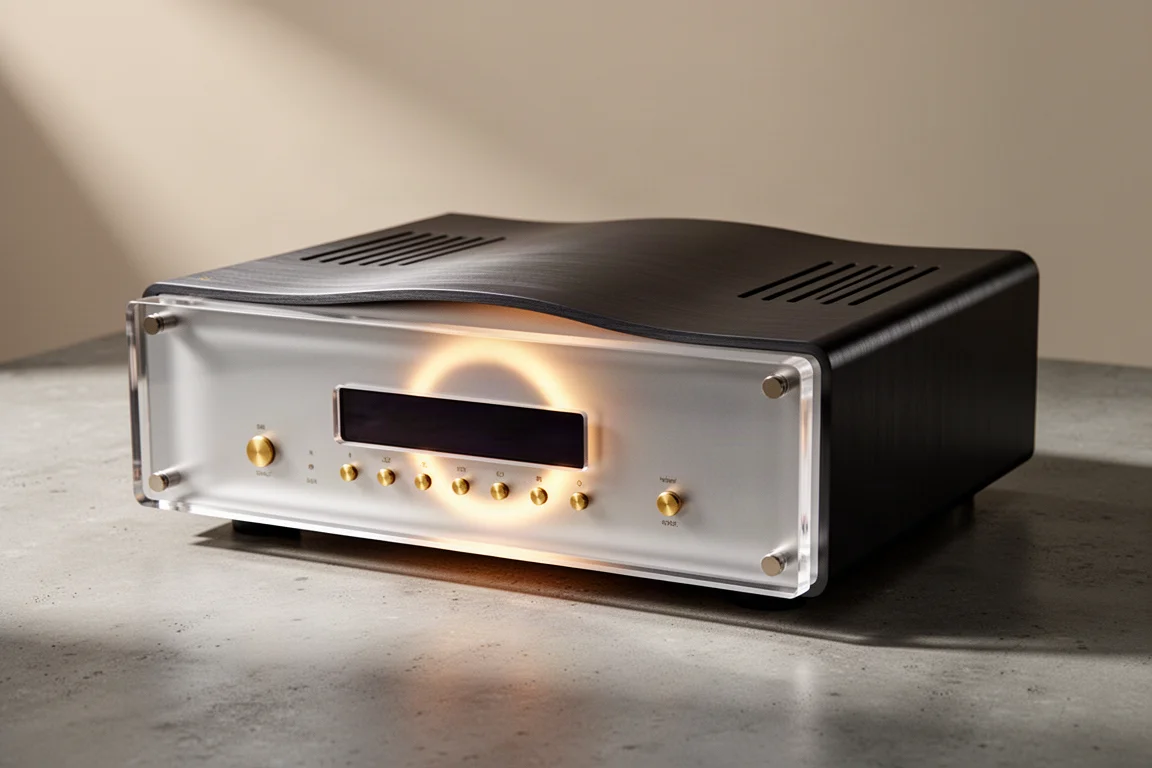
The look is distinctive. The front panel is made of acrylic, which is unusual on a high-end amplifier of this type, and whether it appeals is very much a matter of taste. The gold control buttons, by contrast, feel solid and press with a satisfying weight that reads as genuinely premium. The unit also takes a moment to start up after it is switched on, so expect a short wait before the display comes to life.
Two small details stand out once the amplifier is running. The display uses the word MEDIA where most would expect STREAMING, and the digital inputs appear as TOSS LINK rather than TOSLINK. Both are deliberate compromises, since the display can only fit a limited number of characters.
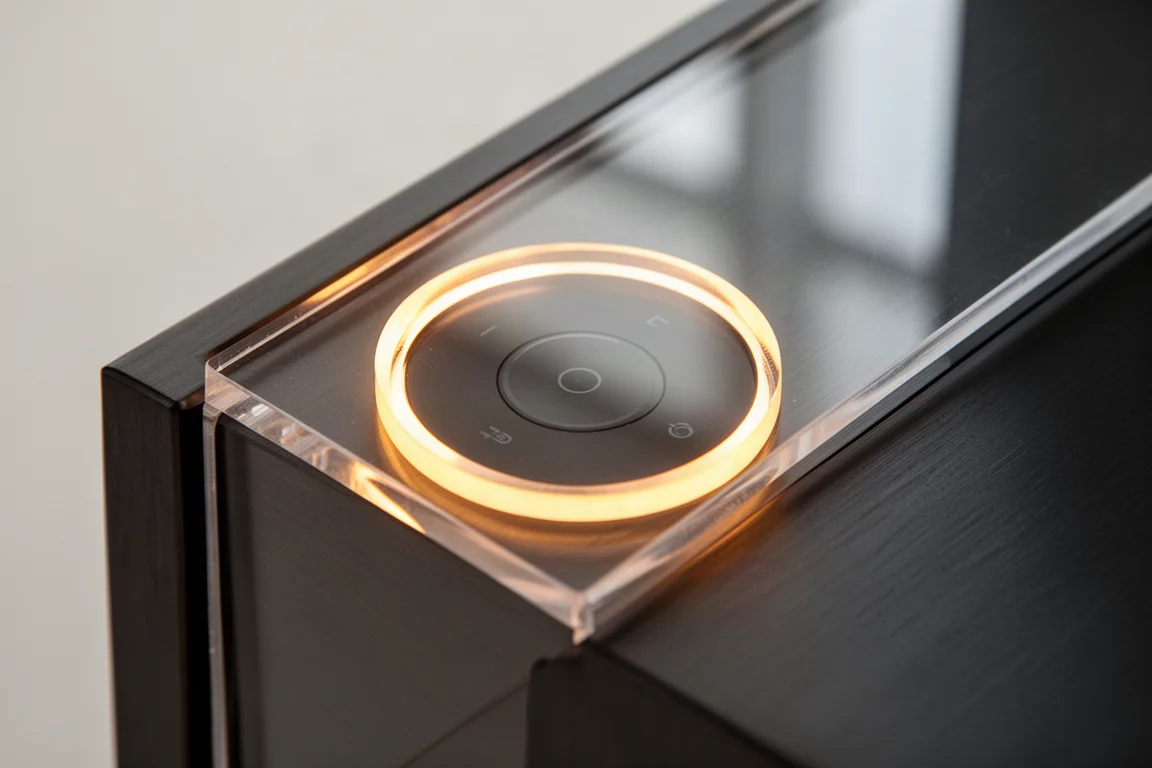
Volume is shown by a halo of light that travels around the logo on the front panel, a design unlike anything else in the category. It is genuinely enjoyable to use, though it can be difficult to read from across a room, at an angle, or when the unit sits in a rack.
There are a few usability quirks worth knowing. Cycling through the inputs does not offer a direct route back to the streaming display. Music started over AirPlay or another streaming service will switch the unit automatically, and a power cycle also returns it to the media view. The third route is on the remote: pressing the stop and eject buttons together brings the display back to media. That shortcut is not documented in the manual.
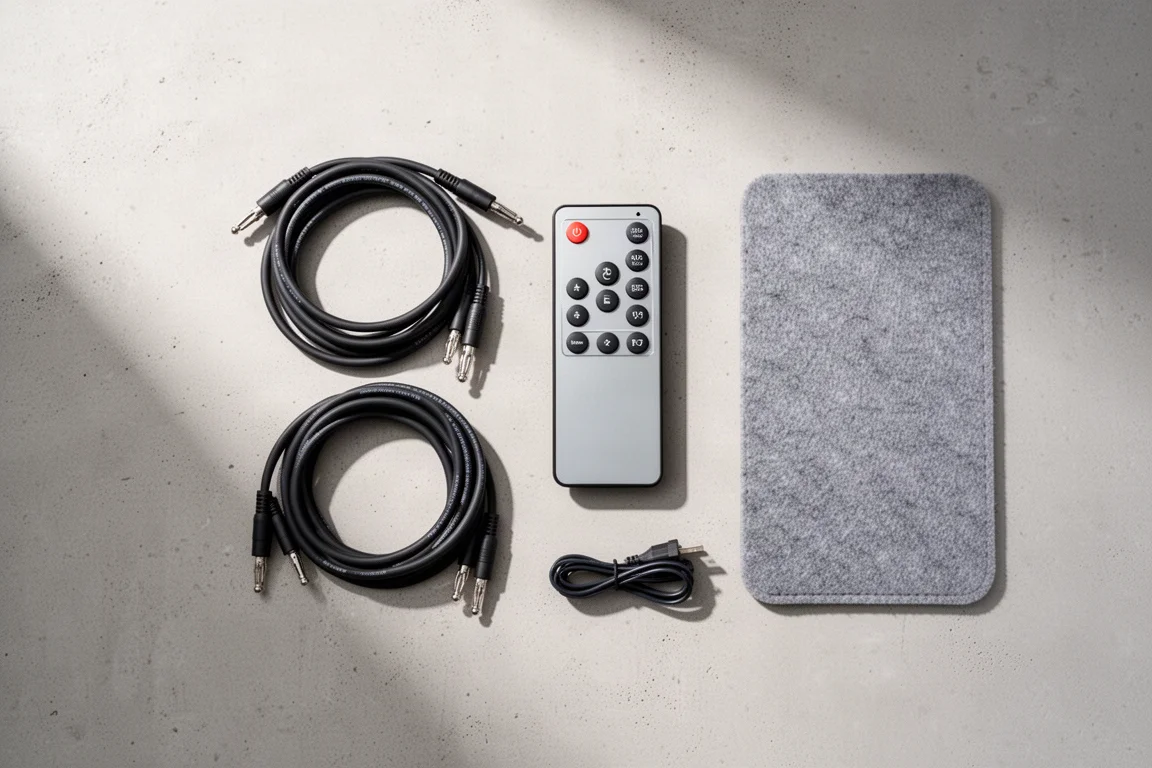
The remote itself is light and made of plastic, which is common at this level but still a slight letdown next to the feel of the front panel. The chassis, on the other hand, is sturdy, with vents across the top and a gently curved top panel that follows the curvature of the acrylic fascia, a small touch that makes the design feel considered rather than assembled.
Power and Sound Quality
The character of this amplifier is warm, smooth, and composed. Bass is grippy and extends low, with plenty of drive and control, though the mid-bass is not the punchiest around. That is broadly in line with other all-in-one players at this price rather than a shortfall unique to this unit.
Where the ECI 6DX Mark I stands out is the mid-range and the high frequencies. Rather than rolling off the top end, it refines it: energetic speakers sound smoother and better controlled without losing detail. Paired with a lively loudspeaker, the effect is close to what a good valve amplifier does for a forward-sounding system.
Soundstaging is strong for an all-in-one design. It is deep and wide, and it behaves more like a real venue than an exaggerated, holographic presentation. It will not rival a dedicated valve amplifier built around a vast, three-dimensional stage, but it is spacious and convincing in normal use.
Speaker Pairing and System Matching
Speaker choice matters more here than with many amplifiers. Warm, smooth loudspeakers will work, but they are not the ideal match, because the amplifier’s own warmth stacks on top of theirs. Speakers with more energy in the top end are where this unit earns its keep, since it takes control of that energy and makes the whole presentation more refined.
Some combinations go further than others. Speakers from Triangle, for example, have proven a consistently strong match, and the pairing sounds more homogeneous than the same speakers do with other electronics. Single-driver designs also benefit from the headroom and bass control on offer here, which is remarkable for a driver that needs very little power.
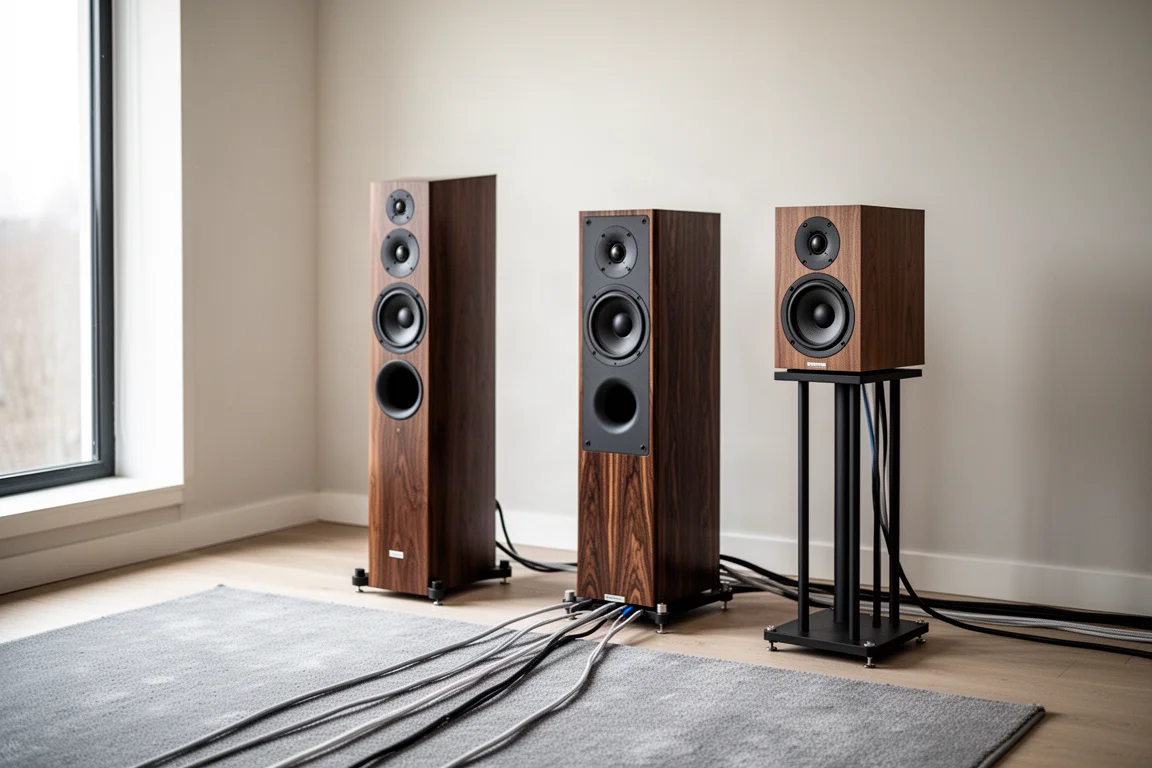
The practical takeaway is that this amplifier is not a universal partner. With the right speakers it sounds excellent; with the wrong ones it can blunt the excitement that makes a system fun. Auditioning with your own speakers, or at least with speakers of a similar character, is worth the effort.
Things to Consider Before Buying
The input navigation quirk is the most noticeable day-to-day annoyance. Returning to the streaming display means either starting playback, power cycling, or remembering an undocumented remote shortcut.
The speaker binding posts deserve a look before you commit. Banana plugs are straightforward, but spade connectors insert in one direction only because of the plastic surround, and thicker power cables can end up competing with speaker cables for space behind the unit.
The acrylic front panel and the halo volume display are both love-it-or-leave-it design decisions. The display is also harder to read at a distance or from an off-axis seat, which matters if the amplifier lives in a rack.
Finally, there is no Amazon Music support, and the remote feels less substantial than the rest of the product.
Buying Advice
At $7,500, this amplifier competes with the Hegel H390, and the two are close enough that the decision should come down to your speakers rather than to a spec sheet.
The Hegel has slightly more emphasis in the bass, a touch more mid-bass weight, and a little more control down low. Its soundstage is marginally smaller. The ECI 6DX Mark I is the smoother of the two through the mid-range and treble. Those differences are small, and both are very similar in bass control and extension.
The larger point is that the Hegel tends to suit speakers from brands such as KEF and Magnepan, which many listeners already pair it with, while the Electrocompaniet tends to suit more forward, energetic speakers. Neither is better in the abstract. Match the amplifier to the speakers you own or plan to own, and the rest of the decision becomes straightforward.
If you want a single box that streams, converts, and amplifies with a smooth, long-listening character, and your speakers lean lively, this is a strong candidate. If your speakers are already warm and relaxed, listen carefully before buying.
Conclusion
The Electrocompaniet ECI 6DX Mark I is a well-built all-in-one player with real power, broad streaming support, and a refined, smooth sound that flatters energetic loudspeakers. Its quirks, the acrylic fascia, the halo volume display, the input navigation, and the spade-friendly binding posts, are all part of the package, and none of them undermine the sound.
For the right system, it is an easy recommendation. For a system that is already smooth, a careful audition is the sensible next step.
Product link
View more details for Electrocompaniet ECI 6DX Mark I
This product is mentioned in the review. Check the specifications, options, and compatibility before buying.
View more details for Electrocompaniet ECI 6DX Mark IFurther reading
Related Reviews
Integrated Amplifiers
Advance Paris A10 Classic Review: Vintage Looks and a Lively, Punchy Sound
The Advance Paris A10 Classic pairs glowing blue VU meters and a tube stage with one of the widest input sets on any integrated amplifier. Here is what it does well and what to weigh before spending $2,500.
Integrated Amplifiers
Advance Paris A12 Apex Review: A Modern Integrated Amplifier With Vintage Character
A dual mono integrated amplifier with 180 watts per channel, a tube front end, VU meters, and a connectivity list that covers turntables, televisions, computers, and headphones.
Integrated Amplifiers
Advance Paris Nova Range Review: AI130, AI190 and Modular Upgrades
A practical look at the Advance Paris Nova range, including the AI130 and AI190 integrated amplifiers and the modular streaming, Bluetooth and remote accessories that expand them.