Bookshelf Speakers
ELAC Vela BS 403 Review: Neutral Bookshelf Sound With a Wide Stage
A compact passive bookshelf speaker with a genuinely neutral balance, wide radiation, and real 50 Hz extension, plus one voicing choice worth understanding before you buy.
Introduction
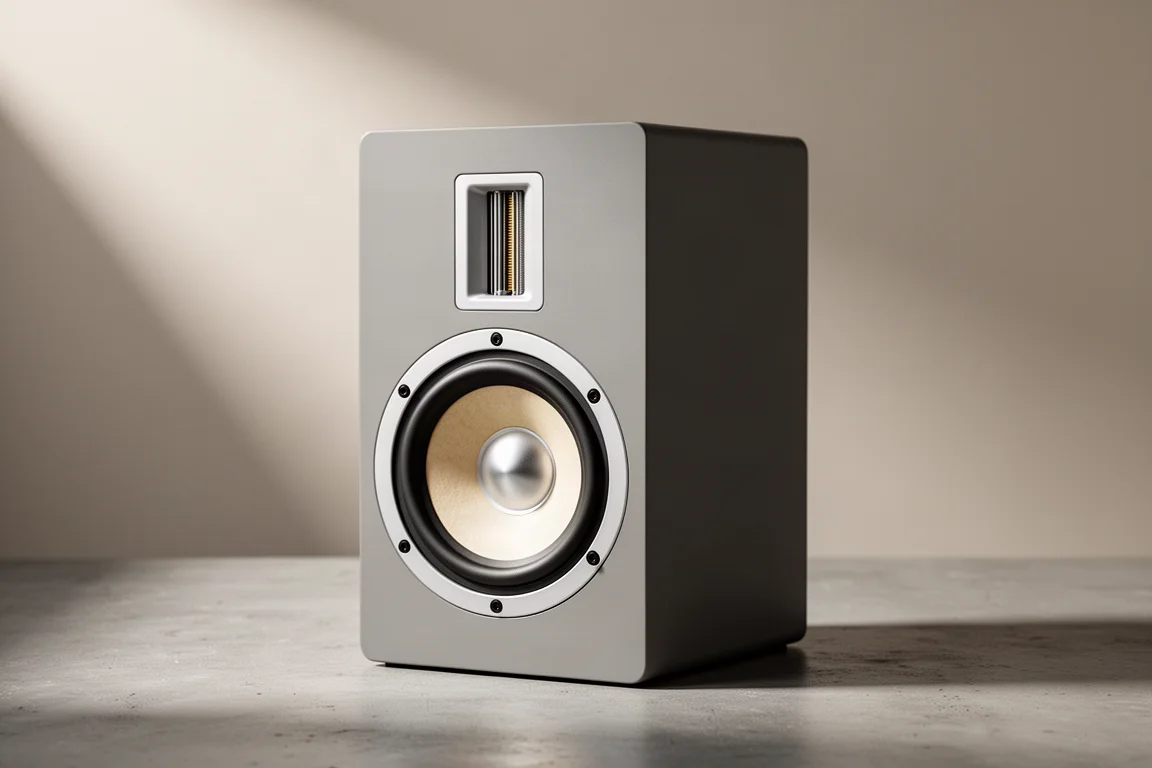
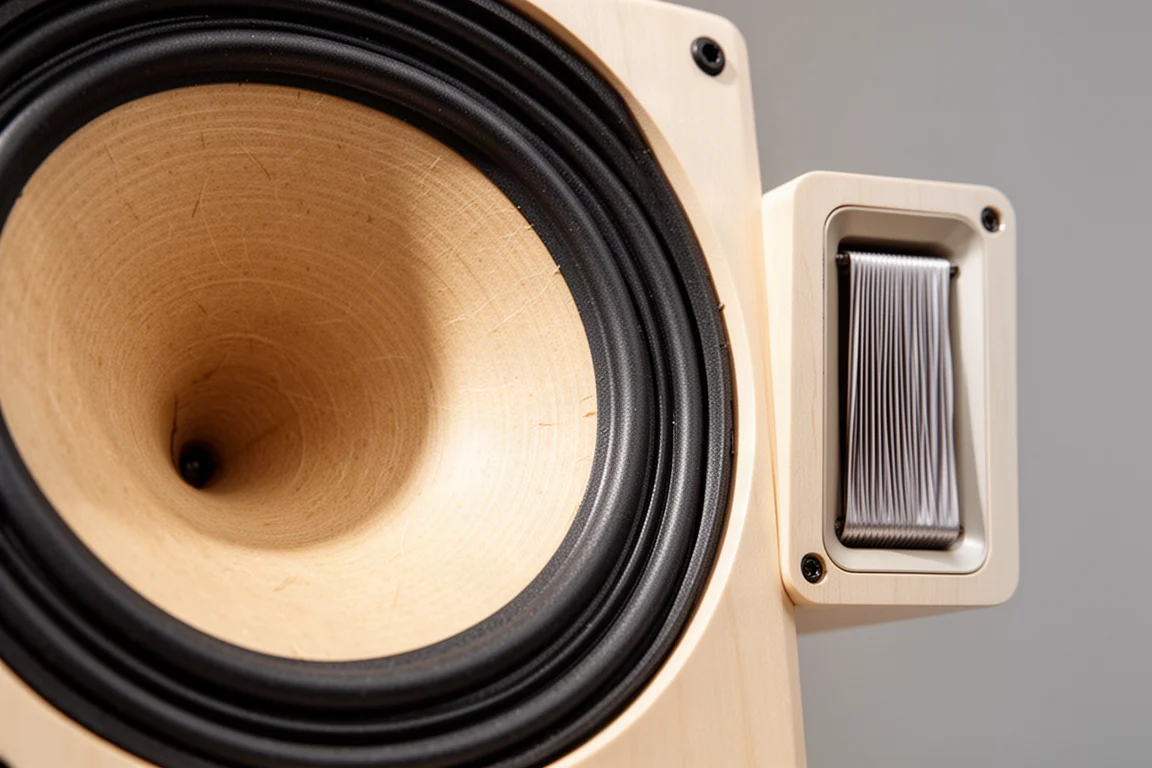
The ELAC Vela BS 403 is a compact passive bookshelf speaker built around a 6-inch aluminium and paper sandwich cone woofer and a folded ribbon tweeter that the company calls a handmade JET 5. It is presented as a neutral, room-friendly design with a wide listening window, and it largely lives up to that description. The one area where listeners will divide is a deliberate voicing choice in the crossover region, where a dip near 2.5 kHz and a peak near 3.1 kHz shape how attack and detail come through. Everything else, from the slim cabinet to the bass extension, holds up well for a speaker of this size.
Who the ELAC Vela BS 403 Is For
This speaker suits listeners who want a neutral balance rather than a coloured, bass-forward presentation, and who can give it some space to breathe. With an average sensitivity of about 84.3 dB and a nominal 4-ohm impedance that dips below 4 ohms in places, it asks for a capable amplifier. A 100-watt amplifier drove it to 80 to 85 dB at roughly 10 feet in an 18 x 14 x 9 ft room, and that was already near the upper end of what the amplifier could deliver. Larger rooms or longer listening distances will want more power on tap.
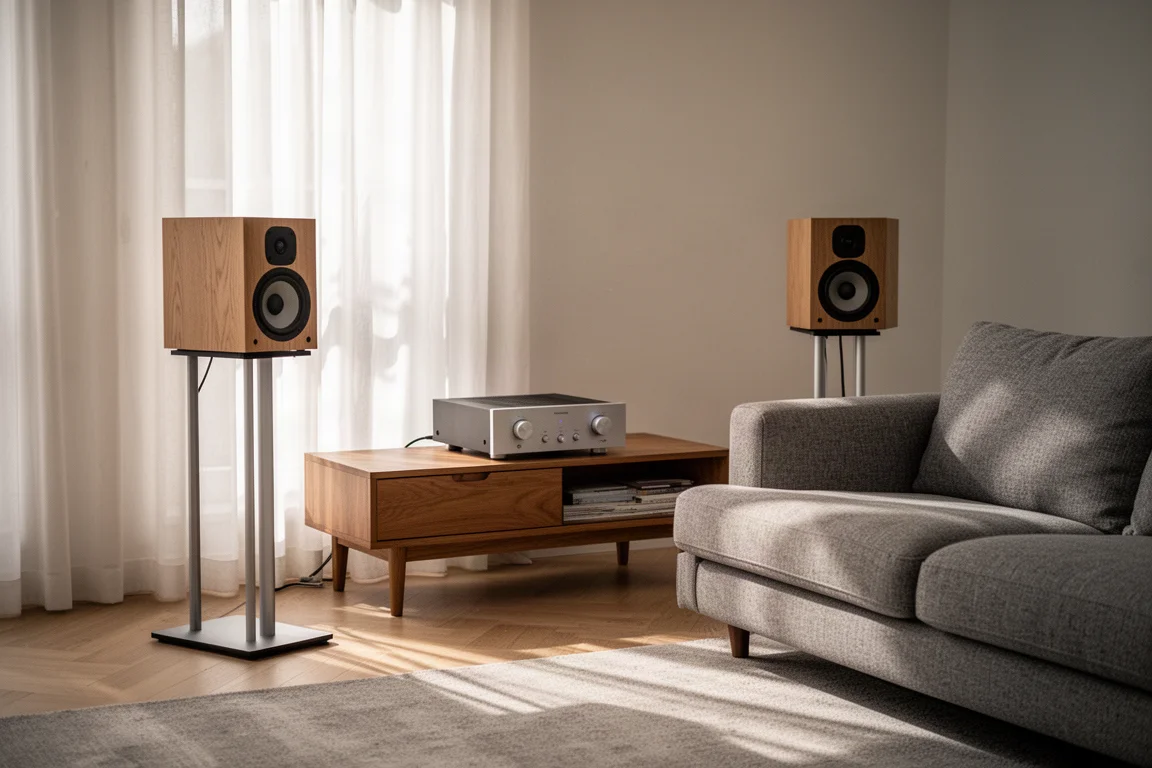
It also suits listeners who value a wide soundstage. Radiation stays broad at roughly plus or minus 60 to 70 degrees across much of the range depending on frequency, which is a good match for rooms with more than one seat in the sweet spot.
Main Strengths: Neutral Voicing and a Wide Soundstage
The strongest argument for the Vela BS 403 is how neutral it sounds overall. Nothing in the presentation calls attention to itself, and the midrange stays composed rather than aggressive. A persistent hand clap that came across as sharp and hard on the JBL L52 Classic sounds far calmer here, closer to a plain hand clap than a transient that makes you wince.
The speaker’s off-axis behaviour is another strength. The estimated in-room response at 0 and 30 degrees tracks closely up to about 10 kHz, which means the tonal balance holds together for listeners sitting off to the side. Above 10 kHz the tweeter narrows, so alignment with the tweeter axis matters more than it does on many speakers.
Bass Response and Room Placement
Bass extension is a genuine step up from the JBL L52 Classic, which relied on a mild bump around 100 Hz and rolled off quickly below it. The Vela BS 403 has an F3 of 59 Hz and an F10 of 46 Hz, and in a typical room most listeners should reach down to about 50 Hz. Anything below that needs a subwoofer, which is normal for a bookshelf speaker of this size.
Placement changes the low end more than the numbers alone suggest. Pushed close to a wall, boundary reinforcement adds kick and thump in the mid-bass region, but that extra energy can come across as bloated, resonant and boomy. Pulling the speakers out roughly a foot and a half from the back wall reduces the muddiness while keeping some of the bass weight.
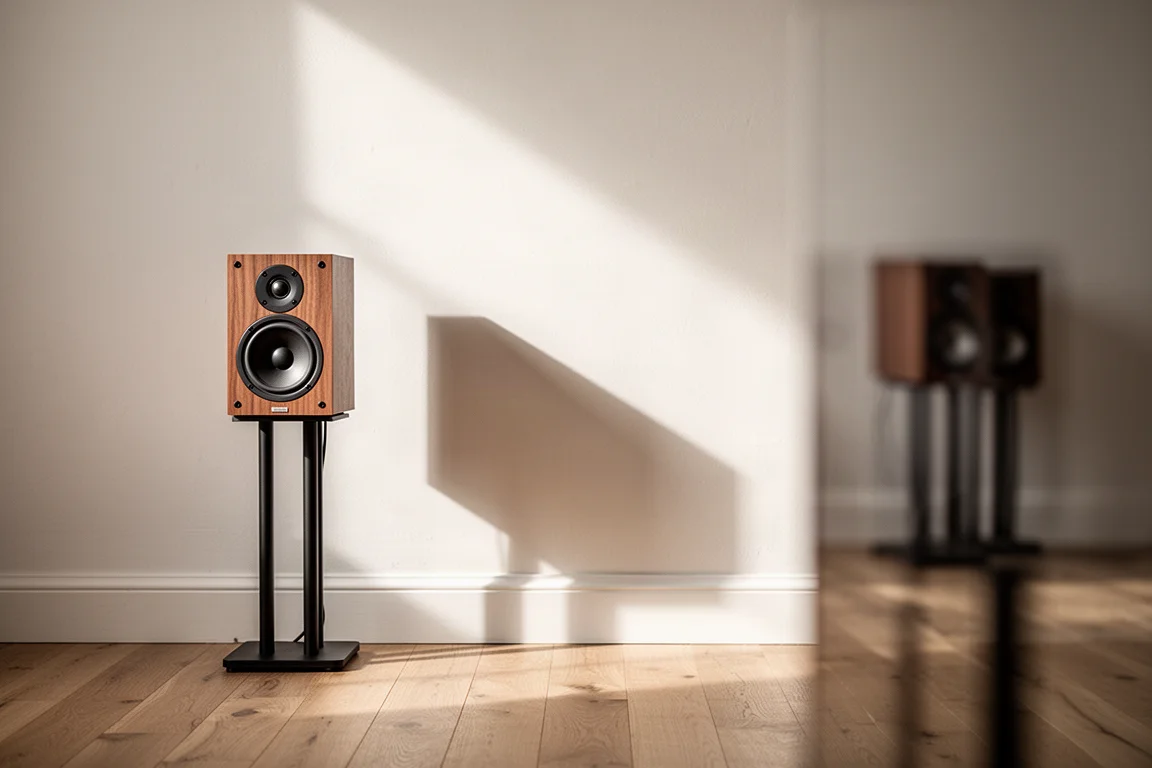
The design itself points toward free-space placement. The Vela BS 403 does not have an extended bass shelf response, and it does not show a lack of baffle step compensation, both of which suggest it was intended to sit out in the room rather than against a wall. Moving it further out costs some low bass but preserves midrange detail and adds a sense of depth.
Treble, Detail, and Perceived Attack
This is where the voicing choice becomes audible. The on-axis response shows a dip of roughly 4 dB around 2.5 kHz followed by a peak near 3.1 kHz, and the same behaviour appears across the off-axis measurements. That consistency indicates the shape is baked into the crossover rather than a measurement artefact, and it looks intentional rather than accidental.
The practical effect is a slight loss of attack and clarity through the upper midrange and lower treble. Horns and brass lose some bite, and vocal intelligibility can feel a touch softer than expected. Dynamic transients still land cleanly at low volume, with snare hits keeping a solid attack even when the volume is turned down, so the speaker is not dull overall. It is simply voiced a little gently in that band.
Things to Consider Before Buying
Output limits are worth understanding before committing. Distortion stays reasonable at moderate levels, but the gap between 86 dB and 96 dB shows a swing of roughly 8 to 10 dB, moving from about 1 percent to nearly 3 percent distortion. There is also a small distortion bump near 800 Hz, though it does not translate into an audible problem. Compression is well controlled, staying within about a decibel above 100 Hz, and the low compression in the treble is a good indication of transient capability from the ribbon tweeter.
Below about 80 Hz the woofer reaches its excursion limits at high playback levels, so a subwoofer crossover around 80 Hz is a sensible addition. Crossing over there also reduces midrange distortion.
Setup and Amplifier Pairing
Aim the speakers directly at the listening position. Pointing them away costs high-frequency detail above about 8 kHz, and there is little to gain in return, though a wider toe-out can work if it simply suits the room better. Listeners should also make sure their ears line up with the tweeter, since sitting off that axis through the crossover region produces a suckout that throws the balance off.
Because the dip and the peak appear consistently across the measurements, they can be corrected. Two EQ bands do most of the work: a boost of around 5 dB near 2.4 kHz with a moderate Q, and a second band to bring down the peak near 3.1 kHz. Smoothing that transition region makes the speaker sound more even and restores some of the attack it lacks. Keep in mind that boosting takes headroom away from the amplifier, so apply it carefully.
Buying Advice
The Vela BS 403 is a good speaker that rewards the right setup. Choose it if you want a neutral, wide, room-friendly presentation with genuine extension down to about 50 Hz, and if you own an amplifier comfortable driving a 4-ohm load. If you prefer a lively, forward upper midrange straight out of the box, the stock voicing may not suit you without EQ. Plan for stands or placement that keeps the speakers clear of the back wall.
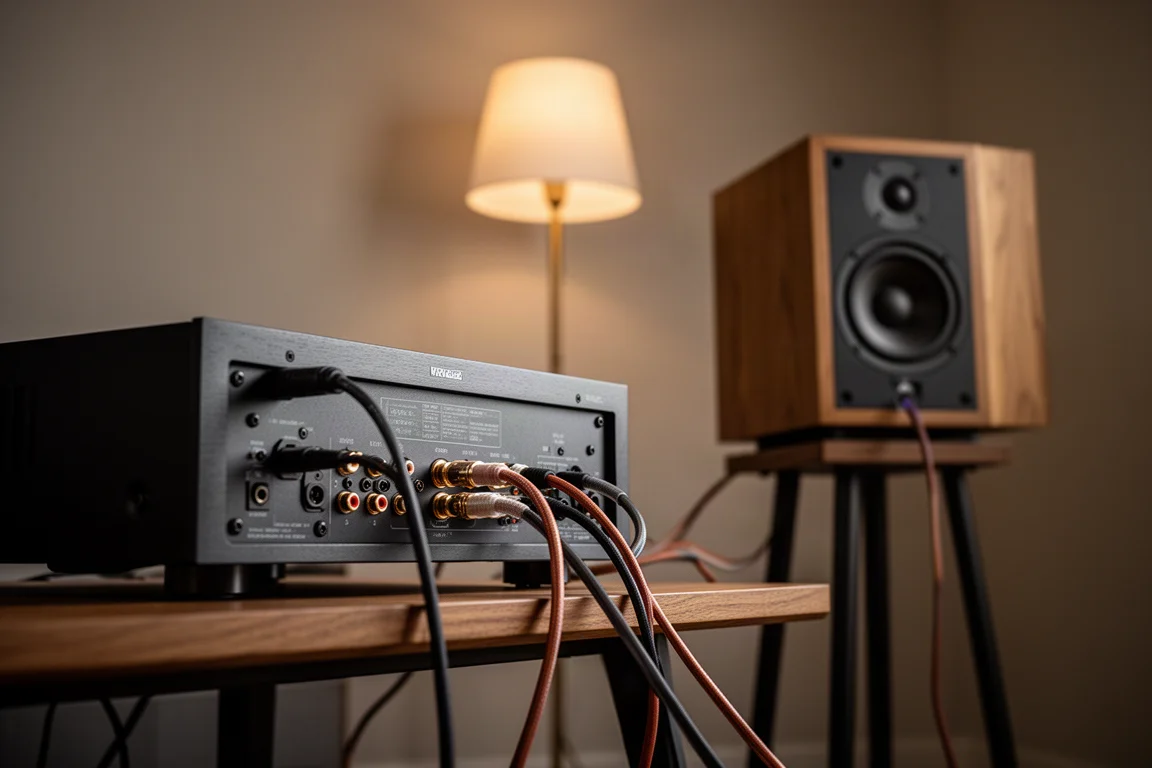
Add a subwoofer only if you need output below 50 Hz. A crossover near 80 Hz is the practical starting point and has the side benefit of lowering midrange distortion. If you want the flattest possible response through the crossover region, check that your amplifier or source offers basic parametric EQ.
Conclusion
The ELAC Vela BS 403 gets the fundamentals right: a neutral overall balance, a wide radiation pattern that keeps the tonal picture intact off axis, and bass extension that reaches about 50 Hz in a normal room. Its personality comes from one deliberate voicing choice around 2.5 to 3.1 kHz, which softens attack and detail in the upper midrange. Listeners who value neutrality and are willing to place the speakers out into the room will get a lot out of them, and those who want more bite can recover most of it with a couple of EQ bands.
Product link
View more details for ELAC Vela BS 403
This product is mentioned in the review. Check the specifications, options, and compatibility before buying.
View more details for ELAC Vela BS 403Further reading
Related Reviews
Bookshelf Speakers
Acoustic Energy A100 Mark II Review: A Compact Standmount With an Expansive Soundstage
The Acoustic Energy A100 Mark II brings clarity, natural tonality and a wide soundstage to an entry-level standmount, with a few setup details worth knowing first.
Bookshelf Speakers
Acoustic Energy AE-100 Mark II Review: Compact Bookshelf Speakers With Standout Imaging
A compact British two-way bookshelf speaker with deep, layered imaging, fast bass, and a slight treble lift to weigh against a crowded $500 field.
Bookshelf Speakers
Acoustic Energy AE100 MK2 Review: Measured Performance and Four Alternatives
A close look at the Acoustic Energy AE100 MK2 bookshelf speaker, what its measured performance reveals, and four alternatives with different trade-offs.