Subwoofers
ELAC Varro Subwoofers Compared: Premium, Reference, and Dual Reference Explained
A model-by-model guide to the ELAC Varro subwoofer range, from the value-focused Premium series to the sealed Reference and dual-driver Dual Reference models.
Introduction
ELAC spent most of its near-century history earning a reputation for value. Founded in Germany, the company invented the moving magnet phono cartridge and was a major turntable seller long before it became known for speakers. Its patented JET tweeter, inspired by the air motion transformer concept, is a useful reminder of how deep the engineering bench runs. Today ELAC’s engineering teams work out of Orange County, California and Toronto, Canada, with the largest group based at an expanded facility in Kiel, Germany. Klippel analysis, anechoic chambers, outdoor measurements, and real-world listening tests all feed into the design process.
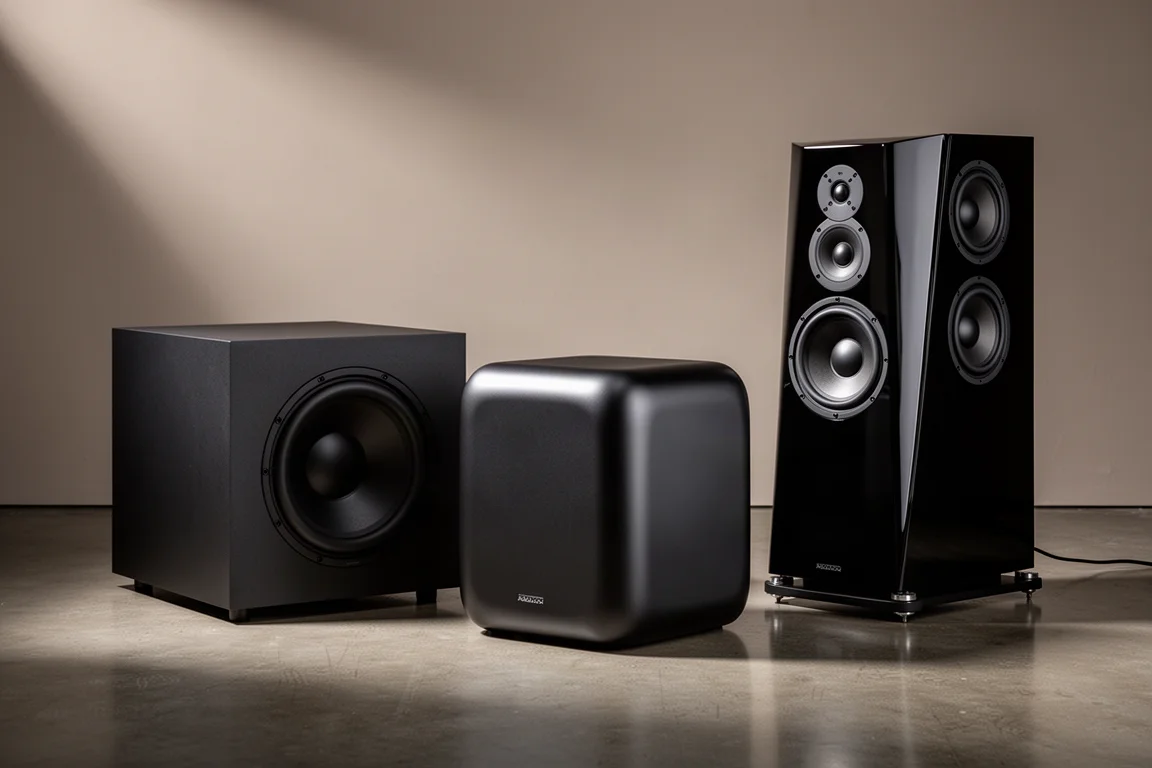
Subwoofers were never the center of the lineup, even as ELAC’s bookshelf and tower speakers collected best-for-the-money nods around the world. That changed when the company brought in a veteran chief engineer from another well-known speaker brand to develop a new range from the ground up. The result is the Varro series, seven models spread across three tiers: Premium, Reference, and Dual Reference.
All seven share a common foundation of cabinet construction, amplifier design, and app-based control. The differences come down to driver design, cabinet type, output, and how low each one reaches.
What Every ELAC Varro Subwoofer Shares
Every Varro cabinet is built with internal cross bracing and damping material, so the enclosure stays inert and lets the driver do its job. Threaded feet are standard across the range, and they accept either spikes or rubber feet depending on your floor.
Drivers use ELAC’s ceramic magnet, while amplifier duties fall to a BASH design that ELAC’s CEO brought to the consumer market. A BASH amp pairs a modulated switch-mode power supply with a Class AB output stage. The supply switches more than 400,000 times per second while tracking the incoming audio signal, delivering only the voltage the moment needs plus a little headroom for dynamic peaks. The practical benefit is a lot of available power while keeping the kind of woofer control that Class AB is known for.
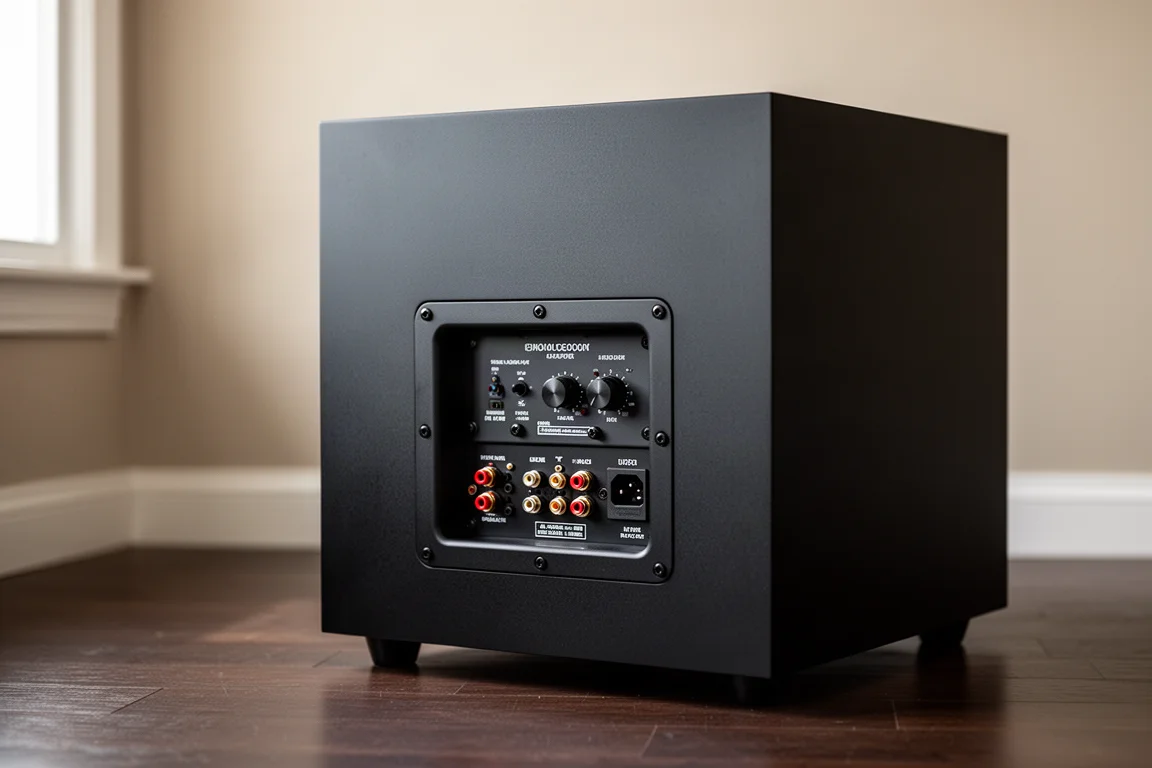
Control happens in ELAC’s subwoofer app, which has been updated for Varro with better auto EQ and quicker, more reliable Bluetooth. The home screen shows volume and the preset you are in. If you run more than one sub, each can be adjusted individually while their relative levels stay grouped, and up to eight subwoofers can be grouped together.
The setup screen covers a lot of ground. Crossover is adjustable from 40 to 150 Hz in 1 Hz steps, phase runs from 0 to 360 degrees, and you can add up to 20 milliseconds of delay. Auto-on thresholds are adjustable too, which matters if you listen at low levels and want the sub to wake reliably. There is also a parametric EQ with eight bands up to 200 Hz, each with its own gain control.
Auto EQ is a two-step process. Point the phone’s microphone at the woofer from very close range for a near-field snapshot, then run the test again at the listening position. The software compares the two measurements and works to flatten the response at your seat. ELAC uses a dual 28-bit DSP system with a 140 MHz master clock for accuracy and minimal latency.
Four presets shape the low end. Flat is the most accurate, Night rolls off the bottom end, Music gives the lower bass a slight boost, and Theater adds a little more. Flat and Night are the most neutral places to start when you want the processing to stay out of the way.
ELAC Varro Premium PS250
The PS250 is the smallest member of the family, and it follows the same recipe as the rest of the Premium line: a 30 mm MDF cabinet with a vinyl wrap, a bass reflex design with the port on the bottom, and damping and bracing sized to the driver. The 10 inch driver uses a high-excursion treated paper cone that stays lightweight while gaining stiffness, a two inch long-throw voice coil, and a large ceramic magnet.
Amplifier power is rated at 250 watts continuous, with double that available for peaks. Published output figures are 27 Hz anechoic and 24 Hz in-room at minus 3 dB, with maximum anechoic SPL of 107 dB. At $649 it is an accessible entry point for a system that needs genuine low-frequency support rather than a token rumble.
ELAC Varro Premium PS350
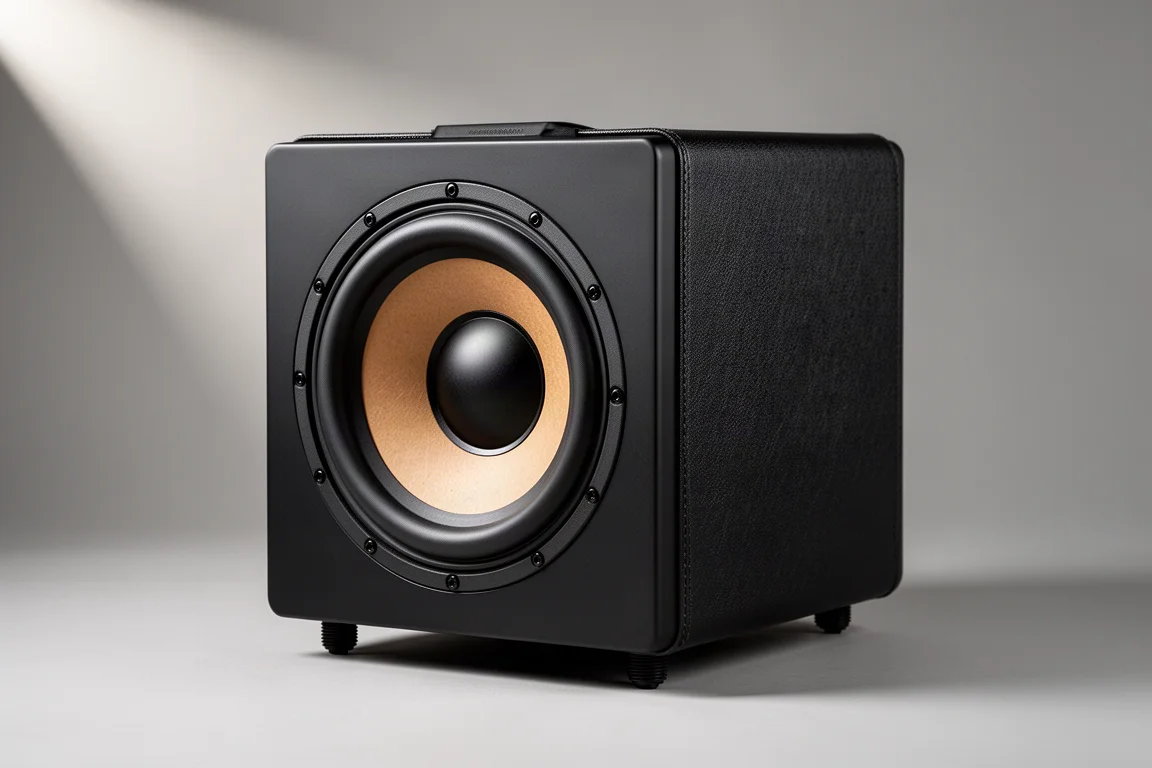
The PS350 steps up to a 12 inch driver in a correspondingly larger cabinet, with the same treated paper cone construction, two inch long-throw voice coil, and ceramic magnet. Continuous amplifier power rises to 350 watts, again with double available for peaks.
Extension improves to 24 Hz anechoic and 21 Hz in-room at minus 3 dB, and maximum anechoic SPL climbs to 108 dB. At $749 it sits in the middle of the Premium range and is the natural pick for a medium-sized room that wants more headroom than the 10 inch model can provide.
ELAC Varro Premium PS500
The PS500 is the flagship of the Premium series and the model that makes the value argument most clearly. A 15 inch driver, 500 watts continuous with double that for peaks, and published figures of 20 Hz anechoic and 16 Hz in-room at minus 3 dB. Maximum anechoic SPL is quoted at 115 dB.
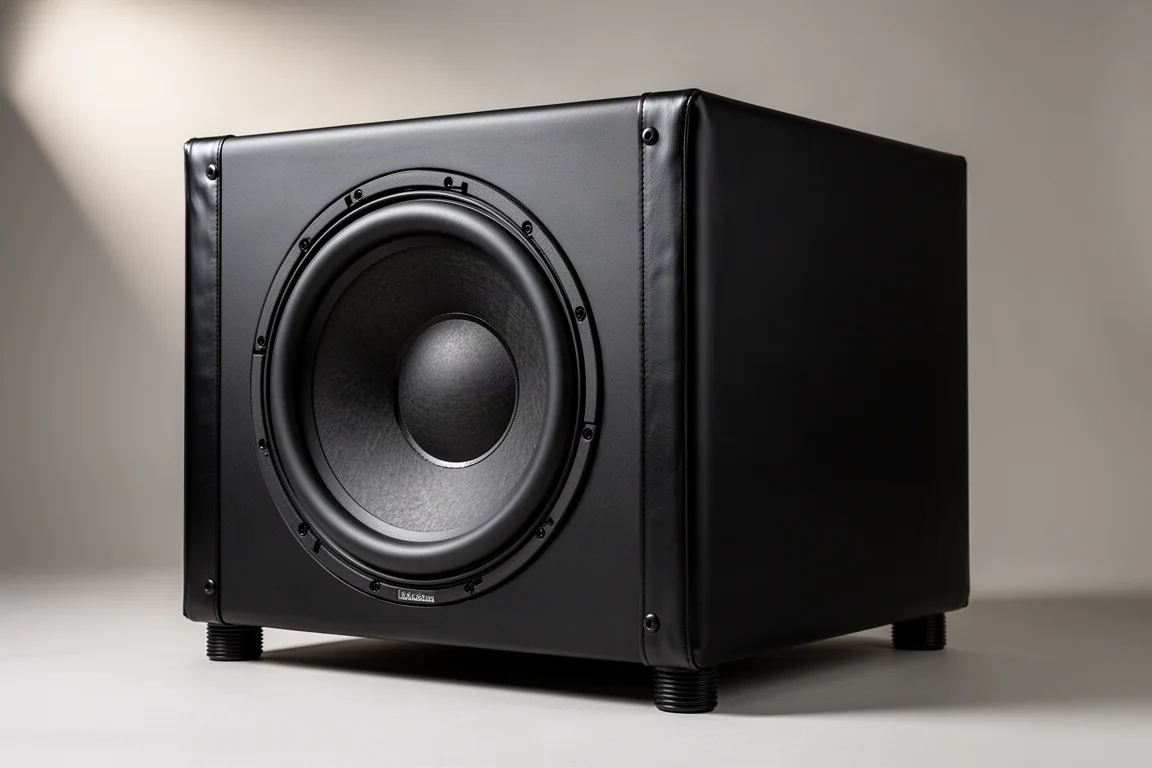
These are quick bass reflex designs, fast enough to keep pace with small bookshelf or tower speakers while still producing a tremendous amount of output. At $909.99 the PS500 is priced where many smaller single subwoofers sit, which makes a pair of them a realistic option for a serious home theater build.
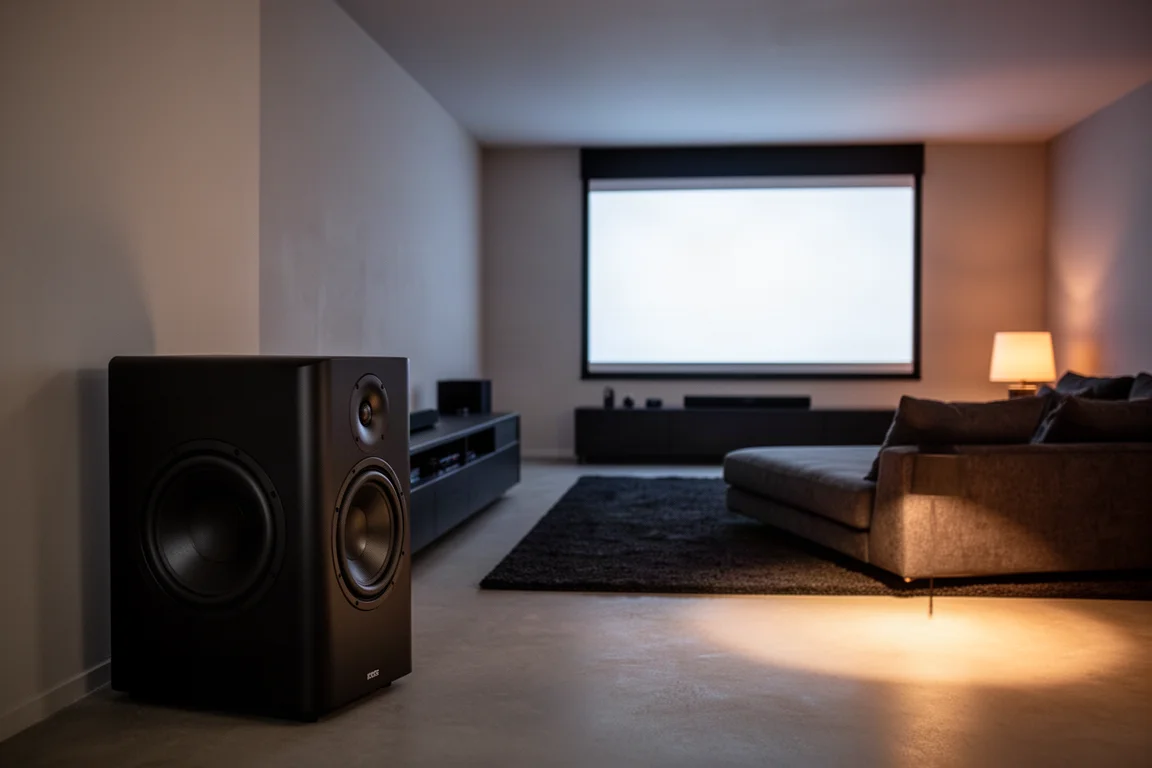
For anyone weighing one large sub against two smaller ones, the PS500 is the model that changes the math. Two of them can be grouped and level-matched in the app, and the parametric EQ gives you eight bands per cabinet to tame the worst room peaks.
ELAC Varro Reference RS500
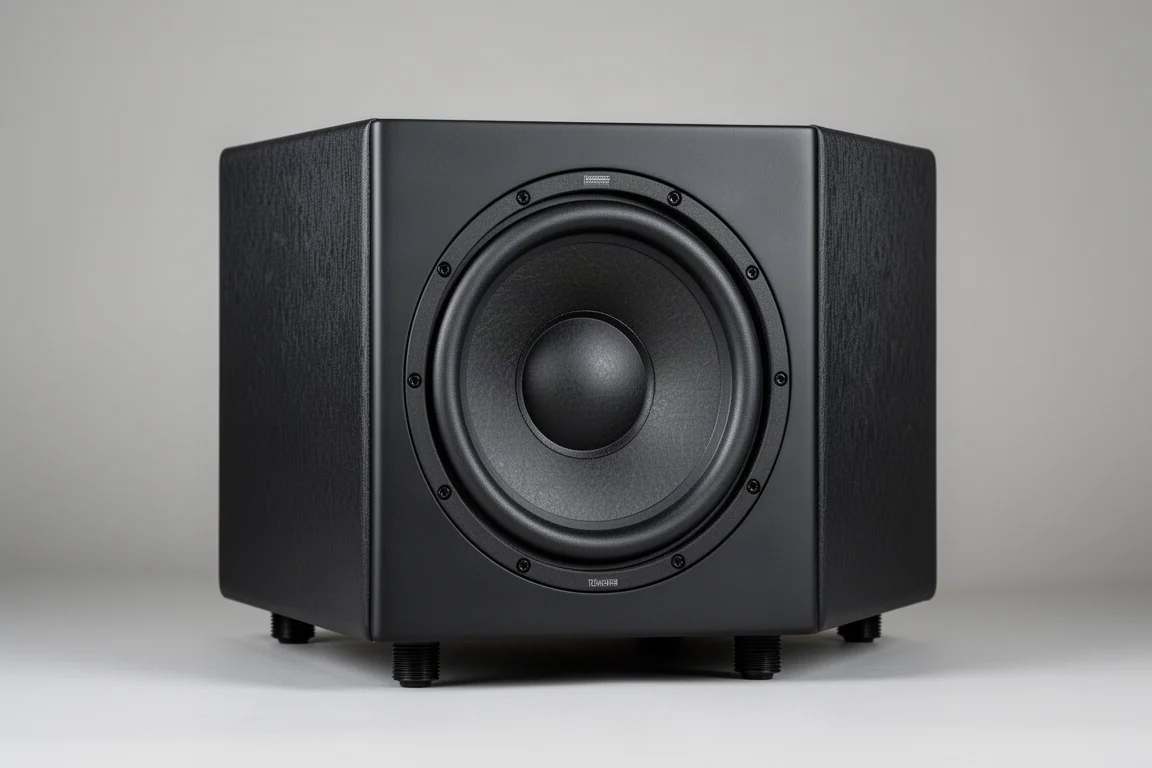
The Reference series moves to sealed cabinets and a noticeably more premium execution. Cabinet thickness rises to 35 mm, the edges are rounded, and the finish is satin paint rather than vinyl wrap.
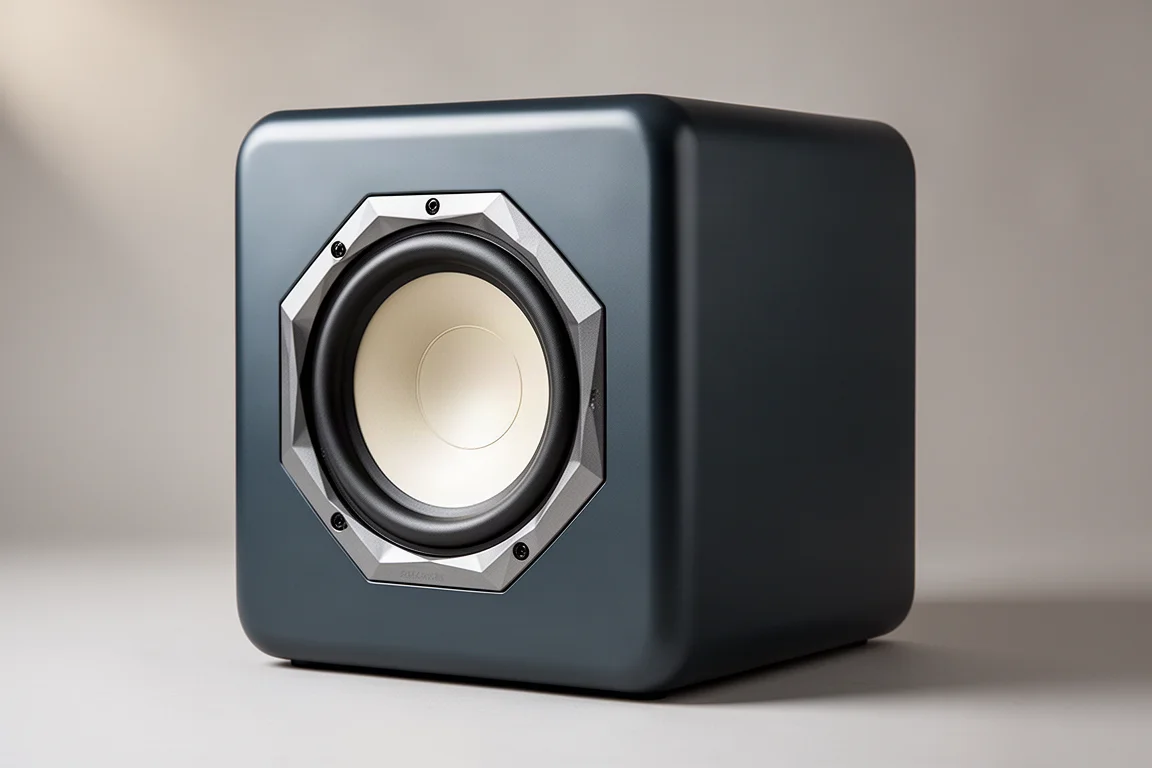
The driver is completely different from the Premium line. Two treated paper cones are bonded around an aluminum layer using a special gluing process, which pairs the transient response of paper with the rigidity of aluminum and allows a longer throw for deep bass and higher output. The basket is upgraded to a die-cast type, the voice coil grows to two and a half inches, and the ceramic magnet is larger.
The surround uses a geometry ELAC calls HEX. Extensive measurements of vertically mounted woofers showed a small amount of sag from gravity regardless of design, and the faceted surround geometry lets the driver move more like a true piston, lowering measured distortion even at very high levels. It also gives the driver a distinctive look.
A wireless receiver is built into the back of the cabinet, so wireless operation is possible with the optional ELAC wireless transmitter, and the AIR-X2 transmitter supports up to three subs at once. Substantial speaker-level connections are also provided for two-channel systems, where the sub can take on more of the character of the main amplifier.
Amplifier power is 500 watts continuous with double for peaks. Published extension is 18 Hz anechoic and 15 Hz in-room at minus 3 dB, with maximum anechoic SPL of 108 dB. The launch price was $1,299.
ELAC Varro Reference RS700
The RS700 is the 12 inch version of the same sealed design, with 700 watts continuous and double that for peaks. Published extension is 17 Hz anechoic and 14 Hz in-room at minus 3 dB, and maximum anechoic SPL is 111 dB. The launch price was $1,499.
In a room roughly 19 by 15 feet with 10 foot ceilings, a single RS700 filled the space well for home theater material, delivering deep and explosive bass. What stood out more was integration. Wired from a stereo preamp into a pair of fast, phase-accurate tower speakers that roll off around 50 Hz in the room, the RS700 blended so cleanly that the only audible change was the music going lower. Crossover and level were dialed in entirely through the app. On tracks with serious low-frequency content, including Yello’s “Oh Yeah”, Chris Jones’s “Long After You’re Gone”, and Boz Scaggs’s “Thanks to You”, the system simply sounded like the mains had gained an extra octave.
ELAC Varro Dual Reference DS1000
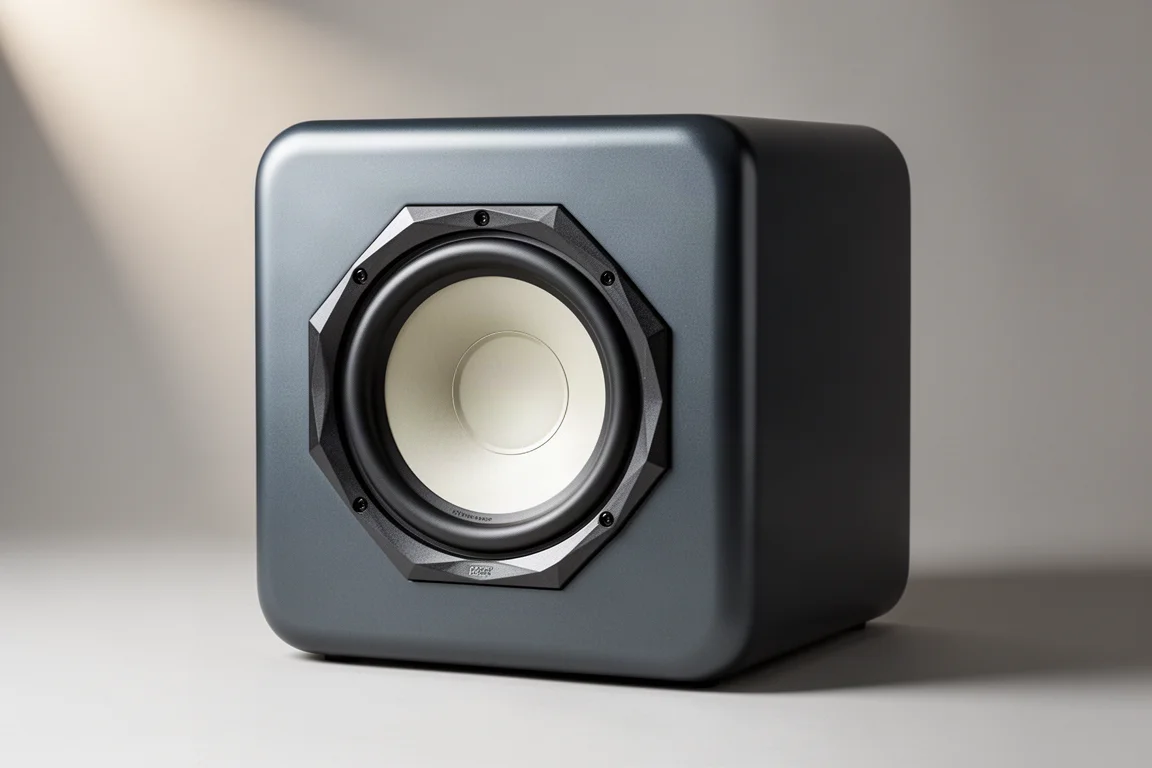
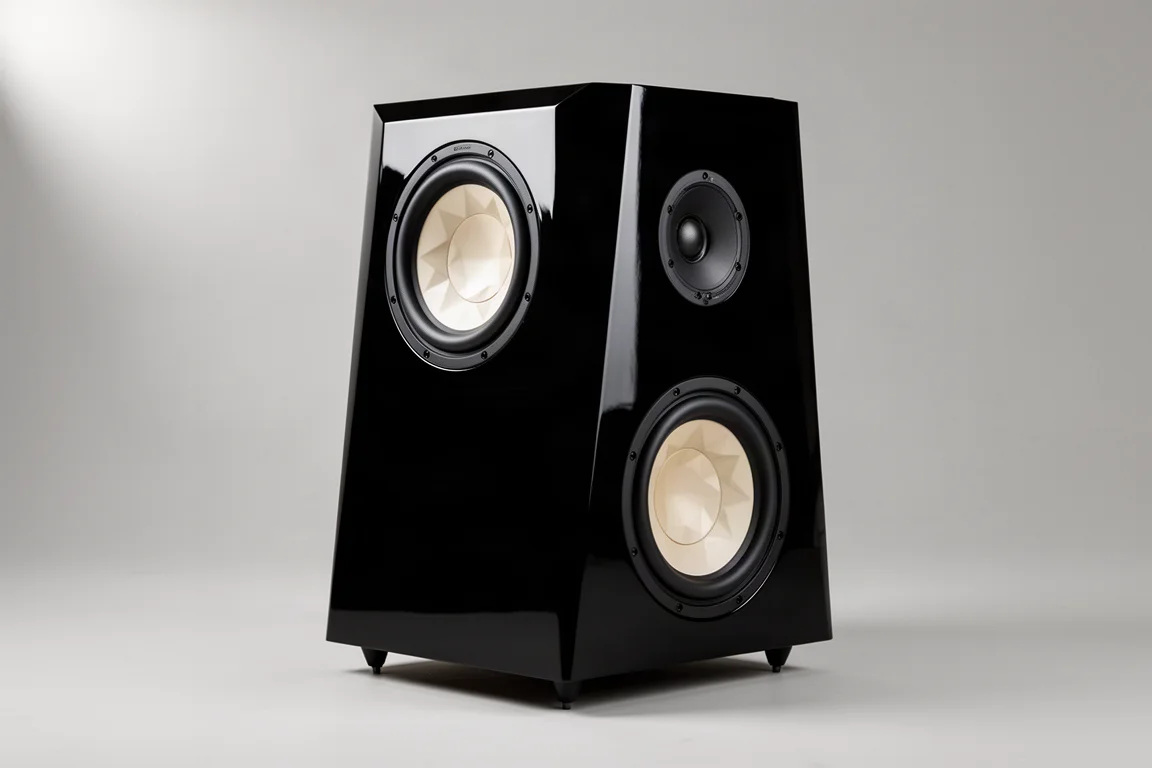
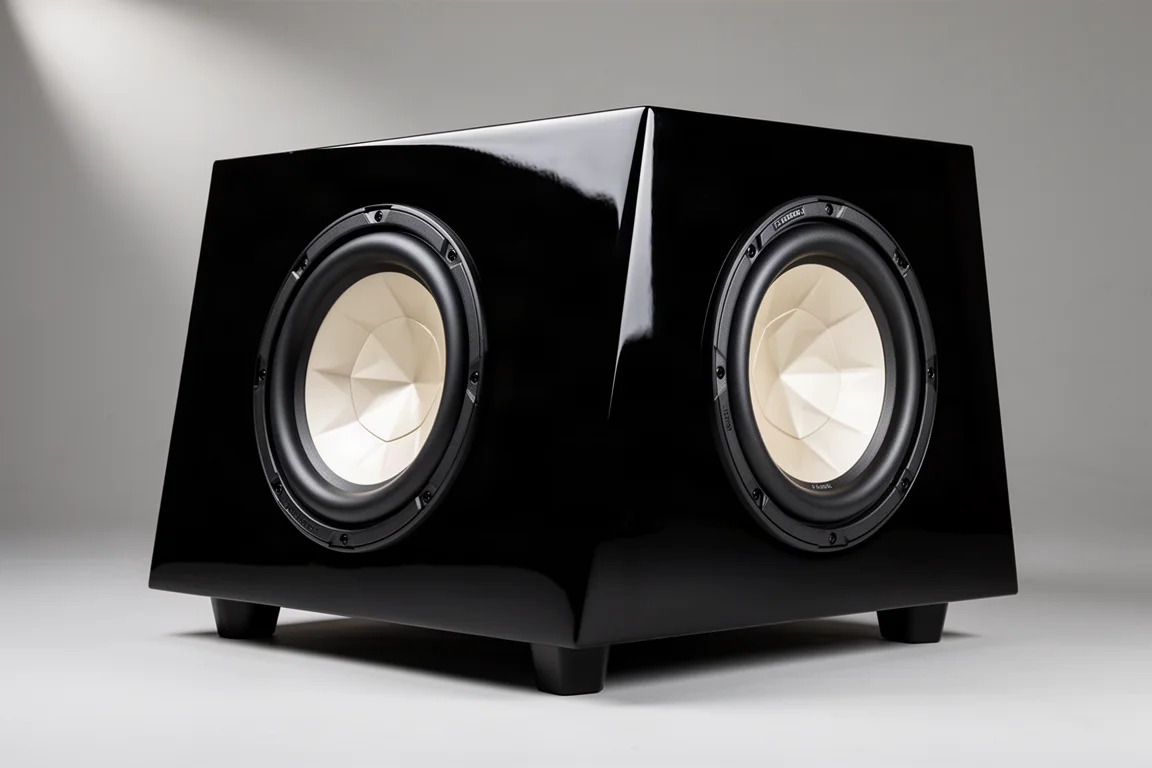
The Dual Reference models are built for listeners who want maximum output while keeping the speed of the Reference series. The drivers are identical to the Reference units, but there are two of them, mounted on the sides of a high gloss cabinet with angled side walls. The cabinet grows to 36 mm, with bracing and damping tuned for the dual-driver configuration.
Speaker-level inputs carry over, and balanced audio inputs are added. Continuous amplifier power is 1,000 watts, with double that available for peaks. These models do not reach any lower than the Reference series, but they play far louder, with 115 dB anechoic peaks. That extra headroom also makes the bass feel more effortless at low to moderate volumes.
The side-firing layout and angled walls mean placement deserves a little more thought than a front-firing cabinet, and the high gloss finish shows its surroundings more readily. In exchange, the cabinet barely seems to work at normal listening levels.
ELAC Varro Dual Reference DS1200
The DS1200 is the largest model in the range, with continuous amplifier power of 1,200 watts and double that for peaks. Published anechoic peaks reach 118 dB. Like the DS1000, it trades the Reference series’ compact proportions for sheer output capability rather than deeper extension.
How to Choose the Right Varro Subwoofer
Start with the room and how loud you actually listen. The Premium models cover a wide span of output on their own, and the larger cabinets are the ones to consider if you want a single sub to pressurize a big space. The Reference and Dual Reference models add output and control on top of that, and the Dual Reference pair adds the most headroom of all.
Cabinet type matters as much as size. The Premium series is bass reflex with a bottom-mounted port, which tends to suit home theater duty where output and efficiency are priorities. The Reference series is sealed, and the RS700 in particular proved unusually easy to blend with fast, phase-accurate main speakers, which is the scenario most two-channel listeners care about.
Think about how you will connect and control the sub. Speaker-level inputs are available on the Reference and Dual Reference models for two-channel systems, balanced inputs appear on the Dual Reference pair, and wireless operation is possible across the Reference line with the optional transmitter, which can feed up to three subs at once. Every model benefits from the same app, and the parametric EQ, crossover steps, phase control, and delay adjustment are worth having regardless of which tier you choose.
Finally, look at the price ladder rather than the spec sheet alone. The Premium series delivers the most performance per dollar by a clear margin, the Reference series is the value pick if accuracy and integration with high-quality mains matter most, and the Dual Reference models exist for rooms and systems that genuinely need the extra output.
Conclusion
The Varro range is a serious statement from a company that spent years being known primarily for value speakers. The Premium series carries that value story into subwoofers with three bass reflex models that reach surprisingly low for the money. The Reference series steps up to sealed cabinets, a sandwich cone driver, and a HEX surround, and the RS700 in particular blends into a fast two-channel system without announcing itself. The Dual Reference models take the same driver design and double it for listeners who want maximum output without giving up speed.
Match the model to your room, your mains, and how you plan to connect everything, and any of the seven will do the job it was designed for.
Further reading
Related Reviews
Subwoofers
Arendal 1961 Subwoofer 1S Review: Beautiful Build, Modest Punch at $1,000
A sealed $1,000 subwoofer with a gorgeous cabinet, plus three lower-priced alternatives that deliver more impact for movie nights.
Subwoofers
Arendal Sound 1723 2V Subwoofer Review: Dual 13.8-Inch Drivers Under $3,000
A flagship ported subwoofer with dual opposing 13.8-inch drivers, a 1,200W RMS amplifier, app-based DSP, and a 10-year warranty.
Subwoofers
Ascendo 16 Sub Active Sealed Review: Sealed Bass Built on Real Engineering
A close look at the Ascendo 16 Sub Active Sealed, a 16-inch sealed home theater subwoofer with independently verified measurements, a purpose-built driver, and genuinely controlled output.