Bookshelf Speakers
ELAC Debut 3 Review: A Third-Generation Redesign Worth Waiting For
A third-generation redesign with a first-ever aluminum dome tweeter, a rear-firing port, and an easier 6 ohm load. Here is what the ELAC Debut 3 gets right, what to check, and how the seven-model lineup fits together.
Introduction
The ELAC Debut series has spent years as the reference point for listeners who want genuine high-fidelity sound without a high-fidelity price. The third generation, the ELAC Debut 3, is the most significant redesign the line has seen so far. It introduces a tweeter type the series has never used, a redesigned woofer, a repositioned port, and a specification sheet that should make it noticeably easier to drive.
Seven models make up the range: two bookshelf speakers, two floorstanders, two center channels, and a Dolby Atmos enabled on-wall speaker. Pricing starts at $349 for the compact 5.25-inch bookshelf in black ash and reaches $500 for the Atmos on-wall model, with the 6.5-inch bookshelf sitting at $450.
What the ELAC Debut 3 Changes
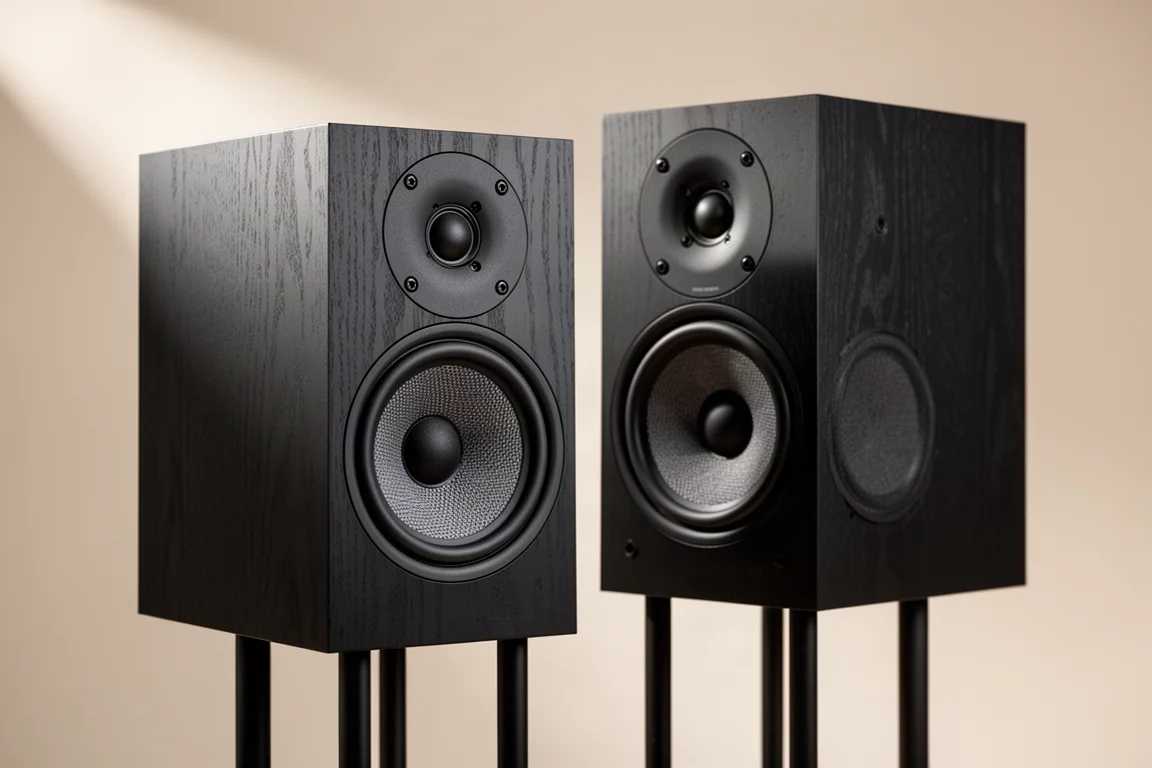
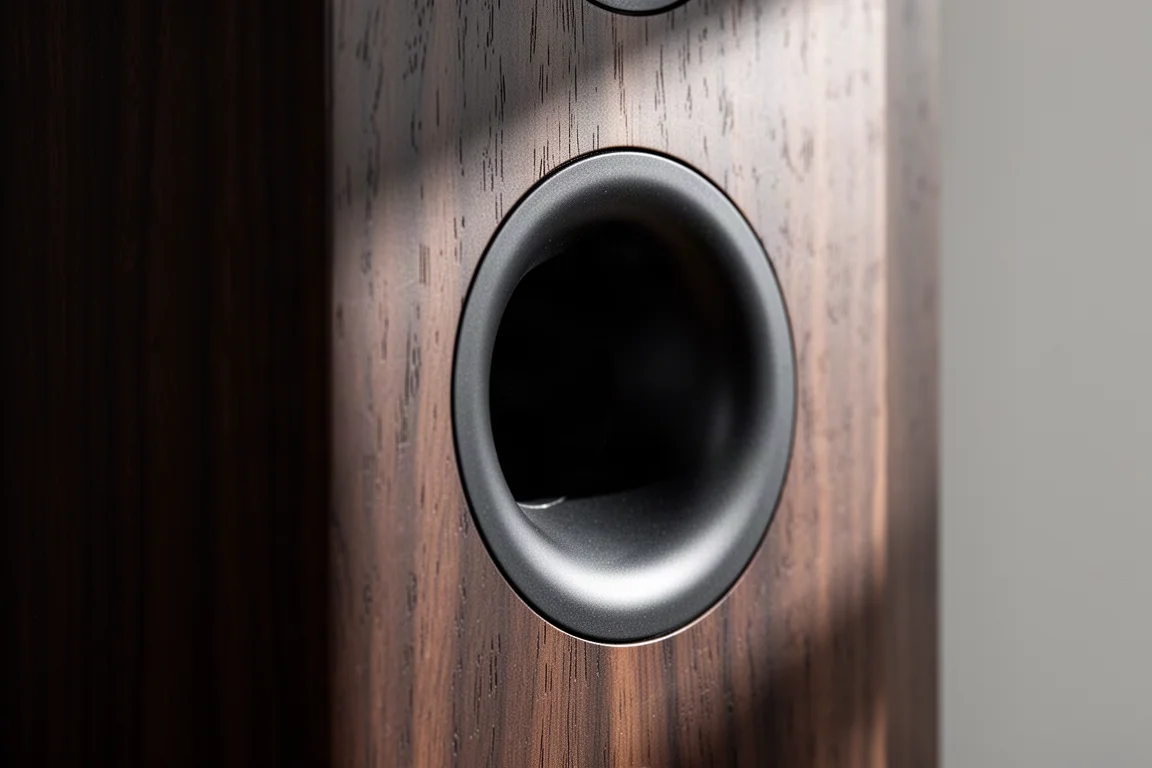
The headline change is the tweeter. For the first time in the Debut series, ELAC has moved to an aluminum dome. Metal domes carry a reputation for brightness, and ELAC has addressed that directly: the dome is covered with a diffusion material and paired with a vertical diffusion bar. The goal is to preserve the clarity and air a metal dome can deliver while smoothing away the hardness that often comes with it.
The woofer has been redesigned too, built around an aramid woven cone. Just as significant is the port. The second-generation Debut placed its port at the bottom of the front baffle, and that arrangement had a clear effect on how the speaker behaved at the low end. The Debut 3 returns to a rear-firing port, the same approach used by the original Debut, a speaker known for producing a generous amount of bass without sounding boomy or bloated.
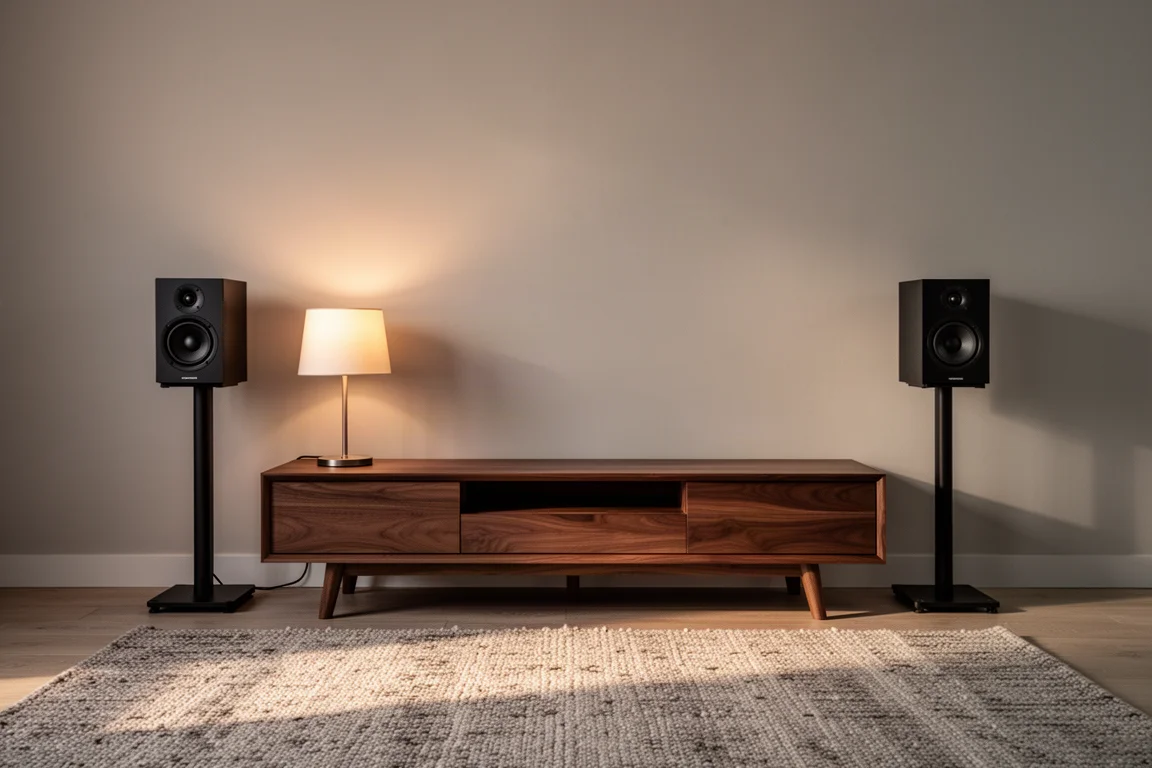
The electrical specification is friendlier as well. The Debut 3 is rated at 87 dB sensitivity with a 6 ohm nominal impedance, which makes it a far easier load than the first-generation Debut. Listeners running modest integrated amplifiers or budget receivers should have much less to worry about.
Who the ELAC Debut 3 Is For
This is a speaker for people assembling a first serious two-channel system, and for anyone who wants a traditional hi-fi brand’s affordable design rather than a lifestyle product. The easier impedance load widens that audience further, because it removes the need for a powerful amplifier to get the speakers working properly.
It also makes sense for listeners who liked the idea of the original Debut but wanted more air and openness at the top of the frequency range. The aluminum dome is a deliberate move in that direction. Home cinema builders are covered as well, since the line includes two center channels and an Atmos on-wall model that can be matched to the bookshelf and floorstanding speakers.
Main Strengths
Three qualities stand out from the design.
- A tweeter that targets detail without hardness. The diffusion material and the vertical diffusion bar exist specifically to keep the aluminum dome from sounding edgy.
- A low end built on the original Debut’s approach. The rear-firing port and the redesigned aramid woven woofer point back to the first generation’s reputation for deep, controlled bass.
- A load most amplifiers can handle. At 87 dB sensitivity and 6 ohm nominal impedance, the Debut 3 asks far less of an amplifier than the first-generation model did.
For anyone who has owned a Debut speaker before, the combination reads as a correction of course: the warmth and scale of the first generation, carried forward with a cleaner top end and a cabinet that looks considerably more expensive than its price suggests.
The value story is the same one that has followed the Debut name from the start. These are conventional passive speakers with no wireless features and no built-in amplification, so the money goes into drivers, cabinet, and crossover rather than app support and streaming hardware. That is exactly the trade-off many buyers in this price bracket are looking for.
Design and Finish
The cosmetic side has moved up a generation as well. The Debut 3 uses a wood-grain vinyl wrap in the spirit of the second generation, but the front baffle is smooth and finished in what reads as a painted surface, with a waveguide around the tweeter that gives the speaker a more deliberate, modern face.
The grille is magnetic and includes a small cutout at the bottom that reveals the ELAC logo, a neat detail that keeps the branding visible without a badge fixed to the baffle. The floorstanding models sit on outrigger feet. The finish is a clear step beyond the earlier generations, which matters in rooms where the speakers are as visible as the furniture.
Things to Consider Before Buying
A few points are worth weighing before ordering.
- The tweeter is a departure. Listeners who prized the soft, warm top end of the original Debut are buying into a different presentation, even though the design aims to avoid the usual metal dome hardness.
- The port has moved to the rear. That is a different placement consideration from the front-mounted port of the second generation.
- The price has risen. The Debut 2.0 B6.2 carried a retail price of $399, while the 6.5-inch Debut 3 comes in at $450, a marginal but real increase.
- Availability is likely to be limited at first. The line is expected to appear through ELAC’s US store before reaching wider retail channels, so stock may be tight in the early weeks.
- Room and amplifier still matter more than any single specification. No sensitivity rating can predict how a speaker will behave in a particular room.
There is one more angle worth noting for patient buyers. Previous-generation Debut 2.0 models have periodically been discounted, with the smaller bookshelf dropping to around $199 a pair during promotional periods and the larger model falling to roughly $279 a pair at times. Anyone who prefers the older voicing, or simply wants to spend less, may still find those offers worthwhile.
The Full Debut 3 Lineup and Buying Advice
Seven models are planned for the line, and the spread makes it straightforward to build a system around one family of speakers.
- 5.25-inch bookshelf, black ash only, $349
- 6.5-inch bookshelf, $450
- Three-way floorstander with three 5.25-inch woofers, $449 each
- Floorstander with three 6.5-inch woofers, $499 each
- Center channel with dual 5.25-inch woofers, $300
- Center channel with dual 6.5-inch woofers, $400
- Dolby Atmos enabled on-wall speaker, $500
For a stereo setup, the 6.5-inch bookshelf at $450 is the natural centre of gravity: it is the model with the most headroom and the one that pairs with the widest range of amplifiers. If the budget or the room is tighter, the 5.25-inch version at $349 covers smaller spaces well, and it is the only model in the range offered solely in black ash. The two floorstanders step up to roughly $900 and $1,000 per pair respectively and suit larger rooms where a full-range presentation matters. Home cinema buyers should match the center channel to the size of their main speakers, with the dual 5.25-inch center at $300 and the dual 6.5-inch center at $400.
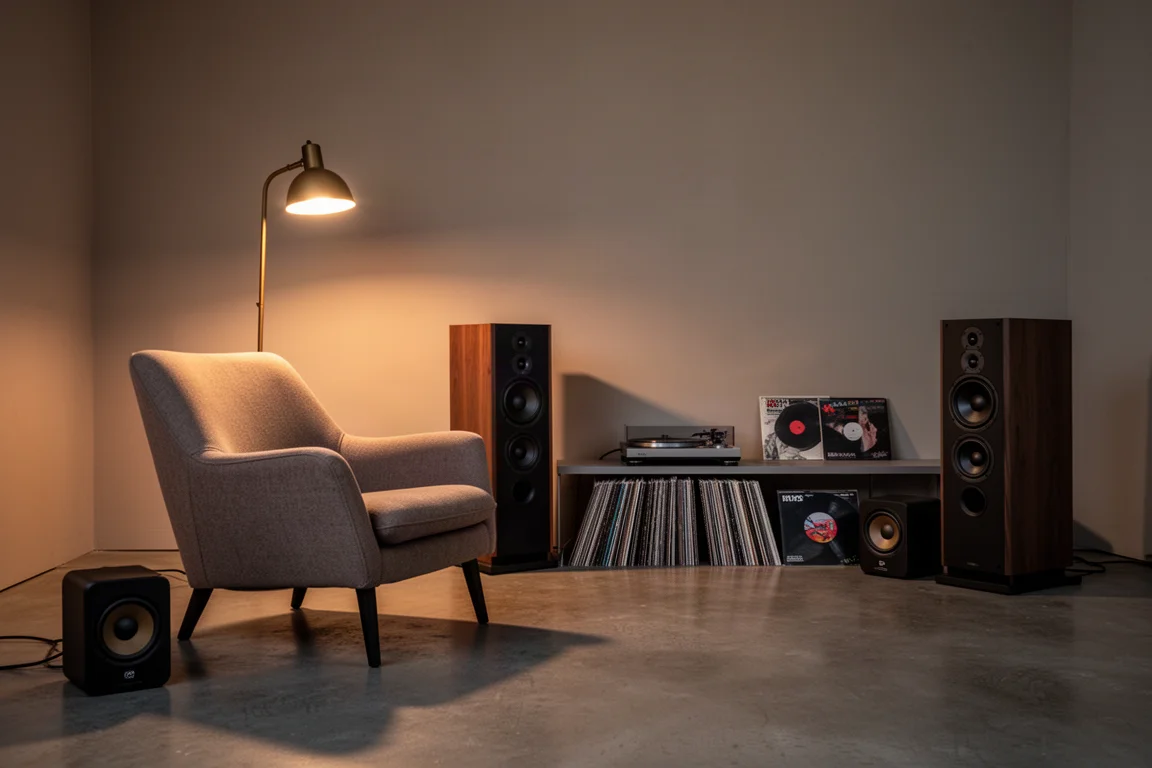
If you are weighing a purchase right now, the sensible approach is to choose the model that matches your room first and confirm amplifier requirements second. The 6 ohm nominal impedance and 87 dB sensitivity mean the Debut 3 will work with far more amplifiers than the first-generation Debut did, so an existing integrated amplifier is unlikely to be the limiting factor.
Conclusion
The ELAC Debut 3 is a genuine redesign rather than a refresh. A first-ever aluminum dome tweeter with diffusion treatment, a redesigned aramid woven woofer, a return to rear porting, and an easier 87 dB, 6 ohm load add up to a speaker that keeps the Debut series’ reputation for value while addressing the areas where earlier generations were less convincing.
If you want a conventional passive speaker with an established design heritage, an entry price of $349 and a 6.5-inch model at $450 put the line in a competitive position. Buyers who prefer the warmer character of the original, or who want to spend less, still have the discounted Debut 2.0 models to consider. Either way, the third generation looks like the version of the Debut most listeners have been waiting for.
Product link
View more details for ELAC Debut 3
This product is mentioned in the review. Check the specifications, options, and compatibility before buying.
View more details for ELAC Debut 3Further reading
Related Reviews
Bookshelf Speakers
Acoustic Energy A100 Mark II Review: A Compact Standmount With an Expansive Soundstage
The Acoustic Energy A100 Mark II brings clarity, natural tonality and a wide soundstage to an entry-level standmount, with a few setup details worth knowing first.
Bookshelf Speakers
Acoustic Energy AE-100 Mark II Review: Compact Bookshelf Speakers With Standout Imaging
A compact British two-way bookshelf speaker with deep, layered imaging, fast bass, and a slight treble lift to weigh against a crowded $500 field.
Bookshelf Speakers
Acoustic Energy AE100 MK2 Review: Measured Performance and Four Alternatives
A close look at the Acoustic Energy AE100 MK2 bookshelf speaker, what its measured performance reveals, and four alternatives with different trade-offs.