Bookshelf Speakers
ELAC Debut 3 DB63 Review: A Capable Budget Bookshelf Speaker
A close look at the ELAC Debut 3 DB63, covering build quality, dispersion, bass limits and the setup habits that decide how good it sounds.
Introduction
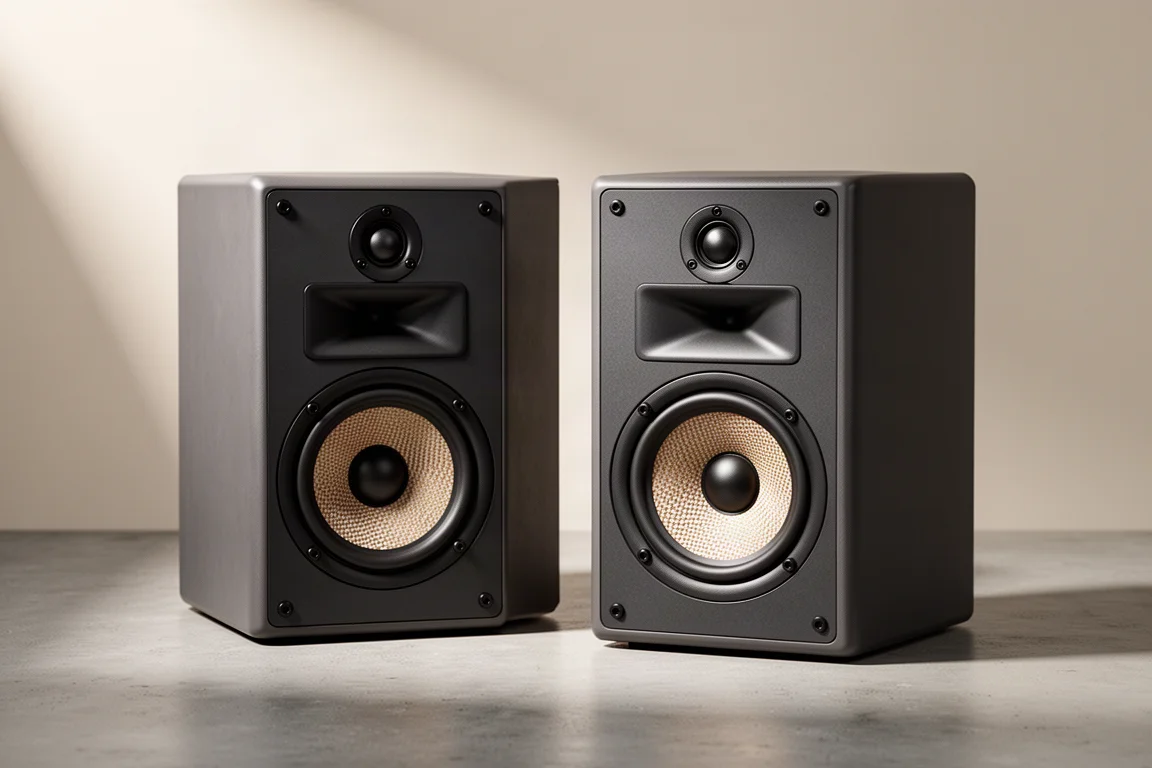
The ELAC Debut 3 DB63 is a ported two-way bookshelf speaker built around a 6.5 inch midwoofer and a 1 inch aluminum dome tweeter. It sells for about $450 per pair, which places it in the budget-conscious end of serious hi-fi rather than the disposable entry-level bracket. Cabinet construction feels genuinely robust for the money, and the front baffle carries an unusual waveguide in front of the tweeter.
That waveguide is not a traditional horn-style guide. Rather than a full lens covering the dome, it uses a partition that sits in front of the tweeter, a design intended to spread the off-axis response more evenly across the listening window. The result is a speaker that responds noticeably to careful aiming and placement, and that theme runs through everything below.
Who This Speaker Is For
The DB63 suits listeners building a two-channel system or a living room setup around a receiver. Impedance is rated at 6 ohm with a minimum dip around 4.4 ohm, so a typical AV receiver should drive it without trouble. Power handling is specified from 20 to 140 watts, sensitivity is rated at 87 dB with a measured average around 86.2 dB, and each cabinet weighs roughly 17 lb.
It also suits buyers who are willing to aim the speaker deliberately. The DB63 sounds best pointed directly at the listening position. Toe it outward by 30 degrees and the top end loses air, a trade-off most owners will want to avoid.
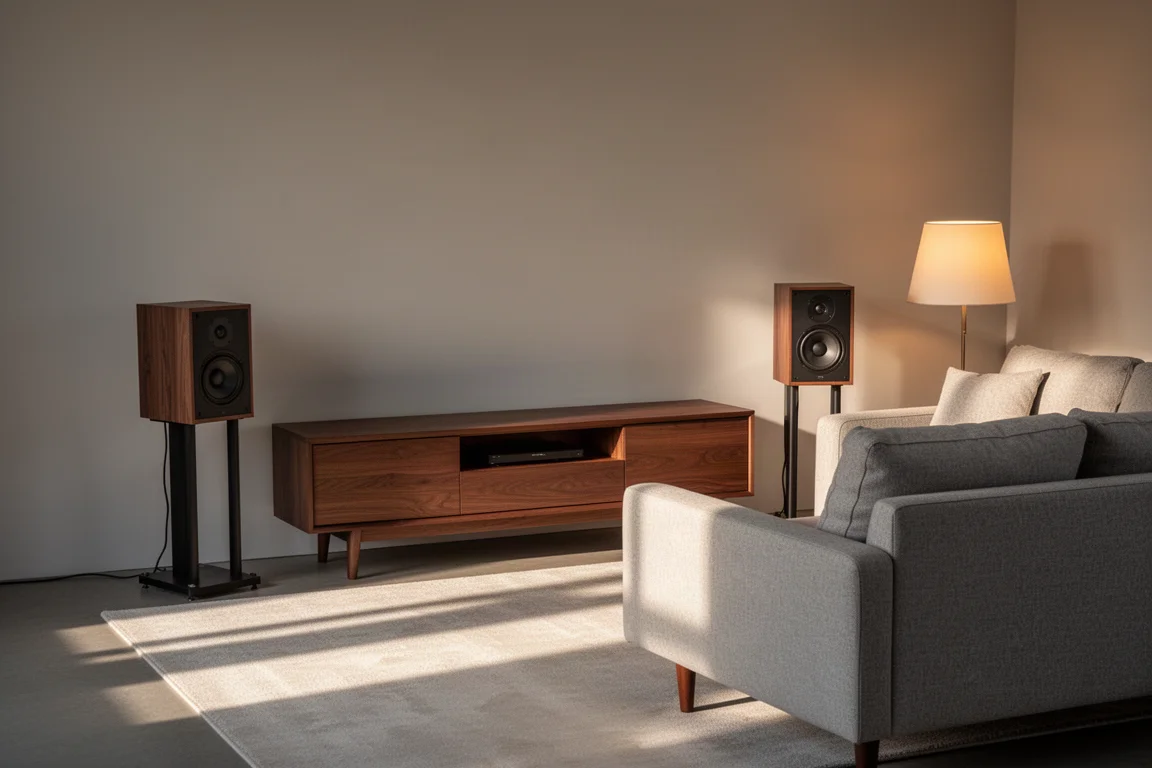
The same buyers should plan for a subwoofer. The cabinet is ported and rolls off gradually rather than steeply, which keeps near-wall placement viable but does not turn a compact bookshelf into a full-range speaker.
Main Strengths
Build quality is the first thing that stands out. The cabinet feels solid, the waveguide gives the front baffle a purposeful look, and nothing about the construction suggests corner-cutting at this price.
Measured on-axis response is decent for the class. Sensitivity averages about 86.2 dB and linearity stays within roughly 2.5 dB, which is a reasonable window for a budget design. Distortion at 86 dB looks good, and while it rises at 96 dB, it remains acceptable.
Horizontal dispersion is another strength. The speaker holds a wide pattern to about plus or minus 60 degrees, which supports a broad soundstage and gives listeners some freedom to move around the room. Below the rolloff point the response falls away gradually, so the speaker tolerates closer wall placement than a steeply rolled-off design. It also responds well to equalization, meaning an owner with a capable streamer, amplifier or DSP can smooth the response without fighting the hardware.
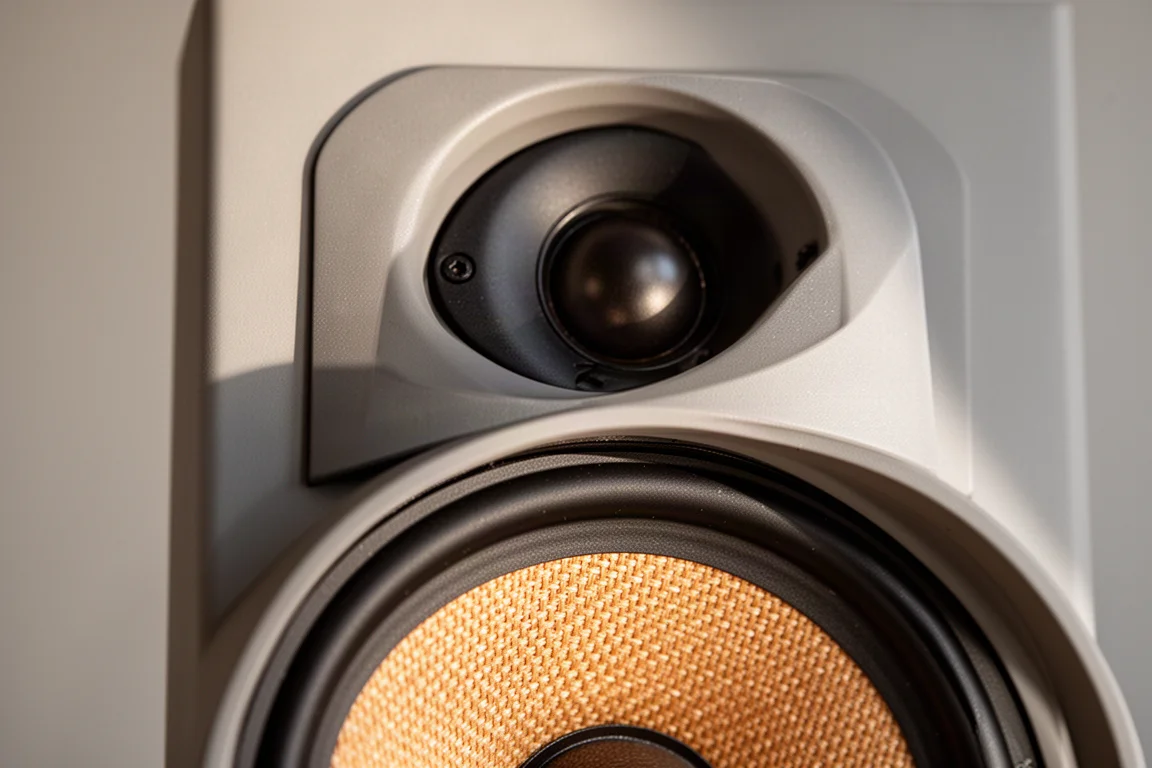
That combination of solid construction, wide horizontal coverage and tuning flexibility is what makes the DB63 a sensible long-term purchase rather than a stopgap.
Things to Consider Before Buying
Aiming matters more than usual here. Pointed straight at the listening position, the speaker is at its best. Toed out by 30 degrees, the upper register softens and cymbal detail and air are reduced.
There is a dip in the lower midrange between roughly 300 Hz and 600 Hz, on the order of 1 to 1.5 dB. In listening terms it removes some of the natural bloom from voices, particularly male vocals, which can sound a little hollow. A high-Q resonance sits around 650 to 750 Hz and shows clearly in the measurements, though it does not prove audible enough to be a practical problem.
A further dip covers roughly 2 to 4 kHz, again only about 1 to 2 dB. It costs a small amount of attack and detail in the upper midrange and lower treble, and speech intelligibility suffers slightly. A dip of this kind is common in budget designs and is far less objectionable than a boost in the same region, which tends to read as glare.
Directivity is not perfectly continuous. Above about 2 kHz there is a droop where the midwoofer hands over to the tweeter, and the horizontal pattern narrows from about plus or minus 60 degrees to roughly plus or minus 40 degrees near 5 kHz. Vertically the window is tighter: ears should stay within about 20 degrees of the tweeter axis, ideally right at tweeter level.
Bass extension needs honest expectations. F3 sits at 76 Hz and F10 at 40 Hz, which is a shallow rolloff rather than deep bass. A subwoofer is recommended for anyone who wants output below 40 Hz in room, and pushing the speaker to cover 50 Hz is a stretch.
Multi-tone distortion climbs past the 3 percent mark between roughly 200 Hz and 1 kHz. Crossing over to a subwoofer at around 80 Hz reduces that midrange distortion, though only modestly. Dynamic range spans about 76 dB to 102 dB, a 26 dB window, and in practice roughly 20 dB of that is usable. At about 10 ft in a living room, the speaker holds together to around 90 dB before lower midrange distortion becomes noticeable and kick drum attack from 50 to 60 Hz starts to fall away.
Compared with the ELAC DB62, the DB63 is the better speaker. The DB62 is noticeably sibilant, and that comes from its crossover, which equalization cannot fix. Owners of the DB62 who have the budget can step up; those who would have to stretch are not missing a great deal. The KEF Q3 behaves differently again, rolling off quickly, scooping back up and then rolling off hard, which makes it a strong candidate for very close wall placement.
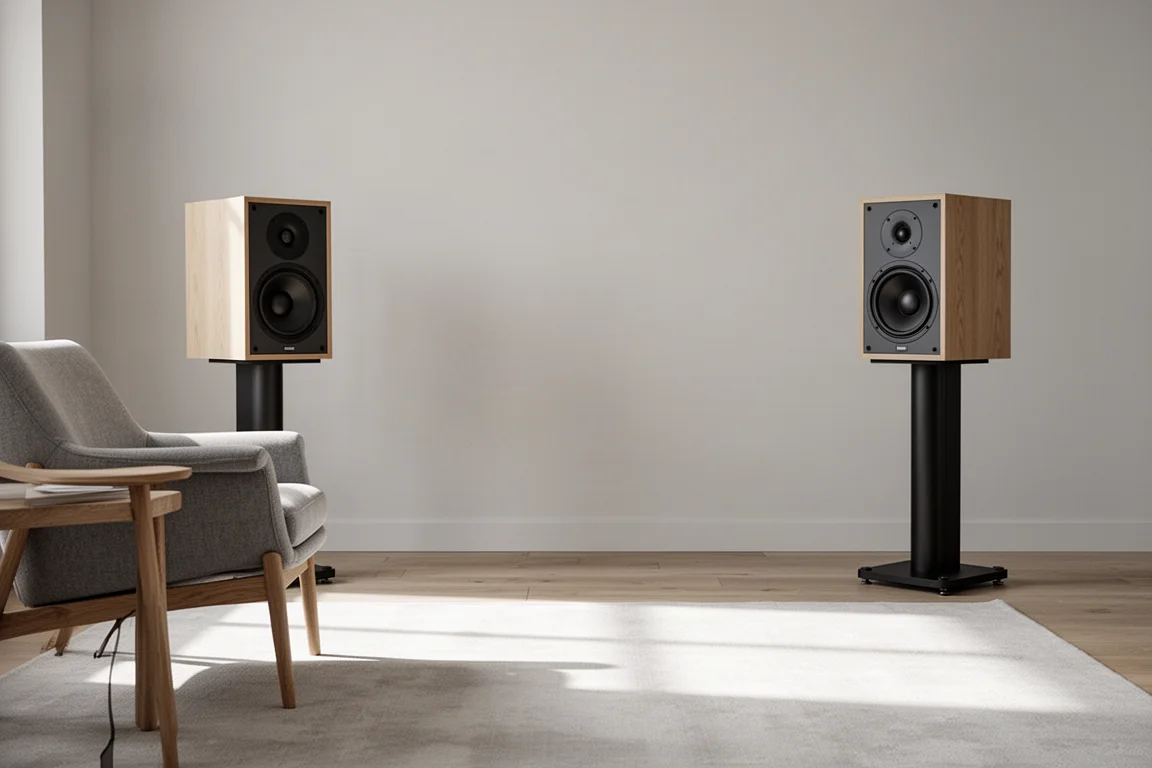
None of these points makes the DB63 a poor speaker. They define the setup it needs: direct aiming, ears at tweeter height, and a subwoofer for full-range listening.
Buying Advice
If the system includes a streamer, integrated amplifier or DSP with parametric EQ, the DB63 rewards a little tuning. A low shelf filter at 650 Hz with about 1.5 dB of gain, plus peaks at 660 Hz, 550 Hz and 3,000 Hz, will lift the midrange dip, soften the resonance and restore some upper midrange presence. Equalization cannot repair directivity or crossover behaviour, but it can make an already decent speaker noticeably more agreeable.
Placement is flexible. Because the rolloff is shallow, close-to-wall positioning is acceptable and often preferable, though it can add too much weight in the 50 to 70 Hz region, so it is worth experimenting rather than assuming. Bring the speaker out only as far as the room allows; this is not a design that demands three feet of clearance.
Add a subwoofer if bass depth matters. It extends the low end, reduces midrange distortion slightly and takes pressure off the woofer at higher volumes.
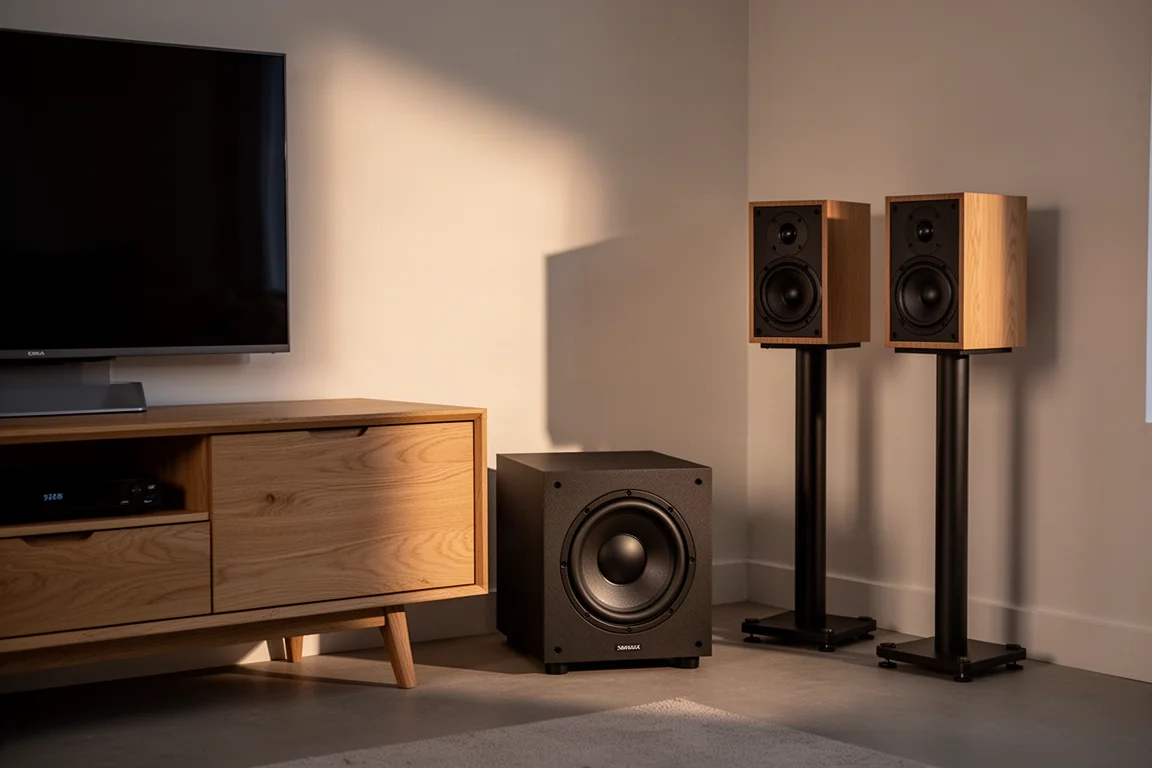
Driving the DB63 is straightforward. The 6 ohm nominal load and 4.4 ohm minimum dip are within reach of most AV receivers, and the 87 dB sensitivity rating means modest power goes a long way in a typical room.
Conclusion
The ELAC Debut 3 DB63 is a solid budget bookshelf speaker with a robust cabinet, wide horizontal dispersion and genuine responsiveness to equalization. Its compromises are the familiar ones at this price: a mild lower midrange dip, a small loss of detail between 2 and 4 kHz, and bass that stops well short of full range. Buyers who aim it at the listening position, sit at tweeter height and add a subwoofer will get the most from it, and at around $450 per pair it is an easy recommendation within the budget realm.
Product link
View more details for ELAC Debut 3 DB63
This product is mentioned in the review. Check the specifications, options, and compatibility before buying.
View more details for ELAC Debut 3 DB63Further reading
Related Reviews
Bookshelf Speakers
Acoustic Energy A100 Mark II Review: A Compact Standmount With an Expansive Soundstage
The Acoustic Energy A100 Mark II brings clarity, natural tonality and a wide soundstage to an entry-level standmount, with a few setup details worth knowing first.
Bookshelf Speakers
Acoustic Energy AE-100 Mark II Review: Compact Bookshelf Speakers With Standout Imaging
A compact British two-way bookshelf speaker with deep, layered imaging, fast bass, and a slight treble lift to weigh against a crowded $500 field.
Bookshelf Speakers
Acoustic Energy AE100 MK2 Review: Measured Performance and Four Alternatives
A close look at the Acoustic Energy AE100 MK2 bookshelf speaker, what its measured performance reveals, and four alternatives with different trade-offs.