Bookshelf Speakers
ELAC Debut 3.0 Review: A $450 Pair That Outperforms Its Price
A compact bookshelf speaker that sounds fuller and more engaging than earlier ELAC models, with dialogue clarity that holds up for television and film.
Introduction
A $450 pair of bookshelf speakers should not be this interesting. The ELAC Debut 3.0 is the first passive ELAC speaker to pass through our listening room in roughly four years, and it is the first Debut generation built after Andrew Jones moved on to Mobile Fidelity. Given how closely that name has been tied to this line, the obvious question was whether the character survived the change.
It did, and then some. The Debut 3.0 sounds fuller and more engaging than the ELAC models that came before it, with a broad soundstage and the kind of dialogue clarity that makes it easy to live with for television and film. In a side-by-side comparison against the Bowers & Wilkins 600 Series, it was the $450 pair that kept drawing attention during movie nights, largely because the Bowers & Wilkins presentation felt smaller and more localized.
The rest of this article covers where the Debut 3.0 genuinely delivers, where it asks for realistic expectations, and how it compares with the alternatives that come up most often at this price.
Who This Speaker Is For
The Debut 3.0 makes the most sense for listeners who are entering hi-fi for the first time, or who have been living with the same pair of speakers for decades and want a modern replacement without spending four figures. It is a passive design, so it needs an amplifier or receiver, but it is not a demanding load: 6 ohms nominal with 87 dB sensitivity means a modest receiver can drive it to reasonable levels in a normal room.
It is also a strong candidate for a living room or a home office where the speakers do double duty for music and television. Dialogue intelligibility is one of its strongest traits, which is exactly what matters when a system is used for series and films rather than critical listening alone.
Main Strengths: Sound and Everyday Listening
The headline is tonal character. Where earlier ELAC models could come across as neutral to the point of being unexciting, the Debut 3.0 sounds richer and fuller, with a wider sense of space between the speakers. It stays punchy and responsive, and it holds that composure across a wide range of budget electronics rather than demanding an expensive amplifier to come alive.
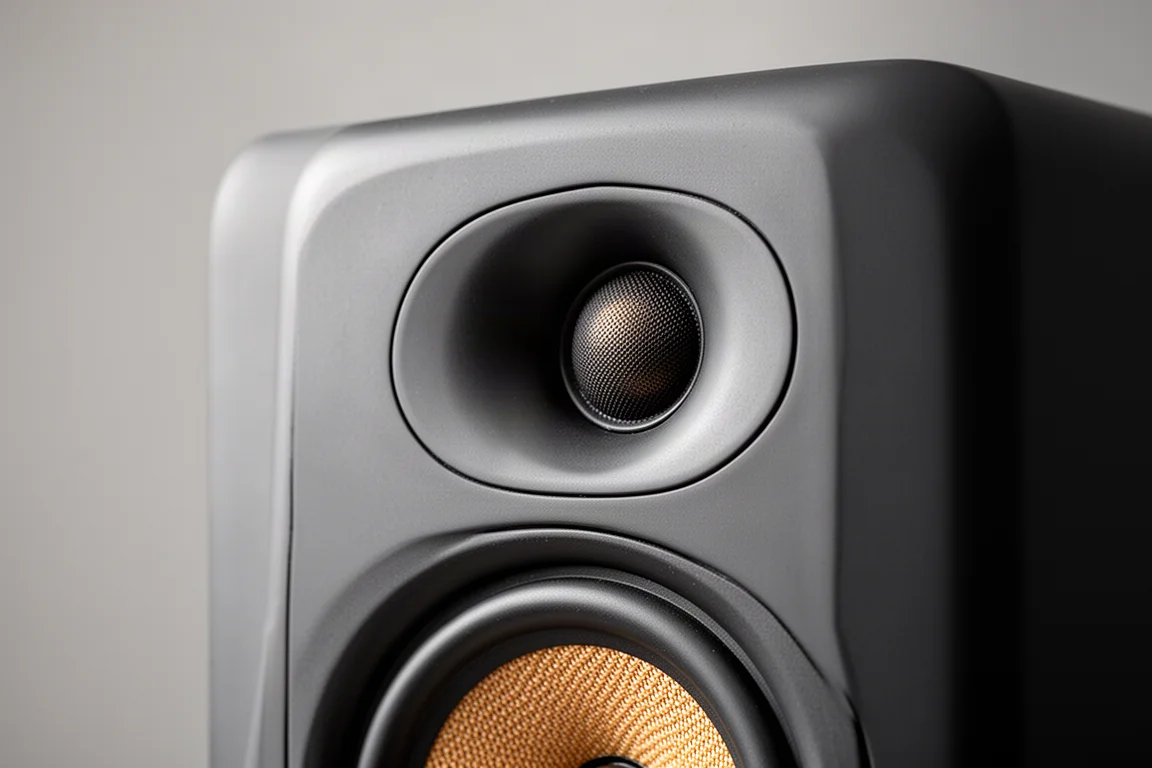
Driver material debates rarely survive contact with this speaker. Paper, aramid, and other exotic cone materials are, in practice, mostly a marketing distinction at this price, and the same applies to tweeter domes. A well-implemented silk dome can perform as well as, or better than, beryllium, diamond, or aluminium alternatives. What actually shapes the sound is the cabinet, the crossover, and the overall design. Measurements taken near-field and in-room, on axis and off axis, support that: the Debut 3.0 behaves predictably rather than relying on a flattering measurement trick.
For anyone upgrading from a much older pair of speakers, the jump in clarity and bass weight will be obvious. For anyone moving up from a roughly $200 pair, the improvement is real but more incremental.
Design, Finish, and Build Quality
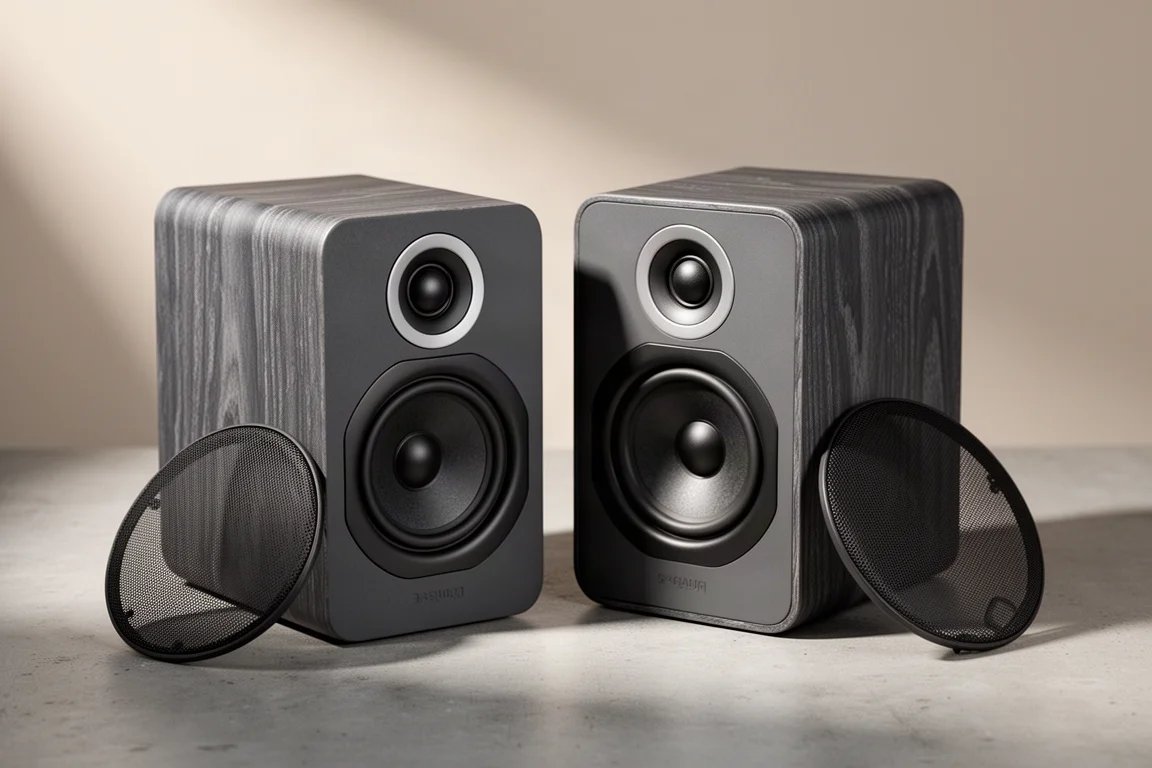
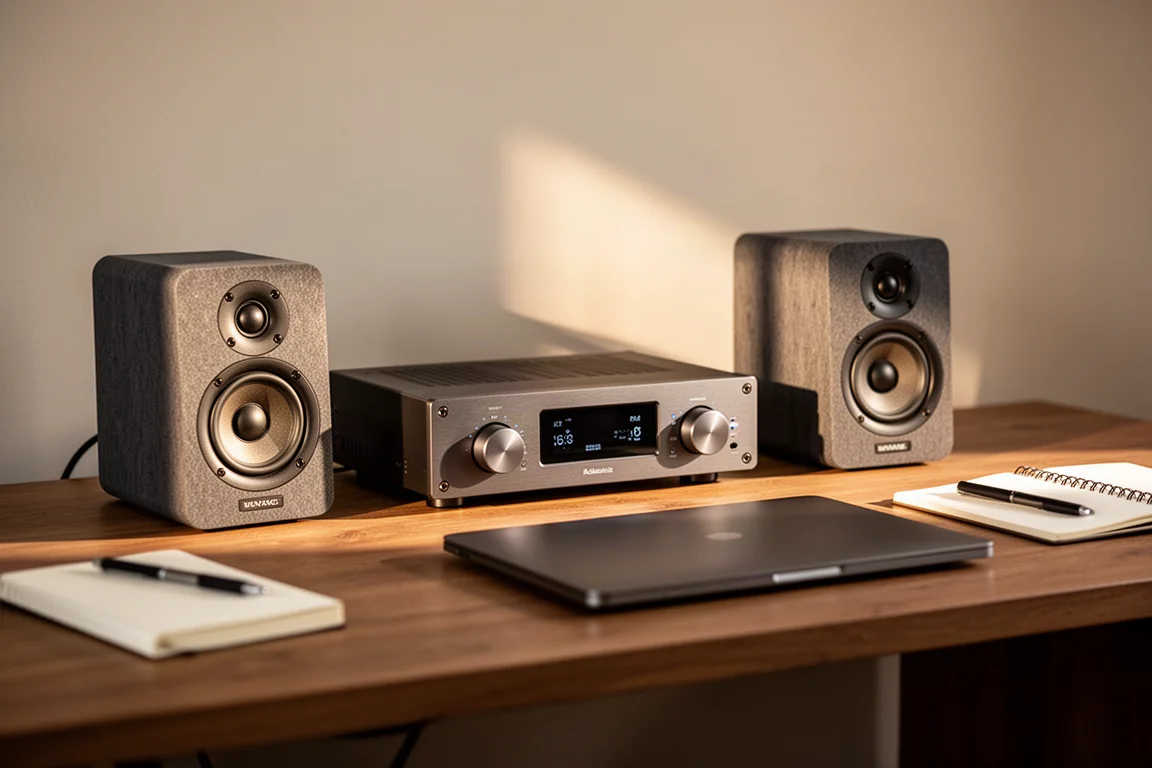
The Debut 3.0 arrives as a compact, conventional two-way box, and it looks better in person than the specification sheet suggests. The cabinet is finished in a vinyl wrap rather than a real wood veneer, but the wrap is applied very cleanly and photographs well. The front baffle has a soft-touch finish, the grille is magnetic, and the trim piece above the tweeter gives the front a slightly automotive, more expensive look.
Not everyone will agree. Some listeners find the front baffle plasticky and the finish options limited, and that is a fair observation as long as it is kept in context. This is a $450 pair, not a $450 speaker. Judged against the price, the presentation is classier than most of what sits next to it on a shelf, and the same money spent elsewhere rarely buys better construction.
How the Debut 3.0 Compares With Other Speakers
Against the Polk Audio Reserve R200, the Debut 3.0 gives up some fit and finish. The Polk is the more refined object, with nicer finishes and more low-midrange and bass emphasis, though that comes with a little more rolloff and a fuller, warmer midrange. The ELAC is the punchier of the two, and the easier one to drive with budget amplification.
The Pro-Ject Speaker Box 5 S2 is the closest match of the group. It is smaller, better finished, and roughly $200 to $250 more expensive, and its frequency response is remarkably similar to the Debut 3.0. The difference comes down to whether the styling and build are worth the extra spend, not to a night-and-day gap in performance.
Wharfedale’s Evo 4.1, at around $800 per pair, is the better-built speaker, with a firmer, more defined sound and an AMT tweeter that is genuinely likeable. It is a better speaker, but not obviously twice-the-price better. The Wharfedale Super Denton takes a broader, fuller approach; the Debut 3.0 counters with tighter definition and separation, and remains the more affordable pick.
The Focal Theva, at around $1,000 per pair, is livelier and punchier, with a little extra bass lift and treble extension. It is a satisfying speaker, but the Debut 3.0 delivers comparable performance for less than half the money. The Monitor Audio Bronze 100 goes for a similar punchy, lively character with better centre focus and sharper delineation, without tipping into the exaggerated separation that some designs chase. The Q Acoustics 5020, at $900 per pair, is a strong on-paper rival, though that model has not been heard here, so no verdict is offered. And the Fluance XL8, at roughly $200 per pair, remains one of the best entry points in hi-fi, but the Debut 3.0 is clearly the better speaker of the two.
Things to Consider Before Buying
Headroom is the main one. The Debut 3.0 works with budget amplification and compact streaming amplifiers, but in a larger room the limits show up sooner than they would with a more powerful amp. Push a small class-D unit much past moderate listening levels and the sound starts to compress and harden. A dedicated integrated amplifier with real current delivery keeps the speaker comfortable.
Second, finish options are limited, and the vinyl wrap will not satisfy anyone shopping for furniture-grade cabinetry. Third, the $500 to $1,200 per pair market is the most competitive segment in hi-fi, and performance differences within it are small. The Debut 3.0 sits at the bottom of that band while performing near the middle of it, but it will not outclass a genuinely higher-tier speaker.
Finally, resist the urge to treat the crossover or driver materials as a problem to be solved. If a speaker already measures and sounds right, replacing parts is spending money to chase a sound the designer never intended. That money is better saved toward the next speaker up.
Buying Advice
At $450 per pair, the Debut 3.0 is one of the easier recommendations in budget hi-fi. It competes credibly with speakers costing twice as much, and nothing under $1,000 is a hands-down better buy across the board; the realistic gap is small enough that this ELAC gets you most of the way there. If you want a meaningful step up, plan to move well beyond the $1,200 mark rather than sideways within it.
Pair it with an amplifier that can deliver clean power into a 6-ohm load, give it a little space from the wall, and it will reward the investment for years. For a first system, a second system, or a long-overdue replacement for tired old speakers, it is a confident starting point.
Conclusion
The ELAC Debut 3.0 is the rare budget speaker that sounds more expensive than it is and does not make you think about its price while you are listening. It is fuller and more enjoyable than the ELAC models that preceded it, it handles television and film as well as music, and it holds its own against rivals that cost two to three times as much.
Its limits are honest ones: modest finish options, a cabinet that will not pass as fine furniture, and a need for a competent amplifier if you listen at higher volumes. Weigh those against the price and the case is straightforward. This is one of the strongest entry points into serious listening, and it earns its place on the shortlist.
Product link
View more details for ELAC Debut 3.0
This product is mentioned in the review. Check the specifications, options, and compatibility before buying.
View more details for ELAC Debut 3.0Further reading
Related Reviews
Bookshelf Speakers
Acoustic Energy A100 Mark II Review: A Compact Standmount With an Expansive Soundstage
The Acoustic Energy A100 Mark II brings clarity, natural tonality and a wide soundstage to an entry-level standmount, with a few setup details worth knowing first.
Bookshelf Speakers
Acoustic Energy AE-100 Mark II Review: Compact Bookshelf Speakers With Standout Imaging
A compact British two-way bookshelf speaker with deep, layered imaging, fast bass, and a slight treble lift to weigh against a crowded $500 field.
Bookshelf Speakers
Acoustic Energy AE100 MK2 Review: Measured Performance and Four Alternatives
A close look at the Acoustic Energy AE100 MK2 bookshelf speaker, what its measured performance reveals, and four alternatives with different trade-offs.