Bookshelf Speakers
ELAC Debut 3.0 DB63 Review: Articulate, Mature Sound Below £400
A close look at the ELAC Debut 3.0 DB63 standmount speaker: build, voicing, amplifier matching, and the trade-offs worth weighing before buying.
Introduction
ELAC is a German audio brand with a 95-year history, which makes it one of the oldest names in hi-fi. The company’s affordable Debut range came to wider attention after Andrew Jones joined in 2015, following a 17-year stint at Pioneer and its sister high-end brand TAD. He moved on in 2022, and in 2024 ELAC updated the Debut line with an entirely new generation of speakers.
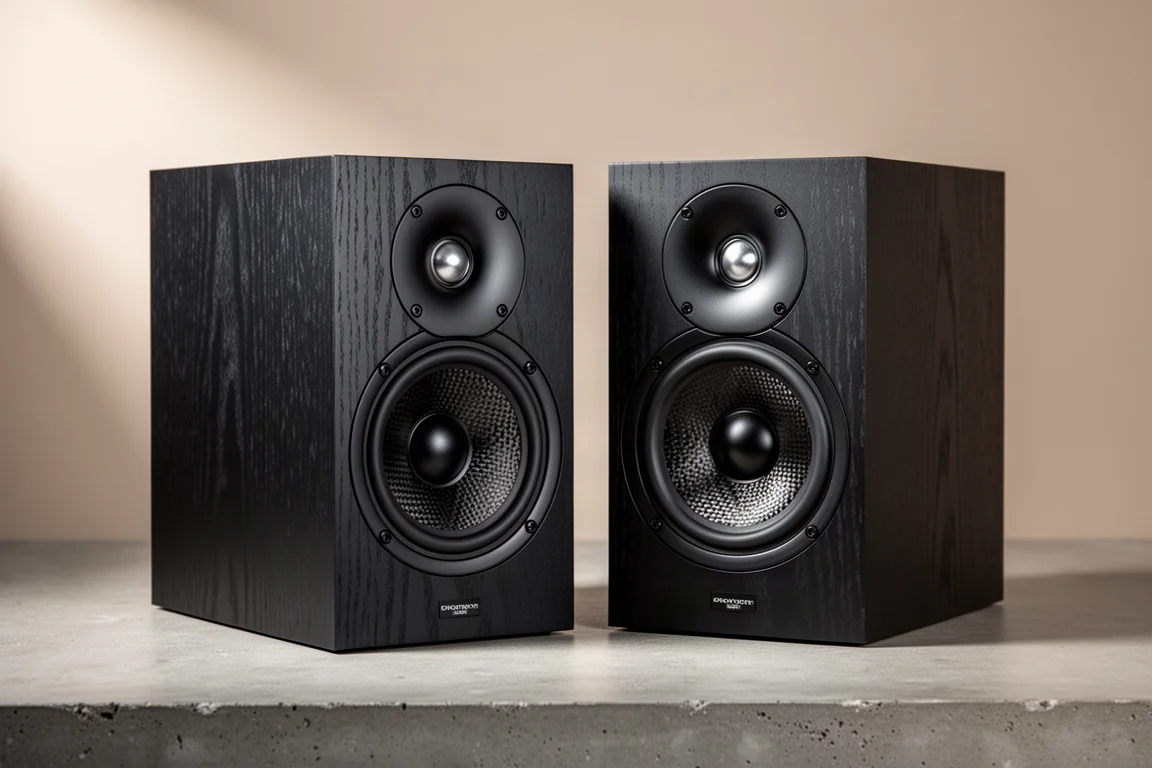
The Debut 3.0 DB63 is the compact standmount in that range. It sells for £379 a pair in the UK, is available in a walnut effect vinyl wrap or in black ash, and measures 339 by 195 by 298 mm while weighing 7.9 kg each. This article covers what the DB63 does well, where it makes compromises, and what is worth knowing before you buy.
Who the ELAC Debut 3.0 DB63 Is For
The DB63 is a strong candidate for listeners building a first serious stereo system in a small to medium room. Its 87 dB sensitivity and nominal 6 ohm load make it straightforward to drive, and there should be no unusual impedance dips to worry about, so it does not demand an expensive amplifier to sound coherent.
The voicing also suits rooms where speakers have to sit fairly close to a wall. Boundary reinforcement from a nearby wall and furniture helps fill in the low end, which is exactly the scenario this speaker appears to have been designed around.
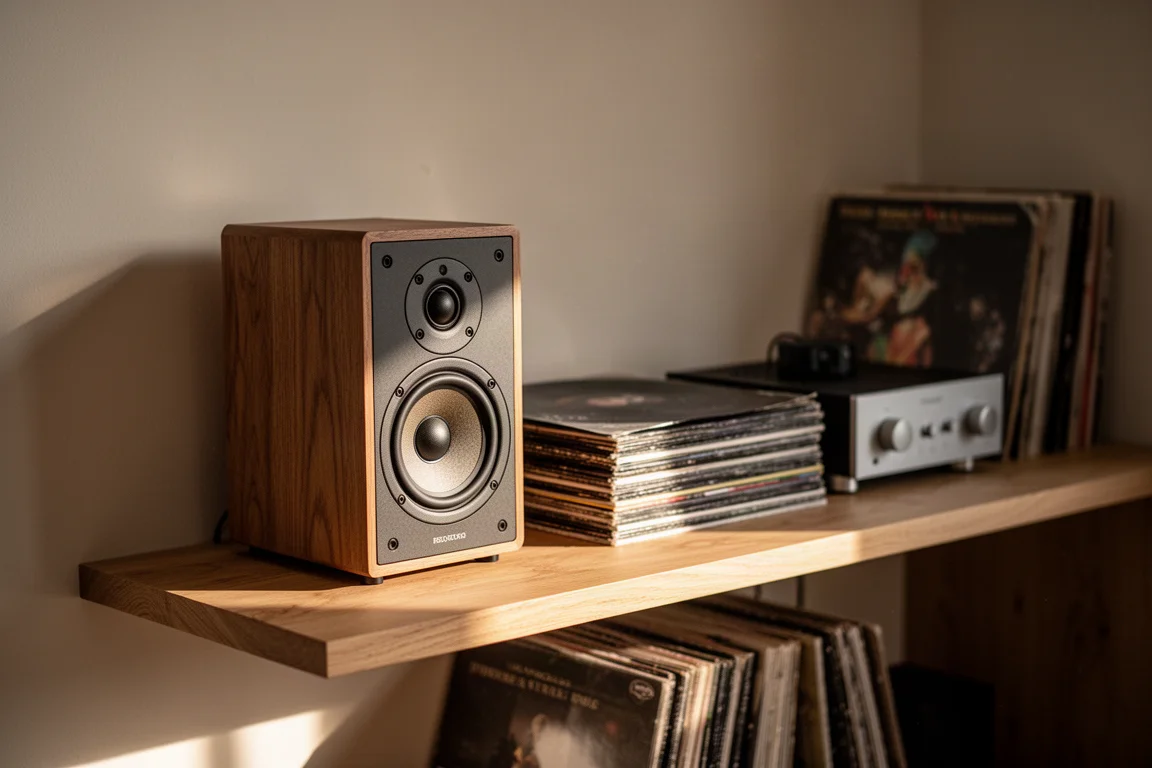
It works equally well on a desk. A nearfield setup with a compact amplifier and the listener sitting no more than about 3 m (10 ft) away is a natural fit, and the speaker is easy to place without endless repositioning.
Design and Build Quality
The cabinet is built from 16 mm (0.6 in) MDF, which is standard at this price, but ELAC adds an internal brace on the DB63 to reduce cabinet resonances. At 7.9 kg (17.3 lb) each, the speakers feel reassuringly heavy for their size.
The front baffle is finished in satin black, set against the gloss of the woofer cone and the silver of the tweeter’s phase plug, which gives the design a more sophisticated look than the price suggests. The midwoofer uses a 165 mm (6.5 in) woven aramid cone paired with a 1.5 in voice coil, larger than the 1 in coil common at this price, and a substantial magnet structure. Both choices should help with power handling.
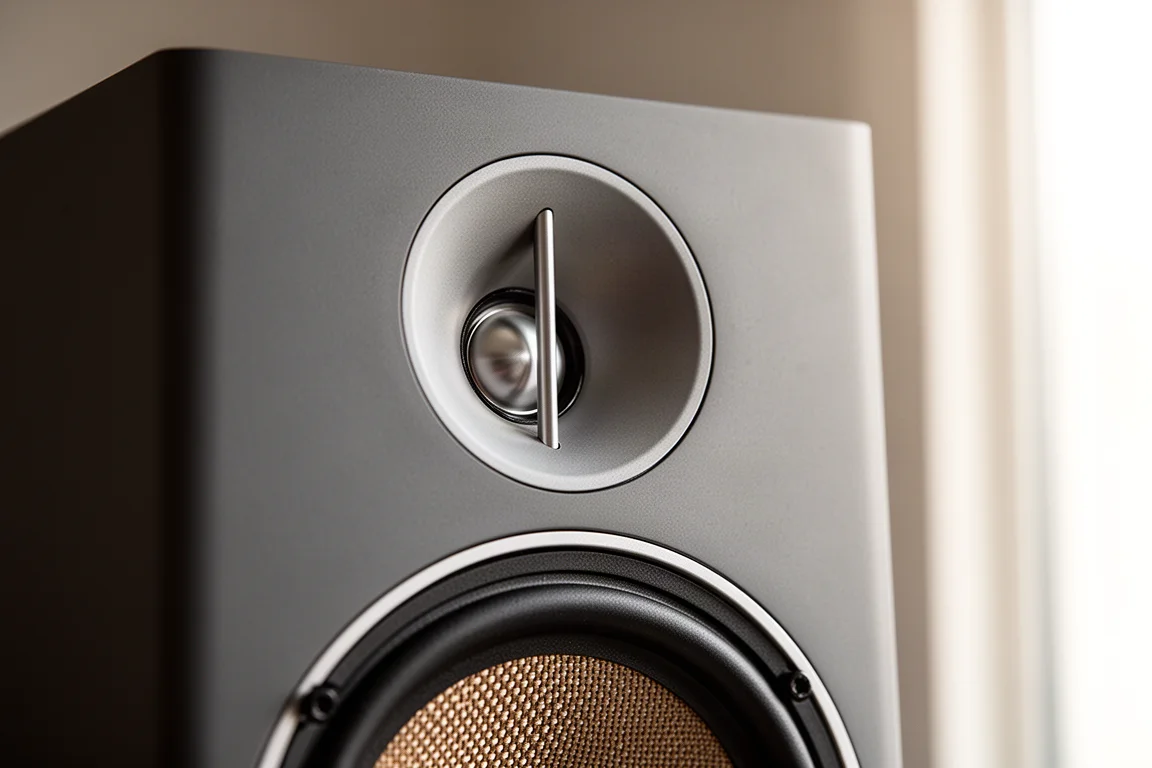
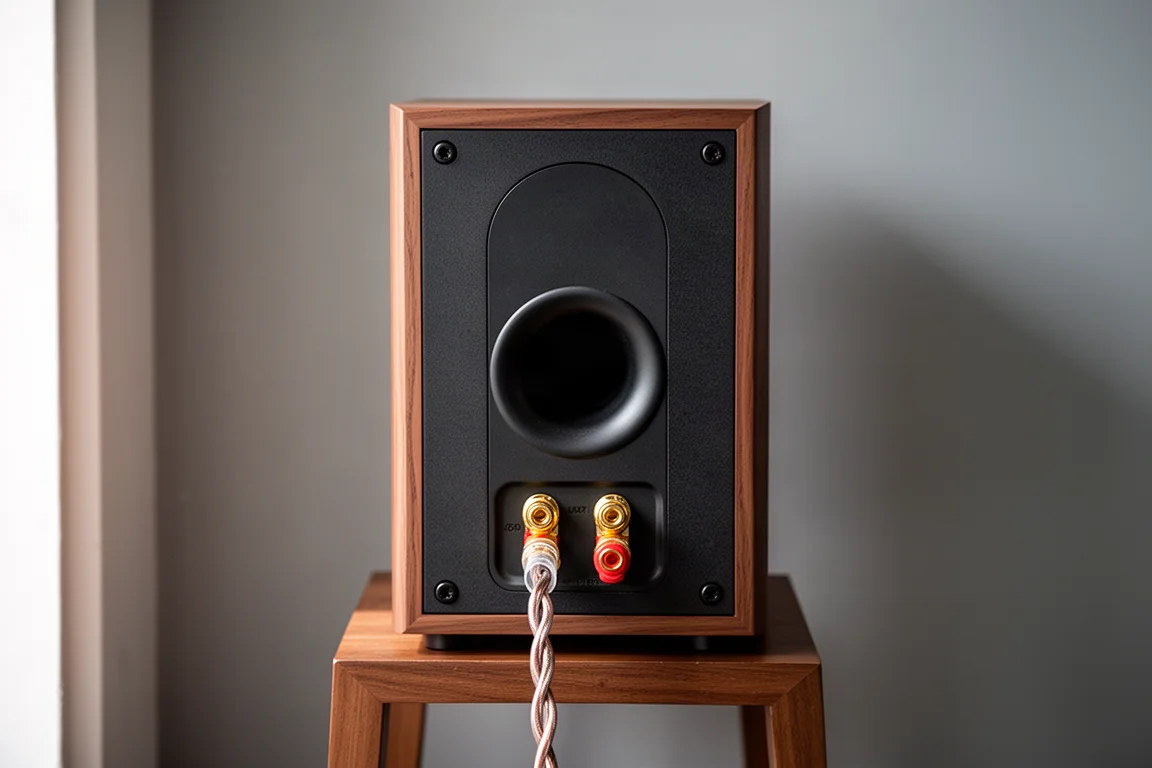
The 25 mm (1 in) aluminium dome tweeter sits in a 108 mm (4.25 in) waveguide that narrows its dispersion to match the midwoofer at the 2,000 Hz crossover point. A vertically mounted phase plug further aids high-frequency dispersion and off-axis performance. Around the back there is a single set of gold-plated speaker binding posts and a flared port that extends bass down to a -6 dB point of 42 Hz.
Main Strengths
Mid-range articulation is the headline. Vocals and the instruments that occupy the heart of the mid-range come through with a clarity that is unusual for speakers retailing below £400. Transients are crisp, there is decent body behind notes, and a hint of decay structure comes through on recordings of sufficient quality.
Bass is tight and well defined rather than bloated. Extension is genuinely useful, and the lack of bloom in the low end keeps the presentation clean in smaller rooms. The treble is open and refined, with an aluminium dome that stays expressive without turning fatiguing across long listening sessions.
The overall character is mature and grown up. Rather than boosting bass to impress on a short demonstration, the DB63 keeps the low end controlled and lets the mid-range carry the performance.
That combination of a controlled low end, articulate mids, and a refined top end is what makes the DB63 feel considerably more expensive than its price tag.
How the Debut 3.0 DB63 Compares
Within the same family, the ELAC Uni-Fi Reference UBR62 at around £749 is more dynamic than the DB63, but its bass-heavy balance, rolled-off treble, and dark overall profile make it a different proposition entirely. It is also more demanding to drive, and the amplification needed to bring it under control pushes total system cost up quickly, at which point spending more on the speakers themselves becomes worth considering.
Against the Q Acoustics 3030i at £499, the DB63 gives up a noticeable amount of bass punch but comes back with more resolution through the mid-range and high frequencies. The Q Acoustics 5020 at £599 is a closer match: it equals the DB63 for resolution while adding more bass thump, a livelier upper mid-range, and stronger sound staging and imaging.
For listeners who prioritise mid-range clarity and an even tonal balance over bass weight, the DB63 holds its own against more expensive alternatives. For those who want punch and drama first, the pricier options above are the more obvious route.
Placement, Rooms, and Amplification
Placement is one of the DB63’s practical strengths. The substantial waveguide helps off-axis performance, so the speakers do not fall apart when listeners move around the room. Toe-in is worth experimenting with: pointing the tweeters directly at the listening position gives maximum treble energy, aiming them straight out into the room tames a bright system, and something in between tends to suit most rooms.
Amplifier matching matters more than raw power. A modest desktop amplifier such as the Fosi Audio V3 drives the DB63 without difficulty in a small room at nearfield distances, making it an excellent starting point. Warm-sounding amplifiers can tip the balance too far: the Cambridge Audio AXA35 at £349 expanded the soundstage, but paired with the already relaxed DB63 it ended up sounding overly cosy.
An amplifier with a subtle lift in the presence region, such as a £449 integrated model, balances the DB63 almost perfectly, though its internal DAC is best bypassed in favour of a dedicated streamer such as the Bluesound Node Nano. Where a built-in DAC is needed, the Mission 778x at £549 is a sensible ceiling for this speaker. Going beyond that level of amplification is unlikely to reveal much more from the DB63.
Things to Consider Before Buying
The DB63 is deliberately easygoing rather than exciting. There is a noticeably recessed area in the upper mid-range, roughly between 2 and 4 kHz, which makes the presentation feel polite when a recording demands sudden dynamic shifts. Listeners who want bite and forwardness from rock or large-scale orchestral music may find it too restrained.
Sound staging and imaging are respectable for the price but not class-leading. The location of performers can be a little vague, although vocals, lead instruments, and percussive elements remain clearly separated, and the best recordings push the sound a little beyond the speakers’ left and right edges.
It is also worth being realistic about the ceiling. There are more complete, more dynamic, and more engaging speakers available for a couple of hundred pounds more. The DB63 wins on mid-range resolution and refinement at its price rather than on outright excitement.
Buying Advice
At £379 a pair, the Debut 3.0 DB63 is one of the most accomplished speakers available below £400. The money goes into the parts that matter for clarity: the larger voice coil, the substantial magnet structure, the waveguide-loaded tweeter, and the braced cabinet.
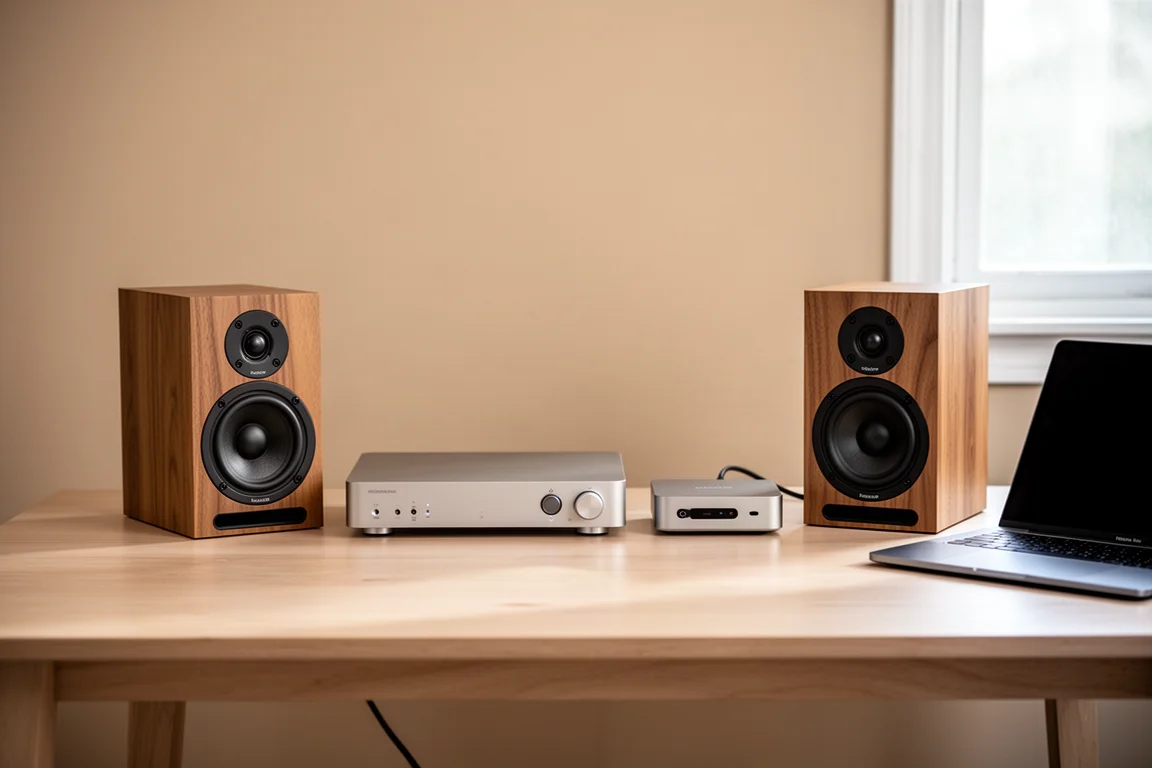
Pair it with a clean-sounding budget integrated or desktop amplifier and a decent streamer, place it in a small to medium room where it can sit reasonably close to a wall, and it delivers a level of mid-range articulation that is hard to find at this price. If maximum bass weight and dynamic drama matter more than refinement, the alternatives noted above are worth auditioning. For listeners who value vocals, acoustic instruments, and long, comfortable listening sessions, the DB63 is an easy recommendation.
Conclusion
The ELAC Debut 3.0 DB63 shows what a well-judged budget design can do. It is stylish and sturdy, easy to drive and easy to place, and its mid-range resolution exceeds what is normally available for the money, backed by a tight, extended low end and an open treble that stays comfortable over time.
The trade-offs are a slightly recessed presence region and dynamics that hold back rather than excite. Buyers who accept that voicing, and who match the speaker with modest, clean amplification, get a grown-up presentation and a genuine taste of what more expensive hi-fi does well.
Product link
View more details for ELAC Debut 3.0 DB63
This product is mentioned in the review. Check the specifications, options, and compatibility before buying.
View more details for ELAC Debut 3.0 DB63Further reading
Related Reviews
Bookshelf Speakers
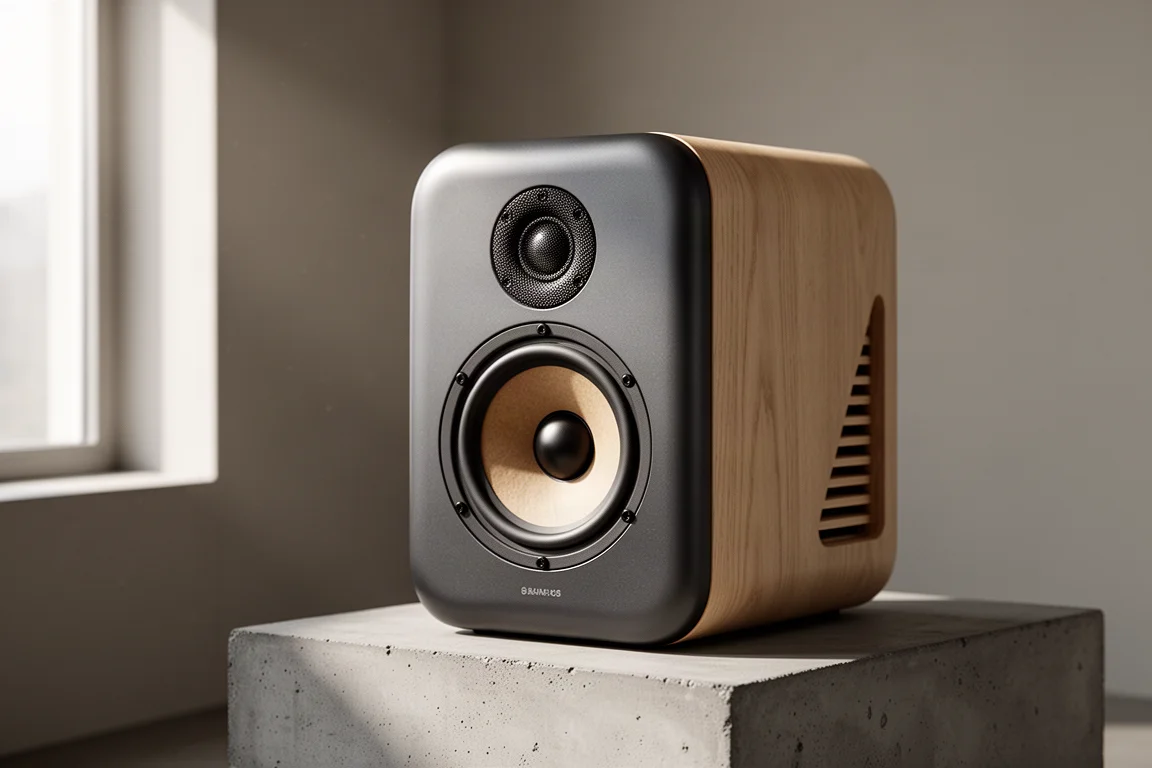
Acoustic Energy A100 Mark II Review: A Compact Standmount With an Expansive Soundstage
The Acoustic Energy A100 Mark II brings clarity, natural tonality and a wide soundstage to an entry-level standmount, with a few setup details worth knowing first.
Bookshelf Speakers
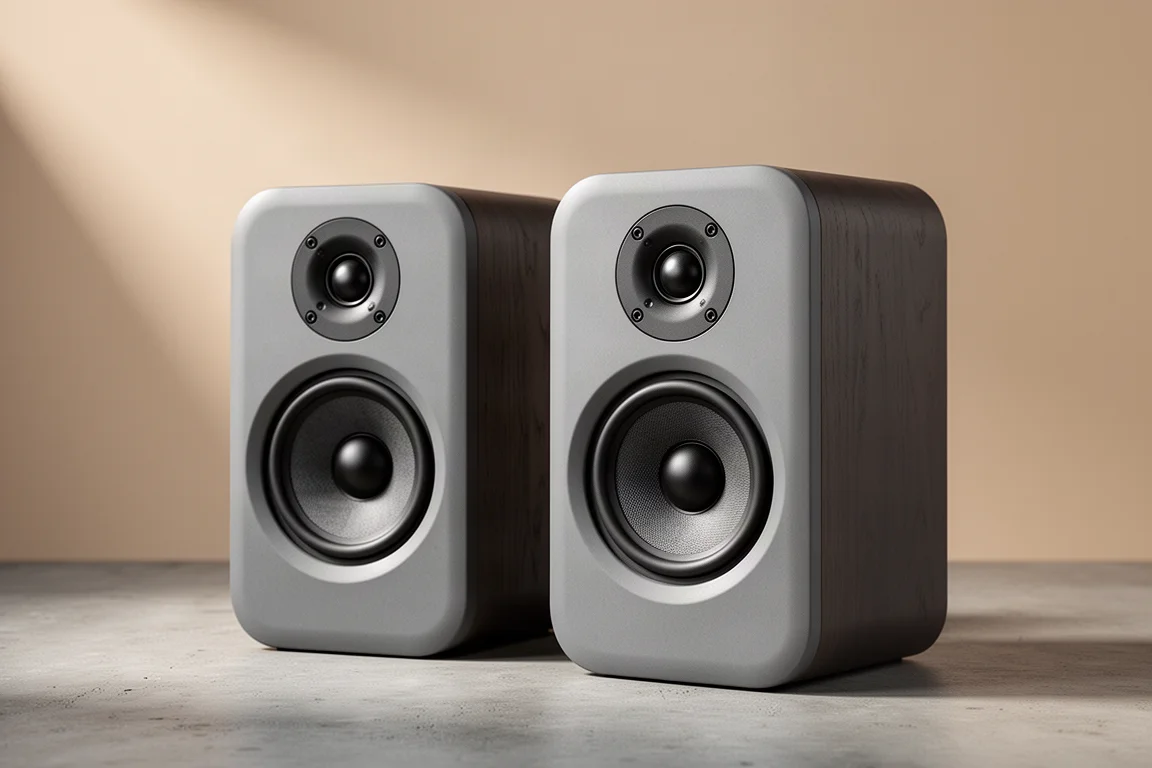
Acoustic Energy AE-100 Mark II Review: Compact Bookshelf Speakers With Standout Imaging
A compact British two-way bookshelf speaker with deep, layered imaging, fast bass, and a slight treble lift to weigh against a crowded $500 field.
Bookshelf Speakers
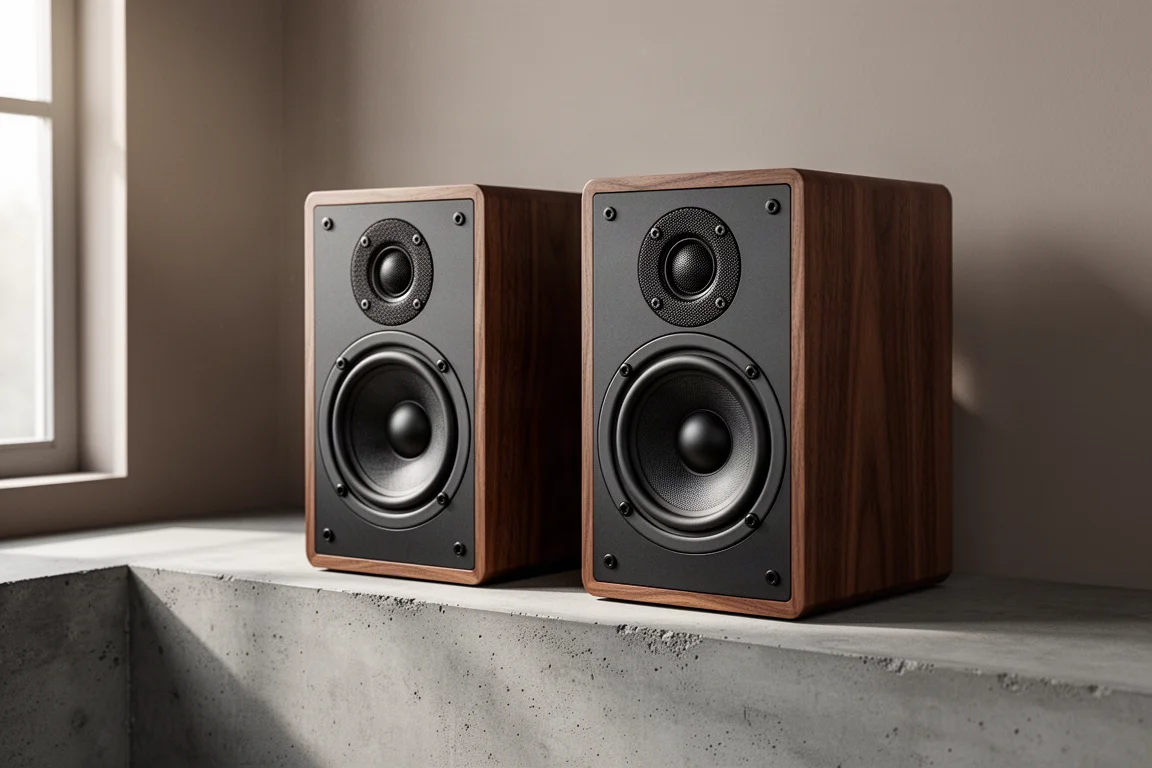
Acoustic Energy AE100 MK2 Review: Measured Performance and Four Alternatives
A close look at the Acoustic Energy AE100 MK2 bookshelf speaker, what its measured performance reveals, and four alternatives with different trade-offs.