Bookshelf Speakers
ELAC Debut 3.0 Bookshelf Speaker Review: Neutral Sound Without the Premium Price
A two-way ported bookshelf speaker with a 1-inch aluminum tweeter, a 6.5-inch woofer, and a remarkably neutral character for the money.
Introduction
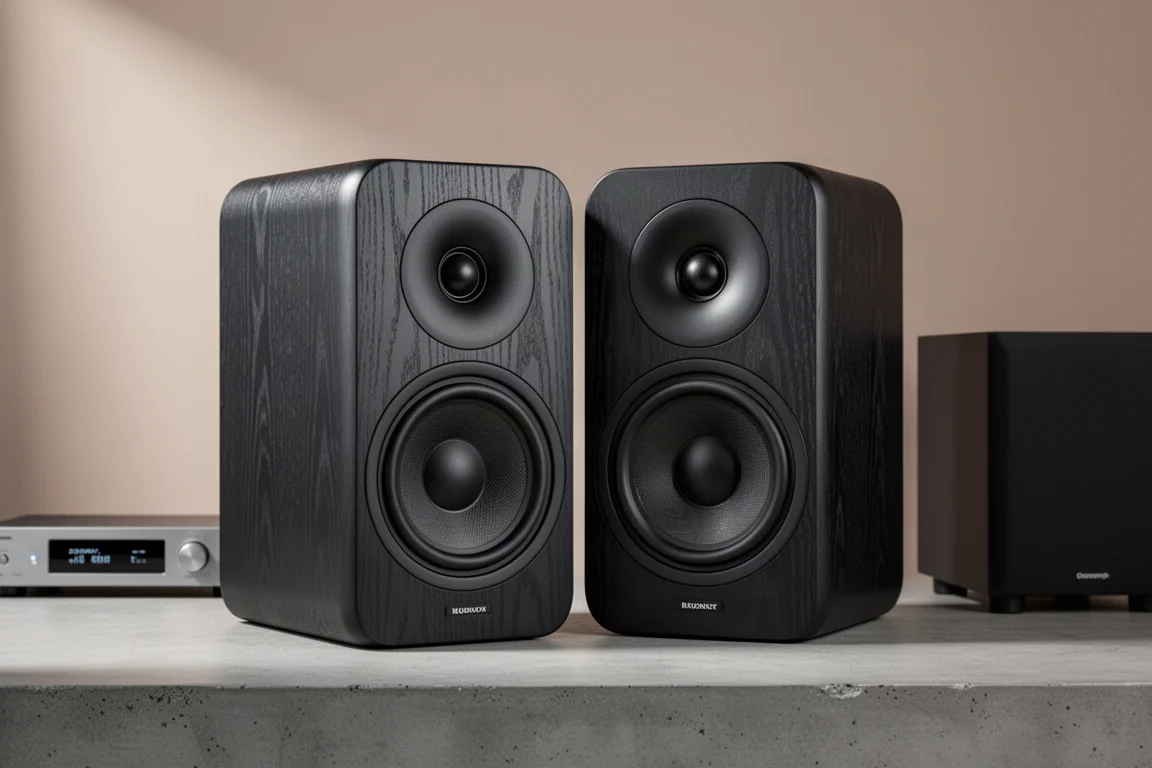
ELAC built the Debut line on a simple promise: serious loudspeaker engineering at prices that do not require a dedicated listening room budget. The Debut 3.0 bookshelf continues that idea as a two-way ported design with a 1-inch aluminum tweeter and a 6.5-inch woofer. ELAC reports a frequency response of 42 Hz to 38 kHz, a nominal impedance of 6 ohms, and a sensitivity of 87 dB.
Those figures are the practical part of the story. A 6-ohm load with 87 dB of sensitivity suggests a speaker that should not fight back against modest amplification, which in turn makes it a realistic match for a wide range of budget stereo amplifiers, receivers, and home theater components.
The cabinet is ported and braced, and the speaker is offered in a single finish: black ash. What follows is a practical look at what the Debut 3.0 does well, where its limits sit, and how to decide whether it belongs in your room.
Who This Speaker Is For
The Debut 3.0 is aimed at listeners who care more about accuracy than personality. Its tuning is neutral, and that neutrality makes it unusually flexible across genres. Acoustic recordings, dense mixes, and film soundtracks all pass through without the speaker imposing an obvious signature of its own.
It is also a sensible fit for anyone building a first serious stereo system or a modest home theater setup. The relatively friendly impedance and sensitivity mean you can pair it with affordable electronics and still get a confident, well-scaled result.
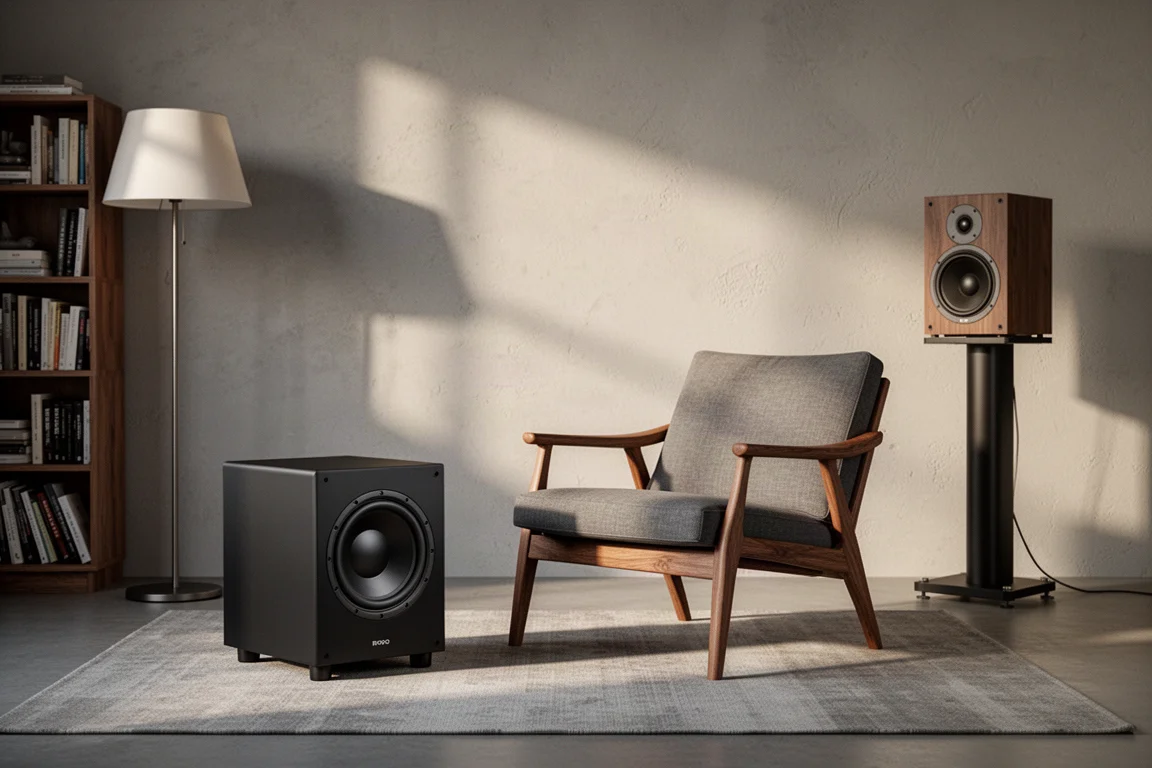
Where it asks something of you is in the low end. This is not a full-range speaker, and anyone who listens to drum-heavy rock, bass-driven electronic music, or wants convincing home theater impact should plan on adding a subwoofer. The good news is that the Debut 3.0 blends with a subwoofer easily.
Main Strengths
Build quality is the first thing that stands out. The cabinet feels remarkably inert in the hand, and that stiffness pays off in the cleanliness of the sound. The front baffle is finished in a soft-touch, rubber-like material that lifts the design well above what the price would normally suggest.
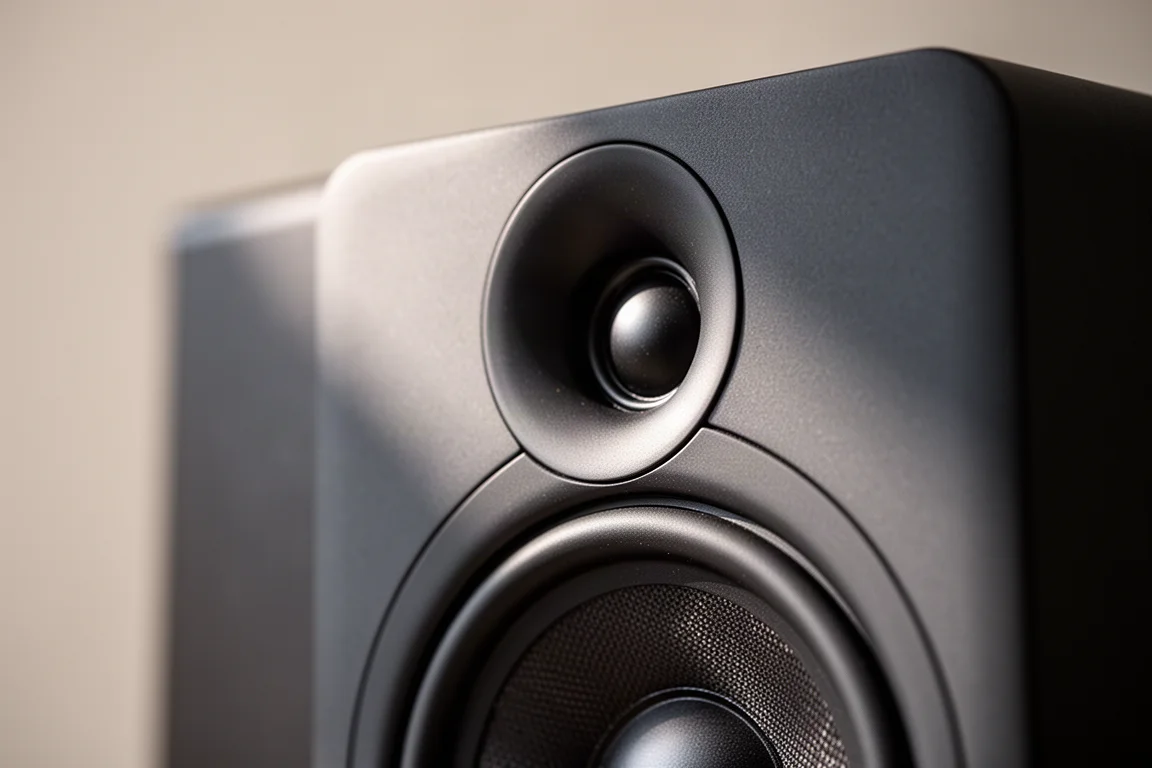
The tweeter sits inside a smooth waveguide and is positioned low, intersecting the woofer surround. That arrangement is intended to improve coherence between the two drivers, and it echoes a design approach used on considerably more expensive speakers. Around the back you get a single set of high-quality five-way binding posts.
In listening, the mid-range is exceptionally linear, and the overall response stays consistent as volume rises. Nothing shifts, skews, or turns objectionable when you push the speaker harder, which means it scales into a larger, more dynamic presentation without changing character. A mild lift in the ultra-high frequencies adds a touch of sparkle up top without tipping into brightness.
Sound Quality in Practice
The Debut 3.0 is a genuinely neutral speaker, and its measured behavior supports that impression. It reaches the claimed 42 Hz extension, and it produces usable output down to roughly 40 Hz in a room. What it does not do is boost the bass, so listeners used to a fuller low-end presentation may initially find it a little light down low.
The mid-range is the highlight. Vocals and instruments come through with natural detail and no artificial emphasis, and the speaker stays agreeable even with less-than-perfect recordings. Intelligibility is strong, though not quite as immediately crisp at low volumes as some brighter alternatives.
High frequencies are more extended and airy than several competitors in the same class, and the top end spreads widely through the room. The sound stage is broad with excellent width, while depth is average for the category, with most of the presence sitting about a foot behind the front baffles. Center focus is good, though some rivals carve out a sharper central image. Dynamically, the Debut 3.0 can go big, and its easy load makes reaching that scale straightforward.
Things to Consider Before Buying
The clearest limitation is bass. Because the response is not boosted, the roll-off at the bottom feels a little more abrupt than what you get from some competitors, and the speaker will not satisfy anyone chasing deep, physical low-frequency output on its own.
Finish options are limited to black ash, so this is not a speaker you buy to match a particular interior palette.
It is also worth understanding where the Debut 3.0 sits next to its rivals, because the differences are mostly about voicing rather than quality. A brighter, more purposefully voiced speaker can sound more immediately revealing and more separated across the mid-range and treble, but that extra definition comes from a deliberate signature rather than greater accuracy. The Debut 3.0 stays truer to the source, which is why it handles such a wide spread of music and film material without fatigue.
Speakers with a bass lift around 100 Hz will sound fuller and slightly more detailed at low volumes, but they cost noticeably more, and the performance gap does not scale with the price difference. Larger, more dynamically explosive designs can sound bigger and deliver more bass, and for anyone who cannot add a subwoofer, that extra low-end output may be the smarter choice. Meanwhile, very compact rivals with similar mid-range and treble character tend to be less efficient and present a more difficult load for an amplifier, which is exactly where the Debut 3.0 has an advantage.
One practical note on treble: there is a mild rise starting around 10 kHz. If you are sensitive in that region, simply pointing the speakers straight ahead reduces it.
Setup and System Matching
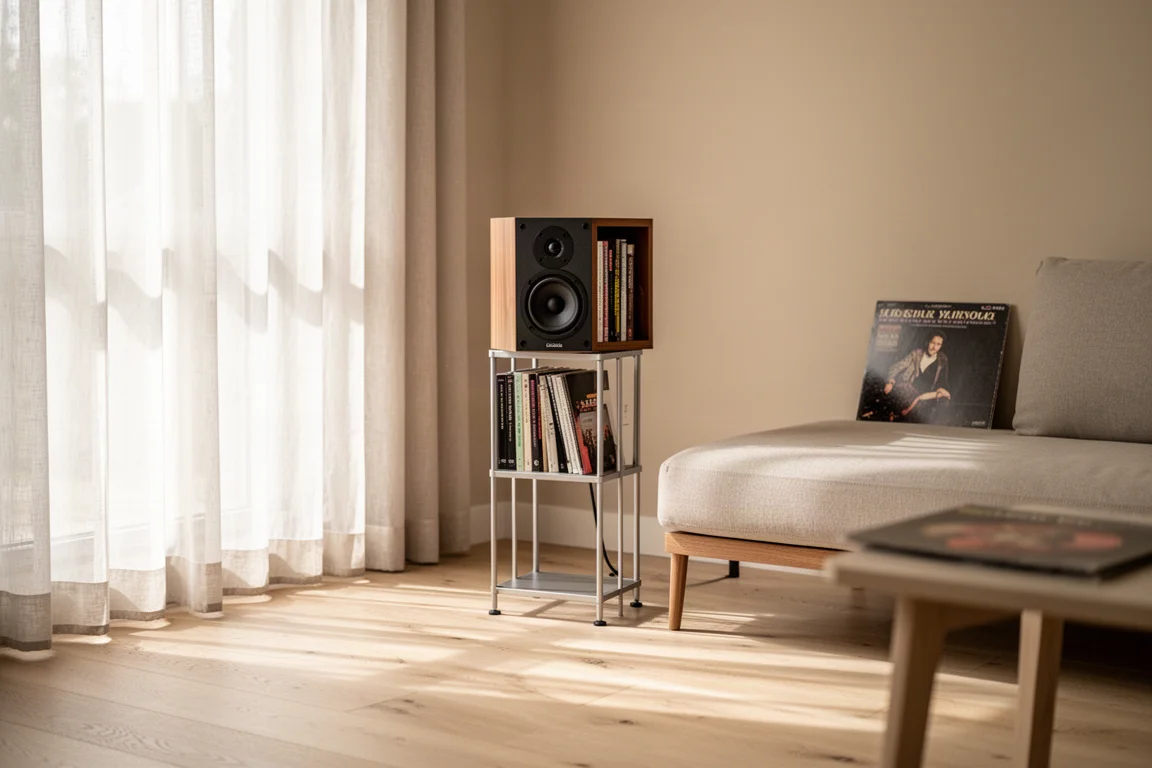
ELAC recommends placing the speakers one to two feet away from the side walls, then experimenting with the distance to the front wall to get the best bass response. The distance between the two speakers should equal the distance from your listening position to the speakers. From there, toe-in is the main tool for dialing in focus and a solid center image.
Room size may force a compromise on side wall distance, and that is fine. The placement guidance is a starting point, and in practice it produces the most balanced response.
On amplification, the Debut 3.0 was driven to its full potential by a range of integrated amplifiers and receivers, and it accepted a subwoofer without any fuss. Crossing a subwoofer over between 60 and 80 Hz rounded out the bottom end cleanly, and adding a sub noticeably improves the speaker’s overall sense of scale.
Buying Advice
At under $500, the Debut 3.0 is a remarkable value. Judged purely on performance, it holds its own against speakers costing far more, and the main things you give up at this price are finish choices rather than sound quality.
The buying decision really comes down to two questions. First, will you add a subwoofer? If the answer is yes, the Debut 3.0 becomes an extremely capable foundation for both stereo and home theater systems. If the answer is no, and you want more bass and a larger sense of presence from the speakers alone, a bigger, more dynamically assertive design may serve you better.
Second, do you already own the previous generation of this speaker? That model was a little more subdued and not as easy to drive. If you already have it, the case for upgrading is not overwhelming. If you own neither, the Debut 3.0 is the easier speaker to pair with whatever amplifier you already own or plan to buy.
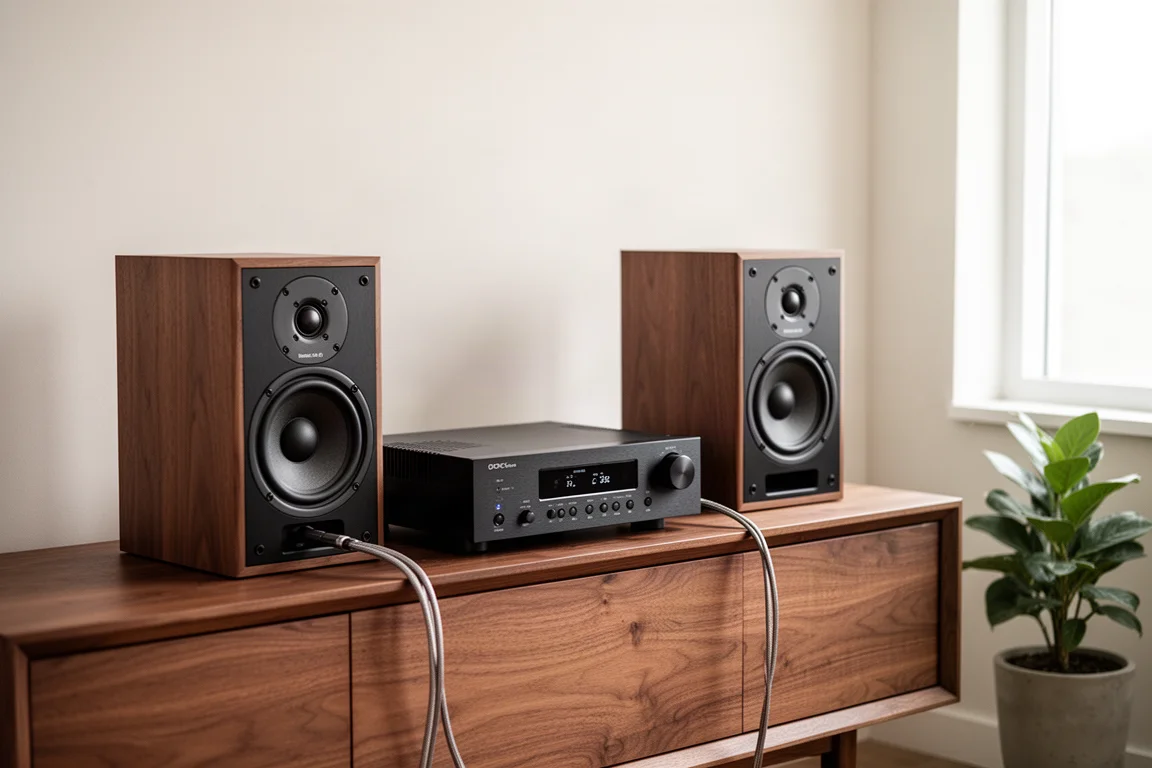
For everyone else, the recommendation is straightforward. This is a neutral, well-built, easy-to-drive bookshelf speaker that flatters a wide range of source material and rewards a sensible subwoofer crossover.
Conclusion
The ELAC Debut 3.0 shows that the Debut line is bigger than any single designer. It delivers a neutral, linear mid-range, a stiff and inert cabinet, and an amplifier-friendly load, all for well under $500. It is not the speaker for someone who wants boosted bass or a strong house sound, and it will not replace a subwoofer in a home theater setup.
For listeners who prioritize accuracy, flexibility, and value, it is one of the easiest bookshelf speakers to recommend right now.
Product link
View more details for ELAC Debut 3.0 Bookshelf Speaker
This product is mentioned in the review. Check the specifications, options, and compatibility before buying.
View more details for ELAC Debut 3.0 Bookshelf SpeakerFurther reading
Related Reviews
Bookshelf Speakers
Acoustic Energy A100 Mark II Review: A Compact Standmount With an Expansive Soundstage
The Acoustic Energy A100 Mark II brings clarity, natural tonality and a wide soundstage to an entry-level standmount, with a few setup details worth knowing first.
Bookshelf Speakers
Acoustic Energy AE-100 Mark II Review: Compact Bookshelf Speakers With Standout Imaging
A compact British two-way bookshelf speaker with deep, layered imaging, fast bass, and a slight treble lift to weigh against a crowded $500 field.
Bookshelf Speakers
Acoustic Energy AE100 MK2 Review: Measured Performance and Four Alternatives
A close look at the Acoustic Energy AE100 MK2 bookshelf speaker, what its measured performance reveals, and four alternatives with different trade-offs.