Bookshelf Speakers
ELAC Debut 2.0 B6.2 vs DBR62 vs Uni-Fi Reference UBR62: Which Bookshelf Speaker Fits Your Room?
A measured comparison of three ELAC bookshelf speakers, covering linearity, dispersion, bass extension, distortion, and where each model makes the most sense.
Introduction
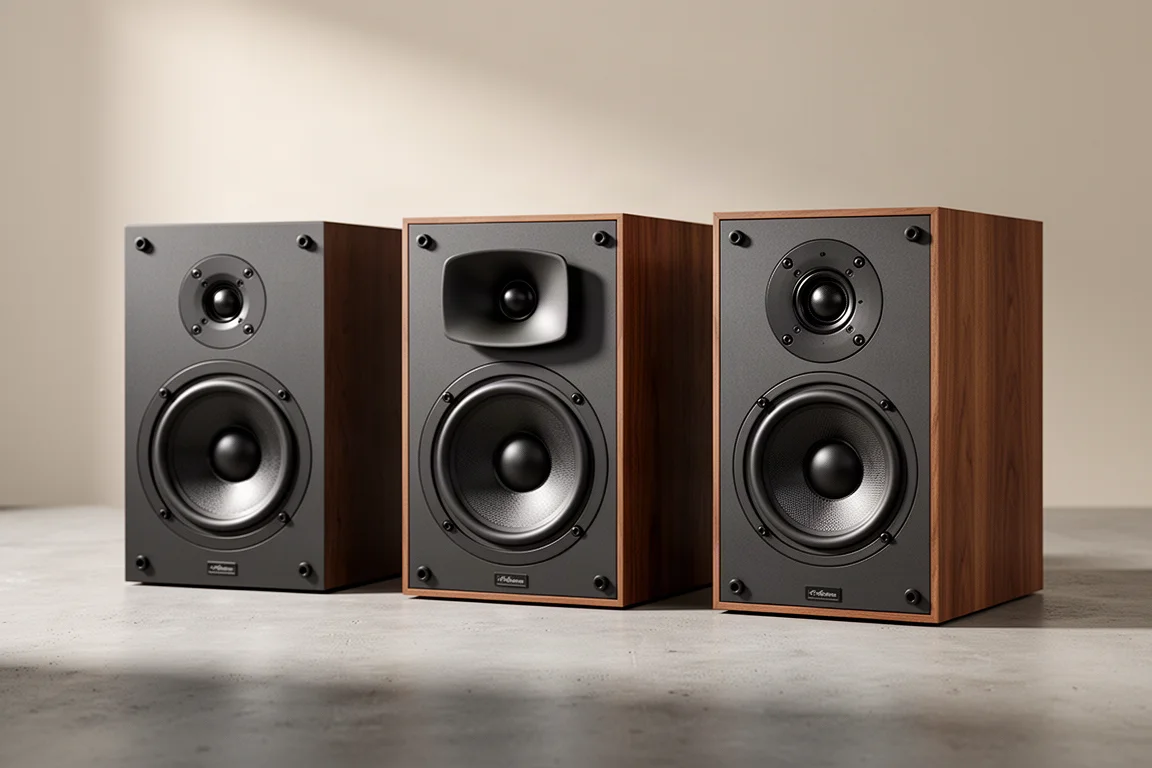
Three ELAC bookshelf speakers share the same 6.5-inch midwoofer size, yet they sit in three different price brackets: roughly $400 per pair for the Debut 2.0 B6.2 (DB62), about $700 for the Debut Reference DBR62, and around $1,200 for the Uni-Fi Reference UBR62. On paper the step-up looks linear. In measurement, the story is more nuanced, because bass extension and sensitivity stay surprisingly close across all three while linearity and dispersion shift as the price rises.
This comparison covers what the measurements show, what those differences tend to sound like in a room, and which of the three is likely to suit a given setup.
What All Three ELAC Speakers Share
All three are compact speakers built around a 6.5-inch midwoofer. The DB62 is slightly taller and narrower than the DBR62, and the UBR62 sits alongside them as the most elaborate cabinet of the group.
Bass extension is close across the range. The DB62 measures an F3 of 57 Hz and an F10 of 40 Hz, which translates to useful low-frequency support in a typical room but not the deepest output. The DBR62 is the mild outlier of the three, and even then the figures remain reasonably close, while the UBR62 tracks the same general behavior. If you want strong output below 50 Hz, plan on a subwoofer.
Sensitivity is similarly tight, within about 2 dB from model to model. Linearity is the clearer dividing line: response grows more even as you move up the line, so the DBR62 and UBR62 measure more linear than the entry DB62.
ELAC Debut 2.0 B6.2: The Entry Point
The DB62 is a two-way design with a 6.5-inch midwoofer and a 1-inch dome tweeter. Average sensitivity measures around 85 dB, and linearity holds within roughly plus or minus 3 dB across most of the range. One feature stands out: a resonance in the 500 to 700 Hz region that lifts a narrow band of the response, and it shows up clearly in listening as a slightly boxy, boomy character around 700 Hz.
The top end is boosted as well, which can read as bright and potentially sibilant. The 10 to 12 kHz region is more subdued relative to the midrange, so the extra energy does not come across as air. Horizontal radiation spans roughly plus or minus 50 to 60 degrees before narrowing above about 5 to 7 kHz, where the dome tweeter begins to beam. Vertically, the useful window is limited to about plus 12 degrees and minus 20 degrees, so listening height matters.
The encouraging part is that both problem areas sit in otherwise smooth stretches of the response, which makes them good candidates for correction. A narrow filter centered near 700 Hz, with a Q around 6 and a cut of roughly 3 to 5 dB, removes most of the resonance, and a gentle shelf can bring the top end into line.
ELAC Debut Reference DBR62: The Best-Value Middle Step
The DBR62 keeps the two-way layout and the 6.5-inch midwoofer, and mounts the 1-inch dome tweeter in a waveguide. Sensitivity is a touch lower than the DB62, and the two traits that define the cheaper speaker, the presence dip and the boosted top end, are absent here. The result is a more neutral balance overall.
Low frequencies get a mild lift around 100 Hz, which adds impact and thump across a wide range of music. The trade-off sits higher up: a dip in the upper midrange takes some attack out of certain recordings.
On-axis response tilts up slightly, so rotating the speaker about 30 degrees off axis lands it in a mostly neutral balance. That costs a small amount of presence in the 1 to 2 kHz area, but the change is subtle rather than obvious. Horizontal dispersion is wider than the DB62 at roughly plus or minus 60 to 70 degrees, narrowing later in the treble, and the vertical window is closer to plus or minus 20 degrees.
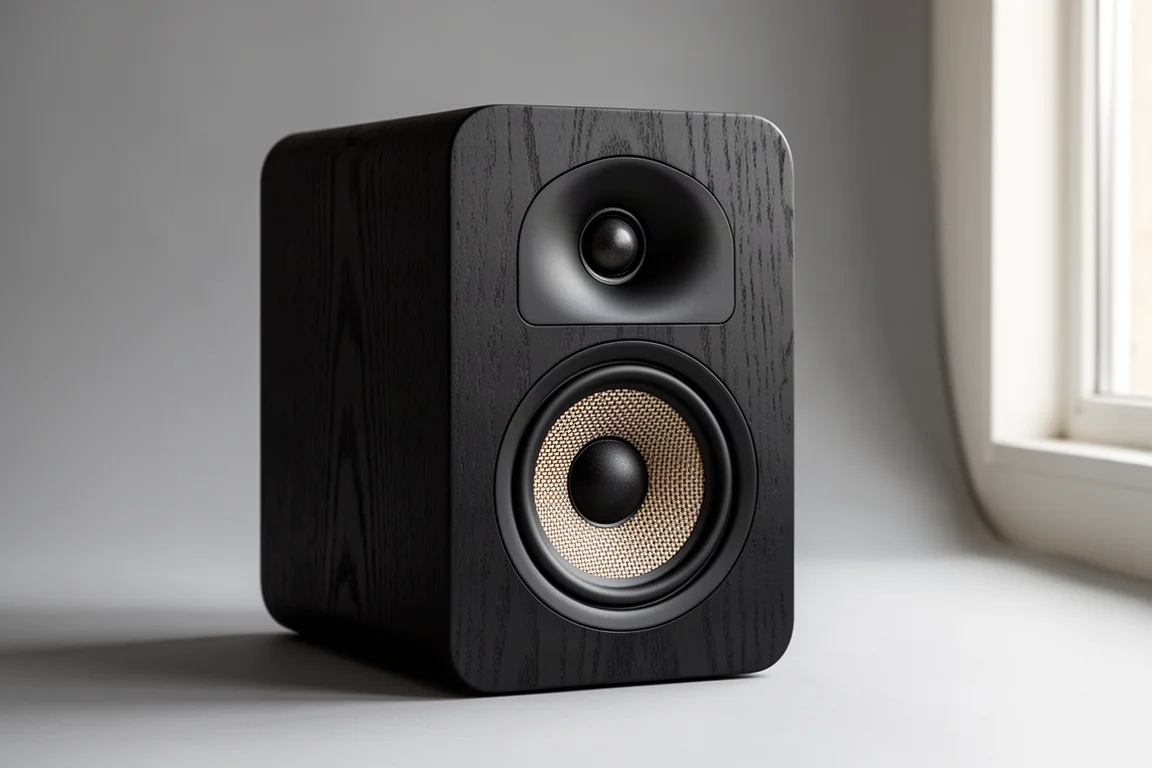
One region resists correction: a directivity dip near 4 kHz that traces to diffraction. The dip remains in horizontal-only early reflections data, which points to a horizontal cause rather than the spacing between tweeter and midwoofer, and EQ cannot fully resolve it. Distortion at 96 dB at one meter measures slightly better than the DB62.
ELAC Uni-Fi Reference UBR62: The Three-Way Flagship
The UBR62 moves to a three-way design: a 6.5-inch midwoofer plus a coincident 4-inch driver with a 1-inch tweeter mounted inside it. On-axis response trends gently downward from the midrange through the tweeter, a slope the other two do not show. The estimated in-room response stays smooth both on and off axis. If you want a little more treble energy, aim the speaker closer to the listening position; if you want less, turn it away.
Bass behavior is comparable to the other two models, with one caveat: a dip in that region takes some weight out of kick drums and bass guitars. It does not stand out as objectionable, but it is worth knowing if that low-mid punch matters to you.
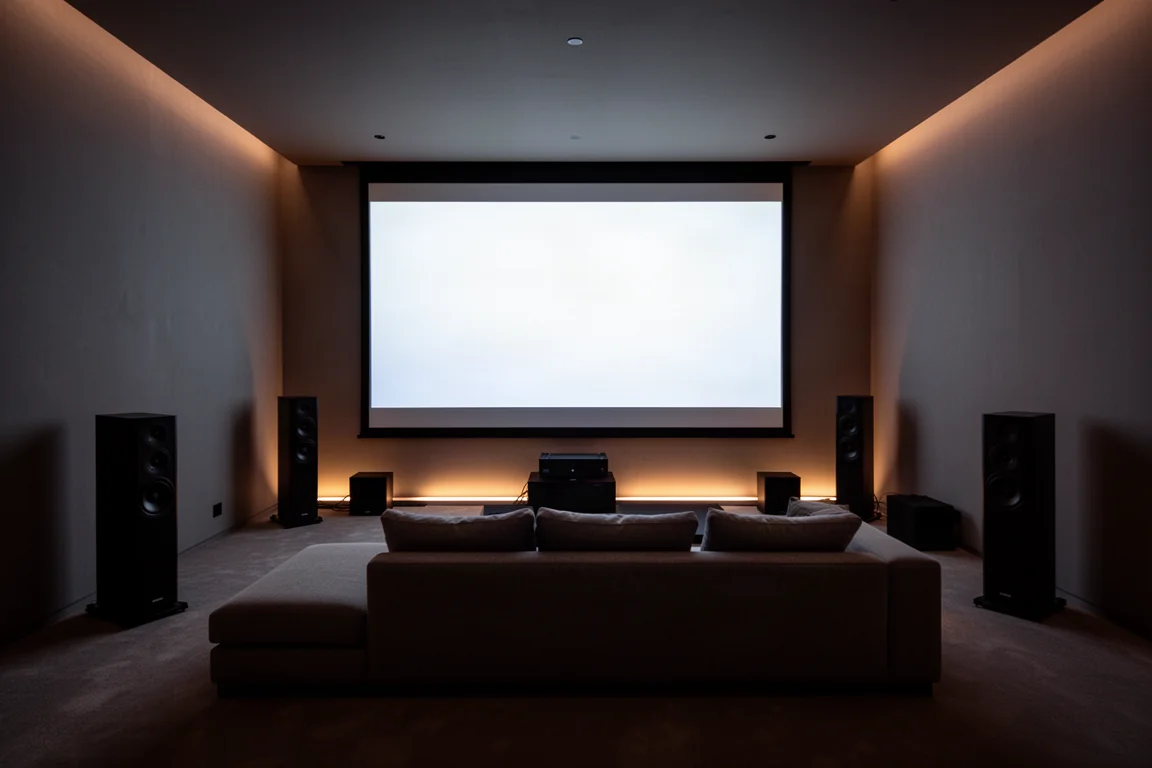
Dispersion is where this model separates itself. Coaxial designs typically radiate in a narrower window of roughly plus or minus 40 to 50 degrees, and the UBR62 holds a much wider pattern, averaging around plus or minus 60 to 70 degrees. Vertical coverage is the widest of the three at about plus or minus 40 degrees, which makes it the more forgiving option for home theater seating or any setup where listeners sit above or below the tweeter line.
Two measurement notes are worth flagging. Distortion shows an anomaly that looks like a resonance or a port-related effect, and compression measures slightly worse than the other two. There is also diffraction behavior above about 7 kHz, most likely from the coaxial driver inside its waveguide, that may ease with a small amount of off-axis aiming. Best results tend to come from aiming somewhere between on axis and about 10 degrees off axis.
Equalization, Distortion, and Room Limits
Reading the directivity index alongside the on-axis and listening window curves shows how much of a speaker’s character can be reshaped. A smooth, linear directivity index means equalization tends to behave predictably. On the DB62, the 700 Hz resonance and the treble lift both fall in linear regions, so a filter can address them. On the DBR62, the upper midrange dip lines up with a dip in the directivity index and a swap between the listening window and on-axis response, which is why that area cannot be fully equalized. The UBR62 has a few narrow resonances that may also resist correction, and some of that behavior may be reduced by adjusting the speaker angle.
Compression behaves similarly across all three. Below roughly 80 Hz the response changes noticeably as output rises, so the tonal balance shifts when a speaker is pushed hard. Distortion at 96 dB at one meter is broadly comparable, with the DBR62 measuring a little better and the UBR62 carrying that additional anomaly. The practical conclusion is the same for every model in this group: for loud listening, long listening distances, or output below 50 Hz, a subwoofer is part of the plan.
Which ELAC Speaker Should You Buy?
If the goal is the lowest entry point into hi-fi, the DB62 makes sense at around $400 per pair, and sometimes less. Its resonance and bright top end are real drawbacks, but both can be managed with equalization, and the fundamentals are sound for the money.
The DBR62 is the value pick at about $700 per pair. It removes the two biggest tonal complaints of the cheaper model, adds a pleasant mid-bass lift, and widens dispersion. The upper midrange dip and the diffraction-related directivity dip are the compromises, and neither is a deal breaker for most rooms.
The UBR62 justifies its roughly $1,200 per pair price with the widest, most consistent dispersion of the three and the best vertical coverage, which matters in home theater or any setup with multiple rows of seating. Its bass dip, distortion anomaly, and slightly weaker compression figures are the points to weigh.
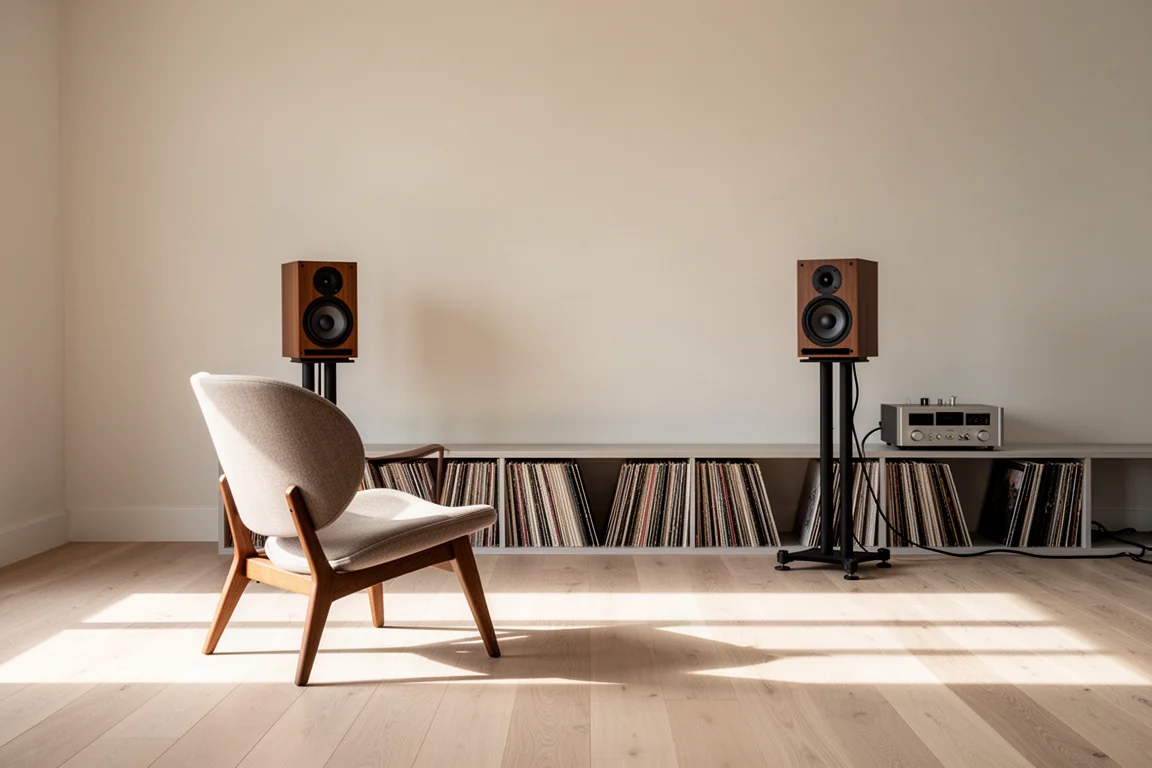
Matching the speaker to the room matters more than the price step here. A small room with a single listening position can be served well by either two-way model, while a larger space with several seats plays to the strengths of the three-way design.
Conclusion
All three speakers share similar bass extension and sensitivity, so the decision comes down to linearity, dispersion, and how much correction you are willing to apply. The DB62 is the affordable starting point with fixable flaws, the DBR62 is the best-balanced option in the middle, and the UBR62 is the choice for wide, consistent coverage across a room. Whichever you pick, budget for a subwoofer if you listen loud or sit far from the speakers.
Further reading
Related Reviews
Bookshelf Speakers
Acoustic Energy A100 Mark II Review: A Compact Standmount With an Expansive Soundstage
The Acoustic Energy A100 Mark II brings clarity, natural tonality and a wide soundstage to an entry-level standmount, with a few setup details worth knowing first.
Bookshelf Speakers
Acoustic Energy AE-100 Mark II Review: Compact Bookshelf Speakers With Standout Imaging
A compact British two-way bookshelf speaker with deep, layered imaging, fast bass, and a slight treble lift to weigh against a crowded $500 field.
Bookshelf Speakers
Acoustic Energy AE100 MK2 Review: Measured Performance and Four Alternatives
A close look at the Acoustic Energy AE100 MK2 bookshelf speaker, what its measured performance reveals, and four alternatives with different trade-offs.