Bookshelf Speakers
ELAC Debut 2.0 B6.2 Review: A Neutral Bookshelf Speaker at a Fair Price
A largely neutral bookshelf speaker with in-room bass to about 50 Hz and strong EQ behaviour, balanced against an upper midrange lift and compression at higher volumes.
Introduction
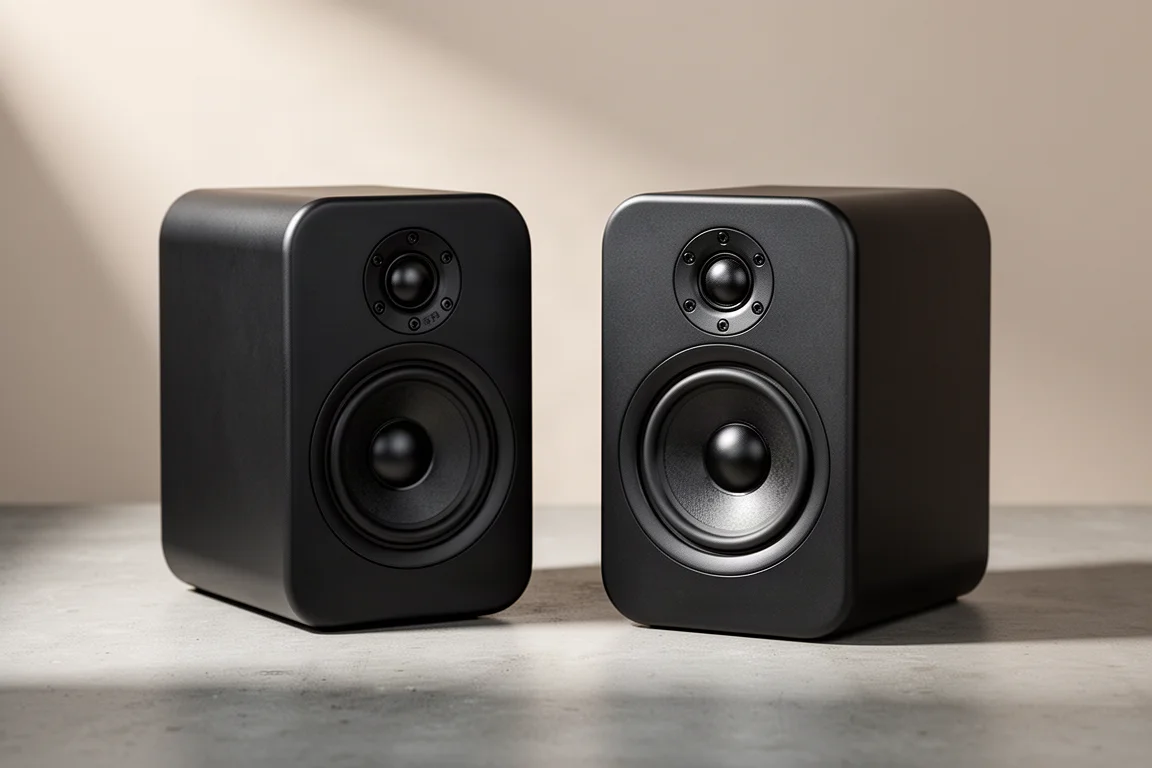
The ELAC Debut 2.0 B6.2 is a passive two-way bookshelf speaker that sells for roughly $300 per pair. The model naming is unwieldy, but the proposition itself is simple: a compact cabinet that delivers a largely neutral tonal balance without the exaggerated treble or bloated bass that so often shows up at this price.
In practice, the speaker held its neutral character in a real listening room rather than only under measurement conditions. Average sensitivity sits around 85 dB, the estimated in-room response stays reasonably smooth across most of the range, and the overall voicing avoids obvious coloration. Two exceptions stand out clearly, and both are covered further down.
For listeners who want a well-behaved speaker and are willing to spend a few minutes with an equalizer, the Debut 2.0 B6.2 makes a strong case at this price. Anyone who wants to play loud without adding a subwoofer should read the trade-offs carefully first, because that is where the compromises concentrate.
Who This Product Is For
This speaker suits listeners building a first serious two-channel system, or upgrading from a small all-in-one setup, and it works well in small to medium rooms where the speakers can sit away from the walls. It is also a good match for anyone who already uses room correction or a desktop DSP, since it takes equalization unusually well.
It is less suited to buyers who want high output levels without a subwoofer, and less suited to anyone who values dramatic cabinet design over measured behaviour. The finish is plain and understated rather than eye-catching.
Main Strengths
The on-axis response is quite good, and the speaker as a whole is close to neutral in character. In-room bass reaches down to about 50 Hz without much trouble, which is enough to give a kick drum real weight and definition. Below that point the roll-off becomes steep, so deep bass is not part of the package.
Horizontal dispersion is generous, holding roughly plus or minus 60 degrees up to about 8 kHz before the tweeter narrows tightly, which is typical behaviour for a dome tweeter. That translates into good soundstage width, and it gives you room to experiment with toe-in. Aiming the speakers directly at the listening position still sounds wide, and angling them off axis can soften the top end slightly to taste without collapsing the image.
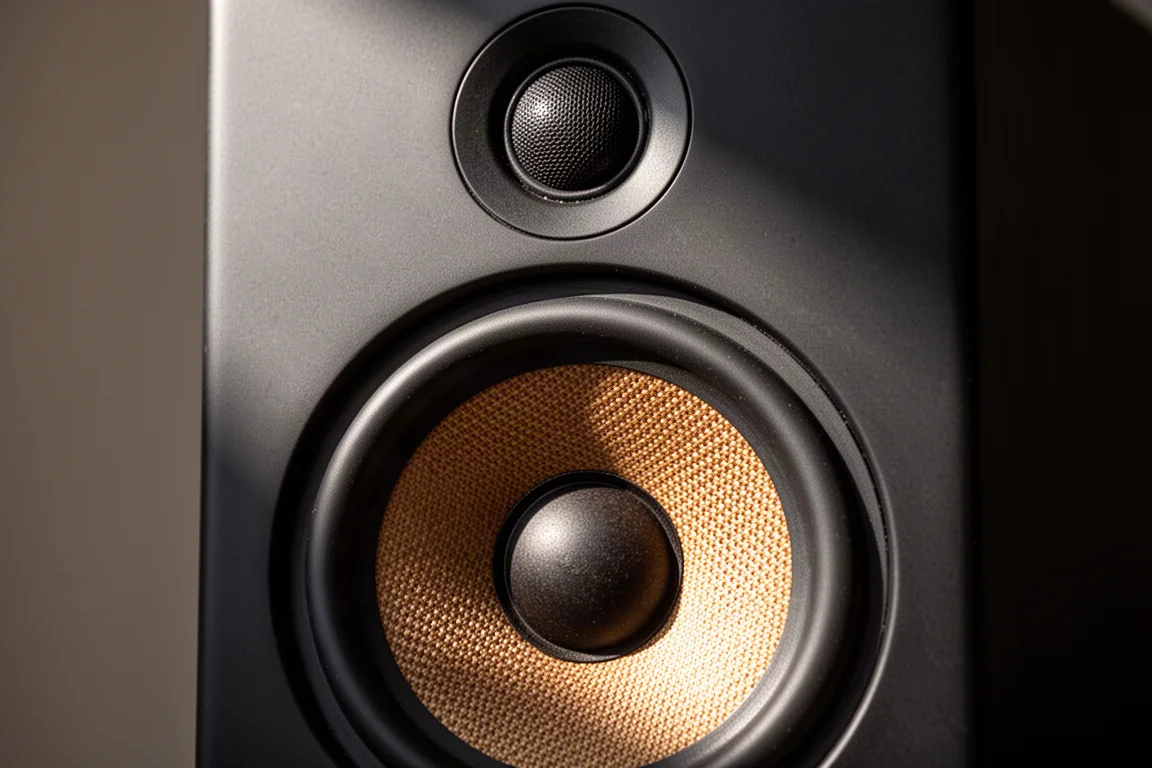
Vertically, the usable window is roughly 10 degrees above the tweeter axis and 20 degrees below it, which is a workable range in most rooms as long as the tweeter ends up near ear height. Distortion at 86 dB stays below roughly 1 percent until about 50 Hz, which is respectable for a cabinet this size.
Equalization is where this speaker really cooperates. It responds well to correction, and because the midrange does not need much adjustment, applying EQ does not cost you sensitivity. The remaining errors in the 2 to 4 kHz region come from vertical directivity and diffraction, and those are not correctable with EQ, but they are modest enough that they rarely call attention to themselves.
Things to Consider Before Buying
The first thing worth knowing is an emphasis in the upper midrange, in the 4 to 6 kHz region. On some material this reads as edgy or sharp, and it can approach a sibilant quality without quite tipping over into it. It is not a constant presence, and how much it bothers you will depend heavily on what you listen to.
The second is a resonance that shows up in the measurements. Whether you hear it depends on the music: if a track happens to land on that particular tone, it will sound slightly more lifted than the notes around it. Reducing it by about 5 dB with EQ produced a noticeable but not dramatic change, which suggests it is a manageable issue rather than a defining flaw.
The third consideration is compression. As volume rises from low to moderate and then to high, the speaker begins to compress, meaning output per frequency drops rather than scaling evenly. This becomes significant below about 80 Hz at higher output levels, and even at 96 dB the response falls away sharply below roughly 60 Hz. The practical consequence is straightforward: for loud listening, a subwoofer is the sensible fix, otherwise you lose dynamic range in the midbass and lower bass. The woofer also starts to give up in the 60 to 70 Hz region at high levels.
Measured distortion is generally well controlled. At 96 dB there is a small rise approaching 3 percent between roughly 300 and 500 Hz, which was not clearly audible, and the multi-tone test stays mostly beneath the 10 percent line, touching about 10 percent between roughly 500 and 800 Hz. Listeners who keep levels moderate are comfortably in low-distortion territory.
One placement note matters: boundary reinforcement will extend the low end if the speakers sit near a wall, but that also introduces a bump in the midbass and costs you the smooth linear response you get with more space around the cabinet. Pulling them out from the wall is the better trade.
Buying Advice
The most useful accessory for this speaker is a subwoofer. Adding one addresses the compression behaviour directly and lets the B6.2 focus on the range it handles well, which is most of the midrange and treble. If your listening stays at moderate levels, running them full range is perfectly reasonable and you will still get satisfying kick bass, just not low bass.
Equalization is optional rather than essential, but it pays off. Taming the resonance and easing the 4 to 6 kHz area smooths out the two characteristics most likely to draw attention, and the speaker accepts those changes without complaint.
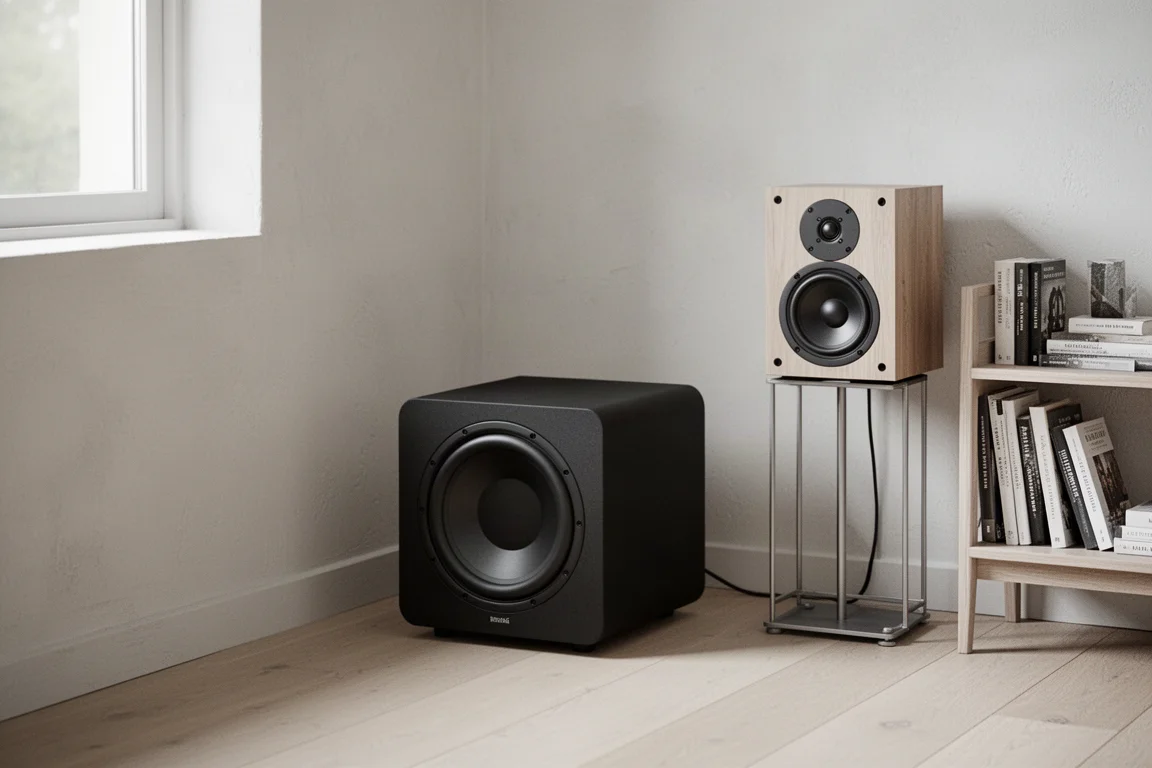
Aim for a setup with the tweeters close to ear height, keep some distance between the cabinets and the wall behind them, and give yourself room to adjust toe-in. None of that requires special equipment, and it is the difference between a speaker that sounds good and one that sounds tailored to your room.
Conclusion
The ELAC Debut 2.0 B6.2 is a genuinely good speaker at a genuinely good price, and that combination is rarer than it should be. It is neutral rather than merely competent for the money, it reaches about 50 Hz in room, it images widely, and it responds to correction better than most speakers in its class.
The compromises are specific rather than broad: a lift in the 4 to 6 kHz region, a resonance that only some music will expose, and compression below 80 Hz as volume climbs. Plan for a subwoofer if you listen loud, plan a few minutes with an equalizer if you want the smoothest result, and this speaker rewards the effort. Buyers who want a neutral, unfussy pair of bookshelf speakers at around $300 per pair will find very little to argue with here.
Product link
View more details for ELAC Debut 2.0 B6.2
This product is mentioned in the review. Check the specifications, options, and compatibility before buying.
View more details for ELAC Debut 2.0 B6.2Further reading
Related Reviews
Bookshelf Speakers
Acoustic Energy A100 Mark II Review: A Compact Standmount With an Expansive Soundstage
The Acoustic Energy A100 Mark II brings clarity, natural tonality and a wide soundstage to an entry-level standmount, with a few setup details worth knowing first.
Bookshelf Speakers
Acoustic Energy AE-100 Mark II Review: Compact Bookshelf Speakers With Standout Imaging
A compact British two-way bookshelf speaker with deep, layered imaging, fast bass, and a slight treble lift to weigh against a crowded $500 field.
Bookshelf Speakers
Acoustic Energy AE100 MK2 Review: Measured Performance and Four Alternatives
A close look at the Acoustic Energy AE100 MK2 bookshelf speaker, what its measured performance reveals, and four alternatives with different trade-offs.