Bookshelf Speakers
ELAC Debut 2.0 B5.2 vs B6.2: Which Bookshelf Speaker Makes More Sense?
A close look at the ELAC Debut 2.0 B5.2 and the larger B6.2, covering the treble step near 1.5 kHz, equalization behavior, output limits, and room placement.
Introduction
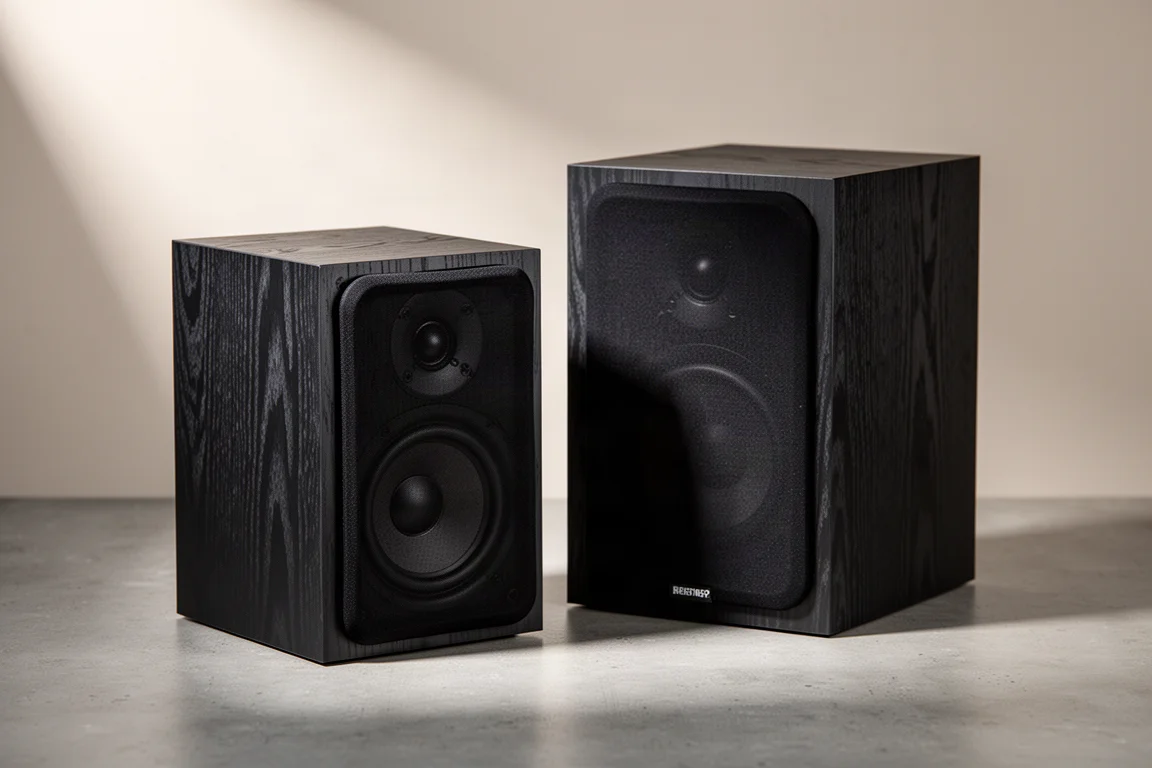
Two speakers from the same family, separated mainly by cabinet size and low-frequency reach. The ELAC Debut 2.0 B5.2 is the compact standmount, and the ELAC Debut 2.0 B6.2 is its larger sibling. Both are two-way bookshelf designs built around a dome tweeter and a woven midwoofer, and both sit in the same broad price territory, which is exactly why the choice between them is not as simple as picking the bigger box.
The decision comes down to three practical questions: how much low-frequency output you need, how loudly you listen, and whether you have access to basic equalization. Those questions matter more here than they usually do, because the smaller model carries a measurable treble step that shapes almost everything else about how it behaves in a room.
This comparison walks through the measured behavior of the compact B5.2, explains the treble step that defines its character, and then looks at why the larger B6.2 is often the simpler recommendation.
What This Comparison Focuses On
Four things matter most when choosing between these two: tonality across the midrange and treble, behavior off axis, how the speaker handles higher output levels, and how easy it is to place in a real room.
Tonality is the headline issue. Below roughly 1.5 kHz the B5.2 is reasonably neutral, and the overall balance would be easy to recommend if the treble sat at that same level. It does not. Around 1.5 kHz the response steps up by about 2 to 3 dB and stays elevated from there.
Directivity comes next. The horizontal off-axis response of the B5.2 tracks its on-axis response closely, which is a strong indicator that the speaker responds predictably to equalization. Vertically the window is tighter: the response changes noticeably beyond about 10 degrees above or below the tweeter axis.
Output and placement round out the picture. The B5.2 is not a high-output speaker, and its front port gives it more flexibility about sitting close to a wall than a rear-ported design would allow.
ELAC Debut 2.0 B5.2: A Compact Bookshelf With a Clean Midrange
Below about 1.5 kHz, the B5.2 is a well-behaved speaker. Voices and most instruments land in a neutral balance, and the front-firing port means the cabinet can sit closer to a rear wall without the usual penalty for that position. At around $300 for the pair, it is priced within reach of a first serious two-channel setup or a compact desktop system.
The treble step is the catch. The elevated region is not harsh, grainy, or edgy. It simply sounds slightly forward and out of step with the rest of the range, which is far harder to describe than it is to hear.
The B5.2 Treble Step and How EQ Fixes It
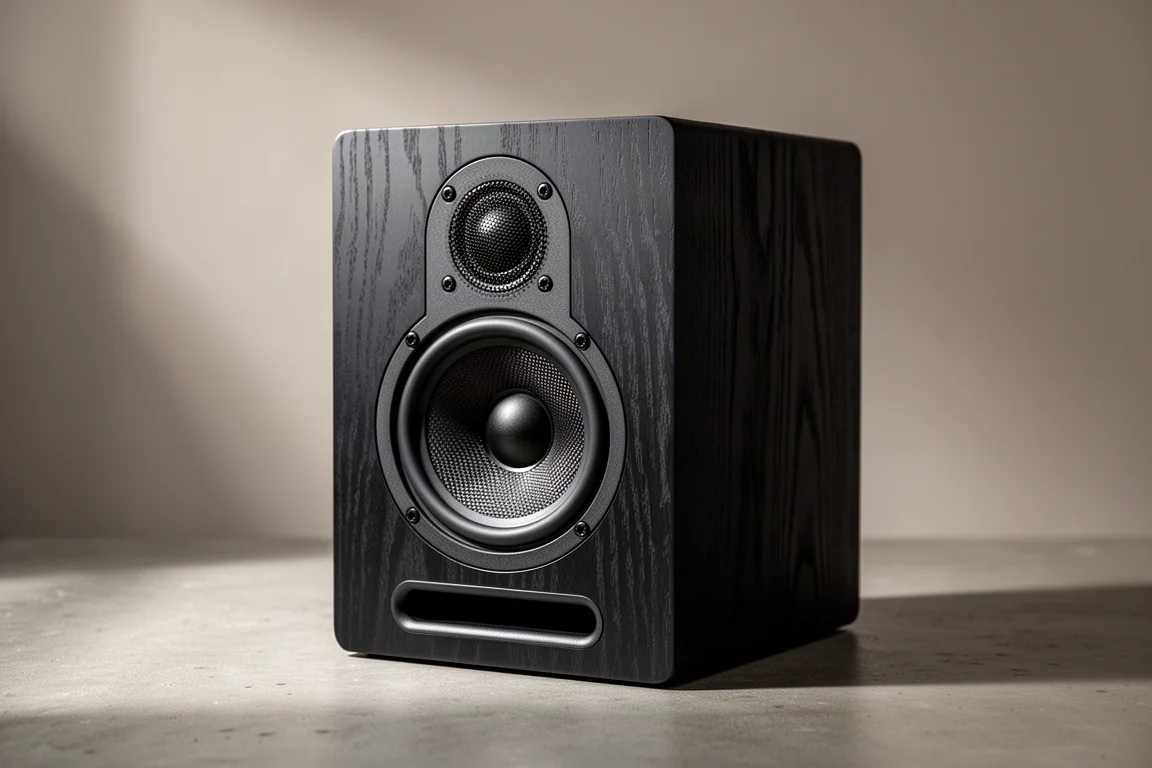
The step is a level issue rather than a tonal mess. A simple series resistor in the tweeter network would pad the tweeter down and make the speaker substantially more linear, which suggests the correction is straightforward at the design level.
In practice, equalization does the same job. A single high-shelf filter at 1600 Hz, set to about -2 dB with a Q of roughly 2, flattens the response considerably. That one band takes the speaker from uneven to close to linear, with overall sensitivity landing around 83 dB.
Two behaviors support that approach. The horizontal off-axis response follows the on-axis response closely, so the correction holds up across a listening window rather than at a single seat. The vertical window is narrower: stay within roughly 10 degrees above or below the tweeter line for the most consistent result.
Radiation width is moderate rather than wide, in the region of 50 to 60 degrees depending on the frequency you pick. Listeners who prefer a broader, more enveloping presentation may find it a little narrow, though it is far from a beamy design.
ELAC Debut 2.0 B6.2: The Bigger Brother
The Debut 2.0 B6.2 is the larger version of the same idea. It reaches a little lower in frequency response and can play a little louder, which addresses both of the compact model’s practical limits in a single step.
That combination matters most for buyers without equalization. If you cannot apply a high-shelf filter through a DSP or an AV receiver, the B6.2’s extra low-end reach and headroom make it the easier speaker to live with straight out of the box.
For listeners who do have EQ available, the smaller B5.2 remains a viable option, particularly where space is tight or the speaker needs to sit close to a wall.
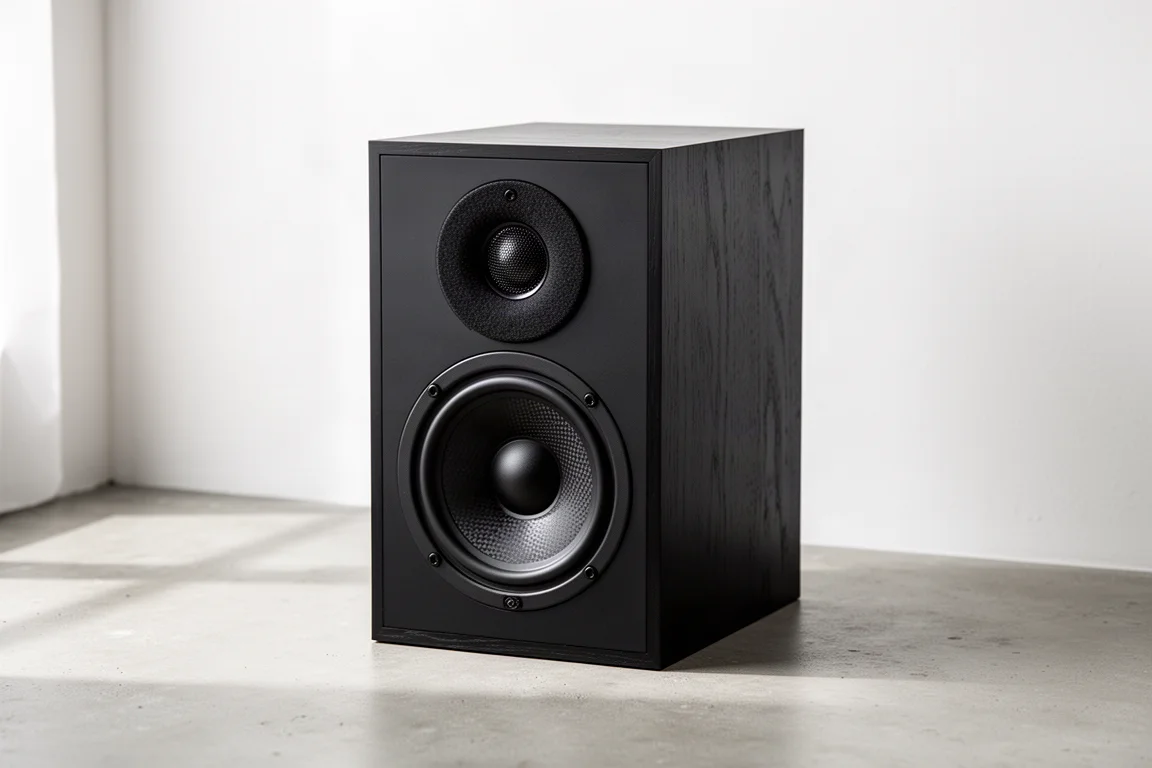
Output, Distortion, and Compression
Distortion stays low at ordinary listening levels. At 86 dB measured at one meter, harmonic distortion sits below about 1 percent for most of the range, with a rise through the midrange. Push the speaker to 96 dB and that same midrange region climbs above roughly 3 percent total harmonic distortion.
Compression is the more noticeable limit. The B5.2 does not handle compression well at high volume, and at the highest output levels it loses around 1.5 dB in the midrange, easing to about 1 dB lower down. At moderate volumes, level loss stays within about half a dB.
Multitone testing tells a similar story. At lower levels the speaker stays below the threshold where complex musical material tends to expose distortion. At around 96 dB, issues appear in the midrange near 600 Hz.
The practical reading is straightforward. This is not a powerhouse speaker, and it is happiest at sensible listening levels, ideally with a subwoofer handling the low bass.
Room Placement and Setup Notes
The B5.2’s low-frequency behavior puts F3 at roughly 60 Hz and F10 near 40 Hz. Placing the speaker near a wall adds some useful weight to the low end, but not a great deal, so a subwoofer remains the realistic answer for full-range listening.
Vertical placement deserves attention. Because the response shifts beyond about 10 degrees off the tweeter axis, keep the tweeter close to ear height and avoid tilting the cabinet dramatically.
The front port is the B5.2’s quiet advantage. It allows a closer-to-wall position than a rear-ported cabinet, which is useful in smaller rooms, on desks, and in setups that cannot be pulled far into the room.
Buying Advice
Choose the ELAC Debut 2.0 B6.2 if you want the simplest path to good sound without extra processing. Its lower reach and higher output ceiling mean fewer compromises in a typical living room, and it needs no correction to sound balanced.
Choose the ELAC Debut 2.0 B5.2 if you have equalization available and value a compact cabinet with a front port. A single high-shelf filter at 1600 Hz, around -2 dB with a Q near 2, brings it close to linear, and the speaker takes that correction well across a wide listening window.
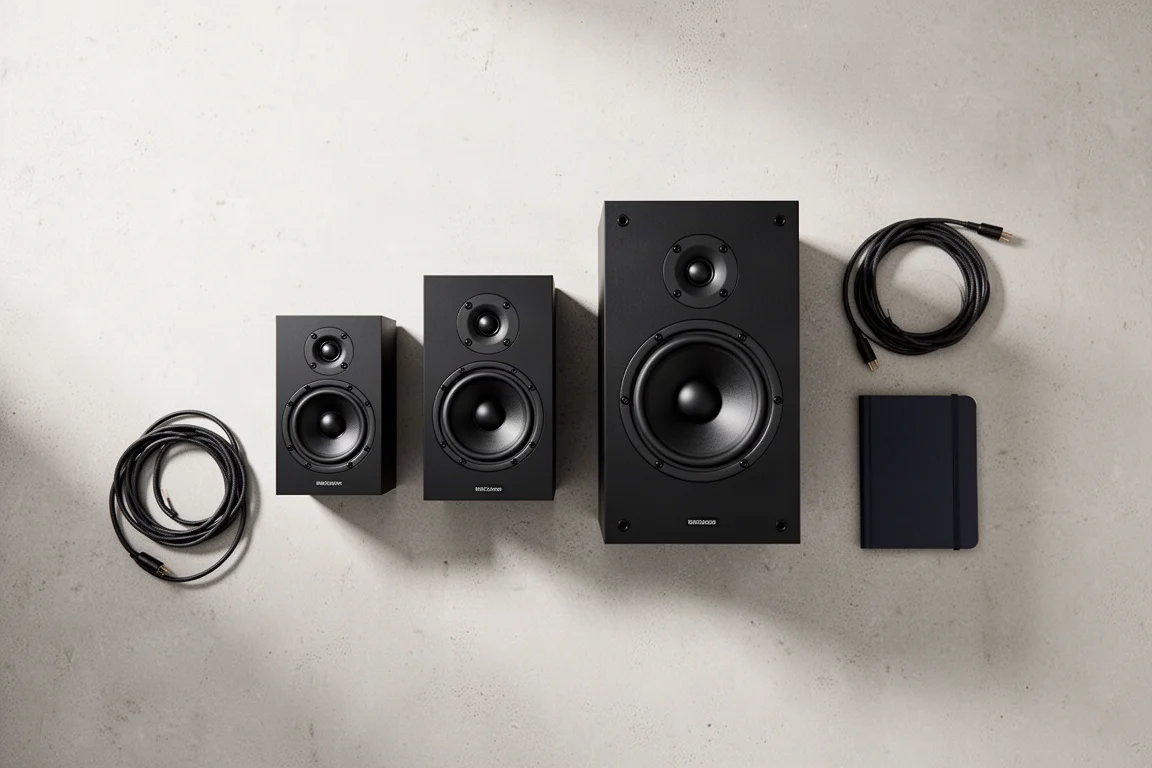
Either way, budget for a subwoofer if you want genuine low-frequency extension, and plan on a listening position within about 10 degrees vertically of the tweeter axis.
Conclusion
The ELAC Debut 2.0 B5.2 is a compact speaker with a neutral midrange and a treble step that keeps it from being an easy recommendation on its own. With a single band of equalization it becomes a genuinely linear speaker. Without that option, the larger ELAC Debut 2.0 B6.2 is the more sensible buy, thanks to lower bass extension and more usable output.
Further reading
Related Reviews
Bookshelf Speakers
Acoustic Energy A100 Mark II Review: A Compact Standmount With an Expansive Soundstage
The Acoustic Energy A100 Mark II brings clarity, natural tonality and a wide soundstage to an entry-level standmount, with a few setup details worth knowing first.
Bookshelf Speakers
Acoustic Energy AE-100 Mark II Review: Compact Bookshelf Speakers With Standout Imaging
A compact British two-way bookshelf speaker with deep, layered imaging, fast bass, and a slight treble lift to weigh against a crowded $500 field.
Bookshelf Speakers
Acoustic Energy AE100 MK2 Review: Measured Performance and Four Alternatives
A close look at the Acoustic Energy AE100 MK2 bookshelf speaker, what its measured performance reveals, and four alternatives with different trade-offs.