Bookshelf Speakers
ELAC DBR62 Review: A Neutral Bookshelf Speaker That Is Easy to Recommend
A close look at the ELAC DBR62, covering measured performance, dispersion, amplification needs, and the trade-offs to weigh before buying.
Introduction
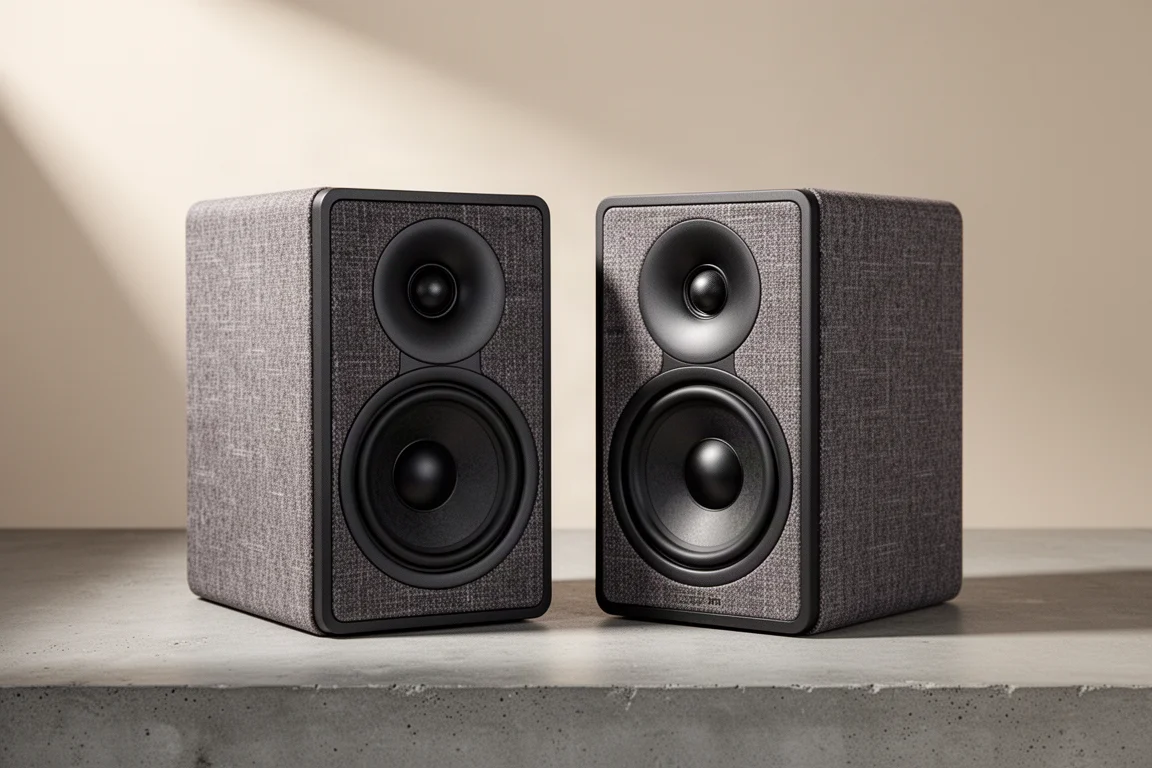
The ELAC DBR62 is a compact two-way bookshelf speaker built around a 6.5 inch woofer and a 1 inch dome tweeter loaded into a shallow waveguide. A tweed grille cloth covers the front baffle, which makes it easier to place the speaker near a wall when the room leaves you no other option.
What makes the DBR62 interesting is not any single dramatic specification. It is the way the design adds up: a neutral tonal balance, wide horizontal dispersion, and a driver layout that stays forgiving when the listening position is less than perfect. After extended listening across several sessions and a full set of measurements, the conclusion is straightforward. This is one of the safest purchases in its category.
Who This Speaker Is For
The DBR62 suits listeners who want a neutral, uncoloured bookshelf speaker for music first and who value flexibility in setup. Because the tweeter sits close to the woofer, the two drivers behave more like a single source than they would if they were spaced further apart. That matters when you are not sitting exactly on the tweeter axis, and it gives this speaker more vertical leeway than most two-way designs.
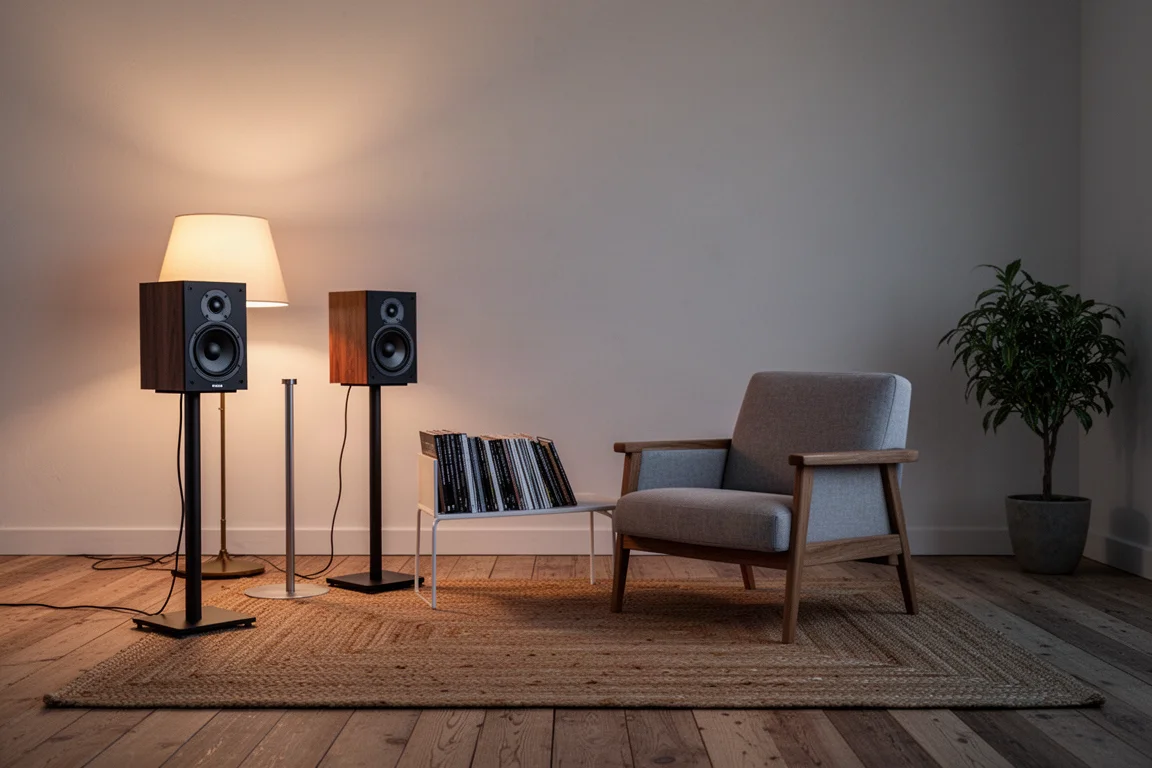
It is also a sensible choice for a small home theater system. Listeners in a second row stay within a usable vertical window, and the horizontal coverage remains wide enough to fill a normal room without aggressive toe-in. The design does not demand a dedicated listening chair in a perfectly treated space.
Main Strengths
Measured on-axis linearity lands within roughly plus or minus 2.5 dB, which is very good for a speaker at this level. A mild, wide-Q bass lift centred near 100 Hz adds a little extra punch to kick drums and bass lines without tipping the speaker into a boomy character.
Low-frequency extension is respectable for the cabinet size. The F3 sits around 50 to 53 Hz and the F10 near 41 Hz, which means in-room response can reach down to roughly 40 Hz depending on placement and room size. Deep sub-bass still calls for a subwoofer, but the DBR62 delivers more weight than most bookshelf speakers of similar dimensions.
Distortion stays below 3 percent at both 86 dB and 96 dB until roughly 50 Hz, and the horizontal radiation pattern holds at about plus or minus 70 degrees before the tweeter begins to beam. Measured preference data comes in at 5.3, a strong result for the category.
Sound, Dispersion, and Room Interaction
Directly on axis the response is flat enough to be genuinely useful, though a small rise around 4 to 5 kHz adds a touch of extra presence in that region. A listening position about 20 degrees off axis smooths this out and proved to be the most balanced option. Toeing the speakers out by around 30 degrees, with the cabinets roughly parallel to the wall behind them, also works well and keeps the overall in-room trend line tidy.
The design is unusually forgiving of aiming. Many speakers must be pointed straight at the listener to sound their best. The DBR62 stays coherent when angled away, which lowers the risk of a room-dependent result. Equalisation is practical across most of the range as well, with the exception of the diffraction region around 4 kHz caused by the cabinet edges. That dip is a normal consequence of a rectangular baffle, and removing it would take a far more expensive curved cabinet.
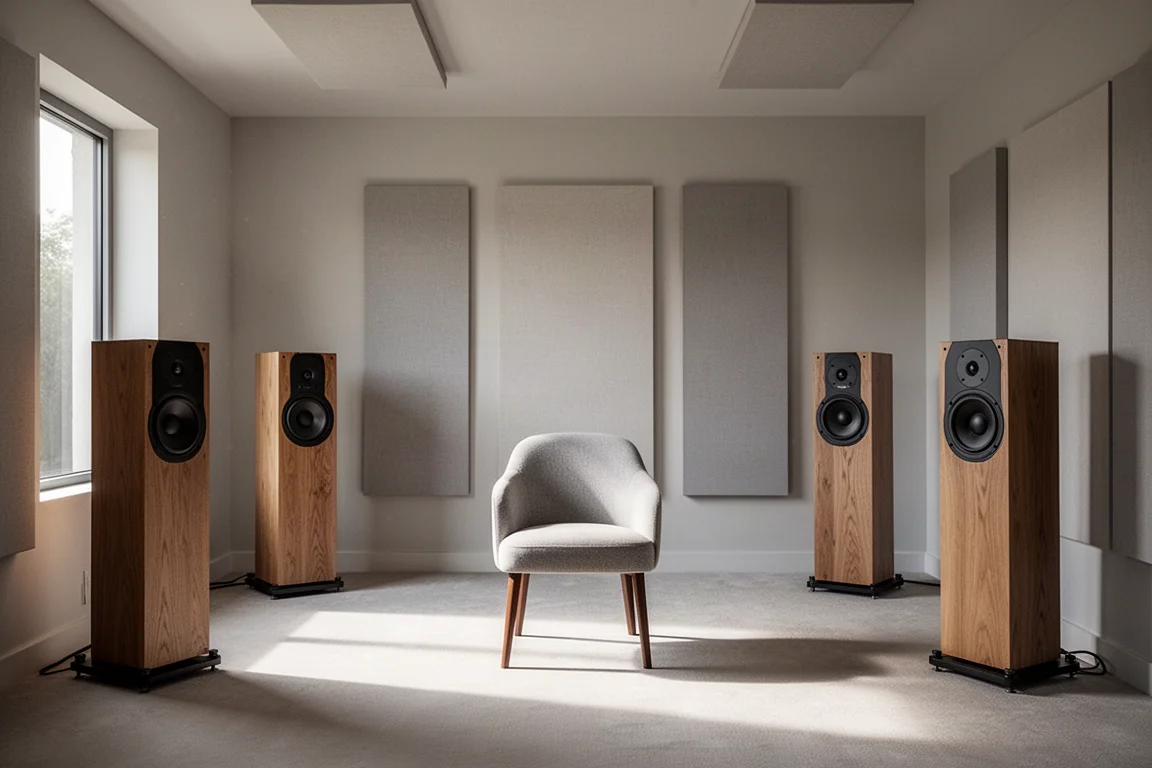
Vertically, the sweet spot spans about plus or minus 10 degrees above and below the tweeter, and up to plus or minus 20 degrees in practice if the setup requires it.
Amplification and Setup
Sensitivity is rated at 84.3 dB at 2.83 volts at one metre, which places the DBR62 on the lower side of the mid-sensitivity range. The impedance magnitude never drops below 5 ohms, but current draw in the 100 to 200 Hz region behaves closer to a 2.4 ohm load, so the speaker asks for real current rather than just voltage.
The practical implication is simple. Pair it with a separate stereo amplifier that is comfortable driving a 4 ohm load rather than relying on an AVR. A capable external amplifier gives the speaker the headroom it needs and keeps low-frequency behaviour under control when the music gets demanding.
Subwoofer Integration and Headroom
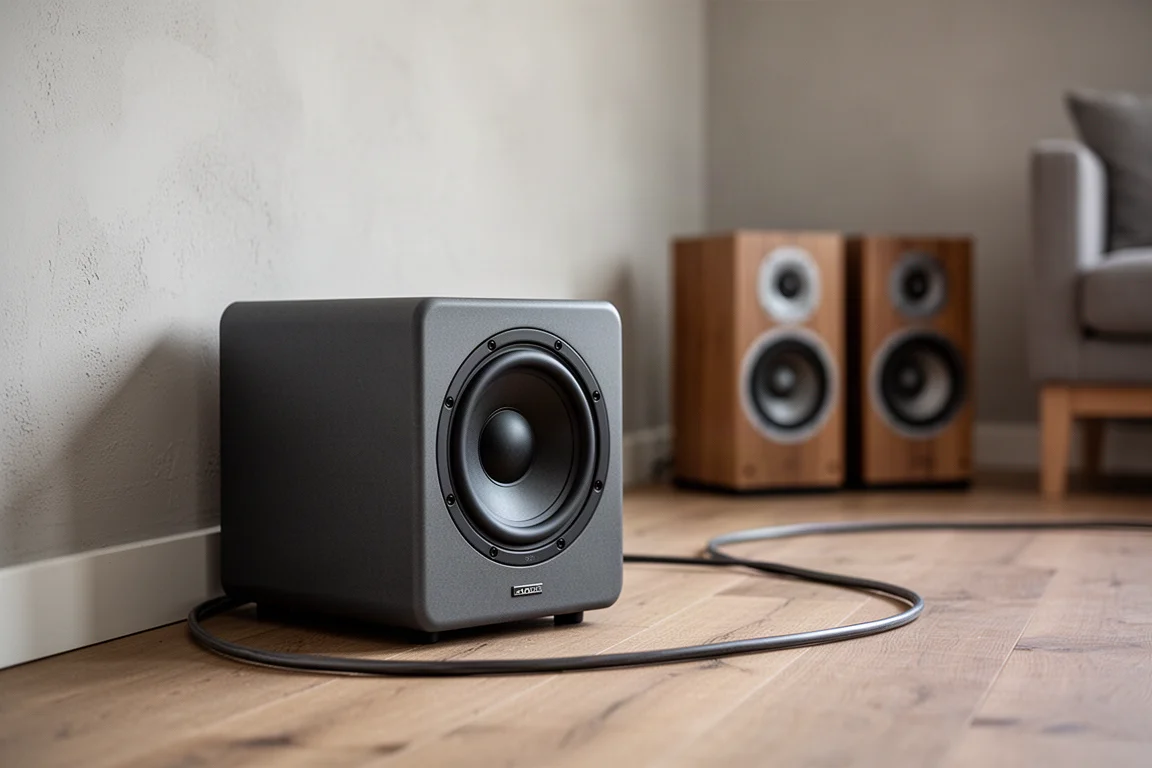
Compression measurements show the woofer working hard below roughly 80 Hz as levels rise, from 76 dB through 102 dB. Crossing the DBR62 over at about 80 Hz to a subwoofer removes that burden, and it also trims the mid-range distortion visible in multi-tone testing. If you listen at moderate levels in a small room, the speaker copes on its own. If you want high dynamics or genuinely deep bass, a subwoofer is the better answer.
Minor resonances appear in the data near 700 Hz and between 1 and 1.5 kHz. They may come from the enclosure, the cone-to-surround termination, or the port, but even at 102 dB the effect amounts to roughly half a decibel, so it is not a practical concern.
Things to Consider Before Buying
The one characteristic worth flagging is a mild recess in the 1 to 2 kHz region. In listening terms this shows up as slightly less vocal presence than some competing speakers deliver. Part of the cause is a small crossover mismatch, visible as a dip in that band in the early reflections and sound power curves, and the relative balance makes the 4 to 5 kHz area stand out a little more by comparison. Depending on what you listen for, you may notice the dip, the peak, or neither.
Deep bass is also out of reach without a subwoofer, and a low-sensitivity speaker of this type rewards a decent amplifier. Neither point is unusual for the size, but both are worth planning for before you commit.
Buying Advice
The DBR62 does nothing badly, and that is precisely why it is easy to recommend. Neutral on-axis response, wide horizontal dispersion, useful bass for the cabinet size, and a forgiving relationship with room placement add up to a speaker that is hard to get wrong. It works as well in a first serious system as it does as a second pair for a desk or a small theater.
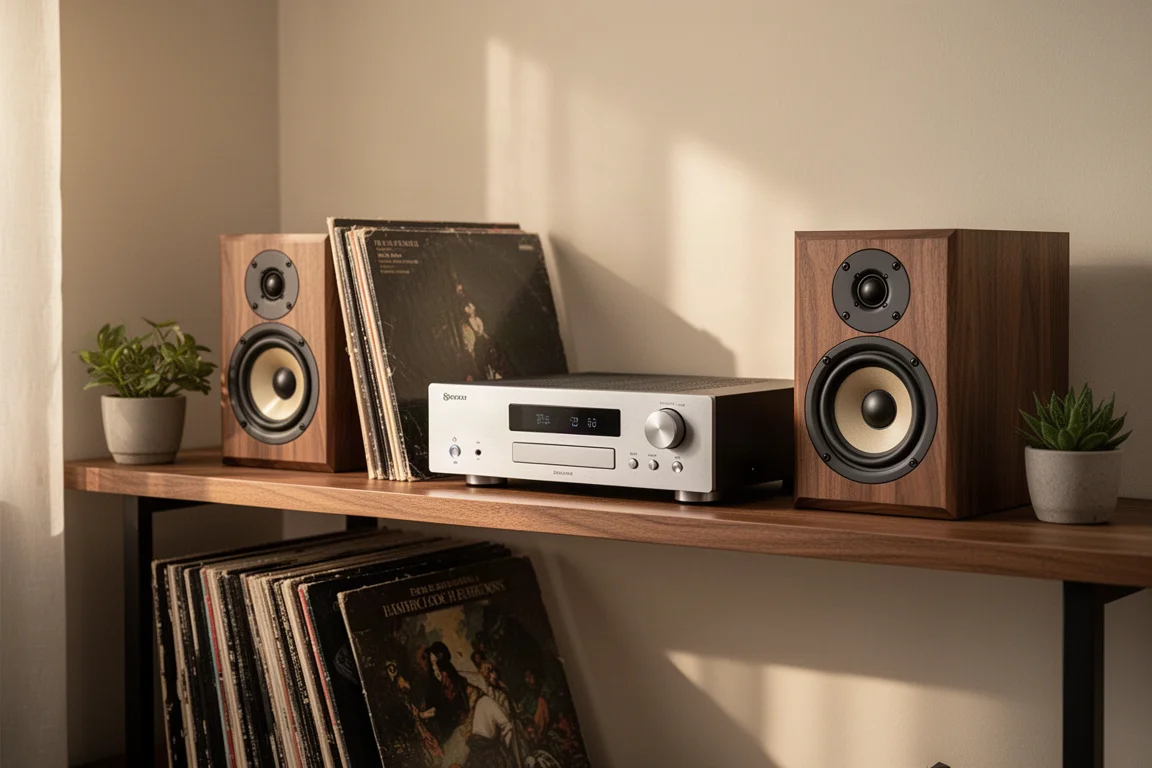
If your priority is maximum vocal presence or the deepest possible bass from a stand-mounted cabinet, there are other options worth auditioning. If your priority is a balanced, adaptable speaker that responds well to setup changes and to equalisation, this one belongs on the shortlist.
Conclusion
The ELAC DBR62 earns its reputation as a safe, well-rounded choice. Its measured performance is strong for the price, its dispersion makes it easy to live with, and the few compromises it makes are predictable and manageable. Add a competent 4 ohm friendly amplifier, cross it over to a subwoofer at around 80 Hz if you want more output and cleaner mids, and it will deliver a balanced result in most rooms.
Product link
View more details for ELAC DBR62
This product is mentioned in the review. Check the specifications, options, and compatibility before buying.
View more details for ELAC DBR62Further reading
Related Reviews
Bookshelf Speakers
Acoustic Energy A100 Mark II Review: A Compact Standmount With an Expansive Soundstage
The Acoustic Energy A100 Mark II brings clarity, natural tonality and a wide soundstage to an entry-level standmount, with a few setup details worth knowing first.
Bookshelf Speakers
Acoustic Energy AE-100 Mark II Review: Compact Bookshelf Speakers With Standout Imaging
A compact British two-way bookshelf speaker with deep, layered imaging, fast bass, and a slight treble lift to weigh against a crowded $500 field.
Bookshelf Speakers
Acoustic Energy AE100 MK2 Review: Measured Performance and Four Alternatives
A close look at the Acoustic Energy AE100 MK2 bookshelf speaker, what its measured performance reveals, and four alternatives with different trade-offs.