Bookshelf Speakers
E.J. Jordan Marlow Review: One Driver, No Crossover, a Very Different Stand-Mount
A single full-range driver and no crossover give the E.J. Jordan Marlow a fast, immediate character. Here is what it does well and where it asks for care.
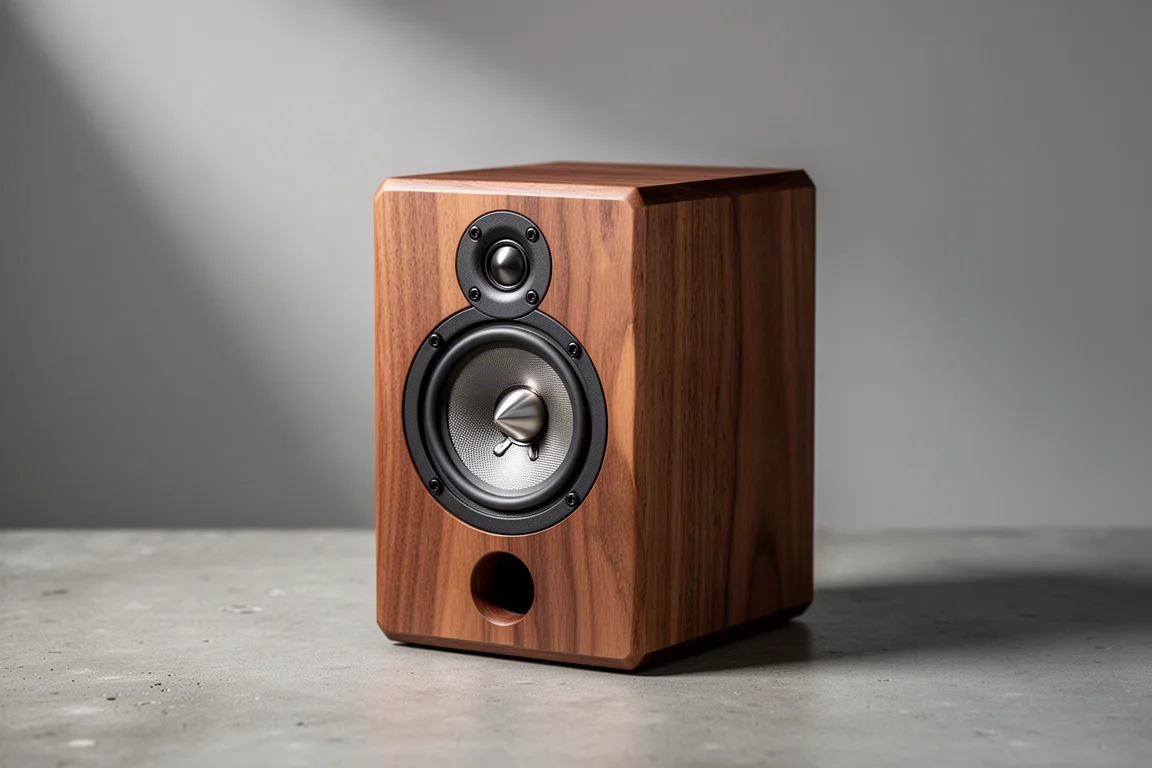
Introduction
The E.J. Jordan Marlow looks like a conventional two-way stand-mount speaker until the grille comes off. Behind it is a single driver, and that is the whole story: no separate tweeter, no crossover, no handoff between drive units. One Jordan full-range driver is asked to cover everything from the bass through the high treble.
That alone separates it from concentric designs such as the KEF LS50 Meta or the unified drivers used by ELAC. Those arrangements still pair a tweeter with a woofer and blend them through a crossover. The Marlow takes the opposite approach, and the audible result is a compact speaker with a personality of its own. It is priced at $2,570 per pair in the United States, shipping is free, and the warranty runs for two years.
Who This Speaker Is For
The Marlow rewards proximity. Listening from roughly three feet away produced the most convincing result, and five to six feet was still very good. Back at seven or eight feet, the presentation loses some of what makes it special, which puts this speaker firmly in near-field and midfield territory rather than in the role of a room-filling floorstander.
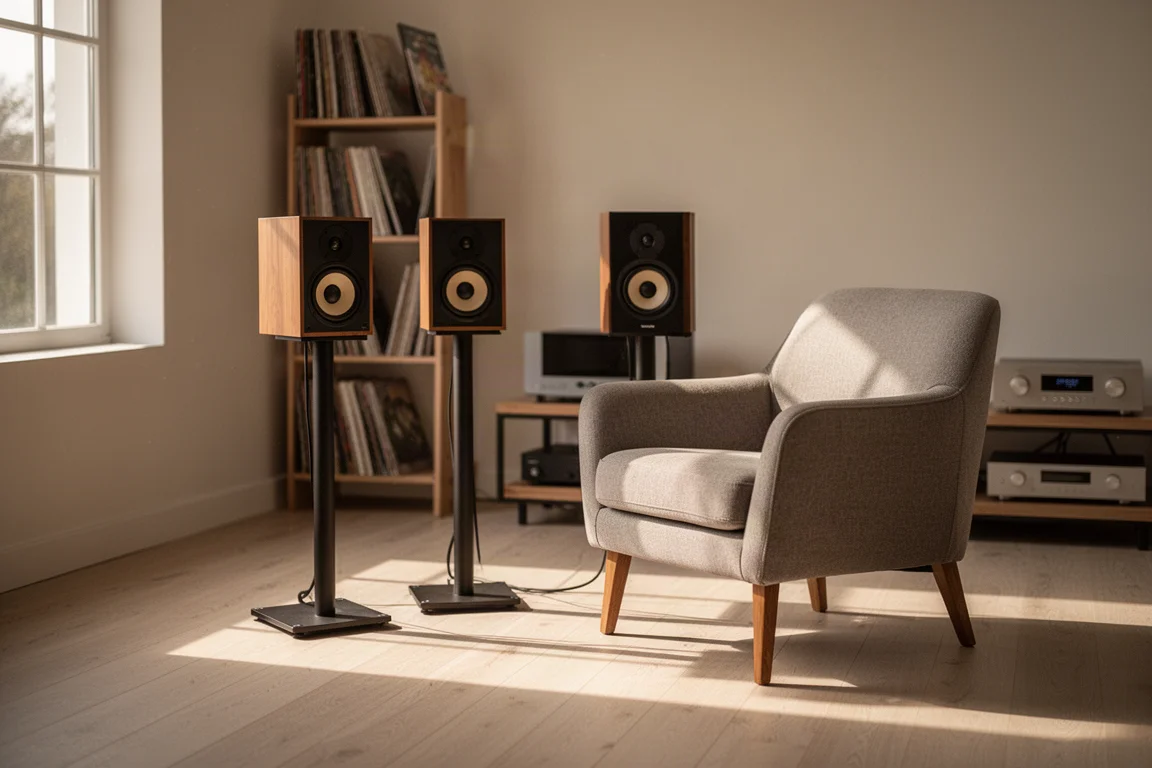
That closeness also makes it a practical choice for rooms with acoustic problems. The nearer a listener sits, the higher the ratio of direct sound to reflected sound, and a small speaker used close up sidesteps much of what a difficult room does to the sound. Desktop systems, small studies and near-field monitoring setups are natural homes for it.
Main Strengths
The basic character is fast, clear, lively and energetic. It is a very different proposition from the relaxed, laid-back balance associated with classic BBC LS3/5a style speakers, which are musical in their own way but rarely described as nimble. The Marlow is nimble first and foremost.
High frequencies come across as clean, crisp and full of detail, which is notable given the rated extension to 18 kHz. Bass, from a small box with a four-inch driver, is surprisingly full and complete: clean and agile rather than boomy or thick. Taken as a whole it is a high-resolution design, and it communicates detail without sounding clinical about it.
Imaging, Detail, and Near-Field Listening
Imaging is where the Marlow does something genuinely special. Instruments and voices lock into place with pinpoint focus, and the soundstage has real depth and space. Much of that is likely down to the single-driver, crossover-free layout, which avoids the phase and timing compromises a crossover can introduce.
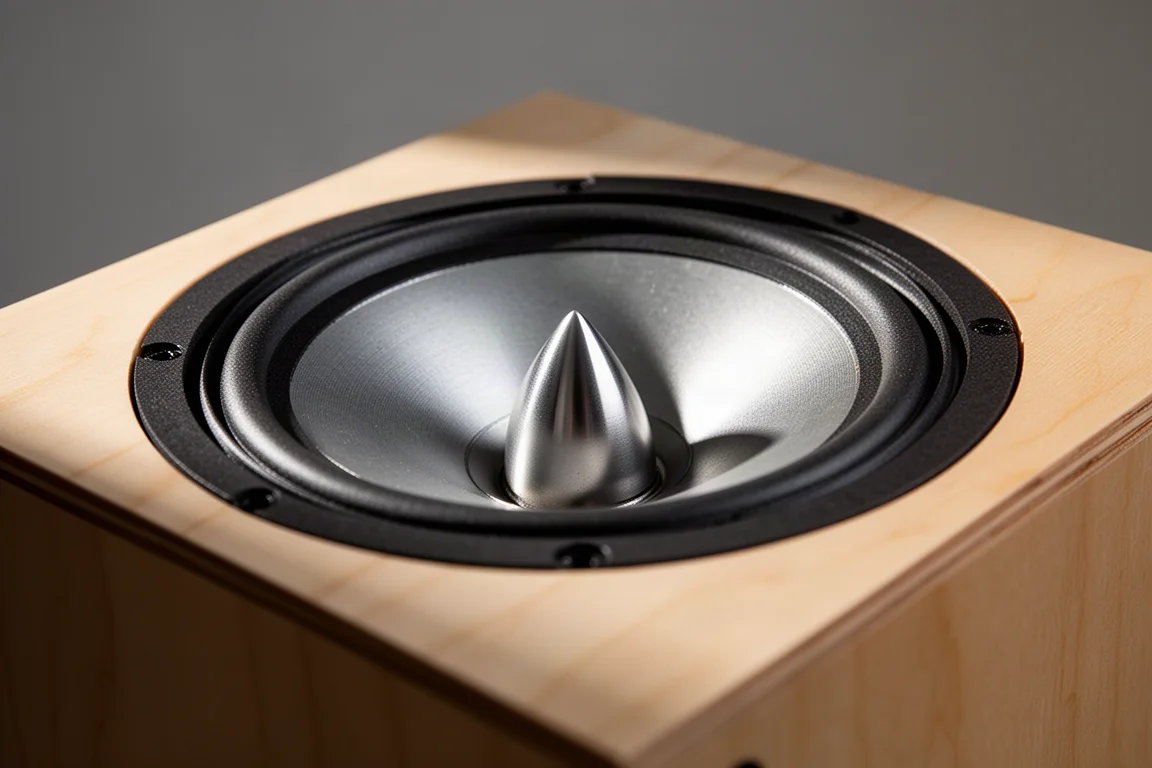
Voices are immediate and present, and on live acoustic material the low end carries genuine weight. A bass guitar on a well-recorded concert set sounded meaty and real, which is not what most small two-way speakers manage.
Design and Build Notes
The driver is sold separately as the Icon. It uses a four-inch metal cone with a phase plug at its centre rather than a dust cap. Parts are sourced in the UK, the driver is assembled in Denmark, and it returns to the UK to be sold either as a raw driver or fitted into the Marlow.
The cabinet is thin-wall Baltic birch ply with heavy internal damping, and it is ported at the front. Around the back, the usual binding posts are replaced by four millimetre sockets that accept banana plugs. The sample arrived in a walnut finish; rosewood is available at an upcharge.
Published specifications rate the Marlow from 44 Hz to 18 kHz, plus or minus 6 dB. That tolerance is worth reading carefully: it is a wider window than the plus or minus 3 dB, or plus or minus 1.5 dB, that many manufacturers quote, and it is a fair signal that this speaker has a voicing of its own rather than a ruler-flat response. The driver alone is $774 per pair in the United States.
The company history behind it is unusually long. E.J. Jordan was founded by Ted Jordan, whose first paper on small full-range drivers appeared in the early 1950s. Small metal full-range drivers followed in the 1960s, and driver modules appeared in the 1980s. Decades of full-range development sit underneath a speaker that looks, from the outside, entirely ordinary.
Bass, Subwoofer Pairing, and How It Compares
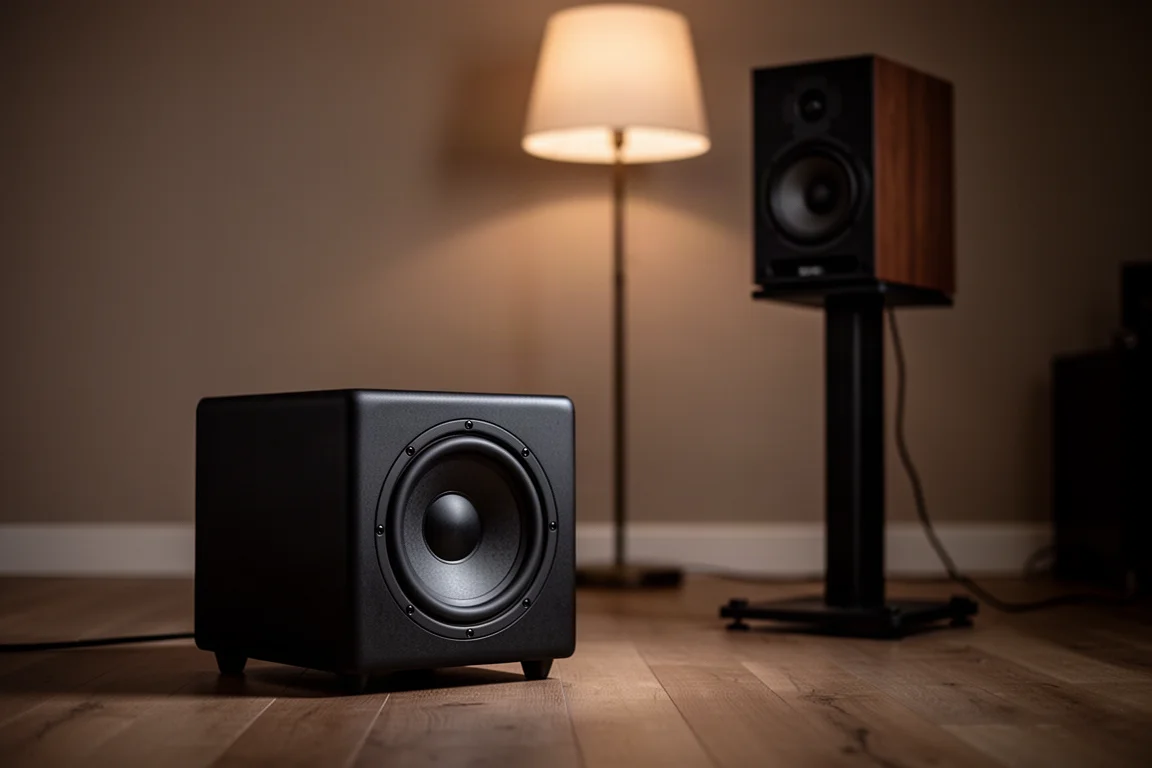
On its own, the Marlow’s bass is complete for its size, but a small subwoofer can add useful scale. Paired with a compact 6.5-inch subwoofer and with the Marlow running full range, with no high-pass filter or bass management applied, the two integrated seamlessly. The sub slipped in underneath rather than announcing itself, which is exactly the goal: the bass simply sounded like it belonged to the speaker.
Set against the KEF LS50 Meta, which is a similar size, the two speakers do not sound alike. The LS50 Meta is the fuller, bigger and warmer of the pair, and it is very resolving in its own right. The Marlow is the livelier of the two. Neither presentation is a correction of the other; they are simply different balances, and the right one depends on taste and room.
Things to Consider Before Buying
The Marlow is a small speaker with a four-inch driver, and it never pretends otherwise. It cannot produce the scale and physical impact of a large cabinet, and no amount of careful setup will change that. Listeners who want a big, room-filling presentation should look at larger designs.
Position matters more than usual. This is a speaker that gives its best at close range, so a listening chair a long way back from the speakers will not show it at its best. The wide plus or minus 6 dB tolerance also means the voicing is deliberate rather than neutral, which is a preference to weigh rather than a fault. Buyers should also note the rosewood upcharge, and the fact that connections are made through four millimetre sockets for banana plugs rather than conventional binding posts.
Buying Advice
The Marlow makes sense for a specific listener: someone who listens from three to six feet away, works in a small or acoustically awkward room, and values speed, immediacy and pinpoint imaging above warmth and scale. In that setting it is a compelling and unusual speaker, and the free shipping and two-year warranty take some of the risk out of trying it.
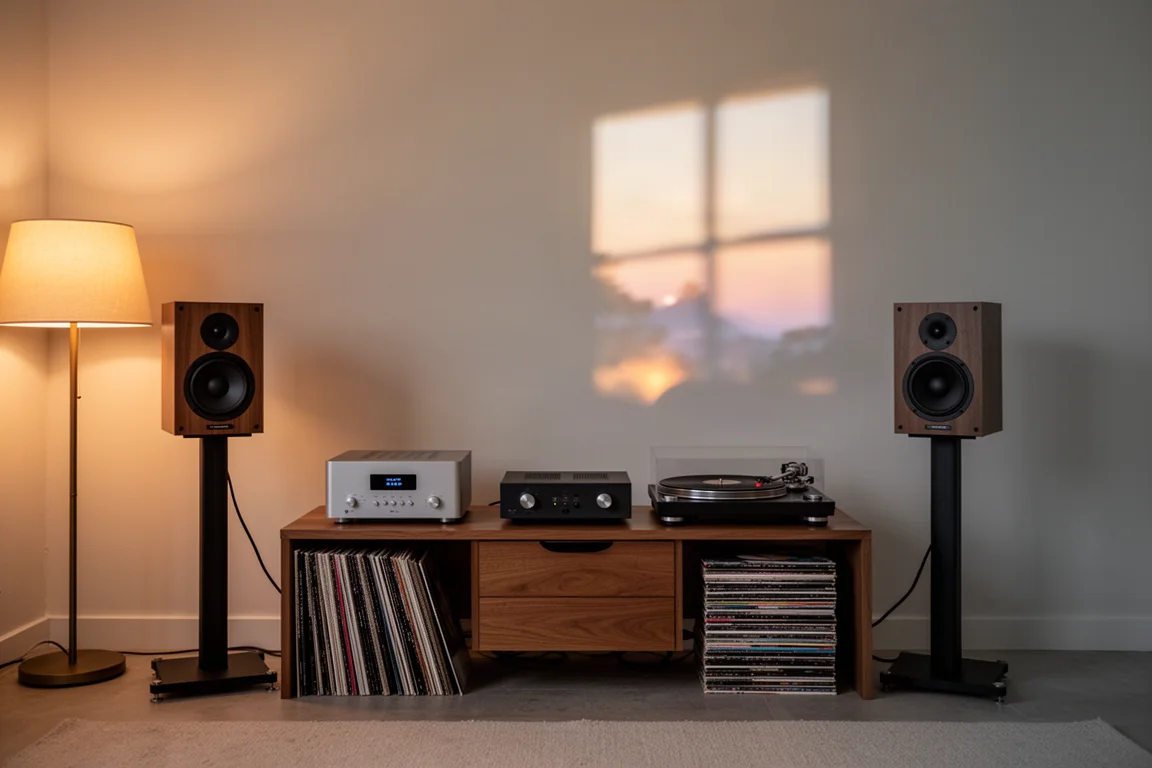
If a fuller, warmer balance is what you are after, the KEF LS50 Meta is the more familiar route, and it remains an excellent one. For anyone who wants the sound of a single full-range driver without buying a finished speaker, the Icon driver at $774 per pair is the building block the Marlow is made from. Either way, the choice comes down to the presentation you prefer rather than to which speaker is objectively better.
Conclusion
The E.J. Jordan Marlow is not a two-way stand-mount in disguise. It is a full-range design with a fast, lively and unusually communicative character, spectacular imaging, and a genuine requirement for close listening. Buy it for what it does well, place it accordingly, and it delivers something most compact speakers do not.
Product link
View more details for E.J. Jordan Marlow
This product is mentioned in the review. Check the specifications, options, and compatibility before buying.
View more details for E.J. Jordan MarlowFurther reading
Related Reviews
Bookshelf Speakers
Acoustic Energy A100 Mark II Review: A Compact Standmount With an Expansive Soundstage
The Acoustic Energy A100 Mark II brings clarity, natural tonality and a wide soundstage to an entry-level standmount, with a few setup details worth knowing first.
Bookshelf Speakers
Acoustic Energy AE-100 Mark II Review: Compact Bookshelf Speakers With Standout Imaging
A compact British two-way bookshelf speaker with deep, layered imaging, fast bass, and a slight treble lift to weigh against a crowded $500 field.
Bookshelf Speakers
Acoustic Energy AE100 MK2 Review: Measured Performance and Four Alternatives
A close look at the Acoustic Energy AE100 MK2 bookshelf speaker, what its measured performance reveals, and four alternatives with different trade-offs.