Desktop Speakers
Edifier M60 Review: A Compact Desktop Speaker Built for Close Listening
The Edifier M60 pairs a 1-inch tweeter with a 3-inch midwoofer in a small desktop cabinet. Here is how it sounds, who it suits, and what to check before buying.
Introduction
Small desktop speakers rarely get much attention, yet they are one of the most practical audio purchases you can make for a home office, a study desk, or a bedroom. The Edifier M60 is a compact two-piece system built for exactly that kind of close-range listening, and at $170 it lands in a competitive part of the desktop audio market. It combines a 1-inch dome tweeter with a 3-inch cone midwoofer in a small cabinet, adds illuminated touch controls on the top panel, and offers enough input options to connect to a computer without extra hardware. This review covers what the M60 does well, where its limits appear, and how to set it up so it sounds its best.
What the Edifier M60 Brings to a Desk
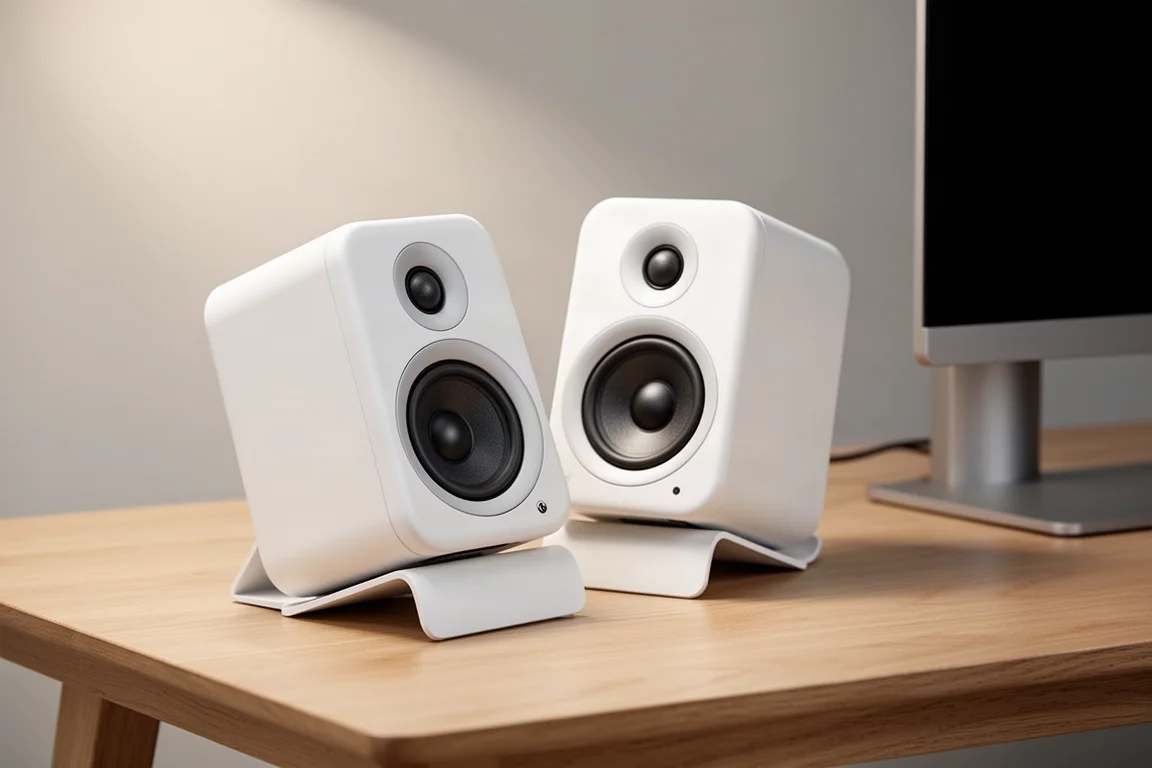
The M60 is a powered desktop speaker with a 1-inch dome tweeter mounted on the front and a 3-inch cone midwoofer handling the lower frequencies. The cabinet is small enough to sit either side of a monitor, and the design leans into that role rather than attempting to fill a living room.
Around the back you get a bass port, a USB-C connection, an auxiliary input, and a speaker output. The power cable runs into the powered unit, and the speaker output feeds the second cabinet, which is passive. That keeps the wiring simple: one powered box, one passive box, and a single cable running between them.
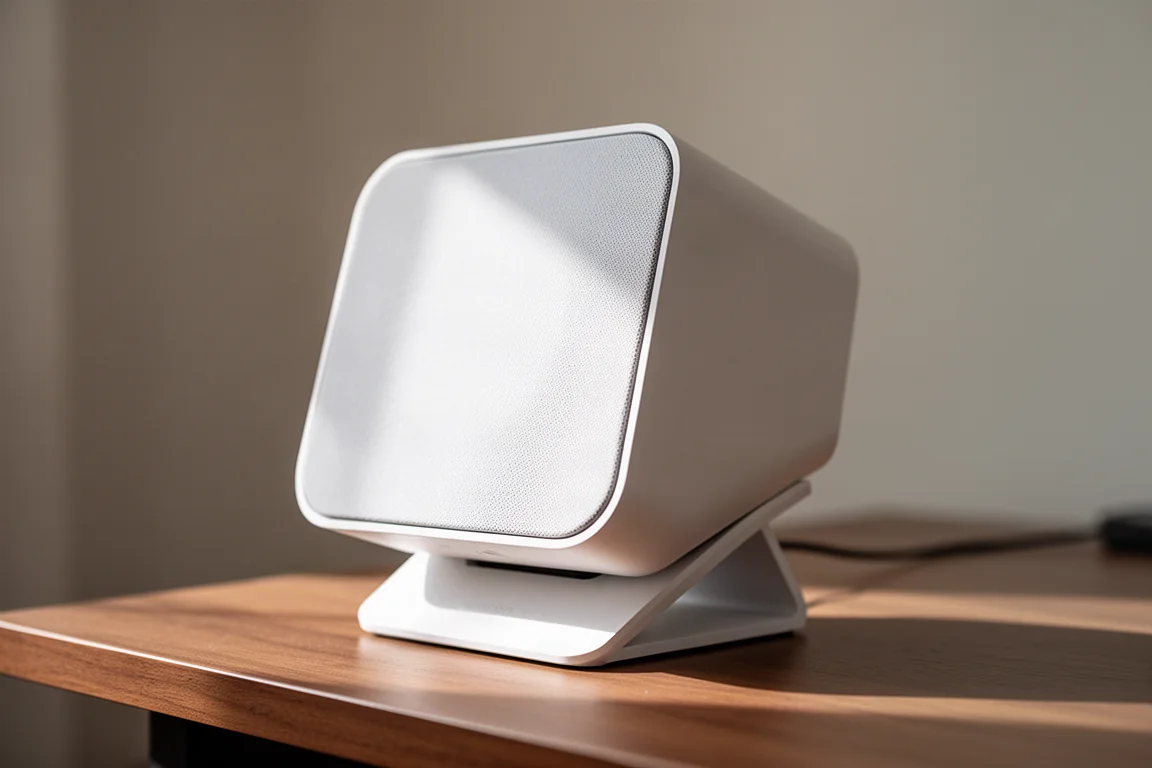
The finish and texture of the cabinet are a genuine part of the appeal. Because the M60 is meant to sit within arm’s reach on a desk, its appearance matters as much as its measured performance, and the surface treatment gives it a more considered feel than a plain black box.
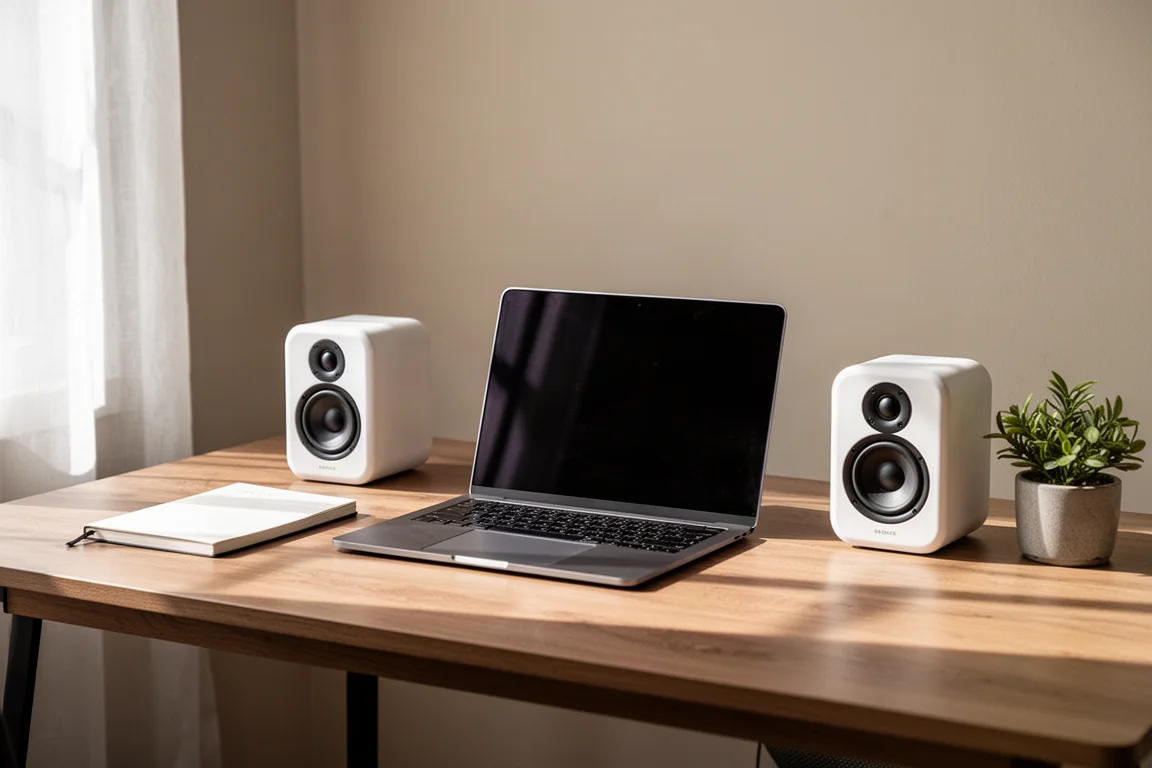
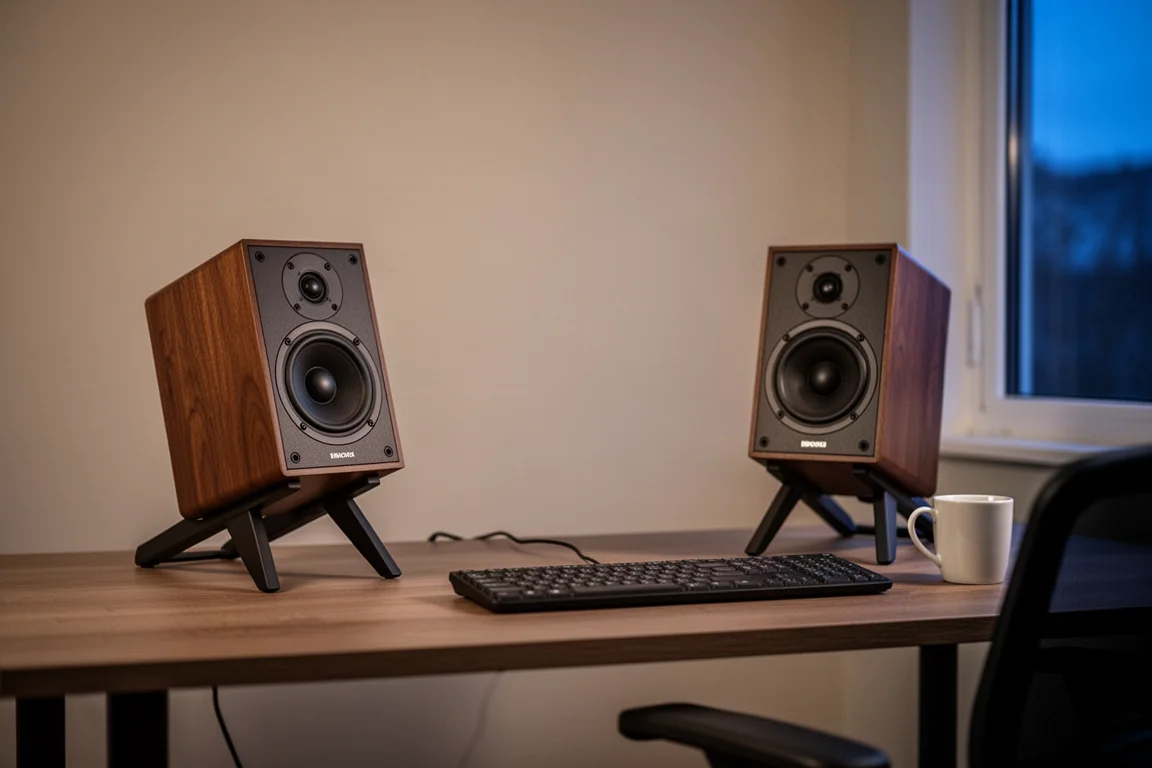
Touch buttons on the top panel illuminate when in use, which adds character to an otherwise understated design. A walnut finish version is also available alongside the white one.
Who This Speaker Is For
The M60 makes the most sense for near-field listening. It is designed to sit close to the listener, ideally no further than arm’s length away, which places it in the same category as studio monitors used at a desk rather than hi-fi speakers used across a room.
That makes it a good fit for a computer setup, a compact home office, or a bedroom where someone wants better sound than a laptop can provide. It also suits anyone who values appearance and features alongside sound quality, since the illuminated touch controls and the cabinet finish are a real part of the experience.
It is not the right choice if you want to fill a room with music. If you need dynamic range and volume at two and a half feet or more, a larger speaker is the more sensible path.
Sound Quality and Tonality
The M60’s low-frequency extension is limited. Output reaches an F3 of about 67 Hz and an F10 of around 57 Hz, which means usable bass runs into the mid-60 Hz region before rolling off sharply. In practice you get some upper kick drum presence but very little deep bass, low-end punch, or tactile energy.
Through the mid-range the speaker is reasonably neutral, but the overall tonal balance trends upward as frequency rises, so the treble sits a little forward of the rest of the range. That is the main tonal characteristic to work around, and it is manageable with placement or a small amount of equalization.
Output is capped as well. Maximum SPL is roughly 86 to 90 dB at one meter, and a pair on a desk lands in the low 90 dB region. Multi-tone distortion behaviour suggests the speaker holds together up to roughly 78 to 88 dB before it starts to sound grainy and compressed. Onboard DSP limiting protects the drivers from being overdriven, so pushing far beyond that range is not realistic.
Horizontal dispersion is wide, holding around plus or minus 60 degrees through the upper mid-range. In a near-field setup that gives you a generous sweet spot, so you do not need to sit in one precise position to get consistent sound.
Design, Controls, and Connectivity
The top-mounted touch controls are the main interaction point, and they light up when you use them. The layout is straightforward for a desktop speaker, and it keeps the front baffle clean.
Connectivity is where the M60 earns its place on a desk. USB-C, an auxiliary input, and the speaker output for the passive cabinet cover the common ways people connect a computer or a small audio source. Power goes into the primary speaker, which then drives the second cabinet, so no separate amplifier or audio interface is required.
Placement and Setup Tips
Edifier includes small stands that tilt the speakers upward by about 15 degrees, which helps aim them toward your ears when they are sitting on a desk. That tilt is a useful starting point, but the exact height matters more than most people expect.
Aim for the tweeter to sit slightly below ear level rather than directly on axis. Raising your listening position just above the tweeter line naturally softens the high frequencies without disturbing the crossover region between the upper mid-range and treble. Keep it modest, though: no more than about 10 degrees above the tweeter is the practical limit before the response starts to change in ways that are harder to work with.
Sitting below the tweeter line is the one position to avoid. It produces a noticeable suckout through the crossover region around 2 to 4 kHz, which drains energy from vocals and instruments that live in that range.
If you would rather not adjust your seating, equalization is the alternative. The Edifier Connect app provides EQ control, and a high shelf filter that pulls everything above roughly 600 Hz down by about 2 dB can bring the tonal balance closer to neutral.
Things to Consider Before Buying
The bass limitation is the most significant trade-off. If your listening leans toward bass-heavy music, film soundtracks, or anything that depends on low-end weight, the M60 will not deliver it. Its output ceiling is also a real constraint: this is a close-range speaker, and it will not scale up to fill a larger room.
The upward-trending treble means the speaker will sound brighter than neutral out of the box, particularly if you set it up on tall stands at ear level. Plan on either adjusting the placement or using the app’s EQ to reach the balance you want.
Buying Advice
At $170, the M60 is a reasonable buy for what it is. It offers solid overall tonal balance for a compact desktop speaker, a wide sweet spot in the near field, and a set of inputs that make connecting to a computer easy. The illuminated touch controls and the cabinet finish give it more personality than most speakers in this size class, and the walnut version is worth considering if you prefer a warmer look.
The caveats are predictable rather than surprising. Bass is limited, output is limited, and the tuning benefits from a small amount of attention through placement or EQ. If you accept those limits and set it up as a near-field speaker, it delivers pleasant, non-fatiguing sound at close range.
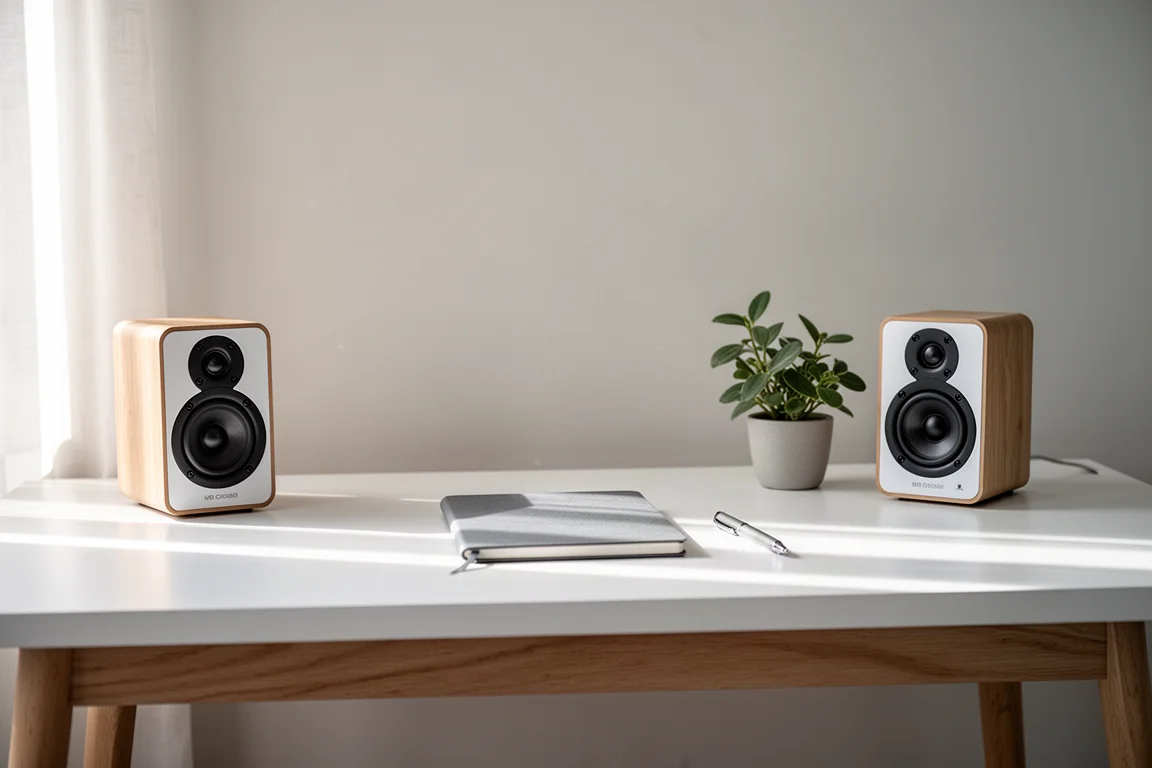
Buy it if you want a compact, good-looking desktop speaker for close listening and you are willing to spend a few minutes on placement. Look elsewhere if you need volume, deep bass, or room-filling output.
Conclusion
The Edifier M60 gets the fundamentals right for a small desktop speaker. It is well connected, easy to live with, and tuned well enough to be enjoyable at close range once you account for its slight treble emphasis and its limited bass. For $170, it is a sensible option for a desk, a home office, or a bedroom setup where the speaker sits within reach and the looks matter as much as the sound.
Product link
View more details for Edifier M60
This product is mentioned in the review. Check the specifications, options, and compatibility before buying.
View more details for Edifier M60Further reading
Related Reviews
Desktop Speakers
Audio Smile Little British Monitor Review: A Compact Desktop Speaker With Measured Neutrality
A small European powered desktop speaker with a waveguide tweeter, an aluminum cone woofer, and an unusually flat measured response for its size.
Desktop Speakers
Audioengine A2+ Review: A Small Desktop Speaker That Knows Its Place
The Audioengine A2+ is a compact powered desktop speaker pair with Bluetooth, a tidy footprint, and a sound profile tuned for life on a desk rather than a listening room.
Desktop Speakers
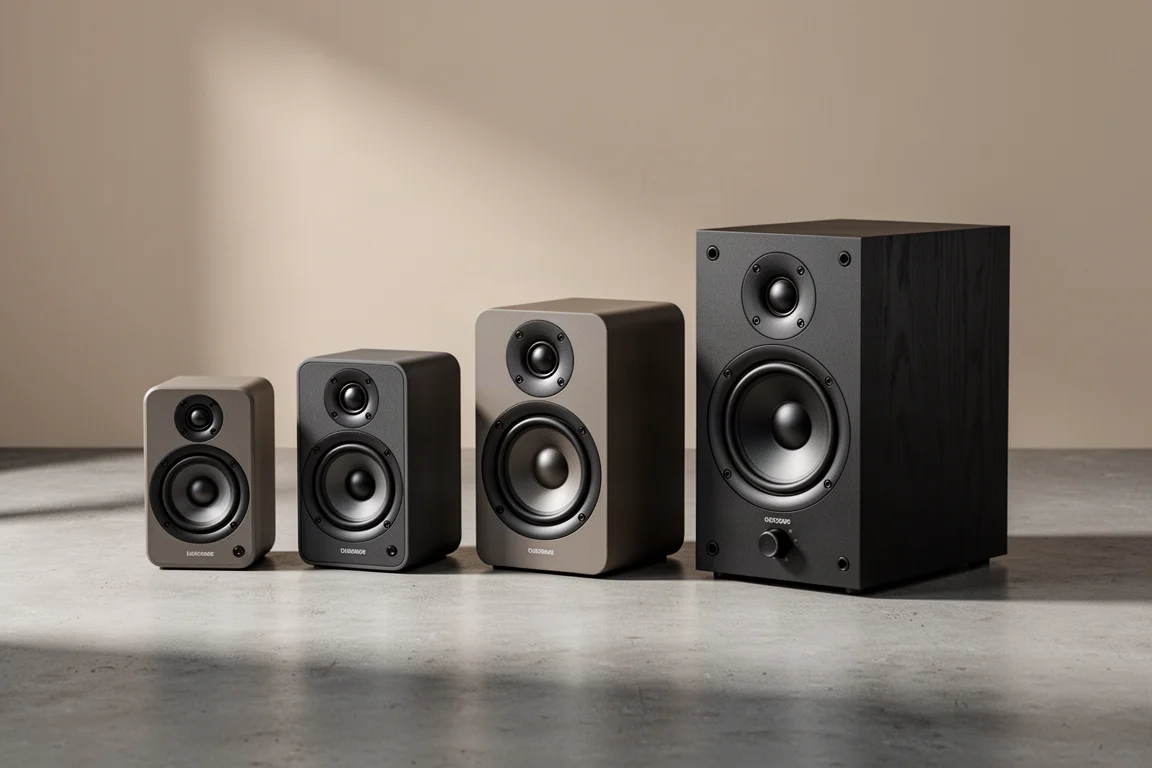
Five Desktop Speakers Compared: Edifier, Kanto, Adam Audio, and Kali
Five compact desktop speakers from roughly $170 to $349 per pair, compared on accuracy, listening window stability, output capability, and desk footprint.